Columbia's Favorite Poetry - today Featuring Al Black

national poetry month.jpg

In celebration of National Poetry Month the Jasper Project invited several artists, writers, and leaders in the Columbia arts community to share with us their favorite poems and most of them generously accepted.

We’ve put together this collection of our favorite poems and will be sharing them with you, poem by poem, day by day, over the month of April. Some of the poems are old and traditional, others are new and inventive. Some are whimsical, others are insightful. Some rhyme. Some don’t.

What they all have in common is that someone you know loves that poem – and this gives us such lovely insight into the soul of our community.

Thank you to everyone who shared their poetry with us.

And Happy National Poetry Month from Jasper.


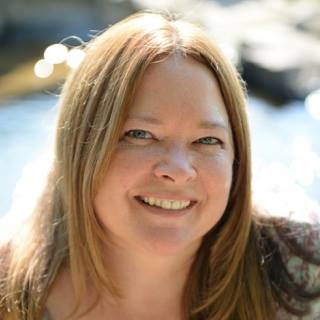
Today's poem comes to us from Al Black.


Wild Geese

by Mary Oliver


You do not have to be good.

You do not have to walk on your knees

for a hundred miles through the desert repenting.

You only have to let the soft animal of your body

love what it loves.

Tell me about despair, yours, and I will tell you mine.

Meanwhile the world goes on.

Meanwhile the sun and the clear pebbles of the rain

are moving across the landscapes,

over the prairies and the deep trees,

the mountains and the rivers.

Meanwhile the wild geese, high in the clean blue air,

are heading home again.

Whoever you are, no matter how lonely,

the world offers itself to your imagination,

calls to you like the wild geese, harsh and exciting

over and over announcing your place

in the family of things.


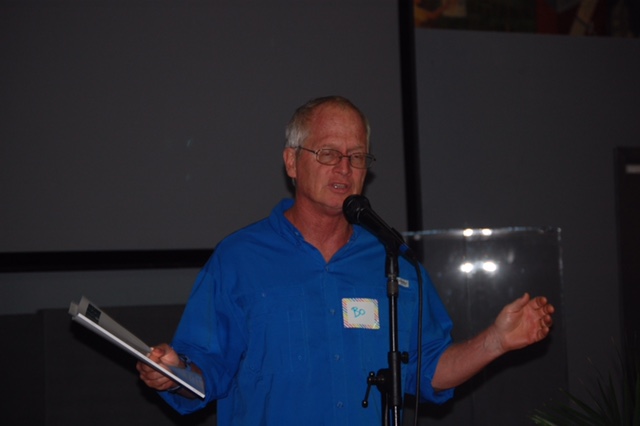
A Hoosier in the land of cotton, Al Black was born and raised in Lafayette, Indiana.  He has been married 46 years to Carol Agnew Black; they have four grown children and six grandchildren.  Black began writing verse at age nine, but kept his poems strictly to himself. In late 2008, he moved to South Carolina so his wife could accept a job as a professor of Sociology. Unemployed for the first time and free from family and community expectations, he publicly shared his first poetry eight years ago.  Black is co-founder of Poets Respond to Race and hosts several poetry and music events in Columbia, SC; he considers himself a northern born Southern poet because it was here in the South that he felt free to blossom.


Al Black

Al Black

Columbia's Favorite Poetry - Today Featuring Eric Bargeron

national poetry month.jpg

In celebration of National Poetry Month the Jasper Project invited several artists, writers, and leaders in the Columbia arts community to share with us their favorite poems and most of them generously accepted.

We’ve put together this collection of our favorite poems and will be sharing them with you, poem by poem, day by day, over the month of April. Some of the poems are old and traditional, others are new and inventive. Some are whimsical, others are insightful. Some rhyme. Some don’t.

What they all have in common is that someone you know loves that poem – and this gives us such lovely insight into the soul of our community.

Thank you to everyone who shared their poetry with us.

And Happy National Poetry Month from Jasper.


Today's poem comes to us from Eric Bargeron --


spring song 


the green of Jesus

is breaking the ground

and the sweet

smell of delicious Jesus

is opening the house and

the dance of Jesus music

has hold of the air and

the world is turning

in the body of Jesus and

the future is possible


Lucille Clifton, "spring song" from The Collected Poems of Lucille Clifton. Copyright 

Eric Bargeron

Eric Bargeron

Columbia's Favorite Poetry - Today Featuring Aida Rogers

national poetry month.jpg

In celebration of National Poetry Month the Jasper Project invited several artists, writers, and leaders in the Columbia arts community to share with us their favorite poems and most of them generously accepted.

We’ve put together this collection of our favorite poems and will be sharing them with you, poem by poem, day by day, over the month of April. Some of the poems are old and traditional, others are new and inventive. Some are whimsical, others are insightful. Some rhyme. Some don’t.

What they all have in common is that someone you know loves that poem – and this gives us such lovely insight into the soul of our community.

Thank you to everyone who shared their poetry with us.

And Happy National Poetry Month from Jasper.


Today's poem comes to us from Aida Rogers and here's what she says about it -- 

Here's one my grandmother would read to us. I didn't quite understand it, but the part about Little Bridget under the lake would just freak me out. Plus, what could sound more delicious to your ear and shivery up your spine and more adventurous in life than traveling "up an airy mountain and down the rushy glen"?


William Allingham (1824-1889)

          The Fairies

    UP the airy mountain, 
        Down the rushy glen, 
    We daren't go a-hunting
        For fear of little men; 
    Wee folk, good folk, 
        Trooping all together; 
    Green jacket, red cap, 
        And a white owl's feather!

    Down along the rocky shore
        Some make their home, 
    They live on crispy pancakes
        Of yellow tide-foam; 
    Some in the reeds
        Of the black mountain lake, 
    With frogs for their watch-dogs, 
        All night awake.

    High on the hill-top
        The old King sits; 
    He is now so old and gray
        He's nigh lost his wits. 
    With a bridge of white mist
        Columbkill he crosses, 
    On his stately journeys
        From Slieveleague to Rosses; 
    Or going up with music
        On cold starry nights, 
    To sup with the Queen
        Of the gay Northern Lights.

    They stole little Bridget
        For seven years long; 
    When she came down again
        Her friends were all gone. 
    They took her lightly back, 
        Between the night and morrow, 
    They thought that she was fast asleep, 
        But she was dead with sorrow. 
    They have kept her ever since
        Deep within the lake, 
    On a bed of flag-leaves, 
        Watching till she wake.

    By the craggy hill-side, 
        Through the mosses bare, 
    They have planted thorn-trees
        For pleasure here and there. 
    Is any man so daring
        As dig them up in spite, 
    He shall find their sharpest thorns
        In his bed at night.

    Up the airy mountain, 
        Down the rushy glen, 
    We daren't go a-hunting
        For fear of little men; 
    Wee folk, good folk, 
        Trooping all together; 
    Green jacket, red cap, 
        And a white owl's feather!


Aïda Rogers is a writer in Columbia who unfashionably likes poems that rhyme. She is the editor of the anthology series State of the Heart: South Carolina Writers on the Places They Love. Volume 3 will be released in August by USC Press.


Aida Rogers

Aida Rogers

Columbia's Favorite Poetry, Today Featuring Ed Madden

"It’s about who you are inside, but also about how the good and authentic version of who you are helps you to live ethically in the world."  

national poetry month.jpg

In celebration of National Poetry Month the Jasper Project invited several artists, writers, and leaders in the Columbia arts community to share with us their favorite poems and most of them generously accepted.

We’ve put together this collection of our favorite poems and will be sharing them with you, poem by poem, day by day, over the month of April. Some of the poems are old and traditional, others are new and inventive. Some are whimsical, others are insightful. Some rhyme. Some don’t.

What they all have in common is that someone you know loves that poem – and this gives us such lovely insight into the soul of our community.

Thank you to everyone who shared their poetry with us.

And Happy National Poetry Month from Jasper.

Today, we feature Ed Madden.


~~~


When I think about a poet and a poem that has always spoken to me, always drawn me and haunted me, I think of Gerard Manley Hopkins and “As kingfishers catch fire, dragonflies draw flame.” There’s something about Hopkins that feels uncannily personal to me and sometimes resistant to the ways I summarize and explicate and parse in the classroom. I don’t teach Hopkins often, and when I do I find myself getting effusive—about the quirky prayer of praise for the particular and the peculiar in “Pied Beauty,” orr about his desperately exuberant exploded sonnet of theology “That Nature is a Heraclitean Fire and of the Comfort of the Resurrection.“ Or the poem To what serves mortal beauty,” in which he insists that beauty draws us to the things of this world and thus to the divine, but beauty (he is especially troubled by the beauty of young men) can also become an end rather than a means, may distract rather than instruct. Or I get lost in all those haunting sonnets of melancholy, the writer desperate to be faithful but crushed by darkness and deep depression.


I love Hopkins. A quirky writer, driven by sound (sometimes at the expense of sense) and given to idiosyncratic rhythms and syntax. A closeted gay man, repressed and depressed in a religious culture to which he devoted his life. Later, stuck in Ireland as a college teacher and overwhelmed by all the exams he had to grade. Deeply religious, but also deeply in love with the natural world, which is, he thinks—which must be—a revelation of the divine. He wrote in a meditation, “All things therefore are charged with love, are charged with God, and, if we know how to touch them, give off sparks and take fire, yield drops and flow, ring and tell of him.” Several years ago, I participated in a spiritual development retreat at the Lutheran seminary, reading and discussing Hopkins with the seminarians. I felt both out of place and absolutely at home there. Like being in a Hopkins poem.


Of all of his poems, it is “As kingfishers catch fire” that I find myself returning to again and again. The syntax is quirky, and the poem is filled with the kind of sonic density I admire in his work (and try, sometimes, to emulate in my own). It is a poem about the beauty of the world, but even more about how the flame of the divine flares most when we embrace our particularity, our singularity, when we live what we were meant to be. Like a bell that sings out its self, its name, so each of us must live out our own authenticities. (The fact that the poem is hard to read aloud just further emphasizes for me the particularities of sound and self.)  Hopkins even makes up a verb: selves. “What I do is me:” he writes, “for that I came.”


This “what I do is me” is not the tolerant you-do-you we hear in contemporary culture, not “do what you think is best for you.” It’s about who you are inside, but also about how the good and authentic version of who you are helps you to live ethically in the world. “The just man justices,” Hopkins writes, again making up a verb, suggesting not that we are what we do, but that we do who we are. If we are just, we live justice. And who we are is both us and more than us. What I do is me.


That’s the octave, the first part of the sonnet where the writer sets the scene, makes a proposition, states the terms. Then the volta, the turn, and the shorter and tighter sestet draws conclusions, moves toward some resolution. For Hopkins, after his little idiosyncratic sermon about selving, he takes an almost-orthodox turn. The just man acts Christlike—or in Hopkins’s quirky phrasing, “Acts in God’s eye what in God’s eye he is – / Christ.” But he pushes on: Christ may be the model for who we can be or what we can do, but Christ is already present in all of us, in lovely limbs and lovely eyes and in faces that aren’t his. It’s not piety or strict adherence to some doctrine or other; it’s not work, it’s play. Christ—whether you read that as the Christian deity or as a figure for our better selves—plays in ten thousand places, and shines through the features of men’s faces. I know, of course, he means the play of a flame, but a good poet can be a punster, and Hopkins wants to say that this is play, not work.


Or it should be play. “All things are charged with love,” as he writes elsewhere, charged with God. If only we knew how to touch, how to see and apprehend, they would take fire—like the blue flash of a kingfisher’s wing—flow through, ring out. So he wants to teach us how to see, a lesson found in the last word of the poem: faces. The rhyme places-faces locates the divine in the faces around us. In the other. There is something deeply human (and humanist) and deeply ethical about this theology, and every rhyme in this quirky little meditation confirms the poet’s argument. The flame of the divine—the good, the true, the authentic—is your name, it’s why you’re here. Justice may be what he is, but grace shines in places and faces not his (not His).


Though I left the strict church of my youth and now find myself among the unaffiliated Nones, I remain deeply compelled by this poem. It could be my daily meditation, my daily prayer: What I do is me, for this I came. Like the flash of a kingfisher’s iridescence, the divine (the good, the just, the true, the authentic, the ethical) may shine in all of us. Like the bell that rings out its own name, each of us can sing the song we were meant to be. And if only we could recognize the holiness of one another, this could be a world of grace and, yes, justice.


Look around you, he says. The world is on fire with love. And God shines in the face of everyone you meet. If only we could learn how to see it.


That’s fucking beautiful.


As Kingfishers Catch Fire

By Gerard Manley Hopkins


As kingfishers catch fire, dragonflies draw flame; 

As tumbled over rim in roundy wells 

Stones ring; like each tucked string tells, each hung bell's 

Bow swung finds tongue to fling out broad its name; 

Each mortal thing does one thing and the same: 

Deals out that being indoors each one dwells; 

Selves — goes itself; myself it speaks and spells, 

Crying Whát I dó is me: for that I came. 


I say móre: the just man justices; 

Keeps grace: thát keeps all his goings graces; 

Acts in God's eye what in God's eye he is — 

Chríst — for Christ plays in ten thousand places, 

Lovely in limbs, and lovely in eyes not his 

To the Father through the features of men's faces. 


Ed Madden is the author of several books of poetry. He is the poet laureate for the city of Columbia, the poetry editor for Jasper Magazine and Muddy Ford Press, and the director of the Women's and Gender Studies program at USC.
 
Ed Madden

Ed Madden

Columbia's Favorite Poetry - Today featuring Susan Lenz

national poetry month.jpg

In celebration of National Poetry Month the Jasper Project invited several artists, writers, and leaders in the Columbia arts community to share with us their favorite poems and most of them generously accepted.

We’ve put together this collection of our favorite poems and will be sharing them with you, poem by poem, day by day, over the month of April. Some of the poems are old and traditional, others are new and inventive. Some are whimsical, others are insightful. Some rhyme. Some don’t.

What they all have in common is that someone you know loves that poem – and this gives us such lovely insight into the soul of our community.

Thank you to everyone who shared their poetry with us.

And Happy National Poetry Month from Jasper.


The reason I like Trees by Joyce Kilmer:
My second grade class presented a special, springtime play, The Wizard of Oz.  I was not selected for a speaking part. I was to stand in the background in a green pillowcase with green crepe paper attached to my arms (and the ink ran).  I was a tree, not even a tree that got to throw an apple at Dorothy, just a plain-old-boring-tree-standing-still.  I hated everything about it until the day of the performance.  My mother took me aside and recited Trees by Joyce Kilmer.  She then put me back in line to enter the stage and snapped a photo of me, smiling.  The poem saved the day. It was alright to be a tree.
PS  Since then, trees are pretty special too!   


Trees


I think that I shall never see 

A poem lovely as a tree. 


A tree whose hungry mouth is prest 

Against the earth’s sweet flowing breast; 


A tree that looks at God all day, 

And lifts her leafy arms to pray; 


A tree that may in Summer wear 

A nest of robins in her hair; 


Upon whose bosom snow has lain; 

Who intimately lives with rain. 


Poems are made by fools like me, 

But only God can make a tree.

Susan is an internationally renown fiber and installation artist based out of Columbia, SC.
 
Susan Lenz in tree costume - center

Susan Lenz in tree costume - center

Columbia's Favorite Poetry - Today Featuring Tony Tallent

national poetry month.jpg

In celebration of National Poetry Month the Jasper Project invited several artists, writers, and leaders in the Columbia arts community to share with us their favorite poems and most of them generously accepted.

We’ve put together this collection of our favorite poems and will be sharing them with you, poem by poem, day by day, over the month of April. Some of the poems are old and traditional, others are new and inventive. Some are whimsical, others are insightful. Some rhyme. Some don’t.

What they all have in common is that someone you know loves that poem – and this gives us such lovely insight into the soul of our community.

Thank you to everyone who shared their poetry with us.

And Happy National Poetry Month from Jasper.


Thanks to Tony Tallent for sharing a poem with us today.

One of my favorite poems is “Wild Birds” by Judy Goldman. To me, this poem conveys being in that place between anxiousness and hopefulness, ready to break free.


WILD BIRDS


I like to think that anything

is possible. Look at me,

a breath holder,

a person well-armored in forms

and channels, caught in the short orbit

of an orderly world. Surely

I can escape


with serious practice, of course,


to a time when I will begin to sing

an accidental song,

peel a tangerine

the color of my hair,

take scissors to the straps

of the sweet-smelling gown I wear,


open my door suddenly to wild birds.


-Judy Goldman


Tony Tallent loves words and loves sharing them in many ways. He is the chief program and innovation officer for Richland Library.
 
 
Tony Tallent

Tony Tallent

And while we're on the topic of Tony, why not check out some of his original work at http://www.vestalreview.org/fallen-birds/ and give it your vote?

Columbia's Favorite Poetry - Today, Featuring Nicola Waldron

national poetry month.jpg

In celebration of National Poetry Month the Jasper Project invited several artists, writers, and leaders in the Columbia arts community to share with us their favorite poems and most of them generously accepted.

We’ve put together this collection of our favorite poems and will be sharing them with you, poem by poem, day by day, over the month of April. Some of the poems are old and traditional, others are new and inventive. Some are whimsical, others are insightful. Some rhyme. Some don’t.

What they all have in common is that someone you know loves that poem – and this gives us such lovely insight into the soul of our community.

Thank you to everyone who shared their poetry with us.

And Happy National Poetry Month from Jasper.


Today we're featuring Nicola Waldron's favorite poem by Wendell Berry-

I think of this poem as the anti-panic. Berry reminds us that the natural world offers us confirmation of the constant existence of uncomplicated beauty and a model of the power of slowing down. When I feel overwhelmed, I can read this and feel as if I’ve actually been out in nature. If you read this aloud, it will actually help you breathe. Try it!


 The Peace of Wild Things by Wendell Berry


When despair for the world grows in me

and I wake in the night at the least sound

in fear of what my life and my children's lives may be,

I go and lie down where the wood drake

rests in his beauty on the water, and the great heron feeds.

I come into the peace of wild things

who do not tax their lives with forethought

of grief. I come into the presence of still water.

And I feel above me the day-blind stars

waiting with their light. For a time

I rest in the grace of the world, and am free.


Nicola Waldron is a writer-mother-teacher and would-be hermit, who tries to operate out in the human world as a bold truth-speaker, while maintaining an internal, prayerful kind of howling.
 
Nicola Waldron

Nicola Waldron

Columbia's Favorite Poetry - Today, Featuring Abstract Alexandra

national poetry month.jpg

In celebration of National Poetry Month the Jasper Project invited several artists, writers, and leaders in the Columbia arts community to share with us their favorite poems and most of them generously accepted.

We’ve put together this collection of our favorite poems and will be sharing them with you, poem by poem, day by day, over the month of April. Some of the poems are old and traditional, others are new and inventive. Some are whimsical, others are insightful. Some rhyme. Some don’t.

What they all have in common is that someone you know loves that poem – and this gives us such lovely insight into the soul of our community.

Thank you to everyone who shared their poetry with us.

And Happy National Poetry Month from Jasper.

~~

Today we feature a Columbia-based visual artist who goes by the moniker Abstract Alexandra.


One of my favorite poems by Dorothy Parker represents, to me, an understanding of pure sadness due to the walls of poverty that force creatives into a life of unhappiness. That was the pain I felt having to leave school. Alone in the world, with no one to care. Giving up dreams of creating wonderful beauty and expression due to poverty is heartbreakingly painful.


A dream lies dead here.

By Dorothy Parker

A dream lies dead here.

May you softly go 

Before this place, and turn away your eyes, 

Nor seek to know the look of that which dies 

Importuning Life for life. Walk not in woe, 

But, for a little, let your step be slow. 

And, of your mercy, be not sweetly wise 

With words of hope and Spring and tenderer skies. 

A dream lies dead; and this all mourners know: 

Whenever one drifted petal leaves the tree- 

Though white of bloom as it had been before 

And proudly waitful of fecundity- 

One little loveliness can be no more; 

And so must Beauty bow her imperfect head 

Because a dream has joined the wistful dead!


Abstract Alexandra is a visual artist.
Abstract Alexandra

Abstract Alexandra

Columbia's Favorite Poetry - Today, featuring Tim Conroy

curl your toes/ into the grass/

national poetry month.jpg

In celebration of National Poetry Month the Jasper Project invited several artists, writers, and leaders in the Columbia arts community to share with us their favorite poems and most of them generously accepted.

We’ve put together this collection of our favorite poems and will be sharing them with you, poem by poem, day by day, over the month of April. Some of the poems are old and traditional, others are new and inventive. Some are whimsical, others are insightful. Some rhyme. Some don’t.

What they all have in common is that someone you know loves that poem – and this gives us such lovely insight into the soul of our community.

Thank you to everyone who shared their poetry with us.

And Happy National Poetry Month from Jasper.

~~

Today, we're featuring poet Tim Conroy.

~~


My favorite poem is Thank You by Ross Gay.  I love poetry that reminds us of our frailty and insignificance and meanwhile calls us to be grateful. 


Thank You

BY ROSS GAY


If you find yourself half naked

and barefoot in the frosty grass, hearing,

again, the earth's great, sonorous moan that says

you are the air of the now and gone, that says

all you love will turn to dust,

and will meet you there, do not

raise your fist. Do not raise

your small voice against it. And do not

take cover. Instead, curl your toes

into the grass, watch the cloud

ascending from your lips. Walk

through the garden's dormant splendor.

Say only, thank you.

Thank you.


Tim Conroy is a Columbia-based poet, retired educator, and a founding board member of the Pat Conroy Literary Center. He is the author of Theologies of Terrain published in 2017 by Muddy Ford Press.


Tim Conroy

Tim Conroy

Columbia's Favorite Poetry - Today, featuring Cassie Premo Steele

national poetry month.jpg

In celebration of National Poetry Month the Jasper Project invited several artists, writers, and leaders in the Columbia arts community to share with us their favorite poems and most of them generously accepted.

We’ve put together this collection of our favorite poems and will be sharing them with you, poem by poem, day by day, over the month of April. Some of the poems are old and traditional, others are new and inventive. Some are whimsical, others are insightful. Some rhyme. Some don’t.

What they all have in common is that someone you know loves that poem – and this gives us such lovely insight into the soul of our community.

Thank you to everyone who shared their poetry with us.

And Happy National Poetry Month from Jasper.


Our fist poem is from poet and author Cassie Premo Steele.


Cassie Premo Steele


"My favorite poem is For Each of Us by Audre Lorde. Audre Lorde's poetry has been important to me throughout my life, so much so that I remember being in my twenties and feeling like life was worth living because I hadn't yet read everything she'd written. I love this poem especially because it is fierce and wise and supportive, but with the paradox of truth that makes Lorde a poet-philosopher. Power and pain exist together. Preparing a meal is essential, but there is more to life. The best politics come when we quiet down and do the work. Nothing is eternal, even the deepest love. And yet, we go on loving and nurturing in a spirit of pride and strength."


FOR EACH OF YOU

By Audre Lorde


Be who you are and will be

learn to cherish

that boisterous Black Angel that drives you

up one day and down another

protecting the place where your power rises

running like hot blood

from the same source 

as your pain.


When you are hungry

learn to eat

whatever sustains you

until morning

but do not be misled by details

simply because you live them.


Do not let your head deny

your hands

any memory of what passes through them

nor your eyes

nor your heart

everything can be used

except what is wasteful

(you will need

to remember this when you are accused of destruction.) 

Even when they are dangerous examine the heart of those machines you hate

before you discard them

and never mourn the lack of their power

lest you be condemned

to relive them.

If you do not learn to hate

you will never be lonely

enough

to love easily

nor will you always be brave

although it does not grow any easier


Do not pretend to convenient beliefs

even when they are righteous

you will never be able to defend your city

while shouting.


Remember whatever pain you bring back 

from your dreaming

but do not look for new gods

in the sea

nor in any part of a rainbow

Each time you love

love as deeply as if were

forever

only nothing is

eternal.


Speak proudly to your children

where ever you may find them

tell them

you are offspring of slaves

and your mother was

a princess

in darkness. 


Cassie Premo Steele is the author of fifteen books, including six books of poetry, and her new novel, The ReSisters, will be out later this year.


Cassie Premo Steele

Cassie Premo Steele

In Guns We Trust by Ed Madden with Bert Easter

"Bert built a crucifix in the backyard." - Ed Madden

guns we trust 2.JPG

After the Marjory Stoneman Douglas High School shooting in Parkland, Florida, in February, National Rifle Association spokesman Wayne LaPierre said at a conservative political meeting that the right to bear arms “is not bestowed by man but granted by God to all Americans as our American birthright.” My husband Bert and I were struck by the religious language LaPierre used, the idea that God grants us, as Americans, the right to carry a gun. For the next few days, we kept talking about this language, this almost-religious devotion to the gun as an American icon, what it represents, what it can do.


I was reminded of an essay historian Garry Wills wrote after the Sandy Hook Elementary school shooting in 2012, “Our Moloch,” in which he compares the American worship of the gun to the stories of Moloch, the Old Testament god of the Canaanites that required the sacrifice of children.  “The gun is not a mere tool, a bit of technology, a political issue, a point of debate,” he says. “It is an object of reverence. Devotion to it precludes interruption with the sacrifices it entails. Like most gods, it does what it will, and cannot be questioned. Its acolytes think it is capable only of good things. It guarantees life and safety and freedom. It even guarantees law. Law grows from it. Then how can law question it?”


As we kept talking, we began to imagine a religion of the gun, a chapel to the gun, the gun as a god that requires the sacrifice of children. We imagined a child crucified on a cross of guns, a church banner with LaPierre’s quote. I suggested one of those hokey traditional pictures of the guardian angel hovering over two children, but with belligerent NRA spokesperson Dana Loesch’s head pasted on it, maybe a gun in her hand.

guns we trust guardian angle.jpg

A few years ago, as part of a collaborative show centered on the image of Saint Sebastian, Bert and I designed an interactive chapel to Sebastian. The show was organized by Alejandro Garcia Lémos and Leslie Pierce at Friday Cottage in downtown Columbia, and featured a range of artists—visual art, sculpture, stained glass, performance, film, poetry—all exploring the iconography of the saint and the historical status of the saint as a gay icon. In our little chapel, there was an altar with votive candles and a statue of the saint, surrounded by any little plastic figure I could find with a bow and arrow (cowboys and Indians, Vikings, even a Smurf). There were church pews, banners, and a shrine where you could write down your prayers, shames, or desires on strips of red paper and pin them to the body of the saint. By the end of the evening, it was covered with red ribbons of prayer.


So we imagined a chapel to the gun. A window diorama. We would call it In Guns We Trust, our national motto inscribed on all currency, evoking thus national patriotic and religious (and perhaps commercial) resonances. We asked Tapp’s Arts Center—perhaps a little in jest, since we are not trained visual artists—if we could do a window installation. They said yes. So we began work in earnest, hoping to get it installed in advance of the March for Our Lives.


Bert built a crucifix in the backyard. We bought toy rifles and machine guns. I bought Dana Loesch’s 2014 book, Hands Off My Gun: Defeating the Plot to Disarm America.  I looked up LaPierre’s infamous press conference on December 21, 2012 after the Sandy Hook school massacre in Newtown, Connecticut, where he said, “The only way to stop a monster from killing our kids is to be personally involved and invested in a plan of absolute protection. The only thing that stops a bad guy with a gun is a good guy with a gun.” 


I began to read more and more about how American attitudes toward guns suggested something sacred. “How can we determine if we are in bondage to an idol?” asked theologian John Thatamani in “The Price of Freedom? Child Sacrifice and the American Gun Cult.”  “Intensity of reaction is a sure-fire marker that we traffic with the sacred,” he said.  “We know that the gun has become a sacred object because it commands unquestioning reverence. Interrogating its sacral status triggers anger and even death threats.”


After the 2016 Pulse nightclub shooting in Orlando, Garry Wills wrote, in “A Nation Captive to the Gun”:  “God gave us guns to show us who we are. Giving up the gun would be a surrender to evil, taking us abruptly into eschatological time.” Eschatological, meaning end times, death and judgment, the end of the world.


“So this time,” Wills continued, “let us skip all the sighing and promising and moments of silence. Why keep up the pretense that we are going to take any real and practical steps toward sanity? Everyone knows we are not going to do a single damn thing. We can’t. We are captives of The Gun.”


“The Gun is patriotic,” he wrote, “The Gun is America. The Gun is God.”


I found that the psalm Dana Loesch cites in her acknowledgments, Psalm 144:1, was inscribed on AR-15 rifles by a gunmaker in Florida in 2015.  “Blessed be the Lord my Rock who trains my hands for war, my fingers for battle.”  The gunmaker said he hoped a Muslim terrorist would be struck by a bolt of lightning if he picked up the gun.


I was struck by the fact that the toy guns we bought for the installation all had the gun safety integrated into the mode switch, so that you can toggle between safe, semi, and automatic. On the cheaper guns on which the accessories were molded, the switch is permanently set on semi. We’re set on semi-safe.


guns we trust 2.JPG

In Guns We Trust, our window installation at Tapp’s on Main Street is meant to draw attention to the almost religious devotion to guns in America, which prevents us from talking about reasonable control legislation. It is a chapel to the gun with banners (including the February quote from Wayne LaPierre and another intoning, in good Republican fashion, "Now is not the time"), a communion tray with cups filled not with wine but with spent AR-15 bullets. On the left side of the window, a poem called “Semi.” (We’re set on semi-safe.)  On the right side, passages from some of the things I’d been reading. There is a trinity of toy machine guns in the air, their laser targets trained on the sidewalk. There is an image of Dana Loesch as the traditional guardian angel, and a child crucified on a cross made of guns.


We hope the window raises awareness, or at least questions, about our American devotion to guns. We hope it helps to start conversations. We clearly need to start talking. Maybe now is the time.


Ed Madden is the poetry editor for Jasper Magazine and the poet laureate for the City of Columbia, SC. 

Tickets Go On Sale for Deckle Edge Keynote Address and Nikky Finney Southern Truth Award Celebration

Terrance Hayes

Terrance Hayes

Nikky Finney photo by Forrest Clonts

Nikky Finney photo by Forrest Clonts

DECKLE EDGE LITERARY FESTIVAL 2018 OPENS TICKET SALES FOR TERRANCE HAYES KEYNOTE ADDRESS AND NIKKY FINNEY SOUTHERN TRUTH AWARD CELEBRATION


In the third year of celebrating South Carolina’s rich literary tradition Deckle Edge Literary Festival 2018 will welcome keynote speaker Terrance Hayes and renowned Southern literary artist Nikky Finney March 3, 2018 for the Deckle Edge 2018 Keynote Address and Southern Truth Award Celebration. Following the 2018 Deckle Edge Literary Festival daytime sessions from 9:30 am until 5 pm at Richland Library on Assembly Street, the Keynote Address and Southern Truth Award Celebration will take place at 7 pm at 701 Whaley Street Market Space. Tickets are $15 in advance, $20 day of, and $10 for students. Heavy hors d’oeuvres from Chef Joe Turkaly will be served with music from Cola Jazz’s Amos Hoffman and Sam Edwards, and there will be a cash bar. Tickets are available at Brown Paper Tickets at https://de18.bpt.me.


Prior to the Keynote Address and Southern Truth Award Celebration a VAP* Champagne Reception will be held from 5:30 until 7 pm, also at 701 Whaley Market Space. (*Very Appreciated Person). The VAP Celebration allows attendees to meet and mingle, as well as raise a champagne toast to, Terrance Hayes, Nikky Finney and other honored participants in this year’s Deckle Edge Literary Festival. The reception will feature free champagne, heavy hors d’oeuvres, and reserved seats for the keynote address and award ceremony to follow, as well as recognition at the event. The reception will also serve as a fund raising opportunity for Deckle Edge Literary Festival. The purchase of VAP tickets will not only help offset festival costs but will serve as a scholarship fund for additional students to attend the evening’s Keynote address.


Winner of MacArthur, Guggenheim, US Artists Zell, and National Endowment for the Arts Fellowships, Hayes is the author of Lighthead, which was the winner of the 2010 National Book Award, Wind in a Box, Hip Logic, and Muscular Music. How to Be Drawn, his most recent collection of poems, was a finalist for the 2016 National Book Award, the 2016 National Book Critics Circle Award, and received the 2016 NAACP Image Award for Poetry. He is the current poetry editor at New York Times Magazine and has two manuscripts forthcoming in 2018.


A South Carolina native, Nikky Finney is the author of Head Off & Split, which won the 2011 National Book Award for poetry, The World Is Round, Rice, Heartwood, and On Wings Made of Gauze. She is the John H. Bennett, Jr. Chair in Creative Writing and Southern Letters at the University of South Carolina.


Over two dozen sessions will make up the Deckle Edge Literary Festival this year with panels and presentations that cover poetry, prose, songwriting, screenwriting, new works from local authors, a live interview for the Pat Conroy Literary Center filmed on-site, writing graphic novels, writing for social justice, a poetry workshop for teens, USC’s Moving Images Resource Center, literary history, and interactive art-making with Columbia-based fiber and installation artist Susan Lenz. Among the authors attending are Chuck Brown, Sanford Greene, Julia Elliott, Scott Gould, Mark Powell, Tim Conroy, Claudia Smith Brinson, Anthony Grooms, Alvin McEwan, Monifa Lemons, Ray McManus, Cassie Premo Steele, Marjorie Spruill, all of SC’s poets laureates – Marjory Wentworth, Marcus Amaker, and Ed Madden, Brock Adams, Isabella Gomez and many more.

The daytime event is free and open to the public and tickets to the keynote celebration are available at https://de18.bpt.me.

Watch the website at www.Deckleedgesc.org for further details as they are released.

Fall Lines Literary Magazine Accepting Submissions for 2018 Issue

Fall Lines.png

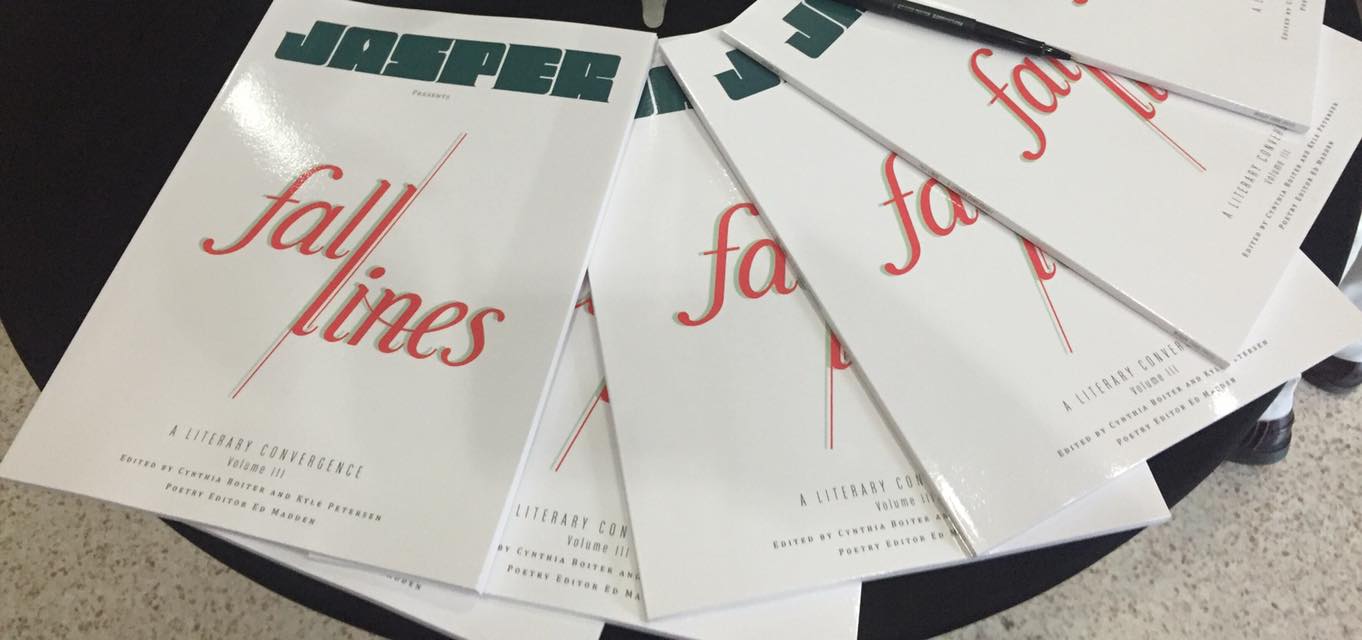
Fall Lines – a literary convergence is a literary journal presented by The Jasper Project in partnership with Richland Library and One Columbia for Arts and History.

Fall Lines will accept submissions of previously unpublished poetry, essays, short fiction, and flash fiction from January 15, 2018 through April 1, 2018. While the editors of Fall Lines hope to attract the work of writers and poets from the Carolinas and the Southeastern US, acceptance of work is not dependent upon residence.

Publication in Fall Lines will be determined by a panel of judges and accepted authors (ONLY) will be notified by May 30, 2018, with a publication date in July 2018. Two $250 cash prizes, sponsored by the Richland Library Friends, will be awarded: The Saluda River Prize for Poetry and the Broad River Prize for Prose.

Each entry must be submitted as a single independent entry and include its own cover sheet.

Submit each individual poetry submission, along with its own cover sheet, to FallLines@JasperProject.org with the word POETRY in the subject line.

Submit each individual prose submission, along with its own cover sheet, to FallLines@JasperProject.org with the word PROSE in the subject line.

Cover sheets MUST include your name, the name of the one individual entry you are submitting with that cover sheet, email address, and USPO address. There is no fee to enter, but submissions that fail to follow the above instructions will be disqualified without review.

Please limit short fiction to 2000 words or less; flash fiction to 350 – 500 words per submission; essays to 1200 words; and poetry to three pages (Times New Roman 12 pt.) Please submit no more than a total of 5 entries.

___

The Columbia Fall Line is a natural junction, along which the Congaree River falls and rapids form, running parallel to the east coast of the country between the resilient rocks of the Appalachians and the softer, more gentle coastal plain.

Deckle Edge Literary Festival Announces Terrance Hayes as 2018 Keynote Speaker

Terrance Hayes will give keynote address at 2018 Deckle Edge Literary Festival

Terrance Hayes will give keynote address at 2018 Deckle Edge Literary Festival

In the third year of celebrating South Carolina’s rich literary tradition Deckle Edge Literary Festival 2018 will welcome keynote speaker Terrance Hayes on March 3, 2018. Winner of MacArthur, Guggenheim, US Artists Zell, and National Endowment for the Arts Fellowships, Hayes is the author of Lighthead, which was the winner of the 2010 National Book Award, Wind in a Box, Hip Logic, and Muscular Music. How to Be Drawn, his most recent collection of poems, was a finalist for the 2016 National Book Award, the 2016 National Book Critics Circle Award, and received the 2016 NAACP Image Award for Poetry. He is the current poetry editor at New York Times Magazine and has two manuscripts forthcoming in 2018.


The one-day festival will take place on Saturday, March 3, 2018 with daytime events being held at Richland Library in downtown Columbia. The keynote address by Hayes will take place on Saturday evening at a culminating celebration during which Columbia-based literary artist Nikky Finney will be presented with the inaugural Deckle Edge Southern Truth Award. A South Carolina native, Finney is the author of Head Off & Split, which won the 2011 National Book Award for poetry, The World Is Round, Rice, Heartwood, and On Wings Made of Gauze. She is the John H. Bennett, Jr. Chair in Creative Writing and Southern Letters at the University of South Carolina. The keynote celebration will take place at the 701 Whaley Market Space.


Almost two dozen sessions will make up the Deckle Edge Literary Festival this year with panels and presentations that cover poetry, prose, songwriting, screenwriting, new works from local authors, a live interview for the Pat Conroy Literary Center filmed on-site, writing graphic novels, writing for social justice, a poetry workshop for teens, USC’s Moving Images Resource Center, literary history, and interactive art-making with Columbia-based fiber and installation artist Susan Lenz. Among the authors attending are Chuck Brown, Sanford Greene, Julia Elliott, Scott Gould, Mark Powell, Tim Conroy, Marjorie Spruill, all of SC’s poets laureates – Marjory Wentworth, Marcus Amaker, and Ed Madden, Brock Adams, Isabella Gomez and many more. The daytime event is free and open to the public and tickets to the keynote celebration will be available soon. Watch the website at www.Deckleedgesc.org for further details as they are released

Focus on JAY Finalists - Don McCallister for literary arts

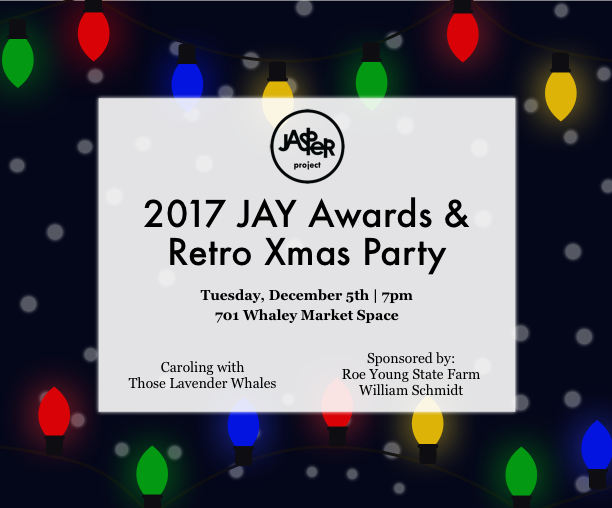
We're chatting with the 2017 JAY Awards Finalists as we enter the last few days of voting and preparing for the JAY Awards (& Retro Christmas party!) coming up on December 5th


Don McCallister - photo by Forrest Clonts

Don McCallister - photo by Forrest Clonts

Jasper: What made the past year so great for you as an artist, how have you grown, and to what do you attribute that growth? 

Don: Becoming my own publisher after many years of submitting and freelancing offered new challenges and opportunities to expand my base of knowledge. It’s also opened up new avenues of creativity as I work on the PR side of the game. I’ve even begun designing some of my own graphic materials, which I had experience doing in the past for my small retail clothing business.


Jasper: How have you seen your arts community grow over the past few years and to what do you attribute that growth? 

Don: I’ve noticed and admired so much growth in our arts scene that I wrote a novel about it called Let the Glory Pass Away! (see excerpt at bottom)


Jasper: Why is art so important right now? 

Don: Art is never-not important, perhaps especially so as humanity struggles to pierce through an emergent veil into next-stage consciousness. Look to the artists for guidance. They’re ahead of the curve—always.


Jasper: What role does art play in your life? 

Don: My current body of work already offers a cohesive literary vision, and as the next few books come out this corpus will take on added dimensions of connection in terms of character and plot, but also in a thematic sense. Achieving what will ultimately be the ten or twelve book world of “Edgewater County” has turned into a longterm art project, and at this late stage in the process, I couldn’t imagine living any other way.


Jasper: Who have been your major influences? 

Don: Major adolescent influences were heavy-hitters of the day like John Irving, Vonnegut, Updike, Stephen King and hardcore sci-fi on the pop side of the equation. Lately I’ve been digging Norway’s Karl Ove Knausgaard and his autobiographical “novel” series My Struggle. Not everyone would, though. It’s a writer-to-writer thing in my case with Knausgaard.


Jasper: Who are some of your favorite local artists from an arts discipline other than your own? 

Don: Our community as a whole enjoys a high per-capita rate of remarkably talented and incisive artists, across all disciplines. Visual artists, mixed-media artists, musicians, writers, actors, filmmakers, hybrids, young people striving to break through into new forms—we have it all here. Too many individuals to name.


Jasper: Is there anyone you’d like to thank for their support of your arts career? 

Don: I’ve had ample support from the community and family and friends, but my wife deserves particular citation for supporting me through the years of intensive art-life concentration and effort it took to have achieved my modest but satisfying publishing successes. The literary arts are a lonely, often non-lucrative trade, and having a life partner to provide and manage things proved crucial to my success.


Jasper: Why should folks come out to the 2017 JAY Awards and Retro Christmas Party? 

Don: What’s not to love about a party? And in the case of the Jasper crew, one may expect the retro-holiday cheer served up with a sense of artistic style, a dash of zest, a feeling of accomplishment and grace.


---


EXCERPT FROM LET THE GLORY PASS AWAY:

[Narrator Cort Beauchamp, charged with convincing a reclusive rock star to participate in a public ceremony honoring his superstar career, has taken a weekend beach getaway that will get him in close proximity to his prey.]


As I clambered down the other side of the mossy, slick groin and headed for the spit, somehow I didn’t hear the heavy footsteps running across the beach toward me—perhaps the pounding of Mahler’s timpani and the wind cutting across my ears had something to do with it. With my prey so close, now only twenty yards away and striking his yoga poses, I had myopia like a camera lens irising to a small round circle amidst an endless field of black. 

DD. 

In my sights. 

“Duncan! Duncan Devereaux—it’s me, it’s Cort Beauchamp, it’s—”

Oof—a massive force from behind, a blackout, my wind knocked out; my face, slamming into the rough hard sand and sliding a foot or so to a stop. I tried to cry out, but my words had no wind beneath their wings, only a mouthful of gritty, salty sand.

A pressure in the small of my back—a knee. A voice belonging to the knee, sonorous, a vibration traveling down the length of my aching body. “Sir—I’m going to release you, now, real slow and easy and we all real cool. No sudden movements. Me and sudden movements don’t get along.”

Upon the lifting of the knee, my back, cracking in a fine and thorough manner the likes of which I’ve not enjoyed since I last hit the chiropractor, now over a year ago.

“Gah,” I managed to say. “Blargh.

“Mister, you’re trespassing on private beachfront right now—”

Another edgy voice from behind me, urgent and upset. “What the hell are you doing, Reynaldo?

The pressure on my back eased.

“Let him up.”

And disappeared.

Relief.

I took a tentative, deep breath; much additional crackling ensued, and a modest but sharp flurry of shooting pains.

My nose and cheeks mudded with gray Sedge Island sand, I rolled over to see a looming security goon as substantial as a small mountain. Alongside the olive-skinned man with forearms like Popeye and backlit by the blazing light of the morning sun over the Atlantic crouched a middle-aged man into whom a once chubby, longhaired rock star had transformed: now reed-thin, gray-faced and wrinkled, but still a version of none other than my old interview subject. The eyes never lie, and his intense, probing marbles shone with recognition.

Duncan’s expression of concern turned to chagrin. “It’s—you.”

“It’s me.”

DD and his bodyguard offered hands that helped me to my feet. I squinted around for the sunglasses that the security guard knocked off my head. I suspected I’d hurt for weeks—the last time I took a spill from the mountain bike I ride around the hilly, rural roads of Cypress Creek, I limped for three months with a sore knee that didn’t want to heal.

I glared at the thug that’d put my dingus into the wet sandy earth. “What is the meaning of this violence? You almost broke me in half.”

“You’re trespassing, sir—this—this is—” 

“Enough.” Duncan, grabbing me by the arm. “This man, he’s a friend. One who’s been trying to get in touch with me for over a month now. Haven’t you, Cort?”

My face, hot as an oven. I could barely meet his eyes.

“So I guess you finally got me.” His smile, genuine. “Might as well join us for breakfast, eh?”

Relieved, I could but agree. And so, for the second time in as many decades, Duncan Devereaux allowed me a glimpse, however brief, into the private life of a rock legend.


VOTE at http://jasperproject.org/jays

BUY Tickets at


JAY2017new.png

Focus on JAY Finalists - Nicola Waldron for literary arts

We're chatting with the 2017 JAY Awards Finalists as we enter the last few days of voting and preparing for the JAY Awards (& Retro Christmas party!) coming up on December 5th

Nicola Waldron - literary artist     photo by Forrest Clonts

Nicola Waldron - literary artist     photo by Forrest Clonts

Jasper: What made the past year so great for you as an artist?

Nicola: I have been lucky to have a number of prose pieces accepted for publication in various venues, and to feel in this way that my voice is being included in the national conversation in some small way. I also had the opportunity to work on a piece of performance art through the Jasper Project’s Syzygy Solar Eclipse Festival: it was so good to collaborate with new friends, and to be given the encouragement to experiment. I learned a lot, had a lot of fun, and found some new avenues to wander down.


Jasper: Why is art so important right now?

Nicola: This has been, as they all are in their way, a hard year, which also means it’s been a year to respond to those difficulties. For me, that means thinking through issues in my writing of femaleness, Americanness, immigrant-ess, and parenthood. If your heart is a social justice engine, then struggle can be its juice, its defibrillator; and art its beat.


Jasper: What role does art play in your life?

Nicola: Writing is my way of being fully alive within myself, when public life sometimes feels oppressive. As a classic introvert, my work is where I live most of the time. It brings me ridiculous joy, those moments where the words on the page come to actually match what it is I’m thinking or feeling: synergy. There’s nothing quite like it.


Jasper: What role does community play in the execution of your art?

Nicola: The support of the community is of enormous significance. We can, and must, labor away or play with our art in private, but without an audience or someone, at some point, saying ‘I hear you; this matters,’ I’m not sure there’d be much point. For me, it’s all about connection. I love the moments here in Columbia where I find myself in a room with like-minds and think, ‘These are my people,’, by which I suppose I mean, ‘here is my true family, the people who will support me in whatever I do, in my attempt to examine a subject and get at the truth of the matter.’


Jasper: Who are some of your favorite local artists from an arts discipline other than your own?

Nicola: I really adore the visual art of painters like Lee Monts, and Christopher Lane, both of whose use of color and form moves me in the way a good poem moves me. I also enjoy the courageous, boundary-pushing work of artists like Michaela Pilar Brown, and Nicole Kallenberg Heere, and Dogon Krigga, though this is not an exhaustive list, by any means. These artists inspire me to break down some walls of my own. In theater, I have particularly enjoyed the work I’ve seen at USC’s Center for Performance Experiment this past year—so much talent in the work of directors and actors like Stephen Pearson, Robyn Hunt, and Mary Beth Gorman. Just so much talent everywhere you look!


Jasper: Is there anyone you’d like to thank for their support of your arts career?

Nicola: Without the support of the Jasper Project, and particularly people like Cindi Boiter, Ed Madden, and Al Black, their warm friendship and encouragement, I’d have fallen into a pit of despair long ago. Thank you one and all. (editor’s note – ow, wow, thanks, Nicola!)


Jasper: Why should folks come out to the 2017 JAY Awards and Retro Christmas Party?

Nicola: Because people dressed as Christmas trees!


VOTE at http://jasperproject.org/jays

BUY Tickets at https://2017jays.bpt.me/

GIVE as part of #GIVINGTUESDAY at https://www.facebook.com/JasperProjectColumbia/

THANKS!


JAY2017new.png