Community Talk: Jam Room Music Festival 2015 Announcement, Cory Branan Edition

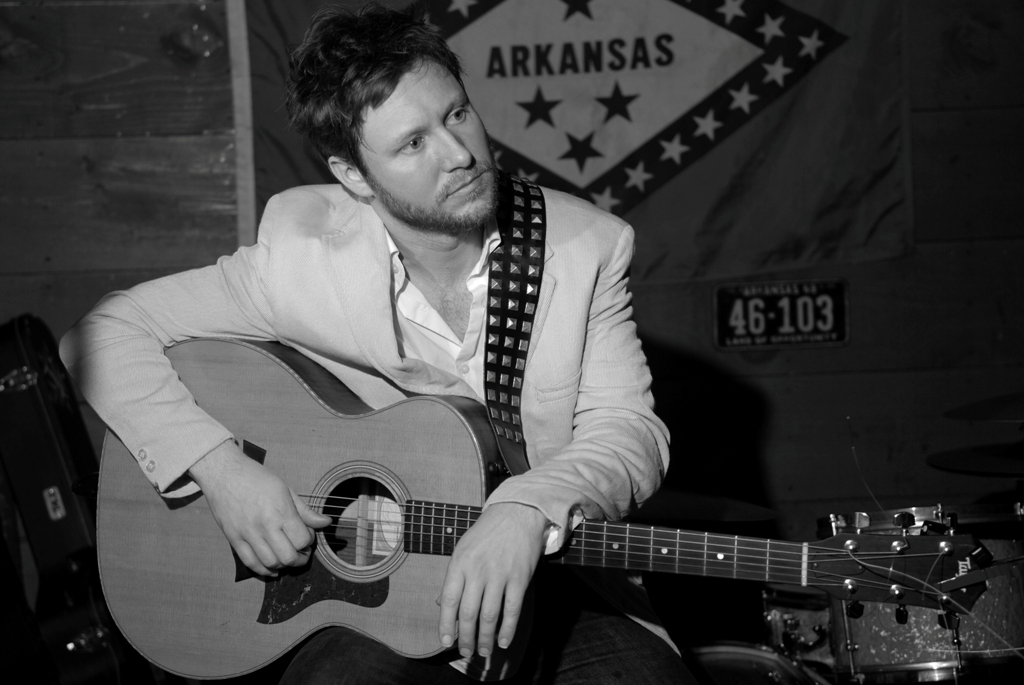
11732033_708312529272830_1273592294353685023_o We here at Jasper are stoked for the 2015 Jam Room Music Festival, a free all-day concert that is celebrating its fourth year on Main Street this year. But rather than us telling you how awesome some of the bookings are, we thought we'd ask some community figures about their personal experiences with some of the bands booked. We started by asking American Gun's Todd Mathis about his history with Nashville singer/songwriter Cory Branan, one of the most celebrated under-the-radar Americana acts around.

---

AltarTV-CoryBrananSurvivorBluesUnpluggedAndUnrehearsed882

The first time I heard the name Cory Branan was in the song “Tears Don’t Matter Much” by Lucero.  Ben Nichols sings:

“Cory Branan’s got an evil streak

And way with words, that will bring you to your knees

He can play the wildest shows

And he can sing so sweet”

Not long after, while browsing around Acme Comics, Randy Dunn suggested I buy The Hell You Say, Branan’s debut album from 2002.  I listened, thought it had some good songs, “Ms. Ferguson” and “Skateland South” being my favorites, but was overall unimpressed.  I thought Lucero was much better and the production on the album was scattered.  Sometime later in 2005 (the exact dates from those days blur) I saw where Cory’s manager, Brian, was looking to fill some tour dates and I decided to try and help out.  The Whig had just opened so I asked Phil Blair if I could book Cory to play there.  Phil agreed and I got in touch with Brian and we booked the date.  I lugged my band’s PA equipment down the stairs to the Whig, set it up and had it ready.  I sent out emails to Uncle Gram (at WUSC) and rounded up as many of my friends as I could and Cory played for the first time in Columbia.

After seeing that show I realized why Ben Nichols had thought enough of Cory to put him in a song.  Cory was great live, and it was just him and a guitar. Charismatic, spastic, tender, and thoughtful were a few of the descriptions that ran through my mind.  His debut album had not done him justice. (And actually, none since have done justice to the live show.)  This guy was madly talented and anyone that saw him had to crack a smile at some of his stories and tunes. There were maybe 20 people in the audience that night, but I think everyone had a good time.  Cory drank some whiskey and followed me back to my house where I left him sleeping the next morning.  I went to work and was surprised to get a call from Brian (the manager) that afternoon asking if I had Cory’s phone.  I found it on the back of the toilet and Fed Exed it to Cory’s next show.

About a year or so later (again, timeframes here blur) I booked Cory again in Columbia, this time being at New Brookland Tavern.  I got Rob Lindsey to open, and I think I played a few songs too, and we had a better crowd.  Things were going pretty good that night until soundman Benji had a heart attack and died in the club.  Cory’s set was cut short and we all moved to the Red Tub where most sat in disbelief.  It was a pretty sad scene, Benji being such a great, nice dude.  Again, Cory came back to the house, and again, I got a call later in the evening asking about Cory’s phone.  I found it under the guest bed.

After those two shows in Columbia, Branan didn’t need my help booking him anymore.  He moved on to a better booking agency and traveled back through Columbia a few more times where he always played amazing live shows.  I even caught him in Nashville once with a full band and a near-packed house, something he hasn’t quite been able to do here in Columbia.  I’ve suggested Cory to the powers that be for the Jam Room Music Festival since its inception and was thrilled to see him on the bill this year.  I’m sure more than a few folks will come away saying, “Dang, that Cory Branan guy put on a hell of a show.” -Todd Mathis

Here's a link to Todd's new project, Interruptions of the Mind, along with some Cory Branan tunes:

https://www.youtube.com/watch?v=Cy7A7mCsHH0

https://www.youtube.com/watch?v=FOOyu02i4mw

https://www.youtube.com/watch?v=55XzJvTMlG4

What’s the Buzz: USC Lab Theatre produces The Bee-Man of Crighton County

image1By Haley Sprankle Eight chairs line the center of the Lab Theatre at USC. The cast gathers and quickly fills the empty theatre with warmth and energy, as they joke with great wit and chemistry. Director and cast member Grace Ann Roberts engages with her team, interjecting a quick quip or two as they all settle in their seats.

This is the cast for the staged reading of an original play, The Bee-Man of Crighton County, by Ryan Stevens. We last heard from Stevens when discussing his original work Player King, which included Bee-Man cast members Jasmine James, Megh Ahire, and Carrie Chalfant. Other team members for the staged reading include Elizabeth Krawcyzk, Freddie Powers, and USC Theatre MFA student Nicole Dietze.

“Well of course we drew heavily on the USC theater community,” Roberts explains. “We’d all seen each other work, taken classes together, things like that. So there’s already an element of familiarity there, and it’s so much fun.”

The cast has a unique added element of familiarity, however.

“You mean I get to sit next to my daughter?”

Roberts’ father sits down, puts his arm around her, and smiles as bright as day while Roberts dons a look of loving embarrassment that I know all too well.

“The other member is, well… it’s my dad, Kevin Roberts. He plays the Bee Man himself. He’s done several plays before, but we’ve never worked on anything together. That has been such a new experience, for both of us, but it’s also really cool. It’s been fun to watch each other work,” Roberts lovingly adds.

The play follows a story about the people in the small town of Sheol. The people are hopelessly trying to gather historical documents from the local hermit, Ogden Flass (Bee Man), while Julie Guest witnesses it all in the midst of her own existential crisis.

“He [Stevens] and I have worked together a ton, and we really trust each other. He’s a great friend, and I think he’s a great writer too, and I’m happy to have a hand in doing this with him,” Roberts says.

A Columbia native and graduate of both the South Carolina Governor’s School for the Arts and Humanities and the University of South Carolina with a focus in theatre at both schools, Roberts is taking on the part of Julie as well as directing the reading.

“I’ve never directed a staged read before, and I’m also cast in it. That wasn’t the original plan but really, at the end of the day, that arrangement has taught me a lot—not only about what you can do as an actor, or how you can bring it to life, but also just how different it is to direct a staged read,” Roberts elaborates. “It’s like… I’m learning too, and I share those lessons with the other cast members. It really feels more like ‘guiding’ than ‘directing.’”

The element of learning doesn’t just end from a directorial or performance perspective, though. Through shared experiences with the South, early adulthood, and family life, Roberts has been able to connect and learn from her character.

“Funny enough, she and I are currently going through pretty similar given circumstances,” she admits. “I just graduated from USC, and am still living in Columbia. Honestly, that wasn’t my initial plan, and I’ll probably be here for a while. Julie is in the same boat: she moves away to start a business, which tanks, and she has to move back to her small town and live with her mom. She and I had similar feelings about the whole thing, too—those feelings being ones of disappointment, sadness, and some anger, too. But, in the same way that her perspective on that changes, I find mine to be changing too. So it’s pretty fun to have that very literal connection to her. She’s helped me to understand how to redefine ‘failure,’ and that feels really good.”

The Bee-Man of Crighton County reading is this Saturday in USC’s Lab Theatre at 7 pm. Admission is free, so come out to support original, local work produced by young emerging artists on the Columbia scene!

“To me, the Bee Man is about blooming where you’re planted. Instead of resisting where you are—geographically, professionally, existentially, what have you—really embracing it, and making the best out of something you once perceived as the worst. I do think, too, it’s unique to the idea of southern community,” Roberts says. “What it means to live in a place where everyone knows everyone, and everyone’s looking out for each other.”

Taking it to the Streets: Pedro LDV on Solo Work, Collaboration, and the Art of Outdoor Performance

11065933_10152987785704760_2026711162285937300_n (1) By: Michael Spawn

Around Columbia, Pedro Lopez de Victoria is best known as the front man and songwriting force of Casio Mio, the manic, electric pop group he formed in 2013. But the band’s intense, sweat-soaked delivery can sometimes overshadow the personal nature of LDV’s lyrics, something he hopes to rectify with plans for solo, more acoustic-based material. Jasper caught up with the songwriter to discuss his future projects, his hometown of Aiken, and how growing up there instilled in him a reverence for the oft-forgotten art of busking. *

Jasper: Tell me about the music you’re working on outside of Casio Mio.

Pedro LDV: Basically, it’s all part of the same kind of heart excavating, personal, honest music that I’ve been putting out with Casio Mio. But Casio Mio is kind of that, but with jackrabbit legs, so it makes everything louder. And sweatier. And the stuff outside of that, it’s from the same source; it’s just the song in its rawest form. Because when I write music, I’m always thinking in the back of my mind, like, ‘Oh, this could be a good symphonic break,’ or ‘this could be a good part for a sick bass line,’ but it’s all kind of embedded in this genetic code that, when I’m playing, it’s the base genes of it.

But it’s all a continuation.

Yeah. Casio Mio has always been my songwriting, just amped up a little bit. Kind of distorted.

Are you going to record any of this music? Are there plans for a record?

Yeah, I’m going to be doing a recording of some of my acoustic stuff with Daniel [Machado] from the Restoration. We’ve talked a little bit about working together. One thing we see eye-to-eye on is that there’s something in the performative aspect of our music that could be parsed out a little bit. The livewire thing that comes out of it, I’d want it to be a big part of any release of my solo stuff, because that’s kind of what it’s been. I’ve been in a number of bands with all these bells and whistles, but the undercurrent has always been simple—just standing there with a guitar, maybe stomping on a tambourine, playing a Nirvana cover. That’s the needle to the vein, you know? That’s the most direct method for me. So I’ll probably just put something out under the name Pedro LDV and it’s just going to be an audio capture of my recent stuff and from there I’ll implement more instrumentation and interesting stuff. The next Casio Mio record we’re writing, which we’re still working on, is definitely going to have a lot more than the bare bones, but I still want to get the bare bones stuff and accouterments figured out.

Which will see the light of day first—the new Casio Mio or the Pedro LDV record?

Probably Pedro LDV just because Lee [Garrett, Casio Mio drummer] is spending the summer in Knoxville, so that’s been delaying stuff a little bit. But it’s been coming out of my pores. I can’t stop writing, so that record will naturally be a thing that’s going to happen first, probably.

In what way have you and Daniel been collaborating? Are you writing together or showing each other things you’ve written independently?

We’ve just been kind of just been showing each other songs, but mostly talking about taking the first step of him recording me and then . . . We’re really just into each other’s songs. We haven’t done anything yet, but we’ve got an understanding of each other’s styles and I think that we’ll definitely do something in the future.

Tell me about being drunk in Aiken, busking on the street corners.

Aiken is a pretty dry spot for being a young, teenage creative person; it’s not really known for its offerings in that respect. Therefore, it’s kind of a 101-lesson plan in trying to carve out your own niche in the music scene. It was like going uphill on roller skates because there are no venues. The only venue was a Christian café called Solomon’s Porch; I played there one night and they had an issue with one of my lyrics. I had a song that said, “damn right,” and they just wouldn’t let me play it. So that was a restriction and basically I decided to just get a business license and start busking in the street downtown. And this was groundbreaking. Until then, there had been no street performance at all of that nature. And people enjoyed it because, well, because they were drunk, but also because it was this novel thing that they weren’t used to seeing. So I enjoyed doing that. What I like about busking is it’s own kind of thing. You know, it’s just me and there aren’t any amps and it’s not really congruent with anything and it’s this improvised, organic thing, as opposed to a gig where you have these songs or a record. You could always, if there’s a guy who likes ABBA, just play an ABBA song.

Did you come with a set list or just take requests?

I would just feel the crowd. It’s a more engaging, interactive thing if the people are in the right mood.

What would you guess is the largest audience you’ve ever busked for?

That’s a good question. But when does it not become busking anymore? When does it become a concert? Where’s the line? I think the key here would be, ‘What’s the biggest unplanned crowd?’ Probably my favorite crowd was when I was in New Zealand in this town called Palmerston North for a little bit; I bought this crappy little classical guitar and I was playing near this monument, and these kids started coming around and following me. Then the kids got more people to come and all of these people started gathering around. I think they thought it was a planned thing. That was the line, I guess, where it became this kind of event and people were giving me random things—cups of coffee, business cards, tickets, that sort of thing. It was a beautiful thing to just have spring out of the earth like that.

*[‘What is busking?’ you may be asking. You see that guy or gal over there on the street corner with the guitar/saxophone/ukelele/pan pipes, hoping to scrape together a few extra bucks? They’re busking. Now cough up a dollar.]

https://www.youtube.com/watch?v=qV7BNmnbs94


A Poem for Leslie from John Starino

Like so many who make a difference by their humility and presence, Leslie Pierce was just such a person.  Here is a poem dedicated to her which appears in my second book Onion Season Pt. 2.  Because of her I participated twice in Frisson at the Columbia Museum of Art.  In my preparation by talking with her, this poem ensued.  - John M. Starino i come to do homework

frisson prepare cma the light plays a different way inconsequential of the lens

this muse this day setting, tenor articulation

leslie pierce brown hair exhibit brown eyes alive today i peruse even remark how vibrant you are

do you ever wish any one to sit down be at eye level that you do not have to look up to

since in essence i look up to you your difference is so obvious not like mine

and in further essence a difference only in appearance

entreat to enjoin compassionate, intelligent demonstrative, adept

so in this essence of humankind you are the standard that has been raised

astride your chariot every day


Darling Dilettante: Starbucks Art

haleyvic By Haley Sprankle

Throughout the year and throughout my writing, I’ve been forced to consider art and my appreciation for it. Certain disciplines I never truly understood in my youth, whether it was my lack of experience with it or lack of information about what is or isn’t considered “art.” Younger Haley might see more modern art pieces, like the post-grad work displayed at Tapp’s and question their validity as “art,” whereas now I am in awe at the creativity and vulnerability of those same pieces.

This called to question: Is art an acquired taste? Can someone who is younger consider and enjoy art the way a more “seasoned” adult might? Is art like coffee? Are more basic wonderments with art sweet and sugary like frappucinos, while more complex considerations of it are like a more pragmatic cup of black coffee?

Last week, I was fortunate enough to spend the day with one of my favorite 15-year-olds, and adoptive little sister. As her “cool college” friend, I wanted to make sure I gave her the trendy tour of Columbia. (Disclaimer: She doesn’t really think I’m that cool.) In the midst of eating fantastic smoked salmon sandwiches at Crepes and Croissants and political discussions over Starbucks, we went to the Columbia Museum of Art.

croissants

I was thoroughly thrilled to finally walk through the Andy Warhol exhibit that’s been up (and will remain up through September 12).

“Is it always this quiet in here?”

I began to realize that I wasn’t entirely sure of the etiquette in art exhibits myself, and hoped that she would enjoy the museum as much as I normally do.

Growing up, I always learned to read the text accompanying each piece to better my understanding of what I’m seeing, so I did just that. Thinking I would be the nerd holding us up, I was surprised to see her follow suit and read them as well. We walked on, recognizing familiar faces and discussing the idea of fame.

warhol

“Oh my god, glitter!”

I chuckled to myself as I listened to her commentary throughout the rest of the pieces. Growing up with the wonderful parents she did, she was able to consider and discuss more controversial and educational ideas prompted by each portion of the exhibit, interspersed with her early teenaged nuances and silliness.

I was thrilled to see she enjoyed the more contemporary pieces and hoped the excitement carried throughout the classic section in the upstairs of the museum.

I’ve always found the classics to be intriguing, and often even comical at times. The way the influences in art evolved over time from being more religiously-centered to featuring portraits of the more wealthy to more abstract and aesthetically driven pieces is exemplified here so well.

“This dude looks like peanut brittle.”

As we walked through, we shared many laughs at some of the more silly-seeming portraits and interesting ceramics (Why do some of these people look so drunk?), appreciate classics like Monet, and stand in awe at the chandelier of Salviati.

victoria

At the end of the day, we giggled about the plethora of cute businessmen on Main Street, we ate great local food, and I got to share a little bit of my interests and passions with her. She went home to her dad, probably with more liberal ideas that I’m willing to admit trying to instill in her mind, and a smile on her face.

That day, I learned that art transcends age. Sure, the level of appreciation and understanding may be different. A 15-year-old might be excited about Superman with glitter (and as was I, who are we kidding?), whereas a 30-year-old might be more intrigued at the political statement that may or may not have been made by depicting Mao.

Regardless, art is still talked about. Art is still appreciated. Art is still relevant.

One appreciation is not better than the other, but instead, understanding and information grows.

So, young art-lovers, you pursue and appreciate your frappucino art. I’m just making my way to a macchiato myself, and might not ever get to taking it without cream or sugar.

(And yes, I am being a coffee elitist.)

Haley Sprankle

Two Minutes Too Many: Support STSM at Conundrum Music Hall Tonight By Haley Sprankle

stsm2  

One in six.

One in six women are estimated victims of rape.

One in 33 men are estimated victims of rape.

Every two minutes someone is victimized by sexual assault.

These crimes are often perpetrated by non-strangers (73%), friends (38%), intimate partners (28%), and even family members (7%), yet sexual assault is one of the most underreported crimes in America.

These statistics are often thrown around in the media through television, movies, and articles, desensitizing the world to the immediate and residual atrocities the actual people that form these statistics face. Through this, people forget the reality of it and they forget how to end rape culture and help their friends in need.

Luckily, Sexual Trauma Services for the Midlands (STSM) is here to help educated and aid victims, their loved ones, and those seeking to prevent such horrid crimes in their communities.

“STSM has done a great job of making their presence felt in the community, raising awareness about sexual assault, and letting people know that they are there to help,” Jeremy Joseph of Raiser Productions states. “For example, events such as their annual Walk A Mile In Her Shoes have been a huge success.  But, what's most important is the services they provide to those in need in our area.”

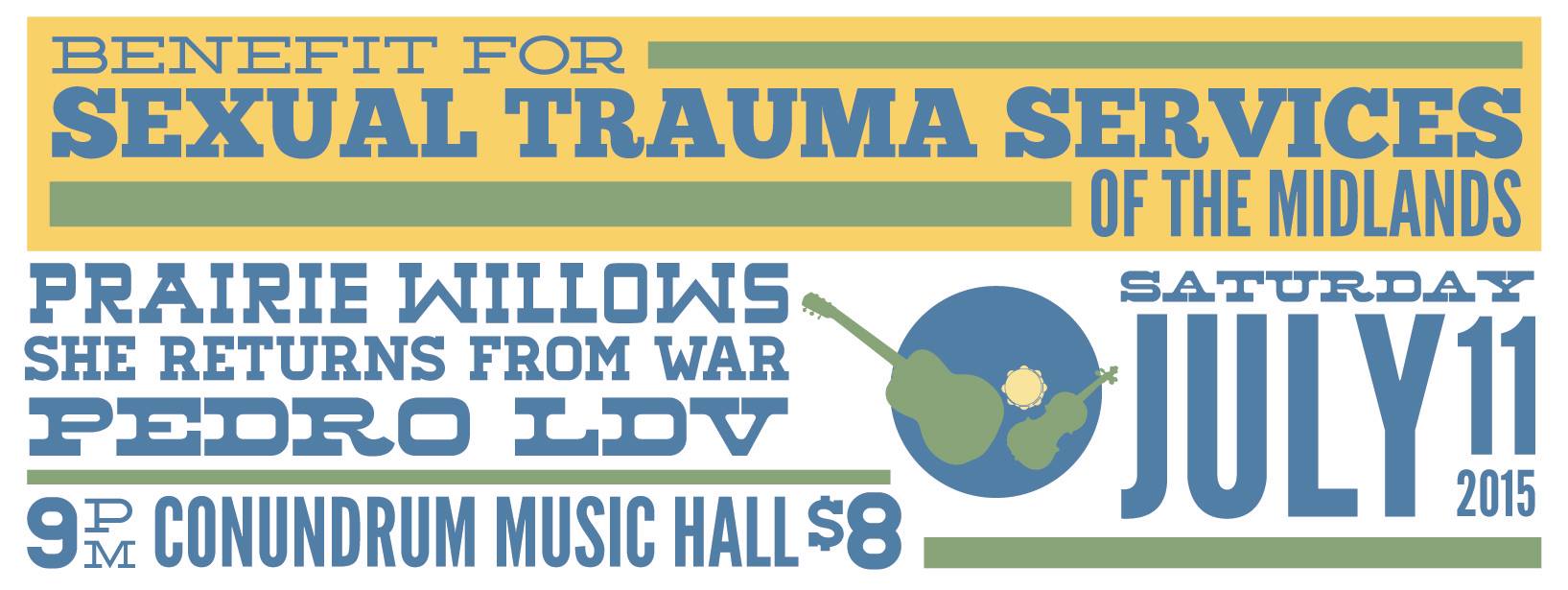
This evening, Joseph organized a benefit concert at Conundrum for STSM featuring Prairie Willows, She Returns from War, and Pedro LDV. Joseph sees each of these distinct acts as music that “people will enjoy” that will “serve as a force for good.”

The arts have historically been shown as a power to raise awareness for issues, promote change in surrounding communities as well as throughout the nation, and induce a sense of healing. Joseph seeks to do just this through the concert.

“Artists can use the power of their platform to speak out against sexual assault, generate awareness and support for STSM, and bring together a supportive group of people to positively change our culture and stand with survivors,” Joseph adds.

Tonight’s benefit is one you won’t want to miss, but if you can’t make it you can still donate to the cause at www.stsm.org/donate. Different donation amounts allow you to either, assist on survivor at a hospital, train community members to prevent child sexual abuse, educate students in a six-week violence prevention program, or provide six months of counseling, legal advocacy, and crisis intervention to one survivor.

“I hope that as many people as possible will be there Saturday night,” Joseph ends with. “Just by coming out for an evening of some of the best music around you can help make the world a better place through supporting the extremely important work of STSM.”

Doors open at 8 tonight, the show starts at 9, and tickets are only $8, so don’t miss your chance to help make every two minutes in America safer for everyone and support local musicians!

Taking an American Gun to the Confederate Flag: Todd Mathis Releases Protest Tune "Fuel the Flag"

fuethatflag By: Michael Spawn

In a world of uncertainties, it’s comforting to know we can always count on Todd Mathis for a good protest song.

In 2013, the American Gun frontman, along with members of Whiskey Tango Revue, released “NRA,” three minutes and thirty seconds of honky-tonk satire in which Mathis assumes the perspective of a loud-and-proud firearms enthusiast, hell-bent on protecting an Amendment that is actually in little to no peril. The song is funny, but where “NRA” uses irony to make its point, Mathis’s latest bit of musical conscience arrives in truly earnest form—no jokes, no winks or nudges; simply his feelings on an issue that has the eyes of the nation fixed squarely (again) on South Carolina. But Mathis’s sincere delivery is completely appropriate, given how simultaneously delicate and explosive that issue really is.

Along with ad-hoc backup band The Discard Pile (Paul Bodamer and Philippe Herndon) Mathis just recorded and released “Fuel That Flag,” a protest song in the staunchly American tradition. Musically, the song couldn’t be less subversive; its standard chord progression rides merrily atop an unflashy, mid-tempo backbeat, with the overall feel being that of mid-‘90s alternative rock, a sludgier Superdrag. The tune is easy to latch onto and the chorus pops with confidence, but as with all protest music, the lyrical message is really the whole trip. “Fuel That Flag” began life as a poem partially inspired by Abram Joseph Ryan’s famous Conquered Banner, and once he was satisfied, Mathis put his words to music, recruited a couple of friends, and turned his verse into a recorded document. The lyrics are plaintive without being overly maudlin; they express anger but leave ample room for hope. “Show the state / And show the world / Fuck this talk / Of respectful furl / Take it down / And start tomorrow / To put away / The pain and sorrow,” Mathis sings in the song’s second verse, which gives way to the chorus of, “You say heritage / I say hate / Fuel it now / It’s not too late.” Given Mathis’ well-known humorous touch, (this is, after all, a guy who named his band American Gun, only to turn around write a piece of Second Amendment satire) his sincere delivery is all the more powerfully felt. The vocals dominate the mix—he wants you to hear what he’s saying and how strongly he feels about it all.

Protest music in the United States first gained real traction in the 19th century and from there, it’s bloodline moved through Woody Guthrie, to Bob Dylan and Janis Ian, on to the hardcore punk scene of Washington D.C., and finally finding its most recent wide-reaching embodiment in the vitriol of Rage Against the Machine. I’m obviously only skimming the surface. The total history of American protest music isn’t nearly as important as the history that music aims to make. Not all succeed, but our society inevitably progresses. With this in mind, it might be fair to say that Todd Mathis has written the most important song of his career. While one song might not change the world, passionate people do. And songs don’t write themselves.

Here's a link to the song's Bandcamp, where you can listen for free or as a name-your-price download.


Darling Dilettante—Discussing the Art of Fear By Haley Sprankle

dreamgirls2 “Do you ever get nervous up there?”

The age-old question for performers—the question of fear.

In just about every production I’ve been fortunate to be a part of, whether I’m the lead or the third white girl from the left, I’m asked this question by a person outside of the performance realm. They ensure me that they don’t understand how actors memorize each element of the show from lines to choreography to even just remembering to smile every now and then. I normally reply with “I used to when I first started, but now it just seems like second nature.”

Most recently, that question of fear prompted me to question myself and the things others around me do, though, and how we do them.

Every day, a banker goes to work. Every day a stay-at-home parent wakes up and takes care of their family. Every day a waiter or a writer or a bus driver or even the President of the United States gets up and fulfills their necessary requirements for the day. These could be things they’ve always done. These could be things they’ve just started doing. These could be things they love, or they could be things they don’t like.

dreamgirls

But they get up and they do them, and like most people feel about performing, I couldn’t even imagine doing these things.

With most things people do for the first time, there was probably an initial fear or nervousness.

What if they don’t like my work? What if I mess up? What if?

We can sit back and ask ourselves “What if?” all day long, but we will never know what WILL happen if we don’t try. Sometimes, it will be a little messy. Sometimes, it will be hard. Sometimes, you will do all right. Sometimes, you will do it all wrong.

One thing, however, is common among all these instances—you learn something new about yourself.

I recently came across a Japanese term: Wabi-Sabi. It translates to “A way of living that focuses on finding beauty within the imperfections of life and accepting, peacefully, the natural cycle of growth and decay.”

In every new or old thing you do, there are endless possibilities, but in the end, the best opportunity you have is to take each outcome and turn it into something beautiful.

So why let fear hold you back from trying something new?

dreamgirls3

Last Friday, Dreamgirls opened at Trustus Theatre and will run through August 1st. The cast includes veterans to the stage and newcomers alike, all representing a long process of hard work, fun, and love that we have put into this show. For some of us, each night may just be another performance, but for others, one or more performances may be among the most nerve-wracking things they’ve ever done. At the end of each night, though, all we can do is do what we do best—put on a show. Things may not go exactly as planned, but that’s live theatre.

In live theatre, we support each other. In live theatre, we help each other. In live theatre, we build each other up.

In live theatre, we find the beauty within our fear and imperfections, and we turn it into art.

I won’t be afraid or nervous. I will be excited and proud.

Wabi-Sabi.

(Dreamgirls runs June 26-August 1. Go to trustus.org for tickets!)

Photos by Richard Kiraly

Film Review: Jurassic World is All Bite, Without a Tooth in Sight

jworld-banner-44 By Michael Spawn

SPOILER ALERT ALERT: There is no need to begin this film review with a warning about potential spoilers. Spoiler alerts exist to protect the curious reader against unsolicited advanced knowledge of plot twists, game-changing character development, surprise cameos, or an ending that jolts the nervous system of any moviegoer who thought he knew what he was getting himself into. None of these exist in Jurassic World, so settle down.

(Okay, here’s just one. Jeff Goldblum is not in this movie. The heart breaks.)

In the two weeks that have come and gone since Jurassic World was released in North America, much has been made of the movie’s misogyny, hokey-pokey dialogue, and inattention to scientific detail. All of these criticisms are legitimate to varying degrees (especially the dialogue thing. Holy lord. You know you’re in trouble when the CGI dinosaurs are more convincing communicators than the actors that actually received a paycheck), but to use these complaints as evidence that Jurassic World isn’t a great movie is to miss the point. It isn’t a great movie, but not because the velociraptors lacked feathers or because Bryce Dallas Howard faced near-constant ridicule from male and female characters alike for prioritizing her career over motherhood and romance. As many critics have pointed out, the movie has the high-minded/misguided gall to be “about itself” in the form of Indominus Rex, a brand-new species of dinosaur created solely because parkgoers (moviegoers?) have become so jaded that the present-day existence of animals who died 65 million years ago elicits little more than a passing interest. It says a lot when the characters constantly check their phones in presence of mankind’s mastery over the laws of natural selection. “Our focus groups want more teeth,” a park investor complains near the movie’s beginning. Well, we are the focus group and the moneymen gave us the teeth we’ve allegedly been clamoring for.

No serious person would actually use a term like "postmodern" to describe a two-hour, thirteen-buck orgy of chase scenes and Chris Pratt’s alpha male posturing, but Jurassic World really is, to a small degree, a movie about the public’s relationship to the franchise. And that’s fine. It doesn’t come across nearly as clever as the screenwriters probably hoped, but the effort is admirable. Still, despite any feelings you may have about such an endeavor, successful or not, the mere attempt is a minor problem that’s inextricably tied to Jurassic World’s true albatross: The mighty Jurassic Park.

It won’t do a bit of good for me to heave a self-righteous sigh, turn my thoughts to yesteryear, and wax nostalgic about how groundbreaking and exciting and utterly badass the original film was and continues to be. For people of a certain age, this requires no explanation. It’s a generational touchstone—our Star Wars. We came as close to real dinosaurs as we ever will, and we did it together. A direct comparison of Park and World would be fruitless, but the latter movie never lets you forget where it came from. This is good, in theory. We, as Audience, can’t help but hear Dr. Ian Malcolm’s creepy-but-cool snicker every time one of Jurassic World’s human placeholders says something so patently ridiculous you wonder what strain of medicinal grass was floating around the writers’ room, so it’s reassuring in a way that the movie doesn’t prop itself up as an independent entity with no connection to its Spielbergian origins. But this is the movie’s biggest problem; it wants it both ways. Given the ham-fisted, almost shot-for-shot recreations of some of Park’s most memorable scenes and the fact that characters continually reference the “old park,” (old movie?) coupled with its desperate need to remind Audience that it’s ‘smarter’ than its predecessor—even if its characters aren’t, by light years—Jurassic World commits the deadly sin of unfounded pride. And worse, it invites us to ride along, spellbound, like a pack of raptors charging alongside a motorcycle just because our trainer told us to. And we will, because it’s fun. Toothless, but fun.


We Welcome You to Munchkinland—Elisabeth Gray Engle on Directing This Summer’s Children’s Musical The Wizard of Oz

wizard  

Lions, and tigers, and bears! Oh My!

Sixty-five children of all different ages from the Columbia area came together this summer to bring you the youth edition of a beloved classic, The Wizard of Oz through Workshop Theatre.

“We are very excited to be doing The Wizard of Oz this summer! There are so many magical elements to this show already, so that is really fun to explore. But the real magical feeling comes from the cast members. We have a very large cast of kids of varying ages and schools who come together to create this show. They form bonds and friendships, and the excitement and energy that they bring to rehearsal is the real magic of the show,” director Elisabeth Gray Engle says.

The range of experience and ages might often lead to complications in the directing process, but Engle uses each child’s unique talents and personalities to create their own interpretation of such a well-known show.

“…Many of our roles are double cast, so there are two actors who alternate the role. This is really fun because you get to watch these two young actors create two very different characters from the same material,” Engle explains. “So much of the humor of our production has come from the actors, and I think that is what makes our production unique. We have a very talented group of kids who each bring something different to their characters.”

While the 4 to 18-year-olds bring a lot to the theatrical table, the production team has also put their own spin on things. With people like Alexis Doktor doing costumes and Baxter Engle doing set, the wonderful land of Oz is sure to excited audiences aesthetically.

“I cannot say enough good things about our Oz Team. Katie Hilliger (Choreographer), Jordan Harper (Musical Director), Jeni McCaughan (Producer), Braxton Crewell (Stage Manager), just to name a few, make this experience so positive and meaningful for our kids. We have high expectations for our cast, but we have a lot of fun along the way,” Engle affirms.

Engle, herself, is no stranger to the stage or directing. She is a company member at Trustus Theatre where she has taught, performed, and will be seen next in the world premiere of Big City. On top of all that, this is Engle’s 5th summer production through Workshop, her 11th year directing youth theatre, and she continues to teach theatre at Heathwood Hall Episcopal School.

“I love working with kids in the summer because it is such a joyous time of year in their lives. The summer musical is different than a school musical or a show during the year because the kids (and adults!) have that special energy that can only exist during the summer,” Engle elaborates. “…They come together during the summer to create this show, so that [in] itself sets the experience apart from school year productions. It’s really exciting to see so many kids from so many different schools who love musical theatre come together. They get along so well, and they love being with ‘their people.’”

The show runs June 25 through June 28, with both evening and matinee performances at the Heathwood Hall Episcopal School auditorium. Go to workshop.palmettoticketing.com for times and tickets!

“Theatre always has a unique way of bringing people together, and we have certainly seen that this summer with our cast,” Engle endearingly states. “Our cast is made up of kids from varying backgrounds, schools, locations, and experiences, and we have loved seeing them come together to create art.”

By Haley Sprankle

REVIEW: Chapin Theatre Company's Into the Woods by Melissa Ellington

intoTheWoods Chapin Theatre Company presents an outstanding production of Into the Woods with music and lyrics by Stephen Sondheim and book by James Lapine at the Harbison Theatre at Midlands Technical College. The musical debuted in 1986 at the Old Globe Theatre in San Diego, followed by a Tony Award-winning Broadway production in 1987. Numerous other versions of Into the Woods have emerged over the years, including Broadway and London revivals as well as the 2014 film adaptation. (This reviewer first fell in love with the musical through the PBS American Playhouse filming of the original stage production. Into the Woods became the first of many musicals I would direct with high school students, and I have fond memories of problem-solving its trickier production demands with energized and optimistic teenagers.) The Chapin Theatre Company succeeds in producing a musical with considerable history through an innovative and fresh approach.

Into the Woods weaves together familiar fairy tales in clever and surprising ways. Key characters are drawn into the woods in pursuit of their dreams and desires: the Baker and his wife seek items needed to lift the Witch’s magic spell and cure their childlessness; Cinderella travels to her mother’s grave for advice on how to attend the prince’s ball; Jack (of eventual beanstalk fame) must sell his beloved cow Milky White in a desperate effort to alleviate his family’s poverty; and Little Red Riding Hood sets out for her grandmother’s house, only to be waylaid by the Wolf. While Act One traces the journey towards wish fulfillment, Act Two takes a darker turn as the characters face what happens after “happily ever after.” As Cinderella sings to a heartbroken Little Red Riding Hood: “Sometimes people leave you, halfway through the wood. Others may deceive you. You decide what’s good.”  Recognition of human imperfection and finding hope amid bleak circumstances provide thematic cornerstones that are as timely now as ever.

Into the Woods has been challenging and moving audiences for decades, and astute director Jamie Carr-Harrington has assembled a top-notch cast for this excellent production.  In the central role of the Baker, Clayton King provides vocal power and emotional connection through pivotal numbers such as “No More,” a poignant sequence with the Mysterious Man (aptly played by Andy Nyland, who is also the appealing Narrator.) Becca Kelly (Baker’s Wife) and Karly Minacapelli (Cinderella) create engaging characters while sharing gorgeous vocal talents.

Catherine L. Bailey triumphs in the complex role of the Witch, communicating both strength and frailty in songs such as “Last Midnight” which is performed as a beguiling lullaby that transforms into a ferocious display of power. Jackie Rowe plays Little Red with depth and compassion, making a role that could easily become a caricature into a highly moving depiction of growing up. After admiring his work on various Columbia stages for years, this reviewer was thrilled to open the program and see Paul Lindley II cast in the role of Jack. Lindley’s vocal energy and magnetic stage presence contribute to a gratifying performance. Nancy Ann Smith delivers a delightful portrayal of Jack’s beleaguered mother.

As the “charming, not sincere” Princes, Jeremy Reasoner and Kyle Neal have impeccable timing and admirable voices, especially in the crowd-pleasing number “Agony.” Ann Baggett (Stepmother), Rachel Glowacki (Lucinda), and Elizabeth Stepp (Florinda) depict Cinderella’s step-family with comedic glee, while Courtney Reasoner shares a beautiful soprano in the role of Rapunzel. Parker Byun succeeds as an appropriately sleazy Wolf and doubles in the role of Cinderella’s incompetent father. Ruth Glowacki’s fierce Granny and Giant and Joshua Wall’s sarcastic Steward contribute to the strong performance.

With superb musical direction by Christopher A. McCroskey, the cast demonstrates extraordinary vocal ability throughout the production. A first-rate group of musicians fulfill the intricate challenges of Sondheim’s score, including David Branham (Bass), Brian Lamkin (Trumpet), and Samantha Marshall (Flute). Patty Boggs’ precise work with percussion enhances the production significantly.

A substantial production staff has collaborated to bring Into the Woods to life, including Carr-Harrington, Lou Clyde (Producer), Carrie Chalfont (Stage Manager), Matt Pound (Technical Director; Set and Lighting Design), Shelby Sessler (Costumer), Kara Pound (Art Design), Diane Moore (Properties) and J.S. Lee (Sound Design and Technician). The technical demands of Into the Woods are considerable, and the production team showcases creativity and skill in staging this performance.

With Carr-Harrington’s expert guidance, the Chapin Theatre Company scores a major win with Into the Woods. For viewers who think they have already seen this material because they went to the movie version: you really don’t want to miss the opportunity to enjoy this lovely production of a musical treasure by a successful local theatre company in the wonderful Harbison Theatre facility. As the characters sing in the opening prologue, “Into the woods, it’s time to go!”

Into the Woods will be presented by the Chapin Theatre Company at the Harbison Theatre at Midlands Technical College on June 24, 25, 26, and 27 at 8 pm and on June 28 at 3 pm. The theatre is located at 7300 College Street in Irmo, SC.  For more information, visit www.chapintheatre.org.

There’s a Road We Must Travel: Mariangeles Borghini on the Road to the Removal of the Confederate Flag

Mariangeles Borghini By Haley Sprankle

“South Carolina is a beautiful state, and we are a diverse community,” local social worker and social justice activist Mariangeles Borghini says. “And we don’t all fit under that symbol.”

On June 20, 2015, thousands of people gathered on the State House lawn. A symphony of car horns sounded in support and agreement upon entering the scene, and chants of “Take it down!” flooded the streets. The people of Columbia united for one cause—the removal of the Confederate flag from the Capitol grounds. Borghini was one of the driving forces behind this movement. Along with Emile DeFelice, head of Soda City Market, and Tom Hall, attorney and filmmaker, the trio created an event that changed the game of rallies in Columbia, in South Carolina, and in the nation.

“After the attack in Charleston, I was looking online to find discussions about the connection between what happened and the Confederate flag we have flying at the State House…And I couldn’t find any,” Borghini states.

As a social justice and human rights activist, she did what she does best and joined a team rallying people together by creating a Facebook page, “Take Down the Flag SC,” which now has over 8,000 likes. Through the page, Borghini was able to promote the online petition against the flag, while also creating an event under the same title. The immediate response was amazing—in less than 24 hours, the event had over 1,500 people pledging to attend.

“I had no idea how this was going to take off,” Borghini explains. “At Saturday’s rally, we had thousands of people around the State House asking in a peaceful, respectful, and hopeful way. That’s what I call democracy, social participation, and community advocacy.”

The grace of the crowd and profound statements of the speakers were a testament to the honest intentions of the movement. There was no violence, and there were no visible counter-protesters, but there was a whole lot of love. “We worked as a team to make this happen,” Borghini adds. “Not only the three of us, but the thousands of people supporting us through the [Facebook] page and our family and friends that pushed us forward and had our backs.”

While many have openly voiced their disagreement with the movement and claim the flag is merely a symbol of “heritage,” Borghini takes a stronger stance on the hot topic.

“Since I came to this country more than five years ago, it was always a shock for me to go downtown and see the Confederate flag flying in front of our state Capitol. Every time a friend or relative came to visit, it was really difficult and shameful to me to explain that to them. I’ve always felt frustrated and impotent about that,” Borghini divulges. “…The flag has been used as a symbol of hate, racial discrimination, and injustice, and it is offensive for many of us that are living and raising our families in South Carolina.”

In a press conference on June 22, 2015, Governor Haley announced her support for the flag’s removal, and gave a July 4 deadline for the decision to be made.

“I am thankful with our Governor for taking a step forward on this. To remove the flag is the first reasonable step in the process of healing a history of segregation, discrimination, injustice, and loss for many human beings. We are identifying with different values—we are not what the flag symbolizes to the majority of people. I really hope our legislators move in the same direction,” Borghini says.

Activism can’t just stop at a rally, though.

“My advice is to love each other and to speak up when we see something that is not right every day,” Borghini advocates. “Racial violence and other types of injustice happen on a daily basis, so let’s not let that happen. If we don’t do it, we cannot expect others to do it for us!”

For information about future events and initiatives regarding the removal of the Confederate flag, be sure to like the Take Down the Flag SC Facebook page.

“It is great we are not being silent anymore,” Borghini affirms. “We are speaking up and taking action towards having a better place to live and raise our families.”

Nickelodeon Theatre Screens Tom Hall's Compromised 

Proceeds from screening of Compromised, a documentary about the Confederate flag on the South Carolina State House Grounds, to benefit Emanuel AME Church.

 compromised

The Nickelodeon Theatre, South Carolina's only non-profit art house film theater, will screen Compromised, a documentary film about the saga of the Confederate flag, memorials, grave markers, statues and symbols on the S.C. State House grounds. Proceeds from Compromised screenings on June 27, at 12 p.m. and 12:30 p.m. will benefit Emanuel AME Church in Charleston, S.C.


Compromised, by Columbia filmmaker Tom Hall, features other prominent South Carolinians, and analyzes the reasons the South Carolina General Assembly voted in 2000 to remove the Confederate flag from the State House dome to its current position facing Main Street in downtown Columbia. The screening will also have a post-film discussion with the director.


“As South Carolina is at a crossroads regarding the fate of the Confederate flag on the South Carolina State House grounds following the shootings at Emanuel AME Church in Charleston, we’re again screening Compromised,” said Andy Smith, executive director of the Nickelodeon. “The Nick has the ability to be part of relevant cultural conversations, and we hope this film will add context to the discussion we’re having in South Carolina and throughout the United States about the Confederate flag, its history and its future.”

Tickets for the two screenings are $10 each and no member discounts are available. For more information on the Nickelodeon Theatre, please visit www.nickelodeon.org or follow the Nick on Twitter and Facebook.  Check out the Facebook event to see the other cool kids going to this event.


Darling Dilettante: You’ve Got Time… For More Than Just OITNB by Haley Sprankle

a1e80dbf-a342-4c7e-818a-bbc7a19b9917 This is it.

The end.

The final episode of the third season of Orange is the New Black.

What am I going to compulsively obsess over in any spare time I have? How am I going to wait a whole year to find out what happens to Piper Chapman, arguably the single most annoying “protagonist” on television? WHAT am I going to do?

I’ve watched every episode up to the last from Thursday until now, in between rehearsals and the necessities of everyday life. I even scheduled my NAPS around episodes.

As I contemplated all this before pressing play, I paused to realize that I do not act like this about anything else. Here I am, having just made an entire summer reading list. Here I am, wanting to go see the Andy Warhol exhibit at the Columbia Museum of Art. Here I am, wanting to make more time for traveling, meeting new people, and seeing old friends. Yet, here I am, watching Netflix.

The latest fad is “binge-watching.” Urban Dictionary defines it as “marathon viewing of a TV show from its DVD box set.” While the definition may be a bit outdated with its exclusion of Netflix and other streaming services, it still has one concept correct—marathoning. With TV shows so accessible, it is too easy to get drawn in, season after season.

With Netflix’s new series, they publish entire seasons all at one time, allowing viewers to choose whether or not they allocate their episodes over time or simply drown themselves in them all at once. If you’re anything like I am, you’ll choose the latter, keeping up with Litchfield Correctional Facility through 13 episodes in less than a week.

As a nation, it seems we’ve all started to fall down this technological rabbit hole.

It becomes too easy to recluse and watch endless episodes of Grey’s Anatomy and Mad Men. Our cell phones have become more hand accessories than tools to communicate. It’s easier to e-mail a coworker than to walk over to their cubicle and talk face-to-face.

Don’t get me wrong, I’m not one of those people who doesn’t believe in cell phones, or social media, or television. It’s just not possible to eliminate the media from our lives. With just about any job, you have to be able to readily communicate. In this fast-paced world, social media is often the only look into our loved one’s lives. Television not only entertains, but also informs us (biased, or not) of what is happening in the world around us.

Media, whether we like it or not, has not only saturated our lives but become relevant and necessary.

So how do we, in this technological age, utilize the media without gorging ourselves on it? How do we make it more of a tool and less of a crutch?

While I may not have the answer now, I’m going to make the conscious effort to cut down on my screen time. Maybe it will be as little as putting my phone away when I’m at dinner with friends, or maybe I’ll pick up a book when I want to turn on a show. However inconsequential or pretentious it may seem, I want to make an effort to connect more with the people and the world around me than I connect to the Wi-Fi. (How could I resist such a good joke?)

In the meantime, though, I’m going to go finish this last episode...

Haley Sprankle

Double Review: Br'er Rabbit - Columbia Children's Theatre and NiA Theatre

BrerRabbit Thumb Theatre review by Melissa Swick Ellington

A NiA production in collaboration with Columbia Children’s Theatre is a sure sign of clever family entertainment, and the current offering of Br’er Rabbit will delight audiences of all ages. Written by Darion McCloud, H. Loretta Brown, and Heather McCue, this version of the trickster’s tale celebrates music and rhythm, vibrant characters, audience interplay, and cunning creativity. Recognizing the complex legacy of Br’er Rabbit in his director’s notes, McCloud envisions an approach to the folk character that “really does belong to all of us.” With this production, NiA and CCT present an interpretation of the tale which delivers “that upshot of joy.” (Further observations on the history surrounding the “Br’er” tradition are explored in the accompanying interview by young Kat Bjorn.)

A master storyteller himself, the magnetic performer McCloud is perfectly cast in the storytelling role of Anansi the spider. McCloud’s interaction with the young audience members seems natural and genuine. Even his dynamic facial expressions foster an atmosphere of encouraging warmth. As the crafty and appealing Br’er Rabbit, Bonita Peeples plays the resourceful trickster with quick-witted glee. Peeples draws in the audience with admirable skill, made evident by children’s eagerness to cover for Br’er Rabbit when the other animals realize they have been fooled by the rascal. At the performance attended by this reviewer, kids insisted “She’s nowhere!” and “Run for your life!” in their efforts to help the beloved main character. (An added treat: audiences even get to appreciate her glorious singing voice!)

The entire ensemble delivers first rate performances which include McCue as the brainy and sassy Br’er Tiger, Charlie Goodrich as Br’er Bear, Michael Clark as Br’er Lion, and Jimmy Wall as Mr. Man and Tar Baby.  Supported by percussionist Don Laurin Johnson, this talented group weaves a captivating web of magical sounds and sights. Moments of aural symphony encourage audience members to clap along, and in the case of my preschooler, offer an enthusiastic “Yeah!” At certain performances, alternate actors appear in the roles of Br’er Lion (Clark Wallace), Br’er Bear (Brown), and Mr. Man/Tar Baby (Julian Deleon and Goodrich).

An innovative approach to physical theatricality pervades the production. From the beguiling staging of the opening spider sequence to the finely tuned collaboration of Peeples and McCue in the big chase through the rousing group dance in the final scene, these performers embody characters and story with boldness and flair. Adults will particularly enjoy the pop culture references (check out that Scarecrow!) and wordplay such as the “arugula” jokes, while the kids relish the opportunity to offer ideas on sticky substances for the Tar Baby (peanut butter and jelly, gum, melted candy, and marshmallows were popular choices).

McCloud provides creative vision as director, costumer, and sound designer, and Wall conjures effective visuals as makeup designer. Costumes evoke animal identity while also inviting children to imagine. McCue (company manager), Crystal Aldamuy (stage manager), and Jim Litzinger (sound and light technician) contribute to a cohesive production team.

As one youngster declared early in the performance, “I knew it was going to be funny!” Columbia families have come to anticipate high quality theatre at CCT, and the collaboration with NiA to produce Br’er Rabbit is an enjoyable success. Treat yourself to the rollicking good time of Br’er Rabbit, and you will likely agree with my preschool son’s post-show exultation: “That was FUN!”

(l-r): Heather McCue (Br’er Tiger), Jimmy Wall (Tar Baby), Darion McCloud (director, Anansi), Thespian Formerly Known as Scarecrow, Charlie Goodrich (Br’er Bear), Michael Clark (Br’er Lion)


Rising Second Grader Interviews Cast of Columbia Children’s Theatre Br’er Rabbit by Kat Bjorn (with some help from her Papa, Arik)


Kat’s Papa:  Hey folks, technically this part isn’t a review of Columbia Children’s Theatre’s current production, Br’er Rabbit, but seriously, you have to see this show—even adults without kids.  You see, there’s a Scarecrow Formerly Known as Prince; Br’er Lions & Tigers & Bears, oh my!; plus more Zip-a-Dee-Doo-Da than you can shake a briar patch at.  Also—

Kat Bjorn:  Papa, shhh!!  I’m starting the interview now.

Papa:  Okay, time to go be scribe.  Seriously, see this show!


Kat Bjorn:  What does “Br’er” mean?

Darion McCloud (Anansi the Storyteller):  That’s a good question.  It means “brother,” but it can be used for boys and girls—all humanity, really.

Heather McCue (Br’er Tiger):  Lady tigers thank you!


Kat Bjorn:  (pointing at Br’er Lion) Are you a lady?

Michael Clark (Br’er Lion):  Are you referring to my fabulous wig—I mean mane?


Kat Bjorn:  Take off your mane.

Br’er Lion:  Don’t mind if I do; it’s getting hot in here.


Jerry Stevenson, CCT Artistic Director:  He’s not even a natural blonde.

Kat Bjorn:  If “Br’er” means “brother,” and they’re brothers, how come Br’er Lion, Br’er Tiger and Br’er Bear are always trying to kill Br’er Rabbit?

Br’er Tiger:  Do you have any brothers and sisters?  I have a sister, and we fight like cats and dogs.


Anansi the Storyteller:  Also, let’s face it, they’re predators.  And rabbits taste good.

Kat Bjorn:  The characters, right?  People don’t really eat people.


Anansi the Storyteller:  Correct.  NiA Company does not endorse cannibalism.

Jim Litzinger, CCT Managing Director:  Nor does Columbia Children’s Theatre!


Kat Bjorn:  Next question.  My Papa says the Br’er Rabbit tales were sometimes codes for African-Americans a long time ago.  What does this mean, and what’s a code?


Anansi the Storyteller:  A code is when people say one thing but mean something else.  And your Papa is right.  During slavery, black people were treated really badly.  They used these stories to feel better.  Br’er Rabbit was code for black people; Br’er Fox and the other Br’er predators were the slaveholders.


Br’er Tiger:  It had a lot to do with power

Anansi the Storyteller:  Right.  They had to speak in code or risk getting punished.


Kat Bjorn:  Why does Br’er Rabbit carry a knapsack in the show poster but not in the play?

Anansi the Storyteller:  Um, director’s choice, I guess.

Papa whispers to Kat.

Kat Bjorn:  Did it have anything to do with budget?

Jerry Stevenson, CCT Artistic Director:  Knapsacks definitely would have broken the bank.


Kat Bjorn:  I’m pretty good at crafts.  I could make a knapsack pretty cheap.

Anansi the Storyteller:  We’ll have to hire you next time as a financial consultant.


Kat Bjorn:  Excuse me, Mr. Scarecrow, can you tell us about “Purple Rain”?

Anansi the Storyteller:  Actually, that’s the Actor Formerly Known as Scarecrow.  The scarecrow’s real name is Button-Bright.  It’s named after a character in L. Frank Baum’s Sky Island.  The Prince mask is another story altogether.


Kat Bjorn:  In the book we’re reading at home, Uncle Remus is the storyteller.  But in this play, it’s Anansi the Spider.  Why?

Anansi the Storyteller:  Actually, many of the Br’er Rabbit stories were originally African folktales.  And in Africa, Anansi the Spider narrates the tales.


Br’er Lion:  Well, I never got there, did I—thanks to Br’er Rabbit!  So we’ll never know!

Kat Bjorn:  How do you prepare to act like an animal character?


Bonita Peeples (Br’er Rabbit):  I use my imagination!  I try to think childlike.  And rehearsal is a great place for me to practice my imagination!

Kat Bjorn:  What was your favorite part of the show?


Jimmy Wall (Tar Baby):  When they’re planning to cook Br’er Rabbit.

Br’er Rabbit:  When Br’er Rabbit interrupts Sister Moon in the shower.

Br’er Lion:  The Tar Baby story.


Kat Bjorn:  Final question:  How come Br’er Rabbit always outsmarts Br’ers Lion, Tiger & Bear, but isn’t smart enough to realize Tar Baby isn’t really alive?

Br’er Rabbit:  You can’t be smart about everything—but I did get myself out of that jam, didn’t I?


Bre’er Rabbit runs June 12-21 with performances at the following dates and times:  Friday, June 12 at 7 p.m.; Saturday, June 13 at 10:30 a.m., 2 p.m. & 7 p.m.; Sunday, June 14 at 3 p.m.; Saturday, June 20 at 10:30 a.m., 2 p.m. & 7 p.m.; Sunday, June 21 at 3 p.m.  Tickets are $10 for adult and children 3 and up.  Seniors & Military ticket prices are $8.  Tickets are $5 for the Saturday 7 p.m. performance.  The Columbia Children’s Theatre is located at the Second Level of Richland Mall, 3400 Forest Drive (corner of Beltline and Forest Drive).  Enter the Second Level parking garage walkway and park in Level 2-L for easy access.  Call 691.4548 for more information or to reserve tickets for groups.  To learn more about Columbia Children’s Theatre , visit http://columbiachildrenstheatre.com/ .


Film Review: Love and Mercy by James D. McCallister

love-and-mercy-700x466 An effectively stylized glimpse into Beach Boys mastermind Brian Wilson’s troubled life composing what remains as the arguable pinnacle of the modern American popular music canon, in the brilliant Love and Mercy we find depicted his mid-1960s creative eruption as well as the sad, bizarre interlude twenty years later when the shattered Wilson, his work by then rightly venerated and admired, nevertheless found himself under the mental and chemical duress of an avaricious vampire posing as devoted therapist.

In the film’s boldest stylistic conceit, the overlapping, intersecting movements of this symphony find Wilson portrayed by two capable, established actors: Paul Dano (There Will Be Blood) and the top-billed John Cusack (High Fidelity). Neither of them look especially like Wilson (nor each other), but then Love and Mercy isn't seeking a reading as a standard biopic of a troubled artist's rise and fall, so it’s probably reductive to criticize the visual verisimilitude of the actors (Todd Haynes’s highly stylized I’m Not There, a six-actor portrayal of key moments in Bob Dylan's life, carries out this conceit ad extremum.)

But in that biographical sense, Beach Boys fans familiar or not with the backstage stories will no doubt find much red meat to enjoy. Being cognizant of most of the details of the Wilson story gave this reviewer great pleasure at seeing the often deft inclusion of a myriad of compelling biographical detail regarding the band, the creative rivalry with The Beatles, the controlling and abusive father figure, Brian's aversion to touring, the mythical recording sessions, and so on.

Brian Wilson of both timeframes seems trapped in a circular, living hell of abusers, all of them 'with his best interest' in mind, including bandmate and cousin Mike Love (Jake Abel), who argues for the abandonment of Wilson's masterpiece SMiLE in favor of more bubblegum pop on which they made their fame and fortune. "But Pet Sounds didn't even go gold," he whines.

If any aspect of the narrative suffers under the weight of biopic expectations, it's the often hard-working expository dialogue, used by necessity to fill us in on the broader details of Wilson's creative journey and his band's place in the pop cultural milieu of the times. Again, little of this material feels particularly revelatory; if you know the story, you won’t learn much new.

But it’s the singer and not the song, as they say, and here Dano’s more accurate physical performance of the composer delights and saddens often within the same scene, while the melancholic baggage of the mind-controlled, isolated Cusack version rends at the heart in even more devastating ways. The contrast between the young artist at his peak and this pitiable creature seems vast indeed. Almost like two different people . . .

At last, however, someone comes into Brian's life who wants to help him: after an encounter on the showroom floor where she sells Cadillacs, Melinda (Elizabeth Banks), becomes attracted, and later appalled by, his pathetic situation as the literal prisoner of one Dr. Eugene Lundy (Paul Giamatti).

Ostensibly he's Brian Wilson’s savior, but Melinda quickly sees how the controlling Lundy clearly profits from the supposedly clinical relationship, while at the same time employing a wildly abusive shout-therapy probably quite reminiscent of Wilson's having grown up with a father who not only exploited his sons into stardom, but also beat them. Once Melinda hears Brian’s sad pleas about being over-medicated and legally separated from his family she decides to act, but it won't be easy. Again, in the standard biopic we'd be treated to the dramatic courtroom battle over Brian Wilson's guardianship, but here it's only the emotional beats in which we're interested, which is to the story's ultimate benefit.

While the back-and-forth cutting keeps the dual plot lines moving at a brisk pace, the storytelling never seems rushed, and the scope of the film remains focused and compelling from start to finish. Special commendation goes out to the sound design and music teams, both in terms of the recording session-scenes of Wilson crafting Pet Sounds and later SMiLE.

After producing credits on a number of well-received pictures (12 Years a Slave, Into the Wild), Bill Pohland arrives on the feature directorial scene with as accomplished a first effort as we’ve seen in some time, one that’s sure to attract ample awards attention later this year, in particular for its leads (Dano and Banks) and key supporting role (Cusack). Kudos to all involved in crafting this lyrical cautionary tale about the foibles of a sensitive genius stirred by the voices in his head to create great art, but surrounded by money-grubbers and myopic, opportunistic bloodsuckers keen to both drain and imprison him. It makes for one hell of a harrowing, life affirming hero’s journey. Highest recommendation, though Beach Boys scholars may expect to come away particularly gratified.

The Capote-Van Halen Hypothesis: Michael Spawn Talks Guitar Gods and Wordsmiths

Halen and Capote By Michael Spawn

A week ago, a friend and I were sitting in a local tavern, drinking Yuengling, talking literature. Next on his hit list, he told me, was Truman Capote’s landmark true-crime opus In Cold Blood. “It’s a great book,” I said. “You’ll like it. Capote’s got a really interesting style.”

“What’s it like?” he asked. “I’ve never read him.”

A tough question. How best to describe what makes any author’s style so thoroughly his own? After a pause, I decided to appeal to our shared misfortune of having grown up as music geeks and library junkies. “Truman Capote is the Eddie Van Halen of the written word,” I said.

I had hoped it would be a sufficient enough answer that no more explanation would be necessary, but it was not to be.

He blinked. “Go on.”

I leaned back in my chair, winding up for what promised to be an exercise in garbled, nonsense theorizing. Instead, I surprised myself with how much sense my response actually made (at least to me, and at least at the time.) “Alright,” I said. “Eddie’s an amazing guitarist, right? A virtuoso. The sounds that come out when he puts his fingers to the strings could come only from him. It’s like listening to an alien trying to communicate with a Midwestern 4-H club. Capote’s the same way. He’s a demon on the typewriter. Where Eddie’s licks demonstrate an almost manic infatuation with the possibilities of his chosen art form, Capote’s stuff could only have been written by someone who has dedicated his life to the aesthetics of serious prose and the pursuit of the perfect sentence.”

My friend nodded slowly and eyed me sideways. “There’s a but.”

“There is a but,” I said. “But, that’s just it. It’s only aesthetics. Both men represent the performative pinnacle of their respective mediums. For all of their talent, it’s still just a show. It’s ‘look-what-I-can-do.’ With a few exceptions, there’s an emptiness at the heart of what they do. A deficiency of soul.”

He seemed to understand completely. “Oh, okay. That makes sense.” He took a long drink. “I’m still going to read the book.”

“Of course you should still read the book.”

“And Van Halen still kicks ass.”

“Of course Van Halen still kicks ass.”

“But only pre-Hagar.”

“Of course only pre-Hagar.”

From there, talk moved easily and rightfully on to other things, but questions began to gnaw at me. Was I right in my comparison? Was it too simplistic to be useful to anyone but my friend and me? And could this template be used to explain the relationships between other word- and axe-slingers? I couldn’t ignore the possibilities and journalistic importance of such an endeavor. So, what follows—in the interest of public service and writerly responsibility—is a brief rundown of renowned authors and their guitar hero counterparts. The list is by no means complete, but it’s a good start at cracking the shell surrounding perhaps one of the greatest non-mysteries of our time: Can our literary tastes explain our musical leanings and vice versa? (Note: The previously mentioned exceptions to the Capote-Van Halen hypothesis are also provided below.)

Ernest Hemingway = Johnny Ramone: This one should be fairly obvious. Ramone is a paragon of six-string efficiency. No excess, no fluff, no showing off. Likewise, Hemingway made it nearly impossible for anyone to write in lean, declarative sentences without betraying the Old Man’s influence. Johnny viewed lead playing and solos the same way Hemingway viewed subordinate clauses—a masturbatory frivolity to be deployed only in the most desperate moments; i.e., to communicate climactic prosaic intensity or when Phil Spector is waving a revolver in your face.

See: 

“He went over and sat on the logs. He did not want to rush his sensations any.” – “Big Two-Hearted River”

“Judy is a Punk” – The Ramones

https://www.youtube.com/watch?v=K6GAGdBiJF0


Kurt Vonnegut = Joe Walsh: Like everyone else in 1975, the Eagles knew they did not rock. Enter Joe Walsh, an insatiable party monster who brought a sense of roguish mayhem to the most milquetoast band in the world. Like Walsh, Kurt Vonnegut took his fun seriously, and this approach was key. It allowed both men to produce work that was imbued with their drunk-uncle-at-the-reunion personas, dropping nuggets of humanist wisdom and lyrical throwaways just goofy enough to flirt with profundity. Walsh did for the Eagles what Vonnegut did for science fiction, injecting a much-needed sense of play into a staid and self-important institution.

See: “Peculiar travel suggestions are dancing lessons from God.” – Cat’s Cradle

“Life’s Been Good” – But Seriously, Folks…

https://www.youtube.com/watch?v=T204WpZSbLw


Charles Dickens = Eric Clapton: Both Clapton and Dickens boast massive bodies of work that have garnered heaps of critical and commercial success. Both possess undeniable talent and perhaps even mastery of their chosen instrument. Both enjoy comfortable elder statesman status and are now required reading/listening for any student of either medium. And both are so dull as to induce comatose drooling and lethargy for which a strong enough accelerant has yet to be synthesized. But they’re not anesthetizing across the board. Mercifully, Clapton has written a small handful of tunes so stellar they justify his entire career (“Layla,” “Bell Bottom Blues”) and Dickens created the most iconic, entertaining character in the admittedly slim pantheon of holiday-themed literature (Ebenezer Scrooge.) The lesson here is that talent can get you far, but resting on your laurels can spell a social legacy of doom.

See: A Christmas Carol

Layla & Other Assorted Love Songs

https://www.youtube.com/watch?v=A1oLU4FAq8E


Hunter S. Thompson = Lou Reed: Lou Reed and Dr. Thompson have more in common than just a love for popping speed like Skittles, though that’s certainly part of the equation. Above anything else, these men were chroniclers—Reed of the strung-out, sexually uninhibited New York City underground freak culture, and Thompson of the perversions and hypocrisies hidden beneath everything from the Kentucky Derby to a presidential campaign. They each saw something in the American character that demanded to be explored and, if the temperature didn’t match the room, exposed. Thompson’s literary style, whether he’s working out some form of reasonable journalism or flights of hash-addled fantasy, is marked by a tendency for digression that doesn’t take anything away from the greater point he’s making; in fact, it’s from these moments that some of his most clear-headed wisdom emerges. Reed shares this meandering tendency. The Velvet Underground were a musical watershed, but what gets so often overlooked is that they might well have been the first serious drone rock band, and these droning side paths were the foundation of some of Reed’s strangest and best moments. The guitar solo in “Pale Blue Eyes,” for example, sounds so odd that it might not even be in the proper key, but somehow that dissonance wraps the song into the neat little package it’s supposed to be. If the solo in a love song feels wrong, it could be because the song’s creator is making a statement about love itself.

See: Fear and Loathing: On the Campaign Trail ‘72

“Pale Blue Eyes” – The Velvet Underground

https://www.youtube.com/watch?v=NcDuR9BF0Oc


Truman Capote = Eddie Van Halen: I may have accused Capote of a ‘deficiency of soul,’ and that’s for the most part true. But read this:

“Only hypocrites would hold a man responsible for what he loves,

emotional illiterates and those of righteous envy, who, in their

agitated concern, mistake so frequently the arrow pointing to

heaven for the one that leads to hell.”  -Other Voices, Other Rooms

This line is so good it makes my earlier claim seem really ridiculous and sort of smug. As for Eddie, there’s little evidence that he is anything more than a mind-blowingly talented robot.

https://www.youtube.com/watch?v=uDOFIttS69I


Interview: Americana Trio Prairie Willows to Release Debut LP this Friday, June 12th, at Conundrum

11391107_424834114365817_2782219863538510765_n By: Erika Ryan

Despite Columbia cranking out more metal bands than Americana groups, The Prairie Willows have become a staple in the city’s scene.

In 2012, Kristen Harris, Kelley Douglas, and Perrin Skinner became the Prairie Willows, together writing delightfully folky, southern ballads about anything from biscuits to breakups. After a handful of original tunes and local performances over the years, their first official record is finally complete.

They’re taking the stage — and backyard — at Conundrum Music Hall June 12 to celebrate their much-anticipated album release, but also to kick back with some friends. Harris, Douglas and Skinner have been anticipating the album’s release as much as any fan. Also, after a successful partnership with local puppeteer Lyon Hill during Indie Grits, he will be joining the ladies on stage this Friday to perform a piece for their original song “Whiskey.”

They’re hardy, they’re homegrown, and they’re quirky. Their album is expected to reflect each of their personalities just as much as this interview we were able to have with them this week.

Jasper: How did the Prairie Willows come to be? When did you get together?

Perrin Skinner: We came together during the fall of 2012. Kristen moved in with me, and we knew Kelley for a while, because we’ve all been involved in the Columbia music scene for a long time…so we met and we decided to start playing music together, and experimenting to see what would happen. Kelley would just come over, and we would practice in the living room and just work up some songs and some covers. We just kind of took it from there and it blossomed.

Jasper: How is the music community for Americana in Columbia?

Kelley Douglas: I love it. I think it’s the best part of playing music here is that Americana is a really approachable genre. We’ve met a lot of people through playing music. A lot of people can connect with our music — we’re able to share it, and teach them songs that we know, so that they can jump in and play with us sometimes. It’s really fun to kind of collaborate with people, and share songs that some of us already know and learn new ones together.

Kristen Harris: Because of the community in Columbia for Americana, we’ve met some really great people just coming through town that we’ve gotten to play music with or share a bill with. It’s really exciting.

Jasper: Can you tell me a bit about your new album?

Perrin Skinner: It’s been a long time coming for us. We’ve wanted to release a full-length record for a while; it just kind of took us a bit to get everything together. We raised all the money ourselves, and got some really great guys to record us. The record is full of originals as well as traditional songs, and it’s really exciting. It’s called “White Lies.”

Kelley Douglas: What’s cool about it is that—we didn’t plan it—but it sounds like the perfect mixture of the three of us. It has elements of the different kinds of music that we like, and we brought our different tastes in. Just listening to it, you can tell it’s a beautiful collaboration of three very different people who created something unique and it came together as a way to surprise all of us.

Jasper: So, what do you have planned for the album release?

Kelley Douglas: We’re having it at conundrum on June 12, and the doors are at 7:30. Slim Pickens is opening for us—they’re some close friends—and Branhan Lowther, the lead player for that group, is going to join us on stage to play to play with us on a few of our songs. We’ve added him in on a few songs, and I think it gives it a little more of a dynamic. We’re really excited, and we have a lot of friends coming. It’s going to be a lot of fun, we’re going to hang out outside some, and it’s going to be a good night to be with friends…

Kristen Harris: Oh, and we’ll also have a puppet feature.

Jasper: Can you tell me more about that?

Kristen Harris: We collaborated with the local puppeteer, Lyon Hill from the Columbia Marionette Theatre recently for Indie Grits for the Spork in Hand Puppet Slam, and he created a piece that goes along with one of our songs called “Whiskey,” and it’s really cool. His wife, Jennifer Hill, is acting in it as a shadow puppet, and it’s a really cool piece — that’ll be our first part of our performance at the CD release.

Jasper: That’s awesome! So what’s next for the Prairie Willows after this?

All: That’s a good question [laughter].

Perrin Skinner: We’re just going to wait and see what happens — this has been a big goal for us, and we’re reaching it — we’re anticipating the album release and then hopefully it’ll bring a lot of opportunities our way.

We all love the idea of touring — going on the road to play different venues and sell our record. But we’ll be playing shows around town this summer, so that’s kind of what we have in store for right now.

Darling Dilettante: The 69th Annual Tony Awards By Haley Sprankle

tony award A day ago.

June 7, 2015.

The Tony Awards.

Other awards shows are grander, flashier, and better-funded, but what could be classier than celebrating the Great White Way in Radio City Musical Hall with the top tier performers of the day? Thespians far and wide await this day for the entire year… …And I missed it for rehearsal.

Melodramatically devastated, I recorded it and wallowed in self-pity for the rest of the evening. I couldn’t remember the last time I missed the Tonys since I had begun taking theatre seriously. I trudged to rehearsal with the desperate hope that maybe the powers that be would change their minds and cancel. They didn’t. Once I got there, I was immediately entranced. Music flowed as the newly gathered band rehearsed before the cast’s call time. The aura of the live music transported me back to my very first opening night in 2001 at Workshop Theatre in Gypsy, as most live orchestration does to me. I feel the excitement of the overture and re-experience the rush of adrenaline before my first performance—the magic of live theatre when each integral element comes together to make a whole.

… And that was just a rehearsal.

After it was all said and done, I went home, went to bed, and watched the Tonys in the morning. Sure, it wasn’t as exciting as it would have been live; I didn’t get to live-tweet it, much to my chagrin, and I already knew who won Best Leading Actress in a Musical (Go Kelli!), but the magic was still there. Somewhere, the spark of excitement in a little girl’s heart performing for the first time was still a part of my experience. That’s the magic of it all. That’s why we rehearse for countless hours. That’s why we perform multiple times a week. Somewhere, deep down, there’s that memory of when you first fell in love with theatre, whether as a performer or an audience member. Sounds cheesy, right?

As cliché as it may sound, it’s true. People often find serenity, solace, and even sanctuary in the theatre. For many, they were able to pursue their passions; for some, they were finally able to just be themselves.

We finally live in a time in which a kid can see musical theatre completely written by women win the Tony for the first time ever. When a kid can see an Asian woman take home a Tony for only the second time. When a kid can listen to another young girl sing a song about identity when so often kids are told their thoughts and feelings aren’t valid. We finally live in a time that a kid can see an openly LGBTQ+ person host the Tonys. We are so lucky that a young kid can see a woman, who has been nominated five times previously, continue to follow her dreams and finally take home a Tony. We are so lucky to finally live in this time.

Haley Sprankle

… And so am I.

I am incredibly lucky to have theatre in my life. It taught me about diversity from an early age. It taught me discipline. It taught me more than words can express. While I deigned to go to rehearsal in that selfish moment, I now look back and delight in the fact that I was able to create with other people who so wonderfully and passionately commit to their performances. This is what we do—we create so that some kid in the audience, some first-time performer, or even a veteran to the stage can experience the magic.

For a list of this year's Tony winners go here.

Be sure to catch Dream Girls at Trustus Theatre this summer! The show runs June 26-August 1. Go to trustus.org for tickets.


A Case for Staying Online (And Reading More Poetry) by Kirby Knowlton

A poem in the form of status updates sounds like it would read as gimmicky, as if the writer was trying to compensate for hours of procrastination online by using Facebook as inspiration. But Rebecca Lindenberg’s poem “Status Update” is not her taking the easy way out. It’s not cheesy, or flashy, or unintelligent. With lines like, “Rebecca Lindenberg likes poems that don’t necessarily sound sincere but really are,” the poem is distinctly aware of itself and especially of its form, giving it the opportunity to poke fun at some points and reveal truths at others. “Status Update” is a poem I often think about because I think it challenges us to reconsider what deserves to be the subject of poetry, a question that I ask myself every day. I tweet a lot. I tweet some very dumb stuff, but also tiny ideas or observations I have. Wondering what is or isn’t worth sharing makes me very anxious sometimes, to the point where I’ll go back and delete the last five things I said. It seems silly to keep up such a habit if it makes me overthink things so often, but the point is that I’m thinking. Status updates are thoughts, but also fodder for thoughts. Scroll down your newsfeed and what do you see? People’s new babies, new houses, new opinions about the latest current events. Pieces of people’s lives. The things they thought were worth writing down. Is that not the stuff of poetry?

Like with any status update, there’s a narcissistic quality to Lindenberg’s poem. But “Rebecca Lindenberg thinks of poetry as the practice of overhearing yourself.” She arranges these declarations about herself as if they’re observations she picked up elsewhere, considering language and musicality to elevate them from just status updates to poetry. The use of Facebook vocabulary works to her advantage in this. Compare the line “Would like to add you as a friend” to “Loves the smell of dirt gathering in water and the sleep-smell of your morning body.” The two sentiments aren’t that different if you pay attention, if you let yourself overhear the first line to become the interpretation of the second.

Her decision to use this form is braver than it originally appears. She is deciding that the minutiae people share is an important contribution to the world, that the insignificant creates a bigger picture. For as long as it has existed, poetry has been bridging the gaps between people. From writer to reader, reader to another reader, poetry is the written proof of people trying to connect. The medium has changed, but when we post online asking strangers if anyone else loves this, that, or the other, we’re not so different from Walt Whitman calling out to the Americans of the future in “Crossing Brooklyn Ferry.” We’ve all seen the status updates of a user begging for attention, a human connection. Is it any less sincere because it was written online instead of in a book? “Rebecca Lindenberg is lonesome. Is keeping lonesomeness at bay with frequent status updates designed to elicit a thumbs-up icon from you.” We’re all reaching, hoping something will take.

Read the full poem here: http://www.theoffendingadam.com/2011/04/04/status-update-dispatches-from-an-unfinished-world-status-update-2/


Kirby Knowlton was a Jasper intern for the 2014-2015 year and is a rising sophomore at USC.