On Saturday, March 21st, The Board of Governors of the SC Academy of Authors, in partnership with USC Aiken, presented the 2026 Induction Ceremony honoring the newest members of the SC Literary Hall of Fame at USCA’s Etherredge Center in Aiken.
The event included a lovely, sold-out dinner for the attendees, followed by an intimate induction ceremony at which individual members of the SCAA Board of Governors had the honor of speaking about the new members before the inductees warmly addressed the audience themselves.
The newest members of the SCAA’s SC Literary Hall of Fame are Claudia Smith Brinson, Dr. Dianne Johnson-Feelings, Augustus Jenkins Farmer, and J. Drew Lanham.
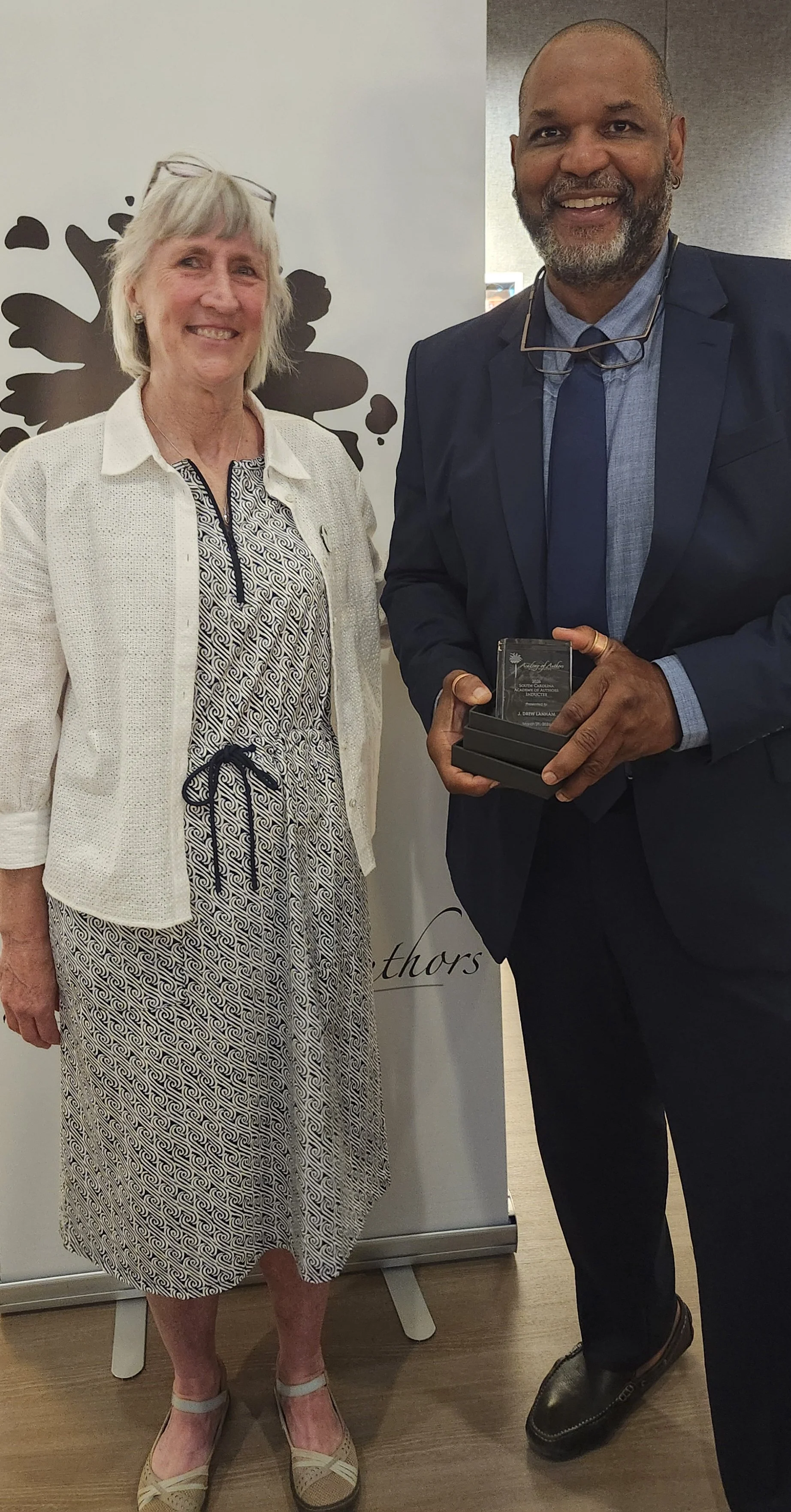
SCAA Board of Governor’s member Betsy Teter inducts J. Drew Lanham into the Academy’s SC Literary Hall of Fame
A native of Edgefield, SC, J. Drew Lanham is a poet, memoirist, naturalist, playwright, professor, and a recipient of the 2022 MacArthur Fellowship “genius” grant. He is the author of The Home Place: Memoirs of a Colored Man’s Love Affair with Nature (2016), Sparrow Envy: A Field Guide to Birds and Lesser Beasts (2021), and Joy is the Justice We Give Ourselves (2024). He is the Poet Laureate of Edgefield County and a Distinguished Professor of Wildlife Ecology and Master Teacher at Clemson University.
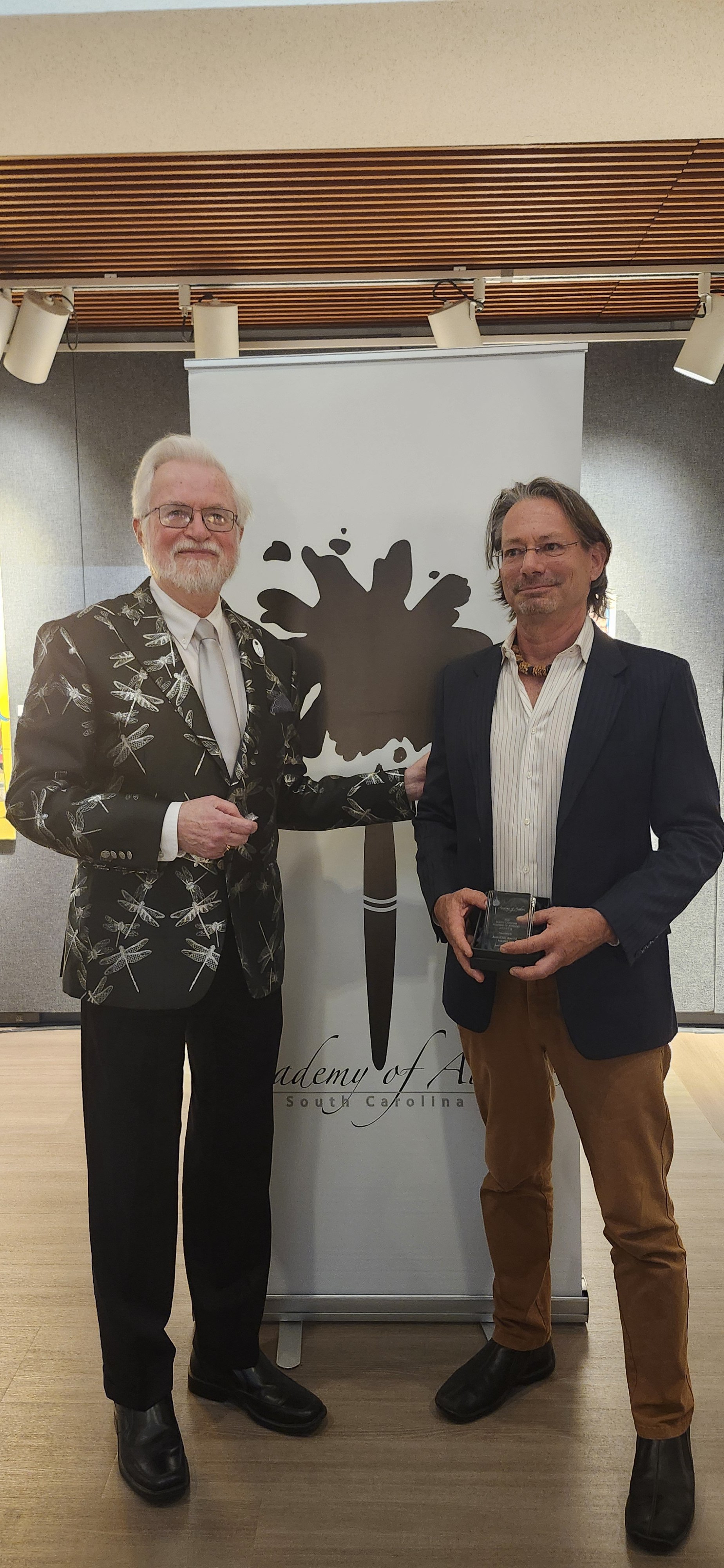
SCAA Board of Governors member Tom Mack Inducts Jenks Farmer into the Academy’s SC Literary Hall of Fame
Augustus “Jenks” Farmer has created two of the largest botanical gardens in SC, building and elevating the Riverbanks Botanical Gardens in Columbia to national acclaim. He is the author of Deep-Rooted Wisdom: Skills and Stories from Generations of Gardeners (2014), Funky Little Flower Farm (2019), Crinum: Unearthing the History and Culture of the Biggest Bulbs in the World (2022), Garden Disrupters: The Rebel Misfits Who Turned Southern Horticulture on Its Head (2023), and Secrets of Southern Gardening (2025).
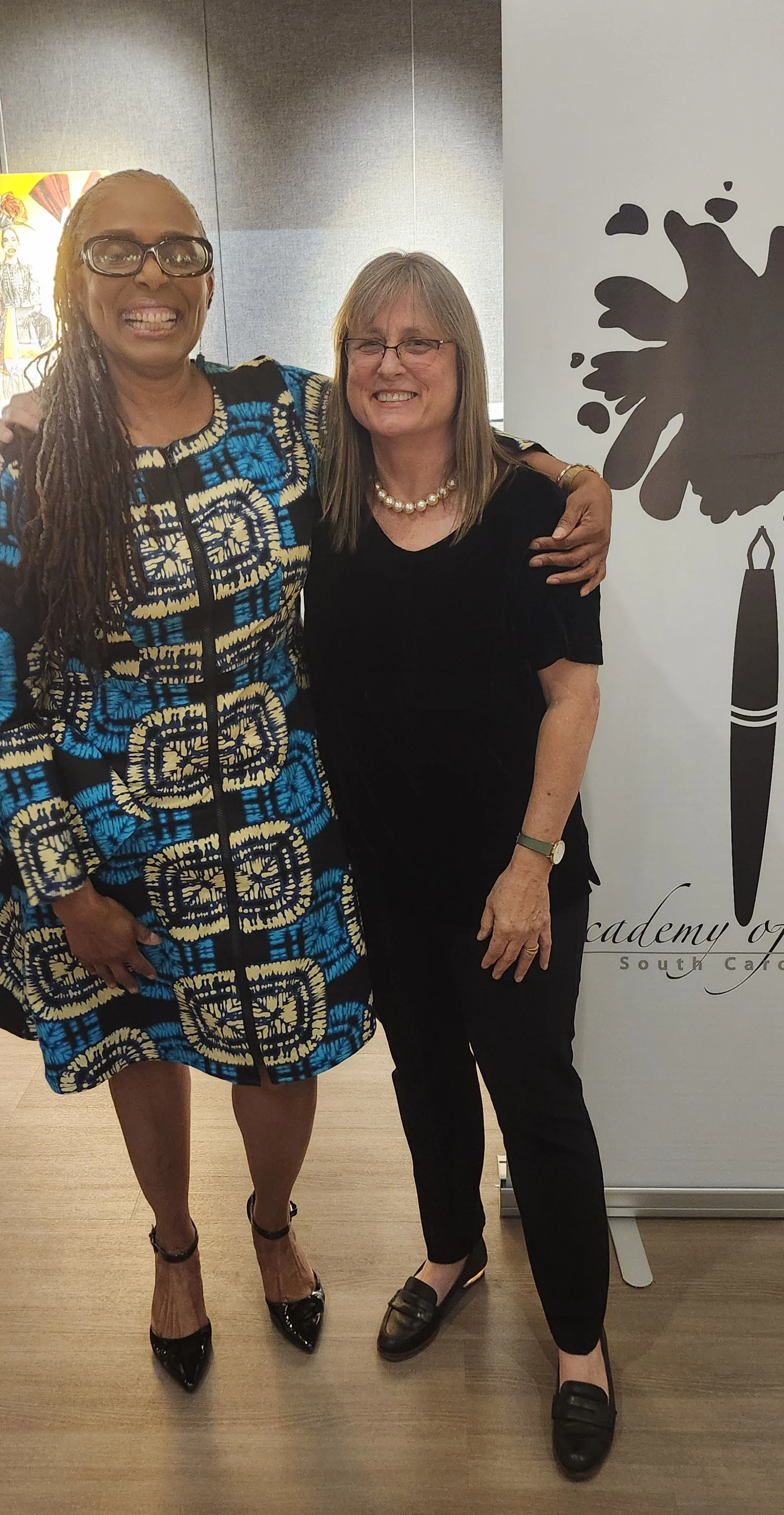
SCAA Board of Governors member Aida Rogers (right) inducts Dianne Johnson-Feelings into the Academy’s SC Literary Hall of Fame
Dr. Dianne Johnson-Feelings (Dinah Johnson) is a professor of English at the University of SC and has written ten books for children, all celebrating African American culture and community. She earned her undergraduate degree in English and creative writing from Princeton University and master's and doctoral degrees from Yale University, in Afro-American Studies and American Studies, respectively. Johnson's first published book was called Telling Tales: The Pedagogy and Promise of African American Literature for Youth (1990) was deemed “a much needed resource for children's literature" and was considered for several years as "the only book-length critical study of early black children's literature." She also edited The Best of The Brownies' Book, an anthology published in 1996 with texts from The Brownies Book a 1920s magazine aimed at African-American children which is considered "a major contribution to the field of children's literature."
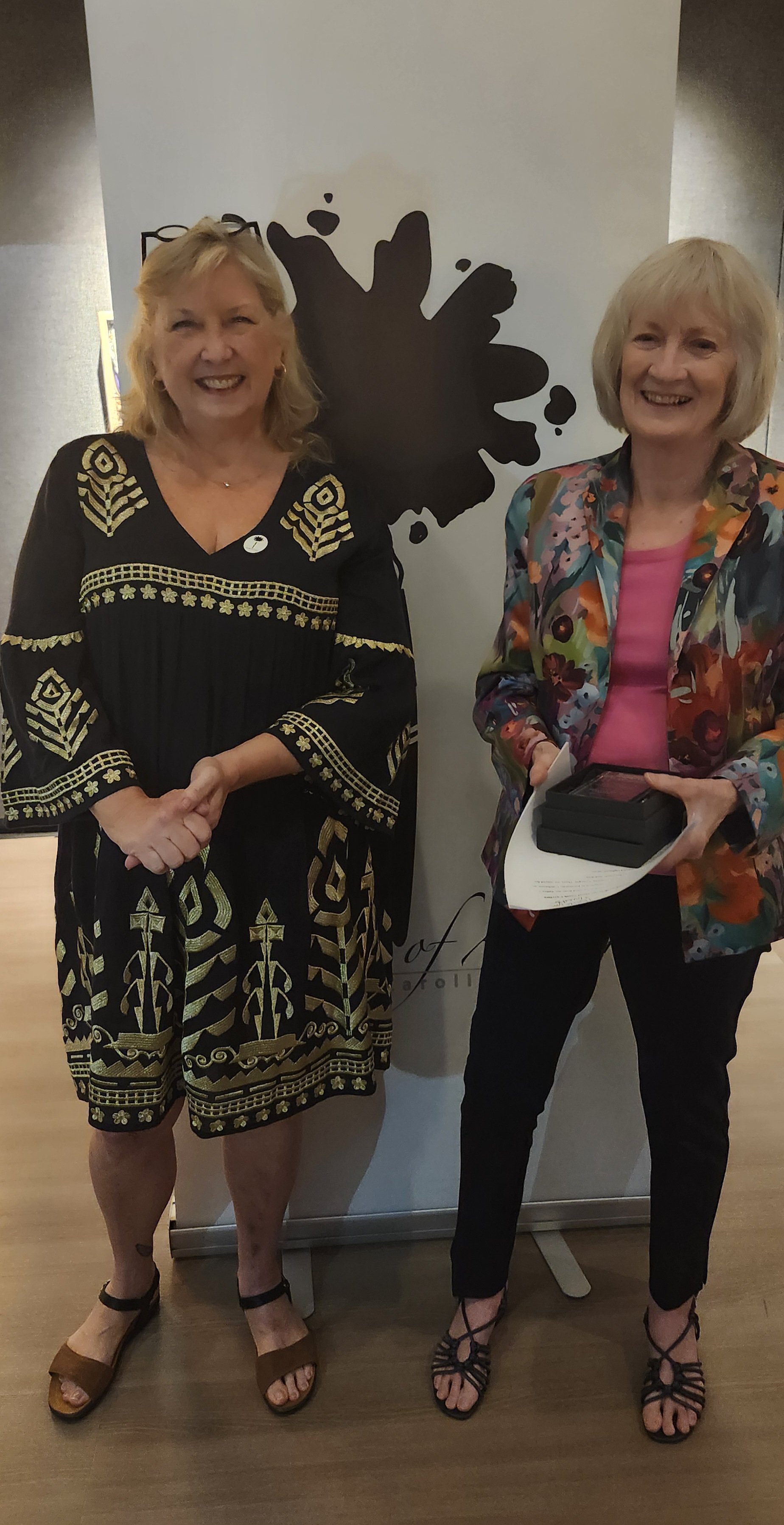
SCAA Board of Governors member Cindi Boiter (left) inducts Claudia Smith Brinson into the Academy’s SC Literary Hall of Fame
Claudia Smith Brinson worked as a journalist for more than 30 years and was a national columnist for Knight-Ridder. Her reporting at The State newspaper won more than three dozen awards and she was the first person to win Knight-Ridder’s Award of Excellence in Journalism twice. She was a member of the newspaper team whose Hurricane Hugo coverage was a Pulitzer finalist and her short story “Einstein’s Daughter” received the O. Henry Award. She is the author of Stories of Struggle: The Clash Over Civil Rights in South Carolina (2020) and Injustice in Focus: The Civil Rights Photography of Cecil Williams (2024).
The SCAA selects new inductees whose works have been judged culturally important. Each inductee, whether living or deceased, has added to South Carolina’s literary legacy by illuminating some aspect of South Carolina culture and gaining a reputation that transcends the borders of our state. Including this year’s induction, the SCAA, founded in 1986, will have officially inducted more than 100 authors into its literary hall of fame.
The SCAA Board of Governors “believes in the extraordinary creativity of the human spirit and the value of multicultural diversity displayed in the work of all South Carolina writers. It is deeply committed to creating and sustaining practices that promote equity, diversity, and inclusion and strives to support these beliefs and holds itself accountable to these intentions.”
In addition to hosting this literary hall of fame, the SCAA also sponsors annual fellowships and student prizes in poetry and prose through support from the Penelope Coker Hall/Eliza Wilson Ingle Fund of Central Carolina Community Foundation. The SCAA is also grateful to the South Carolina Arts Commission for their sponsorship and support.
For more information about the South Carolina Academy of Authors visit the website.
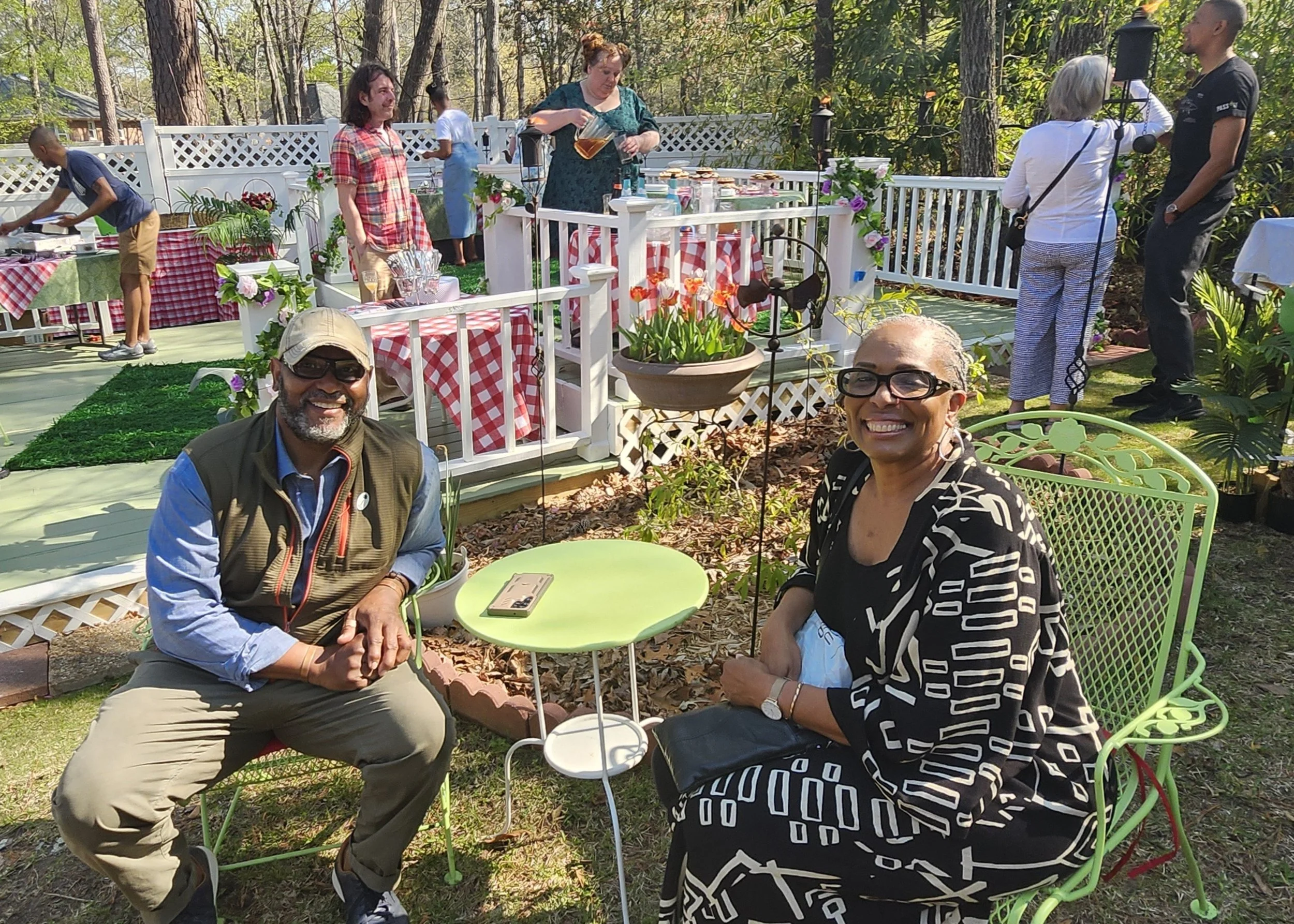
New SC Literary Hall of Fame Inductees Drew Lanham and Dinah Johnson relax during a closing brunch at the home of Tom Mack and Michael Budd
(Full Disclosure: Cindi Boiter is a member of the Jasper Project’s board of directors and the author of this piece)
(Photo Credit - Tom Mack and event attendees)
cb