“So Big/So Small”: Evan Hansen Takes Camden
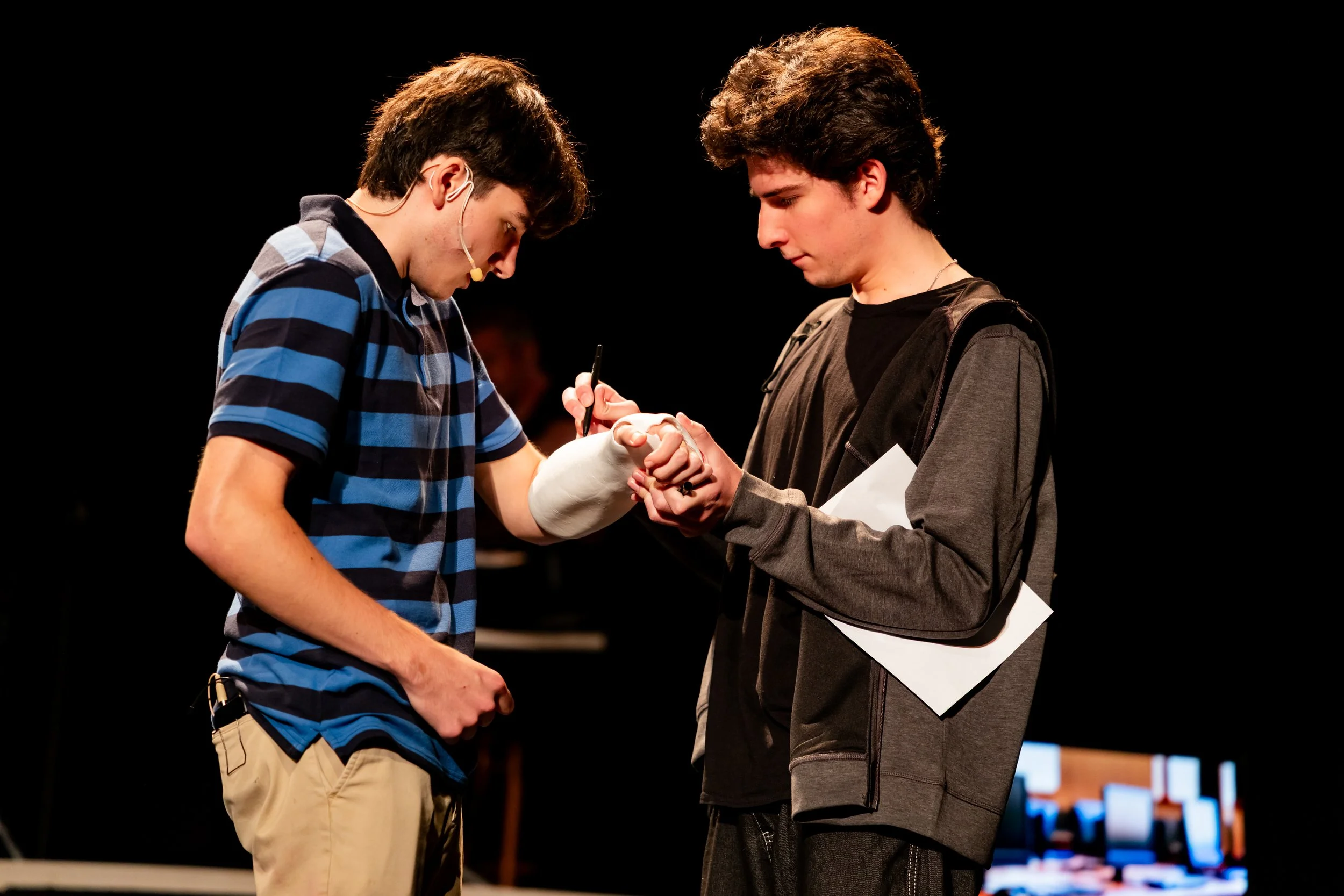
Kyle Mayson with Dominic Coletti
The Arts Center of Kershaw County describes its production of Dear Evan Hansen as “a remarkable musical about loneliness, belonging, and our very human longing to be seen and understood,” and all of that’s true, but let’s say it’s about much less.
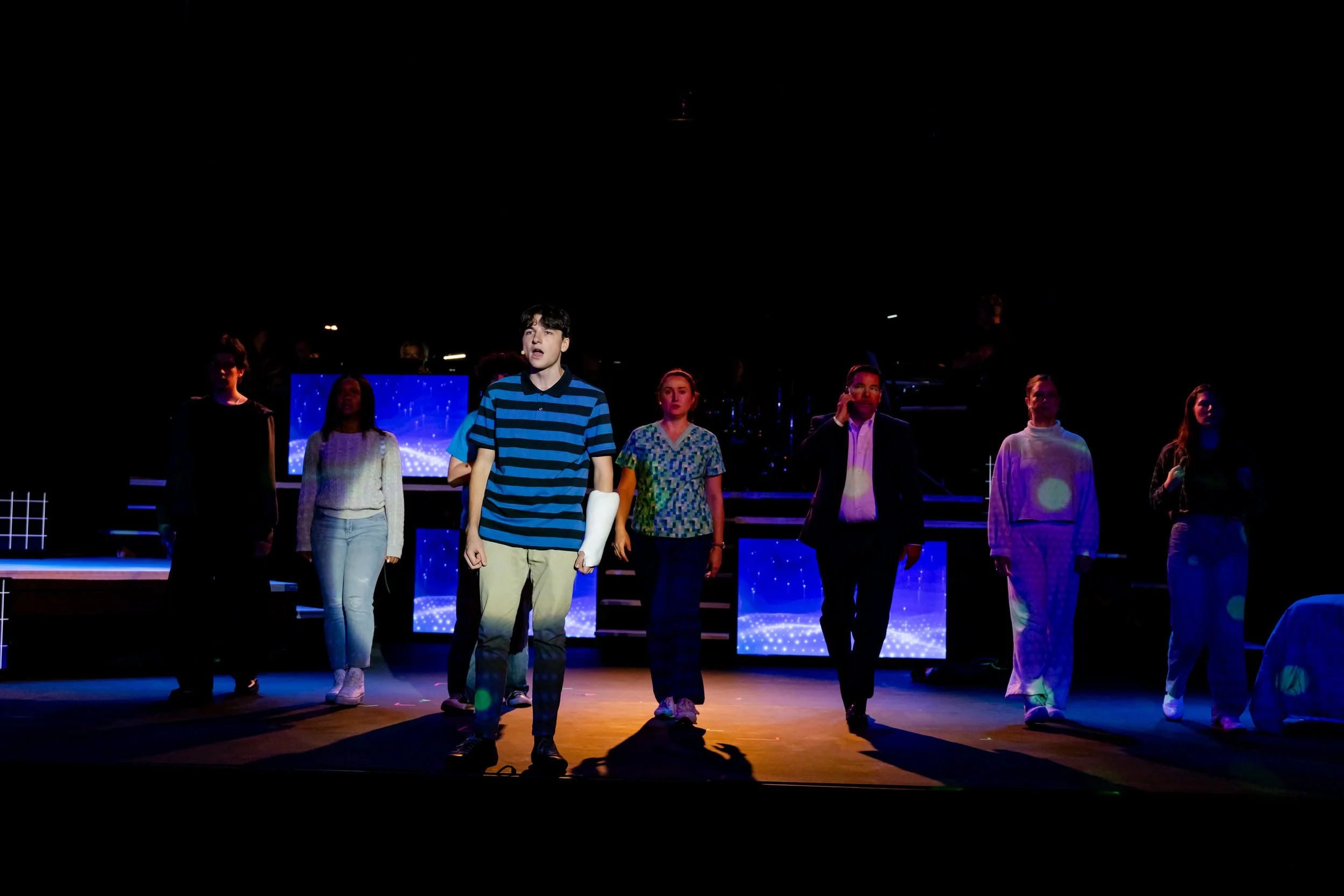
Let us say, oddly, that this is a show about only its production elements—the scene design, the lighting and sound and so on—and presents, therefore, as a hyper-techno-cyberscape in which people exist only as extensions of their gadgetry. The set is spare, cold, consisting primarily of television monitors on which are displayed representations of a remote dimension: a suburb, a lawn, a bedroom, a school, a toaster, a coffee maker. On the proscenium curtains and flat black surfaces appear The Matrix-like, computer-code-looking social media posts while, between beats, electronic beeps and bloops remind us that our lives are now virtual. At times, a laser-like grid appears, graphing the world like a brutalist wall of windows through which we all desperately wave or, on one particularly stirring occasion, fixing a crosshairs on the broken heart of our distraught, eponymous protagonist.
Upstage, on a riser, with no attempt to disguise it, is the band, consisting of eight fine musicians (Katie Miller, Patty Boggs, Cully Salehi, Kathryn O’Shields, Dottie Hanlin, Nigel Grant, Kevin McKinney, and Christopher Cockrell who, pro that he is, conducts from the keyboard.) No attempt is made to create a mise-en-scène that is what we’d call realistic. Rather, this production channels Brecht in that it constantly shows us that we are always being shown something—that these characters are not people but figments, and that by extension we are all just ghosts in a machine. To sum up: this medium is the message. It’s all stunning and disturbing.
Even before the lights come down, fans of director Chad Henderson (who is also the Arts Center’s Executive Director) will immediately recognize his virtuosity. Since his days helming Columbia’s Trustus Theatre, he has solidified a reputation for pushing the limits of the theatrically possible. Here, he is aided ably by lighting designer Sebastian Liafsha, sound engineer Cam Mullikan, media designer Chris Harre, and other members of his crew. He also masterfully choreographs a cast of veterans and newcomers from around the midlands who provide the play with what it desperately needs: a soul.
On which note, let us now say, incorrectly, that this production of Dear Evan Hansen is only about parenting, particularly the agony endured by Larry and Cynthia Murphy, who have recently lost their teenage son Connor. Dad’s coping mechanism is a refusal to feel anything, while Mom’s consists of the nearest available trends—Pilates, eastern mysticism, farm-to-table organics. As played by Kevin Bush, who commands every stage he sets foot on, and Jennifer Erickson, for whom this role is a debut, Larry and Cynthia break our hearts by trying to steel their own. So poignant as to leave bruises is their attempt to replace their lost son with our distraught, eponymous protagonist.
Meanwhile, our protagonist’s mother Heidi (played here by Brittany Hammock, of whom this reviewer can never speak highly enough) is a study in maternal resilience, having been abandoned by her husband and left to juggle jobs and coursework and housework with the needs of her damaged son. Her song “So Big/So Small,” in which she swears never to abandon him, is just as heart-rending as Larry’s serenade to late son’s baseball glove. To sum up: if this production of Dear Evan Hansen were about nothing else, it would be about the futility of trying to raise healthy children in a world that isolates them in their rooms and reduces them to beeps and bloops and tweets and likes.
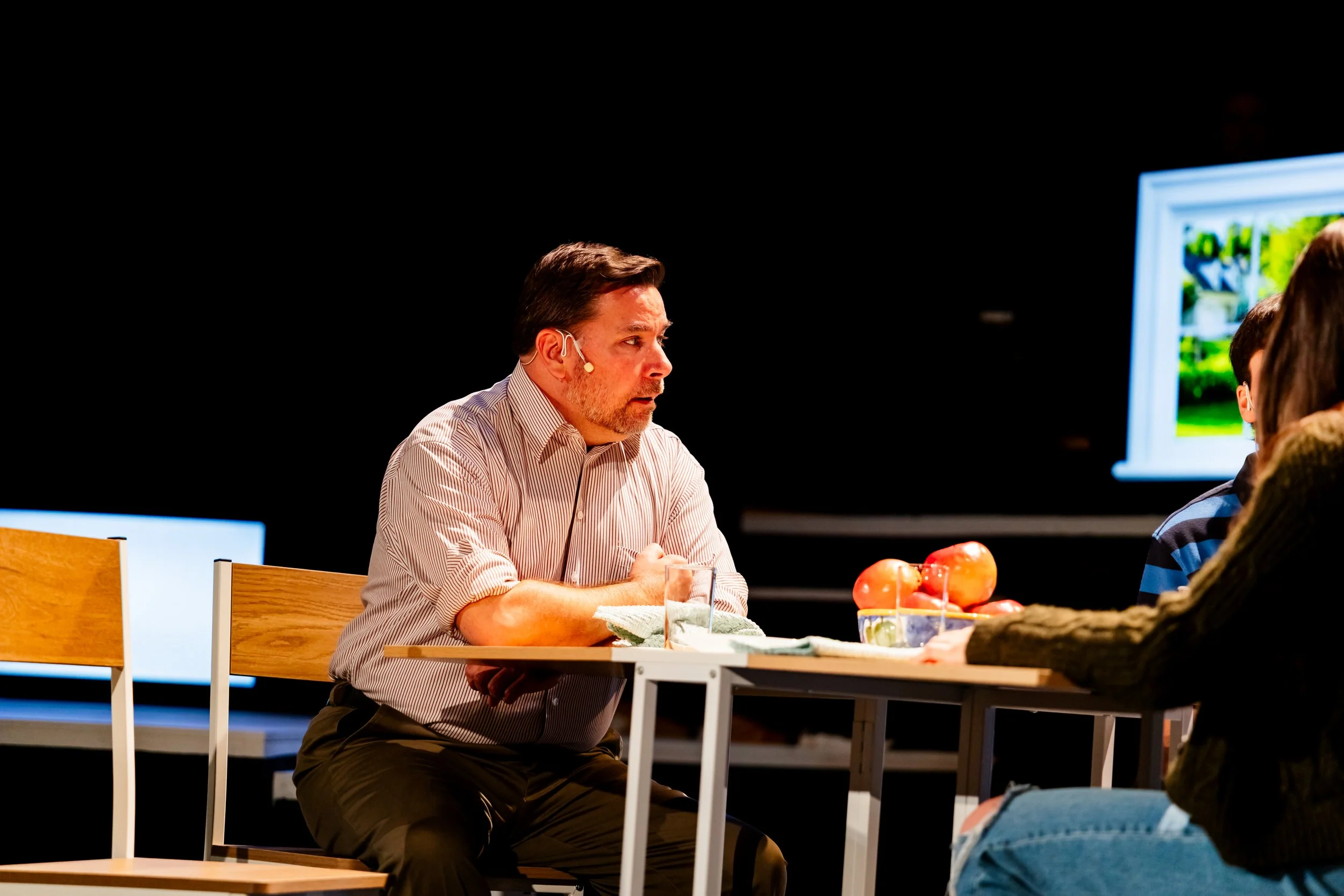
Kevin Bush
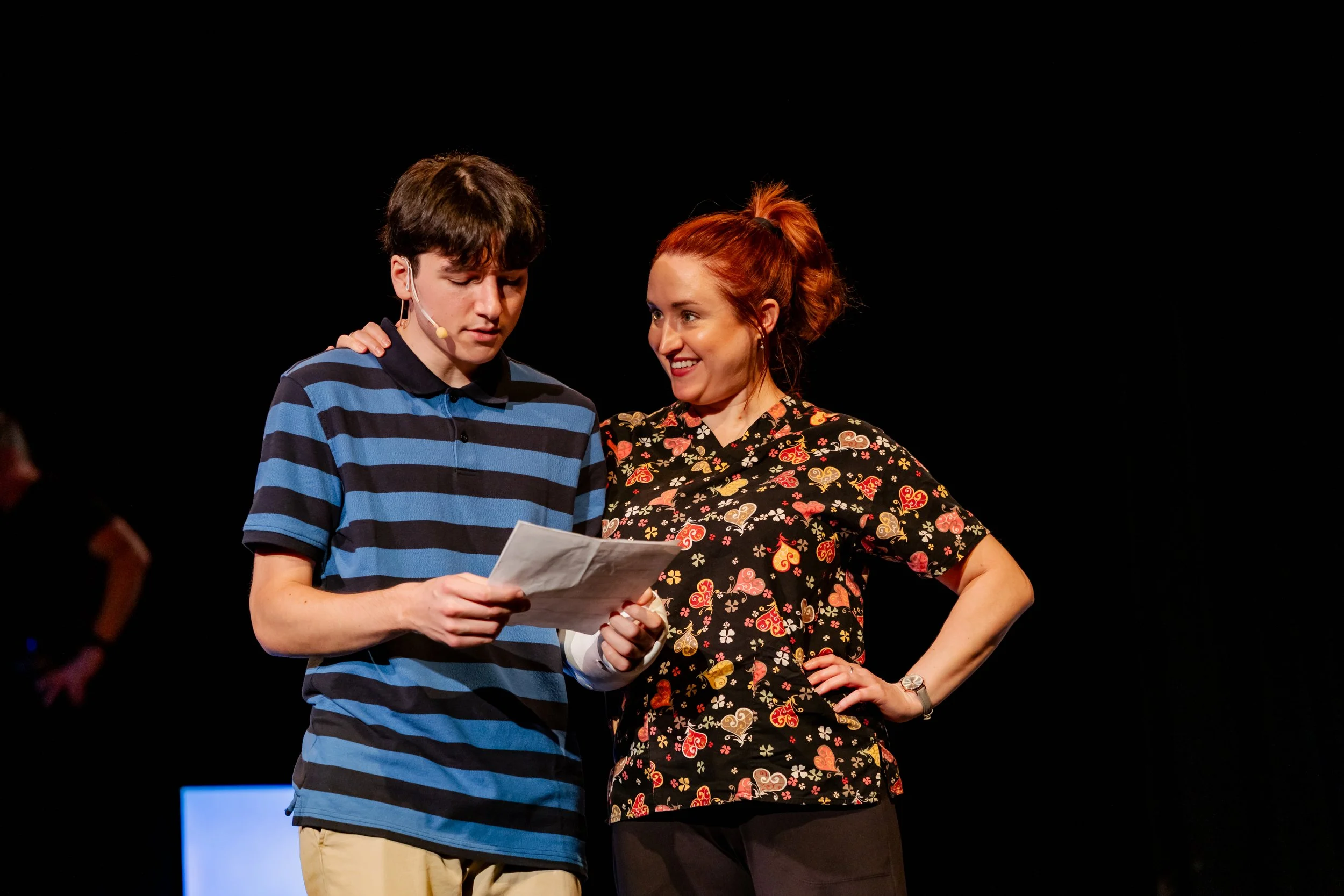
Kyle Mayson with Brittany Hammock
If that’s all there was—if Dear Evan Hansen were about only its production values and parenting—it would never have moved to Broadway and won six Tony Awards, including best musical, best score and best book for its creators Benj Pasik, Justin Paul, and Steven Levenson. Nor would the Washington Post have called it “One of the most remarkable shows in musical theatre history.” It would be unspeakably bleak.
It is not. It’s actually quite charming at times even hilarious as it confronts what Henderson calls “our fundamental need for real human connection. It explores that need through the lens of social media and online communication, revealing how these tools can sometimes become an unhealthy substitute for genuine relationships.” Henderson licensed the play for his September slot to “start the season off with a bang” and to give his audience the opportunity not just to witness good theatre, but to “participate in it. There’s something especially powerful about experiencing this story live: in a play about the challenges of connecting with one another, the audience, the cast, and musicians are all sharing the same human experience together in the same room.”
That room, as the play begins, is the bedroom of its distraught, eponymous protagonist, a high schooler hobbled by awkwardness, hopelessness, and friendlessness. He, Evan, is discovered writing letters to himself—an exercise recommended by this therapist to buoy his drowning spirits. From the very top, then, Dear Evan Hansen announces itself as a play about a boy trying to befriend himself. As it goes, it becomes a valentine for anyone who has ever felt the same, which, judging from the ovation it received on opening night in Wood Auditorium, is everyone.
The inciting incident is, figuratively and perhaps literally, a bang: the death, by his own hand, of the aforementioned Connor, whom we get to know only briefly as a callow jerk. But then, as the play continues, we reinterpret him as an outcast who, in a world full of fashionable influencers, never stood a chance. As played by Dominic Coletti, for whom this is also a debut, and a fine one at that, Connor is not callow but so embittered by isolation that he must mete out his revenge on himself.
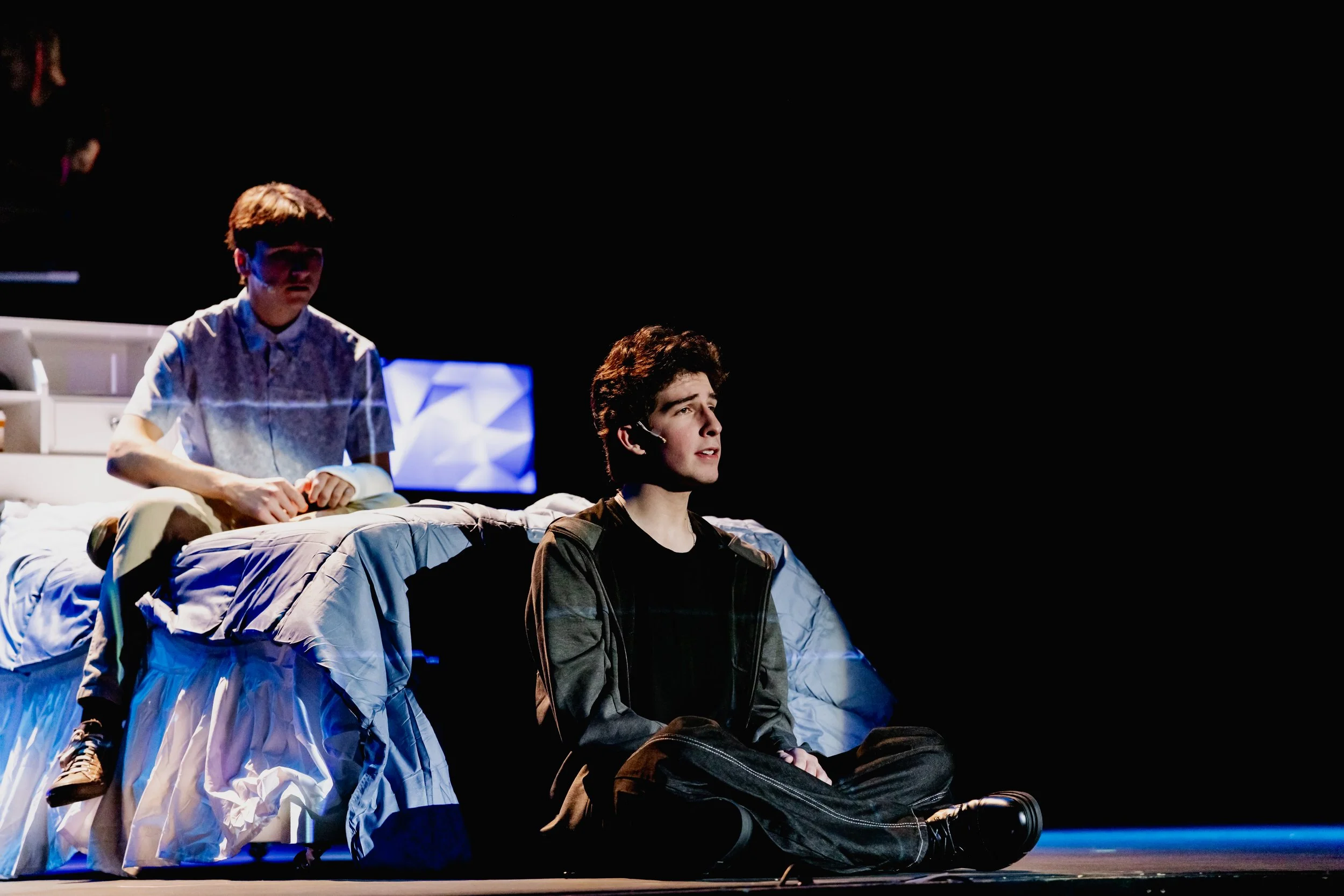
The rest of the first act traces the machinery of myth-making—the resurrection of Connor as a saintly but misunderstood martyr. It is Evan who, inadvertently and reluctantly, spearheads this Connor Project, as it is called. Abetted by fellow cultists Jared Klineman (Sam Siceloff) and Alana Beck (Jayda Bracey), Evan spins himself in a web of deceit woven partly from his own good intentions and partly from our culture’s hypocritical insistence on lionizing its casualties. Their collective desire for visibility drives them to such absurd extremes as an online fund-raising scheme to purchase an orchard.
The orchard is crucial but hard to explain. It is, let us say, a real place, but extinct now, defunct. It is therefore the old world, the organic, Edenic world, where grew the very apple of knowledge which destroyed it. The orchard is a brilliant device that reminds us of all we’ve lost, which is our innocence, our minds, and our way.
In the second act, Evan’s rise to social prominence not only necessitates his fall but quite wonderfully complements it. Sure, he manages to score a beautiful girlfriend, but she is Zoe, Connor’s own sister, who would be devastated if his subterfuge were revealed. Tension becomes panic. No wonder, then, that Evan eventually appears in a bland hoodie very much like the one worn by Connor: they are melding. Evan is about to lose his grip—or let go.
One of the most wonderful ironies in the play is that, for a boy trying desperately to like himself, he has an audience full of fans who adore him. This is owing to actor Kyle Mayson, who embodies Evan magnificently. Mayson is, according to his bio, a theatre veteran of eight years. In that time, he has clearly mastered timing, posture, pitch, timbre, gesture—everything necessary to inhabit a goofy, endearing, lost soul without appearing merely to imitate one. To sum up: Mayson is a revelation and well worth the price of admission.
Zoe, his romantic counterpart, is played by Bella Coletti Pender, also making her stage debut. You’d think that all these debuts would render this production sometimes clunky and amateurish. You would be mistaken. Guided, presumably, by Henderson’s high standards, Pender and the other actors engage us as recognizable, realistic characters trapped in a synthetic world.
Are there problems? Sure. Not all the actors hit all their consonants. Sometimes, volume levels between those playing and those singing are in conflict. And, as for the writing, more jaded viewers might object to the play’s reliance on such platitudes as “everybody matters.”
What is equally true, however, and what Evan Hansen is really about, is that everybody fabulates. It’s a theme that runs through plays as disparate as The Iceman Cometh, Who’s Afraid of Virginia Woolf, and The Playboy of the Western World: our identities are built on lies. How else could we survive?
Dear Evan Hansen runs at the Arts Center of Kershaw County on Thursdays, Fridays, and Saturdays (and one Sunday) through September 26. Admission is $30 and up.
Tissues are encouraged.
Tickets available here.
Jon Tuttle is author of The Trustus Collection (2019) and editor of South Carolina Onstage (2024).
Photography by Perry McLeod.