The Godzillafication of the Art Bar? By Jasper intern, Casey White


Sean McGuinness has taken his lifelong passion and obsession with Godzilla to the next level in his artwork. McGuinness uses his collection of Godzilla collectible figures, digital photography, and Photoshop in order to create his pieces. He has become known for his “Godzillafication” works in which he places the image of Godzilla into famous paintings and pieces of art. McGuinness will be showing these works along with some others at the Art Bar on July 19th at 8 p.m.

When collectors of kaiju -- the Japanese word for strange beasts -- began displaying their collections on the web, McGuinness wanted to take part in the action. However, he wanted people to continue visiting his site rather than just looking at his collection once. This led him to create comics using his Godzilla figures along with other famous kaiju. Over the last 12 years, McGuinness has produced about 1,800 comics with his collectible figures.

It wasn’t until his wife encouraged him to make “real art” that McGuinness began working on Godzillifying pieces of art. His first, and now signature, piece was “1954 in 1865” in which Godzilla can be seen stomping through Sherman’s burning of Columbia. The piece got McGuinness nominated for Artist of the Year at the Columbia Museum of Art Contemporaries. Although he didn’t win the award, he felt that the nomination was a sign that he should dig deeper into the idea of Godzillafication.

McGuinness hopes that through his artwork the legacy that is Godzilla will live on in a world that may be inclined to forget the monster. “Godzilla is an icon of over 50 years,” McGuinness said. “Not that he needs my help, but I want to keep his message and his atomic fire alive in this world of distractions like iPods, smart phones and etch-a-sketches.”

His show at the Art Bar will be the first of this type for McGuinness. In the past, he has done some convention circuits, including Nashi-Con and Cola-Con, but he has never put together a personal show of this scale. The show will include two exclusive prints that use the Art Bar as a medium, and these prints will never be used again. The Art Bar is scheduled to project video of some of Godzilla’s greatest fight scenes, and McGuinness will be selling prints of his artwork as well.

“I want them to take away some of those pieces so they have a little bit of me and Godzilla in their homes. Or at least tell their friends around the water cooler or bar, ‘Guys, I saw this really funny thing last night,’” McGuinness said.

Even if those who attend the show at the Art Bar don’t take away a piece of his artwork, McGuinness hopes that they will take away some sense of happiness or excitement about the art that he is creating.

The show is scheduled to take place on July 19th at the Art Bar at 8 PM, and the show will be on display for about a month. The Art Bar is located on 1211 Park Street. 

 -- Casey White, Jasper intern

Columbia artists in the Conch Republic -- A Guest Blog by Chad Henderson

Note: This story goes best with Jimmy Buffet on the radio, a Hemingway novel on your nightstand, and a Key Lime specialty drink made with generous pours…


During the week of July 4th, four Columbia artists traveled down I-95 heading for the Southernmost point in the United States – Key West. Our Columbia collective consisted of myself (a local theatrical director), local dancer (turned stage manager for this trip) Bonnie Boiter-Jolley, and local actors Paul Kaufmann and Eric Bultman. Of course, some much-anticipated vacationing was expected – but our reason for traveling to the Conch Republic derived from an invitation from The Studios of Key West to be part of “One Night Stand” – a highly popular 24-hour theatre project that was celebrating its fifth incarnation.


The Studios of Key West (or TSKW) describes itself “as a place that provides a truly collaborative and supportive environment for creative experiences.” They offer studio space, lectures, workshops, residencies, partnership projects and nurture the creation of work. Their publicized mission is to “build audiences and support the advancement of established and emerging creative people in the Florida Keys.” TSKW is driven by a distinct cultural and educational mission to support creative community development, nurture artists and the artistic process, while forging collaborations that celebrate and advance Key West’s unique sense of place. And let me assure you – I have yet to experience any place in this country which offers such an inspiring array of opportunities with distinct cultural individuality.


Paul Kaufmann and I first went to TSKW in 2009 when we were part of their first theatre troupe residency. We stayed in The Mango Tree House - one of the studios’ residencies where the oldest mango tree on the island actually drops fresh delicious mangoes into your backyard. Our residency lasted two weeks, and we workshopped a new script called “Homo Apocalyptus” written by playwright Dean Poynor and featuring local actors Monica Wyche and Sydney Mitchell. TSKW provided us the time and space to explore and shape this story daily. This script went on to have productions mounted at Piccolo Spoleto in Charleston, and at an arts festival in Cairns, Australia.


While we were in Key West in 2009, we were also asked to participate in “One Night Stand” during that residency. So, imagine our excitement when we were invited to participate again in 2012! Bags were packed and loaded, and four travelers from Columbi-Yeah took their talents south for a week-long stay, and 24 hours of theatrical creation.


Our group was split between two residencies –Bonnie and I inhabited a lovely studio-style apartment with a private court-yard complete with a pool. Paul and Eric stayed in the newly renovated Ashe Street cottages just behind “The Armory” – the building that TSKW uses as their business headquarters. Paul and Eric had the pleasure of sharing the cottages with Danish artists-in-residency Lise Kjar (Installation/Sculptor/Video Artist), Gina Hedegaard Nielsen (Installation Artist/Sculptor), and Grette Balle (Textile Designer/Painter). Trust me folks, look these women up – they’re amazing and their work is just as awe-inspiring.


The week ensued with your local heroes partaking in some of the expected touristy fare: Sloppy Joe’s visits, sunset celebrations, sunning on gorgeous beaches with blue water, drinks up and down Duval Street bars (think the Bourbon Street of Key West), lunches at Fish Shacks where your meal was caught that day, drinking water from coconuts, and petting polydactyl cats at the Hemingway house. However, we were able to enjoy the colloquial treats of the island with our new Danish friends, and New York filmmaker and painter Christopher Bennett (also a TSKW artist-in-residency).


The time flew by, as it does when you’re having fun in paradise; and soon the weekend was upon us. On Friday, all of the “One Night Stand” participants gathered at the afore-mentioned Armory at 7pm. TSKW Deputy Director Elena Devers took the stage in the main gallery space, which was borrowed and transported from the beautiful St. Paul’s Episcopal Church on Duval Street. She started by welcoming everyone to the Fifth “One Night Stand” – which was met with thunderous applause from all those involved. In the room at that moment were four writers, four directors, twelve actors, four stage managers, a collection of visual artists and their assistants who would serve as scenic designers, and four teams of costume and props designers.


The goal was seemingly simple – write and produce four new shows in the span of 24 hours. After names were drawn from baskets to team up writers, directors, actor groups, and designers – the project had begun.


As a director I was asked up to the stage to draw a writer out of the basket. I drew and opened the paper to reveal I’d be directing a show written by locals Mike Marerro and Chris Shultz, co-author of local publication “Quit Your Job and Move to Key West: The Complete Guide.” I had worked with Schultz during my last visit when he was an actor in the play I directed for “One Night Stand” in 2009. Drawings concluded and our team was assembled, with Bonnie Boiter-Jolley stage managing my show and Paul Kaufmann and Eric Bultman acting with another team.


Besides the teams being assembled, there were a few extra guidelines for the shows. The plays had to be no longer than 10 minutes, there was a hand-mirror that had to be used as a prop, and each script had to include the iconic line “Powerful you’ve become, the dark side I sense in you.” Each writer also had a draw a specific location – we drew “Outer Space,” appropriate considering the required line of dialogue.


We left The Armory around 8pm, and the writers took off into the night to spend the next eleven hours drinking coffee (or beer) while constructing a 10-minute play that would be performed at a 7pm and 9pm showing the following night. I have no idea how the other teams spent the rest of their night, but we decided to do what we did best – be care-free and have some dinner and drinks with our Danish friends and Chris, the filmmaker.


My alarm went off at 6:30am the next morning, and Bonnie and I headed to the Armory. We arrived at 7:15am, met with a table covered in tasty morning treats and the most important element: a warm urn of coffee. I sat down at a table with writers Chris and Mike, and they looked on as I and the designers read the script. The actors were returning to the Armory at 8am, so there was little time to assess the story and decide what was needed from the designers.


The title at the top of the page read “Frank Hates China” – which instantly warranted a chuckle from this director. The story was simple: a group of tourists are visiting a viewing platform on the moon where they can get the best view of a soon-to-pass meteor. However, when the meteor goes off its expected path and crashes into the earth, the group loses their cool and struggles to pull it back together. The tour group was led by a just-doing-her-job guide played by theatre newcomer Ashley Kamen. The tourists consisted of a over-the-top Star Trek fan played by Brandon Beach – a popular leading-man in the Key West theatre-scene, a Star Wars nerd dressed as Yoda (remember the required dialogue) played by Mike Mongo – a entrepreneur who lives in Key West, goes to church in Jamaica, and has a web design business in Miami, and finally a widow who has brought the ashes of her husband Frank along for the visit played by Key West theatre critic Connie Gilbert.


After the first pass on the script, I asked our scenic designer Corynn Young to explore a Jetsons inspired moonscape with a dash of Metropolis. She alerted me she was a painter and not a scenic designer, to which I replied, “Just do whatever comes to you. There’s no way to go wrong - just have fun.” I then went down the props and costume list with our designer Kelly Duford – who does some work with Key West Burlesque. Kelly and her mother took off to scrounge through costume shops at the local theatres and use the $150 budget to get any other necessary materials.


Once the actors showed up at 8am, we immediately headed to a convention center near Mallory Square Dock where the famous sunset celebrations take place. We made a conference room our rehearsal space, and began blocking immediately following a quick read-thru. Bonnie, who was just planning on stage managing, became a performer in the show out of necessity. She walked the ill-fated meteor across the stage and then made a quick change of direction towards earth – which we were hoping would incite some laughter that night at the performance (it did, by the way).


Lunch was served at noon, and we had some visits from our tired writers just to make sure everything was working out. After a few more runs, I asked the actors to depart and learn lines for two hours. After that break, we reconvened at the Armory to continue rehearsing in an art studio upstairs.


There were varying degrees of success with the line-learning. Brandon Beach, who was quite experienced, was having the most difficulty. Whether it was the strange vernacular of his Captain Kirk inspired lines or the pressure of the situation – I don’t know. However, I had faith it would all come together. The others were off-book, and sometimes having the support of your cast can make all the difference.


We made our way downstairs to the main gallery for the one-and-only technical rehearsal at 5:00pm. The cast had one chance to run the show on the stage, and we were able to set levels for the three sound cues we had for the show. The cast was having intense problems remembering their lines at that moment – but still; optimism was the name of the game.


We left the technical rehearsal, and had a pizza dinner that was served in the court-yard behind the Armory. As I dined on delicious local slices with Bonnie, Paul, and Eric – I noticed members of my cast pacing around trying to recite their lines as they chewed cheese and drank a relaxing beer. Brandon Beach was sitting at a table under the aforementioned mango tree with his head in his script, when a mango almost fell directly on him – barely missing his head and landing behind him in his chair. He quickly moved to a more secure area to continue studying.


With the show an hour away, I asked Paul and Eric how their show was going. They seemed optimistic and devoid of anxiety. Minutes later I saw both of them exit their cottage with leather cowboy-wear featuring tassels…Bonnie and I could only smile as we tried to imagine what we were about to see our travel-partners perform.


At 6:30pm my cast convened in the makeshift backstage area in the main gallery. They put on costumes, make-up, and prepared to perform this show that had been written less than 24 hours earlier.

The first show at 7pm was sold out and had a very supportive audience. Two of the shows preceded ours, and then it was our turn. The audience clapped and laughed as our outer-space moonscape backdrop was revealed. Then I hit play on Bonnie’s iPhone that was plugged into the sound board. My cast came bounding down the aisles in the audience making their way to the stage by way of space-walking leaps as “Also Sprach Zarathustra” (The 2001 Space Odyssey Theme, or Gamecock Football intro music) blared through the speakers. As the final climax of the song hit, the cast was on stage and met with applause. So far so good…


The show commenced with very few mistakes. A few lines were dropped or changed, but it still looked very competent. There was a prompter off-stage to help in some of those situations – and the audience expected there to be some difficulty. However, when the show was drawing to a close, Brandon Beach – our struggling experienced actor – drew a complete blank on his final monologue. With complete confidence, he crossed the stage and took the script from the prompter inciting the loudest laugh all night. He then recited his last monologue, then threw the script down on the stage calling out, “who writes this shit?” More laughter. He then crossed to his last mark, and said the last line leading the cast off-stage. The audience cheered like they were having the best time of their lives.


As soon as they were off-stage I told Brandon, “Well, that certainly worked. Keep it for the 9pm – we’ll pretend we planned it the whole time.” He laughed and agreed.


Paul and Eric’s show followed, and it was the final one of the evening. The show titled “An Incident Proposal” was story about Eric’s character and his prostitute friend in 1950’s Key West. When Paul’s character entered the story he proposes $10,000 for a night with Eric’s “wife”. Well, the deal goes down, and Paul and Eric’s excellent performances brought a lot of comedy and presence to the show. The audience was enjoying it immensely, and by the end of the show we realize that Paul’s character is a wheeler-and-dealer who’s had a history of abandoned wives and crooked financial deals.


The first audience was escorted out after the show, making way for the almost-sold-out 9pm audience. The emcee told the new audience that “the 7pm show was more of a dress rehearsal and that they were about to get the ‘real’ show.” So the show commenced, and yet again – the shows got great laughs and response from a lively crowd.


At the end of both shows, the audiences were asked to pick a “crowd favorite” by round of applause. Both times, the emcee awarded the title to “Frank Hates China” – which meant absolutely nothing, but it did add a sweet cherry to the top of this already rewarding sundae of collaborative arts.


Paul, Eric, Bonnie, and I were humbled by an embarrassment of riches while in residency at TSKW. We dined and conversed with international and national visual artists, collaborated with local theatre artists, and were able exercise our craft for audiences in the Conch Republic. A truly unique experience that is just as amazing as the memories it creates.


As we began our 13+ hour-long trek back to Cola on Monday, I was thinking about how the locals of Key West were so supportive of “One Night Stand”. We actually produced a 24 hour theatre project at Trustus years ago. While the actual event was a testament to the talents we have in this city, we had a hard time selling 134 seats to our local audiences. TSKW filled hundreds of seats two shows in a row … that fact alone started an itch that I feel needs scratching.


Maybe its time for another 24 hour theatre project here in Columbia! We’ve certainly got directors, writers, and actors who could pull it off. We’ve even got an excellent group of visual artists in this city who could bring the scenic design to life in a big way. We don’t suffer from a lack of venues either. I also think, with the right press, we could generate a lot of excitement for this unique type of project.  Plus – we’re all enjoying multi-disciplinary collaborations these days – so why not? What do you say Columbi-yeah? Is it time for another go at it? Do you want to see what can happen when theatrical creations come to life in 24 hours? Let’s make it happen!


Note:

Artists interested in residencies should check out www.tskw.org for information.
More about tomatoes than you probably want to know - but read this anyway. What Jasper Said!


“It's difficult to think anything but pleasant thoughts while eating a homegrown tomato.”

-- Lewis Grizzard


It's no surprise to those of you who choose to read What Jasper Said that there is art in everything -- music in the crackle of a fire and dance in the sway of the trees, for example. No matter how you feel about all things great and small, it's impossible to ignore the fact that nature provides us with some of the most beautiful and awe-inspiring sights  we ever have the joy to see.

Take, for example, the lowly tomato.

If there's a caliper by which any Southern garden can be gauged, a singular standard of judgment -- not necessarily of quantity but of quality -- it is the wholly unlikely but potentially perfect tomato. The master measure of any gardener worth her salt is the firmness, roundness, color, texture, and taste of the lycopersicon esculentum -- literally, "edible wolf peach."

From the meaty fruits that grow in twisted bushes out by the barn (pronounced "may-ters") to the glorious globes meticulously mulched and precisely staked by women's garden clubs (pronounced "toe-mah-toes"), Southerners will stretch budgets, backs, patience, and sometimes even the truth to brag about their exceptional poma amoris -- love apples of the vine.

As versatile as the very soil in which we sow them is the tomato itself, which we boil, broil, stew, stuff, pickle, puree, glaze, grill, sun-dry, simmer, saute, fry green with cornmeal and pepper, slather with mayo on snow-white bread, or juice and stir with vodka and Tobasco. A dieter's delight, tomatoes are low in sodium, free of fat and cholesterol, and a superb source of potassium, beta carotene, and vitamins A and C to boot. One medium tomato is 35 calories -- and that's if you eat the whole thing. Which many of us do. Happily.

Eighty-five percent of the 30 million back-yard gardeners in America grow one or more of the literally hundreds of tomato varieties with which geneticists and seed-savers have provided us. With the likes of Big Girls, Better Boys, Bonnies, and more exotic mutations such as Royal Chico, Macbeth's Bloody Hand, and Sub-Arctic Plenty (touted as being the world's earliest tomato, coming into fruition in just six weeks), tomato production has doubled worldwide over the last two decades with the average person eating 80 pounds of them every year. Nowadays, South Carolina is among the top five states in tomato market production, and we, by the way, produce the kind that you can actually eat -- not those green, mealy, gassed  tennis balls the other coast is known for.

But tomatoes didn't become fashionable in our region until after the Civil War. It's thought that the original aggie-sized fruits grew wild in South America, probably Peru, and were eaten by the ancient Incas. Along with other treasures, early explorers took tomatoes back to Europe where both Italians and Spaniards readily adopted them into their diets and, eventually, brought them to the New World. Even then, colonial Americans eschewed tomato consumption based on the bad reputation of the tomato's kin -- the dreaded nightshade family, which makes them kissing cousins with the potentially poisonous mandrake and belladonna.

Thomas Jefferson was one of the first farmers to take a chance and plant tomatoes in his garden in Monticello in 1781. And to publicly prove the tomato's virtue, another champion, whose name we've lost to history, stood on the courthouse steps in Salem, New Jersey in 1820, where he publicly devoured one of the delicacies -- and lived to tell the tale. That and like testimonies, combined with enlightened plant breeders who produced plumper, tastier tomatoes, made the prospects of stewing up a pot of summer soup (tomatoes with okra and corn), much more palatable to the Southern chef.

To set the record straight -- yes, the tomato is a fruit and not a vegetable. That said, even though a USDA official during the Reagan administration, in response to the mandate to cut the school lunch program budget, proclaimed that not only was the tomato a vegetable but that ketchup satisfied a veggie requirement on our kids' lunch trays. After a pelting of rotten tomatoes, he left his post. In reality, tomatoes are fruits of the berry family.

This weekend, we honor the tomato at Columbia's own Palmetto Tasty Tomato Festival with music, socializing, and most importantly, mater munching. Next year, Jasper told me he'd like to sponsor an art exhibit to coincide with the fest. But this raises the question -- is it even possible to capture the elusive beauty of the blessed fruit on canvas? I don't know, but I'd like to find out.

For more on the Palmetto Tasty Tomato Festival please visit the website and consider buying your tickets early. In the meantime, my friend Tracie Broom has shared some of  her photos depicting the beauty of tomatoes with Jasper. Take a look below, lick your lips a bit, and come and see us on Sunday at the Palmetto Tasty Tomato Festival at City Roots urban farm in Columbia.


New Music: The Hollerin' River Talkers + TONIGHT = Jasper #006


Our magazine release parties (if you’ll forgive me for saying so), have had some fairly awesome live performances. And while I have written about our headlining band The Restoration in the past, I want to take some time before the party tonight to tell you about a new, lesser known act who is also capable of blowing your mind.

The Hollerin’ River Talkers, a diverse project-group of singer/songwriters spearheaded by Shallow Palace leader Greg Slattery, is dedicated to reviving classic old folk and blues tunes into a modern context. This task is something that, to put it simply, they blow out of the f***in’ ballpark.

Marshall Brown is the lead-off singer in the troupe, and contributes a (for-him) relatively straightforward vocal that still brings the Donovan-esque psychedelia he is known for to “Baby Won’t You Please Come Home.” Daniel Machado (of the The Restoration) makes a banjo-led attack on “Mary,” an old folk tune about how cheating on your wife ain’t gonna get you to heaven, while Aaron Berg and Slattery both take a gorgeously dirty stab at the blues standards “Catfish Blues” and “Death Room Blues.” Todd Mathis rounds out the set with a dirty rock take on the gospel tune “Wade in the Water,” the only tune which fully makes use of drummer Steve Sancho’s presence.

All of these tunes are ragged and sparse, but that’s not what makes them great—it’s the fact that each contributor never forgets the feeling that these songs first inspired, with lust, laughter, and longing all mixed up in equal measure. It’s a short collection, but I guarantee you’ll want to hear it again and again.

To listen/buy all of these tunes: http://rivertalkers.bandcamp.com/

Come out and see us tonight at Tom Law's Conundrum Music Hall on Meeting Street in West Columbia. We're starting at 7:30 with poetry from Kristine Hartvigsen and Cassie Premo Steele, three short films by Wade Sellers, the Next Door Drummers, a set of classical guitar from Amelia Mau, a solo set from Rhodes Bailey of the Whiskey Tango Revue, then the Hollerin' River Talkers and The Restoration, who will be missing their drummer so they'll be laying down some pretty damn good blue grass. JoeTurkaly will be making supper ($) and two bars will be open. The event itself is free. All to celebrate Columbia's badass arts scene and the release of Jasper #006 -- a solid year of bringing you the magazine we said we would, when we said we would, and in the best possible shape we could get it to you.

You can count on Jasper.

CMA's Design from the Collection -- a review by Jeffrey Day

As much as I like The Art of Seating, a show of 200 years of chairs at the Columbia Museum of Art, I was more excited to see what the museum would do with the companion design exhibition. For Design from the Collection, members of the museum affiliate group the Columbia Design League mined the museum collection for examples of good design. I feel a close connection to many of the objects in the exhibition, having had an opportunity to see many quite a few times and to remember when the museum acquired some.

When we think about museums, great paintings and sculptures first come to mind. The works in Design from the Collection are more prosaic – chairs, desks, teapots, dishes – but their functional origins and often humble material coupled with thoughtful and beautiful design provide a model for the possibilities of beauty in our daily life.

One piece I’m always happy to revisit is Danish designer Georg Jensen’s chocolate pot from 1930. The silver pot is seven-inches high with sleek lines and a low-set teak side handle and matching lid handle; the best way to describe it is charming. Another simple piece, a 1958 teapot by John Prip, is the made of stuff even more basic - pewter and plastic – which doesn’t prevent it from being a delight.


One piece I don’t recall seeing before is Gilbert Rohde’s dressing table from around 1940, but it has belonged to the museum for a decade and is certainly memorable. With its sleek, rounded lines this dressing table made of ebony veneer and quilted maple with a top of glass suspended by steel tubing looks like it could speed around one’s bedroom. It’s the perfect marriage of elegant modern design coupled with a high level of craftsmanship.

As companion to The Art of Seating, the exhibition appropriately has a lot of chairs; chairs that make you rethink chairs, really appreciate chairs, toss your stupid and ugly chairs. The earliest chair, and about the oldest work in the show, is a 1915 bent wood rocker by chair innovators Thonet. (The Austrian company’s chair No. 18 has been manufactured since 1876.) It has rockers and arms made of one continuous oval of bent wood. It is a marvelous melding of new technology, function and beauty – as are all the best pieces in the show.

Eero Saarinen is best known as the architect of the TWA terminal at JFK Airport in New York and the Dulles Airport main terminal, but he created furniture just as cool as those buildings. The exhibition contains two of his most iconic designs – the tulip chair and tulip table. (These were first manufactured in 1956, but like quite a few of the post-World War II furniture pieces these particular items were made a couple of decades later in response to a renewed appreciation of mid-century design.)

Among the other well-known designers represented in the show are Charles Eames and Ray Eames with a molded plywood chair from the 1940s, a cast aluminum and fabric chair from 1958 (along with the Rohde’s dressing table, it’s my favorite piece), a 1946 wooden slat bench by George Nelson, and a ‘40s carafe by Russell Wright. On the unknown end is Danish designer Poul Jeppesen’s modern, but warm and inviting wood and cane armchair from 1950.

Entering the exhibition through the Art of Seating, you’ll be greeted by pieces such as these. Near the end of the show you will wonder if you’ve wandered into another exhibition entirely. You’ll find works that fit firmly in the fine crafts category – glass, ceramics, basketry – as well as a few pieces that are simply sculpture. The exhibition text panels are also puzzling. Several are written with a personal point of view by committee members while others read like standard museum text although all are credited to committee member. These confusing turns may be the result of a committee-created exhibition – in this case it looks like the work of two committees that never met. Both these things badly undermine what is largely an excellent show.

On the plus side, the objects are creatively displayed – especially the chair perched atop platforms attached to the gallery walls. The exhibition is on display through July 29.


-- Jeffrey Day is a frequent contributor to Jasper and What Jasper Said, and the former senior arts writer for The State

Song for Jeffrey By Alex Smith, Sports Editor, Jasper Magazine

A few miles down the road from the fortified compound that houses Jasper Magazine, something is cooking at The Free Times in the Rant And Rave section, and when something starts to cook on that burner, the responses can go on longer than some of the threads on Chris Bickel's Facebook posts, only it's not inter web realtime, so that means weeks. I wanted to throw my pat of butter onto this particular griddle in a somewhat public forum before everybody forgets how the whole fucking thing started (I'm just as guilty as the next: we have given ourselves the attention span of gnats with this internet thing-I hear heckles that 'this internet thing' is what is allowing me to have my say about something while it's still remotely topical…just remember, if you're close enough to hear you're close enough to chew the face off of…).

  Ed [Madden, Poetry Editor] and I were in the bullpen out at the compound at Muddy Ford about a week ago, grinding the pigment out of wildflowers to use for the various colored ink for the upcoming issue (you don't just write when you're on staff at Jasper). As the man said so long ago, "we spoke of movies and verse, and the way an actress held her purse, and the way life and times could get worse…" Then we spoke of Jeffrey. Ed mentioned somebody bitching about our mutual friend Jeffrey Day and one of his less than enthusiastic notices concerning some or other arts related event here in town. We agreed not only that bitching about a review was unwarranted and whiny, but that (you can quote me on this) Jeffrey Day is the best all-around arts critic writing in Columbia. Imagine my surprise when, perusing the new issue of the Free-Times the next day [June 26-July 2], I got to the very last words that weren't ad copy, and they read, "I found a little Jeffrey Day dribble in my Free Times this morning (Arts, June 20). Apparently, the guy is like treatment-resistant gonorrhea; you may think he’s gone, but he ain’t."


I love the Free Times. I have had a man-crush on its editor since I saw his band open for The Violent Femmes when I was 15 years old. When it comes to full coverage journalism in Columbia, The Free Times has no competition, and their work is consistently terrific. And, like most people, I love the Rant And Rave section. So, let me make it completely clear that in no way am I trying to defame The Free Times when I say, in regard to the quote above: Fuck. That. Shit.

Here are a few more choice words in regard to that quote. I've known Jeffrey for going on 25 years, and I consider him a friend, but my anger about those words being said about a friend is beside the point, and what's more, personal, and I'd like to keep this out of that realm. I will, therefore, dispense with attempting to address the anonymous coward who spilled that bile onto the back page of an otherwise decent news rag, and try to look at the bigger picture.


The above quote is indicative of a problem some of the people involved in Columbia's arts community have that can end up being fucking deadly: everybody wants press, but none of them are willing to take criticism from anybody who knows what they're saying. First, let me say that, if you're an artist and you can't take the ugly words the same way that you take the kind words that people say about your art, if you can't be humble in the face of adulation and venom, throw that towel in. Now. You're a kiddie swimming in the big person pool. Get out until you've grown up a little. Beyond that, if our arts scene (which, listen, don't get me wrong, seems to be flourishing and cohering so successfully at this point that it's making me nervous) is nothing but a bunch of people smiling and waxing each others' cars, the whole thing will either burn bright very briefly and then die (again) because, take my word, that kind of enthusiasm can not be maintained without serious drugs; or those grinning waxers will turn around after telling you they love your work and tell somebody else how shitty they really think it is, this behavior will proliferate, and the whole thing will fizz out like a soggy sparkler and die (again).


Be honest about what you think and feel when you experience a work of art, and be willing and able to back it up, especially if your thoughts and feelings are negative. This will create dialogue, which will create working and personal relationships, which will create community. That's one thing.

The other is, for FUCK'S sake, we artists should get down on our knees and praise Allah for allowing us to have an art critic like Jeffrey in this town. Jeffrey is knowledgeable about enough aspects of both visual and performing arts that he can write incisive criticism about what he sees, whether it's a review of a musical at Town Theatre, a symphony performance at the Koger Center, or the latest show at the Columbia Museum of Art. He does so without any bells and whistles, without flexing his intellect publicly, and in such a way that a person reading his reviews does not have to be an aficionado to understand what he has written. He has been a paid writer for virtually every print outlet that covers the arts in Columbia, and when times got tough, he continued to do it for free online. Somehow, Jeffrey sees it all, and he reports on it honestly and thoroughly. People have faulted him for being too harsh a critic as long as I've known him, and, again, let me say it: Fuck. That. Shit.


Jeffrey has seen what the arts community in this city is capable of, and the reason we should be grateful for him is that he holds us to that high standard, and if we weren't around to know about the standard he's holding us to, he'll be glad to tell us about it. He is a good man. He may be a grumbling, naysaying curmudgeon sometimes, but if he knows you, he'll laugh at himself with you about it, especially if you're like me, and he knows that you'll only put up with his grumbling for so long before you pull out your tickle-bat and whack him with it (I'll tell you more about the tickle-bat some other time).


Jeffrey wrote a review of a play I directed in 2005 that has been the kindest thing written about any single artistic endeavor I've been involved with. It ended with the phrase, "…one of the ten best plays to be performed in Columbia in the last ten years." No shit. It was such a good review that I started telling people I'd paid him to write it, or that myself and the cast had gotten him loaded, like Joe Cotten in Citizen Kane, and finished the review for him after he passed out. He also wrote a very poor review of a show I directed in 2000 that I thought was perfect. Ultimately, I believe it was that poor review that made Jeffrey my friend. He would come sit and talk with me and whoever I was with (or vice-versa) when we'd see each other out at the bars or around town. I noticed that, for a long time after that poor review, he didn't seem to come and sit and talk when I saw him, and at first it puzzled me, but then, I realized that he probably thought I was pissed at him about the review (reading that Free Times quote and thinking about how much of that bullshit he's probably had to endure over his career makes me feel naive for ever wondering why he would have thought he should approach an artist with kid gloves). I saw him out one night. I was a little in my cups, so I told him that he needn't ever worry about me being an asshole to him if he wrote a bad review of one of my shows because, ultimately, good or bad, I wasn't doing it for him. I think most people would have been more than a little off-put by some drunk jerk coming up and telling them that they didn't care what they thought, but after that, Jeffrey seemed so much more relaxed and willing to talk when we would see each other.


The part I'm not sure about is whether I told him about the quote. After his bad review came out, I happened to read an interview from the 60's with Miles Davis. To bolster the esteem of the cast of the play Jeffrey had panned, I printed this quote out and hung it backstage:


"I get sick of how a lot of them write whole columns and pages of big words and still ain't saying nothing. If you have spent your life getting to know your business and the other cats in it, and what they are doing, then you know if a critic knows what he's talking about. Most of the time they don't. I don't pay no attention to what critics say about me, the good or the bad. The toughest critic I got, and the only one I worry about, is myself. My music has got to get past me and I'm too vain to play anything I think is bad."


What came after this, which I left out for my cast, but include here, is this:


"No, I ain't going to name critics I don't like. But I will tell you some that I respect what they write -- Nat Hentoff, Ralph Gleason and Leonard Feather. And some others, I can't right off think of their names. But it ain't a long list."


The list might not be long, but this vain, self-critical artist is glad to say that Jeffrey Day is on it.


-- Alex Smith, staff writer, Jasper Magazine


(Alex Smith has written about The Next Door Drummers and artist Cedric Umoja for Jasper Magazine. In the upcoming issue, releasing on July 12th, he writes about music director Tom Beard, Lighting designer Aaron Pelzek, and experimental musician C. Neil Scott. Alex Smith is NOT the Sports Editor for Jasper Magazine.)

Happy 4th from your friends at Jasper - The Word on Columbia Arts

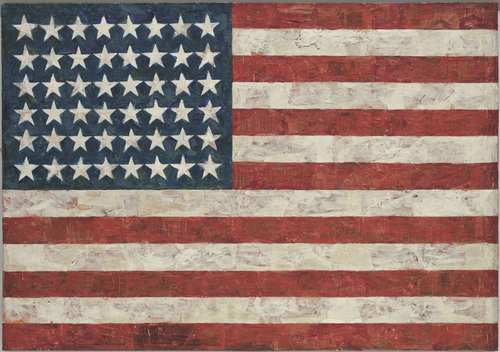
“One night I dreamed that I painted a large American flag,” Johns has said of this work, “and the next morning I got up and I went out and bought the materials to begin it.” Those materials included three canvases that he mounted on plywood, strips of newspaper, and encaustic paint—a mixture of pigment and molten wax that has formed a surface of lumps and smears. The newspaper scraps visible beneath the stripes and forty-eight stars lend this icon historical specificity. The American flag is something “the mind already knows,” Johns has said, but its execution complicates the representation and invites close inspection. A critic of the time encapsulated this painting’s ambivalence, asking, “Is this a flag or a painting?”  -- (from the Museum of Modern Art's Gallery Label text, 2011)


When Johns made Flag, the dominant American art was Abstract Expressionism, which enthroned the bold, spontaneous use of gesture and color to evoke emotional response. Johns, though, had begun to paint common, instantly recognizable symbols—flags, targets, numbers, letters. Breaking with the idea of the canvas as a field for abstract personal expression, he painted "things the mind already knows." Using the flag, Johns said, "took care of a great deal for me because I didn't have to design it." That gave him "room to work on other levels"—to focus his attention on the making of the painting.

The color, for example, is applied not to canvas but to strips of newspaper—a material almost too ordinary to notice. Upon closer inspection, though, those scraps of newsprint are as hard to ignore as they are to read. Also, instead of working with oil paint, Johns chose encaustic, a mixture of pigment and molten wax that has left a surface of lumps and smears; so that even though one recognizes the image in a second, close up it becomes textured and elaborate. It is at once impersonal, or public, and personal; abstract and representational; easily grasped and demanding of close attention.  -- (From The Museum of Modern Art, MoMA Highlights, New York: The Museum of Modern Art, revised 2004, originally published 1999, p. 232.

Jasper Welcomes Jillian Owens to the Theatre Review Team


As Jasper builds our blog to provide readers with up-to-date reviews of theatre and dance, we welcome Jillian Owens to the Jasper Theatre Review Team. Along with August Krickel, Jeffrey Day, Arik Bjorn, and others, Jillian will be lending her critical eye to opening nights of theatre about town and sharing her insights with you as quickly as possible so that you can make informed decisions about how to best spend your local theatre dollars.

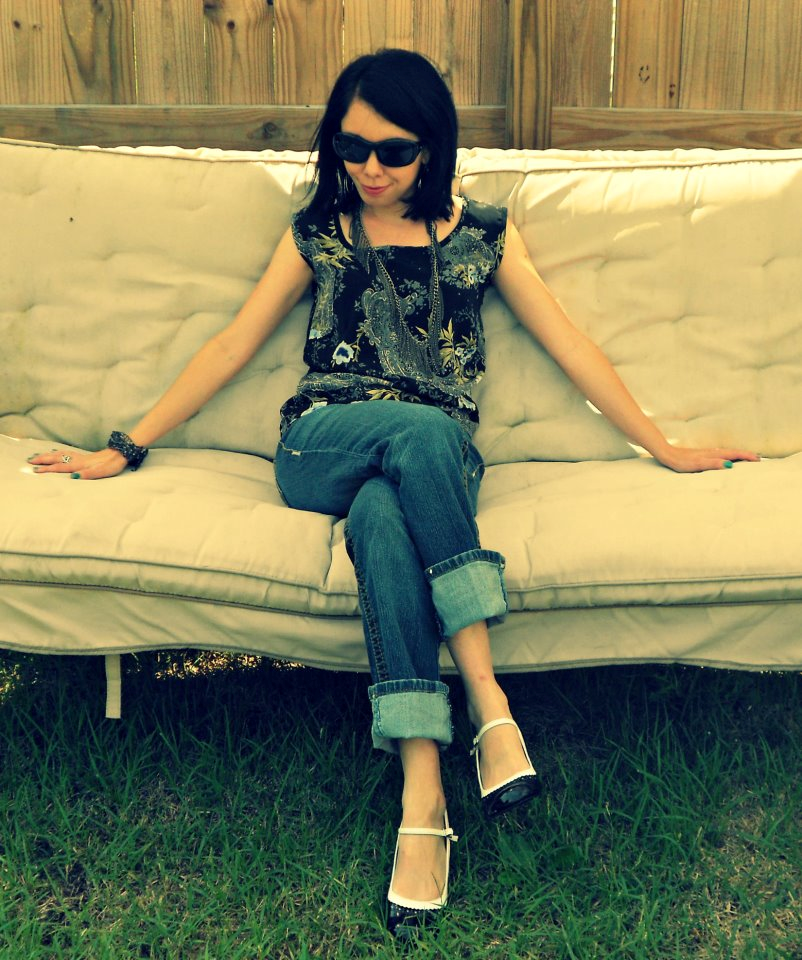
A Columbia transplant, Jillian Owens graduated from the University of South Carolina with a BFA in Theatre and English.  She has worked in many areas of theatre, both locally and nationally, including set design, lighting design, costume design, stage/production management, and acting.

By day, Jillian works for the South Carolina Arts Commission as their Grants Manager.  By night, she writes at ReFashionista.net, her world-renowned recycled fashion blog.

Please help us welcome Jillian to the Jasper Family!


Would you like opening night of your play reviewed? Please contact August Krickel at Akrickel@JasperColumbia.com

The Freshniz: Volume 2 -- Saturday Night!

“Live magazine” sounds a bit oxymoronic.  Whether proactively or reactively, magazines expose, summarize, analyze, and/or relate events; but rarely, if ever, are they events in and of themselves.  Saturday at Conundrum, southeast-based art cooperative the Izms of Art will blend these two aspects of spectacle and journalism into “The Freshniz: Volume 2.”

The Izms of Art, like many of the organizations Jasper features, “strive[s] to push the boundaries of expression.”  In order to do so, members and affiliates fuse a variety of artistic media (including, among others, visual art, graphic design, tattooing, and music production) and instill in the public a more complex understanding of and appreciation for art.

Izm’s multifaceted approach to creative pursuit is a product of the multitalented individuals that comprise it; each member possesses an impressive resume indicative of trans-genre capability: certified audio engineer DJ B (aka B Sam) boasts an extensive knowledge of music, audio, and video production; Carl “Fahiym” Jones engages in various forms of creative writing, including fiction, poetry, and hip hop; Dalvin "Mustafa" Spann offers expertise in graphics, photography, videography, and web design; Tahirah Spann explores “the blurry line between an art form and a craft”; Uncle Vic contributes as a painter, illustrator, graphic designer, and MC; barber, tattoo artist, and founding member of hip hop group The Shaaw Brothers, Jarrett “Un” Jenkins also expresses himself on canvas, paper, and cardboard.

According to Izms painter, illustrator, and writer Cedric Umoja, Freshniz is an opportunity for the community to “come out and enjoy the arts on different levels.”  He emphasizes that when we think of art, we often think of visual arts.  We forget that acting is art, writing is art, cooking is art.  The Freshniz allows for artists to expose the arts that are too infrequently identified as such.

Cedric admits that the concept of a live magazine did not originate at Izms.  He notes that they’ve been “occurring here and there throughout the country,” popping up sporadically and providing speakers with around five minutes each.  But Izms wants to bring consistency and depth to these intriguing events.  Saturday’s event will feature four speakers from various fields of art.  Speakers will be given twenty to twenty-five minutes to showcase themselves, their unique experiences, and their creative processes.

The Freshniz: Volume 2 will include presentations by: visual artist Infamous JeanClaude; producer, director, and videographer Betsy Newman; music producer Midi Marc; and producer Sufia Giza Amenwahsu of REEL Black Pix.  Conundrum’s doors will open at 6 PM, and tickets will be sold for $5 on arrival.

For more information about the Izms of Art, its members, or its events, visit their website (http://izmsofart.wordpress.com) and Facebook page (http://www.facebook.com/Izms.ofArt).  Izms plans to organize two more live magazines this year, so keep an eye out for volumes 3 and 4 of The Freshniz.

-- Austine Blaze, Jasper intern

Columbia city jazz co., is moving spaces -- by Chris Rosa


The always cutting edge, entertaining, and titillating Columbia City Jazz Dance Company has a very special performance for its captive audience. For three nights, the company will be performing "Moving Spaces" at the Harbison Theatre at Midlands Technical College.

The show, an electrifying revue of traditional and modern jazz, contemporary, hip-hop, and ballet, has an even further treat for audience members: a special guest appearance by Jeremy Strong from 'America's Best Dance Crew.' "We're [hoping] to attract audiences that traditionally go to the ballet and also new young audiences that are used to watching shows like 'So You Think You Can Dance' and 'ABDC,' Les Mizzell, husband to CCJDC Dale Lam, said.

The show, as Mizzell puts it, is all about introspection and the evolution of us as human beings. He hopes to personify these elements of life on the stage through movement. "'Moving Spaces' is about one's journey of self-discovery while moving through life's experiences," he said. The spaces are in fact the stages of life, and what the company is hoping to capture is the emotional roller coaster that everyone goes through.

This particular production has been grueling and time-consuming since its inception. The countless hours of dance rehearsals, theme imaging, and technicalities have strung out to almost a year. "We started in August. Probably the toughest part this year was timing. We just had out Summer Intensive a week ago. The planning and work that went into that backed right up into the rehearsal for this performance. Our senior dances were even learning choreography at the studio during the intensive, so they were there over 12 hours straight a day...or three!"

But all of the hard work has paid off. The show is this coming weekend and Mizzell and is excited to see how the audience interprets the performance. "We just hope to have a great turnout and everybody has a fantastic time," Mizzell said.

The performances will be on June 29th at 7 p.m. and June 30th at 1 p.m. and 7 p.m. Admission is $10.

Record Review: Sunshone Still - ThewaytheworldDies

Easily one of the most noteworthy acts in the South Carolina music scene (the group was recently named as one of the standouts from the state by Paste Magazine and has gotten rave reviews from both NPR and No Depression), Sunshone Still is the band/recording project of one Chris Smith, a local business owner who also happens to be a sharp-eyed indie folk-rocker with a love for nylon strings and Nick Drake (the name Sunshone Still is actually derived from one of Drake’s lyrics). In 2007, he produced an ambitious, weighty song cycle on Kit Carson and manifest destiny. Entitled Ten Cent American Novels and written in distinct chapters, the album painted an exquisitely harrowing image of Carson that belies the cheap, one-dimensional tales of its namesake.

On that record and one prior, 2005’s Dead Letters, Smith was mainly performing as a 21st century version of his somber hero, with a focus on a spare, intimate atmosphere over more traditional folk-rock. His hushed, beautifully haunting vocals and quiet backing played a big role on these albums, even though Smith was never averse to electric guitar flourishes and a drum kit (particularly on the more elaborate TCAN).

For his most recent effort, however, Smith has upped the ante.  While featuring his typically bleak-yet-literate subject matter (many of these songs are inspired by the recent suicide of his brother), Smith for the first time has an electric guitar in his hands more than an acoustic, and it shows. He’s also more willfully experimental than in the past, with a couple of songs that take liberally from the desert Mariachi feel of the Southwest indie rock band Calexico (the trumpet solo on the end of the title cut is particularly awesome) and one tune (“Boot”) that features a blues-industrial loop and a hip-hop bridge that is easily one of the most interesting tracks Smith has ever put to tape.

More than this move away from traditional into a freer sense of experimentation, the move to the electric, full-band approach gives a needed edge to the comfortably dusky and heavily melancholic vocals that are Smith’s trademark. Songs like “Jesus from the Chain,” performed on acoustic guitar, would fit comfortably on his earlier efforts, but add a distorted guitar and some eerily plucked piano notes, and the tune suddenly has a lunging urgency that carries the listener far more effectively to the denouement, where a dark string section and heavily reverbed percussion capture the catharsis in Smith’s enigmatic lyrics.

Other tunes like “I Would Kill” and “8 lbs” are almost straightforwardly country rock enough to make the group sound comfortable in the barroom for the first time, although not a whole lot of dancing would really take place to songs as heavy as these.

The album ends with two cuts that bring the acoustic guitar back to the fore, an appropriate move since the subject moves from grief and mourning to cartharsis and hope. The closing number (“Was and Will Be”), in particular, manages to shift the mood entirely, with a gentle accordion and a great guest vocal from Danielle Howle pushing a gentle lullaby as Smith’s lyrical focus shifts from the loss of his brother to the future of his young son.

It’s a beautiful, well-assembled record whose songs seem tautly bound together in a way that even the concept laden TCAN didn’t. And for my money, its easily one of the best efforts put forth by a Columbia musician this year.


The Power of the Pistol -- John Acorn at 701 CCA, opens Thursday


Contemporary art's purpose is to shock, be bold, daring, and brave. Explosive even. As we view a piece of cutting-edge art, there is a movement unlike anything else-- a visceral and raw, examination of societal, political, and personal issues. The art speaks to us because, frankly, the art is us. Charged with the ideals of humanity and the talent of an artist, contemporary works speak to us in ways that no other form of art can. It is for these reasons and more that South Carolina's renowned contemporary artist John Acorn is revealing his latest endeavor, Project Pistols, at the 701 Center for Contemporary Art from June 28th-August 12th.

With his latest installation, which seeks to discover the nuances of human nature through personifying day-to-day objects like a pendent, a pizza, lifesavers, a Palmetto tree, a heart, a crown, a wreath, a T-shirt, a person, and a skull, Acorn achieves new artistic heights. He does this through crafting these confections with something which he feels our culture is fascinated: firearms.

Yes, Acorn, who retired as chairman of Clemson University's art department in 1998, seeks to create a commentary about the aspects of life that bombard us through a medium that frightens, entices, and sometimes controls us. “My interest in using the pistol as a subject or theme for my recent artwork is part of my ongoing search and inquiry into the nature of our species, human beings,” Acorn says. “I do not intend to be a crusader or missionary on issues regarding firearms. I do admit, however, to wondering about the fact that my culture is so enamored with firearms.”

The nature of this installation will be full of harsh contrasts and shocking juxtapositions. In many of his pieces, Acorn associates day-to-day things like cars and books with the hard, daunting feelings of a pistol. For example, in his piece Life Savers for Pistols, Acorn drew inspiration from a normal SUV proclaiming “Guns Save Lives.” John also constructs food in his piece Pie of Pistols, which references a California pizza restaurant that refused to serve men who were armed. The social commentary and everyday occurrences are shrewdly exhibited in these pieces and more of Project Pistols, which even include a large charm bracelet, inspired by “a purchase of a birthday gift for my granddaughter, Mary,” according to Acorn.


Acorn was born in 1937 in Patterson, New Jersey, receiving a fine arts B.A from Montclair State College and later an MFA at the Cranbook Academy of Art. Sculpting was Acorn’s first artistic passion and this fervency has remained constant throughout his career. He cites Paul Harris as one of his many inspirations. He started work at Clemson University in 1961 as an art professor and later became chairman of the department in 1976. “John is an insightful critic, a gentle supporter, a model professional. He’s also a wonderful artist and craftsman,” local architect and 701 CCA board member Doug Quackenbush said. Even through decades and decades of teaching, working, creating, and living, Acorn’s passion for sculpting has stayed fiery and ardent. “I confess to being addicted to making things,” Acorn said. On his latest installation in finding art in everyday life, Acorn confesses that the “enlargement of objects and their positioning alter or transform them into new images.”

These new images are exciting the people at 701 CCA, for they feel Acorn’s project is a breath of fresh air in the world of contemporary art. “It is very good. It is spectacular even. It is ambitious and consists of work that is very smart in its conception and just beautifully executed. What Acorn has created is a brave commentary on our culture in visually spectacular works of art. His work is constantly relevant and cutting edge,” Wim Roefs, chair of 701 CCA board of directors, said. The installations is causing much excitement for Clemson alumni and arts lover alike, and even more so for 701 CCA, whose staff cannot wait to see what Acorn’s works will do for the gallery. “We’ve never done anything like this before. It is visionary,” Roefs said.

The exhibition is sponsored in part by Columbia, S.C., architectural firms Catalyst Architects, Garvin Design Group, J. Timothy Hance, Architect, P.A., Jumper Carter Sease Architects, Quackenbush Architects + Planners, and The LPA Group. Acorn’s reception for Project Pistols will be on Thursday, June 28 from 7 to 9 p.m. The event is free and non-members are suggested to give a $5 donation.


-- Christopher Rosa, Jasper intern

Guest Blogger Jillian Owens - the Refashionista - Reviews "Almost An Evening" at the Trustus Black Box

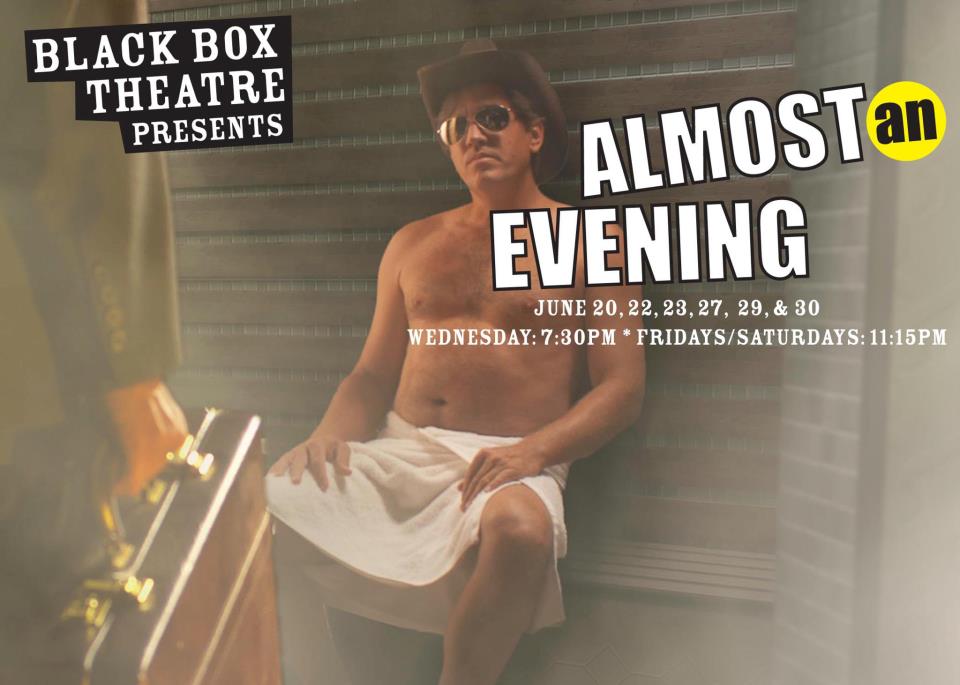
Trustus Theatre's latest Black Box production, Almost an Evening, shows us that while it may take two Coen brothers to bring their signature “What the hell was that????”-ness to films, one Coen brother (Ethan) is more than up to the task of bringing that same mind-bending (perhaps mind-humping would be a better word) writing style to the theatre. The show consists of three one-act vignettes, featuring 8 cast members, most of whom appear in all three plays, in dramatically different roles.  While most productions of Almost an Evening have the same director for each of the plays, Trustus split this task between three directors, and with mixed results.

Part one is directed by Heather McCue, and aptly titled, “Waiting”.  It takes place in the most depressing waiting room you could possibly imagine.   This is where Nelson, played by Gerald Floyd, suddenly finds himself.  He soon surmises that this is purgatory, and is reassured that he will be going to heaven in a mere 822 years.  What follows is an exploration of one man’s high-stakes struggle with bureaucracy and despair.  Floyd makes a sympathetic and realistic Everyman, and brings a great deal of emotional range to his role.  Jason Stokes makes a brilliantly snarky Mr. Sebatacheck.  The Receptionist, played by Vicky Saye Henderson, barely speaks, but manages to say pleeeeenty.   The whole thing is darkly funny, and the ending (or lack thereof) will surprise you.

Part Two, Four Benches, directed by Daniel Bumgardner, felt a bit lacking in comparison.  The action of this vignette occurs between four benches, hence the title.  Kendrick Marion plays a secret agent with a heavy heart and a guilty conscience - but it felt as if Marion was in the wrong play.  His performance seemed forced, with lots of mugging and a poorly executed British accent.  His stiff mannerisms didn’t play as his character being uncomfortable in a tragic situation, but rather as an actor who isn’t comfortable in his role.  The other two main characters, played by Stokes and Floyd, were vastly more fleshed out and compelling, and delivered their heavy Texas accents convincingly.  This had the potential to be the most powerful and moving of the three vignettes, but it never quite happened.

Part Three is easily the most lighthearted part of this show, and the best-acted.  Directed by Larry Hembree, Debate opens as a bizarre play-within-a-play argument between a God Who Judges and a God Who Loves, but soon evolves into a heated battle of the sexes.  Shane Silman, who plays bit parts in the other vignettes, is a perfect ego-driven playwright/actor who just wants a little respect (and a lot of praise, dammit.)  Here Marion absolutely shines as a peevish and pissed-off Maître D’.  He shows great flair for comedic timing and physical comedy, and is obviously in his element.  Henderson is a sweet girlfriend with an edge whom you really shouldn’t piss off (when the glasses come off, you’re in trouble) and Robin Gottlieb is a delightfully spunky partner for a bickering session with Stokes.  It ends on an upbeat note, as if to cleanse the audience’s pallet of all the darkness and despair of the first two plays, so they can go grab a cocktail with almost-easy minds.

Almost an Evening runs from June 20th-June 30th, with performances at 7:30 PM on Wednesdays, and 11:30 PM on Fridays and Saturdays.  This is definitely an adults-only show (why would you have the kiddos up at 11:30 PM anyways?) with profanity, violence, and nudity (ladies…you are in for a treat!)  Clocking in at just under an hour and a half, Almost an Evening will easily provide a thought-provoking and humorous night of entertainment…no almost about it.

~ Jillian Owens

Playing After Dark -- This Friday and Saturday Nights

Neither cartoons, puppets, video games, nor music sound all too foreign.  Unless you’ve been living under a rather sizable rock (or had the misfortune of attending an artistically disinclined South Carolina public school), you’ve undoubtedly encountered each of these creative media before.  But chances are you haven’t encountered them together as a single, collaborative event.

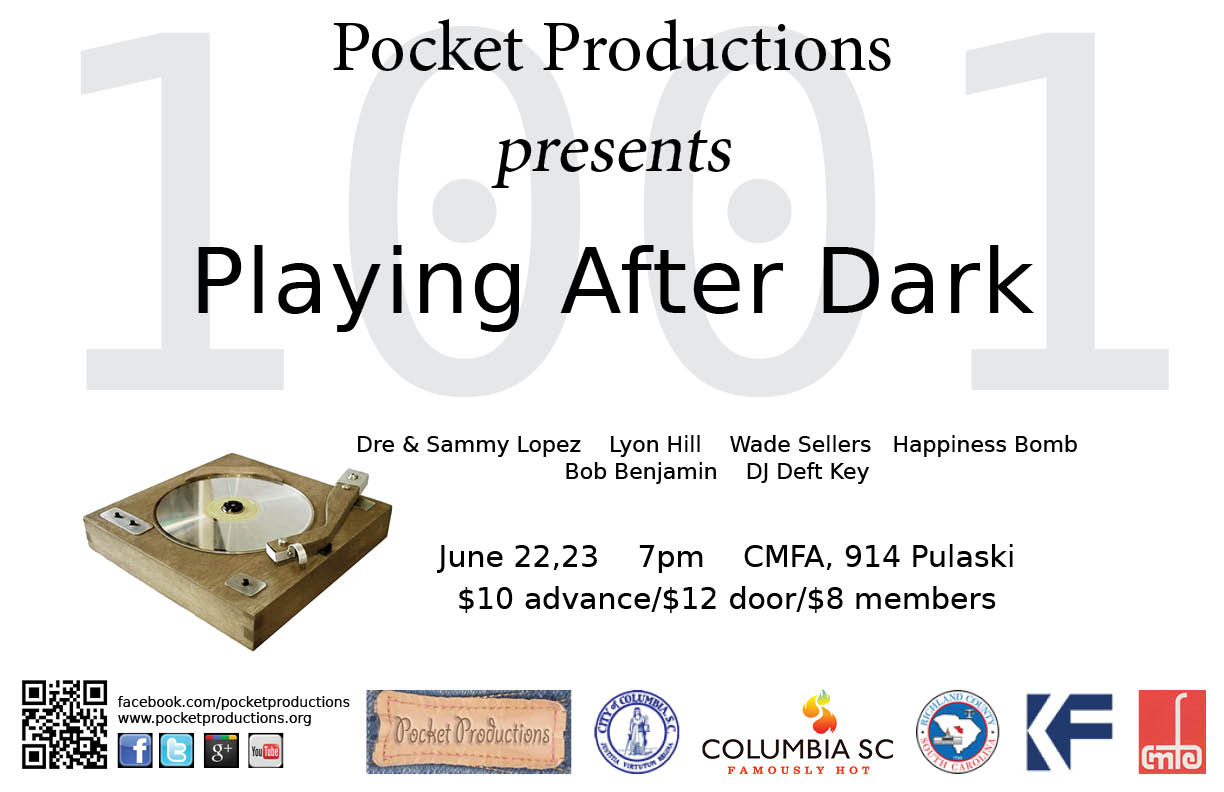
This Friday and Saturday, Pocket Productions affords you the opportunity to do so.  Since 2009, this local arts organization has been expanding the public’s definition of art by exposing Columbia to innovative examples of interdisciplinary artistic cooperation.  Their “Playing After Dark” series, in particular, has introduced audiences to visual, musical, performing, and even culinary arts.

This weekend’s installment of Playing After Dark (titled “1001”) revolves around the unique collaboration between digital and analog art.  It will feature the following performances: Dre and Sammy Lopez of Piensa Art Company will present a combination of digital and analog drawings; Lyon Hill (puppetmaker and puppeteer with the Columbia Marionette Theatre) and Wade Sellers (commercial producer/director and owner of Coal Powered Filmworks) will perform a marionette/cartoon act; Professor Fripples (brilliant young programmer David Hamiter) will show off an audio controlled video game that runs alongside a puppet show; and DJ Deft Key (Entropy Studios’ producer, sound engineer, multi-instrumentalist, and remix artist) and singer/songwriter Bob Benjamin will perform a fusion of digital and acoustic music.

Playing After Dark “1001” begins at 7 pm this Friday and Saturday at CMFA Arts Space (914 Pulaski).  Tickets are available for $10 in advance (online at www.pocketproductions.org), $12 at the door, or $8 with membership.  In addition to the one free drink with admission, fine IPAs, stouts, Merlot, Syraz, and hors d’oeuvre will be available.  The event may also feature a “puppet” boiled peanut stand courtesy of Happiness Bomb (a diverse group of artists, musicians, designers, programmers, and, of course, puppeteers).

For more information about Pocket Productions, check them out on Twitter (twitter.com/PocketProSC) and Facebook (facebook.com/pocketproductions).


-- Austin Blaze - intern, Jasper Magazine


Avenue Q at Trustus Theatre - A Review

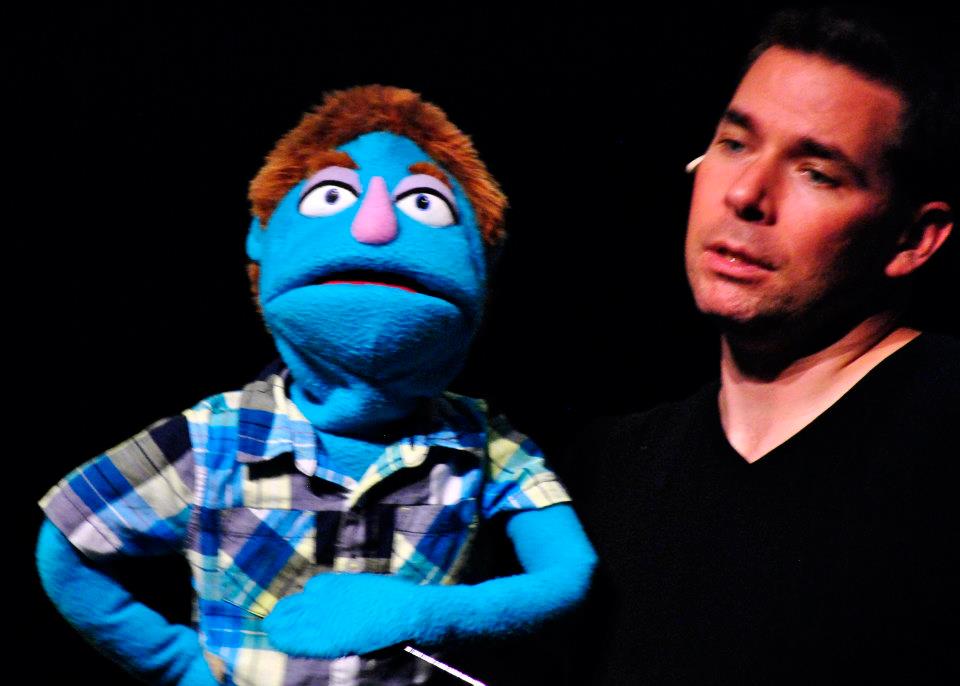
Avenue Q, the new summer show now running at Trustus Theatre, is a lively, witty, naughty musical romp through the challenges of young adulthood in the big city, told via catchy, silly, bouncy songs, performed by puppets. Well, by live actors, four of whom give voice and life to a number of Muppet-style hand puppets.  For sheer escapism and entertainment, you absolutely will not be disappointed by this triple Tony winner that ran for over six years in New York, and still thrives and prospers off-Broadway today.

With music and lyrics by creators Robert Lopez and Jeff Marx, and book by Jeff Whitty, Avenue Q  follows the adventures of recent college grad Princeton, an archetypal naïf looking for his meaning in life... or perhaps just a job, and a cheap place to live, which he finds in the low-rent zone of Avenue Q.  Princeton is Everyman (or Everypuppet) at 22, and this theme has been explored countless times over the years, in films like How to Marry a Millionaire, musicals like How to Succeed in Business, and even the current HBO series Girls.  The show's brilliance lies in its reinvention of the coming-of-age genre, using multi-colored felt and cloth puppets, especially since the impression conveyed is that we are seeing the familiar Sesame Street characters all grown up, and having to confront the realities and responsibilities of maturity.  A disclaimer in the program makes it clear that there is no actual connection to any Jim Henson creations or properties; one imagines that at this stage, Elmo, Kermit and friends are such cultural icons that they classify as public figures, and therefore fair game for parody and satire.  Unlike the Muppets, however, the audience actually sees each performer skillfully manipulating his or her diminutive alter-ego, and so the relevant expressions and emotions are visible on the live actor's face as well.  All are attractive and talented, causing one to want to follow them on stage, but just as much attention needs to be paid to the puppets, who are the actual characters.

Performing Princeton, Kevin Bush finds just the right tone to seem sympathetic, yet still a bit of an immature tool.  A subplot revolving around an ambiguous pair of roommates (think Bert and Ernie) features Bush as Rod, an uptight and closeted yuppie banker whose nose and eye design are as phallic as his name.  Rod's denial of his sexuality and feelings for his best friend become increasingly ludicrous, culminating in a stream-of-consciousness musical fabrication about an imaginary girlfriend, from Canada, named Alberta, who lives in... ummm... Vancouver.  The ever-youthful Bush could really have played either of these roles quite believably in a "normal" play; I do wish there were a bit more distinction in their voices, especially since between the two characters, he has at least 50% of the dialogue in the show.  Still, he's a great singer and a delight to see.

Katie Leitner as Princeton's love interest, Kate Monster, is equally appealing.  Looking back over my notes, I see at least half a dozen times where she duets with Bush or joins in a group number, and I have jotted down "beautiful harmony" or "incredible voice."  Her solo "Fine Fine Line" (a melancholy reflection on the difference between lovers and friends) could easily have been part of a "serious" musical, whereas most of the other songs replicate the sing-song style of a children's show.  With no way to really change the facial expression of the hand puppets, emotions must be conveyed by adjusting their posture or position; somehow Leitner expertly manages to depict Kate Monster as a sloppy drunk, with her hair falling into her face, and the moment is one of many comic highlights.  She also gets to create Lucy the Slut, who oozes mint-julep sultriness and temptation, with a rich deep voice an octave or so lower than Kate's.  Brien Hollingsworth also displays amazing diversity in his voice characterizations as four different characters, including Trekkie Monster (addicted to porn in lieu of cookies) and Nicky, who accepts BFF Rod's sexuality long before Rod acknowledges it.  Hollingsworth and Elisabeth Smith Baker perform Nicky together, and also appear as the Bad Idea Bears, Care Bear-like apparitions who suggest things like chugging Long Island Teas the night before an important day at work, or using funds sent from the 'rents to buy some beer, and it might as well be a case, since those are better bargains.  Baker probably does the best at recreating the perky, cartoonish voices one expects, and also helps to manipulate most of the other puppet characters when their principal portrayers are busy, e.g. she performs Lucy's movements when Leitner is performing Kate. Through some skillful choreography and misdirection, rarely can one ever tell that the principal actor is doing both voices, and this also means that Baker has to know not only her own characters' lines, but most of the rest of the script too, in order to move the puppet's mouth at the right moment, in synch with the right dialogue. The other three performers accomplish this as well, but Baker is perhaps the best at turning invisible on stage, this being that rarest of times when that's a good thing.  And did I mention that Princeton and Kate engage in some graphic puppet sex?  Well, as graphic as hand puppets who only exist from the waist up can get, but that's incredibly, and hilariously, graphic.

Just like Sesame Street, there are human characters too, similarly disillusioned 20-somethings, played by G. Scott Wild, Annie Kim, and Devin Anderson.  While these characters are never fully developed, the performers are excellent, and their voices blend beautifully with the rest of the cast.  Director Chad Henderson brings the customary style that I have come to expect from his shows:  everyone is completely believable in their characters, everything moves at a lively pace, and there's never a dull moment on stage, even in transitional moments and bridging scenes.  Musical Director Randy Moore capably leads four other musicians and never once drowns out the singers.  Danny Harrington's set is ostensibly a simplistic, child-like facade of an apartment row, but utilizes striking colors and odd angles (much like his recent set for Grease at Town Theatre) to make an attractive visual statement.  Performers frequently have to make rapid exits in time to appear as another character in an upstairs window, and I'm guessing the true extent of Harrington's design can only be appreciated from backstage, as everything seems to flow quite smoothly.   There's also a multi-media component, incorporating a tv-like screen that projects video clips (created by Aaron Johnson) and little visual lessons, in that same Sesame Street style.  The excellent puppet creations are by Lyon Hill (profiled in the cover story of the current issue of Jasper - The Word on Columbia Arts) and Karri Scollon, the result of a collaboration between Trustus and the Columbia Marionette Theatre.

Trustus of course is at a crossroads, with new leadership coming in, and the ever-present challenge to stay true to their mission (edgy shows from NY that might not be done elsewhere locally) while giving the audiences what they want (which by and large is light, frothy, silly musical comedies.)  Through some happy harmonic convergence, Avenue Q  manages to do both simultaneously.  The only caveats might be:  a) however adorable the puppets may be, and however appealing the performers, the humor and language is decidedly R-rated, so consider yourself forewarned, or titillated in advance, as the case may be; and  b) the score is quite catchy and eminently hummable, but no moreso (and no less) than any good Muppet Show song.  As above, coming-of-age stories are nothing new, and have been depicted musically as recently as March's Passing Strange, which was wildly popular among most artists, musicians and theatre folks I know. For me, however, Avenue Q  is the most entertaining production I've seen at Trustus in years, and certainly the best show I've seen locally since Victor/Victoria  at Workshop some 15 months ago.  Retelling  fundamental and timeless themes using a new, unexpected, yet also familiar story-telling technique is simply a stroke of genius, and you owe it to yourself to take a trip down to Avenue Q.

Avenue Q runs through Sat. July 21st; contact the Trustus box office at 803-254-9732 for ticket information.
~ August Krickel

(Photo credit - Bonnie Boiter-Jolley)

Southeastern Piano Festival wraps up 10th anniversary year with great attendance, competition winners and significant donation


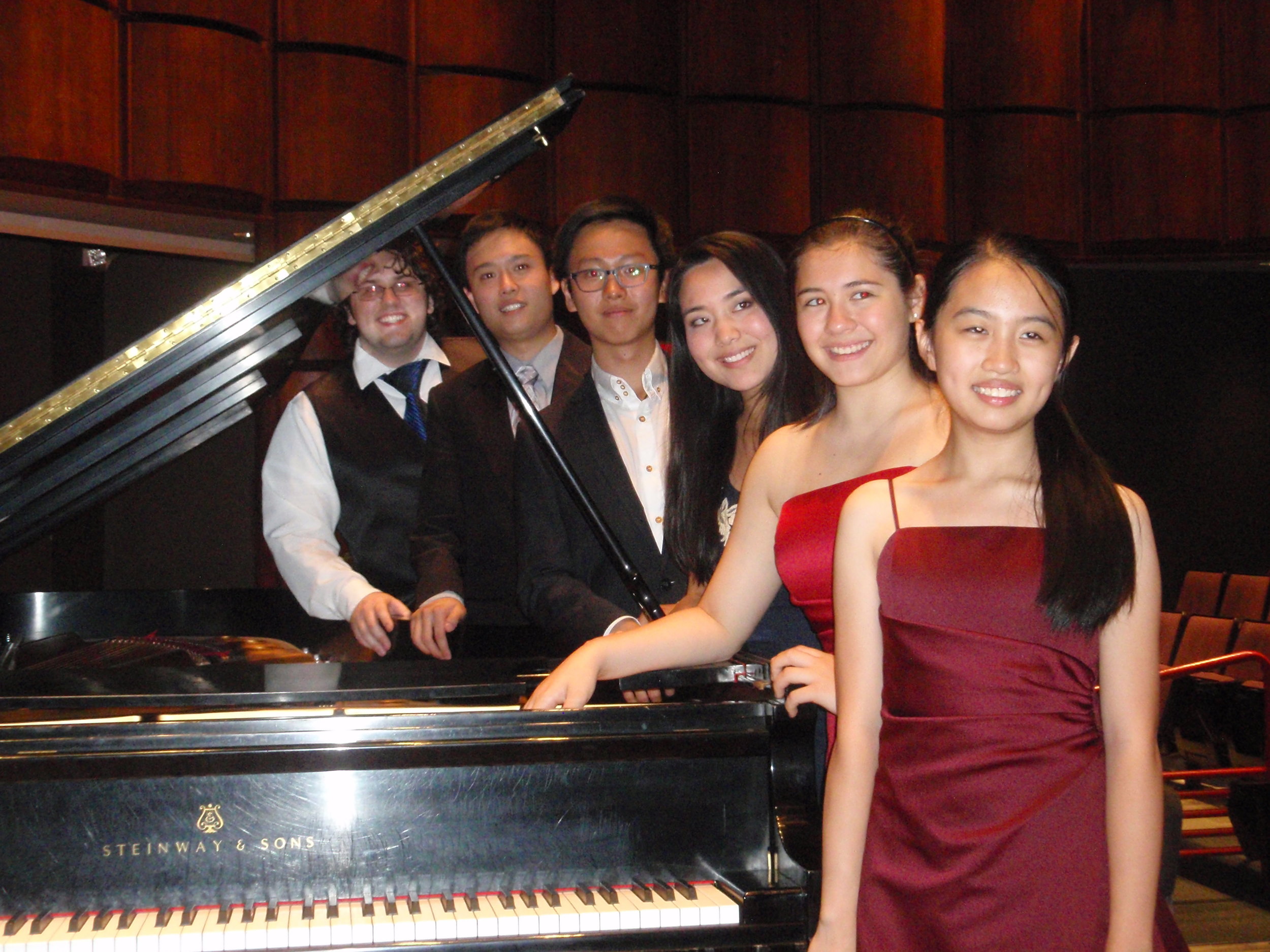
The Southeastern Piano Festival wrapped up Saturday night June 16 with a concert by the winners of the Arthur Fraser International Concerto Competition and the announcement of a $20,000 gift to the festival. The Festival, June 10 – 16, had its most successful year ever with record attendance at concerts including 1,500 at its opening Piano Extravaganza Concert at the Koger Center for the Arts.

“This has been an amazing year with extraordinary students and guest artists and wonderful music that has been shared with large and enthusiastic audiences. To cap it off with an announcement of this gift is the perfect way to end our 10th anniversary festival,” said Marina Lomazov, Artistic Director of the Southeastern Piano Festival.

The first place winner of the Fraser Competition was Dong Yeon Kim of Idyllwild, Calif. The second place winner was Kevin Ahfat of Centennial. Colo., and third place was won by Evelyn Mo of Herndon, Va. Discretionary awards went to Vanessa Meiling Haynes of Shrewsbury, Mass.; Michael Lenahan of Rossford, Ohio; and Rieko Tsuchida of Mill Valley, Calif.

Artistic Director Marina Lomazov announced that an anonymous donor will match dollar for dollar up to $20,000 all donations made to the Piano Festival. The unnamed donor is a long-time supporter of the festival.

Also announced at the closing event is that Joseph Rackers, an assistant professor of music at the USC School of Music and Festival faculty member, will become co-director of the festival.

The Southeastern Piano Festival is composed of a week-long training program for pre-college students coupled with a series of concerts by accomplished pianists. This year 20 students from around the nation and one from Australia took part in the competition.
The top award winner Dong Yeon Kim has been grand prize winner of the Lake Lewisville Competition and in the Lynn Harrell Concerto Competition and has won top awards in the New Orleans International, Dallas Symphonic, National Young Artist Institute, MTNA, Wysong-Joplin and Denton Bach Society competitions. He has performed with the Dallas Symphony under conductor Jaap van Zweden. A native of South Korea, He moved to the United States in 2007 to continue his music studies.

As first place winner, he will receive a $3,000 cash award sponsored by Rice Music House-Steinway Pianos and the opportunity to perform with the South Carolina Philharmonic. The competition is sponsored by the Symphony League of the S.C. Philharmonic and named in honor of the founding music director of the Philharmonic.

Kevin Ahfat was a Silver Medalist at the Fifth Schimmel USASU International Piano Competition, first prize winner in the Boulder Philharmonic, Steinway & Sons and Bradshaw & Buono international competitions. He has performed with the Colorado Symphony, Arapahoe Philharmonic and will perform with the Breckenridge Music Festival Orchestra in August as first prize winner of the 2012 Schmitt Music Competition. He will begin studies at the Juilliard School in the fall.

Evelyn Mo is an eighth grader whose awards include first prizes at the 2012 Blount- Slawson Young Artist Concerto Competition, 2011 Chopin International Piano Competition, 2011 MSMTA Beethoven Sonata Competition, and the International Young Artist Piano Competition in Washington, DC, in 2008 and 2010. She has been invited to appear on NPR’s “From the Top’’ and has performed at the Kennedy Center Millennium Stage and the National Gallery of Art.

The second and third place winners receive $1,500 and $1,000 respectively.

The competition jury was composed of Boris Slutsky, jury chairman and Peabody Conservatory Piano Department Chairman; pianist Alessio Bax; Natalya Antonova, Eastman School of Music Professor of Piano; and Morihiko Nakahara, Music Director of the S.C. Philharmonic. Dong Kim was also awarded the Young Jury Prize selected by a panel of USC School of Music graduate and doctoral students.

-- Jeffrey Day


Reach Jeffrey Day at Carolinaculture@hotmail.com and visit us at Jasper at www.JasperColumbia.com


Arik Bjorn Reviews Cinderella at Columbia Children’s Theatre: Bippity-Boppity Buffoonery with a Spaghetti Twist

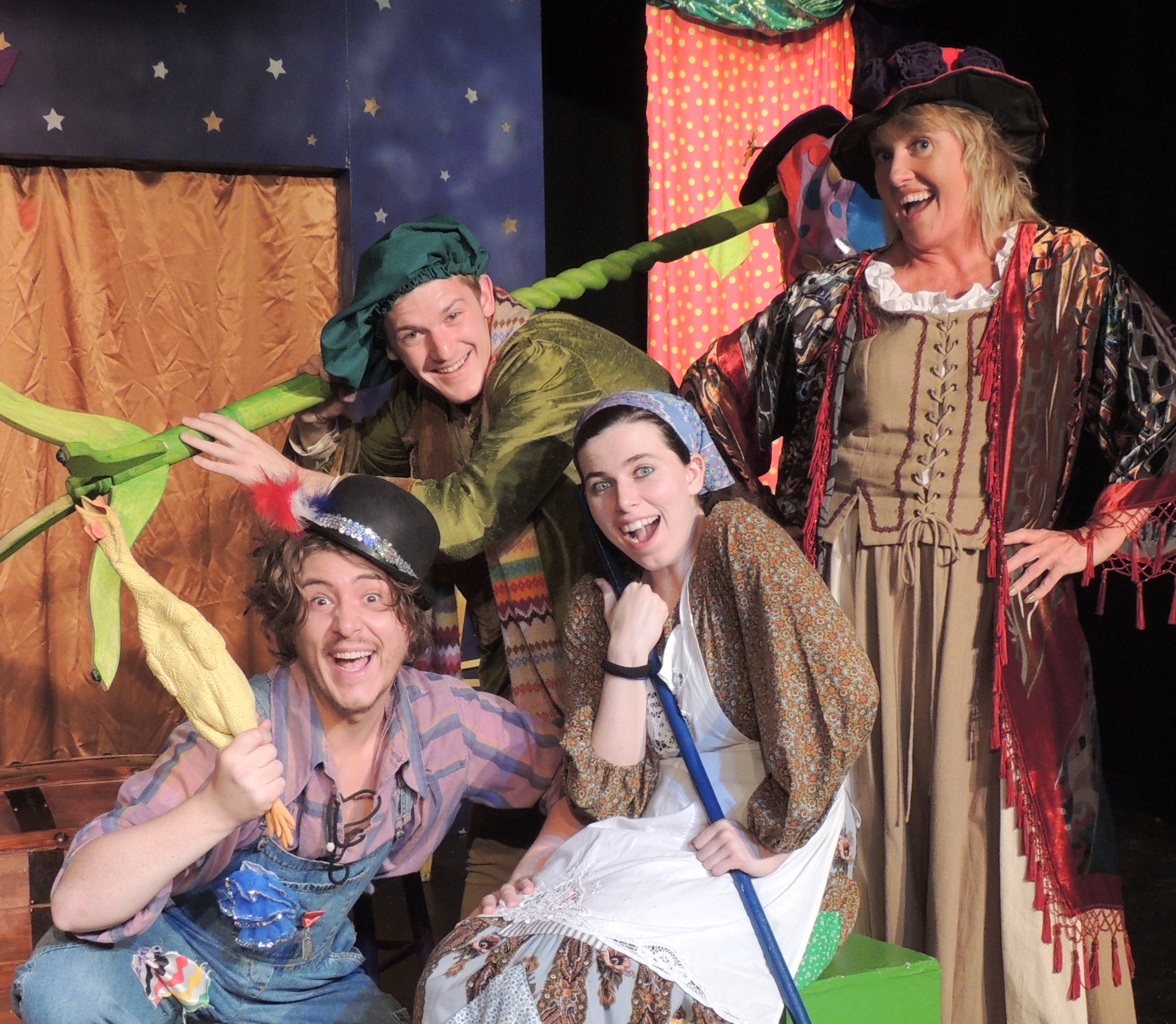
Somewhere in Columbia this evening, the minds of sleeping children are processing the uproarious phenomenon that is Columbia Children’s Theatre’s current Commedia dell'Arte production of Cinderella.  Until tonight, these innocents had never heard Olivia Newton-John sing “Xanadu.”  Never once had it occurred to them that a princess could be bippity-boppity-beautiful in a hot pink and floral poodle skirt and piggy slippers.  And they have no idea why their parents’ bellies burst with laughter over references to some guy named Dick Cheney and tapeworms, and at the unbridled performance of a white trash, uni-browed wicked stepmother, who makes Norma Desmond look like Mother Teresa. These flowers of our future returned to the comfort of their domiciles on Cinderella’s opening night with a renewed, perhaps refined, appreciation of clowning and fairy tales.  And when their cerebellums finally finish stripping away all the layers of buffoonery and silliness sometime in August, what will remain is the essential truth that beauty on the inside matters most.  That, and never be the last one caught holding a rubber chicken at the end of a Keystone Cops-style chase scene.

If you have never attended Columbia Children’s Theatre, your family is in for a real treat, one which begins well before the house lights are dimmed.  First, you will be doing society a great service by patronizing the only retail mall space in the world that has managed to redeem the boxed blandness of space usually reserved for Aeropostale and Banana Republic outlets.

Artistic Director Jerry Stevenson and Managing Director Jim Litzinger have built a children’s thespian wonderland on the second level of Richland Fashion Mall.  Children enter a lobby space filled with suits of armor, masks, and costumes, then are swiftly separated from their parents like wheat from chaff, the adults condemned to “grown-up chairs” while the tots are invited to dance to “Y.M.C.A.” and “The Hokey Pokey” on a brightly-checkered, padded floor space in front of the stage area.  Children eat popcorn and Skittles, adults sip Coke, and everyone has a relaxed sense that this is the kind of theatre that was designed in Willy Wonka’s world of forms.

As to the show itself, the above tidbits have prepared you for the fact that this is not your average Cinderella production.  The curtain rises (or, rather, is tossed off stage left), and the (Jiminy) crickets begin.  Literal crickets, actually, prompting a series of knowing chuckles from adults, and bewildered looks by children.  Then a comedic troupe with mock-Italian accents, presenting itself as the Spaghetti & Meatball Players, demolish the fourth wall, and begin banging into each other with parasols and hat racks.  From there, it’s a jet-fueled, jolly joker jaunt into humor hyperspace.  Eighty minutes later, adults and children alike are ready for giggling triage.

One cannot applaud enough the work of director Sam LaFrage, who, thankfully, has also provided a functional explanation of Commedia dell'Arte in the show program, for parents who mayfeel compelled to explain to their children why this production did not resemble Walt Disney’s familiar version.  (Actually, as a parent of a four-year-old daughter, I do recommend that parents explain there will be some differences in advance to their children.  My daughter Katherine loved the show, and cherished her onstage dance with actor Edward Precht, who plays the Prince and Meatballer Pantalone, yet she wanted a little reassurance afterwards that Cinderella’s castle estate in Orlando hadn’t been sacked and overrun by Italian clowns.)

As to the other Meatballers, Elizabeth Stepp brings enough pure energy to the stage to keep the Olympic flame alive until 2020.  Paul Lindley II and LaFrage (who moonlights as director and Meatballer) play gender-bending stepsisters of such pure, perfidious evil that I expected Macbeth’s Hecate to rise from the depths in the guise of Snooki.  LaFrage also brings down the house at one point as a ding-a-ling Chip Potts, lampooning the classic song “Beauty and the Beast.”  And Beth DeHart’s dual roles as roller skating fairy godmother and wicked stepmother Viola Scruffanickle quite nearly put one adult sitting near me into comic cardiac arrest.

Don’t just go to this show.  Go in droves.  Bring your neighbors.  Bring your friends.  Bring your worst enemies, and let the goofiness settle your long-term differences.  (For all that, consider the excellent weekday group rate that Columbia Children’s Theatre offers.  See website below for more details.)  But most importantly, bring your children.  Bring everyone’s children!  Then immediately afterward, have them call their grandparents and enjoy the pure thrill of watching them try to explain every strange and wonderful hilarity they have just experienced.

 ~ Arik Bjorn

Cinderella runs June 15-24, with performances at the following dates and time:  Friday, June 15 at 7 p.m.; Saturday, June 16 at 10:30 a.m. & 2 p.m.; Sunday, June 17 at 3 p.m.; Wednesday, June 20 at 10:30 a.m.; Thursday, June 21 at 10:30 a.m.; Friday, June 22 at 10:30 a.m., 1 p.m. & 7 p.m.; Saturday, June 23 at 10:30 a.m. & 2 p.m.; Sunday, June 24 at 3 p.m.; and a special Thursday, July 19 performance at 10:30 a.m.  Tickets are $8 for adults and children ages 3 and up.  The Columbia Children’s Theatre is located at the Second Level of Richland Mall, 3400 Forest Drive (corner of Beltline and Forest Drive).  Enter the Second Level parking garage walkway and park in Level 2-L for easy access.  Call 691.4548 for more information or to reserve tickets for groups of 10 or more.  To learn more about Columbia Children’s Theatre, visit http://columbiachildrenstheatre.com/ .

Kristine Hartvigsen launches new book To The Wren Nesting


Kristine Hartvigsen is truly an artist.

An Associate Editor at Jasper, Hartvigsen is releasing her first book of poems, To the Wren Nesting, published by Muddy Ford Press. This a dream come true for Hartvigsen, and she feels now is the right time to share her collection of poetry, which spans several years of creative work, to the arts community in Columbia.  “It’s all about opportunity, really. When the people at Muddy Ford Press approached me about publishing a poetry chapbook, I was in. I was thrilled that they thought my poems would make for a good read.”

Poetry, and the arts in general, have been flowing through the veins of Kristine since she was a child. As an “Army Brat,” Kristine grew up in several places around the country and world. Her father, a former Army officer, physician, and hospital commander, unfortunately had a drinking problem and rage control issues. “My formative years were split between San Francisco and Frankfurt, Germany. My dad was brilliant, but he was abusive to the whole family for years. As a child, my self-worth was virtually non-existent.”


These years of relentless pain, however, did expose Kristine to the arts for the first time, and her passion began.  “I believe my love for the arts originated with my very complicated father, who was an avid collector of paintings and he was also a gifted artist himself. It was difficult for him to be truly happy, but he found great pleasure in the arts.”

As did Kristine.

Although it took Kristine several years of school, she eventually focused her broad love for the arts into one specific form: poetry. A former newspaper journalist, Kristine sought to write fiction, but never poetry. However, a 1990 experience changed her life.  “I was invited to participate in an informal writers’ group. It turned out that the majority of people in the group were poets. I initially wanted to write fiction, so I was disappointed. However, I stuck it out in the group and within a year I fell in love with poetry.”

A budding poet was born after this workshop. With this new passion, she found herself running a poetry series at the Art Bar in Columbia from 1997 to 1999. “[The experience] was so much fun. It was a wonderful escape one night a week to sort of let loose and be creative. I made a lot of new friends and got to overcome my basic fear of public speaking.”

Throughout all of this time, Kristine was writing poetry. Her years of writing garnered many eclectic poems, yet at the same time she has a distinctive artistic process.  “I ‘follow [my] nose.’ I will get a little crumb of an idea, or an image, or a phrase that brings all sorts of thoughts to mind.  I will explore that by jotting down words that articulate that.  Usually the first, most instinctive thoughts are the strongest.  Sometimes these thoughts can be linked. If not, they may find a home in another poem.  As I compose, a tiny story starts to form.”

Thirteen years later, when Muddy Ford Press asked her to compile a book, the task was daunting.  “I was a little worried that I wouldn’t have enough for a book, but eventually I decided on 46 titles. The title is actually a poem in the book about the environment and how humans and civilization continue to ignore the consequences of our actions and displace and push out innocent species that have been here so much longer than we have.”

Kristine’s incredible book certainly describes many sensory images and addresses important societal issues. Still, she cannot believe her book is published. “It is a little bit surreal and I still question whether I deserve it, whether the work is really good enough. I’ll always do that. It’s just the way I’m wired.  I like to tell stories, particularly if they can inform and inspire. In the end, my brightest hope is that people will relate to something they read in my book and enjoy it. ”

--

Kristine will be signing and reading from her book, To The Wren Nesting on Saturday June, 30th from 6 – 8 at Wine Down on Main at 1520 Main Street.

To The Wren Nesting is available online at Amazon.com, Barnes & Noble, and at

MuddyFordPress.com


Muddy Ford Press is a family-owned publishing company located in Chapin, SC and dedicated to providing boutique publishing opportunities for South Carolina writers and poets. For more information find us at www.MuddyFordPress.com, 803.760.4455 or write to publisher@muddyfordpress.com