Meet the Filmmakers for The 2nd Act Film Festival - pt. 1

2nd act single cam The 2nd Act Film Festival is a unique take on the curated film project. Presented by Jasper Magazine, its mission is to encourage and promote the growth of independent filmmaking in South Carolina.

We gave filmmakers the 1st Act and the 3rd Act (one page each) of a script. The filmmakers job was to write the 2nd Act and make the film. All films will screen at Tapp's Arts Center in Columbia, SC on October 10th, 2013.

Over the next few days we'll be introducing you to the 2nd Act filmmakers and filling you in on a few details about the event and all the local artists so generously involved in making it possible. Today you're meeting the team of O.K. Keyes and Alexis Stratton. Their film is called Crosswalk.

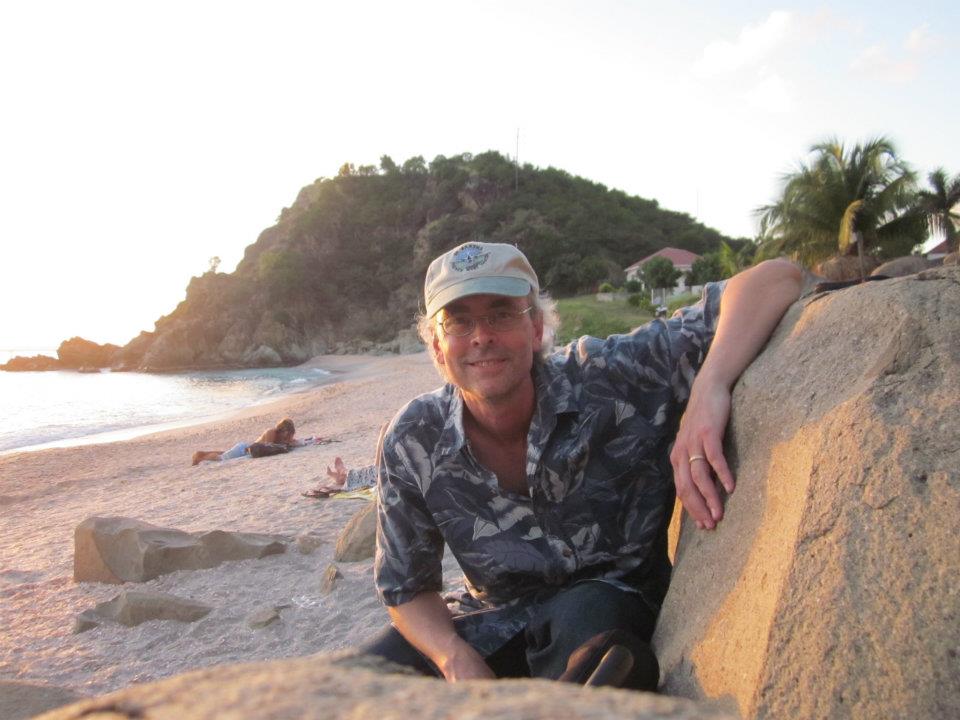
O. K. Keyes - photo courtesy of O. K. Keyes


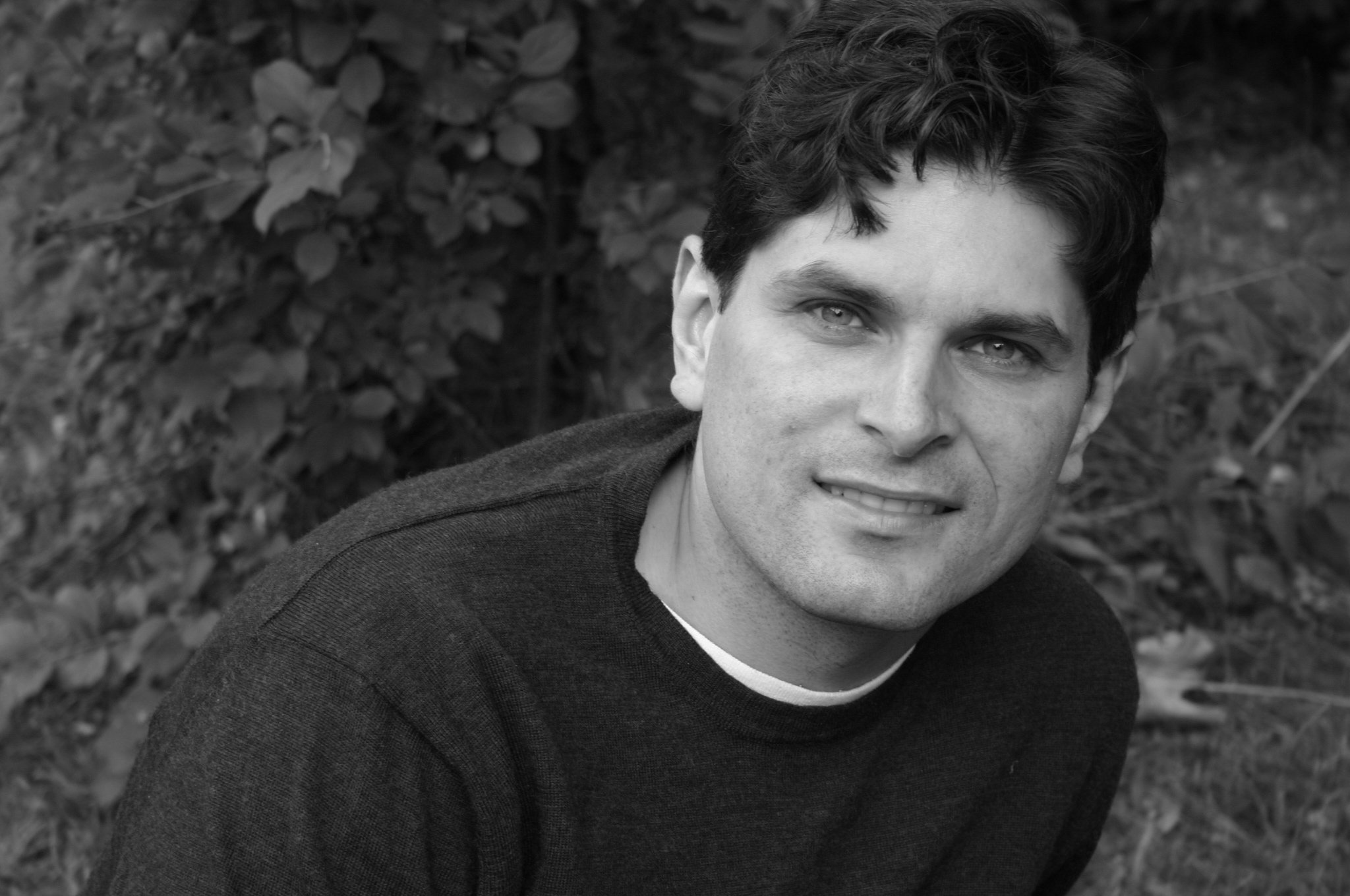
Alexis Stratton - photo by Forrest Clonts


O.K. Keyes and Alexis Stratton

O.K. is a cinematographer from South Carolina. She has been the director of photography for a number of short films, and recently completed principal photography for her first feature, Her Tragedy. She is a graduate student in Media Arts at the University of South Carolina with a concentration in Cinematography. Her thesis is focused on exploring Southern queer narratives and the construction of gender and sexuality from behind the lens.

Alexis is a native of Illinois but has spent her life in many homes, from New Orleans to South Korea. She received an MFA in Creative Writing from the University of South Carolina and works as an educator for a non-profit organization in Columbia, SC. Her writing has recently appeared in Oyez Review, Ayris Magazine, and Bare Root Review, and she won the 2012 BLOOM Chapbook Contest for Fiction.

2nd act multiple cams

About The 2nd Act Film Festival

As part of Jasper's mission to cultivate the arts in Columbia, we decided that something needed to exist here, in our city, that specifically brought Columbia filmmakers together to work on one singular project. With that goal in mind, the Second Act Film Festival was

The Second Act Film Festival exists in two parts. The first is a film project which was created to challenge SC filmmakers with a unique and creative goal. The second part is the film festival itself. A one-night screening of all the films created by the filmmakers chosen by a panel of experts to participate in the project.

In early August of this year, the call was put out to SC filmmakers to take part in the 2nd Act Film Fest. This past week, ten filmmakers were chosen to participate. We gave them the first and last pages of a short film script that was written with the help of professional author Janna McMahan(1st and 3rd acts, respectively). All the filmmakers received the exact same script pages. It then became their job to write the second act and make the movie. All films will be screened at the Tapp's Arts Center for the festival on October 10th, 2013. All films will be compiled into a single DVD. And all scripts will be bound and published and submitted to the Library of Congress.

Funds raised from our campaign will be used to offset the cost of putting on the festival itself. These costs include renting the facility, printing, equipment rental, advertising, and other minor miscellaneous costs.

Please consider becoming an integral part of this project by supporting us --no matter how minimally -- on Kickstarter. We are less than $100 from our goal. Thanks!

~~~Visit our KICKSTARTER PAGE NOW~~~

-- cb

It's Time to Vote for Jasper's 2013 Artists of the Year -- Bios & Photos Below!

It's that time! Finally here! Time to vote for your choices in the five categories of Jasper 2013 Artists of the Year!

Thank you for your patience as we've worked to devise the best possible way for you to vote.

Here's how:

Read about your top three finalists in each category below.

Go to www.JasperColumbia.com and vote! It's that simple!

-Dance-

photo courtesy of Wayland Anderson

Wayland Anderson

During the period of September 2012- September 2013, Wayland Anderson has worked hard to share his passion for dance with Columbia and to give the city the great art that it both wants and deserves through performance, choreography and education. He has also sought to show the nation the huge amount of dance talent and creativity happening in our city. Recently promoted Soloist with the Columbia City Ballet, Anderson performed throughout the season originating roles in the spring 2013 productions of “Snow White” and “The Little Prince.” Guest performances include Ann Brodie’s Carolina Ballet’s production of Cinderella, Dance USC’s production “Ballet Stars of New York,” Griffin Ballet’s presentation of William Starret’s “Lion King” and the South Carolina Philharmonic’s performance of “Carmen.” Anderson’s choreographic efforts include “Nina Simone Suite” for the Columbia Summer Repertory Company, six works commissioned for Workshop Theatre’s production of “Songs for a New World” set on members of the Columbia Summer Repertory Company, “The River” performed in the Artists for Africa Gala, “Survivors” performed as part of “Body and Movement Explored” with the Columbia City Ballet, and a pas de deux created for Ballet Spartanburg’s DanSynergy. Anderson teaches regularly at the Columbia Conservatory of Dance. - BB

~~~

photo by Molly Harrell

Erin Bolshakov

Erin Jaffe Bolshakov spent the period of September 2012 – September 2013 growing the reach of VISTA Ballroom and continuing to enrich the Latin dance community in Columbia, South Carolina through classes, workshops and performances. She also worked to cement Columbia’s place in the national Latin dance community with performances at the Democratic National Convention in Charlotte, North Carolina and in the La Milonga Rosa in New York City, New York. Her work with business and dance partner, internationally renowned Maestro Orlando Farias in her words,”brings us authentic Argentine Tango and Argentinean culture” as well as the respect of the Argentine Tango community. Some of her work this year includes performance and instruction during PASOS “Steps for Pasos” gala, choreography of an Argentine Tango for Palmetto & Luna Theatre group “La Tropa,” performances at the DNC in Charlotte and the La Milonga Rosa in NYC, hosting of a monthly Milonga or Tango dance club, and the Executive Direction of the fourth year of Mad Hot Tango Marathon and producer of the associated professional Tango show. - BB

~~~

photo courtesy of Terrance Henderson

Terrance Henderson

Terrance Henderson is a teacher, dancer and choreographer. He serves on the dance faculty at Columbia Ballet School and Southeastern School of Ballet. He is the director of the dance after school program for AC Moore Elementary and has been the long term artist in residence teaching dance and theater at Logan Elementary. This past season, Henderson’s choreography was seen in the Trustrus Mainstage productions of “Next to Normal,” “Ain’t Misbehavin,” and “Ragtime,” and in Henderson Brothers Burlesque Show as part of What’s Love 2013. With his new personal brand TO DANCE Inc., Henderson premiered an evening of original choreography titled “Hole in My Bucket: A perspective,” at the 2013 Rogue Festival in Fresno, California. Henderson worked with the Fuzion Dance Artist of Sarasota this August setting one of his solo works “That's Life,” and choreographed Dreher High School’s production of “Legally Blonde the Musical.”

~~~

-Music-

photo courtesy of Phillip Bush

Phillip Bush

While Phillip Bush may have only recently begun teaching at USC, he is no stranger to Columbia’s concert music world nor to South Carolina. During the 2012-2013 season, Bush has performed with chamber musicians and as a soloist at the Columbia Museum of Art, at the Kershaw County Fine Arts Center, with the Southeastern Piano Festival, and, of course, innumerably at USC. Bush has also performed across the state, and served as the Music Director for the Bennington Chamber Music Conference in Vermont, performed at the Colburn School in Los Angeles, and beyond, including a residency and numerous performances at the Fayetteville Chamber Music Festival in Texas. Still, more than half of his year’s performances took place in the Midlands, and his level of local engagement has spanned from directing student performances of Steve Reich’s Music for Eighteen Musicians to co-directing February, 2013’s concerts at Arts at Shandon. Bush’s presence in Columbia is perhaps understated, but certainly felt here – and definitely known beyond our borders. - TD

 ~~~

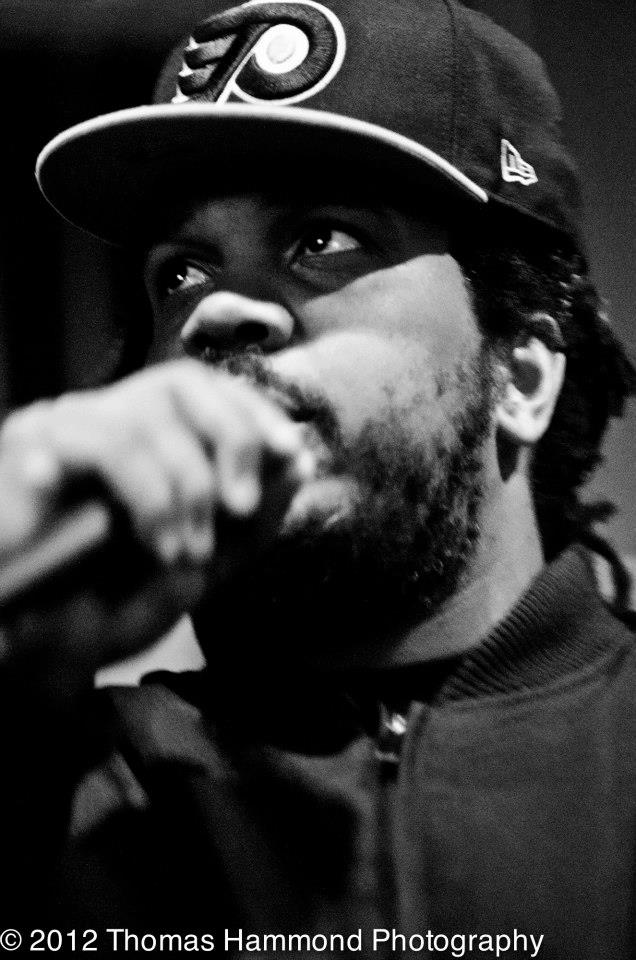
photo by Thomas Hammond

FatRat da Czar

Fat Rat da Czar (aka Darius Johnson) has long been one of the most prominent names in Columbia (and South Carolina’s) hip-hop scene, with nearly 20 years under his belt as a local MC. Still, he’s had an exceptionally busy year even for Mr. Johnson, who had a couple of important milestones over the October 2012-September 2013 period. November saw the release of Da Cold War 3, the completion of a trilogy of proper solo albums that defined him as a rapper lyrically going against the grain and forging his own artistic identity. Perhaps even more importantly, his unofficial status as a mentor for upcoming talent became a career, as he became a full-time engineer at the Boom Room, the Studio B at Columbia’s Jam Room Recording Studios that saw him working with everyone from hip-hop crew Grand Royal to the Americana folk trio Prairie Willows.

In between, Johnson not only landed prestigious opening slots for the likes of Killer Mike and GZA, he also traveled to Atlanta to perform at AC3, one of the nation’s biggest hip-hop festivals. He also played a pivotal role in The Gamecock Mixtape put together by Dinobrite Productions, and drops a powerful closing verse on the lead single “Ride With My Team,” a song whose music video when semi-viral upon its release and has over 112,000 views to date.

Perhaps more than anything though, Fat Rat is a hip-hop ambassador in a city and state still largely segregated musically as much as racially. Along with his musical partner Shekeese the Beast, he organizes and headlines hip-hop shows, but also fearlessly jumps on to rock and roll bills and fearlessly takes the stage at such unlikely events as the City Roots-hosted Mardi Gras festival.

In short, Fat Rat da Czar kept the fire burning in more ways than one for hip-hop in the Midlands last year. - KP

~~~

photo courtesy of The Restoration

The Restoration

For The Restoration, the past year has been an exciting one. The November release of Honor the Father followed up the widely celebrated Constance LP, demonstrating the band’s continued commitment to writing narrative concept albums that grapple with the history of the South both musically and lyrically. Honor the Father is “a narrative exploration of religious fundamentalism dressed with Dixieland and early rock 'n' roll,” according to leader Daniel Machado, and also functions as a murder mystery story with a revealing—and disturbing--conclusion. It’s worth noting the extensive use of musical forms here, as well as the complex structure of the climactic track “The Trial,” which features Biblical footnotes in the liner notes and sees Machado and others donning multiple characters’ hats over the course  of the song’s six minutes of exposition.

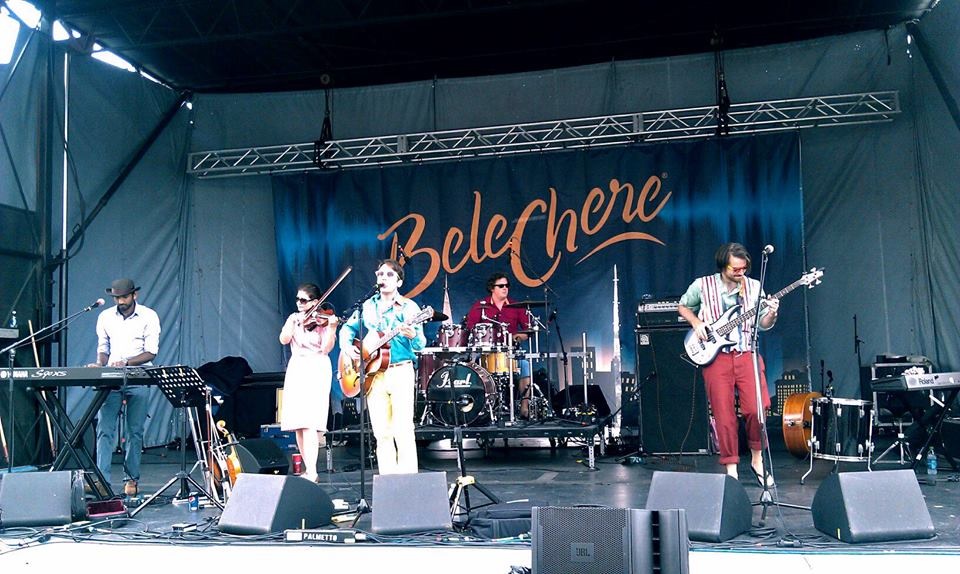
The record’s favorable reception cemented the band’s position as one of Columbia’s best active bands, which led to prominent appearances at the River Rocks festival this spring and the Bel Chere Festival this summer. The band’s work has also received some unusual academic attention, as their work has been featured in English classes taught at Spartanburg Methodist College. - KP


-Literary Arts-

photo courtesy of Jim Barilla

Jim Barilla

Using his own backyard as centerpiece and testing ground for thinking about urban wildlife, Jim Barilla put Columbia on the map for environmental writing this year.  His nonfiction book, My Backyard Jungle: The Adventures of an Urban Wildlife Lover Who Turned His Yard Into Habitant and Learned to Live With It, was published by Yale University Press this spring.  Barilla set out to turn his yard into a certified wildlife habitat, and the book documents that project.  Combining his reflections on his backyard with a rich understanding of environmental issues, the book also includes stories about bears, monkeys, and honeybees in cities around the world, yet Barilla always returns to his own backyard in Columbia as a critical place for thinking about our coexistence with animals. The book was widely reviewed—Publisher’s Weekly, Nature, BBC Wildlife, and elsewhere—with portions of the book published in The Atlantic, Places, and National Geographic online. The reviewer for BBC Wildlife said that Barilla “reminds us to ask what it will be like to engage with nature in a future in which most of us will live in cities.”  Or as a nomination put it, “His work asks us to think about our place in the world around us.” - EM

~~~

photo courtesy of Janna McMahan

Janna McMahan

In January, Janna McMahan published Anonymity (Koehler Books), a novel about homeless youth.  Gritty and based on extensive research, the novel tells the tale of a difficult friendship between a photographer and a homeless teenage girl in Austin.  Novelist Ron Rash called the novel McMahan’s best yet, and Real South magazine praised its gritty realism and its exploration of a situation in which “there are no easy answers for anyone.”  She also contributed “A Name You Can Yell” (yes, she’s talking about how you name a dog—or a kid?) in Literary Dogs and their South Carolina Writers, published by Hub City in Spartanburg just before Christmas 2012, and “Pat Conroy: Or How I Stalked My Prince of Tides,” in The Limelight: A Compendium of Contemporary Artists, published by Muddy Ford Press earlier this year.  Anonymity has led to speaking engagements in schools and community organizations about homeless youth.  Some Richland Library book clubs are reading the novel this fall, and in November, the Main Street library will host a community panel discussion on youth homeless in Columbia (Nov. 17, 3 p.m., Bostick Auditorium). McMahan says, “This has been a story with social impact, and I’m most grateful for how people are interested in the topic and actually taking action.” - EM

~~~

photo by Bill Rogers

Aida Rogers

This summer, Aida Rogers published what USC Press called a love letter to the state of South Carolina, her book State of the Heart: South Carolina Writers on the Places They Love.  The book includes 36 nationally and regionally recognized writers on the places they cherish—including novelists Pat Conroy and Dori Sanders and SC poet laureate Marjory Wentworth.  In the forward to the book, Conroy writes, "State of the Heart reminds us of what is best about South Carolina and her many gifted writers, the monumental power of this place to shape our memories into stories and then our stories into art.”  According to Jonathan Haupt, director of USC Press, the book “quickly became a media sensation and one of our best-selling regional books.”  Rogers herself said of the collection, “I think State of the Heart proved there's plenty of literary talent in South Carolina…. If the anthology does nothing but introduce them to readers, it will have accomplished something valuable.”  Rogers wrote about late Columbia artist Gil Petroff for The Limelight: A Compendium of Contemporary Artists.  That essay, she says, “allowed me to point out what's marvelous but invisible because we see it every day. There is extraordinary talent all around us, and I think it's important for a community to appreciate its own.” - EM

-Theatre-

photo by Rob Sprankle

Bobby Bloom

Bobby Bloom hasn't stopped to catch his breath very much this year as his list of accomplishments demonstrates. Bloom acted and or directed (specified) in the following: Red - Trustus Off-Lady Series at The Columbia Art Museum; The Complete Works of William Shakespeare (Abridged), directed and acted, SC Shakespeare Company at Rosewood Arts Festival; Next Fall, Trustus Theater- Thigpen Main Stage; The Christmas Doll - Columbia Children’s Theater;  A Year with Frog and Toad - Columbia Children’s Theater; The Whipping Man - Trustus Off-Lady Series/ NiA Company at CMFA; By the Way, Meet Vera Stark - Trustus Theater- Thigpen Main Stage; The Commedia Rapunzel - Columbia Children’s Theater; The Commedia Pinocchio - Columbia Children’s Theater; Ragtime - Trustus Theater- Thigpen Main Stage; Mother F***** with a Hat - Fight Choreographer - Trustus Theater - Thigpen Main Stage; The Three Musketeers - Fight Choreographer - Dreher High School; Ragtime - Fight Choreographer – Trustus Theater- Thigpen Main Stage; Bobby also serves as Co-director of the Trustus Apprentice Company and director of the Trustus Stage Door Apprentice Company. - CB

~~~

photo by Rob Sprankle

Terrance Henderson

Terrance Henderson’s hand is in just about every aspect of theatre one could imagine from teaching to directing to acting. Henderson is the director of the theater after school program for AC Moore Elementary and has been the long term theatre artist in residence at Logan Elementary. In the past year, Henderson has portrayed the roles of Dr. Madden in Trustus Theatre’s “Next to Normal” and most recently in the leading role of Coalhouse Walker Jr. in “Ragtime” also at Trustus . Terrance was also the co-creator and official emcee (Nauti Boogie) for the Henderson Brothers Burlesque Show as part of What's Love 2013. Henderson’s direction was seen in Trustus Theatre’s “Ain’t Misbehavin’” this summer.

~~~

photo courtesy of Vicky Saye Henderson

Vicky Saye Henderson

“My identity as a theatre artist is rooted in my work as both an actor and teaching artist,” says Vicky Saye Henderson. The past year has seen her perform in the following productions:  Next to Normal at Trustus Theatre; 5 Lesbians Eating a Quiche at Trustus Theatre; Songs for a New World at Workshop Theatre; Ragtime: The Musical at Trustus Theatre; Late Night Cabaret at Town Theatre; Kevin Bush's Off the Top of My Head Cabaret at Trustus Theatre;  Women at Heart (Palmetto Health's 2012 Heart Health Forum & Exhibition at the Columbia Metropolitan Convention Center for which she co-wrote and performed a dramatic presentation which educated women about the signs & symptoms of heart attack and showed them how to act quickly if faced with them. She also became Trustus Theatre's DIRECTOR OF EDUCATION (December 2012); started Trustus Summer Camp Series; renovated the Trustus Apprentice Company program to include 4 new Master Tracks in Acting, Musical Theatre, Improv & Sketch Comedy and Technical Theatre plus civic engagement projects, and created Night Owl Improv Series & the Actor Wellness Wheel Series. - CB

-Visual Arts-

Michaela

Michaela Pilar Brown

"September 2012 – September 2013 marked a period of significant growth and building," says Michaela Pilar Brown.  Following a critically received solo exhibition Whither Goes My Heart, at Columbia College’s Goodall in Fall of 2012, Michaela spent a great deal of time investing in Columbia’s art community.  She sits on the board of the Friends of African American Art and Culture, as the Programming Committee Chair, and recently joined the One Columbia public arts selection committee. Whither Goes my Heart was a mulit-object/image installation that told the story of family and home.  The work was well received and secured invitations to show at The University of Memphis, Memphis, Tennessee, Plecto Gallery, Medellin, Colombia, the Stanback Museum, South Carolina State University. Here is a list of exhibitions covering the year: June 2013 - Juried into in 2013 South Carolina Biennial, 701 Center for Contemporary Art;  June 2013, ONEx1, Columbia Museum of Art Group Exhibition; May 2013, The South Carolina Arts Gala, South Carolina Arts Commission Invitational group exhibition; April 2013, Install It III, Vista Artist Guild Outdoor City Wide Installation Group exhibition; October 2012, Whither Goes My Heart Solo Exhibition, Goodall Gallery, Columbia College. (photo by Forrest Clonts) - CB

~~~


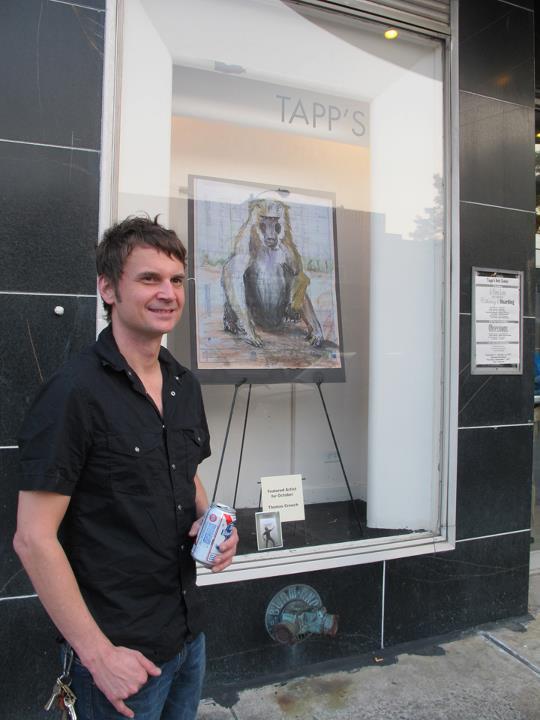
photo courtesy of Thomas Crouch

Thomas Crouch

Thomas Crouch’s work was exhibited at Artfields, in Lake City SC as well as in Columbia at Art Bar Agora IV, Rosewood Crawfish Festival, Wine Down, Best Mattress, Devine Street Art Walk, and Carolina Hair Salon. He was a finalist last year for Jasper 2012 Visual Arts Artist of Year, writer's pick best artist in Best of Columbia in the Free Times. He showed at Tapps Art Center and spoke at High Noon at City Art Gallery, andhe also was honored at Lexington and Richland County Cultural Council Sponsor's Dinner Featured Artist. In Charleston he showed at the ArtMag Rose Ball Gala, gave a solo show at Michael Parks Gallery, The Gadsden, 807, and Pretty Girls group art show.

~~~


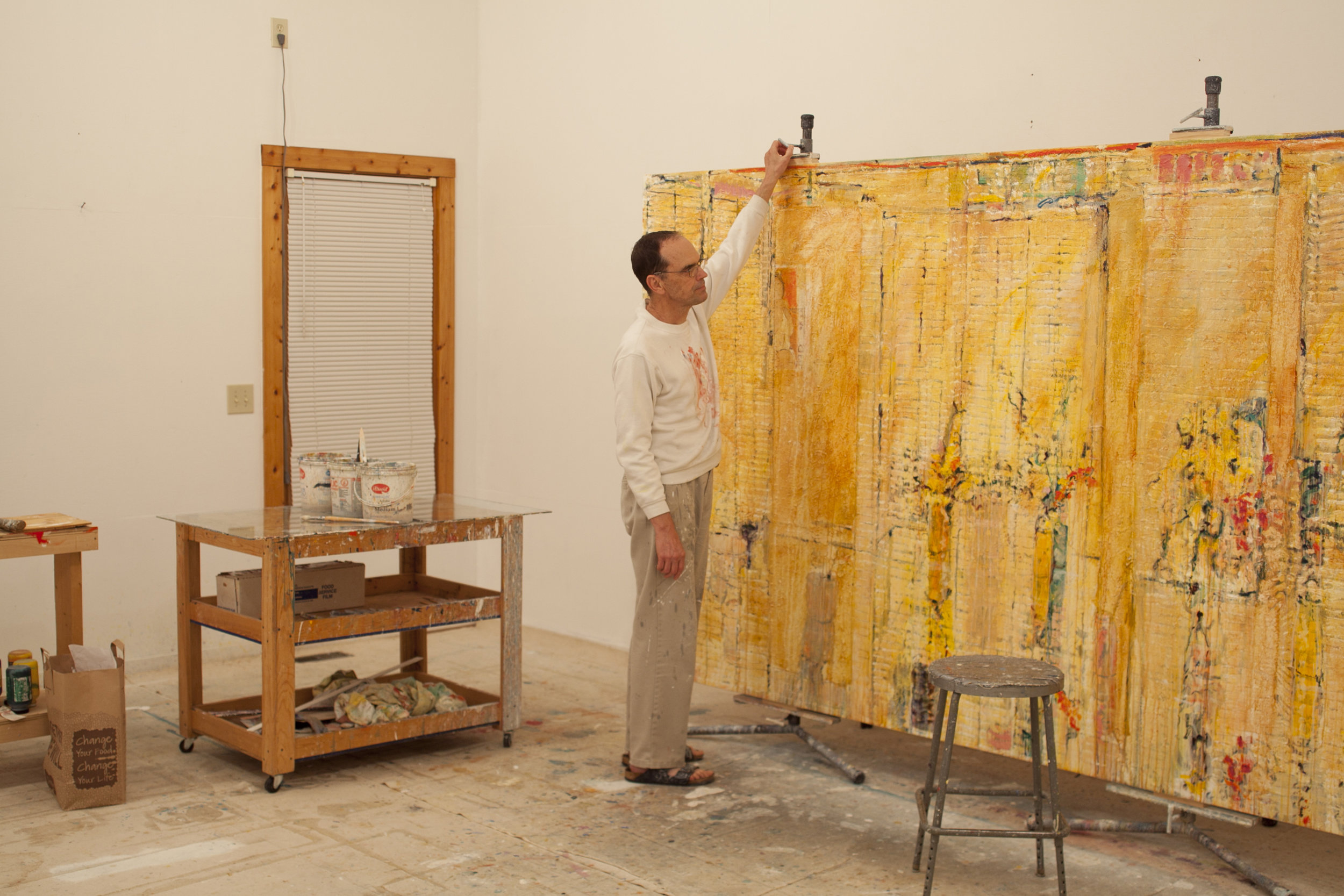
photo courtesy of Philip Mullen

Philip Mullen

The grass hasn't grown under Philip Mullen either. Take a look: SOLO EXHIBITIONS - 1/2013 MULLEN 2009–2012: Franklin G. Burroughs-Simeon B. Chapin Art Museum, Myrtle Beach, SC; 5/2/2013 MULLEN 2009–2013: 701 Center for Contemporary Art.  GROUP EXHIBITIONS -9//2012 -  Arts Council of York County, Rock Hill, SC; 10/7/2012 - An Artist’s Eye:  Franklin G. Burroughs-Simeon B. Chapin Art Museum, Myrtle Beach, SC.  PUBLICATIONS - 1/2013  MULLEN 2009–2012; 2/2013 -      The Limelight-A Compendium of Contemporary Columbia Artists, COVER ARTIST & Article on Philip Mullen by Cassie Premo Steele,  Muddy Ford Press;  2013 - Retrospective Michael Tice:  Introduction by Philip Mullen - New Lit Salon Press;  5/2013 - Bernard Kruseman Aretz:  Cover story by Chris Robinson,  Sara Schneckloth & Philip Mullen - Jasper Magazine May/June 2013; 2013 - Inside Acrylics by Phil Garrett:  One of nine artists included, North Light Books. MISCELANEOUS - 9/2012 - WIS film lecture; 10/18/2012 - 2012 Founders’ Exhibit:  Curator,Cultural Council of Richland & Lexington Counties;  11/8/2012 - Tapp’s Arts Center:  Lecture; 1/13/2013 - Franklin G. Burroughs-Simeon B. Chapin Art Museum:  Lecture;  4/2013 - Arranged private donation:  “Jane’s Wall” - Franklin G. Burroughs-Simeon B. Chapin Art Museum;  5/2013 - Arranged private donation:  “Floral with Easel” - Sumter County Gallery of Art;  5/26/2013 - 701 Center for Contemporary Art:  Lecture; 9/2013 - Arranged long term installation of “Seasons & Koi” - Riverbanks Zoo and Garden; 6/2013 - 2013 AHA Exhibit:  Curator, Cultural Council of Richland & Lexington Counties  and The Humanities Council SC. - CB

"The Musical Adventures of Flat Stanley" - Melissa Swick Ellington reviews the new show at Columbia Children's Theatre

stanley-logo1With a charming production of The Musical Adventures of Flat Stanley, Columbia Children’s Theatre brings to life a beloved character and his exciting escapades. I first learned about Flat Stanley when my visiting aunt arrived in South Carolina with a cutout of the character, which she photographed in various places for a grandchild’s school project. Decades later, I enjoyed sharing the “original adventures” book by Jeff Brown with my young daughter, indulging in a sense of wonder at the wide world and its possibilities. The whimsical nature of the Flat Stanley book series inspires lasting affection in readers; Columbia Children’s Theatre crafts a surprising and delightful world that entices theatregoers. As realized in the musical (with book by Timothy Allen McDonald and music and lyrics by McDonald, David Weinstein, Jonathan K. Waller, and Stephen Gabriel), the Lambchop parents enjoy a cozy family life with Stanley and his younger brother Arthur. After bedtime, the two boys take the audience on an exuberant “I wish I were” romp through cherished adventures (think Harry Potter and Star Wars) complete with light sabers and air guitar.  Stanley’s “star wish” leads to his dimensional transformation after a fateful encounter with a mysterious bulletin board.  He learns that the life of a “flat kid” has drawbacks (getting stuck in a tree when flown as a kite) as well as perks (mailing himself to Paris.)  Clever wordplay transpires in the script, such as the “porkchop” versus “lambchop” confusion that delighted my daughter.   Characters advise young audiences to “find a little adventure,” “write a letter and drop it in the mail,” and “make a star wish.”

Anthony Harvey as Stanley achieves genuine commitment to a child role without condescension, a true gift of a performance. He shares talents in physical comedy (the hilarious doctor’s exam) as well as an appealing voice, with a particularly poignant song while stuck in a tree.  Harvey handles the flat costume with admirable confidence – who knew Flat Stanley could shake maracas and rock a time step, not to mention a kickline? As Arthur, Riley Smith dives into exuberant antics that delight the young audience; he avoids caricature by offering lovable honesty and real sweetness. Actors demonstrate versatility in diverse roles: Evelyn Clary plays a wacky postal worker and a serene Mona Lisa, while Julian DeLeon moves convincingly from sincere father to bumbling physician to flashy entertainer.  Diane Gilbert, Rachel Glowacki, David Quay, Imani Ross-Jackson, and Elizabeth Stepp give vibrant portrayals of various characters that develop depth through nuanced ensemble work. Two different casts share the roles; additional performers are sure to be equally strong in a production of this caliber.    (That second cast includes David Quay as Stanley, Ruth Glowacki as Mrs. Lambchop, Toni Moore as Mr. Lambchop, Elizabeth Stepp as Stanley’s brother Arthur, and Taylor- Noelle Hammond as Mrs. Cartero.)

Meet the Lambchops - clockwise from top: Anthony Harvey, Diane Gilbert, Riley Smith, and Julian DeLeon.

“Why say it when I can show you in an extravagant musical number?” asks a Hollywood character; engaging songs and dances illuminate Stanley’s world with infectious vitality. Cindy Flach directs and choreographs her talented cast with creativity and ingenuity, and Paul Lindley II guides enjoyable singing voices with skillful music direction. The design team (Donna Harvey and Jim Litzinger) proves that Columbia Children’s Theatre really can take us anywhere: characters travel through the Lambchop home, a park, a doctor’s office, California, Paris, and Hawaii.  Lambchop family members’ costumes and even their tabletop décor reflect a patriotic red, white, and blue motif.   Forgotten lollipops stuck on top of the bulletin board illustrate the designers’ meticulous approach; details like these bring a child’s world alive onstage.  Go see the show to find out how acting, directing, and design can collaborate on laugh-out-loud visual comedy with particular effectiveness in Stanley’s museum experience.  CCT shows last season included marvelous puppetry (Knuffle Bunny, Goodnight Moon); Anthony Harvey’s puppet design maintains this high standard.  Stage managers Ruth Mock and Susan Hitt keep the backstage domain moving with fast-paced fluidity and seamless transitions. Visual effects are very well done, especially the picture frame imagery and the lasting impact of Stanley’s unique and astonishing flatness.

But what do the kids think? The children at the matinee I attended were rapt with attention throughout the show.  Light saber hijinks, surf music and “wipe-out” moves, sharp and sassy tap dancing, surprising mailbox revelations, and exciting pursuit of the “sneak thief” proved riveting for even the smallest viewer.  My own five-year-old daughter, while skeptical before the big transformation (“Is Stanley REALLY going to be flat onstage?”), became firmly convinced of the production’s integrity: “My favorite part was when Flat Stanley got flat. I really love and appreciate this show. I think kids will like the show because it is cheerful.”

The mind-opening power of travel, discovery of adventure through sending and receiving mail, and lasting love of family will resonate with audiences of all ages. Through the ongoing development of Columbia Children’s Theatre, Artistic Director Jerry Stevenson, Managing Director Jim Litzinger, and their collaborators make our city a better place – to learn as part of a welcoming community, to raise a family, to love the arts. Thriving theatre for young audiences produced with gratifying commitment to quality in all areas: who could ask for anything more?

The Musical Adventures of Flat Stanley runs through this Sunday, September 29. Call the box office at (803) 691-4548, or visit www.columbiachildrenstheatre.com for ticket information.

~ Melissa Swick Ellington


Directing Tom Stoppard's "Arcadia" at USC - a guest blog by Louis Butelli

So, here I am, about to eat dinner at Al-Amir restaurant in beautiful downtown Columbia, and prepare for one last, pre-tech run-through of Tom Stoppard’s Arcadia with the company of actors and artists at USC’s Theatre SC.  We’ve been on quite a journey to get to this point. Having spent weeks reading, studying, and blocking the play in a rehearsal hall, and then having spent this week on stage at Drayton Hall as the set grew up around us, we are now on the verge of sharing this play with the public. As the show’s director, I couldn’t be more excited. arcadia-3.jpg Pictured, from left: James Costello, Melissa Reed Caption: Septimus (James Costello) tutors precocious child-genius Thomasina (Melissa Reed)  while trying to avoid a scandalous confrontation in Tom Stoppard’s Arcadia, presented by Theatre  SC September 27 - October 5 at Drayton Hall Theatre.  Photographer: Jason Ayer

A little bit of background. I’ve been working as an actor, director, educator, and writer for the past 17 years. Back in 1998, I booked a job as an actor for a touring Shakespeare company which, at the time, was in residence at USC. For a couple of years, we would come to Columbia to rehearse, and then open our shows at the Koger Center before taking them all over the country. Those early years were very happy times, and it was through working for this company that I met director Robert Richmond, with whom I have continued to collaborate ever since, frequently at the Folger Theatre in Washington DC, where we have broken attendance and box office records, and been nominated for (and won!) several Helen Hayes Awards.

Here in Columbia, Robert and I created a theater piece based on Shakespeare’s Macbeth, called A Tale Told By An Idiot. A comic book-inspired mash-up of the Scottish play with the story of original English terrorist Guy Fawkes, it played at USC’s Lab Theater on Wheat Street, and featured the talents of USC undergraduate theater students. People loved it. Some years later, I founded a theater company, Psittacus Productions, in Los Angeles and chose A Tale Told By An Idiot as our inaugural show. Robert came out to direct, we opened as part of the first annual Hollywood Fringe Festival, then transferred to the Son Of Semele Ensemble Theater, where we sold out and extended. The press was excellent, and we received an LA Weekly Theatre Award for our efforts.

My point in all of this is that, for the past fifteen years, I have felt a deep connection to USC, to Theatre SC, and to the great city of Columbia. When department Chair Jim Hunter invited me back down to direct Arcadia, I jumped at the opportunity.

For me, Tom Stoppard’s Arcadia is a very special play. To begin, it appeals to two very distinct parts of who I am, both as an artist and as a human being, about which more will follow.

arcadia-2.jpg Pictured, from left: Leeanna Rubin, Trey Hobbs Caption: Two present-day scholars, Hannah (Leeanna Rubin) and Bernard (Trey Hobbs), try to  uncover the intellectual truths (and possibly scandalous secrets) of a 19th century manor in Tom  Stoppard’s Arcadia, presented by Theatre SC at Drayton Hall Theatre September 27 - October 5.   Photographer: Jason Ayer

In the play, we encounter two sets of characters inhabiting the same drawing room in anestate on the English countryside. The first set is living in the year 1809. We meet a brilliant 13-year old girl, her randy tutor, her elegant mother, and various hangers-on. The whole household is scandalized – one of the guests, a minor poet, has been cuckolded by the tutor. There are allegations, handwritten challenges to duels, love notes passed, all while the young girl makes an important mathematical discovery, many years before the rest of the world would catch up. Additionally, everyone is in a tizzy because of a visit from that most famous of Romantics, Lord Byron, who is lurking, offstage, throughout the show.

The second set of characters live in the year 2013 – or, at least, in “the present day.” Here on the estate, we meet the noble descendants of the family from 1809. There are three siblings – a twenty-something male who is an Oxfordian mathematician, a saucy teenaged girl, and a fifteen-year-old boy who hasn’t spoken since age 5. Visiting the family, to research her next book, is a thirty-something author. Into this idyll charges a hotheaded, fame-hungry professor in his late thirties. He believes he is on the verge of a new discovery that will shake the foundations of English literary studies, particularly on the subject of Lord Byron. Gradually, the artifacts left behind from 1809 start showing up in 2013, and we watch the present day characters getting quite a few of the details wrong…while inching ever closer to the truth.

Pictured, from left: James Costello, Melissa Reed, Leeanna Rubin, Trey Hobbs Caption: Theatre SC presents Tom Stoppard’s award-winning Arcadia, a witty and hilarious  intellectual puzzle about the unquenchable thirst for knowledge, September 27 - October 5 at  Drayton Hall Theatre.  Set at an English manor in both the early 19th century and present day,  Arcadia introduces us to two groups of characters -- the property’s original residents and a  modern-day band of scholars trying to unearth their forebears’ hidden secrets.  “... one of the most  exquisite plays of the 20th century” (The Independent).   Photographer: Jason Ayer

Certainly, the play is populated by very intelligent, hyper-articulate people, who spend quite a lot of time talking – about theory, about math, about landscape gardening, about art, about poetry. More interestingly, though, they also discover that no matter how sure one may seem about their place in the world, it is love – and lust, and the terrifying un-knowability of other people – that throws a wrench in the works every time. As the mathematician Valentine says in the play, these things are “the attraction that Newton left out.” They are the flies in the ointment of a deterministic universe governed by “free will.”

As I said, this appeals to me personally in two ways. First of all, I am a pretty huge nerd. I love teasing apart big ideas. I love intellectual sparring and heated conversation. I love to read, and I love to research. That said, I am also an actor and a flesh and blood male. As follows, I also love the irrational. I know what it is to feel swept up with passion. I know what it is to run away with the circus. This play presses both of those buttons for me, and I hope that it will for you, too.

“Well, good for him,” you might think in reading along. “But so what?”

My point, I suppose, is to say that, in coming to direct this play – or, in fact, any play – one must find a point of entry. One must attempt to answer the question “why produce this play, and why now?” In the current climate of economic fragility, global unrest, mass shootings, a shrill and polarized news media, and a deadlocked government, why would one choose to put on a play that is simultaneously a “big idea” play, and a classic English farce?

There are two potential ways of answering that question, one of which is complex, and one of which is…less complex.

The complex, or at least the “literary” answer goes something like this: Stoppard, particularly in this play, reminds me of two literary titans from the history of drama, Shakespeare and Chekov. To be a bit reductive, both of those playwrights were conversant in creating drama during times of – and through the lens of – great social upheaval. Shakespeare wrote sprawling, imaginative plays against the backdrop of Elizabethan England, a place full of religious conflict, wars against the Spanish, bouts of plague, and a linguistic explosion. Chekov wrote stories about families languishing at a remove from society and, ultimately falling apart, in the years directly preceding the Russian Revolution. Both playwrights are concerned with people wrestling with lofty ideas while simultaneously unable to escape some of the baser parts of their own humanity.

At nine years old, Stoppard, a Jewish, Czech national, moved to England with his mother and English stepfather who, according to the stories once said to young Tom, “Don’t you realize I made you British?” Having been displaced by World War II, and having embraced England, and indeed Englishness, Stoppard has created a literary world that is characterized by rapid-fire wit, philosophizing, and issues of human rights, censorship, and political freedom. And sex.

As for his literary debt to Chekov, one might consider his play cycle, “The Coast of Utopia, which addresses social philosophy in pre-Revolutionary Russia and won the Tony Award for Best Play. As far as Shakespeare goes, I suggest that one re-watch the movie Shakespeare In Love, for which Stoppard won the Academy Award for Best Original Screenplay.

Intimidated yet? I certainly was!

Here’s the less complex answer. This play is really, really fun. Yes, it’s very talky. Yes, it’s very heavy on ideas. Yes, it isn’t packed with a huge amount of “event.” Sounds a bit like an episode of Seinfeld, no?

Seriously, though. When I think about the question of “why this play, and why now?” I keep returning to the Internet. One of the things that sets our little moment on earth apart from any other throughout all of history is the presence of the Internet – not just in our lives, but in our pockets, and on our nightstands, 24 hours a day, every single day.

When I think of my own propensity to click along, chasing a notion or idea from link to link, from graphic to video to article to image, ad nauseum – it reminds me of following Tom Stoppard’s characters as one idea leads to the next, and we bounce between 1809 and the present day, until those worlds collide and overlap in the last scene of the play.

And yet…this is a piece of theater. For me, what the theater does, that no other art form does, is bring a whole bunch of strangers together in real time, under one roof, to trade these ideas with artists themselves. We’re all breathing the same air. You can see and hear us, to be certain. But we can also see and hear you. You impact our performance. Moreover, without you, we simply couldn’t make this work of art come to life at all. In short, theater, by its very definition, needs you to be there with us.

I suppose that’s a really long-winded way of gently pleading with you to buy a ticket to see our show. We’ve all become sort of fascinated by the weird, time-traveling world of this play, and have started seeing little idea nuggets from this play everywhere we look – be it noticing the way the beautiful tendrils of milk stir into uniform color and heat in a coffee at Cool Beans, or the way the tree trunks extend to branches and into leaves and into veins-in-leaves ad infinitum while strolling along the Horseshoe.

You might like our show, or you might find it a spectacular bore. Regardless: if we can all share a few laughs, and you come away with some food for thought, and some things you might want to chat about with friends afterwards, or Google when you get home, then the experiment was worthwhile.

Won’t you come experiment with us?

To close, I’ll just say that working on this play has made me obsessed with fractals. I’m not a good enough writer to unpack fractal theory here, so I’ve included a link to a video animation (click HERE.)  In short, fractals are at the heart of the theory that our 13-year old girl discovers in 1809, and that our mathematician in 2013 extrapolates.

The video is another metaphor for Arcadia. Sometimes seeing a thing unfold makes more intuitive sense than hearing some nerdy director talk about it. So, click this link, and watch this video animation of fractals. If it exhilarates you, then you should definitely come and see our show.

Thanks for reading! See you at the theater!


~ Louis Butelli

Louis Butelli

Born and raised on Long Island, New York, Louis has spent the past seventeen years working as an actor, teacher, director, and writer. From 1998-2008, he was Artist-In-Residence and Company Clown for the Aquila Theatre Company. During that time, he played in over 25 productions of the works of William Shakespeare and other classical playwrights, appearing Off-Broadway, at major regional houses, on tour in the US to 49 states and across Europe; taught over 300 masterclasses; wrote, adapted and appeared in a new production of Stevenson’s Dr. Jekyll & Mr. Hyde. Other credits include Folger Theatre; La Jolla Playhouse; LA Shakespeare Festival; Shakespeare Theatre Co, DC; Alabama Shakespeare Festival; Yale Rep; Long Wharf; Orlando Shakes; Pasadena Playhouse; Two River Theater, NJ; Alpine Theater Project, MT; Seaside Shakespeare of Nantucket; La Scala Opera’s West Side Story in Milan, Beirut, Nagoya, Fukuoka, Osaka, and Tokyo; many others. TV: The Unusuals, and All My Children (ABC), Law & Order, and L&O: Criminal Intent (NBC). He is co-founder and Executive Director of Psittacus Productions, for whom he has produced A Tale Told By An Idiot (LA Weekly Theater Award), and CYCLOPS: A Rock Opera (NYMF Award for Excellence, 3 LA Weekly Award Nominations, Pulitzer Prize Juror Nominee) which played a sold-out and extended run at the 2011 New York Musical Theatre Festival, and the World Premier of the company’s latest show, A True History, which had a workshop at the Obie Award-winning Vineyard Theatre in New York City. He is honored every day he is able to go to work in the service of a great story.

Arcadia opens Friday, September 27 at USC's Drayton Hall Theatre, and runs through Saturday, October 5.   Show times for Arcadia are 8 PM Wednesdays-Fridays, 7 PM Saturdays and 3 PM on the first Sunday. Tickets for the production are $12 for students, $16 for USC faculty/staff, military personnel and seniors 60+, and $18 for the general public. Tickets can be purchased in advance by calling 803-777-2551 or by visiting the Longstreet Theatre box office, which is open Monday-Friday, 12:30 -5:30 PM.  Drayton Hall Theatre is located at 1214 College St.  For more information, contact  Kevin Bush at 803-777-9353, or bushk@mailbox.sc.edu.

Cast in this production are graduate acting students James Costello, Kate Dzvonik, Trey Hobbs, Josiah Laubenstein, Cory Lipman, Melissa Reed, Laurie Roberts and Leeanna Rubin, as well as undergraduate students Jason Fernandes, Grayson Garrick and Liam MacDougall.  Acting instructor David Britt will also appear in the production.   Graduate students Xuemei Cao and Sean Smith will design the set and costumes, respectively.   Guest artist Baxter Engle will create the sound design.  Instructor Eric Morris will design lighting.  Guest artist Todd Stuart will craft the show's intricate props.
 

Announcing the Jasper 2013 Artists of the Year Finalists in Dance, Music, Literary Arts, Theatre, and Visual Arts

Jasper leaf logo

With a total of 55 nominations, 20 adjudicators, and over 10 hours of deliberation behind us, Jasper Magazine is pleased to announce our top three finalists for the honor of

Jasper 2013 Artists of the Year

in

Dance, Music, Literary Arts, Theatre, and Visual Arts.

 ~

~Dance~

Wayland Anderson

Erin Bolshakov

Terrance Henderson

~Music~

Phillip Bush

FatRat da Czar

The Restoration

~Literary Arts~

James Barilla

Janna McMahan

Aida Rogers

~Theatre~

Bobby Bloom

Terrance Henderson

Vicky Saye Henderson

~Visual Arts~

Michaela Pilar Brown

Thomas Crouch

Philip Mullen

~~~

The above 15 artists were among 55 artists nominated by their peers and fans. Based on the information submitted with the nominations, a panel of judges selected the top three artists in each category to compete for the title

Jasper 2013 Artist of the Year.

Now the fun begins!

You’re invited to vote for your choice for Jasper 2013 Artist of the Year in each of the five categories by visiting Jasper's website

starting on Wednesday, September 25th.

There, you’ll find summaries of each artist’s accomplishments for the period of

September 15, 2012 – September 14, 2013.

The winners of Jasper 2013 Artist of the Year in Dance, Literary Arts, Music, Theatre, and Visual Arts will be announced on November 21, 2013 at the release of Jasper Magazine V. 003, N. 003 during Vista Lights. All 15 artists will be featured in the same issue of Jasper Magazine.

Go to www.JasperColumbia.com

and vote for your choice of Jasper 2013 Artist of the Year starting on Wednesday, September 25th

Voting ends on midnight, October 20th, 2013.

Rosewood Arts Festival -- by Deborah Swearingen

rosewood 2013 “Let’s start an arts festival.” These simple words came in the form of a bold proposal over drinks by local writer Arik Bjorn and Rockaways owner Forest Whitlark a little over three years ago. Out of this, a day filled with affordable artistic fun evolved.

The third annual Rosewood Arts Festival will be held Saturday, September 28th at 2719 Rosewood Drive, on the grounds of Rockaways, from 10 a.m. until 6 p.m.

Co-hosted by the Trenholm Artists Guild (TAG) and Rockaways Athletic Club, the festival features art in a variety of forms, including but certainly not limited to painting, jewelry, ceramics, and fabric art. As the festival has grown, more eccentric forms of art have been introduced. This year’s addition? Garbage art.

“Our vision has always been to have a neighborhood festival that benefits the artist,” said Bjorn, co-founder of the festival. For this reason, the Rosewood Arts Festival is affordable for vendors and free of charge for attendees.

Entertainment has always been integrated into the day, and this year, South Carolina Philharmonic Orchestra Musicians, the South Carolina Shakespeare Company, Tonya Tyner & Friends, Tom Hall & the Plowboys and several student groups are performing, along with a variety of other acts.

tom hall at rosewood

Competitions are held each year; one for best art and one for best booth but arguably the most well known – the Paint-A-Cheeseburger challenge. $150 is the going prize for the artist who can create the most impressive cheeseburger. In years past, painted cheeseburgers have been the only art form competing for the prize, but both gourd and ceramic cheeseburgers will be entering the mix this year.

The festival is sponsored by the City of Columbia, The State, Pepsi, US Foods, First Citizens Bank and Beverage South.

To find out more, visit “Rosewood Arts Festival” on Facebook.

-- Deborah Swearingen, Jasper Intern

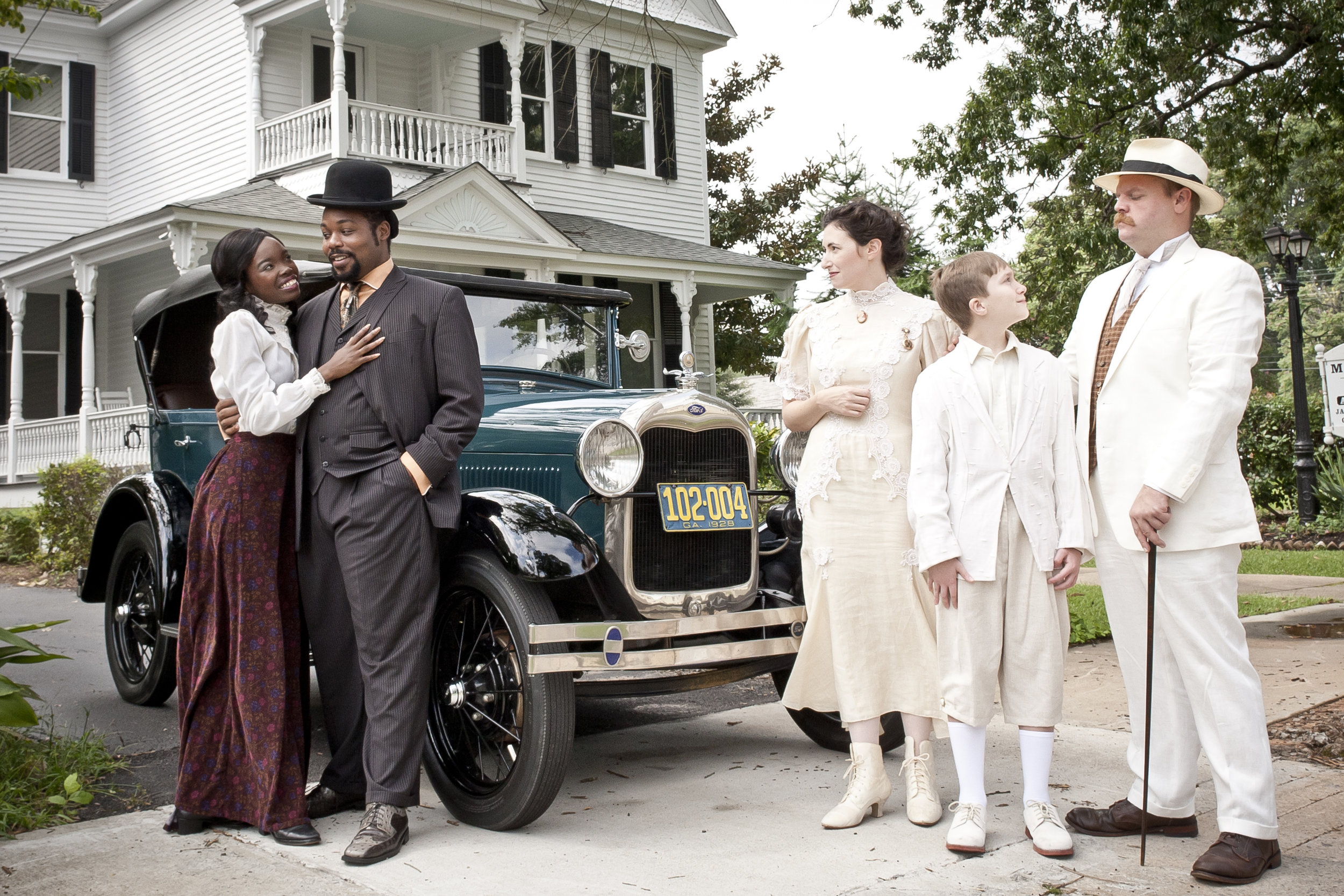
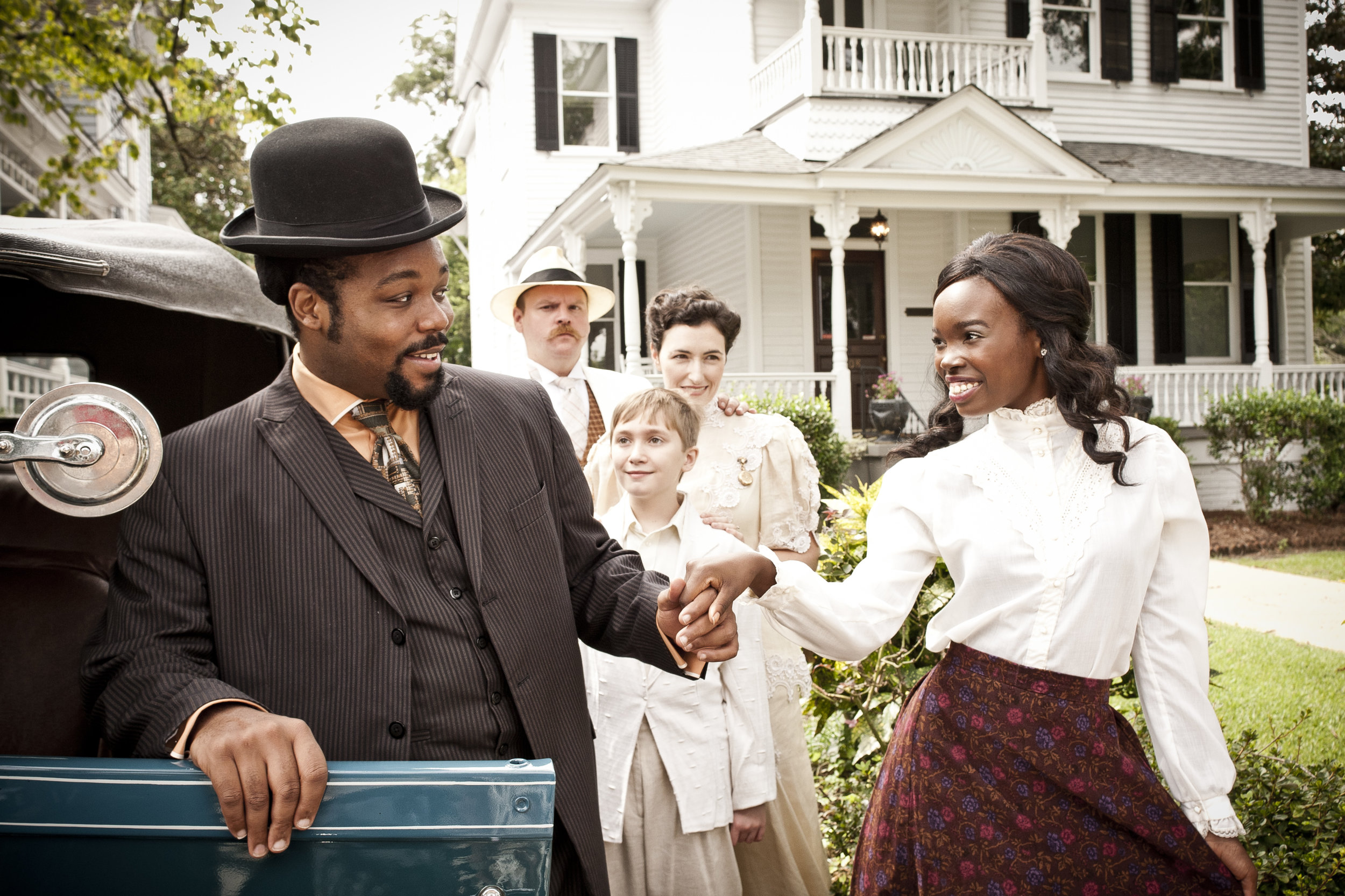
A New Era Exploding at Trustus - a review of Ragtime (the Musical) by Jillian Owens

It was the music of something beginning. An era exploding.

A century spinning.

In riches and rags,

And in rhythm and rhyme.

The people called it Ragtime.

(L-R) Avery Bateman, Terrance Henderson, Marybeth Gorman, Luke Melnyk, G. Scott Wild


Ragtime (the Musical) - based on the E.L. Doctorow novel of the same name - is a story of hope and disillusionment in the face of the American Dream.  This dream is interpreted in many different ways by the many characters in the show, which opened at Trustus Theatre this past weekend.  Ragtime opens during the “Progressive Era” in 1904.  Industry is booming, and excitement is in the air.  This air is filled with the strange, new, simple, and syncopated music of Ragtime.  The music (by Stephen Flaherty) is catchy and tender, simple yet deep, with lyrics by Lynn Ahrens, and book by Terrence McNally.

Mother and Father have a kind, though sterile marriage.  When Father, played by G. Scott Wild, heads off to explore the North Pole with Admiral Peary, Mother - played by Marybeth Gorman - is left to tend to their son, large house, and business affairs.  When she digs up something very unusual in her garden, a chain of events are pushed into movement that will change the lives of her small family, as well as the communities around her.

ragtime2

Ragtime shines thanks to one of the most talented casts it could have possibly pulled together, consisting of many Columbia theatre veterans, as well as a few talented new faces.  There are no weak links in this production.  Terrance Henderson pulls double duty as the charismatic ragtime musician Coalhouse Walker and the show’s choreographer.  Vicky Saye Henderson plays the radical anarchist, Emma Goldman, with gusto, Younger Brother - played by Kevin Bush - is passionate about finding something to be passionate about, and Scott Vaughan’s appearances as Houdini, though short, are very charming.  Chip Stubbs delivers a beautiful standout performance as Tateh, with a voice that conveys all the determination, elation, and heartache of a poor immigrant father struggling to reconcile his dream of America with the reality of his new world.  Stories are intertwined and alliances are made and broken.  With so many characters and stories, you’re bound to find at least a few you can identify with.

(L-R) Terrnce Henderson, G. Scott Wild, Luke Melnyk, Marybeth Gorman, Avery Bateman; photo by Jonathan Sharpe

If you call the Trustus Box Office hotline, a friendly recording will inform you that this show has over thirty actors in the cast – the most they’ve had onstage at one time.  Upon hearing this, I must admit I was a little worried.  When Trustus tries to put on a large-scale show, it usually ends up being a mixed bag.  Their small stage can only hold so much spectacle, scenery, and cast members before things start to get cramped.

Fortunately, for director Chad Henderson, this particular big show doesn’t require a massive set or much spectacle beyond the talent of its actors.  That’s not to say the set is unimpressive.  Brandon McIver’s construction of his giant Statue of Liberty was well-documented on the Trustus Facebook page in the weeks before the opening.  This, along with fragments of early 1900’s Americana, are evocative of the period and theme.  The orchestra is small but skilled.  The costumes are period-accurate and lovely.

Between Henderson’s (Chad) stage direction and Henderson’s (Terrance) choreography, the actors don’t seem confined or cramped at all.  I would advise you to try to get a seat closer to the back as sight lines are a slight issue.  I can’t help but wonder…Is the success of Ragtime just the beginning of a new era of larger-scale productions for Trustus?  Are we ready for this “new music”?

~ Jillian Owens


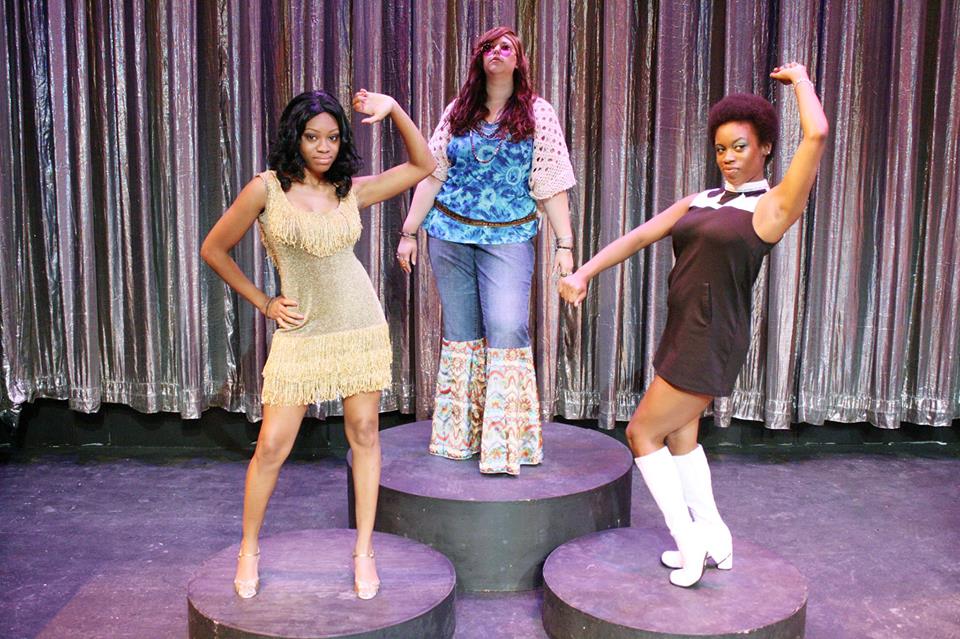
Rockin' the Beehive - a review of "Beehive the 60's Musical" at Workshop Theatre by Melissa Swick Ellington

There are plenty of good reasons why Beehive - the 60's Musical has been brought back to the Workshop Theatre stage after a successful run fifteen years ago, and eight of them light up the performance with stunning vocals and infectious energy. Jocelyn Sanders and Daniel Gainey provide expert direction that shapes a fluid journey through 1960’s music, as the eight performers celebrate female singers and songwriters. While the first act presents a vivacious stroll through girl groups of the early sixties, the second half of the show really rocks the house with the rough, raw sounds of Tina Turner, Aretha Franklin, and Janis Joplin. Medleys combine excerpts of familiar favorites through fictional characters, as in the extended party sequence that features “It’s My Party,” “I’m Sorry,” “You Don’t Own Me,” and “Judy’s Turn to Cry,” among others. beehive2

The Beehive ladies excel at inviting the audience into their world, as the performers handle the audience participation segments with friendly enthusiasm. Valdina Hall, a consummate musical theatre performer and a cast member in the first Beehive production at Workshop, launches the show with confidence. Her warmth and magnetism permeate the occasions when she addresses the audience directly, one of the show’s many strengths. (I enjoyed the good fortune of attending Beehive as the middle member of three generations of girls who love to sing. My mother observed, “When Valdina is on stage, you just feel like everything is going to be all right.”) Jordan Harper’s exquisite yearning and soaring vocals illuminate “Where the Boys Are” and “To Sir With Love,” while Tameshia Magwood thrills with her stirring rendition of “Proud Mary.” Devin Anderson is a true powerhouse who fires up the stage in “One Fine Day,” “Will You Still Love Me Tomorrow” and “Respect.” The rest of the cast (Rayana Briggs, Roxanne Livingston, Brandi Smith, and Safiya Whitehead) brings versatile talent to a slew of musical numbers; the directors deserve commendation for insightful pairings of singers with songs.

The design team makes cohesive choices that support the production with efficiency and purpose. Randy Strange’s scenic design features dynamic visuals and useful levels, while Barry Sparks provides masterful lighting design. The placement of the excellent band onstage proves valuable, as the music (directed by Roland Haynes, Jr.) is front and center throughout the performance. The band’s presence also enables energizing interaction with the performers. Singers and musicians benefit from Baxter Engle’s effective sound design. Choreography by Barbara Howse-Diemer evokes the girl groups of the sixties, evolving through different movement styles as the decade progresses. Costume designer Alexis Doktor provides visual evidence of the decade’s social changes as the performers replace pastel florals with psychedelic miniskirts.  Expectation of impressive wigs and hairstyles comes with the territory in a show called Beehive, and this production does not disappoint. Bobby Craft’s expertise as stage manager keeps the energetic show running smoothly. Design elements work very well together; the lighting and choreography establish a definite shift in tone with “The Beat Goes On.” A few issues with clarity of spoken dialogue over band accompaniment early in the show and a couple of awkward transitions are minor quibbles in light of Beehive’s audience-pleasing power. My young daughter proclaimed upon leaving the theatre, “That was a great show!”

Beehive at Workshop Theatre delivers an entertaining showcase of 1960’s music through the considerable talents of eight versatile and hard-working performers. Beehive earned great buzz from responsive audiences on opening weekend and deserves to pack the house with sixties music lovers through the remaining performances. Be assured that this production is not a series of imitations of the original singers. These Beehive performers make unique contributions to create something that is at once both nostalgic and new.

Beehive the 60's Musical  continues at Workshop Theatre through Saturday, September 28, with curtain at 8 PM, except for a 3:00 PM Sunday matinee on September 22. Contact the Workshop Theatre Box Office at 803-799-4876 for ticket information, or visit www.workshoptheatre.com.

~ Melissa Swick Ellington

........................................................

Jasper   welcomes a new critic to our theatre team.  Melissa Swick Ellington earned a Ph.D. in Educational Theatre from New York University. She has directed or performed in numerous productions in professional, community, and educational theatres in New York and South Carolina. She taught theatre in K-12 and university settings for over a dozen years.

An Open Letter to Jasper's Advertisers

Rosewood Arts Festival ~ 701 Whaley

Columbia City Ballet ~ Trustus Theatre ~ Columbia College & the Goodall Gallery

Vista Ballroom ~ Ricky Mollohan & Cellar on Greene ~ Elite Framing

The Whig ~ USC Dance ~ Newberry Opera House

Doubletakes ~ House of Frames and Paintings 

Harbison Theatre ~ Columbia Marionette Theatre

Kristian Niemi & The Whiskey Fair ~ Sumter County Gallery of Art

Muddy Ford Press ~ First Citizens

Jasper leaf logo

Dear Jasper Advertisers,

I’m writing simply to thank you for supporting your local arts community and the magazine that covers it by advertising in Jasper Magazine – The Word on Columbia Arts.

Jasper Magazine is a home-grown labor of love, written, photographed, and published by local writers and artists for local writers and artists and a readership that welcomes and supports their works. We print the magazine in Columbia, too.

Over the past 13 issues of Jasper, we have covered the work of more than a thousand Columbia artists in our pages—musicians, dancers, poets, actors, filmmakers, set designers, costumers, novelists, painters, singers, sculptors, photographers, lighting designers, playwrights, choreographers, printmakers, ceramicists, directors, composers, conductors, fiction writers, and more.

Our Jasper Salon Series brings the likes of the cast, crew, and company members of Trustus Theatre, Columbia City Ballet and other artists and arts organizations to our studio where we deconstruct the process of creating art and enlighten audience members on how they can become more engaged in the arts they love.

Jasper also sponsors a monthly spoken word poetry event called Wet Ink, a Columbia-based book club, a writers’ group, as well as a yearly local book festival.

Our first film project, The Second Act Film Festival, debuts on October 10th.

In addition to promoting Columbia’s local art scene, we also show our appreciation to you, our devoted advertisers, by encouraging our staff and readers to patronize your businesses and organizations, as well as using our substantial social media presence to make it known that YOU SUPPORT THE HEALTH AND SUSTAINABILITY OF COLUMBIA ARTS BY SUPPORTING JASPER MAGAZINE WITH YOUR ADVERTISING DOLLARS.

You see, we see you as an important part of the Jasper Family because we know that without YOU, we couldn’t do what we do. And we are so proud of what we do! You should be, too.

Thank you for joining us on our mission to make Columbia the newest Southeastern arts destination. Thank you for entrusting us with your message to our readers. Thank you for being a part of the ever-growing, multi-talented Jasper Family.

On behalf of all of us at Jasper -- Thank You.

All my best,

Cindi

Editor, Jasper Magazine

[subscribe2]

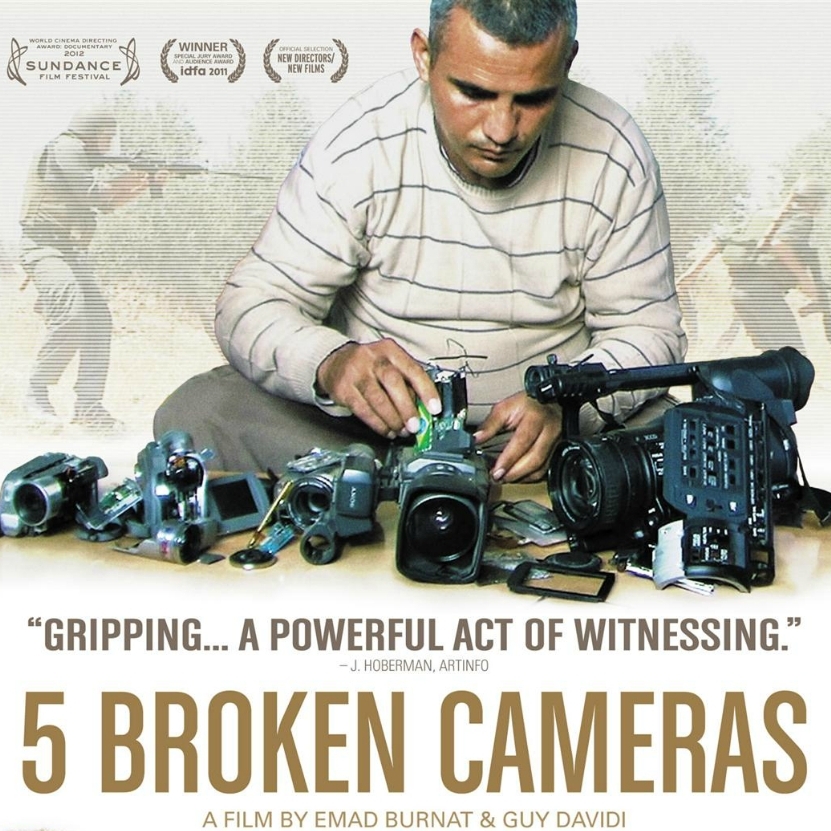
5 BROKEN CAMERAS Review by David Matos

5-Broken-Cameras  

Raw story, not flashy editing, is what makes the 2013 Oscar-nominated “5 Broken Cameras” (Best Documentary Feature) such a compelling film.  Told in simple cinema verité style, “5 Broken Cameras” follows the viewfinder of one Emad Burnat, a peasant-stock Palestinian in the West Bank village of Bil’in.  Acquiring a video camera to document the birth of his son Gibreel in 2005, Burnat finds himself witness to the growth of a nonviolent movement over the course of five years.  Confronted with the confiscation of nearly half of the agrarian village’s land to an encroaching Israeli settlement and a security barrier, the village of Bil’in wages weekly nonviolent protests against the wall separating them from their land and faces heavy-handed repression from the occupying Israeli army.  At times, Burnat’s camera protects him; at other times, it makes him a target, leaving him with the eponymous five broken cameras.  Burnat’s footage is unflinching, at times harrowing and often poignant.  The naked faces of oppression as well as hope and humanity are glimpsed in the gas grenade strewn streets and olive groves of Bil’in.


“5 Broken Cameras” was one of two films about Israel/Palestine vying for a Oscar among  a formidable shortlist that included “The Invisibile War,” “How to Survive a Plague” and the winning film “Searching for Sugarman.”  “The Gatekeepers,”  the other Oscar contending documentary on Israel/Palestine, features a decidedly top-down approach interviewing elite former heads of Shin Bet, the Israeli secret police, who speak frankly for the first time, whereas“5 Broken Cameras” is decidedly grassroots and bottom up, taking the perspective of humble Palestinian West Bank villagers who decide on a path of nonviolent resistance despite the costs in the face of military occupation.


In war, the first casualty is truth.  Burnat’s five broken cameras are testimony to that. “5 Broken Cameras” contains a seed of raw truth.  A collaboration between Burnat and Israeli filmmaker Guy Davidi, “5 Broken Cameras” also points toward the way out of the Israeli-Palestinian impasse, a modern conflict that is often mistaken as an ancient one, showing the Israelis and internationals who join in solidarity with the villagers of Bil’in in nonviolent resistance.  To cut through the misinformation on Israel/Palestine, many perspectives are needed: “5 Broken Cameras” is a good place to start.


Carolina Peace hosts a free screening of “5 Broken Cameras” Sunday Sept 15th at 3pm at Conundrum Music Hall located at 626 Meeting St in West Columbia, SC The film will be followed by talkback Q&A with David Matos, President of Carolina Peace, who traveled to Israel/Palestine in 2006 and 2009 with Interfaith Peacebuilders, and USC graduate Danya Nayfeh, who studied abroad in the West Bank in 2012.  The film is screened as a collaboration with the award-winning PBS documentary series POV and can be streamed on PBS website  through Sept 25th.  Carolina Peace is planning additional screenings across the state.


LINKS:

PBS POV: http://www.pbs.org/pov/5brokencameras/

Oscar Nominees: http://oscar.go.com/nominees

Carolina Peace: http://www.carolinapeace.org

Facebook Event: https://www.facebook.com/events/695326850495245/


Jasper Goes to Hopscotch: Day 2

After the overwhelming nature of the first evening of Hopscotch, the second day can look a little foreboding. Not only does the official schedule start earlier--around 6pm outside on the City Plaza, where the festival’s biggest headliners perform--but a lot, and I mean a lot, of unofficial (and free!) day parties get going right around noon. There are apocryphal stories of people flying in to Raleigh just for the day parties themselves, taking in the free shows that take place around the festival proper and skipping out on the relatively modest sticker price of a three-day pass ($125).

While that obviously seems a bit silly, there is no denying that it’s a great couple of days for locals who are casually interested in the festival as well as a veritable boon for hardcore Hopscotchers who can double the number of bands they see and also occasionally spare themselves an agonizing scheduling decision if a band plays both a day party and has an evening slot. And, on a personal note, last year one of my favorite sets was at a day party--a fire-breathing afternoon performance from the Durham-based Red Collar.

Given the sheer number of acts we are talking about, I’m just gonna throw some bite-sized notes and takeaways here, along with Mr. Sharpe’s photos.

Jenks Miller Band - King’s Barcade

Miller, a guitar wizard who has probably a half-dozen projects going at any particular point, is probably best known for his work in Mount Moriah; This set featured an excellent quartet that he led down some lengthy, mostly instrumental tunes that take the basic language of Neil Young & Crazy Horse and imagine it for musicians that, you know, actually want to show off some skill and nuance. King’s is another great venue--think of something about twice as big as New Brookland Tavern, with a decent sized stage, high walls, and wonderful acoustics.

Roseland - The Hive @ The Busy Bee

A Greensboro country rock I’d never heard before, the four piece is embarking on a full tour along with former Winston-Salem-based alt.country songwriter Caleb Caudle. Their songs are fairly bouncy and straightforward, with a dedication to exceedingly pretty, Byrds-like harmony vocals that are instantly appealing.

Caleb Caudle - The Hive @ The Busy Bee

Caudle is a singer/songwriter with a deep, evocative voice and soulful delivery, along with first-rate songs. Backed by Roseland, he charged through some of his newer compositions with obvious passion, despite nursing a hangover and some difficulty hearing his own voice through the monitor.

Creedence Queerwater Revival - Cirque de Vol Studios

An all-women feminist CCR cover band. Yes, it was as awesome as you are imagining. Bonus points for the wackiest venue of the festival, a large studio space that promotes alternative, circus-style activities in lieu of the traditional gym.

Glenn Jones - King’s

Glenn Jones has played a few shows at Conundrum, but somehow I’ve missed them. An acolyte of the master fingerstyle guitar picker John Fahey, one of the central figures in the American Primitivism movement, Jones also has a long discography with the post-rock group Cul de Sac. His performance of his intricate, adventurous original compositions was spellbinding.

Swearin’ - Slim’s

A fun, heart-on-sleeve pop-punk act with indie leanings.

Spider Bags - Slim’s

Columbia music fans already sound stoked for this Triangle-based band’s upcoming performance at the (FREE!) Jam Room Music Festival, and rightly so--these snotty, rollicking garage rockers are loaded down with a slew of excellent tunes full of shout-along choruses and punk rock fervor, as well as a live show that makes their fans something akin to a cult. The tunes slide around from drunken country-rock to dizzying psychedelic sprawls, and frontman Dan McGee pretty much loses his shit in the process. While it fit the ambience of the tiny dive bar like Slim’s, it ought to be pretty freaking revolutionary on a big stage on Main Street too.

Future Islands - City Plaza

A synthpop band with an unusual line-up (synths and beats, a vocalist, and a bassist), these guys are based in Baltimore now but got there start in Greenville, NC, where the band attended college. So this show is a bit of a homecoming for them, and made all the sweeter by the fact that they’ve risen from playing a small club  slot at Hopscotch to the main stage in just a few short years. Even if it’s not your thing, it’s hard to deny the charisma of frontman Samuel Herring.

Thurston Moore, John Moloney, and Merzbow - King’s

This was a surprise, briefly-announced set via Twitter from Caught on Tape duo Thurston Moore (of the legendary Sonic Youth) and drummer John Moloney with Hopscotch improviser-in-residence Merzbow, a Japanese noise artist. Instead of letting the audience gradually fill up the room, the trio started up 1st so that every audience member would hear the music as they walked up the stairs to King’s. It was a viscerally violent jam as Moore tortured his guitar, shaping feedback and dissonance across some free jazz riffs as he headbanged with ferocity. Merzbow stood in front of a table full of knobs and electronic devices as he strummed on an odd, non-traditional string instrument that created suitably skronky sounds to match Moore. Surprisingly, despite the throbbing mass of sound created by the two, it was Moloney’s relentless, shapeshifting kit work that stole the show, as what felt like the most intense, adrenaline-fueled drum solo hardly slowed over the course of the 30 minute or so jam. A cool and unique Hopscotchian moment.

Holy Ghost / A-Trak - City Plaza

I missed these sets, but Mr. Sharpe got some excellent photos, so we are gonna share.

Spooky Woods - Deep South

I only saw a couple of songs of the Spooky Woods set, a North Carolina group created by Arbor Hill studio-runners James Wallace and Jeff Crawford. Nice vocal harmonies around plaintive, genre-loose songs.

Rose Windows - Berkley Cafe

Rose Windows is a Seattle-based band whose Sub Pop debut, The Sun Dogs, is lighting up on college radio at the moment. A 7-member, psychedelic-leaning band whose songs range from the quietly folky to rumbling ferocity, these guys really create a full sound live, and the prominent presence of a flutist and swooning lead vocalist Rabie Shaheen Qazi up the psychedelic aura quite a bit.

Lady Lamb The Beekeeper - Fletcher Opera House

Another day, another haunting female singer/songwriter armed with nothing but an electric guitar on stage at Fletcher. A bolder, if no-less-delicate singer than Olsen, LLTB (the moniker the Brooklyn-based Aly Spaltro performs under) writes similarly gorgeous songs, albeit ones that require a bit more commitment as she wanders from languid finger picking and crooning in to stridently raucous passages and can have surprisingly and sometimes puzzling lyrical shifts. Another great, attentive crowd in this intimate theater setting led to another great Hopscotch set.

Mount Moriah - Fletcher Opera House Following Lady Lamb at Fletcher was one of those special Hopscotch schemes--local favorites Mount Moriah, who spent most of last year on a national tour supporting their second full-length, the Merge Records-released Miracle Temple, were slated to play through their entire discography with the help of a few guest musicians, including a violinist and pedal steel guitarist. Given the approach, I was particularly psyched to have a guaranteed hearing of some of my favorites from their first record, particularly "Social Wedding Rings," a great song that captures the band's Southern/country/soul-flavored indie rock appeal and the exceptional songwriting of leader Heather McEntire ("The next time we would meet/ Would be a train wreck of nerves and sexless sleep/ Mistakes made, empty hymns.")

 I stuck it out through the last of my favorites from that record (a bouncy electric version of “We Don’t Need Very Much”) before skipping over to catch the last few songs of Waxahatchee. Fortunately, I would make it back to catch the latter half of Miracle Temple as well.

Waxahatchee - Kennedy Theater

Another of the acts I’ve been most looking forward to, Waxahatchee started out a the somber acoustic songwriting project of Katie Crutchfield, but has since become a muscular, three piece that give these emotionally arresting tunes some sonic heft. Crutchfield crafts frank songs full of regret and heartbreak, with a bruised voice that sounds almost brittle to the touch. The trio gave the few songs I heard a sincere reading, with Crutchfield’s voice and words appropriately given the spotlight.

Pig Destroyer - Slim’s

Ah, the best-laid plans. Instead of ending by night at the Pour House for the adventurous power-pop of frequent Ty Segall collaborator Mikal Cronin, where a packed house had a line running outside the club on a one-in-one-out entry policy, I took a chance on something I normally would never be interested in and got a dose of the crazed metal of Pig Destroyer, a grindcore outfit from Richmond. It was an, uh, experience, to  say the least. Metal is another one of those genres that seems to make so much more sense in a live setting, as the band and the crowd played off the mounting frenzy of the music in the best way possible.

...and that was a wrap on Day 2 at Hopscotch. Day 3 coming at you in a stagger...

(and here's Jonathan Sharpe's gallery of images again)

Jasper 2013 Artists of the Year Nominations -- Get Yours in Today

award Sometimes--once in a blue moon, when the stars and planets align, when the gods are smiling down on you, sometimes--when you look back over the past twelve months, you realize happily, contentedly, sometimes surprisingly, that you have had a really good year. 

Sometimes it's not you, but maybe an artist that you know/love/admire.

Jasper wants to help you celebrate this magnificent accomplishment--this milestone--this raining down of good fortune/reward/award/credit due--by shining the spotlight on you and yours for all the world to see.

If you are--or if you know/love/admire--an artist who can look back over the time period between September 15, 2012 and September 14, 2013 and  reflect happily on the way those twelve months have turned out, then please consider nominating yourself or the object of your admiration/affection for the title Jasper 2013 Artist of the Year in Dance, Literary Arts, Music, Theatre, or Visual Arts.

Artists, 18 and older, working in the greater Columbia arts community are eligible for the title based upon their artistic accomplishments during the period from September 2012 until September 2013.*

Nominations should be sent to editor@JasperColumbia.com with the subject heading “Artist of the Year” and should be accompanied by

1)   a single paragraph explaining why the nominee should be considered — this is the place where you wax poetic & sing the praises of your nominee in terms that will touch our hearts

2)   a brief, but comprehensive list of work produced, performed , published, or presented during the September 15th, 2012 – September 14th, 2013 time period — this is the place where you get serious. You know all that stuff you said in the paragraph above? We don’t need to hear it again. What we need to hear are the specific enumerated accomplishments your nominee has made over the past 12 months and the dates of accomplishment. (Note:  it broke our hearts last year when we weren’t able to include highly deserving candidates whose nominators failed to list their nominees’ many accomplishments. For our sake, please follow the instructions.)

3) a sentence stating that you have consulted your candidate and she or he has agreed to participate in the competition.

Nominations must be received online by midnight September 14, 2013.

Results will be announced in the November issue of Jasper Magazine.

Upon closing of the nomination call, a panel of judges will select the top three candidates in each field and, from these three finalists, the public will be invited to vote online for each of their top choices at the Jasper website.

  • There is no fee to enter.
  • Artists may nominate themselves.
  • Artists should be made aware of their nomination and agree to participate in the competition.

The category Dance includes:  performance, choreography, or direction of any form of dance including, but not limited to ballet, contemporary, jazz, tap, ballroom, Latin, or folk.

The category Theatre includes: directing or acting in one or more local performances.

The category Music includes: conducting, directing, writing, or performing any style of music in one or more local concerts or recordings; both individuals and groups are eligible.

The category Visual Arts includes: the completion and presentation of any form of non-performing or non-literary arts, such as painting, sculpture, ceramics, photography, print-making, mixed-media, and (new this year) set design, etc.

The category Literary Arts includes: the completion, publication, and/or presentation of any form of prose, poetry, or non-fiction writing, as well as playwriting and the writing of executed screenplays.

*Jasper 2013 Artist of the Year Awards will not be awarded based on achievements accomplished prior to September 15th, 2012. The purpose of the awards is to recognize artistic achievements accomplished within a calendar year, not over a lifetime.


Congratulations to our outgoing

Jasper 2012 Artists of the Year

on a year well-served!

Regina Willoughby – Dance

Kwame Dawes – Literary Arts

Morihiko Nakahara – Music

Chad Henderson – Theatre

Susan Lenz – Visual Arts

awards pic

Fine Print

  • Previous winners of Jasper Artists of the Year are not eligible for nomination for a three year period following the year in which they won.
  • Previous nominees who did not win are eligible to be nominated in subsequent years.
  • Artists must have resided in Columbia, SC during the September 2012 – 2013 time period. Artists who are from Columbia, but no longer live here, are no longer eligible for Jasper Artists of the Year Awards.
  • Works in progress will not be considered.
  • Employees of Jasper Magazine and clients of Muddy Ford Press are not eligible for competition.


Jasper Goes to Hopscotch: Day 1


This is Jasper’s 2nd year at Hopscotch, a three-day music festival in Raleigh that features an extraordinarily eclectic lineup of over 170 acts scattered at 14 venues in the downtown area. With a pointed inclusion of everything from folk singers, country bands, and indie pop  to hip-hop, avante garde jazz, and death metal, the festival demonstrates a breadth and depth of selection that is quite simply astonishing. This festival also seamlessly blends a significant amount of North Carolina acts in with a wide-ranging group of national and international acts as well. Starting to see why it’s called hopscotch?

While we covered the festival last year a bit in Vol. 2 No. 002 in the context of Columbia’s festival scene, this time around we just want to give you a taste of what the whirlwind experience of Hopscotch is like. So…here we go!

(Note: I (Kyle Petersen) am using the “I” here, although staff photographer Jonathan Sharpe was along for most of the shenanigans as well. Check out a slide show of some of his photos from the day at the bottom of the post!)

I kicked things off at 8:30pm on Thursday with Nathan Bowles (Black Twig Pickers, Pelt), a plaintive banjo player from Blacksburg, Virginia. (The first day’s line-up doesn’t get going until the evening, giving folks time to get off from work. Friday and Saturday are a different story.) Bowles actually has a stronger background in drums and percussion in indie and progressive rock bands, but picked up the banjo a few years ago and has become quite devoted to it, mixing the traditional clawhammer style with a strong progressive bent. Playing a mix of originals and covers, Bowles created a warm, nuanced sound that meandered easily through the attentive crowd in Fletcher Opera Theater, a 600-seat venue where every seat in the house feels intimate. (Fletcher is part of a larger performing arts triumvirate that includes Memorial Auditorium and the Kennedy Theater, making it one of the hotspots of Hopscotch.)

Next I bumped over to The Kingsbury Manx right next door at Memorial, a cavernous 2,000 seater that allows festival goers to really stretch out and for the bands to get seriously loud. A Chapel Hill indie rock cult favorite, KM mixes neo psych and folk with luxurious power pop, and live their is a laidback joy to their performance, with an assured confidence that gives their intricate, occasionally delicate songs a bit of a swagger. Their set left me feeling like, in another world, KM could be as big and as critically lauded as Wilco.

After KM, I sauntered back over to Fletcher, where the Chicago-based singer/songwriter Angel Olsen was running a bit late. I didn’t mind, though, since as soon as she started playing you probably could have knocked me over with a feather. Olsen rose to prominence (as far as I know) from her role in Bonnie “Prince” Billy’s Cairo Gang, where she contributed some pretty otherwordly vocals, but I really wasn’t prepared for her vocal presence here. The inadequate comparisons I could come up with are to people like Antony Hegarty or Joanna Newsom, but neither does justice to the aching, sighing swoon that Olsen employs, moving in and away from the microphone so much and so skillfully that her distance from it was almost an integral part of the song. What she sang about was nearly as enchanting, reflecting on the nature of love and relationships with steely, sad-eyed lenses. This was a set to remember.

Sylvan Esso, a surprising collaboration between Mountain Man’s Amelia Meath and Megafaun’s Nick Sanborn, was pulsating next door (this was the first moment where I was really, really glad I brought earplugs), and I was able to catch the last few songs of their set as well. Their music feel like something that shouldn’t work--electronic dance music backing up free-form freak-folk songs in lieu of any other instrumentation--and yet somehow it does. It also seems like odd music to play live, but Meath and Sanborn were giving it their all, uninhibitedly dancing and swaying to the idiosyncratic beats and baffling choruses as if they’ve found their very own pop nirvana. And maybe they have.

After that I made my way over to the Irish bar Tir Na Nog, located a few blocks away from the glamour of those auditorium spaces, where it shares a block with the Pour House Music Hall and is right  around the corner from Slim’s and The Hive @ Busy Bee; these four clubs form the other hotspot of Hopscotching set-hopping. Despite that fact, I was sitting tight at Tir Na Nog, though, for two of my favorite alt. country bands, both of whom happen to be from Raleigh.

The Backsliders were up first, a group that was a big part of the wave of 1990s alt. country acts that made it seem like the genre was going to be a much bigger force in the music world than it is today. Although some would argue that The Backsliders were one of the best of the lot, they didn’t have as much success as Whiskeytown or Old 97’s, and they disbanded in ‘99, and only recently reunited for a few live gigs. Led by Chip Robinson, still full of as much (maybe more?) piss and vinegar and rock and roll energy as ever, The Backsliders blasted through a set of their classics as if it were 1996 instead of 2013. The original lineup all looked pretty stoked to be playing again, as lead guitarist Steve Howell provided effusive, blistering solos and keyboardist Greg Rice favorably channeled Benmont Tench and Garth Hudson.  Special highlight: Robinson invited up BJ Barham (of American Aquarium) to help him out with “Abe Lincoln,” a tune that AA recorded on their last album and that, last year at Hopscotch, Barham invited Robinson to join AA to sing on.

American Aquarium were up next, and clearly were feeding off the energy the Backsliders left on stage. The last couple of times I’ve caught them in Columbia, they’ve felt a little rougher after coming off hard stretches on the road--here, they were polished and poised, and gave the hometown crowd every little bit of awesomeness that their songs have got. Barham’s vocals, which many of the band’s detractors take issue with, were in particularly fine form. I also got front row seat’s to the Whit Wright experience, where the young multi-instrumentalist spent some heavy time on the lap steel before rotating back in the pedal steel guitar.

The last stop of the night was at the Lincoln Theater, a great mid-sized rock club where Kurt Vile & the Violators were a little late getting on stage, allowing me to catch most of their set as well. While I’m a fan of Vile’s work, particularly this year’s Wakin on a Pretty Day, I was hoping for a bit more guitar fireworks than I actually got. Live he pretty much sticks to the unhurried, spacious 70s rock sound filtered through 90s slacker indie rock vibe that he’s always gone for. His acoustic guitar work, just like on record, is what keeps you going here, as he wanders through his laconic songs not unlike J. Mascis does when he straps on an acoustic.

All in all, an excellent first evening, although disturbingly tiring given the onslaught of day parties and outdoor headliners that awaits us over the next two days...

Building Bridges: Artists enable a new conversation within the African-American community at Sumter County Gallery of Art by Jackie Mohan

Question_Bridge_grid  

Isaac Newton once said, “We build too many walls and not enough bridges.”  The two newest exhibitions opening at the Sumter County Gallery of Art this September work to build more bridges as they explore an important issue: African-American identity and community.  Question Bridge: Black Males uses video to create a conversation among African-American men about issues important to their view of themselves and of their world.  The second exhibition, BLACK, BURST and BOOM! utilizes mixed media to explore these issues even further and the inner conflict these issues provoke.  Together, these exhibits strive to bridge the many gaps that face society today, from social status to age to the issues that haunt the entire community.

An official selection at the 2012 Sundance Film Festival, Question Bridge: Black Males is a collaborative video project seventeen years in the making by artists Hank Willis Thomas, Chris Johnson, Bayeté Ross Smith, and Kamal Sinclair.  Johnson first imagined the concept in 1996 in San Diego, seeking a way to build a conversation within the African American community across boundaries of socioeconomics, generations, and distance.  All four artists spent the past few years traveling the country, accumulating videos of over 150 black men answering and asking questions across twelve cities.  The result is a compilation of 1,500 questions and answers.  Altogether, these videos form an inner look at black male consciousness and act as a conversation about issues including love, family, community, violence, interracial relationships, and the past and future of black men in America.  Question Bridge is a five-channel video installation that provides a transmedia exchange for African-American males about issues that have often divided but also united.

The Sumter County Gallery of Art is also hosting the exhibit BLACK, BURST and BOOM! by Stacy Lynn Waddell, an engaging complement alongside Question Bridge.  Created using mixed media, the installation features techniques including collage, drawing, and the burning and singeing of paper and fabric.  Through these innovative means, Waddell explores issues in the African American community including inner conflict, cultural history and heritage, and personal identity across generations.

Question_Bridge_2

Karen Watson, director of the Sumter County Gallery of Art calls both installations “two of the most important exhibitions the gallery has ever presented.”  Question Bridge: Black Males and BLACK, BURST and BOOM! open at the Sumter County Gallery of Art on Thursday, September 5, with an opening reception from 5:30 – 7:30 pm, and both exhibits close on November 1.  For non-members, there is a $5.00 charge for the reception.

A Conversation with Stacy Lynn Waddell, with Frank Martin, will be on Thursday, September 19, 6:00 – 7:30 pm.  Panel discussion Question Bridge: Black Males – Blueprint Roundtable between nine local African American men, ages 16 to 91, moderated by Rick Jones, director of the Millican Foundation, with artist Bayeté Ross Smith, will be on Thursday, September 26, 6:30 – 8:00 pm in the Patriot Hall Auditorium.

The Sumter County Gallery of Art is located at 200 Hasel Street in Sumter, adjacent to Patriot Hall Auditorium.  For more information, visit sumtergallery.org.


-- Jackie Mohan, Jasper Intern


Jasper 2013 Artists of the Year Nominations -- Open Now!

Jasper leaf logo Jasper Magazine is accepting nominations for the title “Artist of the Year” in each of the following five categories:

  • Dance
  • Theatre
  • Music
  • Visual Arts
  • Literary Arts

Artists, 18 and older, working in the greater Columbia arts community are eligible for the title based upon their artistic accomplishments during the period from September 2012 until September 2013.*

Nominations should be sent to editor@JasperColumbia.com with the subject heading “Artist of the Year” and should be accompanied by

1)   a single paragraph explaining why the nominee should be considered -- this is the place where you wax poetic & sing the praises of your nominee in terms that will touch our hearts

2)   a brief, but comprehensive list of work produced, performed , published, or presented during the September 15th, 2012 – September 14th, 2013 time period -- this is the place where you get serious. You know all that stuff you said in the paragraph above? We don't need to hear it again. What we need to hear are the specific enumerated accomplishments your nominee has made over the past 12 months and the dates of accomplishment. (Note:  it broke our hearts last year when we weren't able to include highly deserving candidates whose nominators failed to list their nominees' many accomplishments. For our sake, please follow the instructions.)

3) a sentence stating that you have consulted your candidate and she or he has agreed to participate in the competition.

Nominations must be received online by midnight September 14, 2013.

Results will be announced in the November issue of Jasper Magazine.

Upon closing of the nomination call, a panel of judges will select the top three candidates in each field and, from these three finalists, the public will be invited to vote online for each of their top choices at the Jasper website.

  • There is no fee to enter.
  • Artists may nominate themselves.
  • Artists should be made aware of their nomination and agree to participate in the competition.

The category Dance includes:  performance, choreography, or direction of any form of dance including, but not limited to ballet, contemporary, jazz, tap, ballroom, Latin, or folk.

The category Theatre includes: directing or acting in one or more local performances.

The category Music includes: conducting, directing, writing, or performing any style of music in one or more local concerts or recordings; both individuals and groups are eligible.

The category Visual Arts includes: the completion and presentation of any form of non-performing or non-literary arts, such as painting, sculpture, ceramics, photography, print-making, mixed-media, and (new this year) set design, etc.

The category Literary Arts includes: the completion, publication, and/or presentation of any form of prose, poetry, or non-fiction writing, as well as playwriting and the writing of executed screenplays.

*Jasper 2013 Artist of the Year Awards will not be awarded based on achievements accomplished prior to September 15th, 2012. The purpose of the awards is to recognize artistic achievements accomplished within a calendar year, not over a lifetime.


Congratulations to our outgoing

Jasper 2012 Artists of the Year

on a year well-served!

Regina Willoughby - Dance

Kwame Dawes - Literary Arts

Morihiko Nakahara - Music

Chad Henderson - Theatre

Susan Lenz - Visual Arts


Fine Print

  • Previous winners of Jasper Artists of the Year are not eligible for nomination for a three year period following the year in which they won.
  • Previous nominees who did not win are eligible to be nominated in subsequent years.
  • Artists must have resided in Columbia, SC during the September 2012 - 2013 time period. Artists who are from Columbia, but no longer live here, are no longer eligible for Jasper Artists of the Year Awards.
  • Works in progress will not be considered.
  • Employees of Jasper Magazine and clients of Muddy Ford Press are not eligible for competition.


Arts and Activism: Changing the Culture of Rape -- a guest editorial by Alexis Stratton

alexis blog rapeculture From my work as co-director of The Vagina Monologues to my time spent with fellow writers and artists, I’ve gotten into a lot of discussions about the arts, media, and representation. Many of these discussions follow the same patterns:

Art is meant to provoke thought and discussion. We can’t govern the imagination.

People just write what they know. He’s a white guy writing about his experiences—he’s not purposely excluding people of different colors/genders/etc.

Sure, all of these characters are based on stereotypes, but at least this film gets people talking about sexual violence/gender stereotypes/race/etc.

As a writer, I have to admit that there is something to be said for some of these arguments. Many of the characters I create are representations of the various facets of my own identity, and while I try to step out of the boxes of my experience and imagine someone else’s, doing so is often a perilous adventure. What if I misrepresent this community? Do I really have the right to write what I don’t know but have only imagined, researched, and tried my best to represent?

Yet, as an artist who is also an activist and a feminist, I think that questions of art and representation must be constantly considered and go beyond my individual experiences as an artist.

As the Prevention Education Coordinator at Sexual Trauma Services of the Midlands, I am invited into schools and community groups to teach our six-session Youth Violence Prevention Program. The first lesson that I facilitate is about gender stereotypes and the normalization of sexual harm. In that lesson, we look at the pervasive ways in which the media perpetuates gender stereotypes and also, in the end, promotes rape culture and makes sexual violence “normal.” Think of these Dolce and Gabbana and Calvin Klein ads, or this Rick Ross song, or any movie in which rape or abuse is eroticized (something that’s often hard to avoid on film).

alexis blog dolcegabbana03-gang-rape-ad

One might try to argue that “The Arts” rise above this fray of marketing and populism. But it doesn’t, and I’m reminded time and time again that it doesn’t. From perpetuating the myth that “no really means yes” to supporting gender stereotypes (i.e., equating masculinity with violence/dominance or upholding the madonna/whore binary) to pigeonholing female characters/subjects as nothing more than romantic interests, “The Arts” are not immune to these issues of misrepresentation and the promotion of rape culture.

When I bring this up, though, my friends and colleagues often ask me, “Why throw the baby out with the bathwater? Isn’t it enough that this work has this great character of color/Trans* person/ Strong Female Character/etc.?” And my answer is that it’s not. Yes, art is art, art provokes, and I will not control another artist’s work. I may even praise artists’ use of X, Y, or Z, but that won’t stop me from challenging them to reconsider their (mis)representations of race, class, gender, etc. I won’t stand idly by while those works promote the rape culture I work to dismantle on a daily basis.

The film Miss Representation makes it clear that the socio-cultural and economic powers that be will make it difficult to create and distribute art/media that represents the voices of populations that are sidelined by those who dominate such industries. I cannot stop Robin Thicke from telling women what they want and objectifying the female body. I cannot get Adam Levine’s label to decry the intimate partner violence in the music video for “Misery.” I probably can’t even convince the beloved (and self-proclaimed feminist) Joss Whedon that just because The Avengers’ Black Widow is a Strong Female Character doesn’t mean she isn’t still overly sexualized. (Even for those who cheer on Whedon’s female characters, The Avengers still fails the infamous Bechdel Test.)

Robin Thicke - "Blurred Lines" video still

But as educators and artists, we have a choice. As an educator, I can teach others to be critical readers, viewers, and thinkers, celebrating the successes of art and media while also being willing to voice what is problematic about certain works. And I can encourage others to create works that speak out against privilege and that recognize both rape culture and inequalities that occur in the arts and media.

As an artist, I can create art that tells a different story—one that resists stereotypes, creates space for different voices, fights rape culture, and talks back to the racist, classist, sexist, ableist, heterosexist messages we receive day-in, day-out. I can create art that doesn’t think rape is a joke and perhaps instead calls out injustices and maybe even reflects the realities of the violence that many women face. I will make mistakes, but I can listen when those mistakes come to my attention. I can be self-reflexive, enter into conversation, and recognize where my own privilege creates blind spots.

alexis blog boston museum

alexis blog avengers1In Miss Representation, Katie Couric says that the media (and I’ll add the arts to it, too) “can be an instrument of change: It can maintain the status quo and reflect the views of the society or it can, hopefully, awaken people and change minds. I think it depends on who’s piloting the plane.” I challenge you to pilot that plane, creating art that resists rape culture—and changing that culture in the process.

alexis blog sexual trauma services


Alexis Stratton is the Prevention Education Coordinator at Sexual Trauma Services of the Midlands, a Columbia-based organization that supports survivors of sexual violence and educates the community to identify and prevent sexual violence. As a graduate of the University of South Carolina’s MFA in Creative Writing Program and Women’s and Gender Studies Program, she has spent years working in the Columbia community (and beyond) to raise awareness about issues of gender-based violence and to empower community members to change the world around them.


Before I die ... Guest Blog by Karl Larsen

photo courtesy of http://beforeidie.cc/toolkit/ In February of 2011, visual artist and motivational speaker Candy Chang struggled to cope with the loss of a loved one. During this difficult time, she found herself lost, searching for a way to express herself and to make sense of death. Eventually she turned to her friends and community for inspiration. Little did she know that what she was about to create would not only serve as a personal escape, but would be a source of inspiration and public expression for the entire world for years to come.


Chang’s canvas? An old abandoned building in the Upper 9th Ward, New Orlean’s largest and most distinctive region devastated by the floods of Hurricane Katrina in 2005. The exterior wall chosen spanned a length of approximately 40 feet, and would become the site of the very first “Before I Die…” wall. With the help of friends, the entire wall was painted end to end with chalkboard paint. Then, in the top left corner, in big white stenciled letters, the words “Before I Die…” set the tone for this soon-to-be interactive public forum. To allow the curious and the brave to interact, “I want to _______________.” was repeatedly stenciled across the wall, inviting the passing public to complete the phrase; soap trays were mounted to hold chalk.


"Before I die" stencil photo courtesy of http://beforeidie.cc/

Chang didn’t know what the coming days would hold for this project that was so close to her heart. What she saw the next day left her astounded. Dozens of colorful reactions decorated the once-dilapidated wooden wall, turning it into the purest form of public art… transforming an eyesore into an attraction.


Within days, the wall was completely filled. In the months following its public début, the wall collected hundreds among hundreds of wishes, dreams and personal aspirations — some funny; others, uplifting and motivational. The newly revitalized corner of Burgundy and Marigny streets became a hub for the weary wanting to love again and the ambitious wanting to keep their undying passions alive in a world filled with unrest and uncertainty.


I want to learn another language.

I want to live my best life.

I want to abandon all insecurities.

I want to teach yoga.

I want to see equality.

I want to be published.


“Before I Die… I want to _______________.”


It was a phrase I knew all too well and what initially attracted me to Candy Chang’s work. The topic of personal desires is a tricky one and the inspiration behind my first book, published in October of 2011. “W a n t.,” as it is titled, is a glance back at my life as I struggled to come to terms with an identity crisis, the decisions I had made as a young adult and the consequences that followed. Lost, and desperate for inspiration, I turned inward to find that I had the answers hidden deep within my long-forgotten desires, leading me to become the last thing I’d ever believed I could become: an author. It was then that I began to harness the energy of my positive desires and turn them into positive actions. The “Before I Die” wall is the perfect visual representation of the messages conveyed in my book. Simple, compelling, captivating.

photo courtesy of Karl Larsen


Today, less than three years after its début, more than 250 walls have been installed around the world, embraced in over 50 countries and translated into more than 20 languages. Though the original wall “died” in October 2011, it’s evident that the “Before I Die” legacy is still being written. Paris, Tokyo, Los Angeles, Montréal… the list goes on. Name a major city; more than likely, a wall has been hosted there. Even Charleston had one of their own from October to December 2011. The message is universal, making Candy Chang’s social experiment a wild success for years to come.


In March this year, after stumbling upon this amazing project and its undeniable ability to capture the hearts of many, I made it my mission to bring it here to the Capital City. With the help of OneColumbia, Mark Plessinger of First Thursdays on Main and many others, “Before I Die” is officially coming to downtown Columbia. The location? The 1600 block of Main Street in front of the future Agapé Senior Headquarters. Set to be unveiled at a 2 p.m. press conference held by Mayor Steve Benjamin, Columbia will have its chance to build the “Before I Die” legacy for the duration of September and, perhaps, longer. As part of an installation for September 5th’s First Thursday on Main, it is expected to attract a considerable crowd, possibly making it the largest and most-anticipated First Thursday ever.


The timing couldn’t be any better. There will be three “Before I Die” walls in Columbia to choose from on September 5. Yes, three. Beginning August 22nd, another installation will open to the public from 5:30–7:00 p.m. in the Goodall Gallery at Columbia College as part of pARTicipate: Projects from the Community Arts Program’s Urban Studio. Jasper Magazine is also hosting a preview and introduction to Main Street’s wall during their monthly Salon Series, 7:00 p.m. on August 27, located in the historic Arcade building. As the highlighted artist for the Salon, I’ll be there to talk about my book and the “Before I Die” project. Jasper’s “Before I Die” wall will also be accessible to the public on September 5th. Whichever location you choose, be sure to reserve your spot and be a part of the worldwide sensation that is the “Before I Die” wall.


-- Karl L. Larsen

 JOIN JASPER THIS TUESDAY NIGHT AS WE LAUNCH OUR FALL 2013 SALON SERIES WITH A VISIT FROM KARL LARSEN WHO WILL TALK ABOUT HIS BOOK W A N T AS WELL AS DISCUSS THE UPCOMING PUBLIC ART PROJECT "BEFORE I DIE ..."

TUESDAY, AUGUST 27TH 7 PM

JASPER STUDIOS IN THE ARCADE

1332 MAIN STREET, SUITE 75


Review -- A Woman with Keys: Nikky Finney’s Rice by Jonathan Butler

rice_cover  

Nikky Finney’s Rice, originally published in 1995 but available in a new edition from TriQuarterly Books, is literature performing  the functions of oral culture: the transmission of stories, legends, warnings, and a sense of history and community. Finney’s topics are the lives and experiences of Black folks in coastal South Carolina, and Rice presents us with speakers from different eras, consistently giving a sense of a living voice, often speaking out of the past, but always with the urgency of the present. Some things are remembered for inspiration and strength, and others as cautions, as with the tale of a white doctor who drunkenly births a child with disastrous results in “The Afterbirth, 1931”:

And because he came with his papers in his pocket

so convincing

so soon

after his Ivy graduation

asking us hadn’t we heard

telling us times had changed

and the midwife wasn’t safe anymore

even though we had all been caught

by tried and true Black grannies

who lay ax blade sharp side up

and placed the water pan underneath the bed

The poem’s ache is especially poignant because of the promise, represented by the doctor’s race and education, that this birth would be a step forward for the family, a hope that turns out to be naive: too much faith a white stranger’s accreditations, not enough trust in their own practices and perceptions:

We should’ve let Grandpop

loose on him from the start

and he would’ve held him up

higheye to the sun

and looked straight through him

just like he held us up

and then he would have known first

like he always knew first

and brought to us

the very map of his heart

then we would have known

just what his intentions were

with our Carlene

It’s a hard-earned lesson, like much of what is contained in Rice, and Finney is determined to see that it isn’t forgotten. That poem and others in the book emphasize the combined knowledge of its characters, keenly aware of the role a community plays in sustaining its members. Establishing such a community is one function Finney finds for poetry in Rice, and this feature of the book goes hand in hand with her skill in crafting language that feels authentic and spoken.  Poetry must serve this function, Finney’s book suggests, because Hollywood is unwilling or unable to:

Why can’t a story sell

less somebody kill molest mutilate me

or make my BabyDarling buffoon fall through a roof

she asks in “Pluck,” a poem that takes aim at narratives that present Black characters either as one-dimensional buffoons, or that reduce the horrors of slavery to melodrama and tawdry romance:

Slavery was no opera

soaped or staged

was no historical moment

when African women conceived children

out of love for white men

The desire for representations of Blacks is strong, Finney acknowledges, but cautions against accepting portrayals that deny people their dignity, complexity, intelligence, or anger:

Sometimes when they know we are starving

they will throw stale bread

but don’t eat right then

hold out     turn away

refuse and reach for your heart   your liver   your lungs

This is the bad bread that Rice is offered as nourishing alternative to, the title crop coming to stand for the knowledge and skill of those that produced it. As a counter to popular media’s oversights, Rice offers accounts of real people, like FX Walker II, a mapmaker whose craft suggests a parallel to the poet’s, or Finney’s own grandfather, Ernest A. Finney Jr., first Black chief justice of the state of South Carolina, characterized in “He Never Had It Made” by his faith in hard work and the law:

He is the Justice Man

and from waiting tables as a young lawyer

for the white and the privileged

to this day here   he has always believed

back then as a boy with only a road

up here as a man who never looks back


The law works Girl

While Rice is a deeply personal book, as the family photographs accompanying the poems make clear, it also situates the personal within a larger history, reminding us that personal history is already social, and that history is personal. If no one will testify to the sufferings and triumphs of real people, then those experience and their lessons may be erased. “Daguerre of Negras” speaks explicitly to these concerns, noting that “They will ask for your evidence / Might you have a photo?”:

They will tell you it never happened

Cause proof must be in a tin plate

And where pray tell is yours

In these poems, bodies themselves are stamped with history. “Making Foots,” which documents the mutilation of Black feet by fire, blunt force, blades, and disregard, concludes:

If your Black foot

ever wakes you up

in the night

wanting to talk about something

aching there

under the cover

out loud

for no apparent

reason


There is reason

But while it’s a reminder of past injustices, and an acknowledgement that they continue in different forms, Rice is also a celebration of the community it evokes. What must be remembered are not only the indignities suffered in the past, but the dignity of those who suffered them. In his foreword, Kwame Dawes writes “What a poet like yourself does is to reinstate the concept of the poet as a griot—as priest, not void of subjectivity and a private self but able to contain the voices of the community—virtually empowered with the gift to develop a soul for the people” (x). Here, the many voices in Finney’s poems insist, I will tell my own story. And each voice is like the one in “A Woman with Keys”:

I am a woman with keys

Unlocking all the buildings

That now belong

To me

Finney has unlocked history for her speakers. Now they occupy history’s rooms, ready for their stories to be heard


-- Jonathan Butler

Who is wrong and who is wronged? Ed Madden reviews "Collected Stories" at Trustus Theatre

Elisabeth Gray Engle and Elena Martínez-Vidal; rehearsal  photo by Richard Arthur  Király There was a moment during a dress rehearsal of Collected Stories earlier this week that simply crushed me.  The stage was dark, and a stagehand went around the set in the darkness, slowly and methodically making a mess of the place.  A plant toppled, papers strewn across furniture and floor, prescription bottles scattered on desk and table, a curtain undone, a shawl tossed in the floor.

Collected Stories, a play by Donald Margulies, opens at Trustus Theatre this Thursday, August 15, and closes on Sunday August 18.  It’s a short run for a powerful little play, directed by Milena Herring.  In a sequence of short scenes over the course of six years, we see Ruth Steiner, an older writer and teacher, take on as her student and later assistant the seemingly innocent Lisa Morrison, a 26-year-old would-be writer.  I say seemingly innocent, as it’s never clear how manipulative and shrewd she really is.  As the balance of power between the two shifts, we wonder at the end who the real innocent might be.

Ruth is played by the indomitable Elena Martinez-Vidal, confident and pitch-perfect throughout the play.  A couple of moments feel performed for the audience as much as they are for Lisa—stagey, theatrical, but that feels right.  Ruth’s little Greenwich Village apartment is her stage, Lisa her pupil and audience, and she is acting out what a famous writer is and says. I’m reminded of that scene in Douglas Sirk’s 1959 Imitation of Life, when Susie (Sandra Dee) tells her mother Lara (Lana Turner), “Oh stop acting mother!”  But she can’t: she is always onstage.  Martinez-Vidal is fascinating in this part, especially near the end, when Ruth’s life and health are ruined, and still some dark vitality—and anger—drives her speech and action.  She bristles stiffly in what seems to be a conciliatory hug from Lisa.

Elisabeth Gray Engle as Lisa was a puzzle, a chameleon.  Ingénue or ingenious, devious or devoted, we’re never really sure, though Engle, like Lisa, slowly but surely finds her voice.  The moment she tells Ruth about a story her father hated, something shifts in the play, and we start to realize that Lisa, as Engle deftly portrays her, has more to her than we imagined.

Either character could have been a type character if not a caricature—the old Jewish writer and professor, the gushing would-be writer—but both actresses brought a real depth to their portrayals.  The room itself, the set, is almost a character as well. Early in the play, Lisa rhapsodizes on how wonderful it would be to live in a place like that, a place perfect for a writer.  She reads the space through Ruth’s fiction, noting a Matisse from this story, the view of a playground from that one.  So when the stagehand comes through knocking over a plant and strewing paper and pill bottles, we realize that something has gone deeply wrong.

Elisabeth Gray Engle and Elena Martínez-Vidal; rehearsal  photo by Richard Arthur  Király

Two primary issues drive the play.  One is power.  When Ruth and Lisa argue over the guilt of Woody Allen after his affair with his 19-year-old step-daughter, we can’t help but wonder about the balance of power in this relationship.  Ruth admits her own affair with an older man, the poet Delmore Schwartz, but she also says that she has never written about the affair, even though it was the bright moment of her life.  “Some things you don’t touch,” she says, a command this daughter-figure is, we know, bound to disobey.

The second issue is the ownership of stories—and in an indirect way, lives.  Ruth admits to exaggerating elements of her own biography for political effect, and the two women agree that writers “rummage” through other people’s lives for stories.  “We’re all rummagers.  That’s what writers are.”  When one accuses the other, “You’ve stolen my stories,” the glib reply—“They stopped being your stories when you told them to me”— amplifies rather than answers the ethical questions.

In 1993, American novelist David Leavitt was sued by English poet Stephen Spender, who accused him of using a section of his memoir World Within World as fodder for his novel, While England Sleeps, a fictional portrayal of someone very like Spender.  I can’t help but think this literary larceny inflects Collected Stories, which premiered three years later in 1996.  (Leavitt’s next published work was The Term Paper Artist, a wicked novella from the point of view of an author accused of plagiarism, who starts to write term papers for college students.)

Where does theft stop and imagination begin?

Even though Ruth may think she’s granting voice to the voiceless, or Lisa may claim she is paying homage, there’s still a real sense here of ethical risk, one that carries, for me, beyond the play.  This would be a fascinating play to discuss in a creative writing class, where questions of writing about real people, people we know, inevitably lead to complex conversations.  What happens when our families read themselves in our stories (no matter how fictionalized)?  Or what happens when we alter details in a presumably nonfiction piece for aesthetic effect.  Yeah, we all know art is the lie that tells the truth (pace Oscar Wilde and Julian Barnes), but playful paradoxes rub raw when real people feel wronged.

Collected Stories closes out Trustus Theatre’s 28th season, and runs Thursday thru Sunday, August 15-18 (with a matinee on Sunday).   It’s a rich play—and as a meditation on plagiarism, intellectual property, and dishonesty, a great way to start the school year.  See it while you can.  Contact the box office at (803) 254-9732 for more information, or visit http://www.trustus.org .

~ Ed Madden

Why You Should Go To Shows Vol. 3: Valley Maker CD Release @ New Brookland Tavern 8/10/13

1) Valley Maker himself (itself?), of course. VM is the recent songwriting nom de plume of Austin Crane, who released a few quite-excellent records under his own name and the Valley Maker moniker before departing for graduate school in 2010. Crane only plays a few gigs a year, and all of them mostly here in Columbia on his brief returns. His last record (and first under the VM name) came out in 2010, and is still one of the most-downloaded South Carolina records on Bandcamp to date. All of which is to say that each show he performs becomes a near must-see. Plus, his new full-length Yes I Know I’ve Loved This World is pretty killer.

2) Opener Amy Godwin, who provides the haunting, mood-setting background vocals on Valley Maker records, started the show off my using extensive vocal loops to harmonize with herself on her traditional folk-meets-dream pop sound that is absolutely enchanting.

3) Let’s Go Coyote! frontman Pat Wall (Free Times music editor and Those Lavender Whales guitarslinger Pat Wall) takes a visceral joy in playing the electric guitar as oddly and brashly as he wants, and in the process demonstrates exactly what rock and roll played live should be about.

4) The stage banter bromance of Wall and drummer Aaron Graves, who fronts Those Lavender Whales, also gave LGC an appeal which really only comes through on stage.

5) Those Lavender Whales were co-headliners, and hearing them shoot through songs on their new EP, entitled Parts & Pieces/Goose and Geeses, was worth the ticket price alone. I called their last record my favorite local release of last year, and I’m pretty sure some of these songs are even better.

6) The gang vocals on Valley Maker’s final song (the new record's closing number, “Goodness”). While perhaps not strictly necessary, it was a striking reminder of how the camaraderie of local musicians and their uninhibited affection for each other’s songs is what makes a music scene in the first place. And, of course, just how good of a songwriter Crane is. Musical moments that combine the warm-and-fuzzy with goosebumps are rare, but they happen, as this loveable moment proved.

-K. Petersen

Why You Should Go to Shows is a projected blog series that describes the specific joys of certain live performances rather than providing a strict review of the show in question or speaking of the joy of patronage in the abstract. Kind of.