Trustus’ True Crime Rep: Jason Stokes Retells Century Old Columbia Murder in Composure


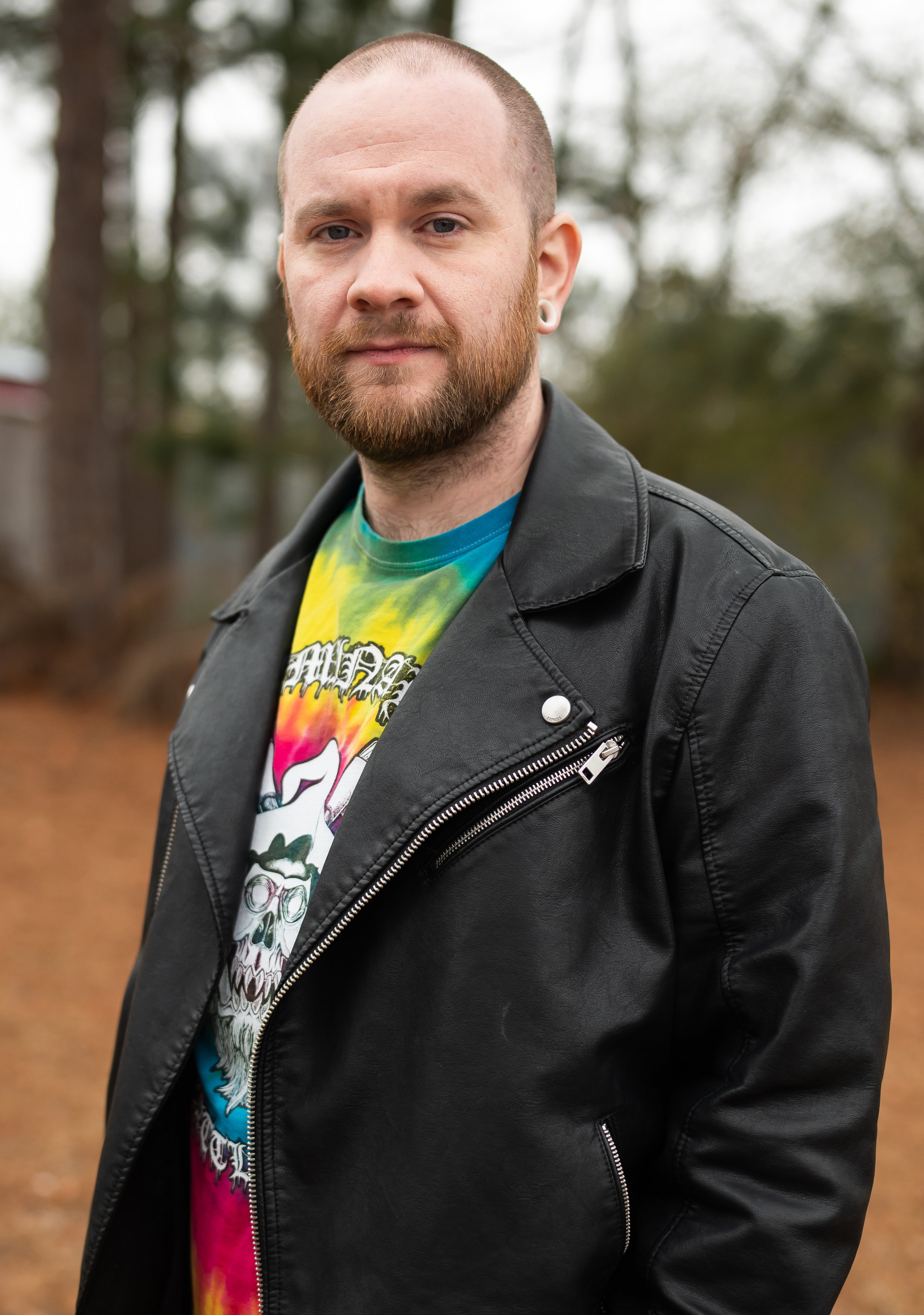
Jason Stokes, Writer and Director of Composure


In 2020, two new plays were created by local playwrights with the intent to premiere at Trustus, until COVID put a halt in production. Now, the two shows, Composure and House Calls are finally being shared with Columbia as part of Trustus’ True Crime Rep.

The shows will perform in repertory, running at the same time with performances alternating nightly. Composure, by Jason Stokes, premieres first, starting on Thursday, August 11th and running until the 27th.

Stokes is far from new to the Trustus scene, having been part of the acting company at the theater since 2004 — and having been working on screenplays since a young boy.

The story for Composure came from a work presentation on a 1903 case that Stokes attended around 20 years ago. The case? The then sitting lieutenant governor (Jim Tillman) finished session for the day, walked out of the State Capitol building, saw the founder of The State newspaper (N.G. Gonzales) pulled out a gun, and – without warning – shot him dead.

Stokes keeps a journal on him at all times with notes all the way back to when he first heard this story in 2003. When he knew he wanted to craft a play, he went to the Thomas Cooper Library to read books and newspapers and to find little known information that coverage of the trial left out.

“It was frustrating because I wanted to write it, but I didn't know what I wanted to write,” Stokes shares, “When I hit on the idea that the why was more important to me than the what, that’s when the catalyst sparked.”

With inspiration and research intertwining, the script started being fleshed out. Stokes started and finished his first draft four years ago—as a screenplay. It was this screenplay that was read at Trustus and that he’s been molding into a stage play since 2016. With this, though, came a unique challenge – how do you transform something made for the screen to something made for stage consumption?

This transformative process from screen to stage was new for Stokes and did in fact challenge him creatively. “The biggest thing was character consolidation. Because when you're out in the real world and you're doing a shoot, you can hire somebody for a day,” he details, “In terms of scenes, you have to think what you can compress or change to put the characters somewhere that's static yet authentic. You realize you have to find focus through dialogue as opposed to through visuals.”

Stokes has embarked on this path by functioning as director of his own play. “I just don't think that I could hand this piece specifically over to somebody else,” he continues, “I feel that this was a living, breathing thing for me. But at the same time, if someone reads something that doesn't make sense, I want them to talk about it. We can change it.” 

Part of this confidence in the ability to change parts of a script based on the opinions of others comes from having an outstanding team, specifically a wonderful cast. Original and new cast members join together to bring this play to life, including Hunter Boyle, Kevin Bush, Libby Campbell, Stan Gardner, Brandon Martin, Terrance Henderson, Nate Herring, Katie Leitner, Jon Whit McClinton, Clint Poston, and G. Scott Wild.

Stokes asserts that “By the end of the process, if I've done my job and I know my cast have done their job, they're going to know the characters better than I ever will.”

With his wife Marcia Leigh Stokes by his side as Stage Manager, Stokes and his cast and crew have worked together to tell a story steeped in history with roots spiraling far before the gunshot at the
State House even took place a century before.

“It’s a unique challenge anytime you deal with historical fact,” Stokes notes, “You've got to be historically accurate, but you have to make it entertaining, so this process was about balancing what bits of history to keep in versus what to take out.”

Stokes certainly hopes his play, which is very much rooted in what happens when your disagreement with another individual falls far off balance, inspires stories and decisions long after the curtain closes.

“I think today we find ourselves in a world where people believe, ‘If you disagree with me, you're wrong,’ or ‘If they're reporting against me, they're lying,’” Stokes asserts, “So I think what’s important is we learn from our mistakes and move forward and understand that there are going to be things and people that we don't agree with.”

Get your tickets to Composure (and House Calls) on the Trustus site and come back next week for our piece with Charlie Finesilver on House Calls!

Jason Stokes and Charlie Finesilver

Chapin Theatre Company Announces CALL for 10 Minute Play Scripts

CALL FOR SCRIPTS!

Exciting News from our Friends at Chapin Theatre Company!

Submissions will be open from June 15 through August 26.  We will accept only one play per playwright this year, so submit your best piece!

Other rules:

  • Playwright must live in South Carolina

  • Play must be no longer than 12 minutes in length

  • Maximum of 5 characters

  • Simple production with limited set pieces

  • Keep it PG 13 or less

  • Play should be in a "play format" and saved as a pdf. Play title and page number must be written on each page

  • This is a blind submission, so your name must NOT be written on the script

Plays will be selected in early September.  The eight winning plays will be part of the 2nd Annual 10-Minute-Ish Play Festival on November 4-5 at the Firehouse Theatre in Chapin.

Good Writing and Good Luck!

Submit

here!

Punk Shakespeare Troupe “Elsewhere” Takes Twelfth Night on Tour


“We all believe Shakespeare has been handled with kid gloves when it wasn't intended that way.”

Shortly before the pandemic, three performers and Shakespeare lovers from the East Coast came together to put their twist on Shakespeare. Now, for the first time ever, actors and managers Katie Mixon (Columbia native), Mac MacDaniel, and Hilary Dennis are taking their troupe on tour. Jasper recently sat down with them to learn all about Elsewhere.


JASPER: For those who aren’t familiar, can you say a little about where Elsewhere started? 

ELSEWHERE: Elsewhere began as an attempt to apply the production principles of the punk scene to Shakespearean theatre. Mac (from VA) grew up going to punk shows, Hilary (from MA) was trained in modern style theatre, and I (Katie, from SC) have a classical background. We met at a Shakespeare acting workshop in NYC and it was — what's the platonic artistic version of love at first sight? We went from total strangers to best friends starting a theatre company together in about a week. We all believe Shakespeare has been handled with kid gloves when it wasn't intended that way. 


JASPER: How exactly is Elsewhere different? 

ELSEWHERE: We cut the plays down to 90 minutes. We keep all the lights on and perform with a small cast and try to drag the audience into the show as much as possible. Fast, minimalist, interactive. We believe that all the things that make Shakespeare easier and cheaper to produce also make Shakespeare more fun and engaging.


JASPER: You have to tell me about the name. 

ELSEWHERE: When the title character in Coriolanus is banished from Rome, he says "there is a world elsewhere." As artists who felt like our artistic ambitions and goals weren't being realized in "traditional" theatre spaces, we decided to go outside and find a new world to work in. It's usual for theatre companies to have names like "[Location] Shakespeare," and we thought it was clever to just say that wherever "normal" theatre is happening, we're somewhere else.


JASPER: Y’all usually perform in Richmond, right? Any specific places there? 

ELSEWHERE: Because we don't need a stage or lights, we can perform anywhere there's an open space and room to set up a coat rack. Our usual spiel is to reach out to a few of our friends, organize a very limited rehearsal period (somewhere between a day and a week) and then do a single 90-minute performance with no intermission, and then the show is over. We like the urgency of a single show; either you're there and you see it, or you're not and you've missed it.


JASPER: Have you toured before? 

ELSEWHERE: This is Elsewhere's first time touring, but it definitely won't be our last. Mac was already planning a road trip with his wife Leah, (who is also the Marketing Director and Graphic Artist for Elsewhere), so he pitched this idea of a tour with a core cast of us three and a rotating local cast that would enable each of us to cast our friends in our hometowns and see how the show changes when more than half the cast will turn over between each show.


JASPER: What made you choose Twelfth Night

ELSEWHERE: We wanted to do a comedy after doing two tragedies back-to-back. Artistically it has all of the things we love about Shakespeare — poetry, wit, brilliant characters, music, humor. It is deep without being dour. It is an ensemble show rather than a solo star vehicle like a Hamlet or an As You Like It. Logistically it is an audience favorite that requires very little in the way of fight choreo or intimacy work, which makes it easier to put together really fast.


JASPER: How did you cut and change the play for the tour? 

ELSEWHERE: Mac does all our cuts, and what he does with the text would probably horrify a lot of scholars and purists. Mac’s goals with any cut are that the text can be played by a small cast and that the basic throughline of the story is preserved. He is both a Shakespeare educator and someone who is always dragging non-Shakespeare friends out to see plays. It is possible Shakespeare to be staged in a way that is beginner-friendly without being dumbed-down.


JASPER: How structured are your shows usually? I know you don’t have a “director.” 

ELSEWHERE: We just run with the vibes. Part of the fun of this tour is seeing how the vibe changes between cities/venues/casts. Mac, Hilary, and Katie are all the same actors playing the same parts, but not only will our characters' relationships evolve as we go, we will be creating new relationships with the other characters. We try to be very clear that even though Elsewhere is our company, we are not "in charge" of the show or the rehearsal room. Anyone we invite to be a part of the show process is an equal partner. They didn't have a director when Shakespeare's company was performing in the 1600's, so we can do that too.


JASPER: You already had one show in Columbia. Anything you’d keep or change moving to the next two shows?  

ELSEWHERE: There are usually small edits made to the cut during rehearsal, things you don't notice until you get the cast in the room — for example, Mac cut all of Maria's lines from a scene but forgot to cut the stage direction "enter Maria," so poor Lonetta was just wandering around in the scene with nothing to say. Katie chose to wear a huge hat and sunglasses for Olivia, but Joseph Eisenrich (who played our Toby) marched on to stage and put them on himself and I fell out laughing.


JASPER: What are some of your goals with this tour specifically? 

ELSEWHERE: We have been working together in Richmond for a while now, but this is our first opportunity to work in each other's hometowns. Usually, Mac is the one in charge of finding a venue and a cast and hosting everyone in Richmond, so it's nice to come to Columbia and for him to be a guest.  

A perhaps bigger goal is to demonstrate for theatre folks just how easy it is to produce Shakespeare shows. The thing that would make us most happy would be for someone to see one of our shows and think "I can do that!" and then take our resources and start producing their own fast popup Shakespeare plays.


JASPER: What’s after this for Elsewhere? 

ELSEWHERE: We haven't the foggiest idea. Maybe we'll start a podcast? Oh! And we have been talking about a longer version of a tour, with a different show.  Maybe Much Ado About Nothing.  Comedies have been fun after two tragedies.


JASPER: Last but definitely not least, how can people support you in the future? 

ELSEWHERE: You can donate to cover tour costs by Venoming me @Mac-MacDaniel (make a note that it's for Elsewhere), or you can make a tax-deductible donation on our website www.elsewhereshakespeare.com  


Elsewhere’s performance of Twelfth Night premiered in Columbia on May 1st, and its next stop is Richmond, Virginia on the 29th of this month. The troupe’s final performance will be in Northampton, Massachusetts on July 3rd.


Last Call for Play Right Series Community Producers

Meet Colby Quick.

Colby Quick is the Jasper Project’s 2022 Play Right Series Winning Playwright.

We’re wrapping up our cast of 2022 Jasper Play Right Series Community Producers and we have a few seats left at the table.

You can learn more about the process of how a play moves from page to stage, be our honored guest once a month at intimate, fun, and informative panel parties with Jon Tuttle, Chad Henderson, Stann Gwynn, Becky Hunter, Michael Hazin, and more, and have YOUR NAME attached as a producer to a brand new piece of theatre that will premiere as a staged reading in August, with you in the best (and most honored) seats in the house.

You can read more about the Play Right Series at the Jasper website but, in-a-nutshell, the purpose of the Play Right Series is threefold:

  • ·         To empower and enlighten audiences (you) by allowing them insider views of the steps and processes of creating theatre art

  • ·         To increase opportunities for theatre artists to participate in new art without being attached to an existing theatre organization

  • ·         To provide more affordable and experimental theatre arts experiences for new and emerging theatre artists and their audiences; thereby expanding cultural literacy and theatre arts appreciation in the greater SC Midlands area.


The result: Community Producers (you) who learn about the extensive process of producing a play and become personally invested not just in the production and success of the play, but also in its playwright, cast, and crew, thereby becoming diplomats of theatre arts.


Last fall, the Jasper Project issued a call for a new one-act play and the competition was begun. Under veteran playwright Jon Tuttle’s direction, scripts were submitted and adjudicated by a committee of outside theatre artists. The winning play, Moon Swallower by Sumter writer Colby Quick, was selected as the play that we (hopefully, you included) will produce over the next few months, culminating in the first ever Staged Reading of this brand-new play in August 2022.


We’re delighted to announce that Chad Henderson has agreed to serve as the director of Moon Swallower and has included among his cast such outstanding Midlands artists as Stann Gwynn, Michael Hazin, Becky Hunter, and Lonetta Thompson.

We have scheduled a series of gatherings for Community Producers and Moon Swallower cast and crew over the next six months leading up to the Staged Reading. Each gathering will feature an interactive presentation as well as a unique social component that you can read about in the attached calendar of events. (SEE SCHEDULE BELOW!)

All we need to do now is fill out our roster of Community Producers, and I hope you will consider being among them. The minimum investment for Community Producers is $250 per person with 100% of the funds going to the production of Moon Swallower.

Our first gathering is at 5 pm on Sunday March 20th when Community Producers will meet each other and the cast and crew of Moon Swallower for the first time, hear playwright Colby Quick talk about his inspiration for Moon Swallower, and receive their signed copy of Moon Swallower to take home and be among the first ever to read. 

Sunday March 20th - Meet the team and Playwright Talk

Join playwright Colby Quick to learn about his inspiration for Moon Swallower and hear him discuss his writing process and challenges, as well as his own background and goals while enjoying Wine & Cheese.


Sunday April 24  - Table Reading

Listen in on the first ever table reading of Moon Swallower and enjoy a unique Beer Tasting with snacks.


Sunday May 22nd - Director Talk

Join director Chad Henderson to learn about his background and process, the industry lessons that prepare him for directing a play, and the unique challenges and solutions he has encountered in directing Moon Swallower while enjoying the project’s official signature cocktail, The Moon Swallower.


Sunday June 26 - Backstage with the Actors

Listen in as the cast of Moon Swallower discusses their processes, challenges presented by their characters, and more, and enjoy a summer picnic with spiked lemonade & finger sammies.


Sunday July 24th - Stage Managing, Props, Costumes, Lighting, and Sound

It’s out last Community Producer gathering before the big event, so Chad, Jon, and our stage manager will discuss the components above before we pop the champagne and party!         


Sunday August 28th - It’s finally time for the Staged Reading of Moon Swallower with a full audience and you get the best seats in the house!

USC Theatre Takes on Radium Women in Play THESE SHINING LIVES - February 25 - March 4 at Longstreet Theatre

Theatre major Maddie Niles as Catherine Donohue, a character based on a real woman of the same name who fought for justice after contracting radium poisoning from her employer. Photo - Jason Ayer

From our Friends at USC Theatre and Dance -

The University of South Carolina Dept. of Theatre and Dance will present These Shining Lives, a drama based on the tragic yet inspiring true story of the “radium girls,” February 25 – March 4 at Longstreet Theatre.

Based on actual events, These Shining Lives reaches back almost a century to uncover a harrowing history that still has profound resonance to our society today.  Through poetic and powerful language, playwright Melanie Marnich tells the fateful story of female factory workers in the 1920s hired to decorate watch faces with glow-in-the-dark, radium-based paint, a substance their employer refers to as “medicinal.”  As they begin developing serious illnesses from radiation exposure, they soon realize the company’s complicity and wage a legal battle to bring it to justice.  The case would go on to have far-reaching consequences on workers’ and women’s rights in our own time.  

Guest artist Ibi Owolabi, an Atlanta-based professional theatre director, has returned to campus to helm the production.  Owolabi previously directed You on the Moors Now in April 2021 for the university.

The director says the experience of the women portrayed in the play feels especially relevant now, as we enter the third year of a pandemic that has so drastically affected the way we live and work.

“If we were to do this play even two years ago, our mindset would have been so different,” she says.  “After experiencing the pandemic for as long as we have, I think we understand fear in regard to mortality and sickness a lot differently than we did before.” 

The story’s parallels to recent pandemic-related labor issues also resonates with the director.  “[The pandemic] has put things in perspective,” she explains.  “The ‘great resignation’ that we’ve seen happen recently, with people not accepting the same working conditions they did before the pandemic, reminds me of how our perspective changes when we’re faced with a life and death situation.”

The historical facts of the “radium girls” case can seem like a horror story.  Employees of the U.S. Radium Corporation, the women were required to keep their paintbrushes sharp by “pointing” them between their lips.  With repeated exposure over several years, radium seeped into the workers’ bones, causing anemia, jaw decay, spinal collapse and, in some cases, death. However, Owolabi says Marnich’s retelling of the story isn’t all gruesome details and tragic outcomes.

“What I think this play does so well is that it focuses on the humanity of these women in addition to the facts.  [Marnich] unfurls the history in a way that is suspenseful but also feels like a personal journey.”

Cast in the production are undergraduates Jesse BreazealeZoe ChanMaddie NilesEmily Paton and Alec Thorn, and graduate theatre student Isabella Stenz.  The production’s designers include graduate theatre design students Ashley Jensen (scenic) and Kyla Little (costume), undergraduate media arts students Aubrey Eastin and Rylee Milz (projections), theatre design professor Jim Hunter (lighting), and guest artist Danielle Wilson (sound).

Owolabi sums it all up as “a riveting look at what seemed like a shining opportunity for these women.  It’s about what it means to assert your individuality and to assert your humanity when you’re faced with a corporate giant.”

“I think the playwright really gave these women justice.”

Show time is at 8 p.m. Tuesday through Saturday, with additional 3 p.m. matinee performances on Saturday, February 26 and Sunday, February 27. Admission is $15 for students, $20 for UofSC faculty/staff, military, and seniors 60+, and $22 for the public. Tickets may be purchased online at sc.universitytickets.com. In keeping with university safety protocols, masks will be required of all audience members, actors and crew, and seating will be limited to allow for appropriate social distancing between all patrons. 

For more information on These Shining Lives or the theatre program at the University of South Carolina, contact Kevin Bush by phone at 803-777-9353 or via email at bushk@mailbox.sc.edu


REVIEW: Scenes from Metamorphoses, USC Theatre

I have to admit that I was surprised to see that the play, Scenes from Metamorphoses, based on the myths of Ovid by Mary Zimmerman, was being offered as part of the USC Department of Theatre and Dance’s season. My friend Ed Madden and I, along with our spouses, saw the play last weekend during its brief engagement, October 28-31, at the Booker T. Washington Lab Theatre on Wheat Street. Having had the opportunity to see the multi-award-winning production at Circle in the Square Theatre on Broadway in 2002, my memories of the experience were profoundly moving, and I remember being as impacted by the starkness of the minimalist set and costuming as I was by the power of the script and the heft of the acting and direction. The lighting in the Broadway production was so finely achieved that it almost became a character on its own.

Was it a good idea for a university to present a project as robust as Scenes from Metamorphoses? I’m still not sure.

A highly sophisticated project, Zimmerman refined her Metamorphoses over years of workshopping productions beginning in 1996 at Northwestern University. By the time it arrived on Broadway in 2002, the final iteration of the project was something pristine and exquisite. A compelling combination of the robust and the delicate that captivated audiences by reminding us of that conflict and resolution—hence, change—are both timeless and essential to life. The fact that Zimmerman also directed the play during its years on and off-Broadway should not be overlooked in terms of the organic flow in which she was able to offer her production.

While the title suggests that the presentation is an incomplete set of vignettes, in reality, we saw the play with all characters, as written, except with fewer actors. Based on David Slavitt’s 1994 translation of Ovid’s Metamorphosis the play features Cosmogony, Midas, Alcyone and Ceyx, Erysichthon and Ceres, Orpheus and Eurydice, Narcissus, Pomona and Vertumnus, Myrrha, Phaeton, Apollo, Eros and Psyche, and Baucis and Philemon. Zimmerman selected the myths to dramatize in order to replicate the rise and fall of a successful project, with all elements needed to create the arc of a well-accomplished stage play. Her use of the myth of King Midas, before his startling conflict and after his ultimate resolution represent the state of equilibrium that the play opens with and circles back to at the end.

The USC presentation featured Asaru Buffalo, Ezri Fender, Cameron Giordano, Cady Gray, Brighton Grice, Carly Siegel, and Nakao Zurlo, with direction by graduate student, Tiffani Hagan.

There were a number of challenges facing the team presenting Metamorphoses at USC last weekend. The greatest may have been the fit of this play for a group of undergraduate students. It can be difficult to discern where strengths and weaknesses come from—whether it is the actors or the director—without the conceit of knowing what the actors have brought to the table on their own. There was certainly an inconsistency in the performances with some players taking on a conscious meta theme to their interpretations and others a more lackadaisical approach. It was difficult to tell whether some of the nonchalance was prescriptive or organic. Others seemed uncomfortable but I’m not sure if their discomfort came from their roles or their own skin.

Madden made particular note of this. “One of the most interesting lines to me is: ‘You know what happened.’ The play is self-conscious about the fact that we know most of the stories. The art of the play lies in how they are put together and in how they are acted.” 

Given the use of the meta-dramatic theme, Madden, who rated the story of Narcissus as among the most beautifully told, based on the “gestures and movement of the actors,” but wondered “why a woman held the mirror for Narcissus—given his love for his own male beauty, it is the one spot in the entire play that could have included a queer element.”

The greatest challenge to this interpretation of Metamorphoses may be found in the absence of the pool of water which is central to every story line and is, in fact, the touchstone of the play. Originally written to have positioned center-stage a large, multi-use body of water serving as a character in and of itself—a place to wash, the ocean, the river Styx, and more—the pool  of water should act as the central part of the set, as a prop, as a destination, as a central unifying thread, and as the greatest symbol of change, or metamorphosis, itself. While this interpretation of the play uses a wooden barrel in that role, the barrel also becomes a receptacle for props and discarded clothing, and it is cast aside and ultimately moved off stage in what felt irreverent to this viewer.

The height of the performance, for both Madden and I, was the telling of the story of Phaeton, son of Helios, who hounded his father into letting him drive his chariot of horses across the sky creating the daily rising and falling of the sun. Phaeton’s failure to handle such a daunting task results in the scorching of the land and other earthly consequences as the boy had taken on more than he was capable of accomplishing. We both appreciated the role of the therapist who offered, as Madden says, “a way to understand the myth, and yet the very human story if the teenage boy.”

The epitaph on Phaeton’s tomb is ironically said to read, “Here Phaeton lies who in the sun-god's chariot fared. And though greatly he failed, more greatly he dared.” And while the cast and crew of Mary Zimmerman’s Scenes from Metamorphoses certainly did not fail, there is no doubt that they grew from the experience in the face of so many challenges presented them, not the least of which were the challenges they each wore on their faces—the very emblem of creating performance art in the days of Covid-19: their masks. As Madden says, the masks “Made some of the language difficult to understand, especially if the music was too loud, and may have caused some over-acting because the actors could not depend otherwise on facial movements to carry emotion.”

Kudos to the cast and crew of USC’s Metamorphoses. Every theatre artist should be so lucky to as to have the opportunity to make this play a part of their artistic lives.

-Cindi Boiter with Ed Madden


Join the Jasper Guild today!

PREVIEW: Mary Zimmerman's Metamorphoses at USC Lab Theatre

Senior theatre major Nakoa Zurlo as Hades  

The University of South Carolina theatre program will present Scenes from Metamorphoses, Mary Zimmerman’s profoundly moving adaptations of classic Greek myths, October 28-31 at the Lab Theatre.  

 Showtime is 8pm nightly.  Tickets are $10 and available online at sc.universitytickets.com.  

In keeping with university safety protocols, masks will be required of all audience members, actors and crew, and seating will be limited to allow for appropriate social distancing between all patrons.  The Lab Theatre is located at 1400 Wheat St. on the first floor of the Booker T. Washington building.   

While the show’s title might indicate an abridged version of Zimmerman’s popular play, the production will indeed contain all the original’s text but with a smaller-than-usual cast of seven.  Hailed in 2002 as “the theatre event of the year” (Time), the award-winning Metamorphoses is a breathtaking fusion of classic and contemporary storytelling, bringing Roman poet Ovid’s timeless myths to dazzlingly theatrical life. Mary Zimmerman’s daring adaptations explore the wide gamut of our universal experience, from love to loss, from joy to despair, connecting it all with the idea that nothing in life comes without transformation.  

"Mary Zimmerman's lovely, deeply affecting work...shows that theater can provide not just escape but sometimes a glimpse of the divine." — Time 

“It’s a really unique combination of adaptations of Ovid’s stories mixed mixed with other iterations of the myths and Zimmerman's own interpretations of who the characters are and what they could be,” says director Tiffani Hagan, a second-year graduate theatre student.  “Each story touches on universal themes like love or loss or fear of the unknown, making them stories that everyone can relate to.” 

The play juxtaposes the mythic stories of well-known characters such as Midas, the greedy king who receives the power to turn everything he touches to gold, with lesser-known figures like Erysichthon, cursed by the goddess Ceres to endure an insatiable hunger.  Hagan says this production emphasizes the anachronistic style of the myths as they are presented in the play, placing many of the ancient tales in modern, often humorous settings.  Think Midas as a Steve Jobs-esque business mogul or Apollo’s son Phaeton telling his story in a therapy session on a pool float. 

“The myths can jump in and out of time because they really are timeless,” says Hagan. 

Cast in the production are undergraduate students Asaru BuffaloEzri FenderCameron GiordanoCady GrayBrighton GriceCarly Siegel, and Nakoa Zurlo.  The production’s design team includes third-year graduate student Heather Gonzalez (costumes) and undergraduates Logan Brodfuehrer (scenic), Brooks Beaty (lighting), and Josiah Burton (sound). 

 “These are stories we’ve all heard at some point in our lives,” says Hagan. “The characters show up again and again in television shows or movies, whether we recognize them as being originally Greek myths or not. This play is a fun way to see them in another light and in a new way.”  

For more information on Scenes from Metamorphoses or the theatre program at the University of South Carolina, contact Kevin Bush by phone at 803-777-9353 or via email at bushk@mailbox.sc.edu.  


 —Courtesy of USC Department of Theatre and Dance


REVIEW -- Amityville 1925

Seven years in the making, playwright and founder of Theatre Mysterium, Christofer Cook, brings his new play, “Amityville 1925” to the black box performance space at Columbia Music Festival Association, 914 Pulaski Street in Columbia’s Vista.

Inspired by mythology surrounding the famed house at the center of the Amityville Horror franchise, Cook’s cast enacts a tale about the Moynahan family, a real family who occupied the home in 1925. In Cook’s imagination, the Irish Catholic family of five is transplanted to Amityville, NY taking up residence at 112 Ocean Avenue, the same house that has appeared to be malevolently sneering down at us in all our scary movie-induced nightmares since the first film debuted in 1979.

In Cook’s play, the family arrives at their new home with their furnishings intact due to the kindness of Jesse Purdy, the patriarch John Moynahan’s best friend. They immediately have the home blessed in traditional Catholic fashion by the local priest Father Fitzgerald but, despite the ostensible blessings bestowed by the man of the cloth, something is awry from the start. Noises from beneath the floorboards, pops and snaps from the fireplace, toppled furniture and books flying through the air. Everything one would expect from a home we hope to be haunted.

But the Moynahan family of three adult children and parents are smarter than the average haunted household-dwellers and they use their deductive powers and Irish intellects to solve the mystery of a house that has a mind of its own.

Or do they?

Amityville 1925 is a world premiere play with exceedingly strong bones and quite a bit of meat on them, to boot. Having seen the first ever public performance of the play on its opening night of Thursday, October 21, I was engaged by where the story was going, where it took me, and impressed by the scenery along the way.

Cook has assembled an excellent cast of actors, each holding their own and contributing singularly significant pieces to the puzzle. The cast successfully performs as one expects an ensemble to do with no weak links and no characters overshadowing others.

The fourth wall having been delightfully broken from the onset as the players approach the stage via the audience, pausing on the steps of the home to acknowledge the beginning of their occupancy of the house, as well as the beginning of the play, various characters return to their conversation with the audience  throughout the performance. The convention works well as a comfortable narrative device with little to no meta-referential disruption.

As family matriarch Catherine Moynahan, Zsuzsa Manna neatly walks a narrow path of being both devoutly religious but still intellectually astute and perceptive. Her Irish accent was captivating as was that of her on-stage spouse, Frank Thompson in the role of John Moynahan.

The three Moynahan siblings, Stephanie Walker as Eileen, Katie Mixon as Marguerite, and James Nolan as Thomas, are strongly portrayed. Walker’s performance was particularly engaging, evoking comparisons with that of Samantha Sloyan’s Bev Keane on the Netflix drama Midnight Mass. Even on opening night the audience got a sense of the essence of the siblings’ unique personalities which, as the run progresses, I feel certain will acquire even more depth. James Nolan’s performance suggested a far more mature actor than I expected when I recognized his youth. As he more fully actualizes his role I would expect to see more of the youthful anger and frustration the character Thomas suggests as the play goes on.

In fact, the inference of a little more backstory for the family members as-a-whole might serve to further enrich the play. I would love to know more about the relationship between the children. While Walker’s Eileen appears naively boy crazy when she meets Father Fitzgerald, it is her (more mature or possessed?) sister who acts on those impulses later on. Why is this?

And no family with adult children under one roof get along so cordially and in such a non-confrontational manner as do the Moynahan siblings. The addition of inter-relationship awareness might add texture to the siblings’ characters. Similarly, I’d love to know some incidental history of the friendship between John Moynahan and his best friend Jesse Purdy, played devotedly by Landry Phillips.

The most challenging role of the play was that of Father Fitzgerald which Charlie Goodrich accomplished with ease. Goodrich fully possessed the variation required of his role, leading the audience to believe that Father Fitzgerald was quite the actor himself.

My only frustrations with Amityville 1925 were issues that could be avoided by two things: workshopping the play to address some of the small narrative gaps mentioned above, and the hard work of a good stage manager. As someone who appreciates the difficulty of presenting what is often a one-person production, I know well how frustrating it can be to have to put out fires when you’d rather be putting flowers in a vase to make everything pretty. A stage manager would make sure the set looked complete by finishing the painting and wallpapering so raw wood doesn’t peep through an empty grandfather clock. They would dust the lower shelves of tables at audience eye-level, replace an anachronistic plastic pesticide bottle with a glass jug marked with a skull and crossbones, and made sure the bed’s box springs couldn’t be seen on the floor.

That said, the fact that this playwright/production team put a performance of this caliber together is an unusual and quite remarkable accomplishment and they deserve high praise. The play is grounded, smart, wryly funny in unexpected places, (here’s to soda bread and rotting corpses), and thoroughly entertaining. It may, in fact, be the best thing you’ll see this Halloween season.

The next time I see it, and I really want to see it again, I hope it will be on a more professional and hospitable stage with a larger crew, a bigger budget—though Theatre Mysterium clearly did a lot with a little—and all the bells and whistles a well-conceived and soundly performed piece of theatre art like Amityville 1925 deserves.

October 21st, 22nd, 23rd, 24th
28th, 29th, 30th, 31st

These are Thursday - Sunday performances. 8:00 curtain, except Sundays which are 1:00 pm matinees.

General admission. Tickets are $20 per person. Go to TicketLeap.com to make reservations.

USC Opens Neil Simon's Rumors at Drayton Hall Friday Oct., 15th

The University of South Carolina Theatre Program will launch its 21/22 season in uproarious style October 15-22 with a production of Neil Simon’s raucous comedy Rumors at Drayton Hall Theatre.  

Show time is at 8 p.m. Tuesday through Saturday, with additional 3 p.m. matinee performances on Saturday, October 16 and Sunday, October 17. Admission is $15 for students, $20 for UofSC faculty/staff, military, and seniors 60+, and $22 for the general public. Tickets may be purchased online at sc.universitytickets.com. Drayton Hall Theatre is located at 1214 College St., across from the historic UofSC Horseshoe. In keeping with university safety protocols, masks will be required of all audience members, actors and crew, and seating will be limited to allow for appropriate social distancing between all patrons.  

Sharp-edged wit meets madcap farce in legendary playwright Simon’s hit 1988 comedy.  When the first pair of guests arrive for an anniversary party at the opulent home of Charlie Brock, the Deputy Mayor of New York, they find their host unconscious, shot in the head (well…the ear lobe), and his wife missing.  Wanting to protect Charlie – and themselves – from potential scandal, they fabricate a lie to tell the rapidly-arriving partygoers, setting in motion an ever-more-hilarious series of cover-ups, misunderstandings and mishaps. "Has nothing on its mind except making the audience laugh." - The New York Times

Recipient of the Pulitzer Prize (1991) and the Mark Twain Prize for American Humor (2006), in addition to numerous Tony® awards, Neil Simon was one of the most successful writers of the 20th century, with hits like The Odd CoupleBarefoot in the Park, and Biloxi Blues becoming long-running successes on stage and screen.  His work has become especially personal to director David Britt, who counts Rumors as the seventh Simon play he’s helmed in the last decade.

“I am a student of Neil Simon and his writing,” says Britt.  “When I was growing up, he was as popular a playwright as anybody, and I see his influence in everything I’ve seen since. I will always pay tribute to him.”

There’s an old expression, ‘I dropped my basket,’ meaning you've lost it...  Everybody’s basket gets dropped in Rumors!

Although the playwright told The New York Times that Rumors was his “first farce” and “completely different for me,” the play’s humor is still classic Simon. “It’s a sarcasm that many of us in the South may not be familiar with,” says Britt of the Simon’s signature one-liners.  “Our sarcasm is often very passive-aggressive, but his is straight to the point.  It’s given and received with the same attitude.”

In keeping with the classic form of farce, Rumors’ comedy is rooted in characters who become completely unraveled in the wake of fast-moving chaos and absurdity.  However, Britt says that Simon’s heightened characters are still totally relatable.

“Having read about Simon and the circles he ran in I think these characters are people he would have attended parties with.  There’s no one in this play who is an unbelievable person and that’s what we’re going for -- to hold up a mirror and say, ‘Look how crazy we all are under pressure.’”  

“There’s an old expression, ‘I dropped my basket,’ meaning you've lost it,” he adds with a laugh.  “Everybody’s basket gets dropped in Rumors!”

Britt’s production will bring its own special sense of zaniness to the proceedings, transporting audiences back to the “decade of excess” with a 1980s design aesthetic filled with shoulder pads, big jewelry and even bigger hair. “This play is not only a farce, but a comedic commentary on the socio-economic status of the wealthy,” says graduate design student Kyla Little, costume designer for the production.  “Material possessions have an interesting way of changing the confidence of the human psyche and I take pleasure in exaggerating that through the aesthetic trends of that era.”

Additional designers for the production include Professor Jim Hunter (scenic), graduate design student Lawrence Ware (lighting), undergraduate media arts student Alisha De Jesus (makeup) and guest artist Danielle Wilson (sound.)  

The show’s cast includes students Brandon BadinskiJohn BoulayJesse BreazealeZoe ChanBilly CheekKoby HallAndie LoweCaroline McGeeJordan Pontelandolfo and Isabella Stenz.

“It’s non-stop laughter for the audience to watch,” promises Britt.  “There isn’t any message beyond just enjoying yourself watching these people who think they’re so collected become so uncollected in a matter of minutes.”  

“Just come and have a good time.”

For more information on Rumors or the theatre program at the University of South Carolina, contact Kevin Bush by phone at 803-777-9353 or via email at bushk@mailbox.sc.edu.   

 Courtesy of UofSC Department of Theatre and Dance

REVIEW: Workshop Theatre Welcomes Audiences Back with New Work - The Campaign, written and directed by Crystal Aldamuy

In Shakespeare’s day, Elizabethans went not to see a play, but rather to ‘hear’ a play.  If the mark of a listenable story is its strength of dialogue, Crystal Aldamuy has the gift of gab. She puts words into her characters’ mouths that make us feel as though we are eavesdropping through a tenement wall. This is more than evident in her latest feat of derring do, a two-act relationship drama called The Campaign produced by Workshop Theatre. Not only does Aldamuy exhibit an acumen for how people talk, but she also proves a competent craftsperson in the construction of plot.

The Campaign tells the story of Kyle McMillian, an ambitious thirty-something who embarks on entering a local city council race, and his life with his flamboyant partner, Seth Williams. The two young men grapple with the universal vagaries of keeping their love alive while cohabitating in somewhat claustrophobic quarters. Their relationship is further challenged by Kyle’s meddling mom, Naomi, whose raison d’etre appears early on to be shopping for her son and picking out just the right sofa pillows.  

At the outset, Kyle and Seth present as a familiar trope of ‘gay odd couple.’ Kyle’s reticence is juxtaposed by Seth’s inability to keep anything to himself. When the moment arrives for Kyle to announce that he has thrown his hat in the ring to be a local politician, Seth has become disillusioned by the reality of their relationship. Seth now must compete for Kyle’s attention and must ‘campaign’ for his true loyalty. This conflict reaches a fever pitch when a man named Timothy enters the picture later in the game.   

Aldamuy’s two main characters’ wants and drives become clearer as the play progresses. Though the inclusion of Kyle’s mother, Naomi, appears first as a single-dimensional plot device, her development of personae is enriched by a touching scene wherein she connects for the first time with Seth at the kitchen table. No spoilers here, though.

Josh Kern as the earnest Kyle McMillion, son of the apparently legendary politician, Walter McMillion, is excellent. He moves throughout the play with ease, giving us a protagonist who desires far more than simply being a domestic AC repairman.

Julian Deleon sparkles with quick one-liners and hilarious mood swings. Deleon may well be the audience favorite as he maintains a type-A drama queen personality who is culinarily challenged and suffers panic attacks during failed attempts at assembling Ikea shelves.

Tiffany Dinsmore is delightful as Naomi McMillion, a mother who strives to insert herself into her son’s life and relationship with the best of intentions. Dinsmore is believable and never over-plays her hand in a role that could so easily have become a caricature.

As a playwright, Aldamuy delivers and gives us some firm bones.  

Missing, however, are clear and smooth transitions between scenes that could better convey the passage of time. These moments, when actors enter and exit depositing and retrieving props in half-light, were confusing.

Act One seemed to take a while before any significant conflict gave its characters the impetus for action. It might also have been technically stronger had Aldamuy directed Josh Kern to vocally project more as he was difficult to hear at times, keeping us on the edge of our seats for the wrong reasons. This took nothing away, however, from Kern’s powerful exchange with Deleon at the end of Act II, two scenes back-to-back that were worth the price of admission alone.

The script struggled to present a narrative that is socially relevant in 2021 with scenes about condoms and AIDS prevention (though certainly still a part of world we live in) giving us tired theatrical territory, once an important innovation in the eighties by dramatists such as Larry Kramer and William Hoffman, but by now a trope with which audiences are overly familiar.

Challenges aside, however, The Campaign is well-worth your time. Workshop Theatre has another winner here with local stalwarts Aldamuy, Kern, Deleon, and Dinsmore at the helm. Remaining performances are few. Do not miss this one!

Fri, Oct 8 8 PM, Sat, Oct 9 8 PM, Sun, Oct 10 3 PM

Tickets at Workshoptheatre.com


Christofer Cook is an active member of the Dramatists Guild of America. He holds an MFA, an MA, and a BA. An internationally produced and award-winning playwright, his latest work is “Amityville, 1925” which opens at Theatre Mysterium on October 21st.


EDITORIAL: Thoughts on Trustus Theatre as Chad Henderson Takes His Leave

By Cindi Boiter - Editor, Jasper Magazine

Chad accepting the SC Theatre Association’s Founders Award in 2018

Chad accepting the SC Theatre Association’s Founders Award in 2018

By now, many if not most of the area’s artists and arts lovers have learned that Chad Henderson has left his post as executive director of Trustus Theatre for new stage sets and designs and new characters to coax into life. (Full disclosure: Chad is my son-in-law. That said, I have been a massive fan and supporter of Trustus Theatre for decades and have served on the board of directors under two artistic directors, including co-founder Jim Thigpen. It is from the perspective of someone who prizes Trustus and the role it plays in the greater arts community that I write this piece.)

Like pretty much everyone, I am sad to see Chad go though I firmly believe it is a smart thing for him to do.

It can be argued that Chad has more talent and potential for creative possibility than could continue to healthily grow in that small but fertile space on Lady Street.

I get that.

In the current structure of most non-profit arts organizations one can only grow as great as one’s board of directors is comfortable with.  It doesn’t matter if you’re an artist or an ED, in the non-profit world we all labor under a collection of thumbs that could fall at any time. It’s easy to imagine a creative spirit straining against the well-meaning confines of a rotating organization of seat-fillers to fully realize that spirit’s potential to break some windows and rattle some doors.

Kudos to Chad for leaving Trustus before this became the case.

As a theatre autodidact and someone who has been lucky to travel a bit and see my share of theatre throughout the US and Europe, I can honestly say that some of the best performances I have ever seen have been on the stage at Trustus Theatre.

I’m reminded of Tarell Alvin McCraney’s Brother/Sister plays, specifically In the Red and Brown Water, which Chad directed in 2015 featuring Avery Bateman and a cast-iron solid cast that included actors like Katrina Blanding and Annette Dees Grievous whose voices I couldn’t get out of my head for weeks after seeing it.

The next year, Chad directed part two of McCraney’s trilogy, The Brothers Size, with Jabar Hankins, Bakari Lebby, and Leven Jackson. I remember walking into the Side Door Theatre and being welcomed by the sounds of cicadas and seeing twinkling lights—lightening bugs—throughout the air. I saw that show three times just so I could watch Jabar’s face and hear his voice crack with love and pain.

I am also reminded of seeing Paul Kaufmann in the one-man play, I Am My Own Wife, directed by Ellen Schlaefer in the Side Door in 2012, after having seen Jefferson Mays in the role at the Lyceum on Broadway. I liked Paul better.

Spring Awakening, Next to Normal, Avenue Q – the list goes on. All of these plays left me, time and again, in awe that you could see this caliber of performance in a  grubby little theatre down the street from wherever you are in town.

No, Chad didn’t direct all the paradigm shifting plays we’ve seen at Trustus. Though it’s no coincidence that many of the plays he scheduled or directed were in keeping with the kind of avant-garde theatrical art that Jim and Kay Thigpen envisioned producing when they started the theatre.

So, as pleased as I am to see Chad move on to the next stage, wherever he finds it, I worry about Trustus.

Don’t get me wrong, I have immense faith in Dewey Scott-Wiley as she steps in as interim director. Dewey is smart, sophisticated, talented, and responsible. There is no one else in town who could do the job she will be doing as well as she will do it.

And that’s the problem. It’s doubtful that Dewey would take the helm of running Trustus permanently. Dewey already has a job and a life.

And make no mistake, whoever takes over running Trustus will not just be taking on a job. They will also be taking on a life. There’s not enough support staff in the world, and there are certainly not enough numbers before the decimal point in the ED’s salary to entice most people who are good enough to do the job to actually do it long-term.

Because running a theatre like Trustus is  a lot like raising a child. For Jim and Kay, Trustus was their child. For Chad, the theatre was a family member he was both emotionally, intellectually, and creatively connected to in that they grew alongside each other for over 14 years. Trustus made Chad the man he is today, and Chad certainly did his part in making Trustus the theatre it is.

I worry that kind of relationship was what kept Trustus going even after Jim and Kay left. And I worry about what will happen in the absence of that kind of relationship.

Trustus has built an enviable reputation among its organizational peers in South Carolina, sharing equity actors, directors, and innovations with other top theatrical minds. Will those relationships be maintained and nurtured? Will they be respected for how they elevate the art form throughout the state? Or will we just worry about our small circles of friends and supporters because that’s the easiest thing to do?

When the board puts pressure on the permanent replacement staff to pay the bills will whoever is behind the wheel resort to producing hokey Southern schlep just to fill the seats? Will they simply recycle previously successful productions and, if so, how many times will theatre audiences pay to see the same show again, and again, and again? God knows you cannot grow audiences that way!

Or worse, will they slump to the lowest of lows and cast local celebrities, moneyed patrons, or God-forbid, CHILDREN in roles just so the “actors’” doting fans and relatives will buy tickets and put butts in seats?

I mean, I have nothing against community theatre. In fact, I love community theatre. But Columbia and its bedroom communities have community theatre out the wazoo, and that's fabulous. Everybody needs a stage at some point, but the stage doesn't need every body. (I’m reminded of a local production of Cats I once saw …)

Trustus has set the standard for professional theatre in the area and believe me, there is as much a difference between professional theatre and community theatre as there is between professional dance and dance school recitals.

I worry.

As proud and happy for Chad as I am, I sincerely hope Trustus Theatre will continue to be the touchstone for avant-garde artistic experiences in the region that it has been since 1985. As a literary artist and an arts afficionado myself, I need this.

To the powers that be, a few requests:

Please respect the culture of the theatre that Jim, Kay, Dewey, Larry, Chad, and the whole Trustus Family has put so much of themselves into creating. It may not be perfect, but it is fertile, it is forgiving, and it accepts people for who they are and what they bring to the table, recognizing that genius is seldom faultless.

Please be careful filling this position, but don’t be too safe.

Please remember there are many ways to interpret integrity and dedication and the best person for the job may not be as sweet-talking or as clean behind their ears as you might like. It takes a lot of bodily fluids to maintain and grow an artistic brand like Trustus.

Trustus had Chad’s heart and he was as devoted to its legacy as a best big brother could be.  I wouldn’t want to be in the shoes of the people who have to try to replace him.

But good luck. 

Chad Henderson and Trustus Co-Founder Kay Thigpen

Chad Henderson and Trustus Co-Founder Kay Thigpen

PROCESS: Theatre Artist Elena Martinez-Vidal Writes about Auditioning for the Role of Maria Callas in Terrence McNally's MASTER CLASS

Elena Martinez-Vidal as Maria Callas

Elena Martinez-Vidal as Maria Callas

An important part of the Jasper Project’s mission is to bring the process of creating art to life for our readers. It’s fascinating learning how many hours of work go into creating a ballet or releasing an album. When we look at the various processes of creating art, no matter the discipline, we come to understand and appreciate the final product much more thoroughly.

To that end, we are always excited when artists share their methodology in a way that we can share it with our readers.

Today, theatre artist Elena Martinez-Vidal shares with us her experience of auditioning for the role of Maria Callas in Terrance McNally’s 1995 play, MASTER CLASS.

The premise of MASTER CLASS is that the larger-than-life soprano, Maria Callas, is teaching a masterclass to vocalists in the last years of her life while she also reminisces about her life and career. Callas was born in 1923 and died of a heart attack in 1977 at the age of 53.

Playwright Terrance McNally, often referenced as the Bard of American Theatre, died of COVID-19 in March of 2020. The author of such critically successful plays as Kiss of the Spider Woman, The Full Monty, and Ragtime, was the recipient of five Tony Awards and enjoyed a career that spanned six decades.

-CB

Master Class 

The Audition

By Elena Martinez-Vidal

"Art is domination. It's making people think that for that precise moment in time there is only one way, one voice. Yours." ~ Terrence McNally, Master Class

Every actor either loves or hates auditioning.

au·di·tion: /ôˈdiSH(ə)n-an interview for a particular role or job as a singer, actor, dancer, or musician, consisting of a practical demonstration of the candidate's suitability and skill. ~ Oxford Languages

I am one of those who tends to be terrified most of the time. Or at least, I used to be. But as the years have gone by, I don't really fear them as much anymore. And sometimes I don’t have to audition, I just get the part!

Hilary Swank is quoted as saying: “All you have to remember is 'audition' is synonymous with 'opportunity. I mean, if you absolutely hate auditioning, do you also hate opportunities? That wouldn't make much sense.”

She didn’t make sense to me. Auditioning is usually torture.

I liked what Robert De Niro said: “Auditions are like a gamble. Most likely you won't get the part, but if you don't go, you'll never know if you could've got it.”

That’s why you have to do them even if they are torture. If you don’t try, you can’t win!

There is a theory that auditioning is your way of doing a mini play. You show yourself off and try to earn a role.

"Think of every audition as a chance to perform and you will have fun doing it."

~ Erica Schroeder

As a speed-reader, I have to slow myself way down or I get tangled up in the words. And I am always terrified that I am doing it wrong.

I could write an entire piece just on auditions I have done. Some have been hilarious since I never even read the play, so my intentions were all wrong. Sometimes I even got the part.

And every once in a while, there is a magical audition! Where it all comes together, and you feel it. Where all the planets and stars align, and it just works! I have only had that happen twice. And this is a short story about one of those times.

When I read about auditions for Master Class by Terrance McNally at Workshop Theatre in Columbia, SC in 2001, I did what all good actors do, I skimmed the play. And I wanted to do it!

What a glorious piece of writing; what a fabulous part!

After announcing my intentions, I was told not to bother because every opera singer in town was going to audition.

But here's the thing - she doesn't sing in the play, except for one small line from Verdi's Lady Macbeth. The stage direction is: "What comes out is a cracked and broken thing".  I figured I could do that. My singing tends to be cracked and broken unless I really am working on it.

I knew I was a little heavy and definitely too short. But I can lose weight and I can act taller! (I do that all the time.) So, I read up on Maria Callas. And I read the play, not just skimmed it. It’s daunting since most of the play is Maria onstage speaking to the audience all alone.

I knew the director and she directed opera also. I was a bit bummed because of being told not to even go for it. BUT I knew I could act it. Oh, and I so wanted to act it! So. after prepping, off to the audition I went.

The room was long, and I seem to remember light coming in from the windows, but that could be a false memory.  I just remember being alone in that room with Ellen, the director.

I don’t remember what I read, not a single line. I know I didn’t try any kind of dialect just heightened American.

What I do remember is that it was magical! All the lines, all the emotion behind and underneath the lines, everything was working! I felt her, I was her! I was transported!

And then I left.

I don’t remember when she called me and offered me the role. I do remember being elated! I do remember that I had to lose weight.


The Rehearsals


Learning Lines

Learning lines is the most horrifying part of acting for me. I don’t have an eidetic memory. I don’t have the ability to learn them instantly. Everyone has some sort of process. Some people write them down. Some people record them. I just recite them over and over and over and over.

I once read about Anthony Hopkins and how he learns lines. Here is an excerpt:

When it comes to preparing for a role, Hopkins delves deeply into the words of the script. He is known to go over his lines sometimes over 200 times until they’re absorbed into his psyche. “I learn the text so deeply that I think it has some chemical effect in my brain,” he says. “I believe in learning the text which is there. Once you know it so well that you can improvise and make it real, it’s easy. 

I recognize this. This is what I do. Go over the lines so much that somehow, they stick with me. At least that is what I want! But unfortunately, I never quite get them. There is usually a phrase or a word that escapes me. I hate it because I want to say the lines like the author wrote them. An actor is not to adapt the lines to themselves, but instead adapt themselves to the lines. Within the lines, over and underneath, is where the character is found. The rhythm, the pace is all-important. Alas…

I began by learning lines. Nevertheless, at the same time I was researching. 

The Research

I read every single book I could find on Maria Callas. Some I borrowed from the library and some I bought.  I still have them.  I wrote notes about the information I gleaned; two notebooks full. I watched interviews. I even bought her music and the EMI Callas La Divina Complete Limited Edition Box set.

To be clear, the Maria Callas of the play is merely a representation of the real Maria Callas. So why did I do all that research? Because I wanted to understand the real Maria so I might apply some of it to the character. I have to understand the inner life.

It is important to create the inner life in order to “live” the character, so all references in the play needed to make sense. To do that I had to learn about her life: where she lived, what she did, how she did.  That is part of the connection to the role.

While I still do not enjoy opera (much to Ellen Schlaefer’s chagrin!) I do love Maria Callas’ voice while singing opera. I still listen to her.

Maria Callas

Maria Callas

Elena Martinez-Vidal as Maria Callas in Terrence McNally’s play Master Class

Elena Martinez-Vidal as Maria Callas in Terrence McNally’s play Master Class

Losing Weight

 Step one: Stop drinking beer

Step two: Workout

Yes, that was it. I lost about 20 pounds as I recall.

What workouts did I do? Denise Austin was one. I don’t remember which specific video, but I remember lying on my tummy with my arms, head, and feet up in swimming position. (“Little fishies” or “little swimmies”)

The other was, believe it or not, Body Flex by Greer Childers. Yes, it is cheesy as hell, but it did seem to work.


Working with Ellen Schlaefer 

Because much of the play is just Maria standing on stage talking to the audience, Ellen and I worked one on one a lot. I remember leaving work and going to Workshop. We went through the script word by word, page by page, dissecting everything. Then we would go outside to have a cigarette break. I would then relate it all to something in my life. This is my version of emotional recall. Once I can relate emotionally, I can make decisions about subtext.

Subtext is especially important to the way I act. If I don’t know what is underneath the words, then I can’t play the actions and reactions. Then it’s just surface and not real for me. Again, part of it comes back to the research and part of it is relating to me as I relate to the character.

We really excavated her life! 


Physicality 

Ellen brought in a real opera singer to teach me the correct posture for Maria. Very straight, very taut in the stomach. This posture, to this day, can put me right back into Maria!

In the play, Maria says: “It’s important to have a look…Get one.”

Therefore, I did. Aided by David Swicegood.

My hair length was fine but needed to be lifted up on top and backcombing wasn’t going to do it! David created a little wiglet to blend into my own hair to give me that lift on top! Hard to see in this picture but you might be able to tell. I let my bangs grow out to go up over the wiglet.


More Rehearsals 

Closer to opening it was full on rehearsals with everyone else at Workshop Theatre. I was full on terrified at this point. Still memorizing lines and praying I would remember them. I think some of the others who were real musicians and singers thought I was a dud. I had to prove them wrong.

Now to her interviews. Maria Callas, the real one, spoke with a combination of Greek, Italian, and Brooklyn. She had a wacky dialect. I was trying to duplicate it. So difficult.

Greg Leevy (Bougie!) came to a rehearsal and afterwards there was a conversation about the dialect. We all agreed that I sounded like I was trying to do a dialect badly. So, I settled on a British/Italian sounding dialect. Whew, that was much, much easier!


Opening the Show 

Terrified!

Going over the script every single day!

Praying I could do this and not lose it!

Opening night, I remember every single line except one phrase!

The second I left the stage, Ellen said “you forgot ‘big Greek dick’ my favorite line!”

Yep, that’s the one I forgot.

While doing the show, it was like a marathon! And sometimes I lost my way!

One night I got completely boggled up and realized that I was talking but I had no idea what came next.

I turned around and there was Andy Zalkin, who walked on once he realized what was happening! Thank you, Andy, for getting me back on track!

One night I walked off the stage and the whole cast was there. They parted like the Red Sea, and there was my father!

My father, who never quite got why I wanted to do theatre, and who loved opera, came down from Pennsylvania to see me in Master Class. And he finally got it! He was so proud! And I was astonished, surprised, and thrilled!


Afterword

 We taped the show five times. Not for public use. Just for us. I have watched a bit of one of them. I still have them.

I am amazed! I am so removed in time from the show, that I impress myself!

I am grateful to everyone who worked on the show but most of all to Ellen who had faith in me.

“No applause. We’re here to work. This is not a theatre. This is a classroom!”

~~~~~~~~~


Elena Martínez-Vidal is an actor, director, and teacher. Recently she was in Montgomery, in 2019. The last show she directed was Marjorie Prime in 2019. Trustus Theatre is her theatrical home since appearing in a show in 1989 when the theatre was on Assembly street. She was a Company member from 1993 to 2019, then transitioned to Company Emeritus. Elena has a BA in French and Theatre Arts from Dickinson College, PA, and an MFA in Theatre: Acting from USC. She also has 30 hours of courses in Communication and a Certificate of Leadership in Higher Education from USC. By day, Elena works at Midlands Technical College.

Elena Martínez-Vidal is an actor, director, and teacher. Recently she was in Montgomery, in 2019. The last show she directed was Marjorie Prime in 2019. Trustus Theatre is her theatrical home since appearing in a show in 1989 when the theatre was on Assembly street. She was a Company member from 1993 to 2019, then transitioned to Company Emeritus. Elena has a BA in French and Theatre Arts from Dickinson College, PA, and an MFA in Theatre: Acting from USC. She also has 30 hours of courses in Communication and a Certificate of Leadership in Higher Education from USC. By day, Elena works at Midlands Technical College.

NiA Returns with Two New Performances: Fan-Favorite Show HOLLA! and Thought-Provoking Play Eavesdropping

“This is my way, and our way, of saying we love you, too”

Darion McCloud with Friends

Darion McCloud with Friends

Local theatre company NiA was one of the many organizations impacted by the COVID-19 pandemic. Now, in these semi-post-pandemic times, NiA is performing their first large-scale in-person event in months. Over the next two Saturdays, NiA will be showcasing a long-loved project and a newer venture, as well.

Darion McCloud, who has led NiA for 23 years, discusses how difficult it was to not be able to perform during the times when people needed it the most, especially when their mission is rooted in storytelling and literacy.

“That's what we're about. We're about telling stories that don't usually get told, for people that you don't usually get a chance to hear them,” McCloud shares, “COVID effectively shut us down. We had a few small ventures out there: one or two with One Columbia, a Kids in Print for Richland Library, and one called Cocky's Reading Express from the University of South Carolina.” 

Now, the group is coming back with two events, four performances, repeating on two consecutive weekends. HOLLA! a NiA “family staple,” will kick off both Saturdays at 10am, and Eavesdropping, a play by Crystal Aldamuy, will end both Saturdays at 9pm. HOLLA! is a family show for all ages, and Eavesdropping is aimed at adult audiences. 

McCloud says the shows the group are doing are a direct response to the outpouring of love that not only NiA received over the pandemic, but that he himself benefitted from after a serious stroke. This performance is not just a comeback but a way to say thank you.

 “This is my way, and our way, of saying we love you, too. That's why it was important for these shows to be free,” McCloud reveals, “We want these shows to be free to our people, the city, free to anyone who wants to come and who wants to enjoy.” 

HOLLA! was the first event NiA ever did, starting back in 1998 for Somali Bantu, and is a multimedia event that changes in shape, style, and participants each time. For this performance, NiA is featuring the Upstart Crows, a local Shakespeare Company of young actors. The same show will take place both Saturdays, but there will be slight differences due to the spontaneous nature of the event. 

“HOLLA! is exactly what it says—it's big, it's loud, it's color. There's music, there's a lot of laughing, spontaneous dancing, storytelling, finger plays, and more,” McCloud effuses, “And it's for everybody; if you're an old dude like me and you come through, you think you're just coming with the kids, but you're going to find yourself caught up in the fun, too.” 

In contrast, Eavesdropping is a short play in 5 vignettes that addresses themes surrounding love, loss, and living. Aldamuy, who has worked with NiA before, was driven to write this play by her desire to experiment with fully colorblind casting, where any race or gender could fill a role. Aldamuy started writing small sketches, and then combined 5 into this play. 

“This piece is designed for playing with and exploring motivation and subtext, as well as gender, race, sexuality, and age in relationships,” Aldamuy intimates, “And how the audience, as voyeurs, makes assumptions about the deeper meaning behind someone else’s words based on what they look like and who they are talking to.” 

The five vignettes are as follows: First Impressions—two people on their first date; The Long Road Home—a person meets with their ex-spouse’s lover; Final Thoughts—estranged siblings wait for their mother’s ashes; Circling—old loves bump into each other after nearly a decade apart; Collison Course—two people meet on the anniversary of their mutual friend’s death.

The first act will be true to script and fairly identical both weekends; however, after a short intermission, the second act will see audience interaction, with people watching called up to audition and perform previous scenes of the play. 

“After the act break, we're going to ask the audience to come up, and we're going to run it like an audition. We hand them a script right there, but me and the audience are the casting director, so I get to say, ‘Okay, that was really good, Kevin. Could you do the scene again in an English accent?’” McCloud details, “So we get to have fun like that, but also people get to think about how an individual actor impacts a scene. It's a little bit of education, but it's a lot of fun.” 

NiA knew it was time to come back and start telling stories again—audiences needed to engage, with art on the stage and with one another. They chose these shows both for the level of audience interaction and because they are easily manageable under the safety precautions NiA is following for COVID-19.  

The performances will happen on Saturday, June 19, and Saturday, June 26, at their CO-OP at 1013 Duke Street with HOLLA! at 10am and Eavesdropping at 9pm both weekends. There will be outdoor seating, Porta Johns, and safety precautions in place for the safety of patrons. The event is free and first-come, first-served—approximately 100 people can be accommodated.  

“We hope there will be a lot of fun afterwards as well for people who want to hang out and talk about the show,” McCloud offers, “We're just hoping you come, bring yourself, your imagination, your fun, and hopefully a friend too.” 

McCloud would like to thank several people helping as performers and behind the scenes: Heather McCue, Joseph Eisenriech, Lonetta Thompson, Katie Mixon, Deon Turner, Beth Dehart, and JB Frush-Marple with special thanks to One Columbia for sponsoring.


If you’d like to support NiA, you can give to their GoFundMe, which was initiated, after not making money for a year, to fund their return to performances and has stayed open for additional support: https://gofund.me/cc1cff68


—Christina Xan

REVIEW: Lady Day at Emerson's Bar and Grill Brings Billie Holiday Back

“… the key to the success of this Trustus show lies squarely at the feet of the women involved in its production.”

Katrina Garvin as Billie Holiday - photo by Jerimiah Greene

Katrina Garvin as Billie Holiday - photo by Jerimiah Greene

Had you asked me last week if I knew who Billie Holiday was, I would have answered, Of course! Who doesn’t know about Billie Holiday? 

But I would have been wrong.

I learned how much I didn’t know about Billie Holiday last Saturday night when I attended the second performance of Lady Day at Emerson’s Bar and Grill at Trustus Theatre, the company’s first presentation since quarantine.

Set in 1959 at the seedy South Philly Emerson’s Bar and Grill on a fictional night just before her death from Cirrhosis later that year, Lady Day at Emerson’s Bar and Grill, written by Lanie Robertson, takes the audience back in time and gives Holiday the microphone to do more than sing. Played by seasoned musical theatre artist Katrina Garvin, Billie Holiday tells her life story in provocative anecdotes in between performing more than a dozen of the title character’s classic tunes.

In an almost disturbingly casual manner we learn throughout the evening how the abuses of her childhood, including a rape at age 10, transformed Eleanora Fagan, which was Holiday’s birth name, into the stage’s Billie Holiday who adopted the name of her father, Clarence Halliday, a jazz musician who had abandoned her and her mother when Eleanora was born. We also learn about Holiday’s struggles with addiction and crippling insecurity both likely resulting from the institutional racism that plagued her professional life from the time she began singing in nightclubs in Harlem as a teenager, to her stint in prison by way of Carnegie Hall, until her untimely death at age 44.

Lady Day premiered in Atlanta in 1986 before moving to Off-Broadway and finally to Broadway in 2014 where it featured the incredible Audra McDonald in the title role. It is remarkable how well the play has held up and how fitting it is that Trustus Theatre decided to present it at this time of a renewed dedication to social justice in the country. The fact that it is essentially a one-woman show, with a musical accompanist, makes it a good choice in our quasi post-Covid times, too.

Lady Day opened to a sold-out Columbia audience and the house was almost full on Saturday, followed by another sold-out show on Sunday afternoon. I don’t expect many empty seats in the run of this show, and the key to the success of this Trustus show lies squarely at the feet of the women involved in its production.

Katrina Garvin, who most may remember from previous Trustus performances like Dreamgirls, In the Red Brown Water, and Constance performing under the name Katrina Blanding, was perfectly cast in the starring role as Billie Holiday. To say that Garvin embodies Holiday is an understatement. Keep in mind that Garvin already brings to the stage exceptional vocal skills but fortified with the wisdom imbued via direction from Jocelyn Sanders and backed up with dialect coaching by Marybeth Gorman and vocal coaching from Katie Leitner, Garvin subsequently delivers a performance that literally takes the audience’s breath away. And this is no small challenge given Holiday’s distinctive vocal stylings.

Garvin conveys all the same pain, frustration, and despondency that Holiday brought to the stage as well as the remarkable talent behind her interpretations of such difficult numbers as What a Little Moonlight Can Do and even Strange Fruit, one of the most painfully powerful songs ever written or performed.

Garvin’s stage partner, Shannon Pinkney in the role of Holiday’s piano accompanist, Jimmy Powers, more than holds up his corner of the stage with exceptional musical chops whether he accompanies Garvin or takes over the theatre for an extended solo while Garvin exits for a brief period near the end of the performance.

Terrance Henderson, Garvin’s musical partner in IndigoSOUL (along with Kendrick Marion), served as movement coach to Garvin, and Colleen Kelly served as stage manager for Sanders. Bad Boy Roy Brasley, Jr. styled Garvin’s hair into an elegant updo with a shock of white gardenias wrapped around the back; Abigail McNeely was costume designer; and Curtis Smoak handled lighting and the simple but convincing set for the show, easily creating the feeling that we were all sipping our drinks as we watched Lady Day at the end of her career and, sadder still, the premature end of her days.

Kudos to Trustus Theatre for bringing us back in our roles as audience members with the perfectly timed presentation of a play that reminds us of the power of art to confront the inadequacies of an imperfect culture.

Lady Day will run through June 20th on Thursdays through Sundays. For tickets and more information, visit Trustus.org.

And be sure to visit the lobby for an outstanding exhibit of art by Lori Isom. (See Below)

Art by Lori Isom.

Art by Lori Isom.

Jasper Talks with Torres Fontain, Jr. about Sundance, Frame x Frame, the Luminal, the Nick & more

“It’s been a journey but I’m at peace nowadays.”

Torres Fontain, Jr. photo by Brailey Johnson

Torres Fontain, Jr. photo by Brailey Johnson

Hi Torres, and thanks for agreeing to virtually talk with Jasper. We’d like to use this interview as an opportunity for readers who don’t know you yet to get to know you as an artist and arts leader, so let’s start off with an introduction that will get all those basic demographics out of the way.

●     Where did you grow up and go to school, how old are you, what are your pronouns, and what terminology do you use to identify yourself as an artist?

I am happy to virtually sit down and talk with Jasper. For those who don’t know, my name is Torres Fontain (he/him) and I’m a product of Camden, SC, home of the Camden High Bulldogs. I am a 29 year old filmmaker and voiceover artist.

●     I know you worked at the Nickelodeon (CFS) until a year or so ago. What did you do there and, if you’d like to, please take a moment and tell us about why you left that position?

My time at The Nick was quite unique. My last job title was Theater Operations Manager however I started as an intern after I was foisted onto the then Director of Media Education, Sherard Duvall.

Quick backstory: I had previously interned for Cynthia Hardy’s tv and radio show and I was an awful intern–just all around bad. Cynthia showed me a lot of grace though, she even paid me, which seems like a miracle in hindsight. I worked so hard though so I at least had that going for me. My transfer over to the Nick was like that episode of Curb Your Enthusiasm, where Larry David couldn’t fire his assistant so he passed her off to someone else. I was the bad assistant. Luckily, Sherard, the “someone else”, took me in willingly.

In 2013 I worked with him teaching Come Around My Way, a new after school media literacy and film production class that we taught at CA Johnson High School. I worked with Sherard for a bit and when he left, I taught CAMW with two other amazing artists, Jessa Gaitor and Josh Yates. At the same time I was working part-time as a theater manager and volunteer coordinator. I ended up moving to Atlanta in 2017 where I freelanced but moved right back to Columbia after I was presented with some stability in the form of a job offer from The Nick.

As the Operations Manager, I did a little bit of everything but mostly I managed the part-time staff and the volunteers. I also took care of the facilities which, in that old building, took up way too much of my time. My ultimate goal in that position was to help make the space more safe and inclusive. I kept this in mind when hiring and when bringing in new volunteers. I’m all about people. I put a lot of care into the folx I worked with and definitely got a lot back. This is why being laid off in May of last year was disappointing. My friends at the Nick were my friends outside of the Nick.


●     We’d love to hear more about how you perceive the situation at the Nick now. Are you satisfied with the response of the board of directors to the important problems you and Mahkia Greene identified?

I think we made it pretty clear in our open letter what our departure was like. To be blunt: the CFS leaders used the pandemic to fire everyone. It was done sloppily with zero care. They also made a couple of “fuck you” moves just to let us know that they didn’t take too kindly to a few of us raising concerns about the culture of the Nick before the pandemic hit. People can read all about that in the letter.

I do not currently support the Columbia Film Society nor do I support or approve of its current leaders. It honestly feels strange and a bit bold to think I should have some sort of approval over anything that goes on there now, but in my experience it has done more harm than good when I take the “humble” route and fail to stand in my power. I was there for almost a 5th of the organization's existence. Only a handful of people had been there longer. What was even more valuable was that I spoke to the folx who held positions at CFS before me and the folx who held positions before them. I’m even friends with volunteers who were there since day 1. I think it’s safe that I have a little audacity to express my disapproval.

With that being said, we were very disappointed in the board’s response or rather their lack of response to our open letter. Some of us got severance packages and I think they expected us to be happy with that but our letter was written to address things we did not want to see continue. Mahkia and I were prepared to support the Nick in becoming as safe of a space as possible. Unfortunately they doubled down on the white supremacy. Of all the bullshit though I think I’m most upset that I had to reactivate my Facebook page to keep people updated with everything. This, to me, is truly unforgivable.

●      How have you been using your time since leaving the Nick?

Well in a way, being laid off was the best thing that could have happened for me. It was a chance to take a real break. I had been working so hard and my position was taking a toll on me. I’m used to doing a lot of physical work, pushing the limits of my body. I’ve been an athlete my whole life. I did not expect to be so burnt out emotionally though. So I spent some time grieving, while collecting money from the government of course. I have to mention how grateful I am to have an amazing family. The support from my Mama and Daddy saved me. Spending time with my sisters and my nephews saved me. I owe it all to them.

But I had to get to work eventually. So I did some work with SCRJI (South Carolina Restorative Justice Initiative) and I also did a few podcast episodes with some amazing artists and friends. I joined a virtual workout group, edited a film, and recommitted to my spiritual practices. It’s been a journey but I’m at peace nowadays. Now if only this country could conquer a global pandemic we might be cookin’ with grease!

●      I understand that you have some work with the Sundance Film Festival coming up. What can you tell us about that?

Yes! So Sundance chose the Luminal Theater to host films here in Columbia and I’m helping the founder of the Luminal, Curtis Caesar John, with some editing. I’m also helping host some panel discussions. The only thing I love more than talking about film is listening to other filmmakers talk about film so it’s really exciting to get paid to do that.

●      And if I’m not mistaken you are one of the organizers of the Frame x Frame Club, is that right? Can you tell us more about this project? Is the Frame x Frame club open to the public or is it by invitation only?

Yes, FxF is our baby. We’re lovers of independent film and for the past few years, this team of people have been the ones moderating the critical dialogue in our community. We want to continue to engage with our people in this way. “Think book club but with films”– is what we say. Our contributors are all former CFS employees but anyone can join the discussions. We go live once a month and discuss a film selected by one of our contributors. For now, we only choose films that are available on Kanopy because it’s free with an active library card. Maybe we’ll expand to Netflix or something else in the future we’ll see.

●      What else is going on with you? We’d love to hear about any other projects you have going on.

I’m currently working on launching my podcast next month. I don’t want to drop the name yet because it might change but it’s going to be something special. I’m also writing and editing for a web series that I can’t say much about but some real talented people are involved and I think it will be huge for SC.

●      Is there anything that I didn’t ask you about that you’d like to talk about?

I wouldn’t have expected anyone to know to ask about it because this is a new very new thing for me but I’m finally pursuing my lifelong dream of being a voiceover artist! I’m still working on my demo reel but it’s been a fun and difficult journey so far. If there’s anyone reading this that needs a good voice for something, hit me up, I’m available!

*

Thanks, Torres, for bringing us up to date on what you’re up to and some other happenings in the MIdlands-area film community.

While Sundance at the Luminal ends today, you can read more about the project at Luminal Theatre. (The Luminal Theater is a nomadic cinema that brings Black film straight to the people.)

And you can check out Frame x Frame on Facebook and at their website.

Film - Revisited, Reviewed, Reflected: Lauren Wiggins and Discovering "But I'm a Cheerleader" in Small Town SC

jasper screens.png

It’s strange, but logical, that film has become such a large part of our lives during these pandemic days even for folks who don’t identify as cinephiles.

Stranger still is the recognition that, as hungry as we are for film art, a lot of what we’re getting from the plethora of studios producing work now is leaving us dissatisfied. (Watch this space for more on this subject coming soon.)

Consequently, many of us are going back to the vaults and revisiting films from earlier days that we either missed when they came out or that came out before we were even born.

In the case of the former, it’s impossible to approach these movies with truly fresh eyes (is this ever really possible?) because we don’t just watch a movie, we experience it with all the temporal baggage (and the lack thereof) that accompanies being a human of a certain age.

Lauren Wiggins, a friend and former student of mine (USC class of ‘09 WGST) found this to be the case when she revisited the 1999 comedy, But I’m a Cheerleader, starring the intoxicating Natasha Lyonne (check her out in ORANGE IS THE NEW BLACK and RUSSIAN DOLL) and directed by the equally brilliant Jamie Babbit. We happened upon Wiggins’ blog post detailing this experience and wanted to share it, with her permission, with our readers (below). - CB

***

You Can't Make This Up, #4: Discovering But I'm a Cheerleader in Small Town SC

A queer camp cult classic anniversary celebration extravaganza!

bit i'm a cheerleader.jpeg

The year 2000 is a fine vintage for movies that I still love. Drowning MonaMementoAmerican Psycho - all classics! With the exception of darker titles like, Requiem for a Dream, several of the best ones from that year were inspirational for young women. They were the kind of films that made teenage girls want to become something and trust their instincts. Center Stage left me to ponder if 14 was too old to start ballet lessons. Coyote Ugly taught me that I could be a badass bartender on the side and the compensation from that one job would surely bankroll my passions and cost of living. Miss Congeniality showed me that I didn’t have to be girly to make friends that were girls. Let me tell you, it was a real coming of age summer.

When I entered Freshman year of high school that fall, my cousin Tiffany took me under her wing. She was a cheerleader and she played soccer. She was a senior with a million friends, and she was about to get a car! Plus, she let me hang out when her friends were around and they said I was funny, which of course cinched a top spot in the hierarchy of cool Freshmen.

When we got bored in our three stoplight town, as all apathetic teenagers across the USA did; we flocked to the beautiful blue and yellow beacon known as Blockbuster. There, amongst the over-priced candy, we’d sometimes spend an hour selecting our film. One particular visit to our local Blockbuster, But I’m a Cheerleader caught Tiffany’s eye. She was chasing the Bring It On high from that summer, and the word ‘cheerleader’ was all she needed to read; certainly no reason to flip it over and read the synopsis. 

Allow me to pause the story to tell you what But I’m a Cheerleader actually is. It’s a queer camp film directed by Jamie Babbit, which follows a protagonist who doesn’t know she’s a homo, as she’s forced by families and friends to go to ‘True Directions’, a conversion therapy camp run by Cathy Moriarty and RuPaul. And this past year, this movie turned 20 years old. Vintage queer camp. 

Again, since I had proven my coolness, I was invited to come along to Tiffany’s ultra-cool friend’s house. Jessica did pageants, but she had the kind of sense of humor that made you think she was doing them ironically, like a joke that only she was in on. She was tall, her hair was always pretty, and she had an endless supply of Roxy t-shirts that I silently coveted. I studied them and all the hair products I had no idea existed strewn across her room, as we cozied up on a floor pallet with snacks. 

Flags were quickly raised that this was not a movie about cheerleading, but there were pom-poms, so I kept my mouth shut. Just to see. I could be wrong. Nobody else had said anything yet, and in my angst, I quietly hoped they’d want to watch the whole thing. 

We did end up watching the whole thing, mostly because up until the end of the movie, I think we were all still expecting that it would eventually work out to be the farce on cheerleading that we rented. After all, I might not have been the cinema hound I am today, but I knew about parody and the low-budget looks of the box were on par with a poster for a Leslie Nielsen movie. 

The longer I waited for the movie to be more relatable for my cousin the cheerleader, the more it struck me that this movie was a kind I had never seen before. I had seen Rocky Horror Picture Show a million times with my mom, but that was blatant, flagrant queerness. This movie was speaking some new language, and even though I was missing a few words, it was a language made for me. The entire duration of the film evoked that weird feeling that was a bit like watching a sex scene with your parents, and we passed through the real moments that made us feel awkward by acknowledging the other movies we had seen these actors in. 

“Holy shit, it’s Rufio! What’s that guy been up to?!”

“Is that Stokely from The Faculty?!” 

“Oh, it’s the chick who dances with the vibrator in Slums of Beverly Hills!”

“Yeah, she’s the friend in American Pie too!”

I concealed my interest during the actual sex scene, but if there had been any doubt in my mind before I watched that very thoughtfully directed moment between two women, I knew I was gay then and there. I also wondered if my mom paid very close attention to our Blockbuster rental history.

I remember the first time I secretly studied it alone in my room. Not a euphemism. I wanted to understand the color coding but was so nauseated by all the blue and pink. I was equally repulsed at the pukey browns in the parents’ house, but I mainly took issue with the queer characters being stuck in these institutionalized style uniforms of what I felt were baby shower colors. It wasn’t until many years later that I got to talk to other queer people and unpack Dir. Babbit’s commentary on gender roles being artificially grown in a heteronormative laboratory. 

Conversion therapy was back in the news a few months ago, for good reasons. If you haven’t heard, 370 religious officials signed a declaration to ban conversion therapy. In my mind, it’s unconscionable that anyone would still support such a crazy idea. I’m friends with deeply religious people, but I can’t imagine that they’d look at me and think there was any “going back” or some different life for me. Then again, I don’t know what they say when I’m not queerly taking up space in a room.

On the 20th anniversary of this excellent piece of film, I celebrate But I’m a Cheerleader, not only as my root and an instant classic in queer camp, but as something that made me begin to analyze everything I watched and listen out for the languages of the oppressed. After all, those are the tools I have now to truly own the space in the room.

Thanks for coming to my super gay Ted Talk.

READ MORE FROM

LAUREN WIGGINS AT

YOU CAN’T MAKE THIS UP.

CORONA TIMES - Catching Up with Larry Hembree & Columbia Children's Theatre

Larry Hembree -pictured at Trustus Theatre

Larry Hembree -pictured at Trustus Theatre

In our continuing coverage of Columbia’s arts community and our responses to COVID-19 and the restrictions it compels, the Jasper Project is touching base with members of the community to see how they are faring. Today we’re chatting with Arts All-Star Larry Hembree who is currently the Executive Director of Columbia Children’s Theatre.

~~~

JASPER: Larry, you’ve played a role in the success of several Columbia arts organizations over the past few decades, including a stint as the president of the board of directors of the Jasper Project. For readers who may not know your history, tell us about your background, please. Where did you go to school and what did you study, for example, and then what happened after that?

HEMBREE: Oh lord, child. I hardly remember any of it. Went to Clemson and did a lot of theatre there because my parents told me not to (cast Mike Tyler in his first play there, he played Gunther in Friends, name dropping starts here) Ten minutes after walking through the graduation/diploma line in Littlejohn Coliseum a little tipsy from a bunch of bloody Mary’s a favorite English professor had served that morning, I ran across campus with BA in English intact in my hand still adorned in graduation robe and talked to a woman who hired me on the spot to start a summer gig the next day at the Highlands Playhouse (Highlands NC) running the box office.  That started it all. I met actors from NYC and all over, got accepted to the University of Georgia Theatre program (had to borrow money from a banker for the first quarter), moved to Athens GA, went to the 40-Watt Club a lot, partied a whole lot, roomed with Alton Brown (Good Eats, Food Network, name dropping continues) in a really crappy old house, and in three years got my MFA in Directing with no debt at the end.  Moved to NYC for a short stint working with Pulitzer Prize winning playwright Lanford Wilson, did summer stock (outdoor musical theatre in front of a golf course) in Jekyll Island Georgia.  Worked a good bit there with Kyle Chandler (Friday Night Lights, etc. name-dropping ends here) and then got a long-term 11-year gig running the Camden Community Theatre (Camden SC). Then moved to Columbia in 1997 to work for SC Arts Commission, then worked for Columbia City Ballet, Trustus and then Nickelodeon Theatre before retiring. Then stopped being retired and found beauty at Columbia Children’s Theatre.


JASPER: When did you begin working with CCT and in what capacity?

HEMBREE: I met CCT Artistic Director Jerry Stevenson in 1986 when he was serving on a search committee to hire the first theatre artist in residence at the Fine Arts Center of Kershaw County in Camden. That would be me. I got hired and then made the mistake somewhere in my 11-year career there, of telling him (I directed him in shows there too) that I owed him a big favor for giving me that wonderful job and experience.  Fast forward to 2016, I had departed Trustus and “retired” when he called me and said, “Remember that favor from the ‘90s you talked about?” and that was that, I wrote the first strategic plan for the theatre, then became their first Director of Development and then their first Executive Director.  I love this organization because they do very important work in our community and you get to hang around youth who always tell you the truth whether you want to hear it or not.


JASPER: Can you talk briefly about the history of CCT and make sure we’re all aware of the main folks involved?

HEMBREE: I’ll give you a bulleted list. That should make all my linear thinking friends very excited. You can also find a very good story I wrote about the CCT history in Jasper Magazine Spring 2016 Issue, Volume 006, Issue 002, pages 80-83.

2005

·         CCT founded by Jerry Stevenson and Jim Litzinger.

·         Programming takes place out of Sarah Nance Cultural Arts Center Arts Incubator.

·         Professional company created to present work at Sarah Nance and throughout the city.

·         Classes and Camps offered at Sarah Nance and parks throughout the city.    

2009

·         Theatre moves to the second floor of Richland Mall.

·         YouTheatre created for youth to participate in productions.

·         Additional Artistic Associates hired as part of staff.

2010

·         CCT celebrates its 35th year (in Dog Years) with a production of Go, Dog, Go!

2017

·         CCT expands square footage by relocating to the ground level of Richland Mall adjacent to Barnes & Noble. 

·         CCT Board hires first Director of Development.

·         Central Carolina Community Foundation funds expansion of touring program.

2019

·         CCT Board hires first Executive Director, first Director of Finance and first Director of Marketing.

2020

·         CCT Board hires first Director of Education. 

cct 3.jpg

JASPER: What would your legacy at CCT be if you and your husband packed up tomorrow and moved to Botswana?

HEMBREE: I helped prevent CCT co-founders Jerry and Jim from dying due to stress of running an art non-profit.


JASPER: Assuming you and your husband will be staying put for a while, what goals do you have for your time at CCT?

HEMBREE: On the business side, seeing the completion of our current strategic plan which includes creating and implementing a cultural equity plan, creating more opportunities for more youth to do more things, inspiring more people to know about and attend programs at the theatre, building more internal structures and, most importantly, having more fun!

In addition, focusing on creating and seeing a secession plan for Jerry, Jim and me and, after we retire, we three can just drink martinis for lunch once a week and talk about the good old days and bitch about how these children that we put in charge of running the theatre don’t know what real work is (like back in the day when we had to make flats out of cheesecloth, wood and wheat paste and actors had to learn lines (gasp) and sing without a microphone strapped to our ears and cool stuff like that.

JASPER: Can you please talk for a minute about what life at CCT has been like during the COVID-19 pandemic?  

HEMBREE:   Being someone who leads with a 7 on the enneagram chart, I have a tendency to flip things to the positive instead of wallow in the pain of reality.  It has been great fun! (insert emoji of someone screaming, crying and choking themselves all at the same time.)   

Honestly, working through the complexities of the pandemic has shown me what a stellar staff and board we have put in place. We have moved forward with creativity, flexibility and maintaining a sense of humor. What else can you ask for right now?  I feel blessed to be where I am.

Here are some specifics that show we have not been sitting around on our butts crying over COVID-19.

COVID may have closed our Main Stage, but we remained committed to bringing the joy and magic of live theatre to each of your households in any way we still could. When the pandemic began in March, we went online, reading bedtime stories on streams and beaming a little bit of normalcy across the city. In the end, we were able to organize 30 summer classes, 8 productions recorded and premiered virtually, new workshops taught by actors and artists from across the country – all without cracking open the doors to the general public at 3400 Forest Drive.


JASPER: What have your major obstacles been and how have you tried to problem solve them?

HEMBREE: The major obstacles that our folks are calling “opportunities” are that with every decision you make right now, COVID-19 and equity have to be part of the conversation to get to what you would consider a correct decision. And I am not saying that’s a bad thing at all. Artists have always owned the creative gene and are expert problem solvers.

All photos courtesy of Larry Hembree and Columbia Children’s Theatre

All photos courtesy of Larry Hembree and Columbia Children’s Theatre

JASPER: Assuming we’ll be wearing masks for a bit longer, how do you plan to help CCT meet its mission going forward? What should we be looking for from CCT?

HEMBREE: We have great CCT masks for sale for adults and kids. To purchase one or ten, simply email me at larry@columbiachildrenstheatre.com and I’ll set you up.

Oh yeah, the question: I had one of our very smart board members remind us all the other day (as we were wallowing in how to survive and were coming up ridiculous ideas/solutions) we need to remember to stick to our mission and we would be ok.  So, we quickly refocused on transforming the lives of our youth and families through the power of live theatre. So, we will continue doing that.  Focusing on education, classes, how to offer safe social interaction and educational opportunities for youth in our city.  We have four or five more shows lined up to present virtually (rehearsing and filming shows on stage and then presenting them virtually) in early 2021. We will also be aggressively searching for additional organizations to partner with.  


JASPER: Jasper is excited to be neighbors with you CCT guys at the new 1013 Co-Op. Do you have any secret thoughts on ways we might collaborate that we can tease our readers with?

HEMBREE: Here’s my secret list:

·         Start a series to create and educate a diverse pool of arts critics in our city

·         Start a midlands theatre consortium

·         Celebrate anything and everything!

cct 2.jpg
cct 5.jpg

JASPER: Given your level of experience with different arts organizations in Columbia, what do you think the future holds and what do you think we need to be prioritizing in order to continue to grow as a community, as organizations, and as individual artists? 

HEMBREE: I was extremely lucky to be part of the team that created the Amplify plan for Arts and Culture overseen by the    and One Columbia for Arts & Culture.  It was an intense learning experience to work side by side with consultant Margie Reese for over two years and meet lots of new folks in our city who deserve to have a voice in creating a strong cultural base here.  I learned that once you gather all your information from your community, you have to put it into policy.  It can’t dangle around in the air; it has to become policy to be effective and to garner real results.   I hope our city and county will step up to the plate and embrace the policies set forth in the plan.

If you haven’t look at the Amplify plan, now’s your chance while we sit and wait to get our vaccine shots: Find it at: https://www.dropbox.com/s/l0hafckjg5wui7v/Amplify.pdf?dl=0


JASPER: Can you share some words of wisdom with readers to help them grasp what COVID-life is like for arts organizations?

HEMBREE: I hosted a zoom session for arts leaders in April or May to get a reading on the pulse of what was happening with my peers.  Here is what I found:  We are not working on self-care very well; we don’t know when to stop working as many of us are working from home and technology savviness is key to our successes right now.  That is a challenge for arts leaders who never took a class on “programming for Zoom.”

However, even though we are all struggling to figure out how we can bring in more earned income for the time being, overall, we remain positive for the future.  We are also all very thankful for our supporters who are stepping up in major ways and to local, state and national funders who are standing by our sides and assisting.


JASPER: Anything else you’d like to say? Here’s your platform!

HEMBREE: Just one thing (for now):

I hope that arts and culture will live again in the White House.  I recently sat down and rewatched the video of the day when the Obama’s brought in the cast of Hamilton to perform when it was still in infancy.  I wept as I heard our national leaders talk smartly about how the arts inform and become a record of what is going on in our society, how the arts serve as catalysts for conversations that might not normally occur and how we should all see beauty in ourselves when we participate in cultural experiences.

I have really missed artistic cred from the top over the past four years and I am very hopeful that will change.  

cct 4.jpg

For more information on Columbia Children’s Theatre check out their website!

CORONA TIMES - Trustus Theatre Melds Formats to Bring Us The Thanksgiving Play: A Talk with Director Abigail McNeely

“It’s a satire about white wokeness and the assumptions that we have always been taught about the Native American experience that we have accepted as fact, and how complex and impossible it is to create something that represents an oppressed group when that group isn’t even in the room. … Now, it’s one of the top ten most-produced plays in America and it fits in at Trustus perfectly. It’s modern, it’s challenging, it makes you laugh and then it makes you cringe that you just laughed…”

Abigail McNeely, director - The Thanksgiving Play

Abigail McNeely, director, The Thanksgiving Play at Trustus Theatre

Abigail McNeely, director, The Thanksgiving Play at Trustus Theatre

As quarantine precautions continue to impact the opportunities for performing arts institutions to gather artists and audiences safely together, problem-solving and creative solutions are more highly valued than ever.

With a theatre that has been physically dark since March, Columbia’s beloved Trustus Theatre has offered a number of alternative events including a virtual play festival last month that brought us new plays with small casts live streamed three weekends in a row.

This week, the organization, under the watchful eye of Producing Artistic Director Chad Henderson, is raising the bar even higher with a brand new play being offered as a pay-for-view event—The Thanksgiving Play, a comedy by Larissa Fasthorse.

Jasper talked with Abigail McNeely who, in addition to directing The Thanksgiving Play, is also on staff at Trustus Theatre. We’re sharing this interview with you.

JASPER: First, tell us about your position at Trustus Theatre, how long you’ve been there, and what you do.

MCNEELY: I am the Administrative Assistant of Production and I started in May 2020. I do a lot of different things! I work closely with Chad, the Producing Artistic Director, and our technical staff, as well as our wonderful donors. When we return to live production, I’ll be working with production teams as well. A big part of my job over the last few months has been working on our Trustus LIVE series, which included filming, editing, and streaming video for our audiences at home. I was so excited to take on the challenge of taking the Trustus experience online and I’ve learned a lot. I’m really proud of the streaming work that we’ve done and it has all been leading up to The Thanksgiving Play, a production that combines both our practical live theatre skills and our virtual skills.


JASPER: And I know you graduated from USC – when was that and what was your major?

MCNEELY: I graduated from the University of South Carolina in 2017 with a Bachelor of Arts in Theatre. While there, I received the Helen Hayes Undergraduate scholarship and worked with Green Room Productions, the entirely student-run theatre production group, and was a member of TOAST Improv.


JASPER: Talk for just a minute about some of the plays you’ve been in or directed and maybe choose one or two favorites.

MCNEELY: There are so many! I’ve been doing theatre since high school and each project feels like it teaches me something new. Some highlights:

·        Bloody Bloody Andrew Jackson, which marked my fifth musical here at Trustus (and unfortunately closed in after just two performances due to COVID – but we’ll be back!). I love working with Chad on musicals. It’s like you stepped into a music video. It’s a blast.

·        A Bright New Boise by Samuel D. Hunter which I directed my senior year of college with some of my very close friends through Green Room. Hunter is one of my favorite playwrights. Funny and dark and full of heart.

·        A Christmas Miracle at the Richland Fashion Mall, written by The Mothers, Trustus’ resident comedy group that I am proudly a member of. I was honored to get to direct our very first full-length play that was a love letter to some of our favorite Columbia things.

Thanksgiving Play.JPG

Patrick Dodds and Kayla Cahill Machado

JASPER: Now, let’s hear about the Thanksgiving Play – who wrote it and what should viewers expect from the content of the play?

MCNEELY: The Thanksgiving Play is written by Larissa FastHorse (Sicangu Lakota Nation). The show is about four people coming together to try and create a politically correct, culturally-sensitive play about Thanksgiving during Native American Heritage Month. Those four people all happen to be white, not a single Indigenous voice in the room. It’s a satire about white wokeness and the assumptions that we have always been taught about the Native American experience that we have accepted as fact, and how complex and impossible it is to create something that represents an oppressed group when that group isn’t even in the room. FastHorse wrote this play to explore these issues with only white people in the cast in response to being told that her other plays couldn’t be produced for lack of Indigenous actors. Now, it’s one of the top ten most-produced plays in America and it fits in at Trustus perfectly. It’s modern, it’s challenging, it makes you laugh and then it makes you cringe that you just laughed… it’s what I think of when I think about “a Trustus show.”


JASPER: Who will we get to see performing?

MCNEELY: Four really wonderful actors from the Trustus company – Kayla Cahill Machado (Bloody Bloody Andrew Jackson), Brittany Hammock (A Streetcar Named Desire and the Jasper Theatre Artist of the Year recipient for 2019), Patrick Dodds (Sweat), and Clint Poston (Marjorie Prime). We knew we wanted to stay within the Trustus family for this show and these four actors were my first choice. I’ve had the pleasure of watching and working with each of them multiple times and I appreciate their dedication and their willingness to try new things. Getting them all in to the same cast was a dream.


JASPER: And now, the obvious, how exactly will we get to see this play?

MCNEELY: The Thanksgiving Play is Trustus’ very first virtual on-demand show. After a month of quarantine and testing, we brought our cast and crew in to film the show to then stream online. It’s similar to renting a movie off of Amazon – you pay for an access code that is good any time between November 11-21, and once you begin watching it, you have 48 hours to finish it. Tickets can be purchased online at trustus.org and any questions can go to our Box Office Manager, Brandon Martin (boxoffice@trustus.org). He was instrumental in creating our online experience and ensuring it still felt like Trustus even from the comfort of your couch.


It’s similar to renting a movie off of Amazon – you pay for an access code that is good any time between November 11-21, and once you begin watching it, you have 48 hours to finish it. Tickets can be purchased online at trustus.org

JASPER: As the director, tell us about some of the challenges you encountered in putting this play together and how you problem-solved them.

MCNEELY: We started the process completely online, rehearsing over Zoom. The first few days of a rehearsal process are vital in building ensemble and getting the show up on its feet to block, so having to do so online was challenging, but thankfully, the cast took to it easily.

After two weeks of virtual rehearsal, we started in-person rehearsals. It was a breath of fresh air to have people back in the theatre again. We were masked when not on stage, lots of hand sanitizer, weekly testing… Above all, we had to do this safely. It means nothing to bring theatre back if it’s done haphazardly. While we were in the space, we ran the show and added costumes and props just like any normal rehearsal process. It felt good to be back in the rhythm of things. After another two weeks, we filmed the entire show over Halloween weekend. It was a whirlwind process. The staff worked so hard to make it happen. It was exciting to get to work with my team on a production together.


Brittany Hammock

Brittany Hammock

JASPER: Assuming we haven’t seen the play yet, key us in to one of your favorite or funniest parts to look forward to.

MCNEELY: One of the most fun things about the show is that it’s a play with music, so in between each of the scenes with the group creating the play, we get a glimpse at some of the outdated Thanksgiving songs and pageants that have been performed over and over again. FastHorse wrote these based on real songs she came across while writing the play, and they are perfectly campy in their performance and cringey in their content. There’s also a scene involving a head. That’s all I have to say about that.


JASPER: Is there anyone whose praises you’d like to take this opportunity to sing?

So many people! The time we spent rehearsing online gave us ample time to discuss characters and intentions and engage in conversations about some of the tougher topics. We had discussions with Eva Foussat, an Indigenous member for the Trustus board, and Terrance Henderson, Trustus company member and the chair of our Equity Task Force. I’m so thankful for their time. It was essential to have POC voices at the table when we discussed this play. Otherwise, we would’ve been doing exactly what the play tells us not to do: talk the talk but don’t walk the walk. Perform radical wokeness without working with or listening to BIPOC. 

I’d also love to shout out the musicians we worked with on the show. We asked Greg Apple to create the transition music you’ll hear between scenes, and what he and Chad came up with is so fun: tribal beats that morph into jazzy tunes. It reminds me a lot of Vince Guaraldi’s score for the Peanuts specials, perfect for the holidays. Then, we reached out to two of my favorite musicians to fill in the music for the rest of the show. Chris Cockrell, Trustus company Emeritus member, scored scenes 1, 3, and 7 and Daniel Machado, whose wife Kayla plays Logan in the show, scored scene 5 and the credits. Daniel also stepped up to the plate as a camera operator and sound mixer for the entire show. He’s helped so much.   

I’ve never felt this way about collaboration before. I am so lucky to have worked with so many different artists in such a short, loud time and created something we can all be proud of.


JASPER: And what’s next for you and Trustus?

Coming up on November 21st, we’re hosting three awesome bands in the alleyway outside of the theatre for Rock the Block – a fun(d)raiser for Trustus Theatre! Brandy and the Butcher, Les Merry Chevaliers, and E.Z. Shakes are playing, Scott Hall’s got the food, and we’ll be pouring drinks. It’s going to be so much fun. Info can be found online at https://trustus.org/event/rock-the-block/. After that, we’ll be installing new air filtration systems to hopefully return to live performance soon. Stay tuned!

Corona Times: Darion McCloud ‘Storyteller’ Brings Families Together with The Magic Purple Circle

by Christina Xan

“…part of what The Magic Purple Circle is supposed to do is to bring a little bit of joy into while the world is burning. And hopefully we're burning off impurities, and we're leaving behind things we don't need. This is going to sound grandiose, but I really do believe this: sometimes just laughing, just loving, is revolutionary.” – Darion McCloud

photo thanks to John Allen

photo thanks to John Allen

In these scary but often enlightening times, Jasper continues to interview artists, sharing their creations and ideas, new and old, with the community. I recently talked with local artist, performer, and all around wonderful human being, Darion McCloud, about his new project The Magic Purple Circle, in which he reads children’s stories to families at home during quarantine.  

Jasper: You’ve been creating art and performing for so long now. How has that changed or transformed recently with COVID and other social/political events.

McCloud: We are in a real, full-blown pandemic with people in leadership positions not knowing what to do, and now it's out of control. I never imagined the economic, the physical, the spiritual/cultural, the mental havoc it could wreak, and it's pushed me to The Magic Purple Circle. This is my response to the world being on fire. And fire can hurt, but it also can burn away impurities and forge things. I'm thinking after this, hopefully, we learn our lesson until we finally think, "You know, healthcare is pretty important for everybody. Police brutality, police just rolling up on people and killing them is wrong." These are things that we can fix. These are things that we're going to have to fix. That's one thing the uprisings and the pandemic have shown us. All these things that we have, these privileges that we think we have, even the ones we don't have but we think we have, they're not a birthright. We think it's a birthright to go wherever we want to go, and do whatever we want to do, and have whatever we want to have. No, those are the things that people have worked for, and sacrificed, or some people have stolen, but you don't just get them because you're an American. And, so, part of what The Magic Purple Circle is supposed to do is to bring a little bit of joy into while the world is burning. And hopefully we're burning off impurities, and we're leaving behind things we don't need. You can still smile and laugh and be silly. This is going to sound grandiose, but I really do believe this: sometimes just laughing, just loving, is revolutionary.

Jasper: Of all things to create as a response in these times, why a children’s series?

McCloud: Actually, my first time performing, period, was for children as a storyteller. In 1993, I started working with what was then Richland County Public Library. I’m lucky that today a large part of my practice is still with families and with kids. This past March, it was Dr. Seuss's birthday, so I was entered into a lot of Dr. Seuss gigs, and I just thought about all those kids who were at home, not reading Green Eggs and Ham, which is one of my favorite books ever. I would see all these posts online about people complaining about being stuck home with their kids, and I saw my own daughter struggling. She was quiet, but that was the scary part. I knew she had to be struggling. So, this was my little contribution to all that, and people just dug it. People dug it, dug me, and kept hitting me up, and I started making more. Before I knew it, people were hitting me up like, ‘Hey, my kid's mad at you because you haven't made a Magic Purple Circle in a week.’

Jasper: The title – Magic Purple Circle – is so fun. How did you come up with it?

McCloud: I'm from Columbia, and when I first started working with the library, the story time room was on the other side of the building, and inside the story time room, there was a big, plushy purple carpet, and then inside that carpet was a deeper purple circle that I called the story time circle. I used to have a little speech I gave to the attendees, to the people coming to the story time. I'd tell all the parents that if you sat inside the magic purple circle, you had to do everything we did. That included singing songs, the Hokey Pokey, whatever. It was kind of a release, an excuse, like, "Well, I have to do the Hokey Pokey, because I'm inside the purple circle," without them admitting, "I love the Hokey Pokey!" Because of that I always called it the magic purple circle, so when I was trying to think of name for this project, it just brought me full circle to where I first started: sharing stories with families.

Jasper: And how do you choose what stories to share?

McCloud: A lot of it for me is nostalgia. A lot of the books are old. They're books from 20 years ago that I thought were special. Or maybe it’s just something I think is cool, something I think is interesting. Sometimes it’s something I think it is more suited for other people, something I think reflects people. Even today, children of color are underrepresented in children's literature. I don’t know – it's not a real scientific process. It's just what moves me. What moves me, what I think will move someone. It's kind of cool, people often say, "Oh man, this made my day," or sometimes, every blue moon, somebody's like, "I cried". It's just cool. And, I mean, I love picture books. I don't think you outgrow a great picture book. Everything that you're looking for in the arts, period, is there. Great storytelling, great words, economy of language.

Jasper: Would you say the whole process of the show is organic like that?

McCloud: Yeah, it's unscripted. I'm real comfortable in that environment. One of the things I did was I ran an improv group for a while. I just say what's real for me. That doesn't mean I don't make mistakes. If it's a minor mistake, I just keep it. Like if I mispronounced a word or something. And I kind of like that, too, because I like the kids knowing. It's not so sterile as a lot of times on television, there's never a flub. So unknowingly, you make this impression that a flaw is a mistake. I just know I'll make a flub and come back and say, "Oh, I mispronounced that word." I think it's easy because I speak my truth, and it's easy because I'm doing what I love, and I hope what I love, what I'm doing, is good for people. I love it. I love what I'm doing. I love the books. I love doing that, I love having fun with the families. So, like I say, I just kind of speak the truth of the moment.

Jasper: Do you plan to do The Magic Purple Circle for as long as you can?

McCloud: Yeah. I didn't envision it getting where it is, and it's made me think. One of the things I've always wanted to do is I want a TV show. I'm hoping The Magic Purple Circle can evolve into a family TV show. I grew up on Electric Company, Sesame Street, Mr. Rogers, Zoom. My childhood is the '60s, '70s. So, I want to do something like that.

Jasper: And you said Magic Purple Circle moves around, right?

McCloud: Yeah, I did one for Colleton County right at the beginning of the summer and with the Columbia Museum of Art a couple weeks ago. One just aired with Richland Library, and I still want to do smaller ones for families.

Jasper: What's the best way people can support you and the project?

McCloud: Find Magic Purple Circle on YouTube. I mean I'm just like every other artist during COVID-19. This is what I do. This is my gig. Money is always appreciated. 99% of the people you see on stage, they're out of work now. That's how it is for most artists. We're making work, but even that is limited. People sharing the work, that helps a lot because hopefully the more people see it and the more people can talk to me about it, the better I can make it. People may know networks or venues I could use. But the most important thing for me is sharing. If you don't have any money, if you don't have any influence...that's not what I'm doing this for. I'm doing this just for people, hopefully to make people's day a little bit better. Make people laugh a little bit, make people hug their kids a little tighter.

Jasper: Have you had help from people putting the show on and sharing it?

McCloud: I'm kind of a one-man gang, one-man operation. Michaela [Pilar Brown] has done some great work; she designed my logo for this. I’ve co-created with Molly Ledford, Heather Leigh, Bonita Peeples, and Drew Baron. Sam McWhite has done this incredible music. When I can expand it, I have people, but for the most part, it's just kind of me.

Jasper: And, as a storyteller, do you have people or figures that have inspired you?

McCloud: There are too many to name but Prince, African American painter Jacob Lawrence, comic book creator Jack “King” Kirby, and the Pittsburgh Steelers to name a few.

Jasper: How about other adventures? Are you working on any other projects right now?

McCloud: It's not defined yet, but I’m trying to work on some adult stuff, too, because working for families is good, but there's more. I'm lucky enough to have those two halves. To love the family work and have that, but also, I love to do very…I call it the backbreaking stuff. So, like when the uprisings happened, the conversations now, these are conversations I've been having with my art since I became an adult, when I was still a visual artist. As a theater artist, this is the type of work I love. Like I said, I call it the backbreaking planes, where it forces you to look in the mirror, even if it's not ‘you’ that you see. Maybe it's your friend or maybe it's your family or maybe it is you, but it forces you to look. Or maybe the you, the we, is sometimes larger. Race, gender, class, nationalism, whatever. I love that type of work in my adult work, so I'm working on some stuff to address that.

Jasper: Well, as you and others continue to work on these projects, do you have any advice you’d give to creators who want to respond to this world on fire but don’t know how?

McCloud: I can't really give advice but trust yourself. It's different for everybody. Somebody might take two years to process all this, or it ekes out into your work little by little, or you do one big thing. I think that's one of the traps of this thing has been everybody feels like, "Well, I'm stuck at home. I have to create. I should be creating. I have all this time." And you put this weird pressure on yourself. Hell, I'm still processing. I'm working, making things, but I'm not done processing. For one thing, this thing, it shifts so often. I would just say trust yourself, man. Don't try to beat yourself up too much. Just trust yourself.

You can find The Magic Purple Circle at YouTube here and check out McCloud’s recent collaboration with the Richland Library here.


Be sure to follow Jasper on social media (The Jasper Project on Facebook; @the_jasper_project on Instagram; @JASPERadvises on Twitter) to keep up with local art events like The Magic Purple Circle.

 

Darion McCloud, winner of the 2018 Jasper Theatre Artist of the Year

Darion McCloud, winner of the 2018 Jasper Theatre Artist of the Year