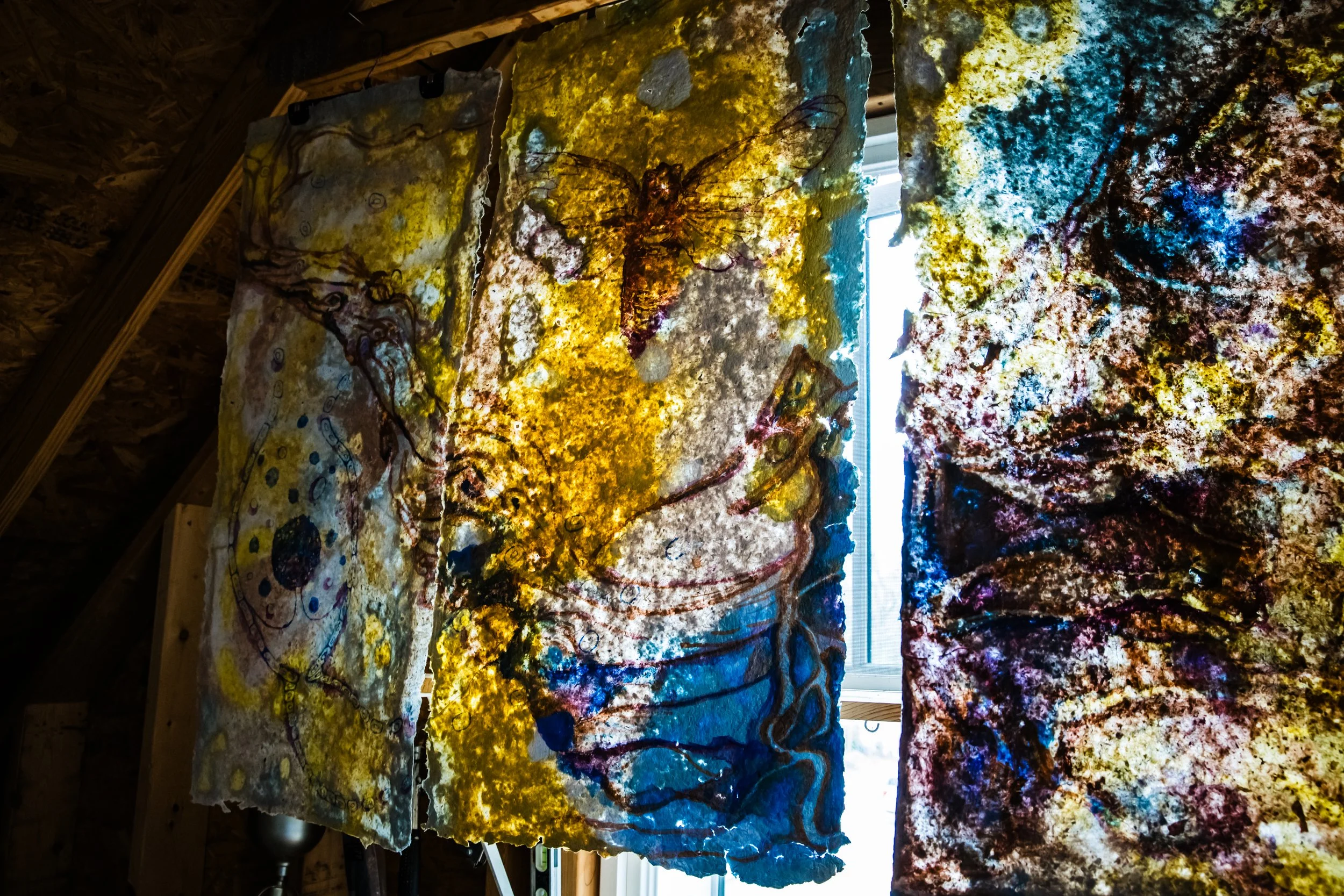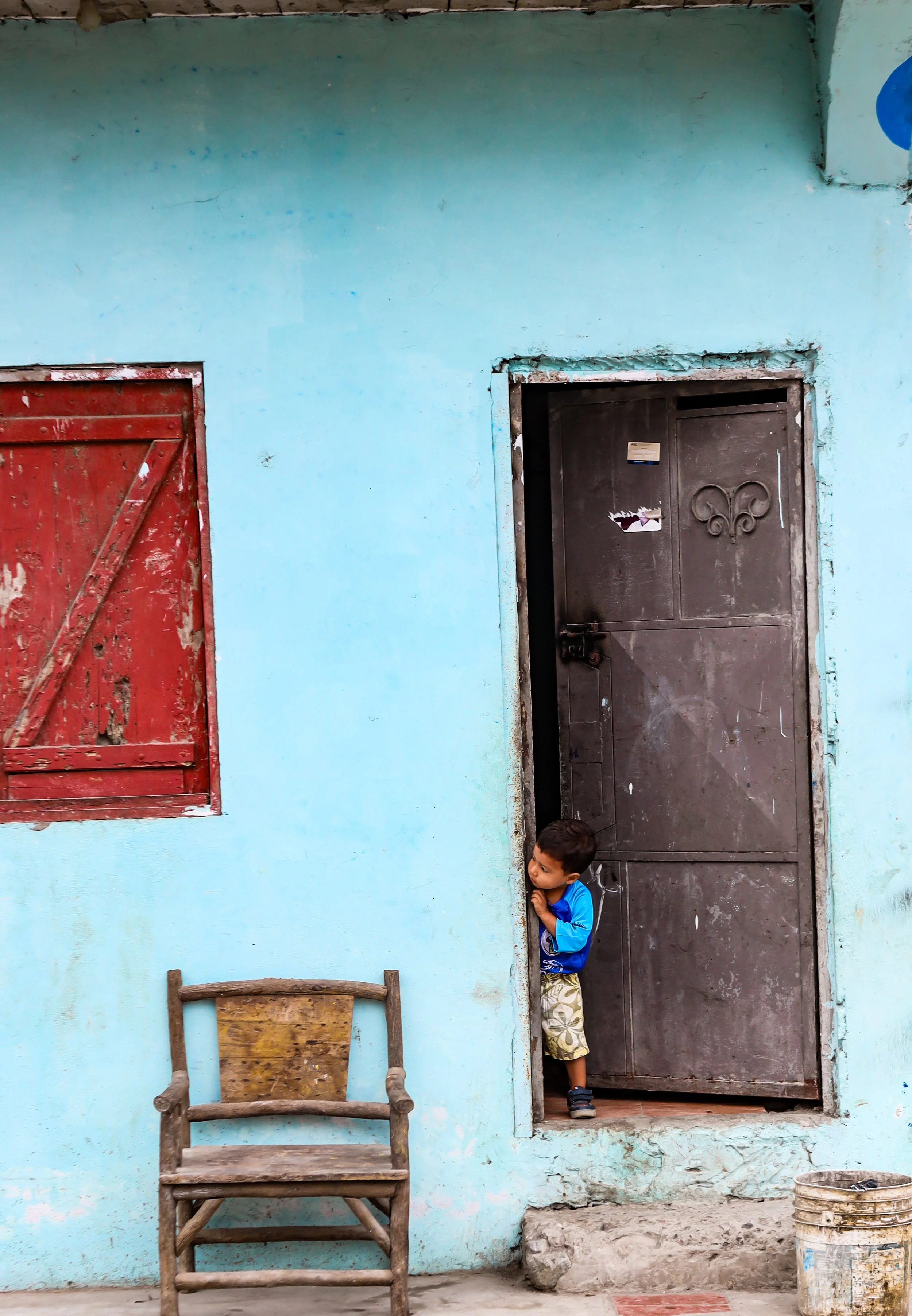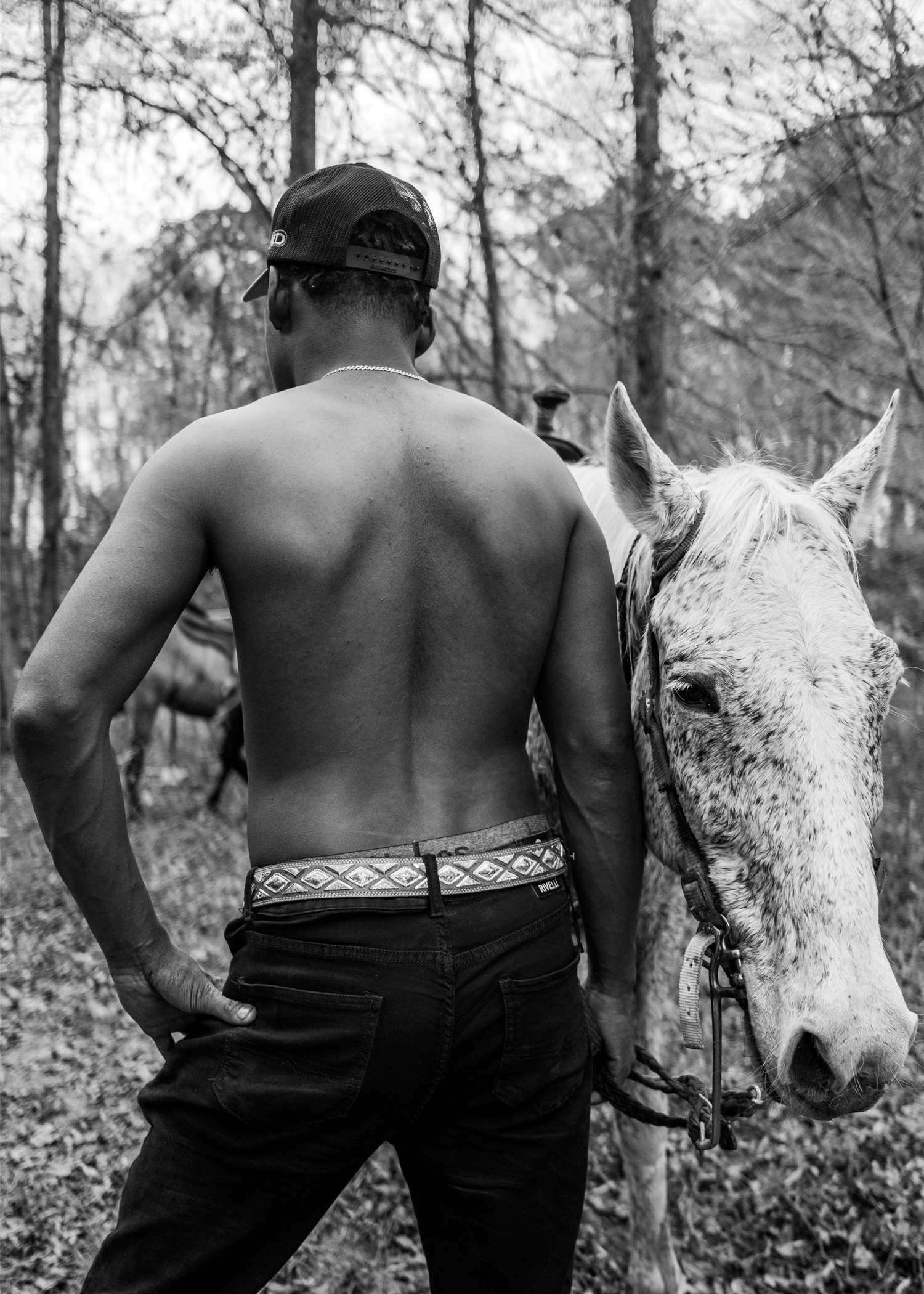
Columbia-based Artist MICHAEL KRAJEWSKI Partners with CORIN WIGGINS to Present METAPLASIA: A CONTEMPORARY PERFORMANCE OF BUTOH & PAINT

The Jasper Project is excited to help spread the word about a new project presented by Columbia-based visual artist Michael Krajewski and theatre/performance artist Corin Wiggins, who returns to Columbia, SC after a ten-year absence. METAPLASIA: A Contemporary Performance of Butoh and Paint – A Ten Year Homecoming will be presented on Saturday, February 7th, at 7:30 PM at Gemini Arts, in Columbia, SC.

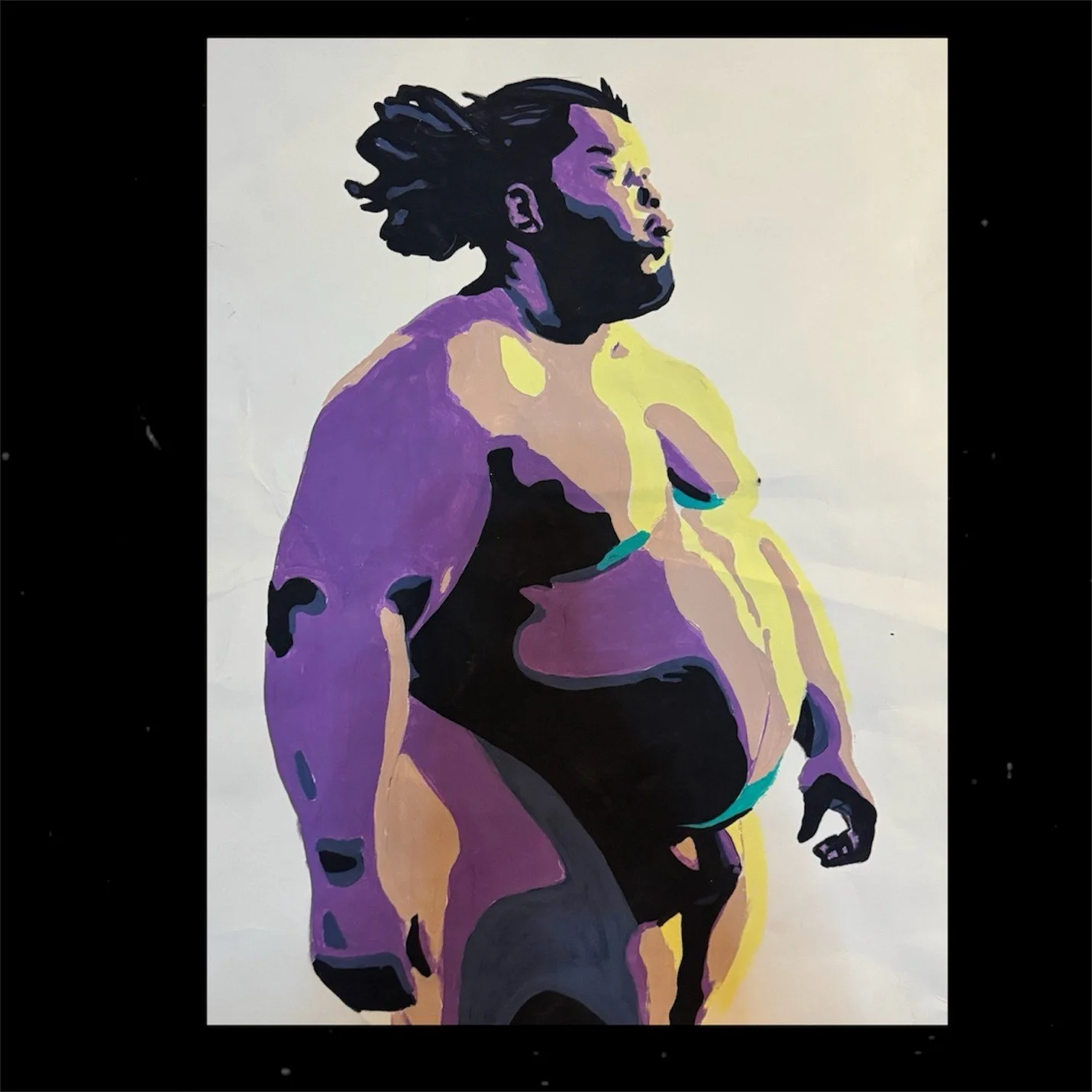
Krajewski, who has earned a reputation as a bravely experimental artist, has a history of engaging in painting as performance, often partnering with dancers and other performing artists. This time he will be partnering with Corin Wiggins who has mastered the Japanese art of Butoh Dance. According to the Butoh Institute of New York, “Butoh is an avant-garde art form born in Japan in the 1950s. Butoh developed at the height of the Japanese Counter Culture Movement and was influenced by surrealism, neo dada, French mime techniques, ballet, flamenco, Neue Tanz (German Expressionist dance) as well as French and European literature.”

Traditionally performed in white body makeup, butoh is considered an avant garde dance form and typically involves hyper-realized, grotesque imagery, and “slow and arrhythmic body contortions expressing a confluence of anguish and rapture, and a dedication to form and improvisation that is deeply connected to the nature of being.” https://japanobjects.com/features/butoh) Many practitioners and patrons of the artform consider butoh to be more of a dance experience than a performance, often saying the experience is undefinable.

In the press release for this event Wiggins states that, “METAPLASIA represents more than just a performance; it is a compelling fusion of visual and performing arts. Following a decade-long journey away from his hometown, Wiggins returns to Columbia for this significant homecoming event. Notably, this performance is poised to be the first professional butoh performance in South Carolina’s history, showcasing the depth and evolution of this unique art form.

“The term "Metaplasia," derived from Greek, signifies "change in form," reflecting the transformative processes that occur in nature and art. The performance will delve into themes of nonconsensual existence, chaos and control, cryptobiosis, and mindfulness in contemporary society. Accompanying the performance will be an original musical soundscape, meticulously crafted by Wiggins, enhancing the immersive experience for the audience.”

Krajewski will paint as Wiggins performs.

Don’t miss this rare opportunity to enjoy thought-provoking performance art ephemerally created amongst the visual art exhibited at Gemini Arts. Tickets are only $10 and may be purchased in advance via Eventbrite. Doors open at 7:10 and the performance begins at 7:30.

For more information about what to expect, please visit the Eventbrite site.

Click here to learn more about Butoh.

About Michael Krajewski: Michael Krajewski is an artist-in-residence at Gemini Arts Collective. He is a self-taught artist described as neo-expressionist, although he is less concerned with labeling than with creating from an authentic, mindful space and expressing what he is feeling and experiencing in the moment. He works in various mediums including painting, drawing, clay, and video.

Krajewski has been commissioned to provide artwork for film and art festivals, set design for Trustus Theatre, and art for the Columbia City Ballet. He painted a mural in the Greenville Children’s Museum, and a mural in the Columbia Museum of Art, one of only two artists ever invited to paint on the walls there.

Of his many contributions to the culture of Columbia and greater South Carolina is Michael’s freehand composition on the walls of Black Rooster, a restaurant in West Columbia, where he is using the entire restaurant as his canvas to create a one-of-a-kind installation that so far is four years in the making.

About Corin Wiggins: Corin Wiggins is an actor, director, and deviser of theatre. Their training and performance experience encompasses forms from the entirety of theatre history, with particular emphasis on classical verse, contemporary realism, commedia dell’arte, butoh (舞踏), and new devised work.

Raised in Columbia, South Carolina by a family of civil engineers, Corin first discovered the stage at age eight through the Columbia Children’s Theatre. Growing up in community musical theatre and child actor film agencies, including work undertaken on and off stage at both Town Theatre and Trustus Theatre, Corin began their professional actor training at the South Carolina Governor’s School for the Arts and Humanities Drama program. They hold a B.F.A. in Physical Theatre from a joint program between Coastal Carolina University and the Accademia dell’Arte in Arezzo, Italy.

Alongside a national presence, Corin has lived and travelled extensively outside the United States and has created and performed in Italy, Switzerland, Austria, Czechia, Kazakhstan, and for audiences from all over the world via numerous international festivals. To date, they have contributed to well over one hundred projects, collectively seen by tens of thousands.

The liberation of the human is the primary goal behind Corin’s work. Corin’s original performances generally concern themselves with humans and human relationships, the conscious vs. subconscious vs. superconscious mind, and dark psychedelia.

Corin has booked work throughout the United States in 2026, as well as a butoh performance tour of Japan in the latter half of the year.


From the Print Issue -- A Prayer for Every Stitch – Memory and Empathy Through the Eyes of Staci Swider By Emily Moffitt

A quick trip down memory lane with a gorgeous Southern night sky and the subtle buzzing of insects. A brief respite from the metaphorical weight a person carries with them. The beauty within Staci Swider’s work goes beyond the visual aesthetic; it encompasses the intentions of the artist, and the potential for powerful conversation with anyone who stops to admire her work. 

Art has been in Swider’s DNA since she was little. Learning how to sew from her grandmother, who happened to work in a children’s clothing factory, she was surrounded by knitting, needlepoint, fabrics, and anything craft oriented. “Growing up in the late 60s and early 70s, that was the resurgence of it as a craft form people were engaging with,” says Swider. “I have started to see artists start to crochet and sew again in our community nowadays, but that was what life was like back then!” Swider then went to school for fabric design and got into the workforce designing home furnishings. What she learned in school and during her career did end up shaping a lot of her practices and principles in terms of creating original work, along with the words of her grandmother: “a prayer for every stitch.” Finding the act of weaving to be very meditative, Swider subconsciously reflects on every loop and stitch beyond what it is creating in the physical plane. “Sometimes it isn’t about the finished product,” said Swider. “The act of doing is the real work. It gives you something to quiet your mind.” 

Swider’s background in textiles taught her to be attuned to finer details. She works with anything and everything fiber: yarn, thread, and fabric, then incorporates other materials like wire into the design to create both two-dimensional and three-dimensional works. These are not the only building blocks, however; Swider finds the exploration of contrast to be a major key in her work. “Contrast is not always just light and dark,” Swider says. “Sometimes, contrast in art focuses on the smooth versus rough, the busy and quiet, and finding the balance within a pair.” Weaving lends itself to be an optimal method of creating contrast, especially through Swider’s mastery of color work. She says, “On the surface, the color work appears as a quick snapshot that you take in, but when you come upon it and look closely it reveals itself further. You must look for the little things, like a piece of pink duct tape or cobalt silk that really sticks out in a section of one of my pieces.” 

The visual building blocks of contrast, color, and the technical skills required of fiber arts all coalesce in works that capture the key theme of spirituality in Swider’s portfolio. Swider’s lens of the world is rooted in introspection and metaphorical conversation. "I express myself through a visual alphabet of symbols,” said Swider. “Not just runes or anything like that, but the actual images themselves in my work, and a lot of artists who tend to work metaphorically do something similar.” One notable example of the symbology is the arc shaped vessel in many pieces of Swider’s art. One may attribute it to being a literal boat at first glance, but the deeper meaning within the symbol goes beyond; rather, it is a vessel for everything one feels and does, a well of experience carried along a path in the work. It functions as a vessel for the other subject in the work as well as the viewer and are aptly referred to as “soul sleds.” 

Conversation is integral to Swider as she aims to evoke a response in the viewer that they may or may not be able to articulate in words. Colors and images like a moody blue against a stark background may evoke a moody or contemplative feeling in the viewer. For Swider, “an image like a quiet night sky brings me to sitting in my backyard and listening to crickets.” As an empathic artist who feels a great sense of tension within her inner person, the imagery that Swider conveys in her work is a way for her to return to a specific moment and take a mental pause, allowing for a clear opportunity for introspection on how to proceed and respond to that tense feeling. The conversation with the viewer still continues through that introspection; after all, the viewer might be feeling the exact same way. 

Having this exchange with the viewer completely remotely is exciting to Swider and feels as rewarding as if they were speaking face to face. “Whether or not a person likes the artwork I make or does not, they are still thinking about the work itself,” says Swider. “Whether they realize it or not, we are having a conversation about the work that way, which is a really beautiful thing to think about.” 

The life that Swider has lived and the years of unique or shared experiences finds ways to express itself in her work. This experience lends itself to the key piece of advice Swider gives to any of her students or fellow artists who experience any sort of creative block: go back to the last place they felt artistically comfortable. Lessen the anxiety of creating something brand new and unfamiliar to themself by letting the creativity flow within familiar territory, like a flower arrangement for an artist who focuses on painting flowers. Set the mind at ease before attempting a new challenge, and the art block is much easier to overcome. 

A life as an educator and full-time artist has paved the way for Swider to express her creativity in a multitude of ways beyond the visual arts. “At this point, my creativity leaks out into everything, like cooking and gardening,” said Swider. “I love to surround myself with beautiful things in my home, and to find beauty in anything and everything.” Living with intention and slowing down in an increasingly fast-paced world appeals greatly to Swider and has impacted her drive to continue interacting with things in her day-to-day life that makes her smile or feel uplifted. 

The uplifting energy in her life carries through and feeds her creativity for the next piece Swider creates. The newest exciting opportunity to come Swider’s way is a grandiose exhibit at the Burroughs Chapin Museum in Myrtle Beach. Seizing the opportunity to work on her art and voice simultaneously, Tide Carriers, as Swider has named the project, focuses on three connected storylines that incorporate many of her new and old techniques along with exploratory discoveries she has made in other new projects, like her Unbuilt Rooms series. 

"This maturity I have as a human and an artist, how does that get reflected in my work?” Swider asks. The optimal way to explore this was to create the three storylines: an expansion of the Unbuilt Rooms, the Soft Architecture of Rain, and the Songs of Becoming. The storylines follow a chronological reflection of Swider’s life, her evolution and where she finds herself now as a woman in her 60s in 2025. Starting with the Unbuilt Rooms, Swider explains these pieces as “the selves and dreams we carry within us but have not been realized.” These are not meant to be opportunities for the viewer to dwell on past choices that have been made, but rather, beacons of hope for them as they realize that their future still holds a great expanse of choices and dreams that can still be made and had. 

The second piece of the narrative puzzle, the Soft Architecture of Rain, heavily incorporates the soul sled image, reiterating the weight of your hopes and dreams, longing, and baggage that they carry. This specific image joined Swider’s rotation in 2020 and is depicted both in two-dimensional and three-dimensional space. The incorporation of the vessels also enables Swider to express her attunement to her own empathy and operate as a moment of self-reflection both in the creation and viewing of the piece. 

The odyssey concludes with the Songs of Becoming, where Swider maintains her agency as an older woman in a society that is so focused on the eternally youthful and naive. “Once upon a time, women of a certain age like me became the elders and leaders of a community,” says Swider. “They were the ones with the knowledge to pass on to the younger members in their community.” Swider poses the question of how she wants to be remembered through this section, and how she can embrace where she finds herself in the present day. The images in this section are filled with symbols of feminine power, such as extravagant headdresses that can even be worn when depicted in three dimensions. Swider’s art is 100% who she is now and continuously nurtures her identity; this dedicated exhibit brings all those feelings to the forefront for audiences to understand and perhaps empathize with. 

Swider’s work must be seen to be fully understood. The intricate interplay of varied colors and materials creates a truly unique presence in the fiber arts realm. It is easy to get lost in the delicate rhythm of each piece, to drift into a long time behind you yet somehow still unfolding before you.

This article originally appeared in the Fall 2025 issue of Jasper Magazine.


Jasper Welcomes Jewelry Designer Clayton King to the Tiny Gallery

Jasper is excited to kick off 2026 in our Tiny Gallery with handcrafted jewelry created by Midlands area artist Clayton King. According to King, whose jewel-art is offered under the title Inspired Chaos Studio, he is “a jewelry artist based in Columbia, SC, whose work resides where fluid lines meet thoughtful structure. Inspired Chaos was born when King ran the art and jewelry gallery, Artizan, in which he offered bespoke fan pulls and crystal sun catchers. The line was expanded to include wearable jewelry and is now offered online. His creative process is guided by the quiet movement found in nature and the Gestalt principles that reveal the beauty of negative space—how what isn’t there can shape what is.

“Clayton is also a performing artist, most notably singing in cabarets and on various Midlands stages. A Texas transplant, he pursues both jewelry and performing as a holdover from his major in Theatre Performance, as well as his years as a gallery owner. Both creative outlets are soul-feeding in different areas of creativity.”

To shop from King’s collection of original artisan jewelry just click here and make your choices!

From the print issue: Kwasi Brown Sits Down with Afrofuturist and Arts Educator Dominique Hodge - AKA Jakeem Da Dream

I first saw Jakeem Da Dream’s art at the former Noma Warehouse in Columbia a few years back, and I’ve been a fan ever since. There’s something about his work—the bright colors and unmistakably Black characters—that immediately pulled me in. Coming out of Sumter, SC, Jakeem Da Dream has built a style rooted in Afrofuturism, reimagining what our future looks like through a lens of culture and pride. His art has popped up across Columbia and all over South Carolina, but his most important work is in the classroom where he provides kids in rural areas lessons in art and a role model they wouldn’t be getting otherwise. He isn’t just an amazing artist he’s an amazing person.

~~~~~

Kwasi: How did you come up with your artist name?

Jakeem: My artist name is not tied to my real name at all. It's a name I came up with in high school. Jakeem is actually an acronym for Just A King Enjoying Everyday Moments. It just kind of dawned on me because I looked at it from the perspective of the name we're born with is one that is given to us, but at some point, we have to define who we are. And I felt that name personified who I was.


Kwasi: Can you talk about the evolution of your style and how you got to where you are at this point in time?

Jakeem: I loved animation. I loved cartoons, comics, manga, and all of that. So I started off just replicating what I saw. I would draw Dragonball Z. I would draw Pokémon and Digimon. I started creating my own characters, probably around middle school. I would make small comics in notepads, before I knew about sketch pads and before I had access to professional art materials. ... I went into high school doing the same thing. My artistic voice didn't start really forming until probably around college, when I was exposed to African American art and Instagram, honestly, like, OG Instagram was a space that connected you with all these different artists. And I'm like, oh, god, look at all these amazing Black artists creating Black artwork. And from there it was, It spoke to me like, I want to create stuff that looks like me, because I didn't know you could do that. So, like I said, once I ran across that it was rapid, even like what I work on now, being in the genre of Afro futurism, I realized that what I've always done has always been in that genre before I even knew what that meant. I currently refer to it as Afro Alchemy. I'm taking both past, present, future pain, suffering, joy, happiness, and transforming it, transmuting it into something brand new, and it just, it shows us in a positive light. And I love it when people see my work and it’s just bright eyes kids excited to see it. It's an amazing feeling.

Kwasi: What exactly is Afrofuturism? In your own words, how would you describe it? 

Jakeem: Afrofuturism, in my opinion, is looking at the African diaspora, for example, understanding that we as African descendants are part of the past, present and future. Like a lot of time, we look at time from a linear standpoint, but time exists all at one time. So like the past, present, and future, they're happening all at once. We only perceive them bit by bit. One of the earliest Afrofuturistic concepts I came across was, if you look at something like Star Wars, Star Trek, stuff that takes place in the future, you'll see how you have all these different aliens and robots, but then there's always an absence of Black people, right? And the question was proposed, like, how could you have aliens in the future. You could have flying cars in the future, but somehow, Black people don't exist in this future. No, there should be a much more balanced appearance, because we're in the future, we're in the past, we're here now. So for me, Afrofuturism is really just examining the fact that we are multidimensional, and we're spread out across time, and we always will be.


Kwasi: Are there any specific visual artists by which you were/are inspired? 

Jakeem: Absolutely, Hayao Miyazaki is one. He created Spirited Away and he owns Studio Ghibli, an amazing animation studio based in Japan, where they actually still do hand drawn illustrations. Nowadays, a lot of animation is done digitally, but at Studio Ghibli they still hand draw their work, and it creates this very nostalgic, beautiful feeling. He's been a major influence. Artists like Guillermo del Toro, who is a phenomenal director, who created the Hellboy franchise. His style is so unique. Mike Mignola, who actually created the Hellboy comics, and they worked together on the first Hellboy movies. And Cedric Umoja and Thomas Washington are local artists who inspired me that I actually know.


Kwasi: Do you have a favorite piece of art that you created and is there a fan favorite piece of work? 

Jakeem: My Puny Humans piece is definitely my favorite, as well as most people's favorite. And what's fascinating about that piece is that it’s the second version of it, the first one I did back in 2016. It was titled simply puny humans. This one that's popular now is Puny Humans the second coming, and I want to expand upon that as a series and do more in it.  

Kwasi: You're also a teacher and you work with children. How did that come about?  

Jakeem: Teaching called me. I did not set out to be a teacher. If you had told me when I graduated high school that I'd be working with kids, I would have laughed in your face. So what happened was, I was invited to do a live painting at the Black Women’s Expo. The painting I did I got to present it to Vivica A Fox which was really cool. While I was there, one of the liaisons for the Auntie Karen foundation--her name is Lisa—saw me and told me about a teaching program and got my information. Maybe a month later, I had an interview with her and Karen Alexander Banks, who's the creator of the foundation, and I've been teaching ever since. Since 2018 I've  been in schools and the program, we're primarily involved with rural area schools, due to the fact that there are a lot of schools in South Carolina that do not have art and music. So we come in and put artists and musicians in these positions to teach, you know, to educate these kids. So I taught at my first school in Hardeeville, South Carolina. Currently I'm in King Street  Kindergarten Leadership Academy. I've been there for six years now. And I have to say, teaching is amazing. I genuinely enjoy it. It's a very fulfilling thing. In my opinion, teaching is the ultimate way of giving back, … especially when I think of how many kids, especially in our rural areas, mostly Black children, who don't have positive male role models. A lot of them have never had male teachers. For me, being able to be that positive role model for them is a really big thing. … I've been working with kids most of my adult life now, looking back on it. Before, I was working with the foundation, I worked at a studio in Sumter, where I painted kids. I was doing after school and summer programs with kids. I've always worked with kids. I work with the Sumter art gallery now, over the summer, during the fall time, I do classes. So I've literally always worked with kids, even though that was never something I set out to do. It's just kind of what I've been called to. So I say, yeah, being a teacher is definitely a calling, there's something inside you that's a love for kids, and also you want to impart something to these kids. 


Kwasi: This has been a very interesting and informative interview, before we get out of here do you have anything coming up that we should be looking out for in the future from you? 

Jakeem: It’s still in the early stages now but I may have a solo exhibit at an Art Gallery coming up at the beginning of 2026. So I'm really excited about that one. It's a couple of series I'm working on that I'm looking to put out, and really, I just want to see where things go. At Roc Bottom Studios. I'm stepping into the world of character design work, so I'm really excited about that, as well as skill training. …  Aside from that, I'm just looking to create and see what comes naturally.

Afrofuturism is a cultural movement that blends art, science, and technology with African culture and African diasporic history. It reimagines the Black experience and manifests a future via art, film, tv, writing, and music in which systemic racism no longer or never existed.


Poet Phillis Wheatley’s poem “On Imagination,” written in 1773 was a precursor of Afrofuturism, as was W.E.B. Dubois’s 1920 short story, “The Comet.” Famous jazz musician Sun Ra (1914-1983), funk musician George Clinton, science fiction writer Octavia Butler (1947 – 2006), visual artist Ellen Galagher, graphic artist Manzel Bowman, and Nigerian illustrator Suleiman Gwadah are all examples of Afrofuturism across arts disciplines. 


CALL for ARTISTS! IN THE MAKING: CONTEMPORARY CRAFT FROM SC a component of HANDWORK 2026: CELEBRATING AMERICAN CRAFT!

From our friends at SC State Museum —

CALL FOR ARTISTS! 

In the Making: Contemporary Craft from South Carolina is a juried exhibition organized by the South Carolina State Museum as part of Handwork 2026: Celebrating American Craft, a nationwide initiative led by Craft in America.  

This exhibition will highlight up to 12 South Carolina-based artists working in fiber, ceramics, wood, metal, glass, mixed media, and other fine craft media. Selected through a statewide open call, participating artists will present newly made works alongside recent creations, offering a look at the breadth and vitality of craft practices in the state today.

Artists for this exhibition will be selected based on the strengths of their submitted portfolios by a panel of jurors. Final works will be chosen during studio visits, with the possibility for the artist to create new pieces specifically for the exhibition. Final selections for the exhibition will be the decision of the curatorial staff of the museum. 

Since opening in 1988, the South Carolina State Museum has celebrated the creativity and craftsmanship of artists working across the state. In the Making: Contemporary Craft from South Carolina continues this legacy as part of Craft in America’s Handwork 2026 national initiative. Artists selected through this open call will represent the depth and diversity of South Carolina’s contemporary craft community.

All submission materials are due on or before Sunday Feb.1, 2026, at 5 p.m. 

Exhibition dates:  Friday October 16, 2026 – April 24, 2027

Opening reception: Thursday October 15, 2026


Interested in applying?
Artist Application(opens in a new tab)


Two Events Coming Up Celebrating GENERATIONS: 100 Years of Arts at the University of South Carolina

The University of SC’s School of Visual Art and Design is having a birthday - and it’s a big one!

Established in 1925, USC’s School of Visual Art and Design (SVAD) is celebrating it’s 100th birthday this year with two events coming up next week at Columbia Museum of Arts The Loft, as well as at McKissick Museum on the campus of USC.

On Friday, December 5th you’re invited to help celebrate this auspicious occasion by attending a reception in honor of the museum’s exhibition of art from alumni and professors, current and contemporary, titled Generations: 100 Years of Arts at The University of South Carolina. Curated by students under the direction of Susan Felleman and Lana Burgess last spring. The reception is from 4 - 5:30 and is free.

Later, you may join celebrants at our Columbia Museum of Art’s The Loft (1515 Main Street) for an even bigger bash from 6:30 - 9:30. The evening includes live music, food, drink, opportunities to purchase art, and a short talk by Deborah Solomon, New York art critic and authorized biographer of the artist, former Lake Murray resident and USC student Jasper Johns, the artist for whom our little magazine was named. Tickets are required for this event and may be purchased by clicking this link. Please note: there is a sizeable reduction in ticket prices for artists who are self-employed. (Kudos to the event planners for giving this much-appreciated financial break to working artists!)

Jasper congratulates and honors all the members of the SVAD family!

Last Week for Jasper's November Tiny Gallery Featured Artist YYUSRI

Thinking about a Christmas present for the art lover in your circle? Check out the work of YYUSRI, Jasper’s featured Tiny Gallery artist for November. But don’t wait too long! YYUSRI’s art is only up for one more week. And the best part? You can grab this art up without ever having to leave your house. Remember — Art from Columbia’s LOCAL ARTISTS make some of the best presents you’ll ever find!

Read more about YYSURI below —

In the artist’s own words —

I’m based in Columbia, SC, but my home is where the art is. I create to tell stories. As a storyteller, I’m drawn to many forms of expression. It may look like I wear many hats, but it’s really one hat with a very wide brim. Whether I’m illustrating, painting, animating, or producing music, I’m doing the same thing; telling stories.

Stories come in countless forms: pictures, comics, songs, films, or even a voice by the campfire. Growing up, I was captivated by how stories could transport and transform us, revealing new possibilities. Through my work, I aim to show (and teach) that what you can imagine, you can create.

As a full-time artist, every artwork that finds a home brings me closer to realizing my dream project: Our Sun is a Star, an animated coming-of-age story about loss, healing, and escape.

To purchase any of these pieces (and many more not pictured) visit Jasper’s Tiny Gallery as easily as clicking here!

Last Week to Enjoy the Art of JUDY MAPLES - Jasper's Featured Artist at Sound Bites Eatery

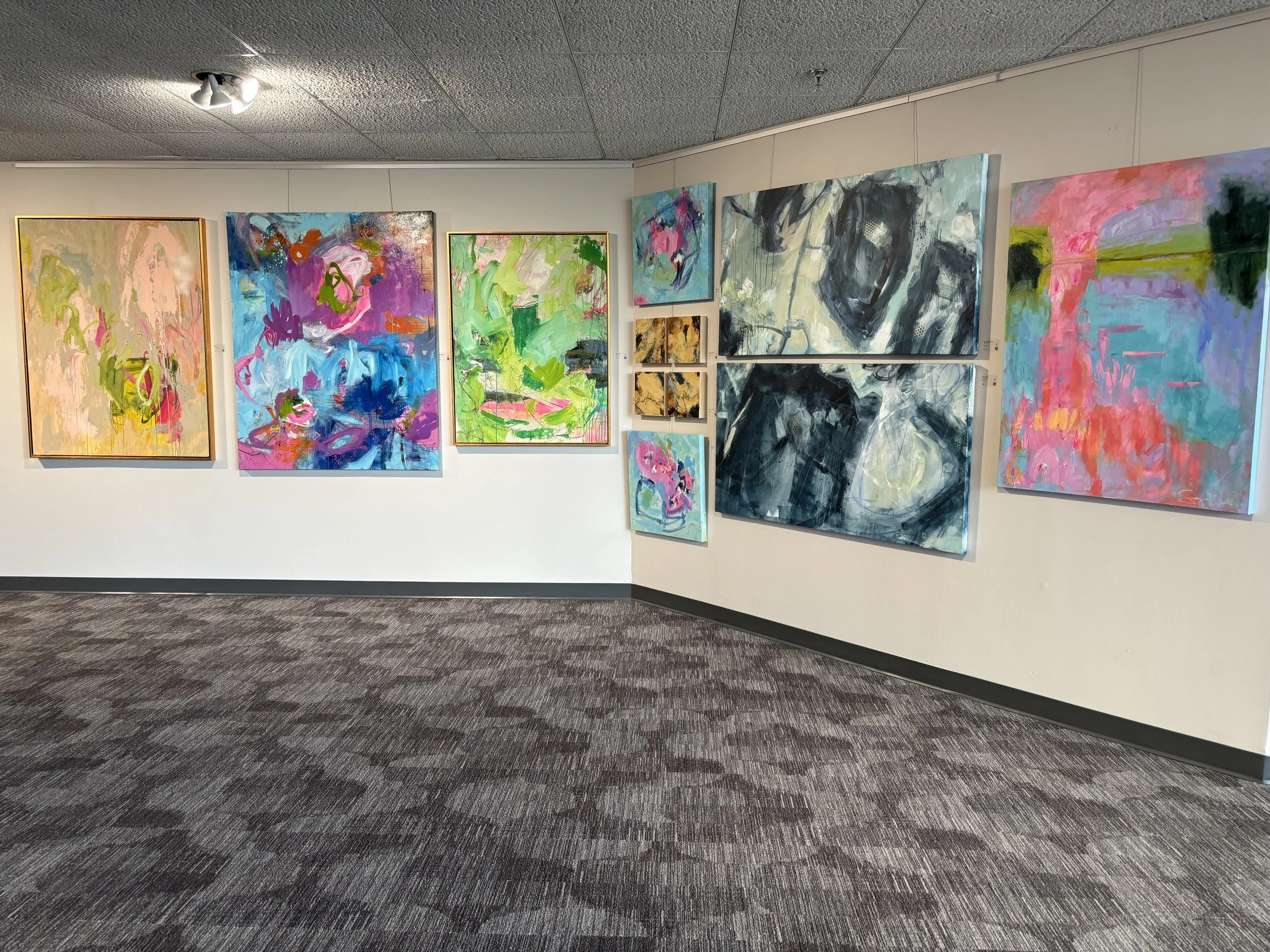
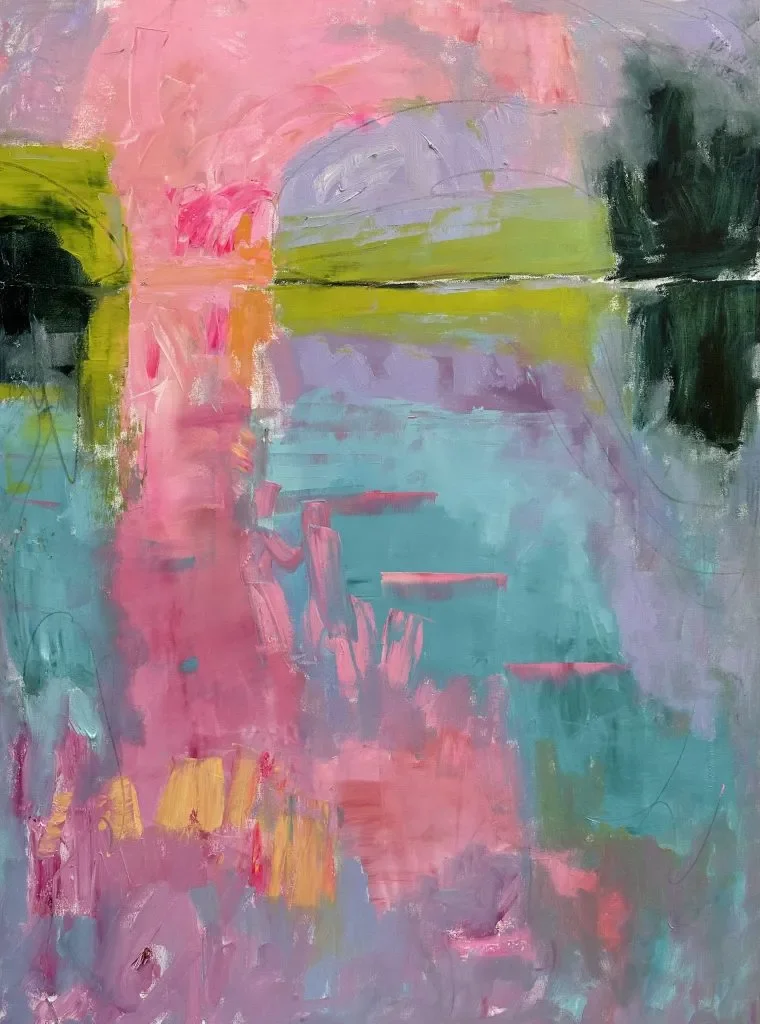
This is the last week to check out the art of Judy Maples in the Jasper gallery space at Sound Bites Eatery, just a block off Main Street on Sumter. Maples artworks are beautiful abstractions created using a lovely color palette that almost seems to jump off the walls.

Below, we share the artist’s own words as she reflects on her paintings.


What do these things have in common: soil, puff pastry, music, and my abstract paintings?

Layers.

My painting process is based on instinct, intuition, and emotion. The layers in my abstracts reflect my life experiences and the stories I carry with me. When I start a new canvas, I don’t have a clear plan or a specific image in mind. I allow the painting to evolve naturally, letting each layer guide me to the next. This approach allows me to be fully present in the moment, to respond to the colors and textures as they emerge, and to create something that feels authentic.

The first layer often consists of random marks and strokes of bold colors applied with a sense of freedom and spontaneity. Then I add layers and textures that overlap to create depth and complexity. One of my favorite techniques is to apply a layer of paint and then scrape most of it away, revealing glimpses of the layers beneath. As I add layers, I refine the composition to add depth, complexity, and emotion.

My abstract paintings continue to evolve in the eye of the viewer. Each person sees something different, finds their own meaning in the layers, and adds their own story to the painting. Only then is the painting finished.

My abstracts, with their many layers and textures, have depth and a sense of history, leaving the viewer to think, “I wonder what’s under that top layer?”


Maples’ work will remain up for viewing through Saturday morning, November 29th.

Congrats to Columbia's Koger Center for the Arts - A Grantee of the Levitt Music Series!

Huge Congrats to the Koger Center for the Arts for being a Levitt Music Series Grantee! The Jasper Project is proud to be among the SC organizations that partner with the Koger Center to make it more than just a performance venue, but a true center for the arts. Every Third Thursday patrons can join Jasper on the center’s second tier at our Nook Gallery space where we feature the work of a Midlands-area visual artist as part of The Vista’s regularly scheduled Third Thursday programming. The intimate space offers patrons the opportunity to meet and chat with our featured artists, share a snack, and often hear our artists speak about their work. This is always a free event and we typically go from 5:30 - 7 pm, but it’s always a good idea to check the Koger Center calendar to be sure a performance doesn’t result in a change in time.

While the Koger Center has been offering a program of free events in the lobby and on the outdoor stage for a while now, director Nate Terracio says this is the first time the organization has been awarded a Levitt Music Series Grant. “The grant provides 3 years of support for free outdoor concerts in 2026, 2027 and 2028,” Terracio says, explaining that, “We have hosted both local talent such as: Longtooth, Prettier than Matt, The Ramblers, CammWess, David Rodriguez, and members of the Black Nerd Mafia,” as well as regional and national acts including Claudette King, Clap Your Hands Say Yeah, J Roddy Walston, John Hollier, She Returns From War, and Indianola.

“The Koger Center for the Arts is beyond excited that Columbia has been chosen as the first city in South Carolina to be recognized and funded by a Levitt Music Series Grant and we are thankful to the community and individuals that supported our efforts and took the time to vote for us,” he continues. “We look forward to expanding our free outdoor concert series through this grant to include spring and fall concerts.  As Columbia’s center for the arts, we want everyone to feel welcome and hope to bring the whole community together through music both inside and outside.”

For more about the grant please refer to the press release issued by the Levitt Foundation: “The Levitt Foundation, a national social impact funder supporting the largest free outdoor concert series in America, today announced the largest number of Levitt Music Series grant recipients in its history—providing 66 communities with multi-year grants, up to $120K each.

Levitt Music Series Grants are an exciting, multi-year matching grant program bringing the joy of free, live music to towns and cities across the country. Each Levitt Music Series location presents 7-10 free outdoor concerts per year, injecting new life into underused public spaces and creating joyous, inclusive community destinations. Reflecting the Foundation’s commitment that all Levitt projects be community-driven, the top 50 finalists were selected through public voting in September 2025 (via online and text to vote). The Levitt Foundation then conducted a comprehensive review process of all finalists to determine the Levitt Music Series grant recipients.

The Levitt Foundation will be awarding over $7 million dollars over three years to the nonprofits presenting Levitt Music Series, supporting 34 new grantees and 32 returning grantees to bring free outdoor music to their communities in 2026, 2027, and 2028. Also new this grant cycle are funding partnerships with state agencies—in Tennessee and Mississippi—to bring even more free outdoor concerts to their communities.

“The Levitt Foundation is thrilled to announce the communities across the country receiving Levitt Music Series grants, and we congratulate all the new and returning Levitt grantees. We know from decades of supporting free concerts in public spaces how the power of free, live music brings friends, families, and neighbors of all ages and backgrounds together, strengthening the social fabric and economic vitality of communities,” said Sharon Yazowski, President & CEO of the Levitt Foundation. “We are also excited that our partnerships with Tennessee and Mississippi are supporting additional communities in those states—a model we hope will inspire other states throughout our nation for future collaborations to bring free, outdoor concerts to their towns and cities.”

From the print issue: Jasper Presents Ceramicist Megan Tapley at Coal Powered Filmworks for Vista Lights!

Tapley’s work always falls into the category of being socio-political in some aspect. She sees the art scene as a proper catalyst for change, with their art being a factor in facilitating it.

Jasper is once again proud to participate in the 2025 Vista Lights celebration and, this year, our featured artist is ceramicist Megan Tapley. A resident artist at Gemini Arts, Tapley will be setting up shop at Coal Powered Filmworks (home of Jasper’s filmmaker extraordinaire and board of directors president Wade Sellers) offering some great items to help you tackle your Holiday gift-buying list. The festivities get under way at 6 pm and Coal Powered Filmworks is located at 1217 Lincoln Street, a couple down from Mike Brown Contemporary and across the street from the Blue Marlin.

Read our article below about Megan Tapley, written by Emily Moffitt, which originally appeared in the fall issue of Jasper Magazine which is on newsstands now.


An Unconditional Approach to Life with Megan Tapley

By Emily Moffitt


Following a traditional lifestyle has never been in the cards for Megan Tapley. Living life to the fullest for them means living a bit unconventionally, but that never stood in the way of them pursuing their own aspirations: making a career out of art.

Megan Tapley, pronouns she/they, graduated from Clemson University in 2024 with a B.F.A. in Ceramics. This was not always their medium of choice, though. “I grew up in many accelerated art programs, which introduced me to ceramics at a young age,” says Tapley. “However, I did not pursue ceramics until college.” Tapley finds that her artistic practice is best when they balance their time between multiple disciplines, so they also engage in collaging, filling out their sketchbook, and building sculptures when not focusing on their ceramics. They are inherently driven to be creative, and as such they find any outlet they can to express their creativity.

However, regardless of the medium, Tapley’s work always falls into the category of being socio-political in some aspect. She sees the art scene as a proper catalyst for change, with their art being a factor in facilitating it. Much of Tapley’s portfolio revolves around femininity, thus leading to a body of work that focuses on the female form, reproductive rights, and the role of women in the South. Tapley says, “I feel led to make this work because of my own personal identity as a woman in the South, but I also feel led to make this work to open the conversation up.” The conversations she references are meant to be inviting rather than polarizing, especially among women. Her senior exhibition included a wide variety of vessels that represented different female forms and the desire for bodily autonomy, in a socio-politically charged statement. These differences in form, shape, and size are all meant to bridge gaps and spark up conversations of intersectionality and change as according to Tapley, “I chose to make my work inviting rather than polarizing in hopes that we can all find common ground amongst the issues we face as women.”

Tapley was born and raised in Irmo and found themself returning to the Midlands after finishing their undergraduate degree. The excitement of being a Gen Z artist in a growing community allured her, creating in them a sense of confidence in seeking out a “riskier” life, separate from the stable, 9-to-5 lifestyle other generations seem to encourage the next generation to pursue. “I think being a young artist in a growing community is a good thing,” says Tapley. “I’ve been able to gain a lot of opportunities in the last three months by being willing and able to help grow and foster the arts community here.”

Despite just starting their post-grad career, Tapley has already made great strides by becoming a resident artist at Gemini Arts and has been elected as the inaugural Gemini Arts President. The position comes with a heavy workload but is an optimal role to produce cool opportunities for her fellow artists in the studio. Making the effort to involve themself in the community is the kind of advice that Tapley offers any other young artist trying to participate in Columbia’s creative landscape. “My biggest advice is to apply to everything,” says Tapley. “The worst someone can tell you is no, and you never know where an opportunity will lead you.” Of course, Tapley also warns of the problems with saying “yes” to everything, and that it is okay to only pursue chances that are in your best interest and push your career further forward.

Tapley knows that the path of an artist is not always the easiest to take. Facing the reality of the “starving artist” narrative that many peers still harbor helped Tapley understand the importance of having true allies in your corner, ones that do support you and your craft unconditionally. Tapley says, “I feel that having people around me who question my career choices is just something that will always be an obstacle, so my way of overcoming this has been to unconditionally believe in myself.” Adopting an unwavering sense of confidence is key advice for anyone trying to break into the art scene, especially younger artists. Tapley has proven through their growing role at Gemini Arts and consistent booking of arts exhibitions that they have internalized key experiences and connections and utilized them to further their career.

In-progress art from Megan Tapley

They say, “I have learned to take feedback from those who have pursued a career in the arts, rather than giving too much attention to those who do not understand the life and career I have chosen to lead.”

Tapley is an active member of the Gemini ceramics community, and a staple in bringing awareness to the power of political commentary through art, especially for women of all ages.

From the print issue -- DEGENERATE ART PROJECTS I & II

“We proudly reclaim our art—protest art in defiance of the current administration’s attempts to remove, censure, and redefine art and its purpose—"Degenerate Art” in solidarity with both historical and contemporary artists who work or have worked to maintain our first amendment rights of freedom of speech and expression.”

Degenerate Arts—Entartete Kunst—I and II

By Cindi Boiter


Sometimes you just have to say what you’re thinking. You have to get it out there, one way or another. You have to express the fire of frustration, anger, and disappointment that can rage within you, as well as those still-hanging-on, deep-rooted beliefs that it can be better. It has been better. Our country has been better and can be better again. These sensations are complex and difficult to manage for all of us.

Luckily, we have artists.

Art is the tool we humans use to attempt to reconcile our profound and complicated responses to a world that doesn’t always give us the peace we crave. The peace we once took for granted. The process of creating art, be it dance, theatre, or music, visual art, or the written word, not only soothes the artist but it helps the recipient of the art, the viewer, the reader, feel seen and heard as they wrestle with the same conflicts an unbalanced world stirs inside them. It helps the recipient to better comprehend where we are right now, as a culture, and it helps us know that they we not alone.

This is why the Jasper Project originated the Degenerate Art Project in the summer of 2025 at Stormwater Studios, and it is why we’re bringing this unique project back in January 2026 at Gemini Arts.

Degenerate Arts II offers an open call for visual artists as well as performing or written word artists who want to propose programs that they would like Jasper to help implement.

Why do we call it “degenerate art?” In his essay printed in the current issue of Jasper Magazine, professor and Jasper Magazine poetry editor Ed Madden identifies the similarities between Hitler’s purge of art that did not represent the cultural ideology he promulgated—an ideology we now recognize as fascist—and the current administration’s attempts to dictate, control, and suppress art via a “politics of culture.” As Madden writes, in July 1937, “Nazi culture warriors had searched 32 of Germany’s public museums, determined to purge them of any work they considered undesirable because they were incompatible with Nazi values.” Hitler and Goebbels called the exhibition of this “undesirable” art “Degenerate Art,” or “Entartete Kunst” and juxtaposed it against an exhibition of predominantly representative art, of which he approved, and titled “Great German Art” or Grosse Deutsche Kunstausstellung.

We proudly reclaim our art—protest art in defiance of the current administration’s attempts to remove, censure, and redefine art and its purpose—"Degenerate Art” in solidarity with both historical and contemporary artists who work or have worked to maintain our first amendment rights of freedom of speech and expression.

CALL FOR ART FOR DEGENERATE ART PROJECT II EXTENDED UNTIL MIDNIGHT SATURDAY NOVEMBER 22ND!

I’ve always maintained that we don’t fully know the history of an event or a period of time until we know how the artists interpreted it. To that end, we created the first iteration of our Degenerate Arts project to provide a concerted platform for Columbia’s artists to express their responses to our country’s current socio-political situation. We also wanted to bring our local arts community together both physically and in spirit during this challenging time in order to support and encourage one another. And we hoped to preserve for posterity the SC Midlands’ artistic interpretation of this unique and disturbing time in history.

More than twenty visual artists participated in the Degenerate Arts Project in June. It was exciting to see the work, some of it satirical like Robert Airial’s cartoons of the president as a present-day Mussolini and  the same man removing the letters M and E from the word America to simply spell ME. Some was jarring and foreboding, like Eileen Blyth’s found art sculpture of a child’s old doll in a rusty oven. And some of it was incisive and incredibly current like Marius Valdes’ huge painting of a masked ICE agent with a word bubble reading “Just Following Orders.”

Pictured - poet Ed Madden stands before Marius Valdes’s painting “Just Following Orders” during a protest poetry reading in June 2025

Eileen Blyth - Artist

Portrait and assemblage artist Kirkland Smith says, “Being part of the Degenerate Arts project reminded me how powerful art can be in shaping the way we see one another.” She continues, “I appreciated the opportunity to portray a polyamorous group of four beautiful transgender women with quiet dignity, reclaiming a narrative that has been twisted for political reasons. The exhibition created a space for empathy in a world that is forgetting how to listen.”

Kirkland Smith pictured with her painting and her daughter at the Degenerate Art Project I in June 2025

While our first project focused on visual arts, poetry, a little music, and activism opportunities, we plan for our 2026 project to include additional arts disciples and we are excited to hear from dance, theatre, and more literary artists about what you’d like to contribute.

While the 2025 project lasted less than a week, the 2026 project will last three weeks, giving all of us ample time to be seen and heard.

And while the first project was structured as an invitational exhibition, Degenerate Arts II offers an open call for visual artists as well as performing or written word artists who want to propose programs that they would like Jasper to help implement.

For more information on how to submit a proposal for Degenerate Art II please see our CALL FOR ART at the Jasper Project website.

CALL FOR ART FOR DEGENERATE ART PROJECT II EXTENDED UNTIL MIDNIGHT SATURDAY NOVEMBER 22ND!

This article previously appeared in the fall 2025 issue of Jasper Magazine, on newsstands now.

Alex Ruskell & Les Merry Chevaliers Invite You to THE WORLD'S MOST HANDSOMEST ART RECEPTION

Join visual artist Alex Ruskell on Wednesday December 3rd at 6 pm at The Hallway: Community Art Gallery at 701 Whaley for the opening reception of his exhibition.

Special LIVE performance by Les Merry Chevaliers!

The artist Alex Ruskell with Les Merry Chevaliers

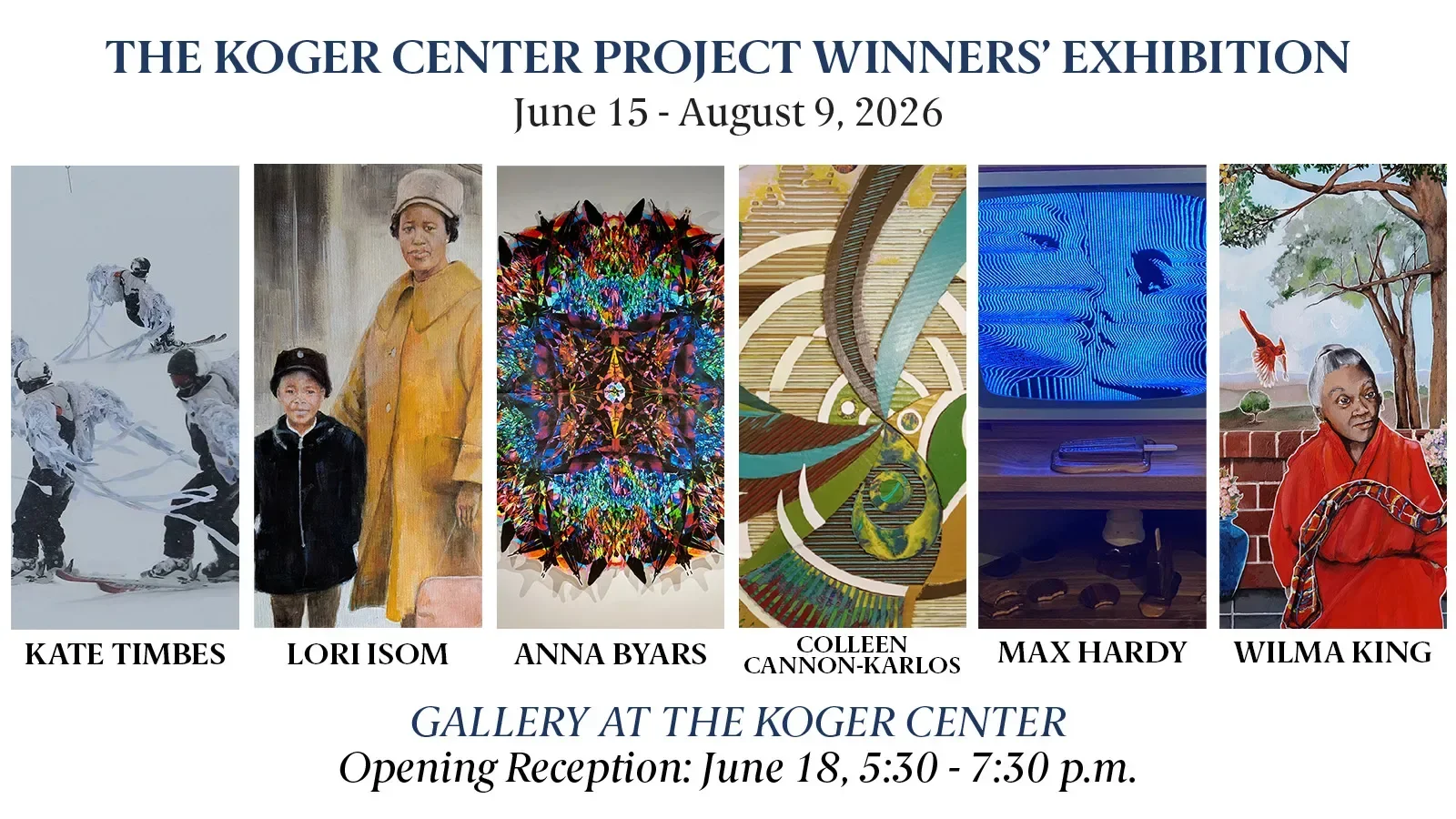
Jasper Presents a Free Artist Talk with Colleen Cannon-Karlos at the Koger Center for the Arts

By Emily Moffitt

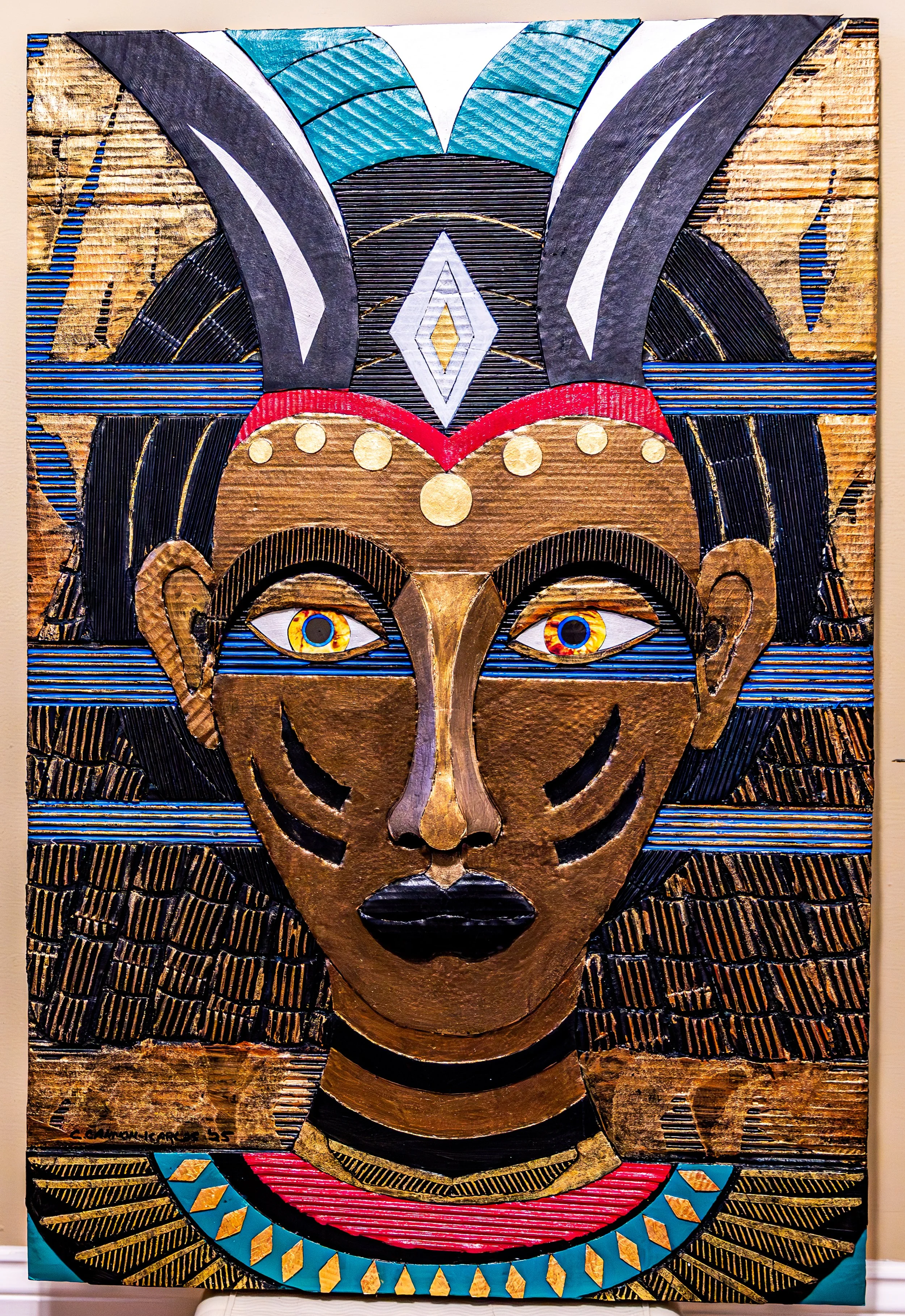
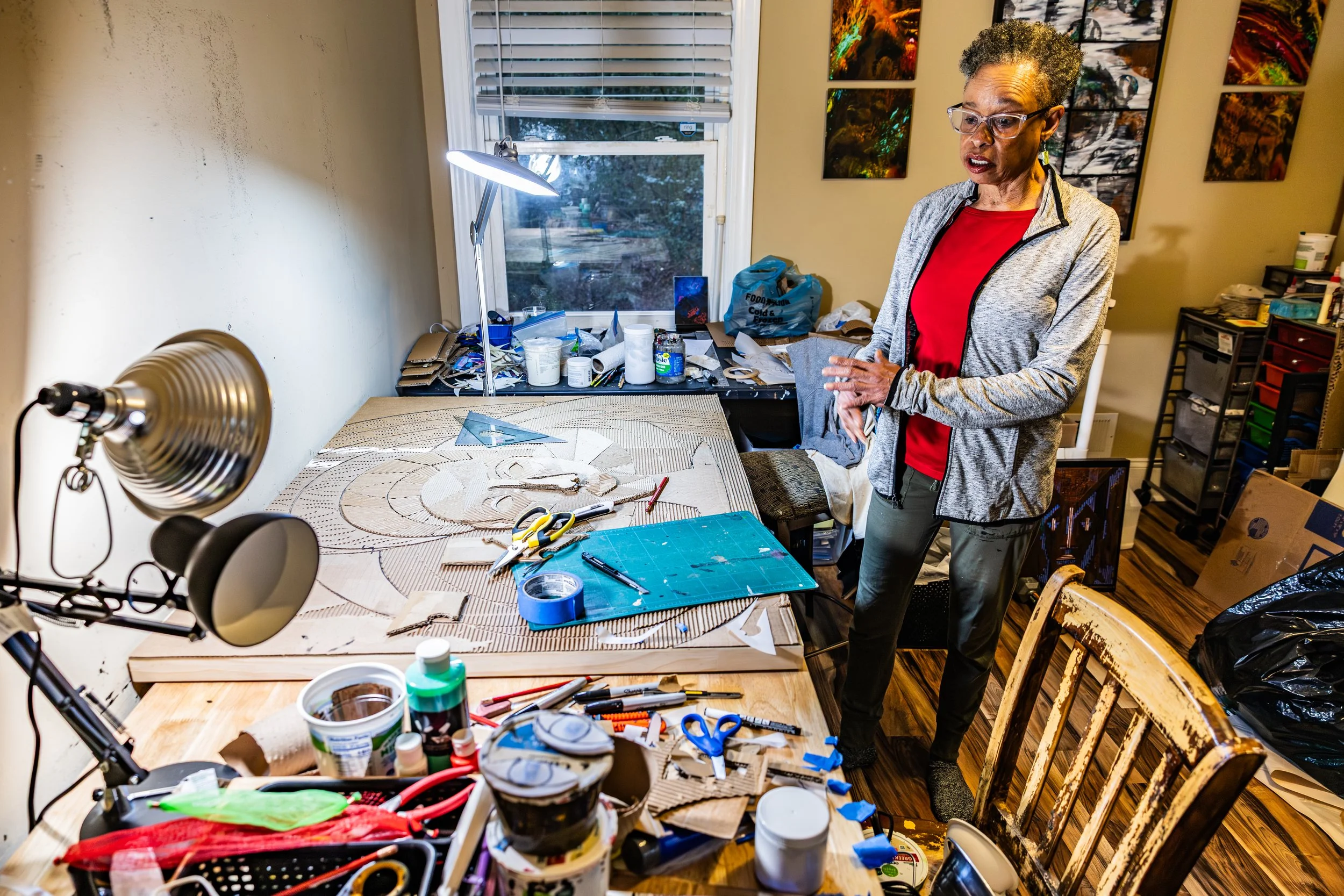
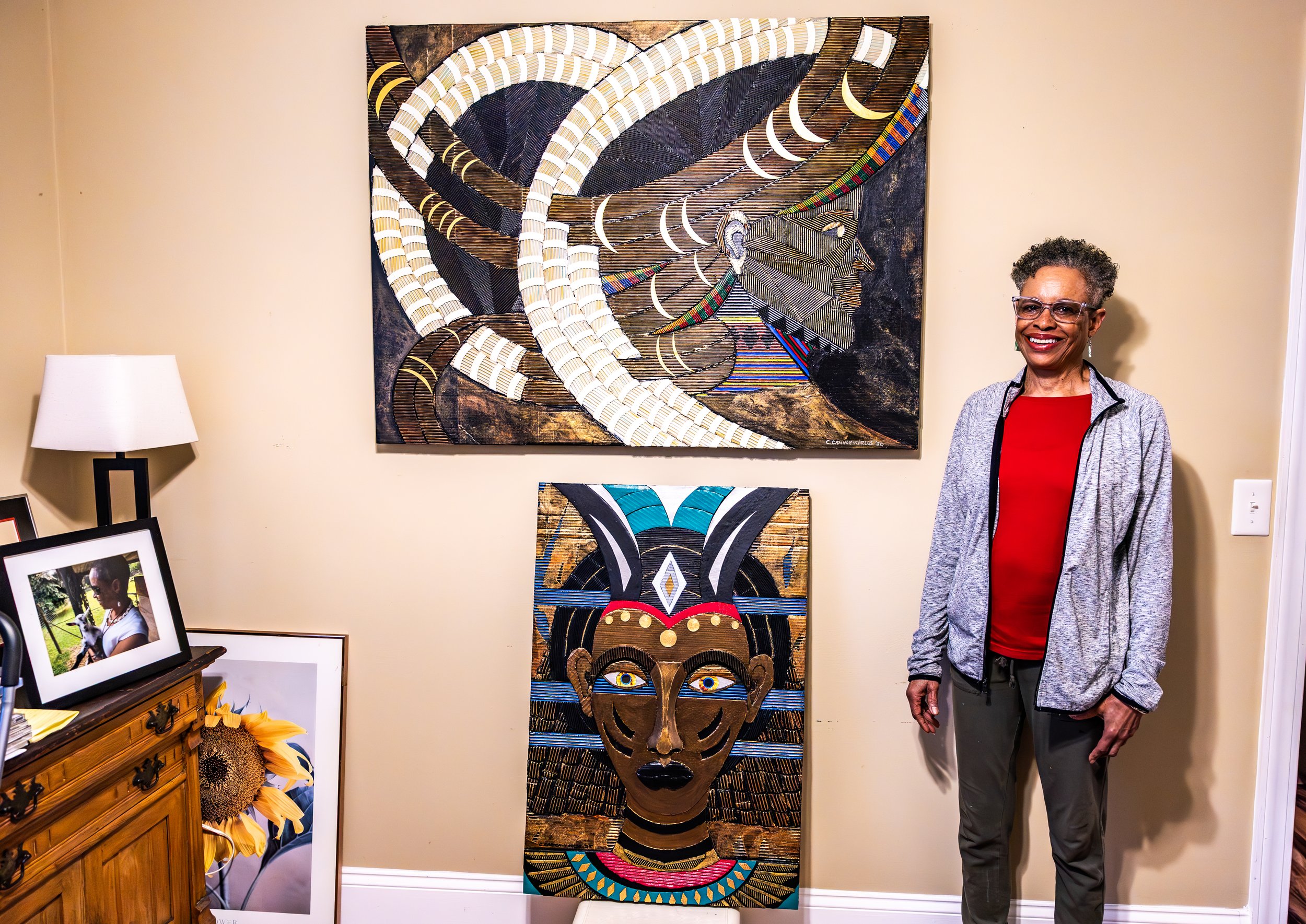
If you missed the chance to check out Colleen Cannon-Karlos' exhibit in the Jasper Project’s Nook gallery space during her opening reception for October’s Third Thursday, mark your calendars for her free artist talk at the Koger Center!

Join us on November 4, from 6-7 p.m. for her free talk where she’ll give an in-depth look at her artistic processes, inspirations, and more. A Q&A will follow her talk, and all the work in Cannon-Karlos' exhibit is available for purchase.

Cannon-Karlos' Artist Statement:

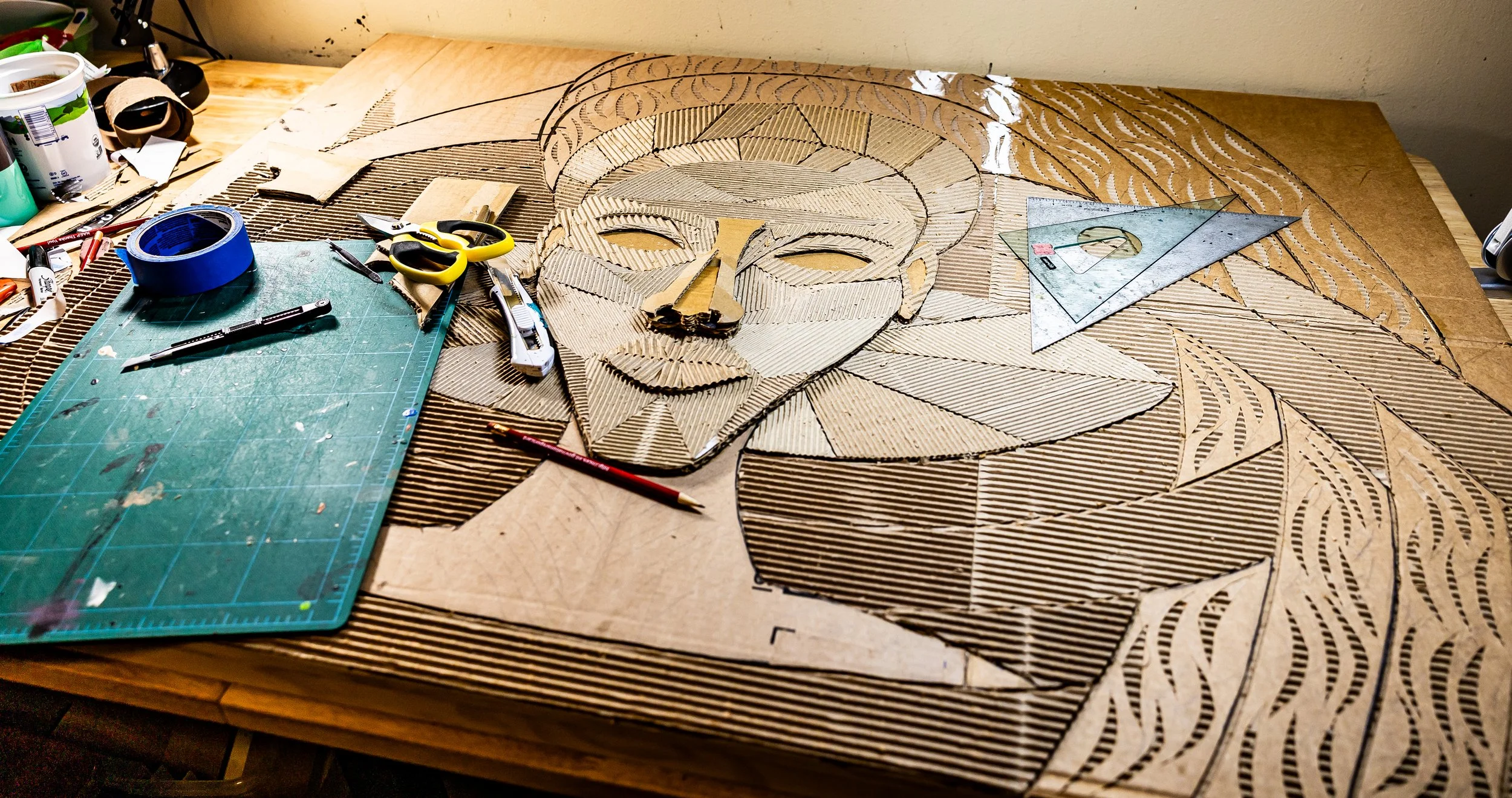
My new work consists of deconstructing recycled corrugated cardboard and transforming it into an alternative surface to create new imagery. I became interested in working with cardboard because it is cheap, ubiquitous and unfortunately very wasteful in our consumer driven, throwaway society. Mixed media includes cardboard, recycled plastic shopping bags, acetate and more. At least I can do my small part and turn discarded objects into artwork that celebrates its beauty and integrity.

The corrugated or fluted lines contain their own design aspect of regularly spaced, machine engineered parallel lines. Removing and/or adding layers by distressing and manipulating the cardboard reveals amazing texture characteristics in layers that are enhanced with the application of paint and other materials. The cardboard itself reveals levels of unique textures that give a relief quality and tangibility to the imagery. This work also reflects my interest in physics – understanding the nature of reality as energy coalesces into form. The imagery present in the distressed cardboard seems to be in the process of both emerging from and dissolving into existence. The resulting artwork is mounted on wooden panels.

For additional questions, contact the Koger Center.


Meet Columbia Artist Renea Eshleman During Jasper's First Thursday at Sound Bites Eatery!

Join the Jasper Project and Sound Bites Eatery in welcoming our artist for the month of October, Renea Eshleman, by making Sound Bites one of your first or last stops during First Thursday this week!  And while you’re visiting us, why not grab a loaded grilled cheese, a twerky turkey sammy, or some delish spin dip with a glass of vino from the Sound Bites kitchen? It’s always a fun night at Sound Bites when you gather with friends, new and old, to celebrate an evening of art and good times!

About Our Featured Artist

Renea Eshleman writes, “I especially enjoy creating nature compositions from photographs I take while traveling around the beautiful state of South Carolina. I strive to lure the viewer into wanting to ‘be there’ in the painting to look for what is not obvious.  

“My art includes representational, dream compositions, and some objective abstract. Having begun painting in traditional transparent watercolor, I mostly paint and create collage on non-traditional surfaces using liquid and tube watercolor, gouache, acrylics, and self-printed papers.

“The traditional approach to painting watercolor, acrylic, and mixed media is where I know what the composition will be before I begin the painting. It is predictable. However, many times the process begins with loosely pouring or rolling paint onto the paper or a polypropylene sheet (called Yupo), gently manipulating the paint to blend colors, and making interesting textures, allowing the paint to dry, and developing the composition based on what the first layer suggests.

“This process allows me to combine imagined or suggested flora, fauna, insects, animals, and figures. Sometimes pieces begin with the pouring method hang in my studio for weeks or months before they ‘speak’ for development of the composition.

“This approach to making art provides wonderful opportunities for happy accidents, flexibility to adjust the composition, and intrigue in the work.”

Craig Houston's Compositions Opening at City Art

WALK IN THE FOG By Craig Houston

City Art is pleased to announce our newest exhibition featured in the main gallery space: Craig Houston’s Compositions. The show will run between September 22nd and January 2026.

One of the important things to Craig Houston is seeing his art in the hands of those who truly appreciate and enjoy it. His style is continually evolving as well as his sense of color, technique, layering and texture. Craig’s paintings are the product of his education at Ringling College of Art and Design in Sarasota, Florida in Commercial Illustration and Advertising.

Though he still does commercial pieces, his love is painting, both impressionist and abstractions.

Taking a concept or quick sketch and being able to make it come to life on board or canvas is a strong talent he possesses. Fighting the idea that the next painting is going to be his best, Craig isn’t willing to stop until he is pleased with it for himself. Large abstracts and non-representational art have produced a new-found freedom of expression in Craig’s work.

Realizing most of his free-form works have to get ugly to get pretty, helps keep his work fresh and prevents looking labored over. Putting paint down, stepping back, observing, and applying layers until the image starts appearing is his routine. His desire is to use his God-given talent to the max!

Please join us for an opening reception with the artist that will be held Thursday October 2nd from 5pm – 8pm. City Art Gallery is located at 1224 Lincoln St. in the historic Congaree Vista area in Columbia, South Carolina. For more information, contact City Art Gallery, at 803-252-3613. Visit online at www.cityartonline.com

TIDAL TRANSFORMATIONS: MY WORLD IN LINOCUT by LAURIE MCINTOSH Opens Wednesday at Stormwater Studios

Exhibit Wed, September 10- Sat, September 29. 

Open daily 11am-5 pm 

Sunday 2pm-5 pm

Stormwater Studios, 413 Pendleton Street, Columbia, SC

Tidal Transformations features more than 60 works created using the linocut reduction technique, alongside mixed media pieces composed from the residual cleanup and cast-off materials generated during the printmaking process.

Laurie McIntosh is an accomplished South Carolina artist known for large, thematic bodies of work inspired by personal experience and visual exploration. She is the owner of Laurie McIntosh Art in Camden, SC—a working studio she established in 2016—and was formerly a member of Vista Studios/Gallery 80808 in Columbia.

Linocut reduction is a relief printmaking method where the artist carves a reverse image into a linoleum block, inks it, and prints it on paper. Layers are carved and printed sequentially in different colors, with each layer eliminating parts of the previous one. Because earlier layers cannot be changed once removed, the method is often referred to as “suicide printing.”

In 2023 McIntosh began noticing intriguing visual elements in the cleanup process and started creating mixed media works from the leftover paper and fragments generated during the reduction process.

“The design, planning, and execution of linocut reduction is an intricate and deliberate process,” says McIntosh. “Working with its byproducts gives me a chance to create from a more intuitive, spontaneous place.”

A South Carolina native, McIntosh earned a B.A. in Fine Art from the University of South Carolina and continued her training at the Center for Creative Imaging, the Penland School of Crafts, and other prestigious institutions. Her notable exhibitions include All the In-Between: My Story of Agnes, which inspired a companion art book in 2012; the South Carolina State Museum’s 30th Anniversary Juried Exhibition in 2019; and numerous juried, solo, public art projects and group shows throughout the state. In 2019, she was commissioned to design public art for Columbia’s COMET “Art Bus.” She returned to Stormwater Studios in 2023 with the solo exhibition Gatherings: My World in Linocut.

For more information on Laurie McIntosh, visit lauriemcintoshart.com. To learn more about Stormwater Studios, visit stormwaterstudios.org.


1714 Fair St.  
Camden SC  29020

Studio -1014 Broad St. Camden, SC