Recognizing the 2026 Jasper Play Right Project Community Producers

The 2026 Jasper Play Right Project is well underway with a packed house of cast, crew, and our all-important Community Producers.

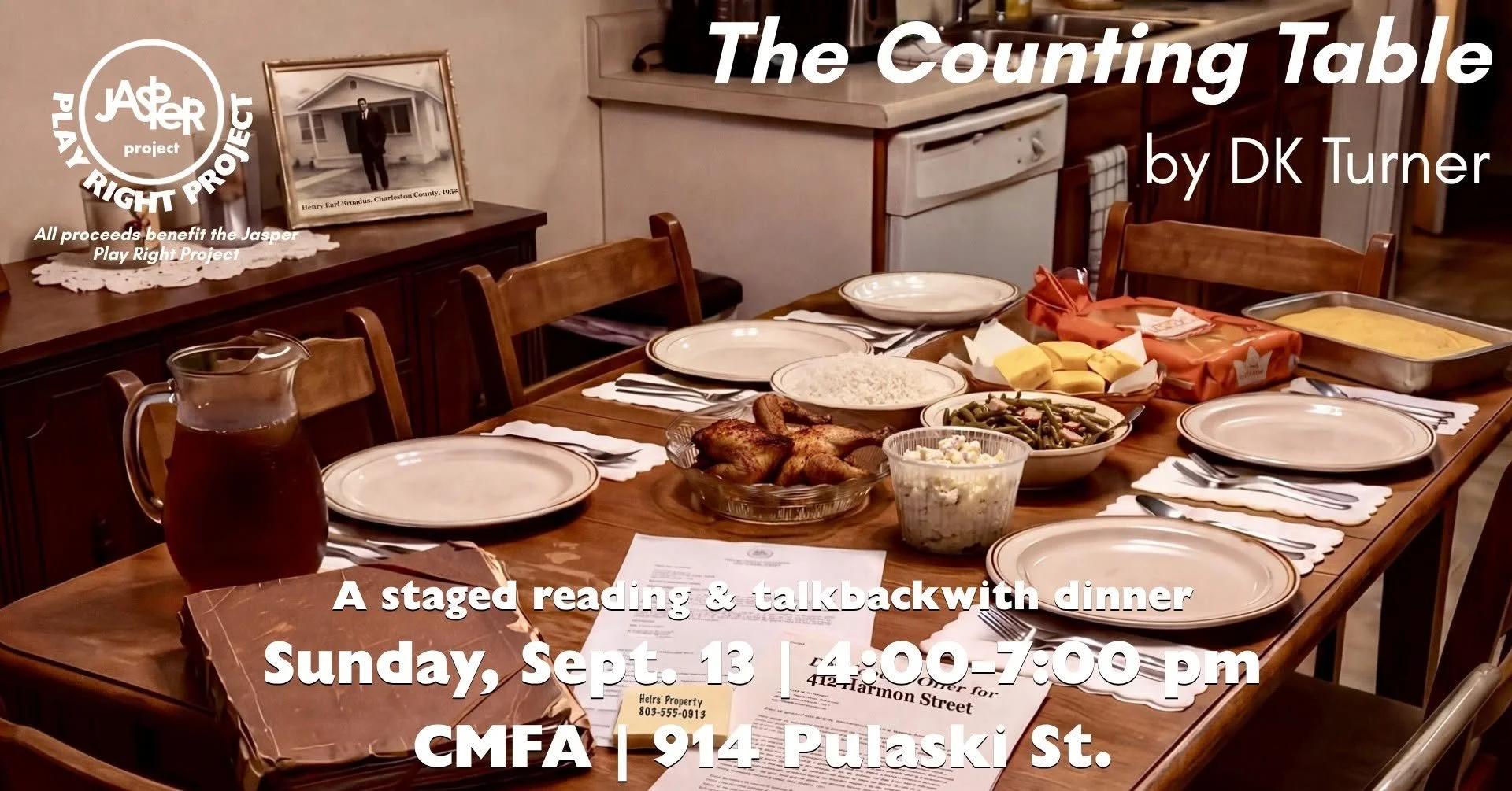
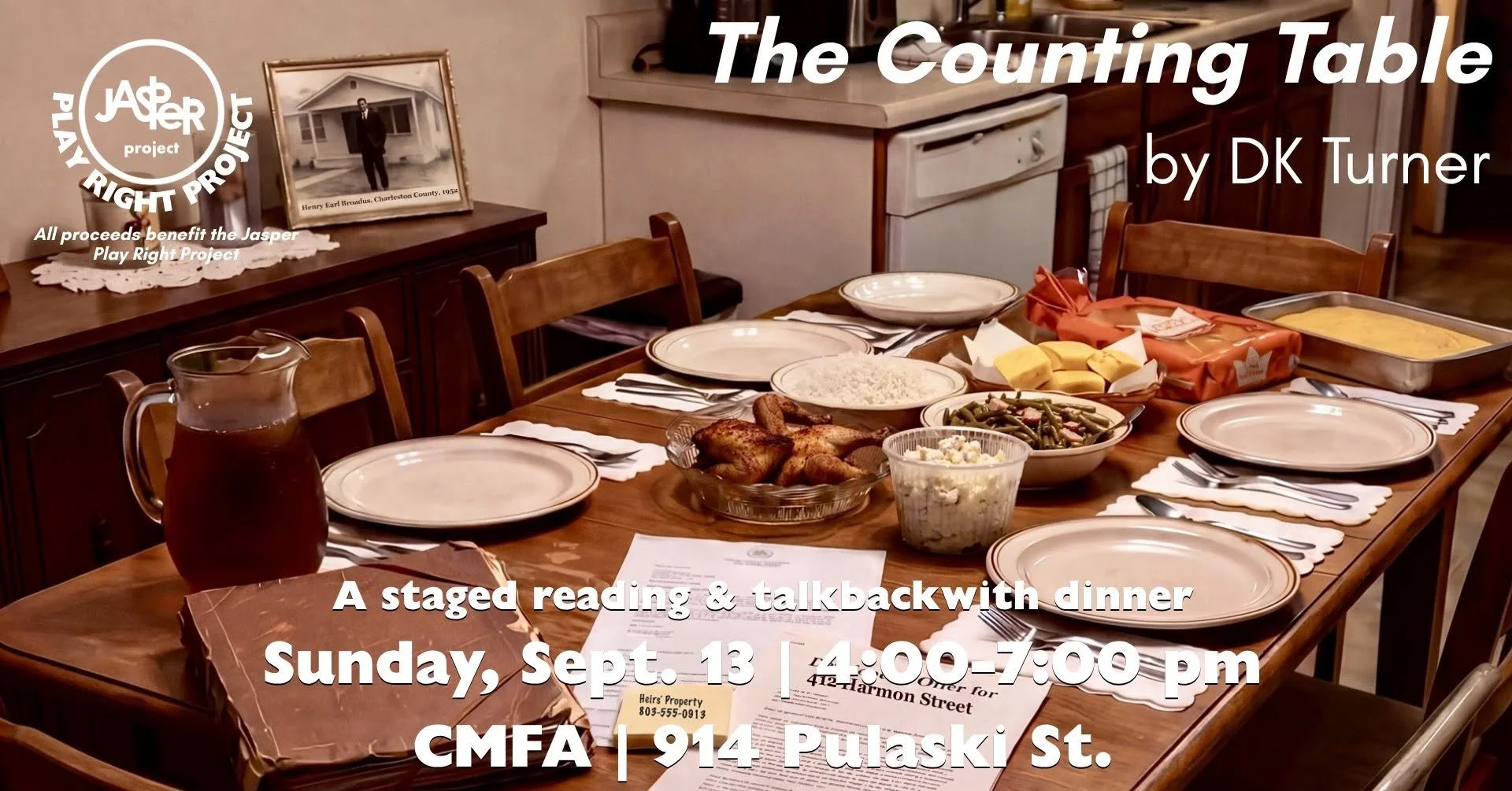
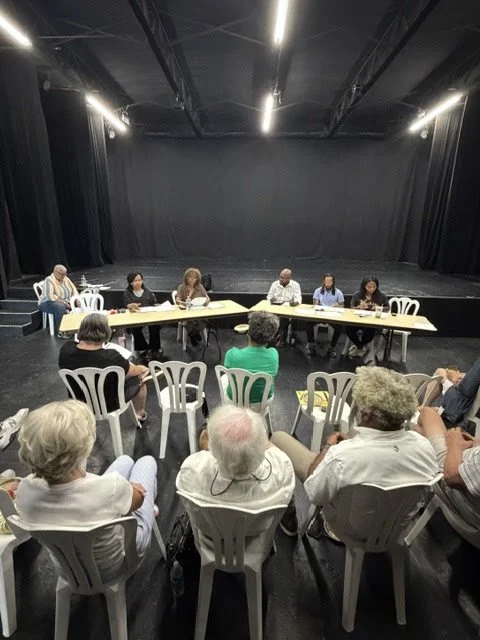
Community Producers essentially fund the production of the winning play to the Staged Reading level of development. Their work began on Sunday July 12 with their first gathering around a table of wine, cheese, and treats to witness Jasper’s first Table Reading of DK Turner’s The Counting Table.

Between now and Sunday, September 13th, the Community Producers will gather three more times to go deeper into the process of play development and then finally, on the 13th, they will take their reserved seats to witness the highly produced Staged Reading.

Thank you to our 2026 Jasper Play Right Project Community Producers!

Stan Conine

Jennifer Gunter

Larry Hembree & Joe Hudson

Linda Khoury

Richard & Nancy Layman

Tricia & Henry Motes

Bill Schmidt

Wade Sellers

Kirkland & James Smith

Gwinette Taylor

Keith Tolen

Jon Tuttle

Cindi Boiter & Bob Jolley


You don’t have to be a Community Producer to see the finished product though. Tickets are now available to join Jasper and the Community Producers for the official Staged Reading of The Counting Table followed by a meal inspired by the play itself.

Special Thanks to Columbia Music Festival Association for serving as the host of ALL Jasper 2026 Play Right Project events, including the Big Show on September 13th!

Learn more about the Jasper Play Right Project

One Columbia Announces Cultural Layers Community Celebrations, Unveiling New Public Murals Honoring Columbia's African American History

"For us, public art is more than just what you see; it's about creating connections …" — Xavier Blake

Artist - Daniel Esquivia-Zapata

From our Friends at One Columbia …

One Columbia for Arts and Culture will host the Cultural Layers Community Celebrations, two free public events marking the unveiling of new public artwork honoring the stories, people, and places at the heart of Columbia's historically African American neighborhoods. The celebrations take place Saturday, July 18, at 2:00 PM at Richland Library Edgewood and Sunday, July 19, at 3:00 PM at the Richland Library Main Auditorium. Admission is free and open to the public.

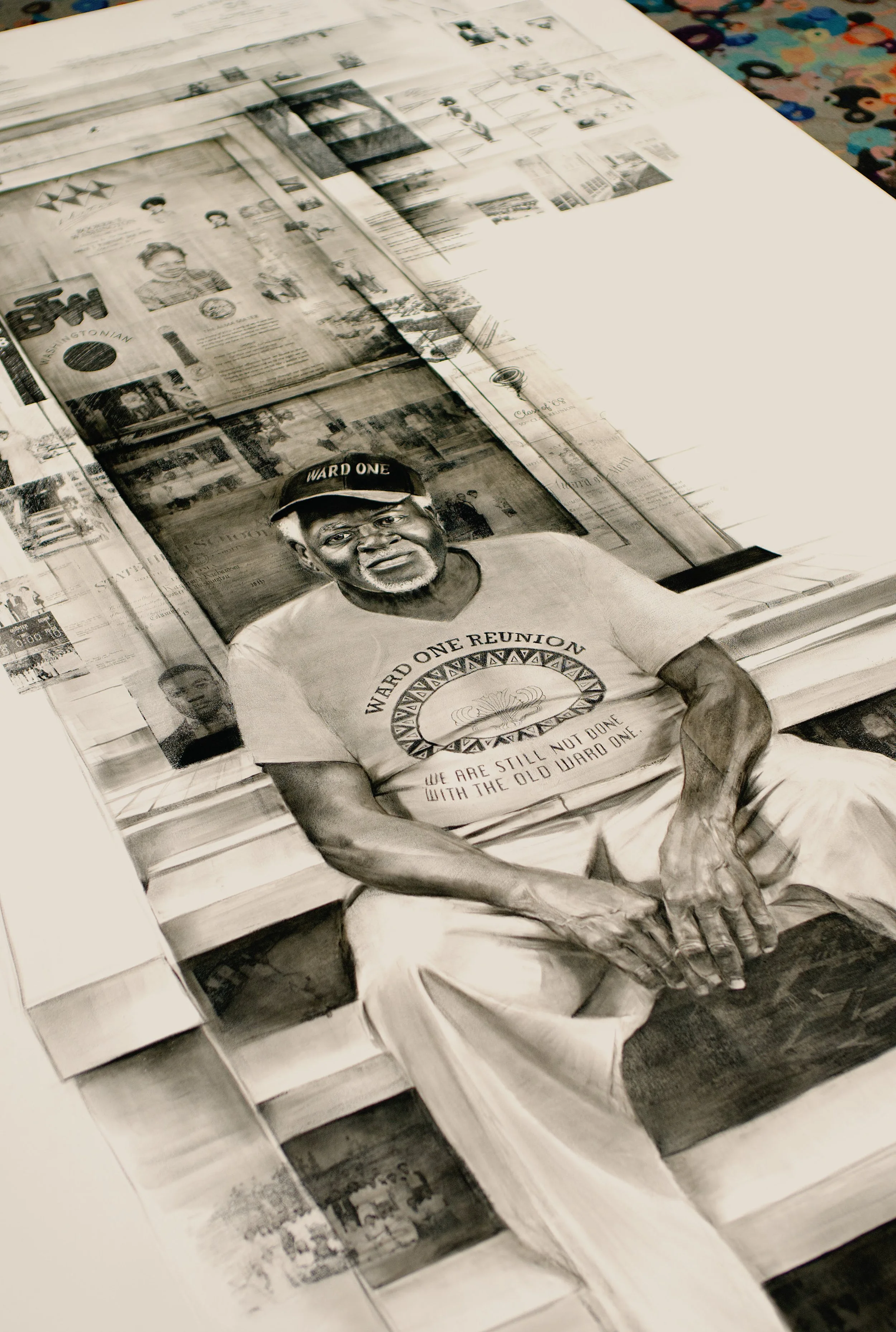
The new artwork honors former residents and legacies of the Booker T. Washington, Ward One, and Wheeler Hill neighborhoods. Cultural Layers is a public art and storytelling initiative led by One Columbia and funded by the Knight Foundation and the Central Carolina Community Foundation. The project preserves and amplifies histories from these communities through photography, videography, oral histories, archival research, and public art, centering the individuals who shaped the city and the schools and neighborhoods that served as cultural and social anchors for generations.

At each celebration, attendees can view the completed murals and public artwork, meet several of the individuals depicted in the work, and connect with the community members, historians, and cultural partners who helped bring the project to life. The events are designed as community gatherings grounded in memory, local history, and collective pride.

Featured artists include Daniel Esquivia-Zapata, Visual Artist and Educator; Nora Williams, Photographer and Cultural Worker; and Malcolm Vanhannegeyn, CEO of Perspective Cinema and Cinematographer. Community members featured in the work include Crissandra Elliott, Deacon Richard Caughman, and Raymond Richardson.

"For us, public art is more than just what you see; it's about creating connections," said Xavier Blake, One Columbia Executive Director. "Through Cultural Layers and the incredible talents of Daniel, Nora, and Malcolm, we hope to create a lasting impact that honors the lives, spaces, and histories that shape our city."

The celebrations are made possible with the support of community partners and sponsors including Central Carolina Community Foundation, Knight Foundation, Richland County Library, the A'ja Wilson Foundation, the Center for Civil Rights History and Research at the University of South Carolina, Columbia SC 63, the Ward One Organization, and Friends of African American Art & Culture.

More information is available at onecolumbiasc.com/public-art/cultural-layers-project/.

FROM THE PRINT ISSUE - PART THREE IN OUR SERIES ON KOGER CENTER PROJECT WINNING ARTISTS featuring WILMA KING

Wilma King

by Cindi Boiter

Photography by Brad Martin

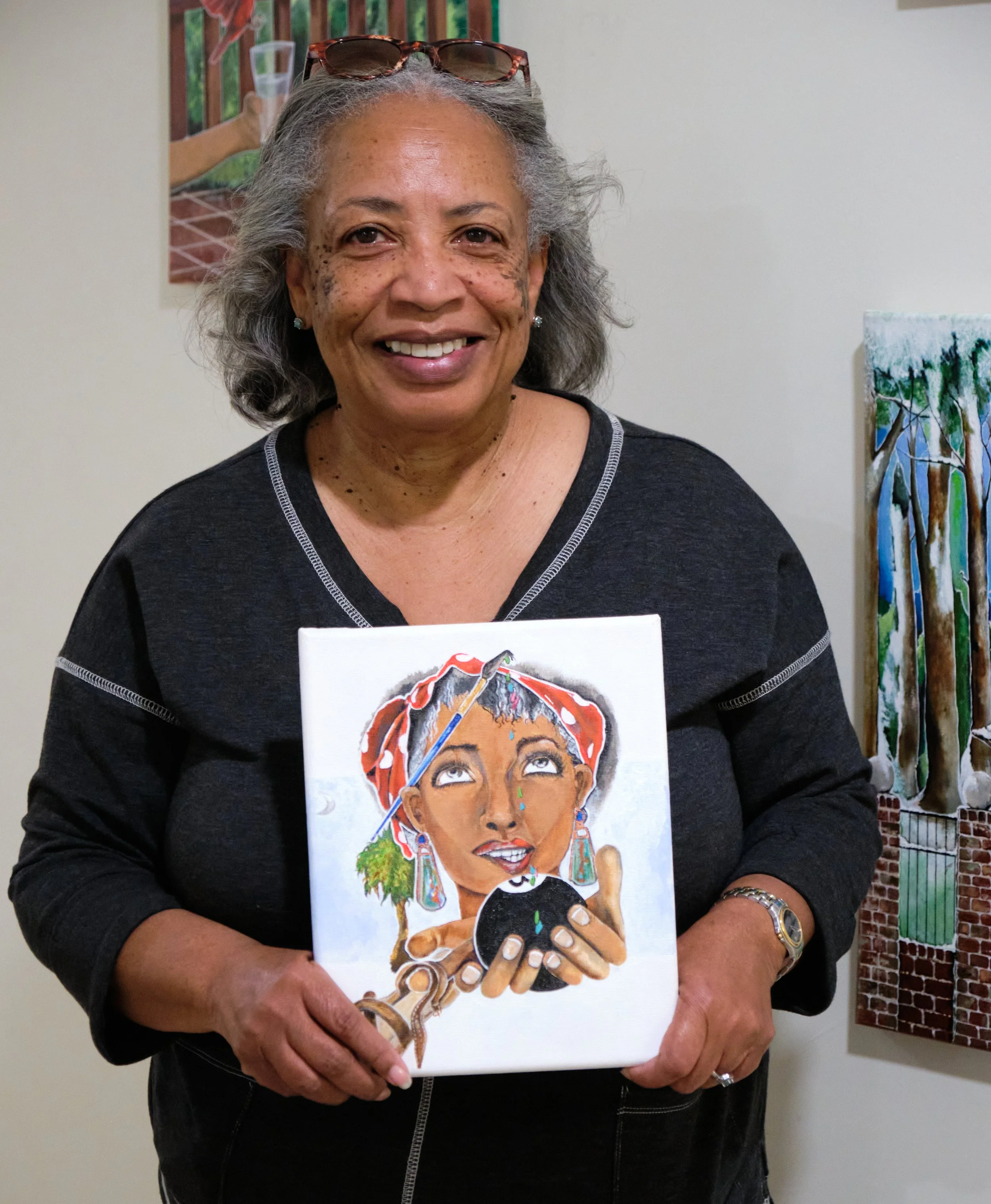
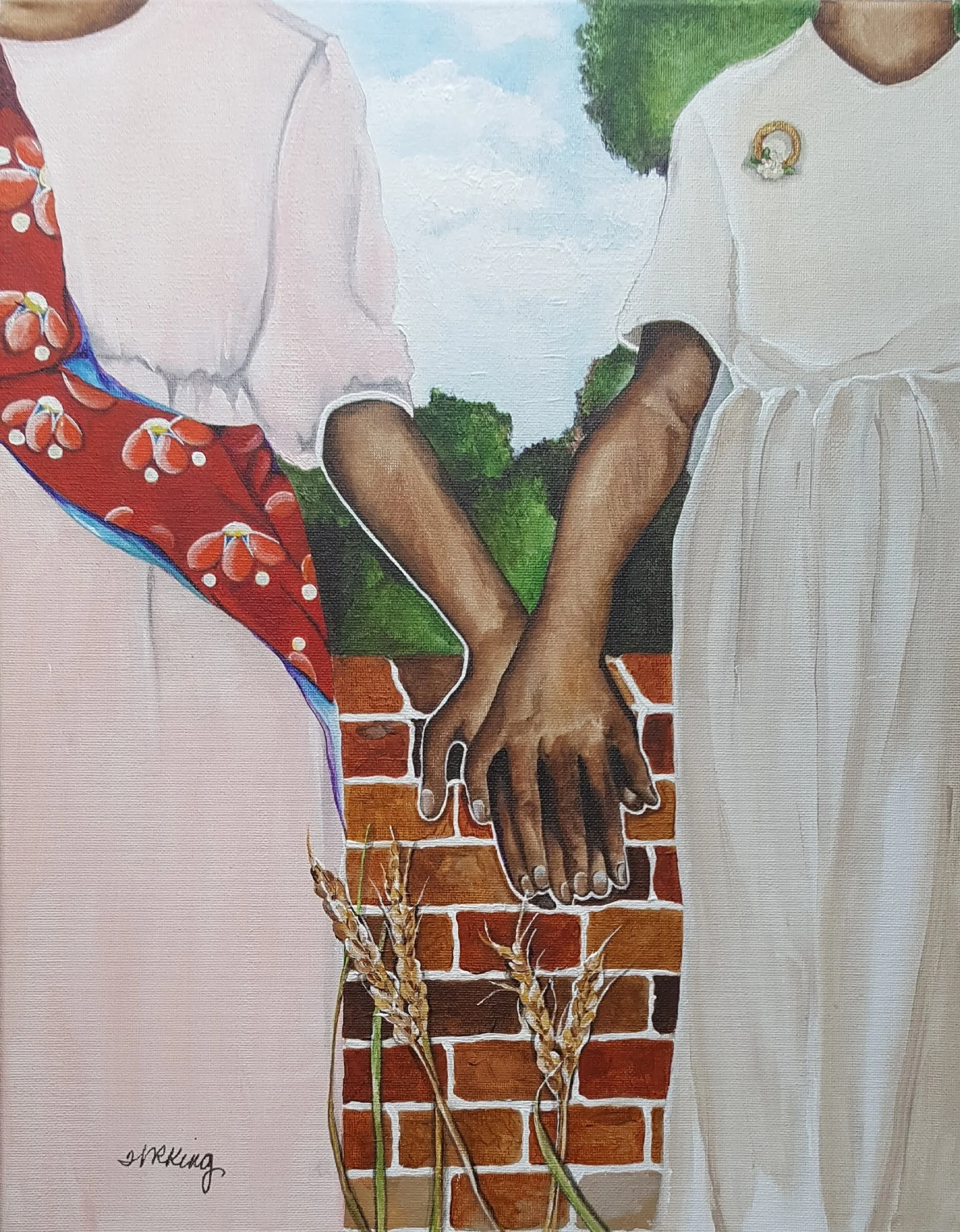
“I  remember an incident in fourth grade that helped me focus in on my love of art and design,” Columbia-based visual artist and winner of the 2022 Draw Jasper competition, Wilma King begins. “My teacher, Ms. Hendrix, knew how to inspire and cultivate creativity. She read to us, held in-class competitions, and infused applied learning into our coursework way back then. Our school was on a military base in Fort Greely, Alaska. My mind was full of dreams of being a nurse like Clara Barton until Ms. Hendrix announced a fashion design competition. My classmates convinced me that I would surely win – but I didn't. So, I launched this compulsion to design paper dolls for my sisters, friends, and anyone who would let me do so. It was an experience that allowed me to delve deeply into individual, and cultural preferences for design, color, shape, size, and form.” 

That lesson, to persevere despite all odds, has served King well as a guiding force driving her to accomplish a life full of achievements and broken barriers that serves as an inspiration to artists and women and people of color today.

Born in Lexington, SC, King, who has a BA in studio art from the University of SC and a MA in journalism from Texas Southern University in Houston, says she grew up both in Lower Richland County and Alaska. “I have lived in 11 different states and done domestic and international sabbaticals that took me to a cumulative 9 months of slow travels and teaching abroad in Italy and in Canada. After more than 30 years of doing some of the things I found interesting and exciting, and to become my mother's primary caregiver, I moved back home to SC.”

But that was not before teaching art at the Art Institute in Houston, O’More College in Franklin, TN, SUNY, and serving as an associate professor in PR at both Western Kentucky University and well as the Rochester Institute of Technology in upstate New York. “I always felt there should be a collaboration between words and images. I taught graphic design, computerized design, or some form of public relations design most of my career, beginning with launching, teaching, and designing the first courses and curriculum in commercial art here in Columbia at Benedict College.”

King was the first Black faculty member in the Department of Journalism and Broadcasting, and she stayed there for 16 years where “they allowed me to do things I never dreamed I could do.” One of those dreams-come-true was launching an international conference on diversity and inviting groundbreaking photojournalist Gordon Parks to the school for three days of lectures and hands-on learning. “It was then that I started to specialize in art and storytelling,” King says, reflecting on her time with Parks, whose documentary style photography was instrumental in the fight for civil rights but who went on to be the first Black person to produce and direct major motion pictures, including 1971’s revolutionary film, Shaft.

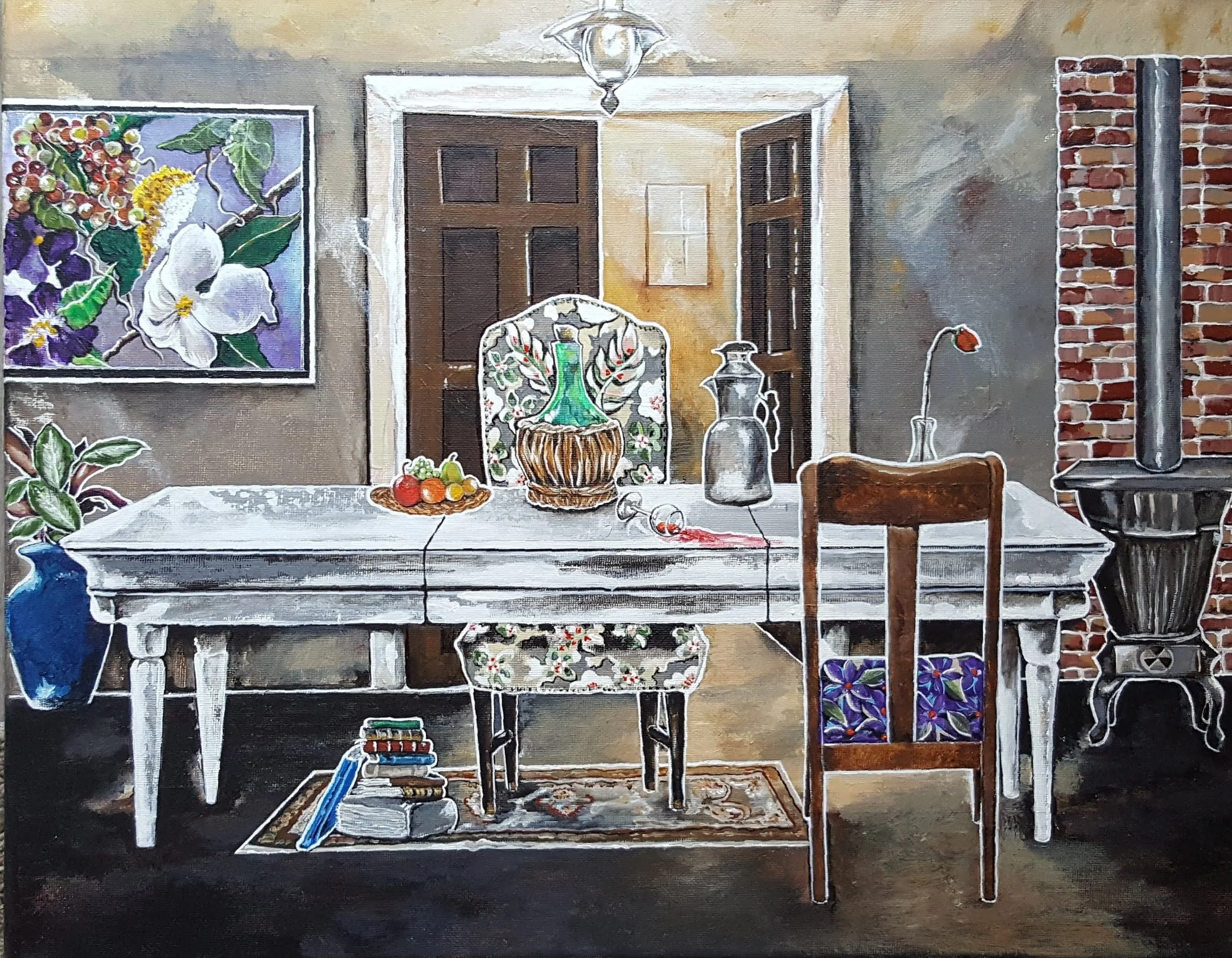
I came to love a very well-written painting,” King says, adding that “art should tell a story,” an endeavor she strives for in her own work. “I enjoy telling my stories as well as those of people I have met along the way. An avid nonfiction reader, I try to incorporate a level of authenticity, through descriptive and narrative detail in my paintings. I focus on the story to give it broader meaning – that is, the painting’s relationship-building potential. People often comment on my style. I paint from memory, not photos (unless commissioned to do so), and I rarely use references. Various elements in each painting are carefully outlined to show that the story is a composite of different places and spans of time.”

King’s medium of choice is acrylic. “My very wonderful art professors at USC, particularly Jim Edwards, taught me that acrylics are extremely adaptable and can convincingly disguise as other paint mediums.” And as for her technique, “I would say that I have either a ‘gentle’ realism or perhaps a somewhat ‘rigid’ surrealism style,” she says. “I am not painting from photographs unless I’m commissioned to or as reference. The white outlined objects in my work come together in my memories from myriad places and times.”

Among her greatest influences are Dony Mac Manus, sculptor/founder of the School for Sacred Art in Florence,  Italy, and Giancarlo Polenghi, the school's director of the master’s program who is an Italian art historian and teaches theology of the body. “They both helped me to understand that the purpose and power of art is to elevate the status of individuals in communities and in society.”

“Now, each day, before I begin to paint, I study some of the great Christian art. I enjoy Biblical stories through the eyes of Michelangelo di Lodovico Buonarroti Simoni, Michelangelo Merisi da Caravaggio, Peter Paul Rubens, Cristofo de Predis, Rogier van der Weyden, Rembrandt, Vincent Van Gogh, and even Salvador Dali.”

But she adds that, “Jonathan Green has given me some very good advice and critique on my work, as well,” counting Greene as one among her three favorite SC artists. “I love his use of color and form, and the stories of the African American experiences in the South. He depicts an enjoyment, pride, and love for life that is seldom seen these days. His viewpoint and perspective are necessary against a backdrop of sadness, anger, and bitterness in the world.”

Her other two favorite home-state artists are Gerard Erley and Phillip Mullen. Of Erley she says his technique is “akin to that of the ‘great masters,’ not only in his artistic ability, but also in the way he commands his storytelling.” From Mullen, her former drawing professor whose work she says she “has always loved,” King says, “I learned to be meticulous in the details and still develop a style distinguishable from everyone else.”

With a CV replete with honors, awards, grants, and fellowships, listings of lectures given, international conferences organized and attended, publications in books and esteemed journals as well as listings of books and publications she designed, and truly, more accomplishments than can be recorded here, King’s humility is overwhelming. It is beyond anticlimactic to mention her recognition as the winner of a competition as prosaic as the Draw Jasper contest, but it must be done.


It is on the cover of this issue of Jasper Magazine that Wilma King’s painting, Jasper is published, the winning entry in the 2022 Draw Jasper Competition. “My art is of hindsight, unable to catch up with the present – because the present becomes the past too quickly. Nonetheless, each of us are where we need to be when it comes to our art,” King says. “The Jasper painting expresses the joy of being where I am now, and the struggle of recognizing significant moments and collaborative memories from multiple sources. Through the colors and imagery, I try to describe my vision of a world that is seeded and then grows from my South Carolina and Louisiana Creole cultural roots. It also speaks of my age that notices and shares the pivotal history of two generations before me.”


“These days, I read less than I used to (a book each week), and paint more,” King continues. “I am painting each day, whether it is on canvas or glassware. Art is a way of praying. It helps me find positivity in whatever I am confronted with throughout the day – good or bad. I am seeking ways to put the events of the day in proper perspective and finding a way to reconcile my day in gratitude. I began what I hope will become a series of painting based on contemplative and spiritual exercises. I believe art should elevate the status of persons and communities. Finally, I have had a happy life, despite a few calamitous events I certainly hope the happiness is what my art passes on to others.” 

 Wisdom from Wilma King: I think there's a need to not only expose the world to Columbia arts, but to also expose Columbia arts to the world! There are ideas and opportunities for collaborations that are not being explored. Let's create some opportunities for collaborations and universality through perhaps Sister Cities for starters.

On my wish list? It's time for a women's museum, a children's museum, and an independent art school. The spirit and excitement of art is apparent in Columbia’s eclectic art community. Still, the more we venture out, explore, and study the universal art world, the less repetitive we become.

This article appeared in the Fall 2022 Print issue of Jasper Magazine.

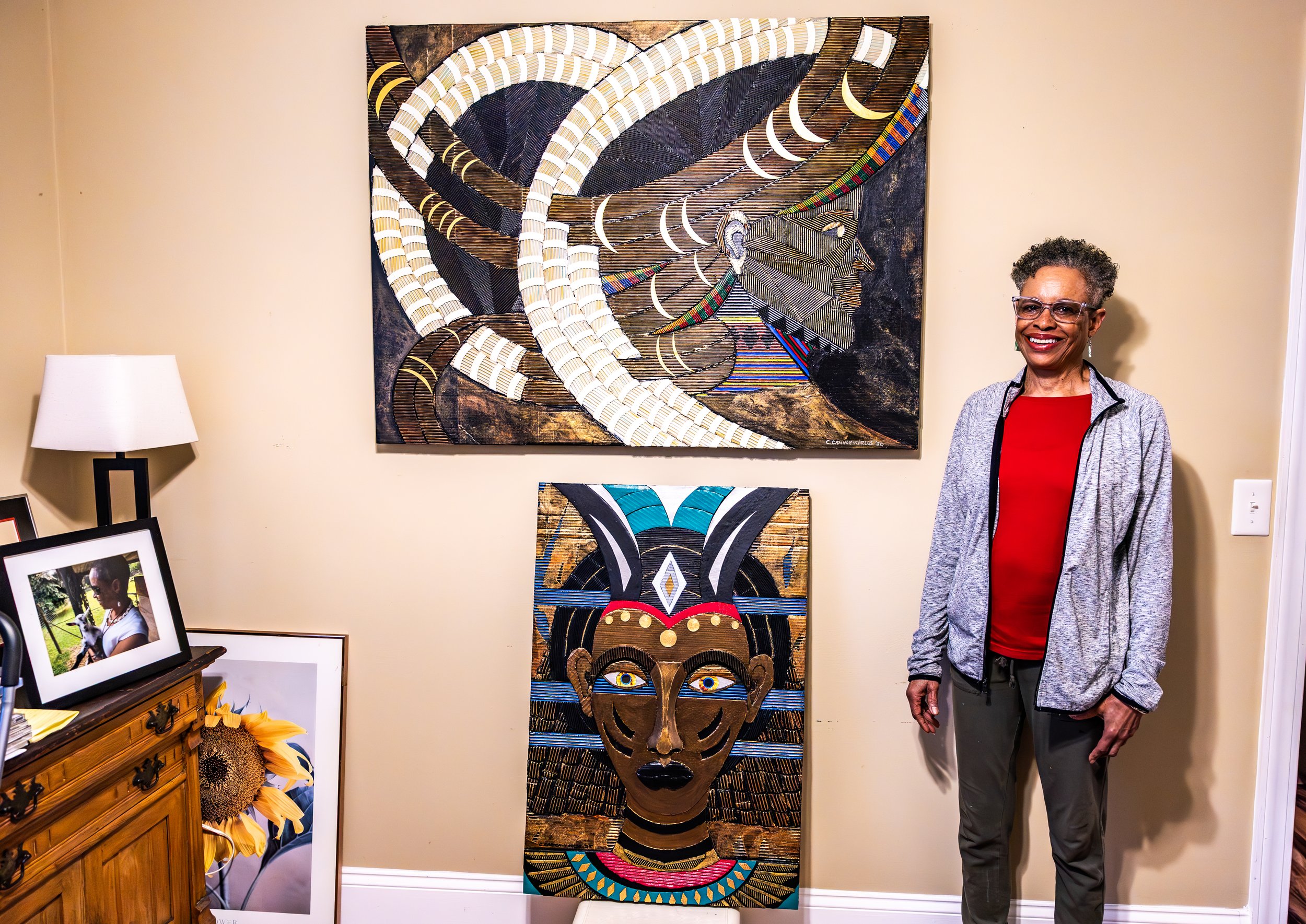
FROM THE PRINT ISSUE - PART TWO IN OUR SERIES ON KOGER CENTER PROJECT WINNING ARTISTS featuring COLLEEN CANNON-CARLOS

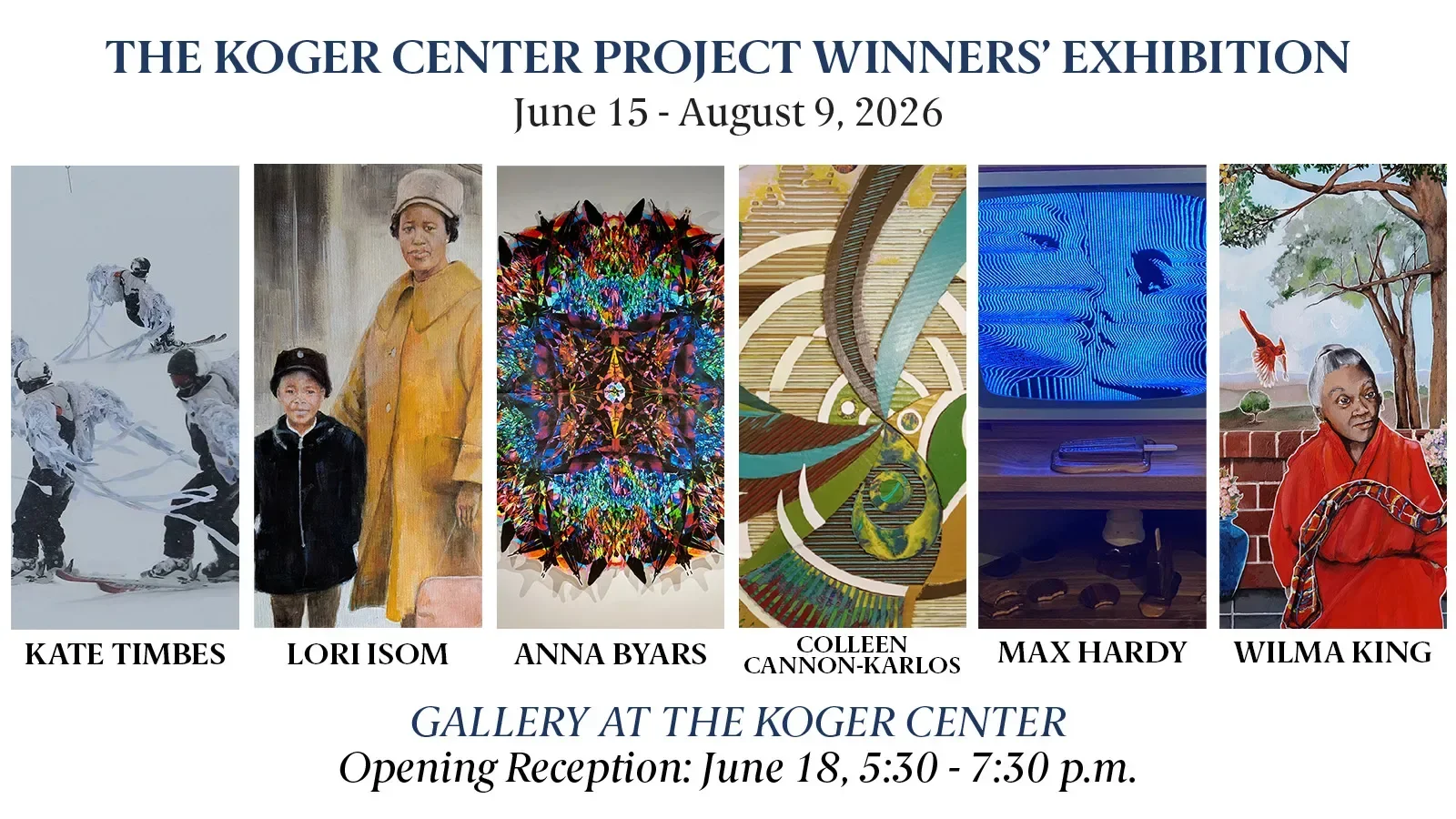
Welcome to the second article in our series on the Koger Center Project’s Winning Artists. You can get the background on this series in yesterday’s article on Kate Timbes, and learn more about the project and the other winners from an earlier Jasper Online post. Today we’re featuring Colleen Cannon-Karlos and sharing the article by Emily Moffitt that appears in the spring issue of Jasper Magazine!

~~~

Colleen Cannon-Karlos:

Left Brain, Right Brain – One Artist 

By Emily Moffitt

Photography by Perry McLeod


The intersection of art and science is sometimes explored only in name, particularly in academic settings. However, for Colleen Cannon-Karlos, the two fields are inextricably intertwined both in her art and her personhood.

Cannon-Karlos' upbringing took her across the country to both coasts—born in Los Angeles to native New Yorker parents, she ended up moving to New York after her parents divorced. During her school years, she excelled in all subjects, participating in gifted student programs and having a strong handle on both sides of her brain. The left brain seemed to dictate her path slightly more as she had not considered being an artist when she was younger. She still enjoyed creative endeavors, however. According to Cannon-Karlos, “I never had a formal art class growing up in school, and the gifted programs in the Bronx that I participated in had music as the cultural enrichment.” This did not stop Cannon-Karlos from pursuing artistic hobbies at home as her mother taught her how to knit, sew, and crochet. At home, she made her own art projects that combined her budding fiber arts skills with recycled materials like popsicle sticks and old fabrics. This resourcefulness has resurfaced years later in the Cannon-Karlos work we see today.

Even as the designated artist of the family, Cannon-Karlos still initially enrolled in schooling oriented toward a career in math or science. “I went to the Bronx High School of Science and had an affinity for math and physics,” says Cannon-Karlos. “There was a drafting class available if anyone wanted to be an architect or engineer, … I absolutely loved taking it. The precision, tools, and learning how to transfer schematic drawings into three-dimensions—I use these skills in my work today all the time.”

Precision is the key to much of Cannon-Karlos' artistic practices today. She developed these tools even further when she studied at Stanford University and worked in the physics lab. Her curriculum was strenuous and extremely scientific, but she always had art in the back of her mind. While in college at Stanford, the artist’s aunt asked her to make some art for her. This became an “a-ha” moment for Cannon-Karlos, whose time spent in the lab, identifying subatomic particles of smashed atoms, did not leave much time for creative hobbies. “I rediscovered my love for making stuff, using materials as simple as magic markers,” she remembers. It was time for her to find her path not only as someone with a knack for science, but also as an artist.

Cannon-Karlos decided to take a gap year from her Stanford studies and moved back to New York City to, hopefully, establish a career as an artist. She spent her days teaching herself how to paint, exploring museums and creative communities, and communing with playwrights, artists, and musicians. “This was during the 70s, so a lot of the community’s creative endeavors coalesced with different sociopolitical movements of the era,” Cannon-Karlos says. “There was this explosion of creative, dynamic energy that was so immersive and different from today.”

Working on her art career paid off early as she had her first gallery representation when she was 19-years-old. She began dabbling in photography and even convinced the staff photographer at the Studio Museum of Harlem to let her work with him in the darkroom. After spending the year building her portfolios in a variety of media, drawing, painting, and photography, she went back to Stanford and switched her major from sociology to art with a concentration in photography.

 She flourished in the field while also continuing to experiment with other media. The inquisitive Cannon-Karlos always had a knack for trying and learning something new and says that “some artists do the same thing for decades, but it is my nature to explore.” In her twenties, she began to bring back her fiber arts skills to simultaneously turn a profit and make some serious work; she was introduced to fabric design by her former husband, a fellow artist. She began to sell her handmade fabrics and clothing in flea markets, then boutiques and stores in New York. Eventually, Cannon-Karlos took the lessons she had learned practicing her art and began to apply them to something new: academia.

Throughout her career, Cannon-Karlos has instructed students of all ages, from elementary school through college. Since her methods of problem-solving combine both artistic and scientific approaches, she uses this thought process to her advantage in the classroom. She teaches her students that they may have analytic tools but they still need to be able to think outside the box.

The artist has also created curricula based around projects in which students can learn scientific concepts by making art. In Durham, NC, for example, she worked with the local art council and taught classes to elementary schoolers in which they studied ocean science through technical concepts but also had opportunities to create sculptures like jellyfish and tube worms with plastic bags, paper tubes, and other recycled materials that can, unfortunately, easily be found in oceans and bodies of water.

While she lived in Hawaii, she created curricula that truly captured the intersection of her interests. “I was finally able to make a proposal for an Art, Science, and Technology Class that collaborated with the marine science department,” says Cannon-Karlos. “We had a mix of art and science majors in the class, and we were allowed to use lab equipment, including their scanning electron microscopes. This allowed us to see the intricacies of the designs of a particular specimen at a microscopic level and beyond.” The designs found on the plates were only black and white, so the students would then learn how to use Photoshop to add color to their discoveries. While this was an art project in essence, Cannon-Karlos made sure that all students flexed both sides of their brains and wrote explanations of each step of their project, including why they dissected the image in a particular way, how they manipulated the image, and what they learned from the experience. The science-minded students loved the opportunity to express their inner creativity, and the arts students jumped at the opportunity to exhibit their talents on an academic level.

Thess lessons were among the many ways that Cannon-Karlos exhibited her proficiency in seeing things beyond the material plane and comprehending, on a deeper level, the use of an object or material for something completely different. Using recycled materials for creating artwork started in her childhood, and it has manifested contemporaneously as her preferred medium.

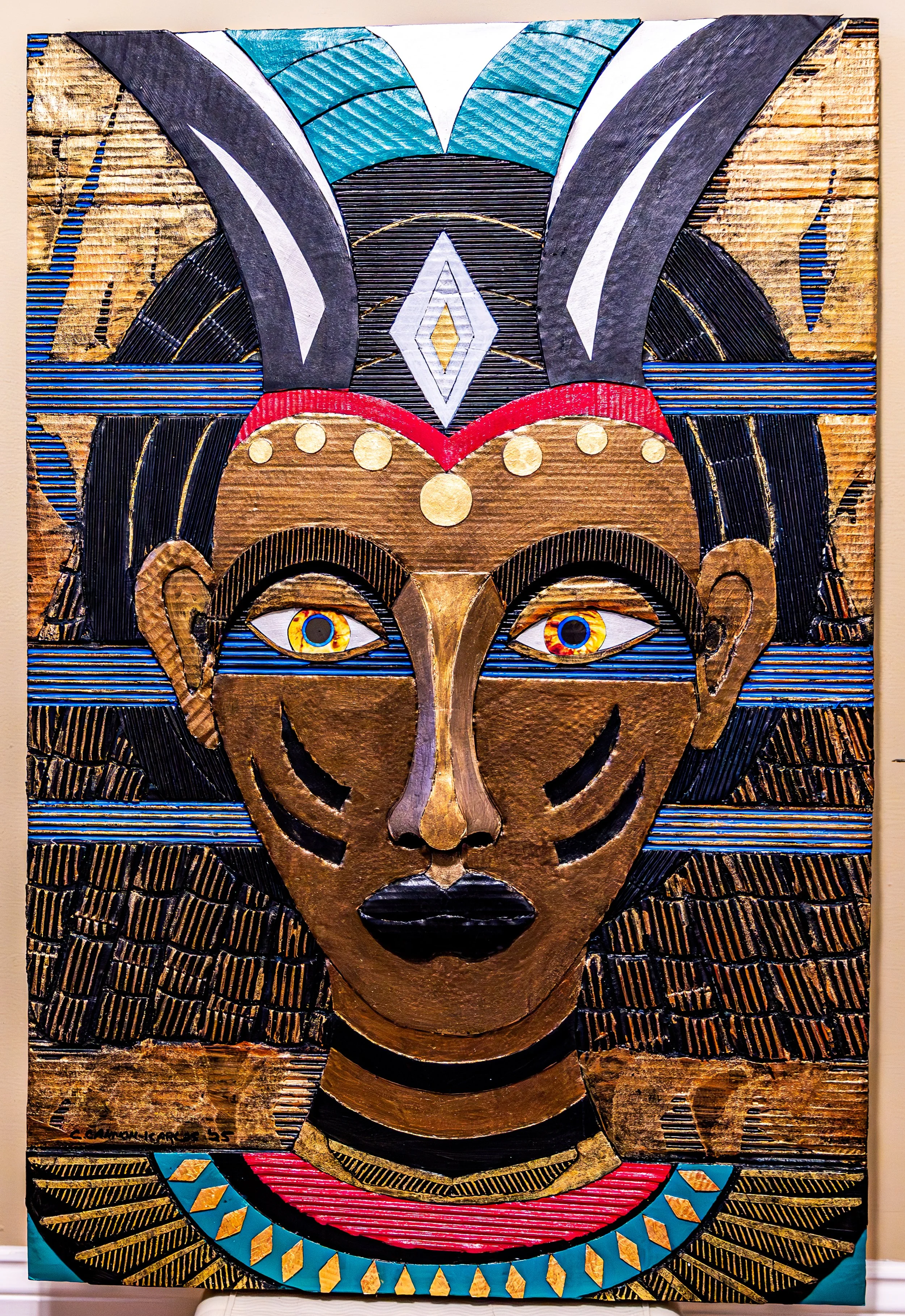
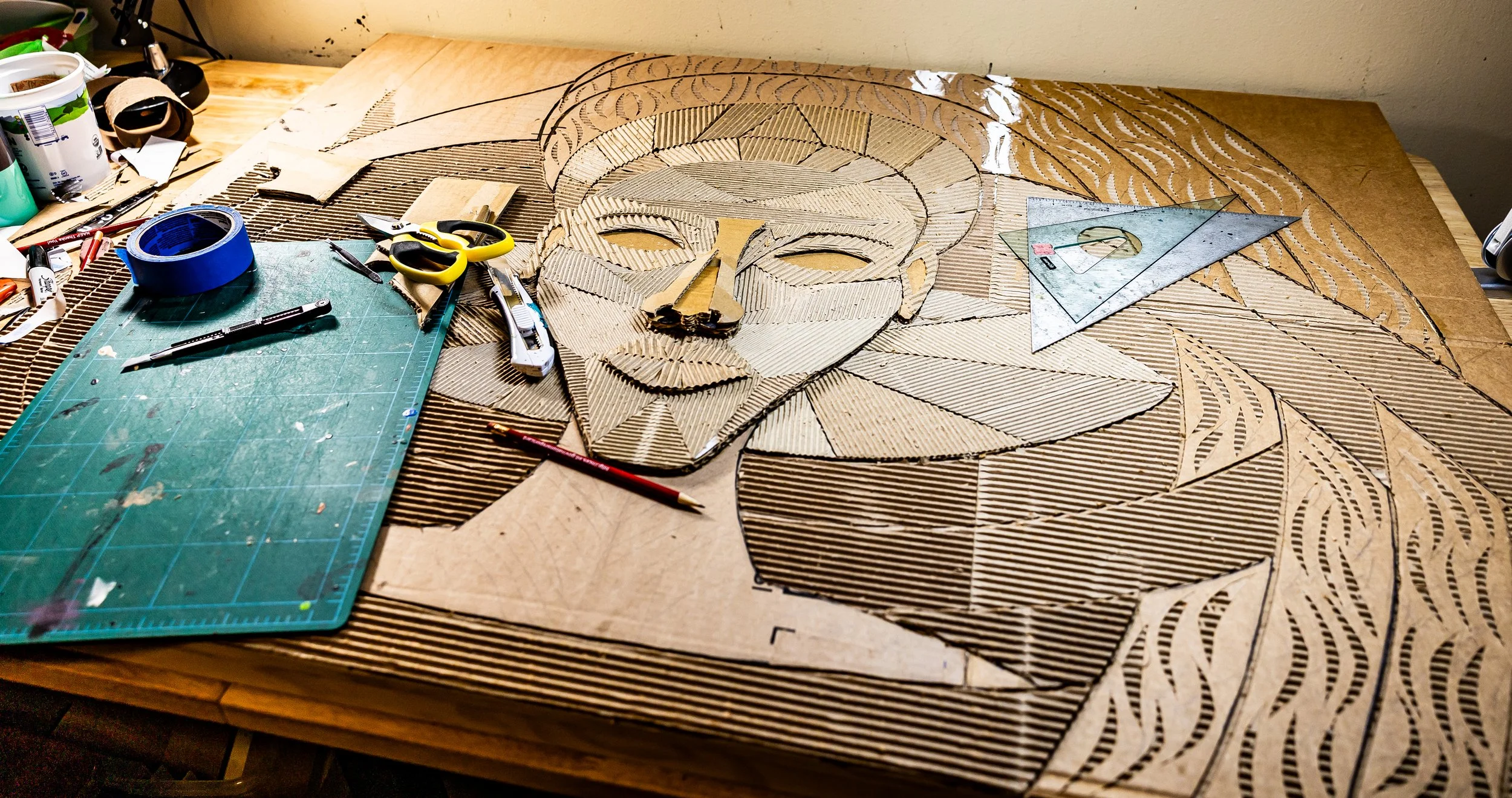
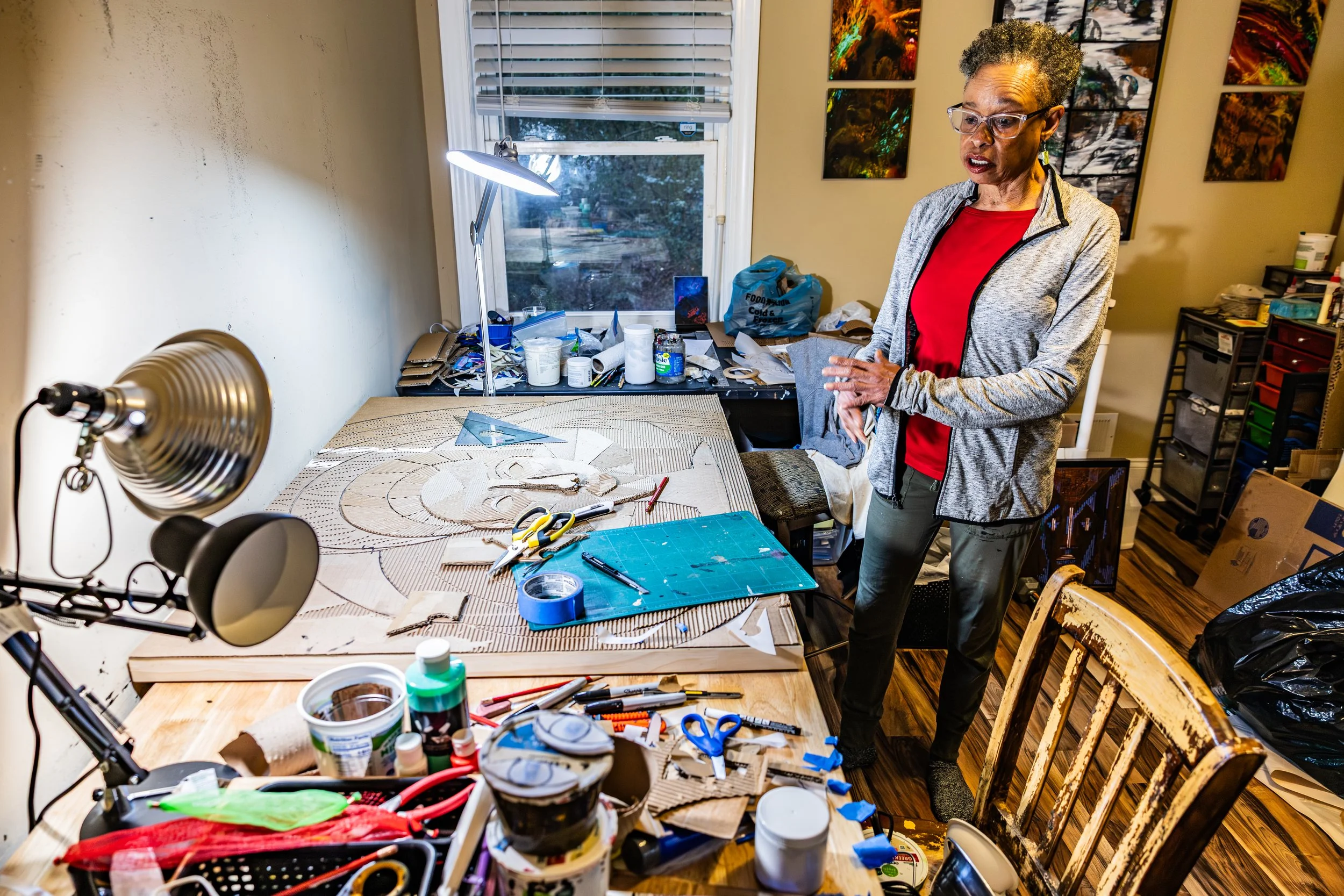
Piles of cardboard boxes inevitably piled up across Cannon-Karlos' cross-country moves. After collecting so many, but not wanting to throw them in the waste, she decided to express her resourcefulness by stripping, cutting, and tearing the boxes apart. “Being a science aficionado, I like to experiment with my materials and am always in that mindset of play,” says Cannon-Karlos. “I realized I could make some imagery with these strips.”

Cannon-Karlos had started to experiment with cardboard in 2019, but it was not until after the pandemic and a final move to Columbia that she seriously started to create with it. The cardboard allows Cannon-Karlos to work as a scientist again, finding ways to challenge herself and test new hypotheses regarding how she can use the cardboard and adapt the surface to do different things. One such test of skill was born out of observing sweetgrass basket weaving. “When I saw the weavers … I asked myself if I could simulate the weaving process with the corrugated cardboard.” This process also made Cannon-Karlos reflect on the resourcefulness of African artists, especially with recycled materials of their own. Her work is a constant conversation between culture and science, always looking to explore what that conversation could look like on a surface with one of the most accessible materials available. “A lot of recycled materials are brought over and dumped into Africa,” notes Cannon-Karlos. “The artists are very resourceful; they can go to the dump and pull fabrics, electronics, and other trash then turn it into the most amazing work. I am very inspired by people who look at things differently and turn them into something new.”

Like many other artists, Cannon-Karlos' career path did not follow a straight trajectory. The moves, twists, and turns provided great opportunities at each bend, but nothing necessarily consistent. “If I followed my trajectory out of grad school in the 90s, I may have become more prominent in the art world,” says Cannon-Karlos. “I have had to put my career aside working as a single parent. It is hard to be an artist when you are taking care of a family.” While working in Hawaii, she had first-hand experience with the exorbitant costs of shipping artwork, and the transience of teaching positions in higher education. Her trips across the country, while pursuing her dreams, created different bumps along the road. But when asked if she had the chance to do everything all over again, Cannon-Karlos admits that she may not change anything at all. Her life experiences and her way of approaching art, as both an academic and a creative, are what make her portfolios so alluring, with viewers waiting with anticipation to see what she’ll create next.

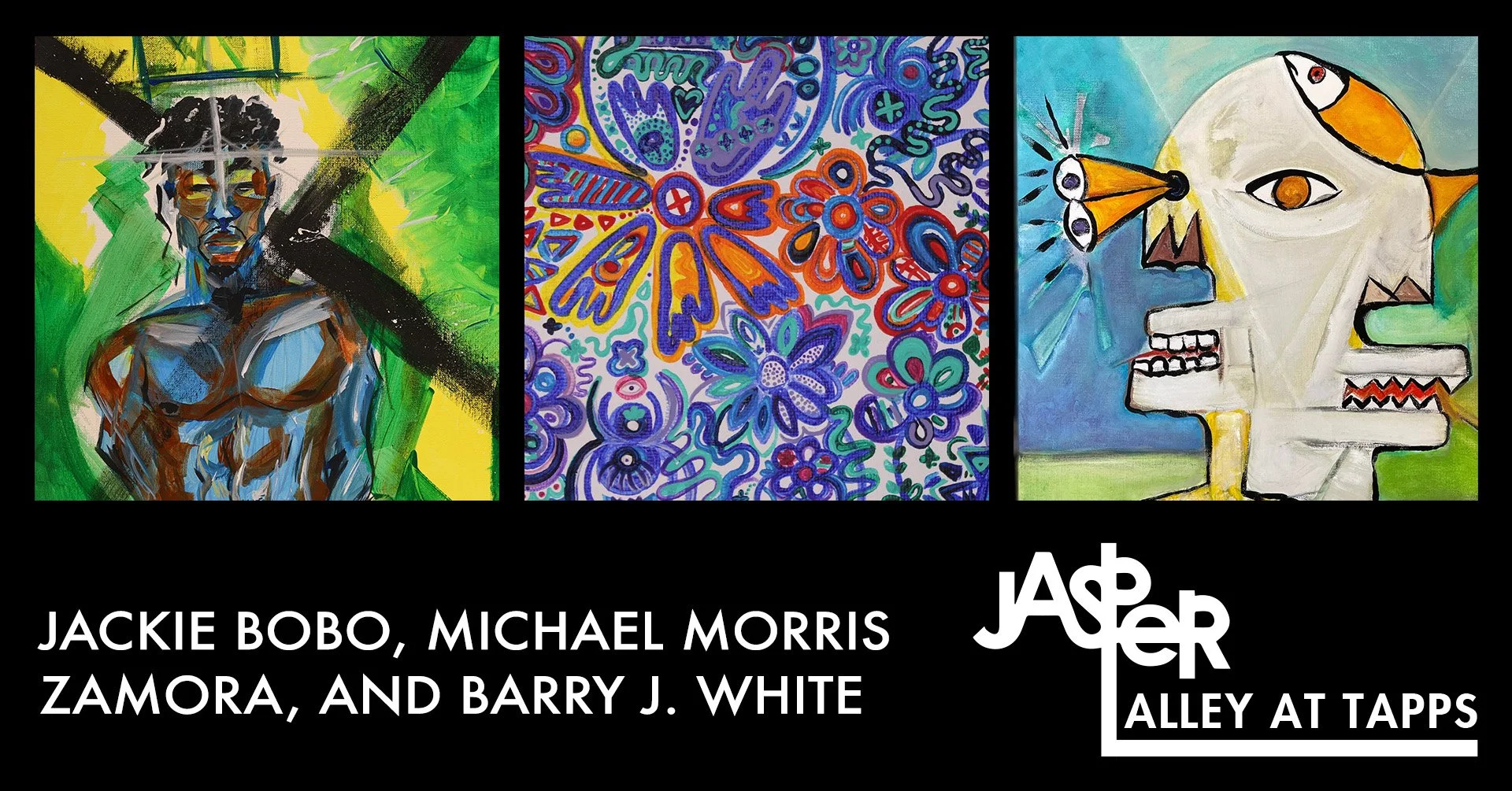
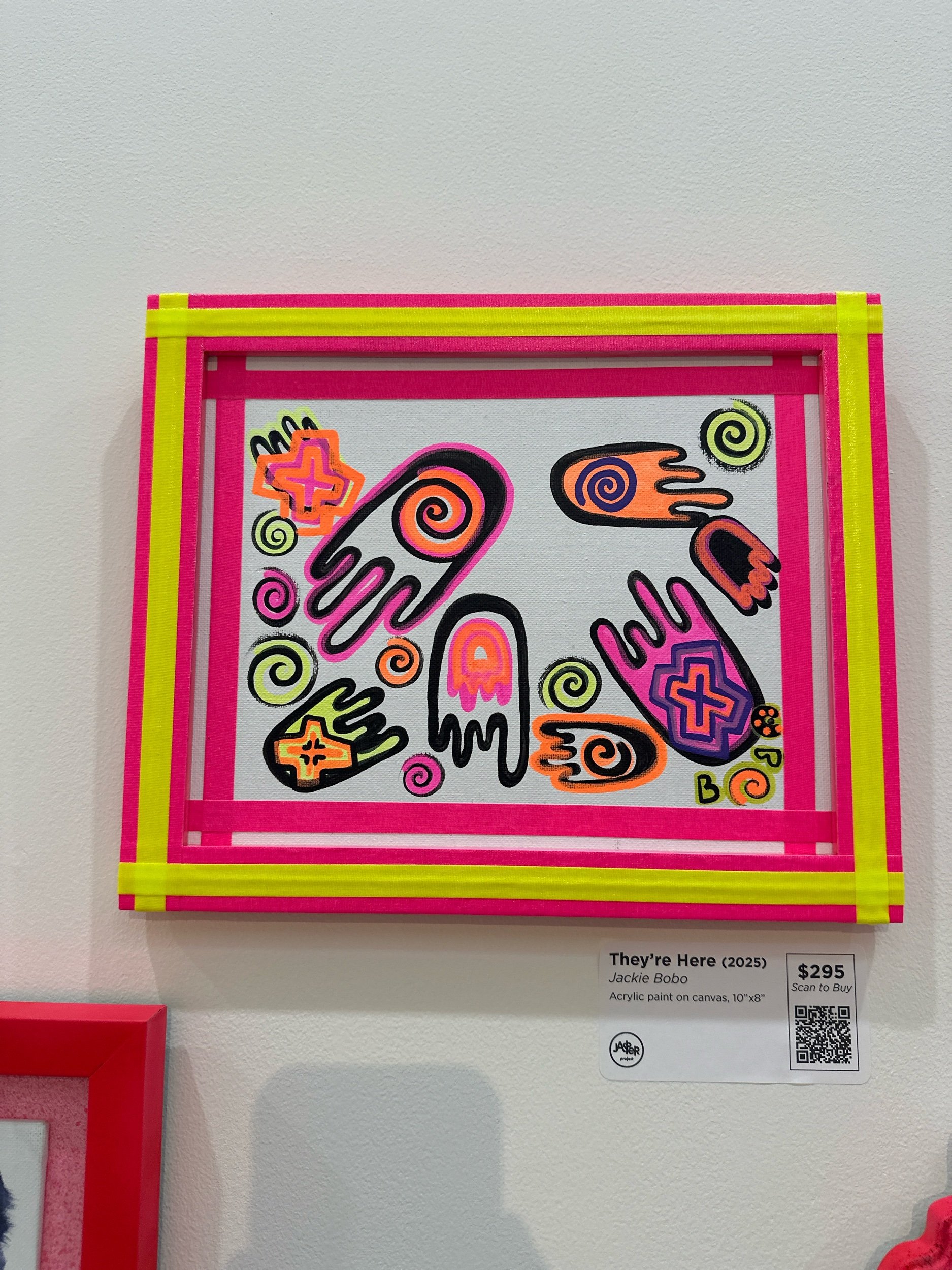
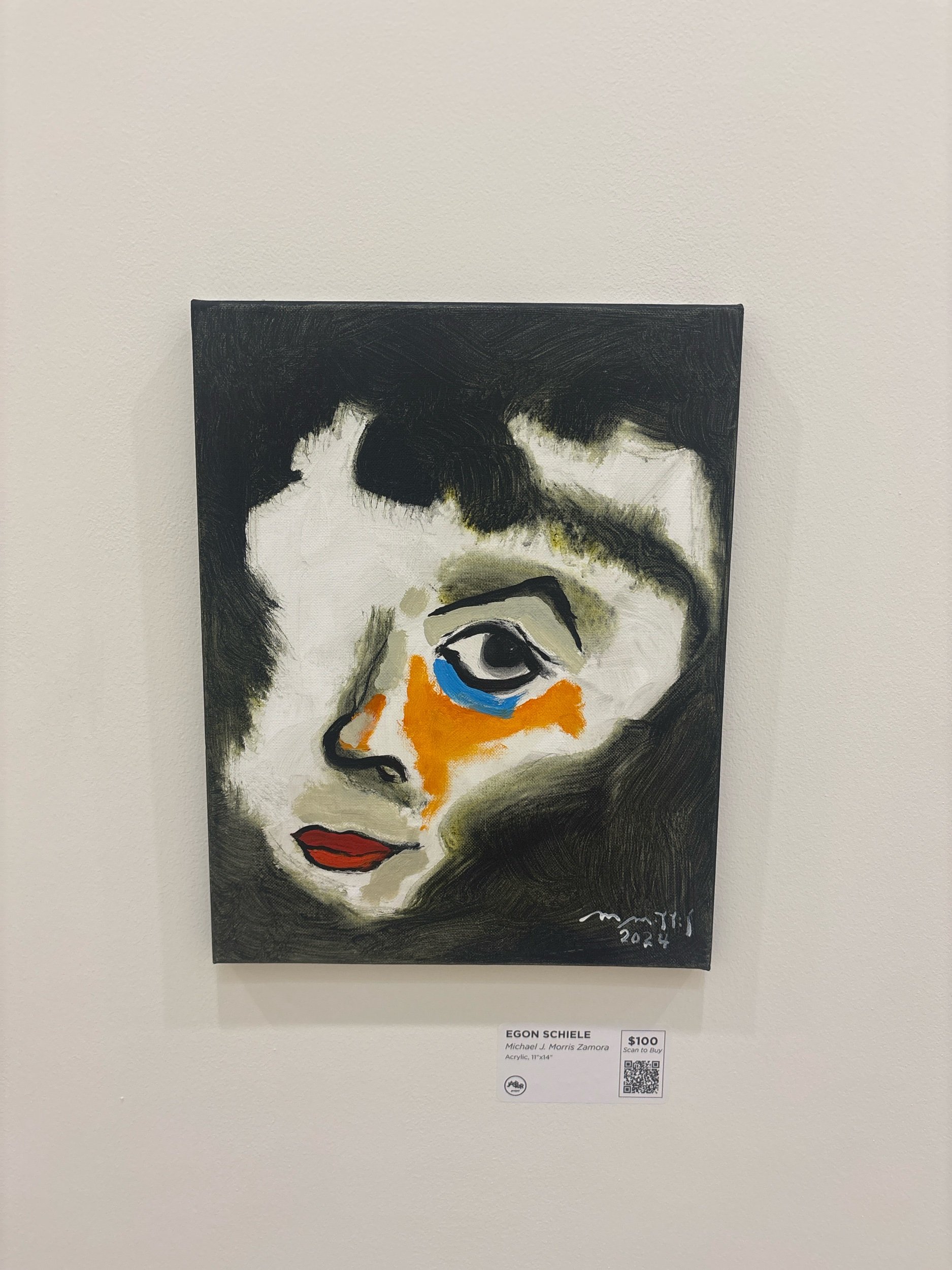
Spotlight on Jasper's Featured Artists in the Jasper Alley at Tapp's in June: Jackie Bobo, Michael Morris Zamora, and Barry J. White

This month, Jasper is featuring three artists in the Jasper Alley at Tapp’s that we want to make sure everyone knows about—Jackie Bobo, Barry J. White, and Michael Morris Zamora.

Artist - Barry J. White

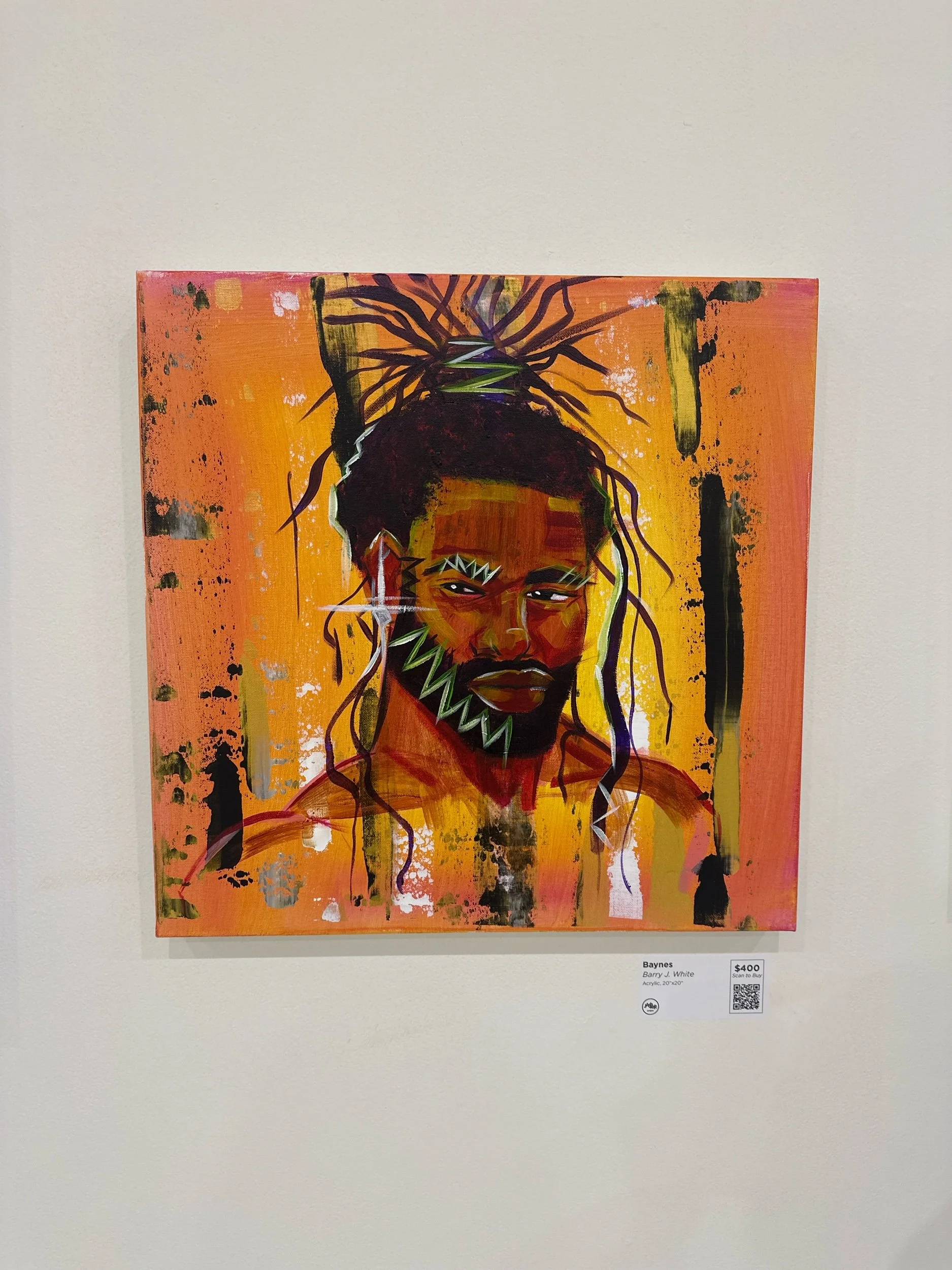
Barry J. White is a Blythewood, SC-based self-taught multi-disciplinary artist whose works center the beauty, strength, and vulnerability of Black men. Guided by intuition, personal experience, and emotion, Barry’s paintings explore themes of identity and self-acceptance through expressive realism and atmospheric color.

Barry’s work has been featured in the following exhibitions For the People, Crowned by the Roots, Jasper Degenerate Arts II, as well as at Gemini Arts, Stormwater Studios, Roc Bottom Studio, and Drummond Studios. His work has been recognized for its depth, honesty, and visual storytelling. 

White says that his exhibition at the Jasper Alley has given me the confidence to start working on more pieces daily. I'm creating a collection I'm naming, I Drew Him. It's a collection of people that I have known over the years that inspire my current artistic expression. My next show is By Any Means, curated by KELA, with the opening reception on Juneteenth at REDUX Studio in Charleston, SC.”

Continuing, White says he is inspired by many local artists including Dre Lopez, Skrilla, Cam Moore, Keith Tolan, Damion Johnson, Sanford Greene, Jahnna Blyden, Ija Monet, and Tyrone Geter, but he really appreciates the work of his show-mate, Jackie Bobo, saying, “I can't look at Jackie's work without thinking about the kindness she extends to the people around her. Before I ever spent time with her artwork, Jackie encouraged me to embrace vulnerability and find the courage to share my own art and show up as my authentic self. That same spirit lives inside her paintings. In her work, what's typically viewed as different or spooky becomes a strength instead of something to hide or be ashamed of. Little Lonely Ghost feels less like sadness and more like an invitation to be seen. Her "Happy Spooky" aesthetic reminds me that belonging isn't about fitting in, it's about showing up as your authentic self. Spending time with her art feels like receiving permission to take up space exactly as you are.”

Artist - Jackie Bobo

Jackie Bobo is the vibrant force behind Bobo to the Max, an art practice and brand that creates emotionally immersive art and experiences inviting people to feel deeply, express fully, and belong as their most vivid selves.

Informed by nearly a decade as a speech-language pathologist—and more than three decades of living at the intersection of queerness, Blackness, and neurodivergence—Bobo approaches painting as its own language, one capable of holding nuance from the playful to the profound.

Through her signature “Happy Spooky” aesthetic—bright, bold colors paired with ghosts, spiders, and other whimsically macabre motifs—her work explores what it means to unmask, authentically connect, and belong. Each piece acts as a symbol of self-acceptance, affirming that belonging doesn’t mean blending in—it means revealing who you already are.

Bobo, who is currently an artist-in-residence with One Columbia for Arts & Culture at the Garage Studio, says she is “in the ideation phase of another immersive experience, but I'm being intentionally tight-lipped about it for now!”

About her show-mate Barry J White, Bobo says, “Barry captures the power, in both strength and tenderness, of Black masculinity in a way that's magnetic. His work makes you feel, in real time, suspended between society's limited understanding of and ability to hold space for Black masculinity, showcased through his daring vulnerability and technical skill.”


Artist - Michael Morris Zamora

Michael Morris Zamora was born in Puerto Rico to a South Carolinian father and a Puerto Rican mother. Mostly self-taught, he began creating art at the age of ten, and by fourteen, was painting in oil and acrylic mediums with a tendency toward abstract expressionism.

A chemist, film actor, writer, poet, and drummer, in Puerto Rico Zamora is also a Certified Artisan specializing in wood carving and sculpting, harkening back to his childhood interests in iron sculpting, wood carving, miniature buildings installations, and jewelry-making from natural seeds and seashells. In 1972 he published some of his first poems and stories. In 1980 he published his poetry book, Telarañas (translated, Cobwebs). 

Zamora also taught elementary art and later studied art at the San Juan Art Students League under Professors Rafael Rivera Ortiz (drawing and painting), and Hiram Rosado Poupart (ceramics).

According to Barry J. White, “I've met Michael on several occasions, and what stands out immediately is his warmth. He's a natural storyteller, always ready with a conversation, and he has a genuine enthusiasm that makes people feel welcome. That same sense of curiosity seems to carry into his artwork. Michael's paintings move between dreams, emotions, memory, and abstraction. Two pieces that especially resonate with me are Depression and Dreaming in Green. While very different in mood, both feel deeply human. Depression captures a quiet heaviness and vulnerability, while Dreaming in Green feels expansive, imaginative, and full of possibility. Michael’s paintings don't simply depict a subject; they create space for reflection and emotion. Like the stories he tells from his life experiences, they stay with you long after you've walked away.”

Bobo agrees adding, “Michael's work makes me feel like I've found a visual escape hatch from this reality into a world where my thoughts, galloping as they may be, are supported by his artistry the whole time. His use of color and the integration of various subjects on his canvases invite ease and reflection while maintaining presence—like a daydream.”

Zamora returns the sentiments about both his show-mates. “When I met Jackie for the first time in person at the Jasper Magazine release party a couple of months ago, it was a magical moment. For some reason, we recognized ourselves immediately,” he says. “Since we were notified we were going to be in the June Tapps show together I was touched by the magical vibrance of her creations. Her work and personal energy really synchronized with me and we spent over an hour engaged in a wonderful exchange of ideas and artistic views.”

He continues, “About Barry I can say we connected from the first moment as well.  He is such a humble being with a spiritual aura that you can feel every time you coincide with him on any artistic venue. His sensibility can be felt both on his great artistic expression and his person as well. [Barry is] always ready for a fraternal hug with his contagious smile. I feel so honored by being with both great artists. Thanks to the Jasper Project for this memorable experience.”

The work of all three artist will remain on display at the Jasper Alley at Tapp’s until the end of June when the group photography exhibition, Still Here, is installed. Still Here features the work of Jackson Campbell, Perry McLeod, Nora Williams, Alexander McDonald, Jr., and TaJuan "TJ" Huiett.

Read about showing YOUR work via one of the Jasper Project’s gallery spaces throughout the city and apply today!


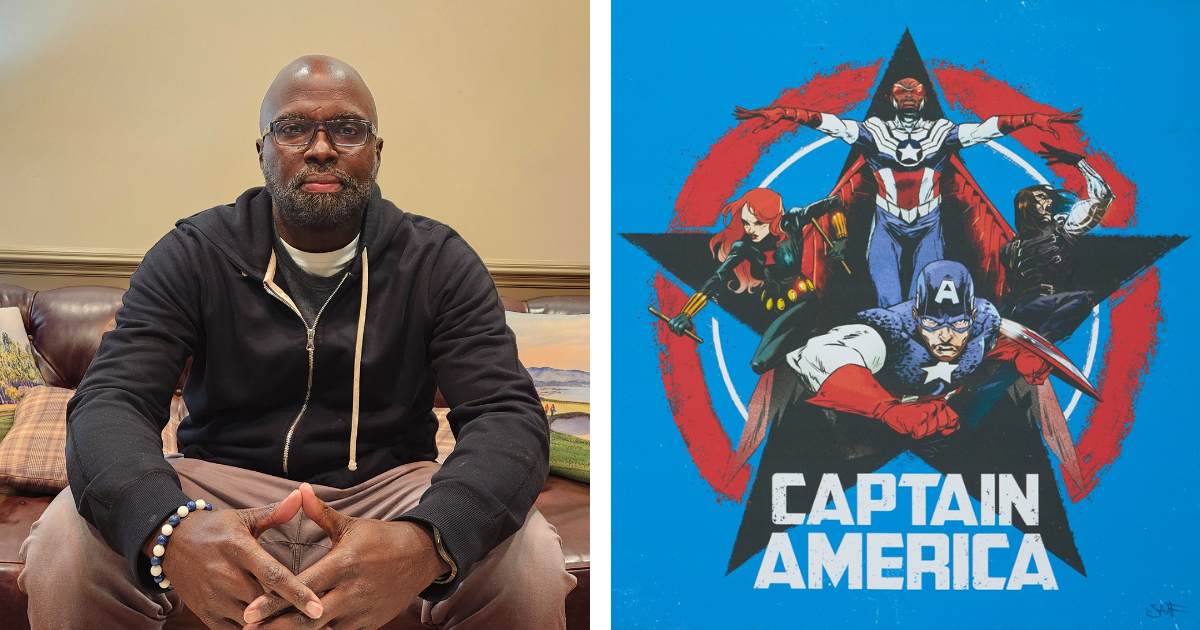
Artist Talk with Sanford Greene This Friday, June 19 at 12 p.m. - SC State Museum

From Our Friends at the SC State Museum …

Join us for this Artist Talk as Sanford Greene sits down with Ramon Jackson, Curator of Cultural History, to discuss several pieces Greene has donated to the Museum and the stories and meaning behind them.

This artist talk series highlights artists featured in From the Vault: Art from the Museum’s Collection, currently on view in Lipscomb Art Gallery. These programs will give artists the opportunity to discuss their work and offer visitors a chance to hear firsthand the ideas, experiences, and processes that fuel artists’ creative journeys.  

Each conversation will center on the artist’s practice, the themes that shape their work, and what it means to create in South Carolina today. Some talks may include mentor and mentee pairings or collaborative discussions, while others will focus on individual artists sharing their stories and perspectives. 

Above all, the series is designed to create an open and engaging space where artists and audiences can connect, ask questions, and deepen their understanding of the work on view.


About Sanford Greene

Sanford Greene is a nationally recognized illustrator and comic book artist originally from Greeleyville, S.C. Known for his work on major titles like Black Panther and Batman, Greene’s dynamic ink work and layered narratives explore culture, place and resilience.

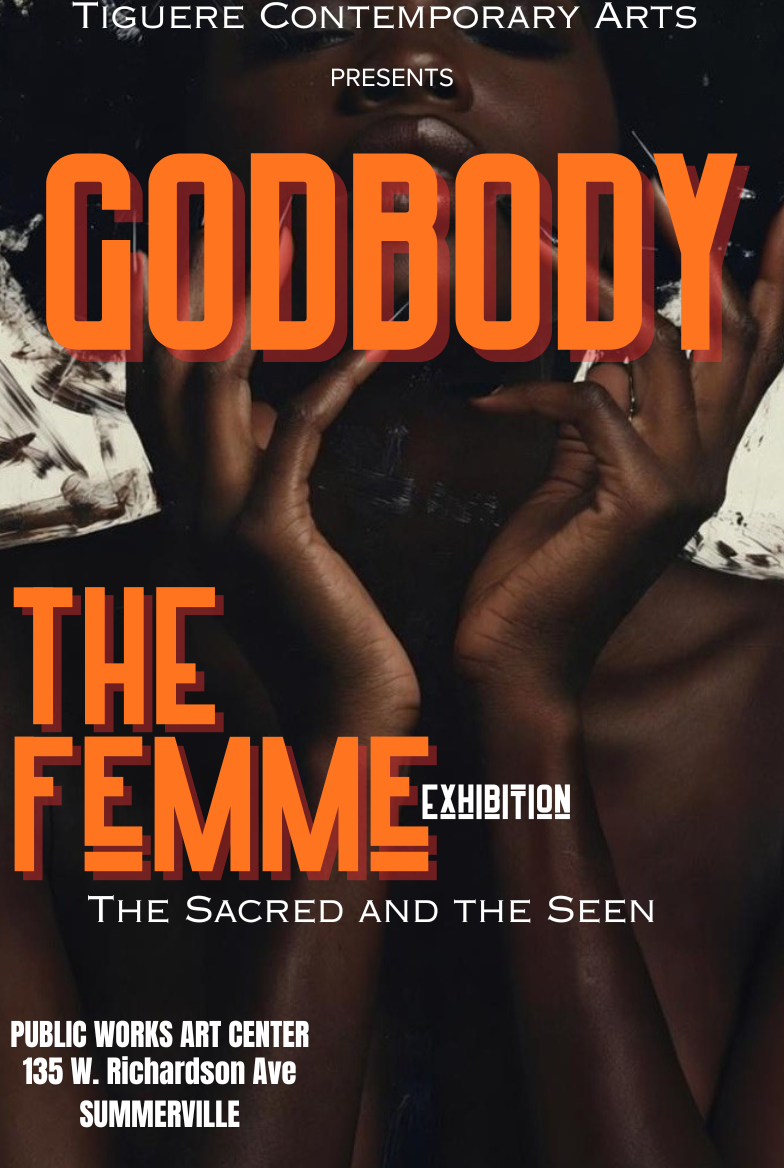
GODBODY: THE FEMME An Art Exhibition Exploring Power, Vulnerability, & the Sacred Politics of Identity

From our friend, Ty Davis, Curator of GODBODY: THE FEMME at Summerville’s Public Works Arts Center …

GODBODY: THE FEMME is a group exhibition that centers Black Women as powerful carriers of divinity and continual transformation. Through painting, mixed media, photography, and installation, this exhibition positions Black Women as active, sovereign, forces; complex, self-determined and fully in command of their own narratives. The exhibition gathers artists whose practices confront the many ways Black Women are simultaneously revered, policed, exploited, and politicized. The works move between deep tenderness and unapologetic defiance, engaging themes of gender, class, spirituality, and survival.

Firmly rooted in Black cultural thought and lived reality, GODBODY rejects any false divide between the sacred and the everyday. Here, presence itself becomes altar and archive.

Pleasure exists alongside grief, labor alongside intimacy, each asserting the undeniable right to self-authorship in a world that so often tries to deny it.

“GODBODY: THE FEMME is about reclaiming full authority over how Black Women are seen, valued, remembered,” says artist and curator Ty Davis. “It asks what becomes possible when Black Women are placed at the center.”

This exhibition continues Davis’s curatorial commitment to work that challenges social structures while remaining deeply personal, placing equal weight on clarity, material honesty, and rigorous conceptual depth.

Featured Artists

Kela, Samira, Kanish, Kalah, Jada, Tiana, Nathalie, Kei, Denise, Antonette, Christine, Skigh, Desiree, and Barinwa

GODBODY: THE FEMME

May 20th-July 11th

Public Works Art Center, West Gallery

135 West Richardson Ave
Summerville, SC 29483

For  more information, please contact

Ty@TiguereContemporary.com

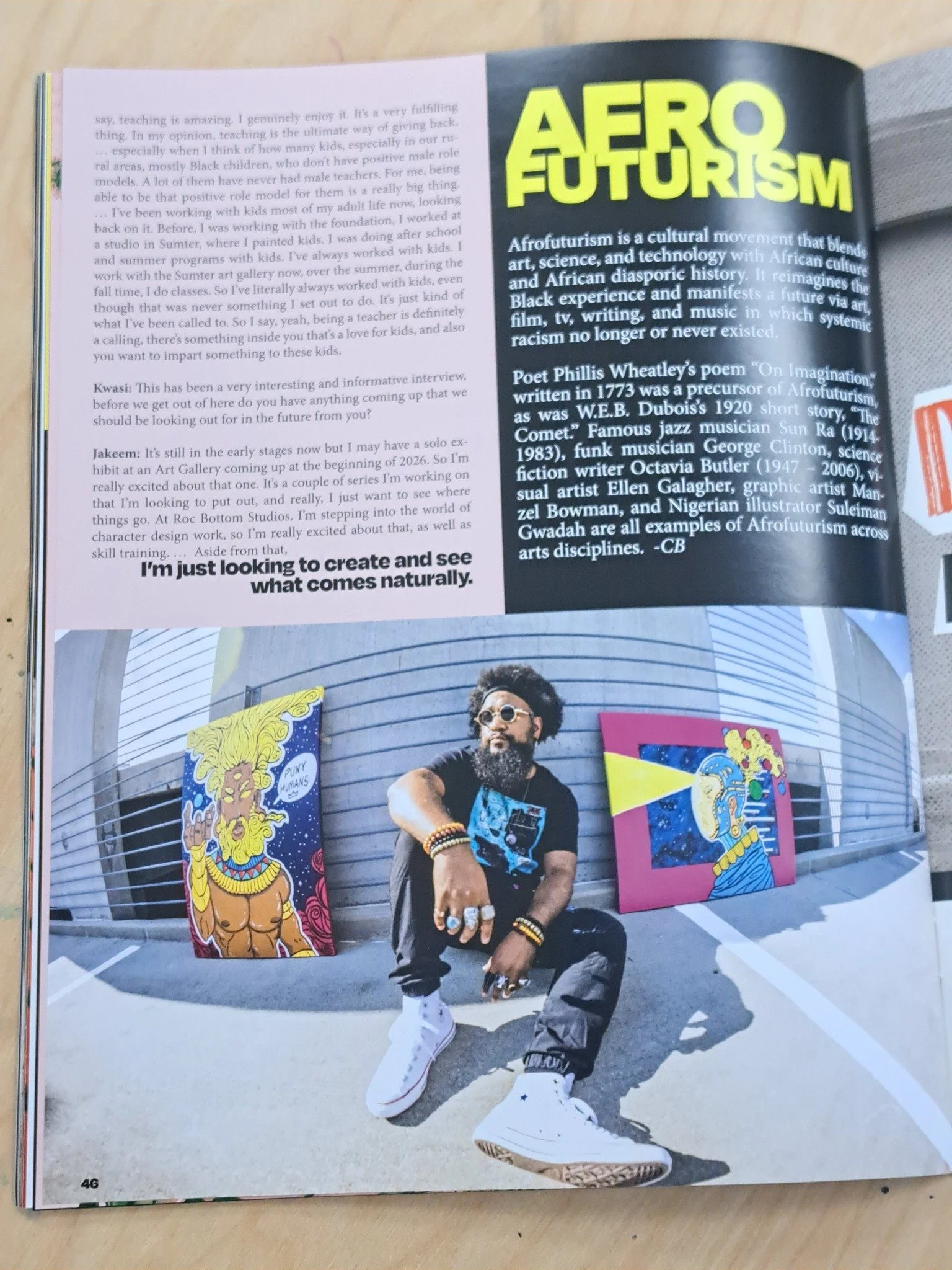
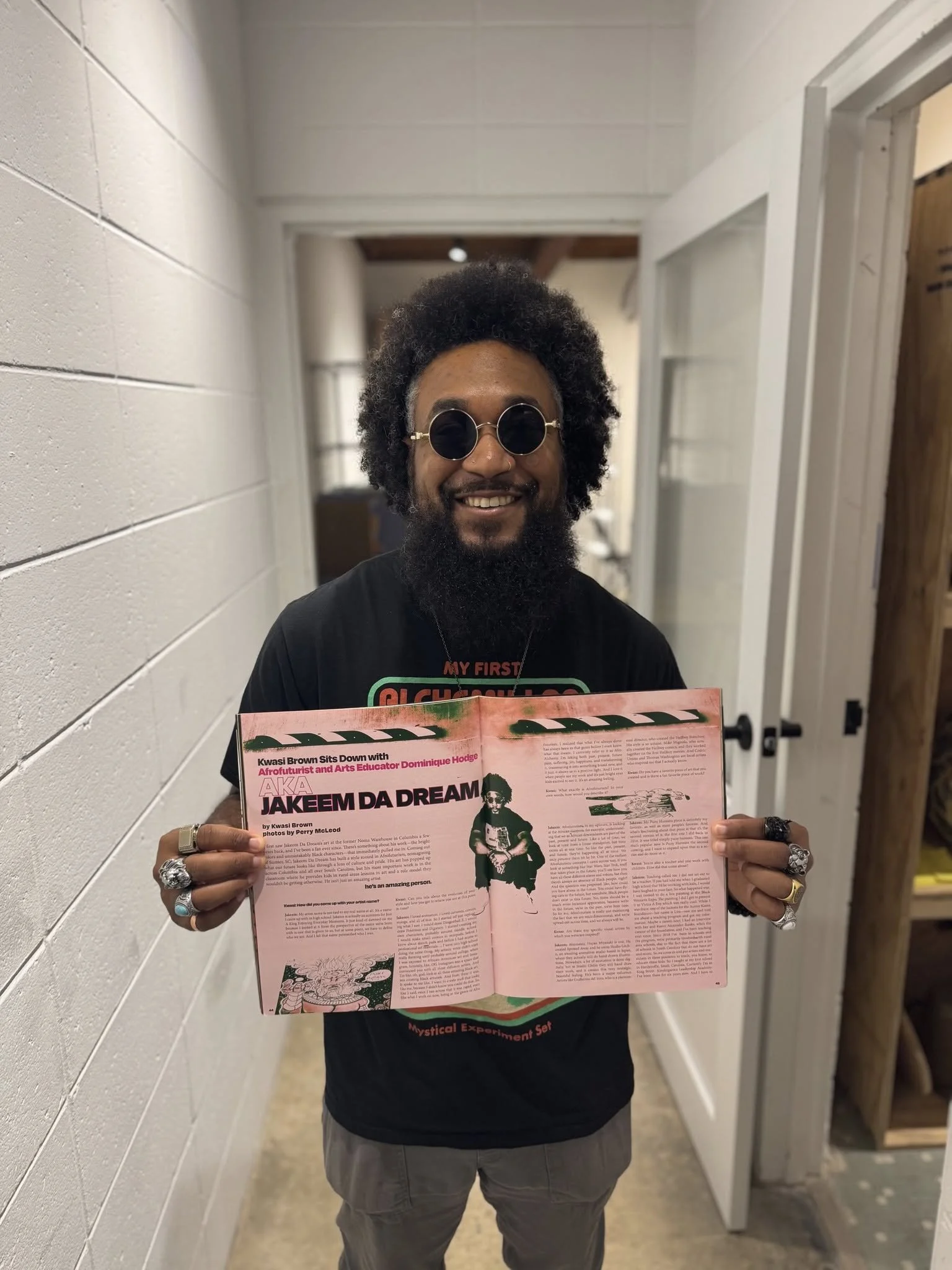
From the print issue: Kwasi Brown Sits Down with Afrofuturist and Arts Educator Dominique Hodge - AKA Jakeem Da Dream

I first saw Jakeem Da Dream’s art at the former Noma Warehouse in Columbia a few years back, and I’ve been a fan ever since. There’s something about his work—the bright colors and unmistakably Black characters—that immediately pulled me in. Coming out of Sumter, SC, Jakeem Da Dream has built a style rooted in Afrofuturism, reimagining what our future looks like through a lens of culture and pride. His art has popped up across Columbia and all over South Carolina, but his most important work is in the classroom where he provides kids in rural areas lessons in art and a role model they wouldn’t be getting otherwise. He isn’t just an amazing artist he’s an amazing person.

~~~~~

Kwasi: How did you come up with your artist name?

Jakeem: My artist name is not tied to my real name at all. It's a name I came up with in high school. Jakeem is actually an acronym for Just A King Enjoying Everyday Moments. It just kind of dawned on me because I looked at it from the perspective of the name we're born with is one that is given to us, but at some point, we have to define who we are. And I felt that name personified who I was.


Kwasi: Can you talk about the evolution of your style and how you got to where you are at this point in time?

Jakeem: I loved animation. I loved cartoons, comics, manga, and all of that. So I started off just replicating what I saw. I would draw Dragonball Z. I would draw Pokémon and Digimon. I started creating my own characters, probably around middle school. I would make small comics in notepads, before I knew about sketch pads and before I had access to professional art materials. ... I went into high school doing the same thing. My artistic voice didn't start really forming until probably around college, when I was exposed to African American art and Instagram, honestly, like, OG Instagram was a space that connected you with all these different artists. And I'm like, oh, god, look at all these amazing Black artists creating Black artwork. And from there it was, It spoke to me like, I want to create stuff that looks like me, because I didn't know you could do that. So, like I said, once I ran across that it was rapid, even like what I work on now, being in the genre of Afro futurism, I realized that what I've always done has always been in that genre before I even knew what that meant. I currently refer to it as Afro Alchemy. I'm taking both past, present, future pain, suffering, joy, happiness, and transforming it, transmuting it into something brand new, and it just, it shows us in a positive light. And I love it when people see my work and it’s just bright eyes kids excited to see it. It's an amazing feeling.

Kwasi: What exactly is Afrofuturism? In your own words, how would you describe it? 

Jakeem: Afrofuturism, in my opinion, is looking at the African diaspora, for example, understanding that we as African descendants are part of the past, present and future. Like a lot of time, we look at time from a linear standpoint, but time exists all at one time. So like the past, present, and future, they're happening all at once. We only perceive them bit by bit. One of the earliest Afrofuturistic concepts I came across was, if you look at something like Star Wars, Star Trek, stuff that takes place in the future, you'll see how you have all these different aliens and robots, but then there's always an absence of Black people, right? And the question was proposed, like, how could you have aliens in the future. You could have flying cars in the future, but somehow, Black people don't exist in this future. No, there should be a much more balanced appearance, because we're in the future, we're in the past, we're here now. So for me, Afrofuturism is really just examining the fact that we are multidimensional, and we're spread out across time, and we always will be.


Kwasi: Are there any specific visual artists by which you were/are inspired? 

Jakeem: Absolutely, Hayao Miyazaki is one. He created Spirited Away and he owns Studio Ghibli, an amazing animation studio based in Japan, where they actually still do hand drawn illustrations. Nowadays, a lot of animation is done digitally, but at Studio Ghibli they still hand draw their work, and it creates this very nostalgic, beautiful feeling. He's been a major influence. Artists like Guillermo del Toro, who is a phenomenal director, who created the Hellboy franchise. His style is so unique. Mike Mignola, who actually created the Hellboy comics, and they worked together on the first Hellboy movies. And Cedric Umoja and Thomas Washington are local artists who inspired me that I actually know.


Kwasi: Do you have a favorite piece of art that you created and is there a fan favorite piece of work? 

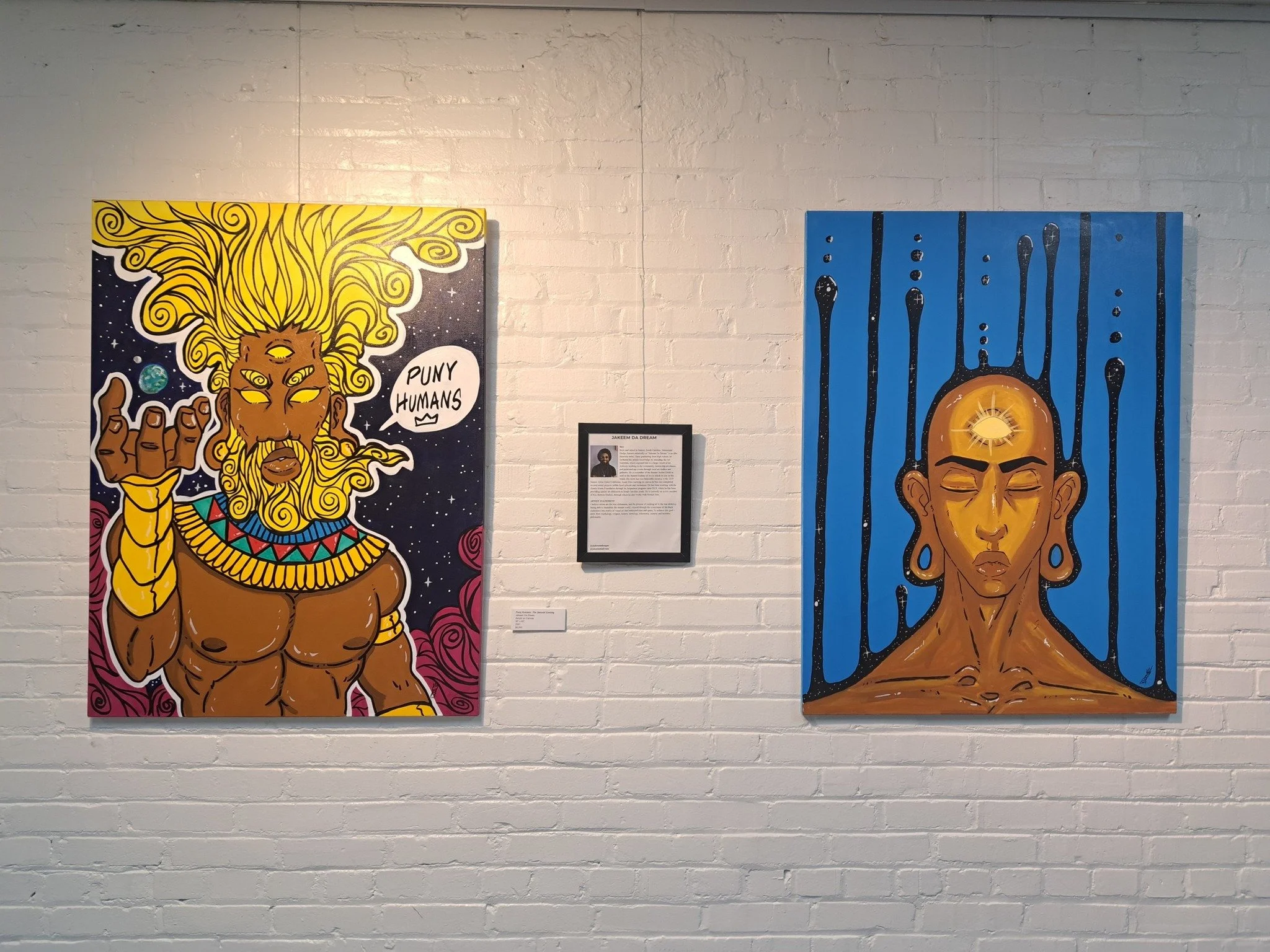
Jakeem: My Puny Humans piece is definitely my favorite, as well as most people's favorite. And what's fascinating about that piece is that it’s the second version of it, the first one I did back in 2016. It was titled simply puny humans. This one that's popular now is Puny Humans the second coming, and I want to expand upon that as a series and do more in it.  

Kwasi: You're also a teacher and you work with children. How did that come about?  

Jakeem: Teaching called me. I did not set out to be a teacher. If you had told me when I graduated high school that I'd be working with kids, I would have laughed in your face. So what happened was, I was invited to do a live painting at the Black Women’s Expo. The painting I did I got to present it to Vivica A Fox which was really cool. While I was there, one of the liaisons for the Auntie Karen foundation--her name is Lisa—saw me and told me about a teaching program and got my information. Maybe a month later, I had an interview with her and Karen Alexander Banks, who's the creator of the foundation, and I've been teaching ever since. Since 2018 I've  been in schools and the program, we're primarily involved with rural area schools, due to the fact that there are a lot of schools in South Carolina that do not have art and music. So we come in and put artists and musicians in these positions to teach, you know, to educate these kids. So I taught at my first school in Hardeeville, South Carolina. Currently I'm in King Street  Kindergarten Leadership Academy. I've been there for six years now. And I have to say, teaching is amazing. I genuinely enjoy it. It's a very fulfilling thing. In my opinion, teaching is the ultimate way of giving back, … especially when I think of how many kids, especially in our rural areas, mostly Black children, who don't have positive male role models. A lot of them have never had male teachers. For me, being able to be that positive role model for them is a really big thing. … I've been working with kids most of my adult life now, looking back on it. Before, I was working with the foundation, I worked at a studio in Sumter, where I painted kids. I was doing after school and summer programs with kids. I've always worked with kids. I work with the Sumter art gallery now, over the summer, during the fall time, I do classes. So I've literally always worked with kids, even though that was never something I set out to do. It's just kind of what I've been called to. So I say, yeah, being a teacher is definitely a calling, there's something inside you that's a love for kids, and also you want to impart something to these kids. 


Kwasi: This has been a very interesting and informative interview, before we get out of here do you have anything coming up that we should be looking out for in the future from you? 

Jakeem: It’s still in the early stages now but I may have a solo exhibit at an Art Gallery coming up at the beginning of 2026. So I'm really excited about that one. It's a couple of series I'm working on that I'm looking to put out, and really, I just want to see where things go. At Roc Bottom Studios. I'm stepping into the world of character design work, so I'm really excited about that, as well as skill training. …  Aside from that, I'm just looking to create and see what comes naturally.

Afrofuturism is a cultural movement that blends art, science, and technology with African culture and African diasporic history. It reimagines the Black experience and manifests a future via art, film, tv, writing, and music in which systemic racism no longer or never existed.


Poet Phillis Wheatley’s poem “On Imagination,” written in 1773 was a precursor of Afrofuturism, as was W.E.B. Dubois’s 1920 short story, “The Comet.” Famous jazz musician Sun Ra (1914-1983), funk musician George Clinton, science fiction writer Octavia Butler (1947 – 2006), visual artist Ellen Galagher, graphic artist Manzel Bowman, and Nigerian illustrator Suleiman Gwadah are all examples of Afrofuturism across arts disciplines. 


From the print issue -- DEGENERATE ART PROJECTS I & II

“We proudly reclaim our art—protest art in defiance of the current administration’s attempts to remove, censure, and redefine art and its purpose—"Degenerate Art” in solidarity with both historical and contemporary artists who work or have worked to maintain our first amendment rights of freedom of speech and expression.”

Degenerate Arts—Entartete Kunst—I and II

By Cindi Boiter


Sometimes you just have to say what you’re thinking. You have to get it out there, one way or another. You have to express the fire of frustration, anger, and disappointment that can rage within you, as well as those still-hanging-on, deep-rooted beliefs that it can be better. It has been better. Our country has been better and can be better again. These sensations are complex and difficult to manage for all of us.

Luckily, we have artists.

Art is the tool we humans use to attempt to reconcile our profound and complicated responses to a world that doesn’t always give us the peace we crave. The peace we once took for granted. The process of creating art, be it dance, theatre, or music, visual art, or the written word, not only soothes the artist but it helps the recipient of the art, the viewer, the reader, feel seen and heard as they wrestle with the same conflicts an unbalanced world stirs inside them. It helps the recipient to better comprehend where we are right now, as a culture, and it helps us know that they we not alone.

This is why the Jasper Project originated the Degenerate Art Project in the summer of 2025 at Stormwater Studios, and it is why we’re bringing this unique project back in January 2026 at Gemini Arts.

Degenerate Arts II offers an open call for visual artists as well as performing or written word artists who want to propose programs that they would like Jasper to help implement.

Why do we call it “degenerate art?” In his essay printed in the current issue of Jasper Magazine, professor and Jasper Magazine poetry editor Ed Madden identifies the similarities between Hitler’s purge of art that did not represent the cultural ideology he promulgated—an ideology we now recognize as fascist—and the current administration’s attempts to dictate, control, and suppress art via a “politics of culture.” As Madden writes, in July 1937, “Nazi culture warriors had searched 32 of Germany’s public museums, determined to purge them of any work they considered undesirable because they were incompatible with Nazi values.” Hitler and Goebbels called the exhibition of this “undesirable” art “Degenerate Art,” or “Entartete Kunst” and juxtaposed it against an exhibition of predominantly representative art, of which he approved, and titled “Great German Art” or Grosse Deutsche Kunstausstellung.

We proudly reclaim our art—protest art in defiance of the current administration’s attempts to remove, censure, and redefine art and its purpose—"Degenerate Art” in solidarity with both historical and contemporary artists who work or have worked to maintain our first amendment rights of freedom of speech and expression.

CALL FOR ART FOR DEGENERATE ART PROJECT II EXTENDED UNTIL MIDNIGHT SATURDAY NOVEMBER 22ND!

I’ve always maintained that we don’t fully know the history of an event or a period of time until we know how the artists interpreted it. To that end, we created the first iteration of our Degenerate Arts project to provide a concerted platform for Columbia’s artists to express their responses to our country’s current socio-political situation. We also wanted to bring our local arts community together both physically and in spirit during this challenging time in order to support and encourage one another. And we hoped to preserve for posterity the SC Midlands’ artistic interpretation of this unique and disturbing time in history.

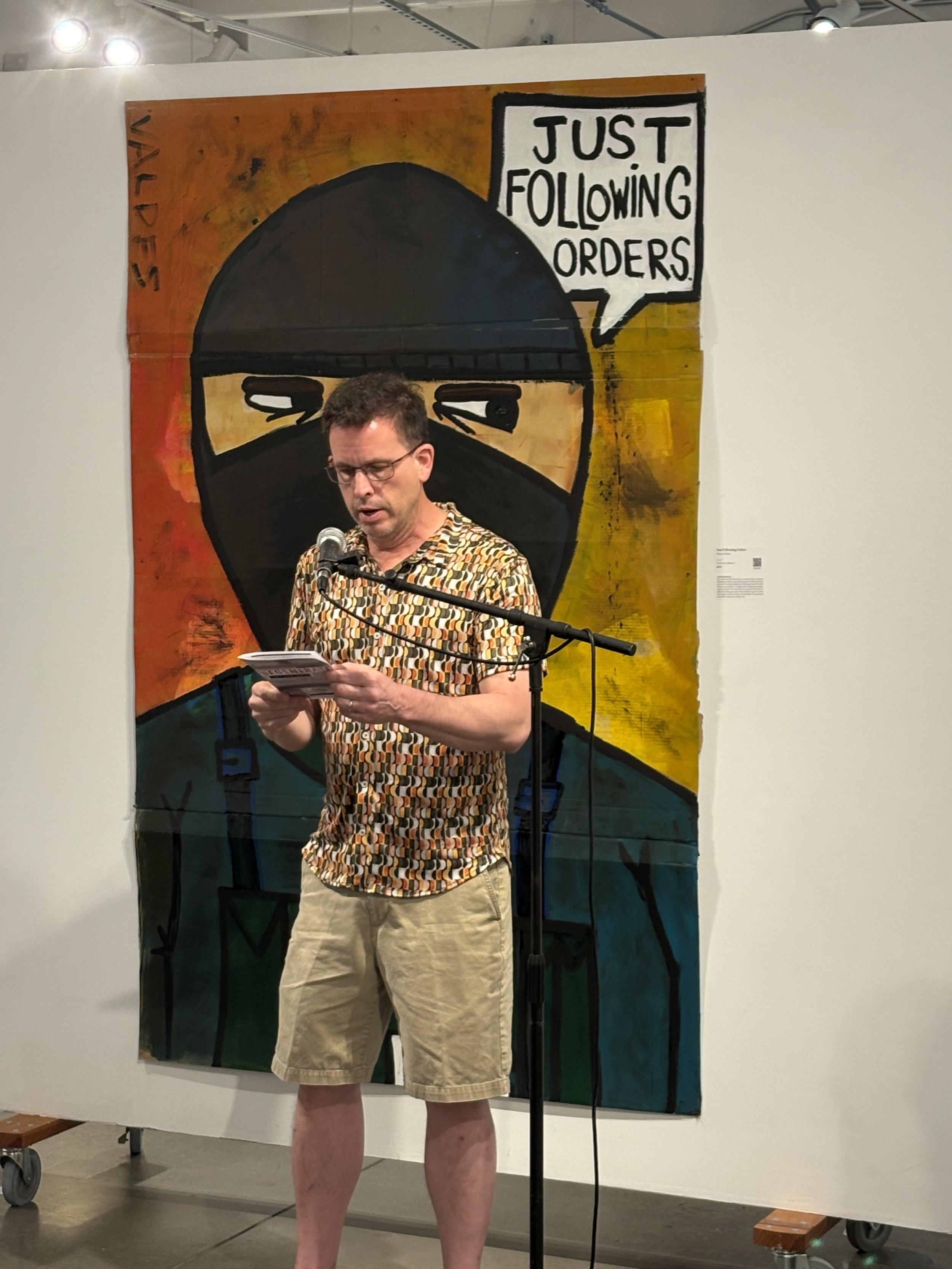
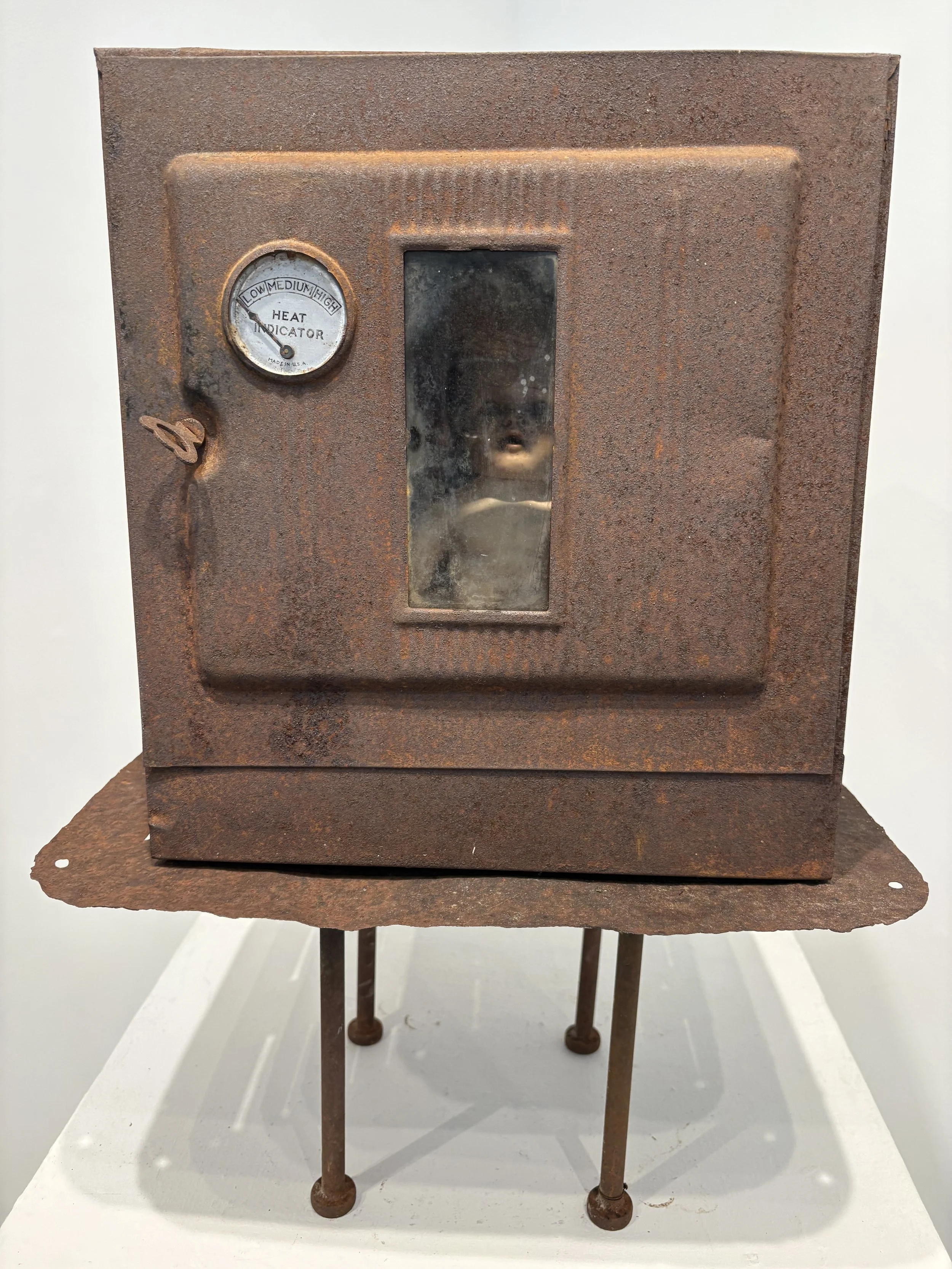
More than twenty visual artists participated in the Degenerate Arts Project in June. It was exciting to see the work, some of it satirical like Robert Airial’s cartoons of the president as a present-day Mussolini and  the same man removing the letters M and E from the word America to simply spell ME. Some was jarring and foreboding, like Eileen Blyth’s found art sculpture of a child’s old doll in a rusty oven. And some of it was incisive and incredibly current like Marius Valdes’ huge painting of a masked ICE agent with a word bubble reading “Just Following Orders.”

Pictured - poet Ed Madden stands before Marius Valdes’s painting “Just Following Orders” during a protest poetry reading in June 2025

Eileen Blyth - Artist

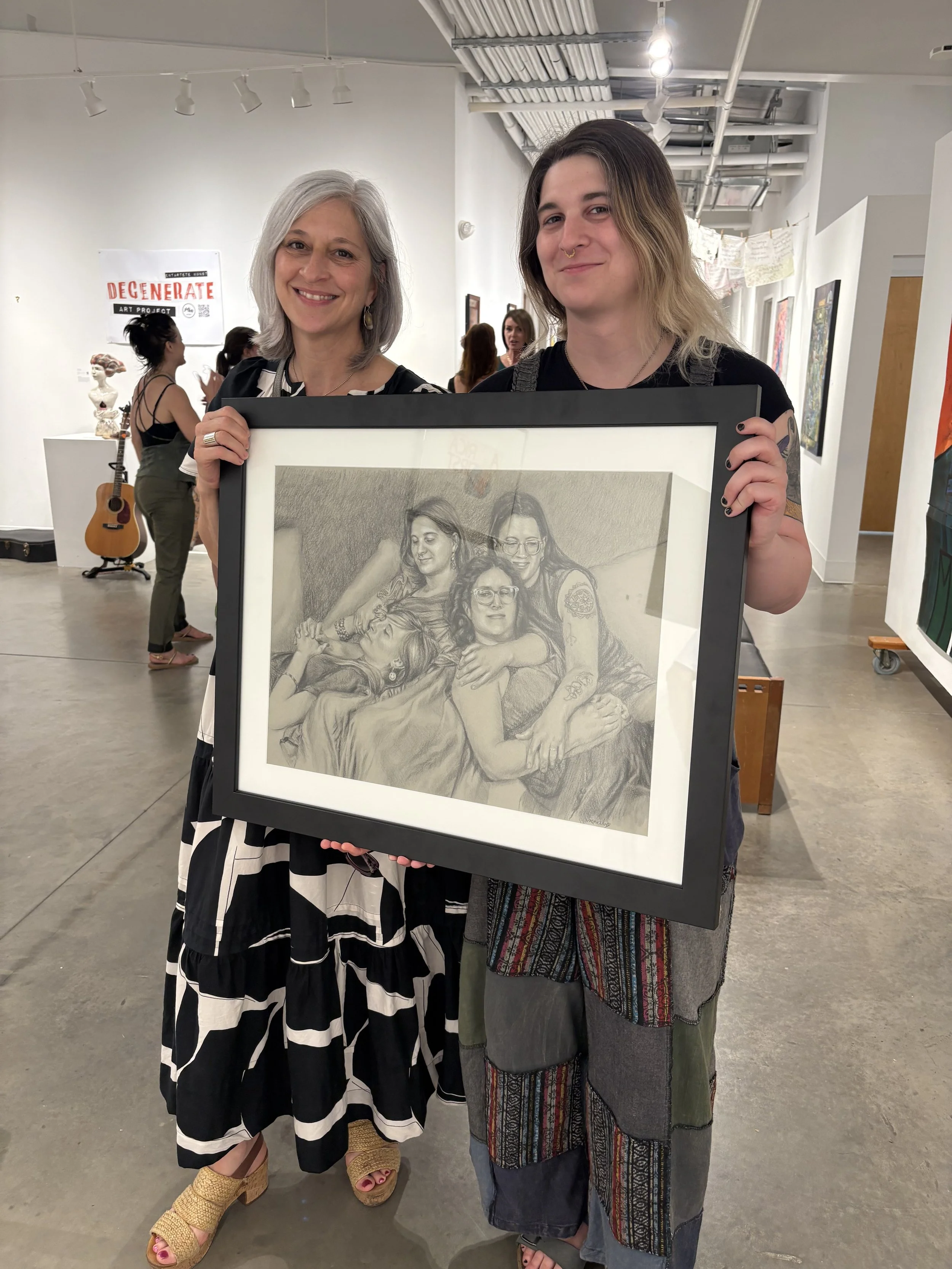
Portrait and assemblage artist Kirkland Smith says, “Being part of the Degenerate Arts project reminded me how powerful art can be in shaping the way we see one another.” She continues, “I appreciated the opportunity to portray a polyamorous group of four beautiful transgender women with quiet dignity, reclaiming a narrative that has been twisted for political reasons. The exhibition created a space for empathy in a world that is forgetting how to listen.”

Kirkland Smith pictured with her painting and her daughter at the Degenerate Art Project I in June 2025

While our first project focused on visual arts, poetry, a little music, and activism opportunities, we plan for our 2026 project to include additional arts disciples and we are excited to hear from dance, theatre, and more literary artists about what you’d like to contribute.

While the 2025 project lasted less than a week, the 2026 project will last three weeks, giving all of us ample time to be seen and heard.

And while the first project was structured as an invitational exhibition, Degenerate Arts II offers an open call for visual artists as well as performing or written word artists who want to propose programs that they would like Jasper to help implement.

For more information on how to submit a proposal for Degenerate Art II please see our CALL FOR ART at the Jasper Project website.

CALL FOR ART FOR DEGENERATE ART PROJECT II EXTENDED UNTIL MIDNIGHT SATURDAY NOVEMBER 22ND!

This article previously appeared in the fall 2025 issue of Jasper Magazine, on newsstands now.

Money Where Your Mouth Is Installation Thursday, July 31 at 6:30

“What moves men of genius, or rather what inspires their work, is not new ideas, but their obsession with the idea that what has already been said is still not enough.” - Eugene Delacroix


When Columbia-based arts advocate and influencer Jared Johnson decides to take on a project, HE TAKES THAT PROJECT ON, generously investing his wide and varied resources in bringing it to fruition. For the past few weeks Johnson has been working on the not-so-subtly titled MONEY WHERE YOUR MOUTH IS project with a group of individuals he assembled specifically to meet the needs of an artist whose work he’d like to see supported both culturally and financially. The artist is Monique Dove and a celebration of her work will be held Thursday evening, July 31, at 6:30 at 2001 Greene Street, Suite D.


According to Johnson, “The Money Where Your Mouth Is art event is a unique opportunity for Columbia, SC to change its approach to how we support local talent. This city loves the arts and we enjoy going to exhibitions and viewing art, but that love doesn’t always translate into purchasing art. The lack of sales have a direct impact on artists’ survival and ability to live and create more work/art.”

“Money Where Your Mouth Is,” Johnson continues, “aims to change the current narrative of the Columbia art scene. Yes, this event is free and open to the public and there will be free cocktails for guests. But the organizers will also be inviting and reaching out to those who appreciate art and have the means to pay for art. The goal is to work together as a community to sell art. … This event is the first of its kind and the inaugural artist is the talented Monique Dove and her wonderful work will be for sale. with 100 % of sales going to the artist and the hope and prayer is that these funds help her transition out of living in her car to and into safer housing.”

The event is free and open to the public. Drinks and light snacks will be served.

Who: Monique Dove
What: Money Where Your Mouth Is Art Event
When: July 31st, 2025
Where: 2001 Greene Street, Suite D, #ColumbiaSC


REVIEW: A New Realization of a Classic Work -- The Glass Menagerie at Workshop Theatre

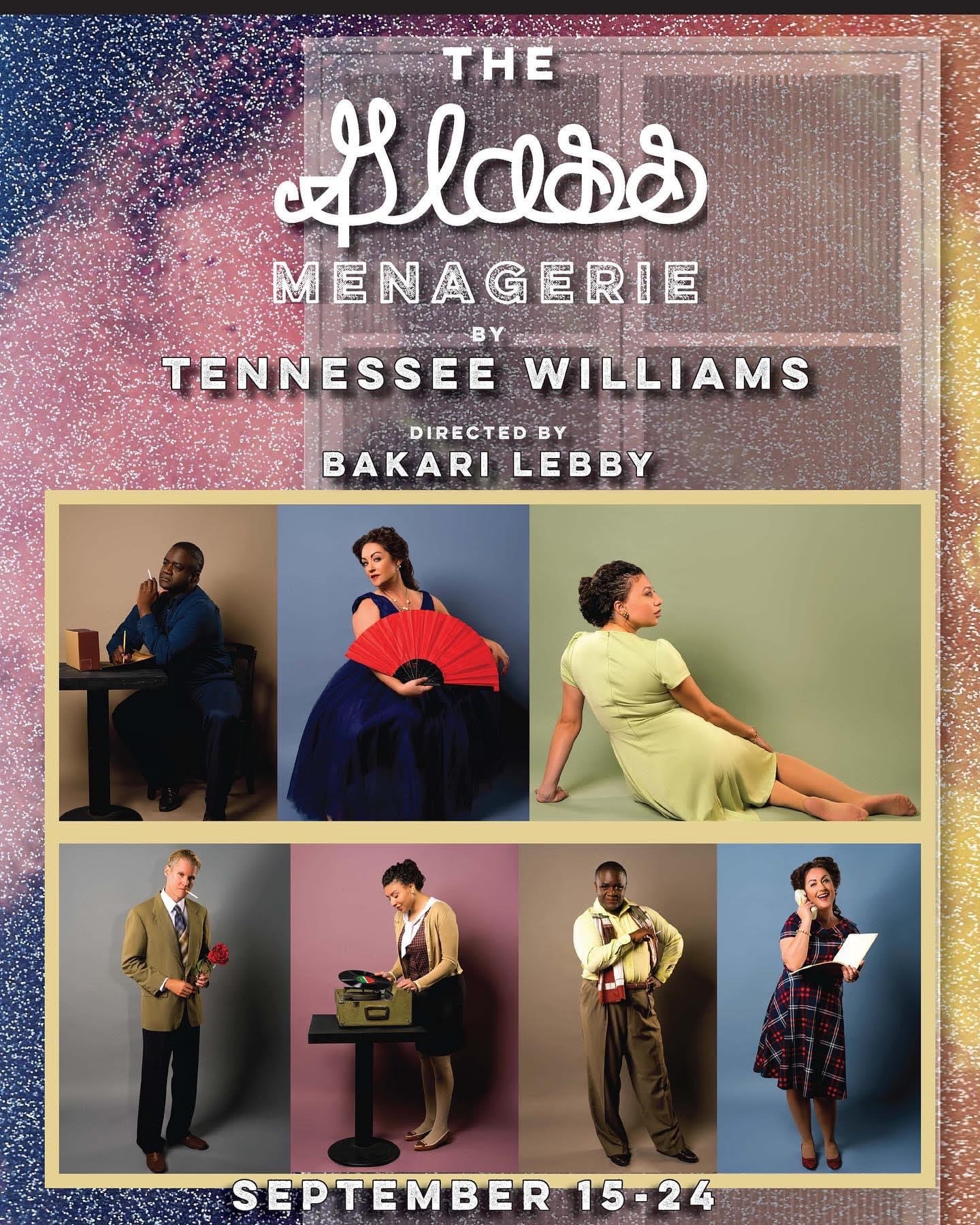
Workshop Theatre opened its 56th Season with Tennessee Williams’ The Glass Menagerie on Friday, September 15th at Cottingham Theatre at Columbia College.  As this 78-year-old play is frequently included in high school literature curricula and regularly produced at community and professional theatres around the country, it is likely that many audience members have already had an experience with this play. It continues to relevantly examine escapism, unfulfilled desire, and familial responsibility in an old American South that is in conflict with modernity and advancement. Friday’s audience seemed to enjoy the production, leaning into the intended comedy of scripted moments, while also finding levity in moments that seemed absurd to contemporary audiences. For example: one of the biggest laughs came when a character decided to put a newspaper on top of a rug in order to “catch the drippings” of a candelabra that was being used to combat a blackout. The audience seemed to scream with their laughter: “Somebody call the Fire Marshal! This guy is nuts!”

          A quick recap of the story: The Wingfields live in St. Louis, Missouri. The patriarch has long since abandoned the family, leaving them to fend for themselves. The matriarch, Amanda Wingfield, is an overbearing mother hellbent on refining her modern children and pushing them towards the life she wishes for them. Tom, her son (and the narrator of the play), is the main bread-winner of the family – working a very unsatisfying job at a shoe factory. Amanda is constantly badgering him about pretty much everything. Laura, the daughter, is an incredibly timid young woman who spends most of her time indoors with her phonograph and her animal figurines made of glass (cue title of the play). Amanda obsesses about Laura’s future, and after learning that her daughter’s anxiety has kept her from her typing classes – she insists on Tom finding a gentleman caller for his sister. He says he will, and indeed this former high-school hero, Jim O’Connor, comes to the house for dinner. Go see this production if you are not aware of what happens next. 

          In the first scene of the play, Tom Wingfield, played by Lamont Gleaton, steps onto his “safe place” – the fire escape outside of his home. Here, he tells the audience that what follows is a “memory play,” and that “nothing is real.” Thus, Williams has explicitly told the audience to expect the unexpected, while also freeing a director and production team to dream outside the constraints of slice-of-life realism and engage in the magic, idealism, romanticism and, sometimes, regret that memory can conjure. Workshop’s production, under the direction of Bakari Lebby, intentionally exercised creative freedom with their production rendering a thoughtful dive into the memory-world of the play that truly made this a 21st Century production - with mixed results.

          Workshop’s The Glass Menagerie is performed by an ensemble comprised of Columbia-based actors Lamont Gleaton (Tom Wingfield), Katie Mixon (Amanda Wingfield), Carly Siegel (Laura Wingfield), and Marshall Spann (Jim O’Connor). Contemporary productions of Williams and Arthur Miller plays are being cast more frequently with Actors of Color in the past 20 years here in America – offsetting the decades long practice of casting only white actors to portray the families that these playwrights created. The multiracial casting of Workshop’s Menagerie invites the audience to engage in a different kind of discomfort when witnessing Amanda Wingfield’s talon-tight grip on the old Southern way of life. When insisting she clean the table after a meal in Scene II, Amanda uses a racial epithet to describe her domestic services to the family – something that creates a unique tension on stage and in the audience as a white mother says this to her non-white children. The casting also begs more questioning of Amanda’s southern-fried prejudices within the context of her relationship to her now-absent husband. These questions provide good fodder for post-show conversation, but do not overshadow the author’s original intent during the performance – which focuses more on universal and poetic themes.

          As Tom Wingfield, Lamont Gleaton was taxed with a large order to play an iconic character from the American canon. Having wowed audiences this time last year with his portrayal of Lola in Workshop’s Kinky Boots, this seems to be Gleaton’s first foray into non-musical theatre. He shines in scenes with other actors – letting his cool-heeled naturalism serve the play throughout. He particularly brought control to a scene where he returns home drunk from “going to the movies” – realistically exhibiting a man on a bender who is returning home to live a lie.  Gleaton does seem to struggle with inviting the audience into the poetic monologues that connect the scenes all evening. Gleaton might gain more command as the production continues if he realizes that this story is Tom’s to tell.

          Katie Mixon in the role of Amanda Wingfield was an audience favorite – she confidently commanded the stage as her character created most of the conflict in the play. Her portrayal was theatrical, outrageously comedic – and the audience rewarded it with laughter. However, this choice makes it seem that Amanda is not only in a different world in her head – it feels as if she is in a different play. Gone is the brutality and seething criticism that the character garners on the page, leaving the stakes low for Tom’s need for exodus and freedom, and completely eradicating the possible indications that Amanda’s narcissistic abuse exacerbates her daughter’s severe insecurity and anxiety. Still, when Mixon took her final bow – she was met with audience members who were inclined to stand to show their appreciation.

          As Laura Wingfield, Carly Siegel was one of the strongest performers in the production. Siegel emphasizes the affliction of Laura’s anxiety disorder – a condition that, as we understand it today, can be a crippling disability. Though the character is traditionally portrayed with a limp or costumed to wear a leg-brace, this Laura does not. In 2023, we can totally acquiesce to the concept that this character’s timidness and fragility (a trait she sees in her glass figurines) is a product of her own anxiety which is made more severe through her mother’s scrutiny. Seigel beautifully executed the moment in the play when her “gentleman caller” accidentally causes the destruction of one of her beloved glass animals. She grows in the moment right in front of the audience – controlling her response and avoiding a sure panic attack.

          Marshall Spann was a solid choice for the prized gentleman caller, Jim O’Connor, who finally enters the play in Act II. His charming portrayal of the character makes him a magnetic interest for Laura, while also welcoming allure from Amanda (and possibly Tom?). The scene in Act II in which Spann and Siegel are left alone on stage is very rewarding, with both actors creating a welcome tension between the possibilities of the future and their ultimate hopelessness.

          Director Bakari Lebby and the design team present a very thoughtful concept of this memory play – accepting Williams’ scripted invitation to be inventive in creating the world on stage. A painted portrait of the absent father changes over the course of the play, with each following iteration becoming more and more abstract. The Wingfield home is a foundational structure that is faced with reflective material – making the set a literal glass enclosure from which the characters cannot escape. The sound design proffers a delightful mix of period-appropriate jazz that is peppered with contemporary music – drawing modern connections to the story and giving the audience permission to see how moments in the story could feel like “here and now.” Most notably, the media used in the show is instrumental in this production’s presentation of memory. Film clips that were filmed and edited specifically for this production were featured throughout the performance, giving the audience glimpses into the minds of these characters. These inventive and well-produced clips were shown on two TV’s nestled in the on-stage structure.

          Ultimately these production design elements put a unique stamp on Workshop’s production of The Glass Menagerie. One can feel that these elements were intended for a larger presentation. Perhaps more specific lighting and projection mapping on the set could have elevated these elements to a more effective level for the audience. In the end, this production seems like a laboratory or workshop for a future production. Whether it was lack of resources or technical capabilities, this production suffers from a grander vision not being realized. This production should be seen and supported, because there is quite a bit of thought and inventiveness that went into it. The stylized concepts, though they could have been pushed much farther, do present Columbia with a new realization of this classic work. Tennessee Williams continues to prove that he was a skilled auditor of the human condition, and we can still see ourselves in these characters. The Glass Menagerie runs through September 24th at Cottingham Theatre at Columbia College, and you may book tickets at workshoptheatreofsc.com.

South Carolina's Own Sergio Hudson at Columbia Museum of Art!!! Get excited!

From our Friends at Columbia Museum of Art:

The Columbia Museum of Art is pleased to announce Sergio Hudson: Focused on the Fit, an exhibition showcasing the work of iconic fashion designer and Midlands native Sergio Hudson, on view Saturday, November 18, 2023, through Sunday, June 30, 2024. Organized by the CMA in partnership with Sergio Hudson Collections, LLC and community curator Megan Pinckney Rutherford, this exhibition showcases the remarkable moments of a designer who fell in love with fashion at 5 years old while living in Ridgeway, South Carolina, and has become one of the biggest names in the industry today.
 
“Many things are happening in my life that I could only dream of — this exhibition at the CMA is one of them,” says Hudson. “I feel very lucky, and I hope my story can inspire other young men in South Carolina to believe in themselves and follow their passion.”
 
Hudson will be at the CMA on November 18 for a special opening day program — tickets go on sale to museum members on Monday, October 16.
 
“As a lifelong lover of fashion, I am thrilled to be the community curator behind this exhibition showcasing the incredible work of my dear friend, Sergio Hudson, a successful Black fashion designer that was born and bred right here in the Midlands and is well on his way to becoming the next iconic American designer,” says Rutherford. “I am honored to get to share his story with a community that inspired and supported him, and also with the next generation that I’m sure will be inspired by his familiar beginnings.” 
 
Born and raised in Ridgeway, Hudson has always taken inspiration from the strong women in his life, particularly his mother, Sheldon Hudson, who introduced him to sewing. Since launching his first eponymous label in 2014, his fresh perspective on luxury American sportswear has taken the fashion world by storm. Hudson’s high-profile clients include Beyoncé, Michelle Obama, Serena Williams, Rihanna, Kamala Harris, Kendall Jenner, Issa Rae, Rachel Brosnahan, and Keke Palmer, a close friend whom he has called a muse.
 
Hudson’s philosophy is that fashion should be for everyone and include everyone. He designs to empower the wearer and often includes a nod to the ’90s of his youth. Focused on the Fit features eight signature garments from key moments in his revolutionary career alongside more than 20 sketches and drawings exploring his career from the early days winning Bravo’s Styled to Rock in 2013 up through the present day.
 
“Sergio is an example of what it means to ignite a passion and never let go of the dream. Focused on the Fit is not only a show about fashion, but also a story of how one makes their mark in the world,” says CMA Director of Art and Learning Jackie Adams. “We are so proud to present Sergio’s work right here in his home state, and we hope this show will inspire and educate visitors about a creative visionary driven to make a difference in how we choose to show up in the world through fashion.”
 
This exhibition is organized by the Columbia Museum of Art, South Carolina, in partnership with Sergio Hudson Collections, LLC and Community Curator Megan Pinckney Rutherford.

About Megan Pinckney Rutherford
A Charleston native, Megan Pinckney left the Lowcountry to attend the University of South Carolina where she earned a degree in fashion merchandising. She began developing her social media skills during her reign as Miss South Carolina USA when she was tasked with managing the title’s account across several platforms. Since then, she’s developed Shades of Pinck, a lifestyle brand + online moniker that serves as a lady’s guide for styling yourself, your home + your travels. She believes in champagne for breakfast, that pink is a neutral, and that life is only what you make it! When Megan isn’t creating digital content for local + national brands, she’s supporting the arts community of South Carolina, encouraging her generation to become more involved in local politics, cheering on her beloved Gamecocks at Williams-Brice Stadium, and spending time with her 2-year-old son, Teagan.

Indie Artist TiffanyJ Presents a Premiere Night of Music and Film during Suicide Prevention Month

TiffanyJ is thrilled to announce her highly anticipated Album Release & Film Premiere event for "Solbird Sessions Live." This extraordinary evening promises a fusion of live music, cinematic artistry, and a unique ALL DENIM AFFAIR experience, all set to take place at Spotlight Cinemas Capital 8. 

The event will be a celebration of music, creativity, and community, showcasing the culmination of TiffanyJ's musical journey through her third album which was recorded live in concert at South Carolina ETV in May. TiffanyJ, a Columbia native, musical artist, and inspirational personality, has hopes to encourage those, like herself, dealing with mental health challenges through the power of her melodic artist expressions. This project has been successfully crowdfunded. 

Event Highlights:

  • Date: Wednesday, September 13, 2023

  • Time: 7pm

  • Venue: Spotlight Cinemas Capital 8, 201 Columbia Mall Blvd Ste 211, Columbia, SC 29223

  • Dress Code: ALL DENIM AFFAIR

  • Tickets: Starting at $10

  • Featuring:

    • Pink Carpet: Capture the essence of guests arriving in their denim best.

    • Live Music by Rod Foster & Company: Immerse yourself in live soulful, jazzy tunes that will set the perfect tone for the night.

    • Feature Film Presentation: Experience the captivating transformation of a live concert on the big screen, featuring exclusive behind-the-scenes and documentary footage. Witness the concert's power unfold before your eyes.

    • Album Merchandise: Exclusive album merchandise will be available for fans to take home a piece of the experience.


The event acknowledges support from the South Carolina Arts Commission and Every Black Girl, Inc. Solbird Entertainment invites music enthusiasts, cinema lovers, and all those seeking an extraordinary night of entertainment to join this exceptional celebration. 

Tickets are available at sslpremiere.eventbrite.com, and with limited seating, early reservation is recommended to ensure participation in this immersive musical and cinematic experience. The “Solbird Sessions Live” album will be released worldwide on all digital media outlets on Friday, September 15, 2023

Want to know more about TiffanyJ? Watch for Kevin Oliver’s feature story on her in the fall 2023 issue of Jasper Magazine!


About TiffanyJ: Indie Soul Artist TiffanyJ has one of the most unique and incomparable musical styles and sounds. Her powerful voice alone engages listeners both young and old. TiffanyJ is a singer and songwriter creating a soulful approach to melodic art that is guaranteed to uplift those who witness her gift.


Rob Shaw Gallery Reception to Feature Eclectic Private Collection and Award-Winning Photographer


On Friday, September 1, from 6 to 9 p.m., Rob Shaw Framing and Gallery will host a reception featuring the private art collection of Mary Beth Dawson-Gillis. The reception will also feature award-winning photographer Skip Willits, who will sign copies of his new book Come Walk with Me. Both Willits’s book and all works in the private collection will be for sale at the event. The gallery is at 324 State Street in West Columbia. 

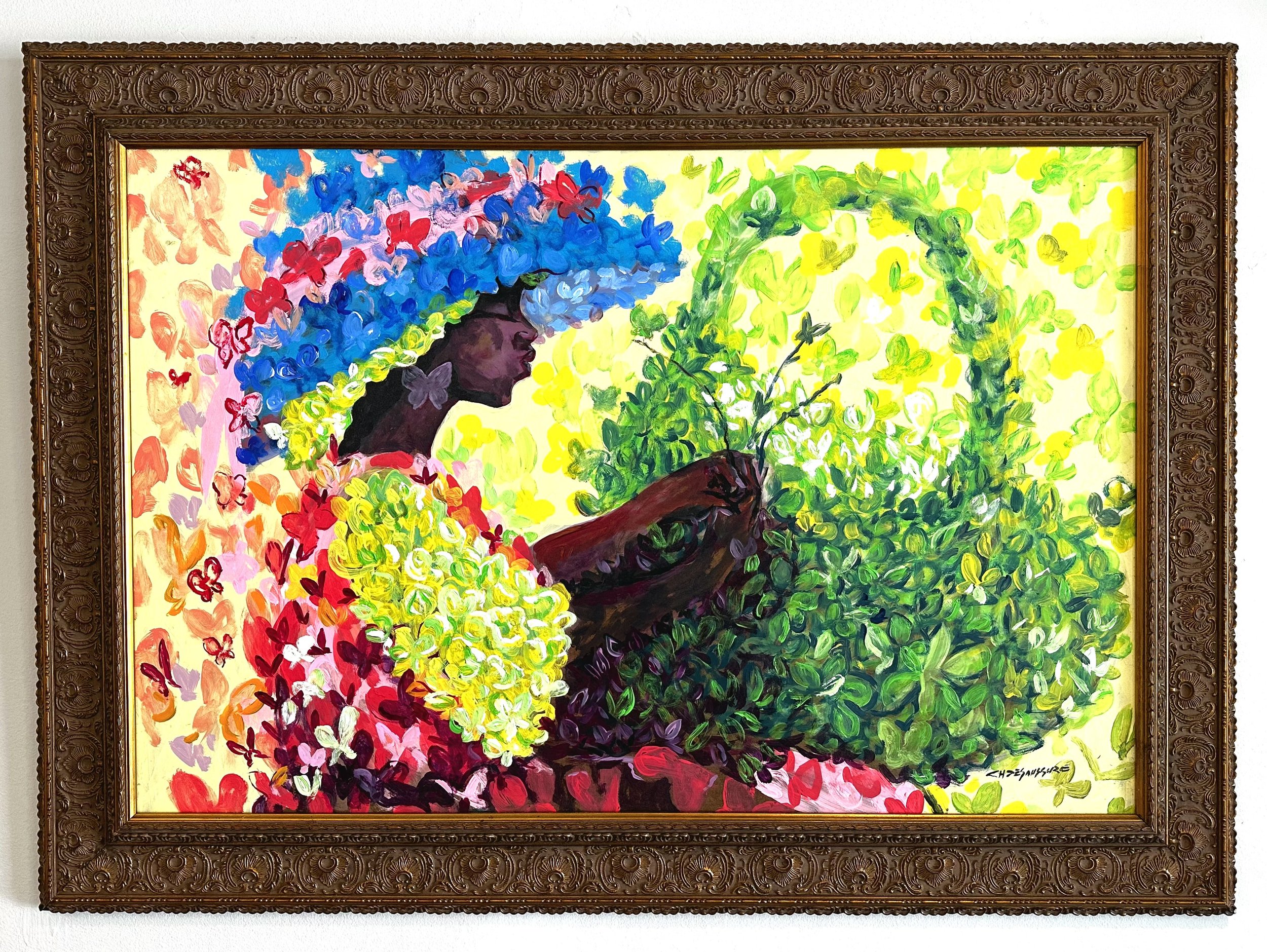
The Dawson-Gillis collection features an eclectic mix of artwork ranging from Folk Gullah paintings to representational landscapes. Featuring more than 20 artists, it includes works by Charles DeSaussure, Kip McCullough, Amiri Farris, Saundra Erickson Wright, Marshall Foster, Michel McNinch and Cami Hutchinson.

Willits is a professional photographer specializing in maritime, nature, and urban scenes, with a special emphasis on lighthouses. His work appears in books and magazines as well as in lighthouse and wildlife posters. Willits has led tours and produced multimedia presentations for the Smithsonian Institution. 

Rob Shaw Framing and Gallery is a full-service frame shop and fine art gallery. Since opening the gallery in April of 2019, Shaw has showcased many talented South Carolina artists with diverse styles. 

The gallery hosts First Friday at Rob Shaw Gallery receptions every month except July and August.

Mark Your Calendars for Jasper Board Member - Elect Keith Tolen's Aiken Exhibition and Artist Talk

Mark Your Calendars!

Columbia based artist and Jasper Project board of directors member-elect, Keith Tolen, brings a wealth of experience to this upcoming exhibition in which he experiments with using dots as the dominate paint stroke technique in CONVERSATIONS WITH THE DOT.

Along with his professional art career in the areas of illustration, photography and painting, teaching art has always been and continues to be a major part of his life. He has taught art for after school and gifted and talented programs and has been a teaching artist for South Carolina Arts Access, which works to provide arts experiences for the unique and special needs community, for almost 20 years

Join us for an Artist Talk with Keith Tolen Tuesday, October 17 at 6pm in the main gallery at Aiken Center for the Arts

Don’t Call It A Comeback: The Redemption of Shekeese Tha Beast

by Kevin Oliver


On Fat Rat Da Czar’s classic 2009 release Cold War 2, “Do Whud I Do” opens with DJ Shekeese The Beast shouting “Can you hear me out there? We back!” before Fat Rat intones, “If you knew what I knew, then you could do what I do.” The partnership between the two Columbia, South Carolina hip-hop artists made them a marquee act and flag-bearers for the genre across the southeast for nearly twenty years, before Shekeese, in his own words, “went dormant” and focused on other business pursuits. Last year, as Fat Rat Da Czar readied a new campaign of hip-hop shows and productions, he re-enlisted his former DJ to appear on stage with him again and just like that, Shekeese Tha Beast was back as hype man extraordinaire and hip-hop ambassador. In a recent conversation with Jasper, Sherard Shekeese Duvall opened up about his entry point into hip-hop, the other pursuits that have occupied his time, and how he has come full circle to reconcile his disparate, multiple pasts into a unified future with a mission to bring South Carolina hip-hop into a new generation. 

Before he was Shekeese Tha Beast, he was just a kid named Sherard, growing up in the neighborhood–but it was the formative experience of his life, he says now in retrospect.

“I grew up in Ridgewood behind Eau Claire High School, so it was a super, super black experience,” Duvall says. “The only time we saw white folks was when we went downtown.” It was a childhood surrounded by family, who shaped his worldview from an early age.

“My family was huge, and there were relatives on both my mom and dad’s sides who were into music, art, sports, politics, it was all there. I had an uncle who was political but also into Stevie Wonder, he gave me Malcolm X books when I was a kid. I had another uncle who played guitar, my grandfather played piano, so art, music, and all this stuff was all around me.”

It was a specific moment that led directly to hip-hop for Duvall, however, a purchase his mother made.

 “She bought me a 45 of LL Cool J’s ‘Candy’ and on the back side was ‘Go Cut Creator Go’ and it blew my mind, I didn’t know how they were making those sounds,” He says. “Prior to that it was seeing the video for Run DMC’s ‘Rock Box’, and I couldn’t figure it out, like was the band the DJ on top of the car? That’s what made me want to be a DJ.”

As an entry point into hip-hop, it turned out to be the right one for Duvall as high school turned into college and beyond. 

“After I got out of Columbia High, I met all the guys in Beat Junction Project, and around that time I also met Fat Rat Da Czar. The Beat Junction Project was doing its thing around Columbia, and he was doing his, and Streetside had put out a record that I was spinning at WUSC-FM.” As a student DJ, Shekeese Tha Beast was born and the show “Non-Stop Hip-Hop” put him on the airwaves weekly, featuring lots of local hip-hop talent in addition to his own DJ skills. His reputation grew, he hosted shows on Hot 103 and the Big DM, and Fat Rat came back around.

 “Fat was coming out with a mixtape, and they were looking for a DJ for it,” Duvall says. “Not sure that one ever came out, but shortly after that he went on to start doing his solo stuff and we ended up collaborating on the mixtape ‘Fat Rat Is Dead,’ which was the beginning of the whole Shekeese Tha Beast and Fat Rat Da Czar thing.”

 It was a perfect collaboration, Shekeese says, which explains the longevity of the relationship that endures to this day.

 “We have a lot in common when it comes to not only how we saw hip-hop but also how we thought about opportunities and hard work, it was just a similar perspective that clicked.”

There were multiple releases that flowed after that, from the “Cold War” series of traditional hip-hop albums with Shekeese as hype man and DJ while Fat Rat dispensed rhymes and wisdom using his instantly recognizable flow. For a time, the pair was synonymous with South Carolina hip-hop, and credit is certainly due to them for all they’ve done to promote and support the genre within the state. Then Shekeese Tha Beast went silent, at least as a performing personality. The reasons behind that dormancy were both personal and professional, he reveals.

 “Unintentionally, the separation with that part of me had to do with its popularity,” He says. “I was all over the radio, people knew me from that, from TV, doing the Love Peace and Hip Hop festival, all of that added to the notoriety and recognition.” What was happening behind the scenes, however, was that he was pursuing a professional career as a filmmaker and videographer, first with Genesis Studios and then with his own, still thriving operation as OTR Media Group. 

 “For the film stuff I felt like it needed to be different, so I was Sherard Duvall, not Shekeese Tha Beast, in that world,” He says. “When OTR came along I was still of the mind to keep things somewhat separate, because I didn’t want to enter rooms as Shekeese, I wanted to be Sherard, to be taken seriously as a business owner and not have it be like ‘Oh, the DJ is here.’”

For Duvall, the link between his hip-hop DJ persona and the work he was doing as a short film specialist and documentary filmmaker wasn’t immediately apparent, but it slowly dawned on him that he wasn’t doing anything all that much different after all.

 “Hip-hop is a storytelling form, and OTR Media Group is built around storytelling in everything we do, from media literacy to media strategy work, nonfiction, short and long form media content,” He says. “Hip-hop is incredibly dense, we’re able to use a lot of words, mesh a lot of styles together, and we’re able to connect with more people in more ways than you can with a lot of other forms of music.”

 In 2023, Sherard Shekeese Duvall, the filmmaker, husband, and father re-emerged as Shekeese Tha Beast on stage with Fat Rat Da Czar for several performances, something that Duvall says he’s enjoyed even more than he thought he would.

 “Stepping back into the Shekeese Tha Beast thing has been one of the most joyous times in my life,” he says. “It was weird when I put it down because there was an article in the paper about me quitting, people didn’t know what to call me anymore, I treated it like ‘that thing I used to do’--but I realized when I was back on stage that I had been neglecting a part of myself; I’m hip-hop through and through and it made me feel whole to be on stage again.”

 It’s the example and the role model, even mentor that he can be for the next generation that’s driving Shekeese Tha Beast now, he says–starting with his own son. 

“Until recently my son had never experienced Shekeese Tha Beast, he was too young to remember me taking him to meet KRS-One or Lauryn Hill,” Duvall says. “He’s eleven now and I took him to the show we did at the Music Farm in Charleston. Him seeing me do that might not register now, but he’s a creative, free spirit kid and it might matter later on when he’s thinking, ‘You know, it’s alright that I’m left of center, that I’m different, because my dad is super different.’” 

For now, Duvall says being “back” just means he’s whole, that his work in film and in the community will go hand-in-hand with his hip-hop persona and all that it entails.  

“I feel like Shekeese Tha Beast is back for all the right reasons,” He says. “Where I find comfort now is in being a hip-hop ambassador for South Carolina. It’s more beneficial to the culture of our state to celebrate the diversity instead of nitpicking what is and isn’t hip-hop. So, all I can tell you is that wherever South Carolina hip-hop is, that’s where you’ll find Shekeese Tha Beast.”
Jenifer Bartell's Traveling Mercy -- Launching this Fall, Preorder NOW!

“A Jennifer Bartell poem unwinds like “a Black tea-stained river water… on its way to the Atlantic.” A Jennifer Bartell poem houses the bucolic gospel of a Bluefield griot and the abstract blues of our present world. Lucille Clifton appears with tiny packages of light. A stone grows gills and lives  at the bottom of a woman-built lake. You find the poet in the mouth of the fish. Jennifer Bartell makes fabulous poems. Traveling Mercy is a fabulous debut.” –Terrance Hayes, MacArthur Genius and author of American Sonnets for my Past & Future Assassin
“Bartell’s Traveling Mercy is such an intimate history of a Black girl raised by Black women, raised by church fans and magnolia memories, dream-hymns of Black people pushing through mud and disease and held together by traditions. This rich collection of poems, by a Black girl who knows how and why to style okra seeds in her hair, spills with fat oysters and a community’s petrified pounded grace. Bartell assures she will never give us one chance to hold our breath, as we jump into this never-ending deep end of blazing life, therefore, prepare to be drenched.” –Nikky Finney, National Book Award Winner and author of Head Off & Split
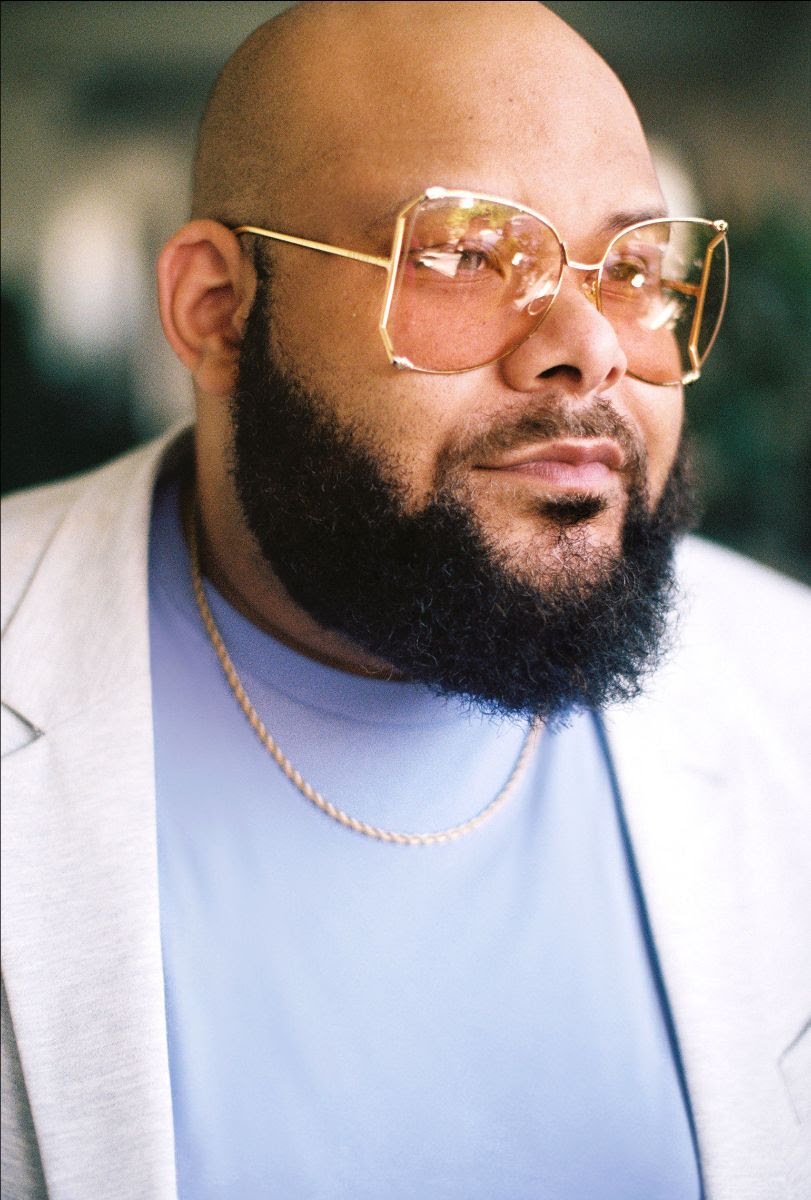

Jennifer Bartell Boykin is the Poet Laureate of the City of Columbia. She teaches at Spring Valley High School, where she was named the 2019-2020 Teacher of the Year. She was born and raised in Bluefield, a community of Johnsonville, SC. She received the MFA in Poetry from the University of South Carolina. Her debut book of poetry, Traveling Mercy, will be released in November 2023 under the name Jennifer Bartell. Her poetry has been published in Obsidian, Callaloo, pluck!, As/Us, The Raleigh Review, kinfolks: a journal of black expression, Jasper Magazine, the museum americana, Scalawag, and Kakalak, among others. An alumna of Agnes Scott College, Jennifer has fellowships from Callaloo and The Watering Hole. She is pursuing a Master of Library and Information Science at USC to become a school librarian. You can reach her online at www.jenniferbartellpoet.com.

Traveling Mercy navigates the journeys of a Black woman from rural South Carolina. Her travels transcend time as she encounters history, nature, and grief. She sits with the eldest residents before her birth, with the first ancestor who came to these shores, with her parents through their marriage, and through her own loneliness in the wake of their deaths. Planting as she harvests, this book is a lament and a love story to survival. 

Pre-order Traveling Mercy for $20.99 (USD)

This is an advanced sales price that will increase after its release

Traveling Mercy will be released on November 17, 2023. The pre-order sale price is guaranteed through September 15, 2023. Reserve your copy today!


Celebrating the 2023 Play Right Series and Everyone Involved ~ a message from Cindi

Congratulations to the Cast & Crew of the PRS 2023 Winning Play THERAPY by Lonetta Thompson!

Cast & Crew of Lonetta Thompson’s THERAPY

Emily Deck Harrill, Ric Edwards, Marilyn Matheus, Michelle Jacobs, Allison Allgood, Elena Martinez-Vidal and center front Lonetta Thompson

Forgive me if this message still reads a little giddy but we’ve just completed the culmination of the Jasper Project’s 2023 Play Right Series and it just feels so good!

Here’s a little history. I came up with the idea for the Play Right Series in 2017 as a way to promote and support original playwrighting from SC artists while at the same time gently informing members of the community about how much time, energy, talent, and WORK HOURS go into the creation of theatre.

I have this theory that one of the reasons arts (of all disciplines) are not valued as they should be is that, due to our lack of proper arts education and appreciation in schools, among other reasons, the average working South Carolinian doesn’t learn and build their worldview knowing that in addition to art being a talent, it is also work. If the arts are not a part of one’s life, many people think of art as a hobby or something only children engage in until they grow out of it. Think piano and ballet lessons. The average person may not discern the difference in hobbyists, crafters, and artists—all important parts of our culture, but also distinctly different. They may not realize how many of their fellow South Carolinians make their livings as professional artists or in one of the unique and highly skilled jobs that fall under the profession of arts administration.

When we started the Play Right Series in 2017 with our first play, Sharks and Other Lovers written by David Randall Cook and directed by Larry Hembree, I hoped that by inviting Community Producers to become a part of the process they would act as diplomats of local theatre, sharing their experiences and encouraging others to make live theatre part of their entertainment options. The plan was—and still is—that we ask Community Producers to invest $250 each in the production of a brand-new juried play by a SC playwright with their investment going to pay a cast and crew (and playwright) to workshop that play from the first table reading to a ticketed staged reading. (Some, like Bill and Jack, donate even more.) The CPs are invited to meet with the cast and crew over the course of a month or so and take part in the workshopping of the script before serving as our guests of honor at the public staged reading.

In 2022, Chad Henderson directed last year’s winning play, Moon Swallower by Colby Quick to a SRO audience. It was almost a full production of the play.

Last night, under the direction of Elena Martinez-Vidal with stage management by Emily Deck Harrill, this year’s Community Producers and generous sponsors produced the staged reading of Therapy by SC theatre artist Lonetta Thompson. The cast included Marilyn Mattheus, Allison Allgood, Michelle Jacobs, and Ric Edwards. Illustrious SC playwright and Jasper Project board of directors member Jon Tuttle oversaw the entire project for the second year in a row and all I did was bring cookies.

RIC EDWARDS

ALLISON ALLGOOD

MARILYN MATTHEUS

MICHELLE JACOBS

LONETTA THOMPSON (LEFT) AND EMILY DECK HARRILL

Some of last year’s CPs were so pleased with the project in 2022 that they came back this year –thank you to Kirkland and James Smith and to the incredibly supportive Bill Schmidt for this. New CPs and sponsors included Shannon and Steven Huffman, Jack and Dora Ann McKenzie, Betsy Newman, and Amy and Vincent Sheheen, as well as new JP board members Keith Tolen and Libby Campbell. JP board president Wade Sellers and I were CPs again, as well.

This morning, messages streamed in on the group email thread Jon initiated for ease in communication, showering each other, actors, CPs, and playwright alike with congratulations and heartfelt feedback. Keith Tolen says, “I will never watch a performance the same without thinking of the work that makes it seem effortless. Thanks to all because you made it an experience that I will not soon forget.” Kirkland Smith says, “It was a wonderful experience and I very much appreciate your openness, honesty, and talent!”
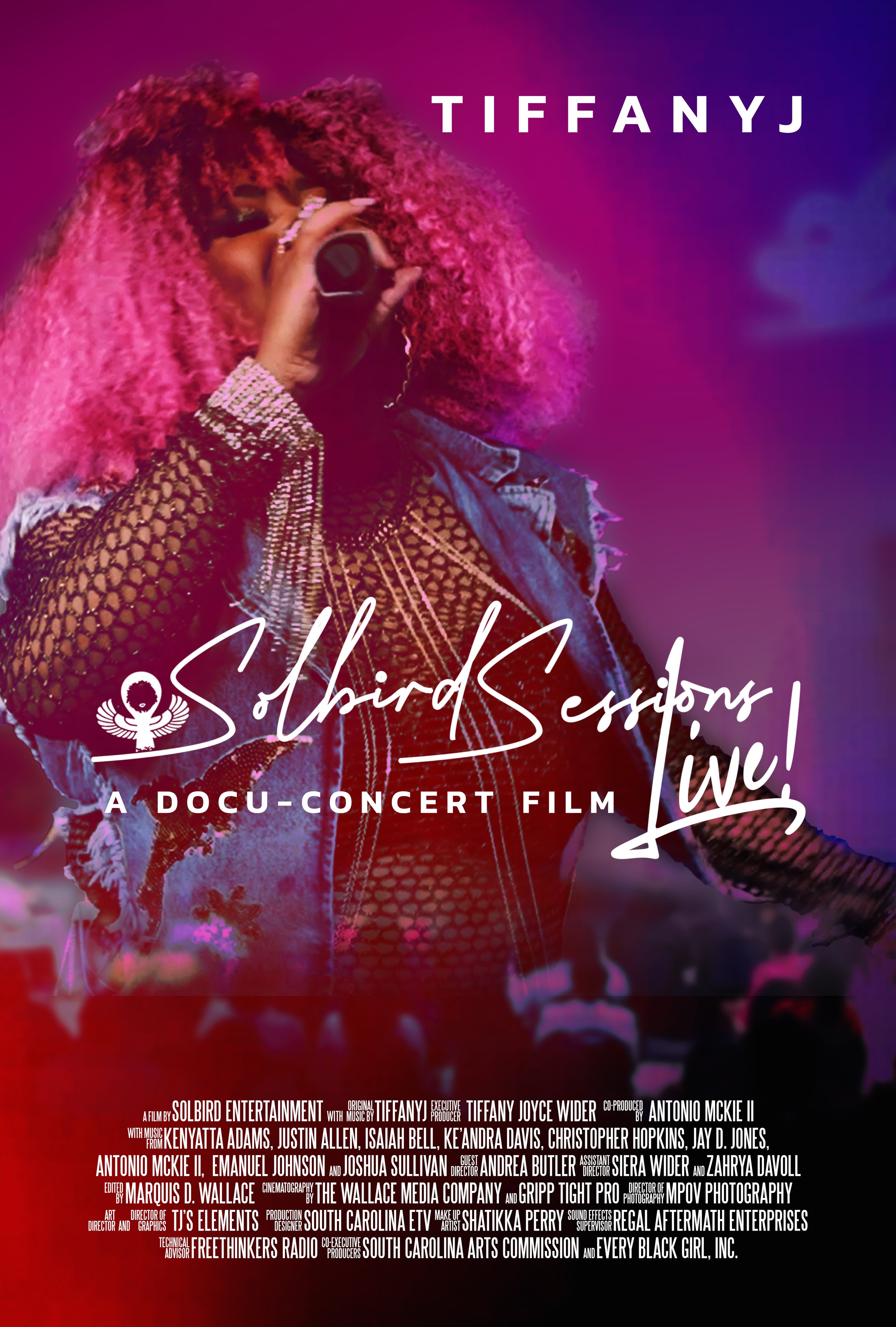
AUGUST 6, 2023 PANEL TALK-BACK

AUGUST 6, 2023 PANEL TALK-BACK

AUGUST 6, 2023 PANEL TALK-BACK

It is extremely unusual for me to use the term “I” when referencing anything the Jasper Project does. That’s because without an enthusiastically working board of directors who share the same passion that board president Wade Sellers and I have about the importance of service to our fellow artists and arts administrators, we wouldn’t be able to accomplish anything. But this time, I’m so proud of how this little seed of an idea of mine has been implemented and improved upon by the generous and talented individuals who participated in Play Right Series 2023, that I want to claim it! It’s a legacy thing, but also, the Play Right Series is Jasper at its finest. An idea becomes a mission and good people play parts small and large to fulfill that mission, making it a reality.

Congratulations to everyone involved in Play Right Series 2023. In addition to everyone already mentioned, this includes board member Bert Easter, who shared some of his beautiful items from Easter Antiques at the Red Lion for the stage set, and to Ed Madden for helping Bert haul said stuff to and from CMFA; also to Christina Xan, Libby Campbell, and Kristin Cobb for working the event; to Bekah Rice for her graphic arts skills and for laying out the book that many attendees and all CPs and sponsors took home with them; to Bob Jolley at Muddy Ford Press for donating his time and financial resources to this project; and to One Columbia and Columbia Music Festival Association for rehearsal and performance space.

Clearly, we have the village that it takes to birth new art in Columbia, SC.


Deadline for Fall Lines Extended to August 14th! Whew!

It’s not too late to submit your poetry and prose to the 2023 Fall Lines - a literary convergence journal and competition. 

Because at Jasper, we know how it feels to juggle art and life, we’re extending the deadline for submissions to 2023 Fall Lines volume X until midnight Monday, August 14th.  

This gives you two weekends to create a poem or some flash fiction, or to finish and polish that short story you’ve been building in your mind, if not on the screen or paper.

Don’t forget that this year we’re offering Three Prizes! 

The Saluda River Prize for Poetry and the Broad River Prize for Prose, sponsored by the Friends of the Richland Library, as well as the Combahee River Prize for South Carolina writer of color in either poetry or prose, sponsored by the SC Academy of Authors.


So relax. You have plenty of time to burnish your words and send them on to Jasper. 

We can’t wait to read what you’ve written!

SC Academy of Authors Sponsors Jasper's Combahee Prize for a SC Writer of Color in this year's Fall Lines

The Jasper Project is delighted to announce that the South Carolina Academy of Authors will be the sponsor of the 2023 Combahee Prize for a SC writer of color in this year’s Fall Lines – a literary convergence journal.

Founded in 1986, the South Carolina Academy of Authors (SCAA) is a nonprofit organization which recognizes distinguished South Carolina writers, living and deceased, through induction into the Academy. It also supports developing writers with its Coker Fellowships and Student Prizes in Poetry and Short Fiction. 

"The SCAA is very pleased to join with The Jasper Project in supporting the Combahee River Prize,” says Marybeth Evans, chairman of its Board of Governors. “The Academy is dedicated to nurturing and supporting South Carolina’s literary talent. It deeply values the multicultural diversity displayed in the work of all the extraordinary writers in our state."

The SC Academy of Authors joins the Friends of Richland Library in sponsoring these three prizes: the Broad River Prize for Prose, the Saluda River Prize for Poetry, and the Combahee River Prize for a SC Writer of Color in Poetry or Prose. Each prize offers $250 cash and publication in Fall Lines - a literary convergence, volume X.

The deadline for submitting your work for consideration in this year’s Fall Lines - a literary convergence is July 31, 2023.

Submit to Fall Lines volume X here.