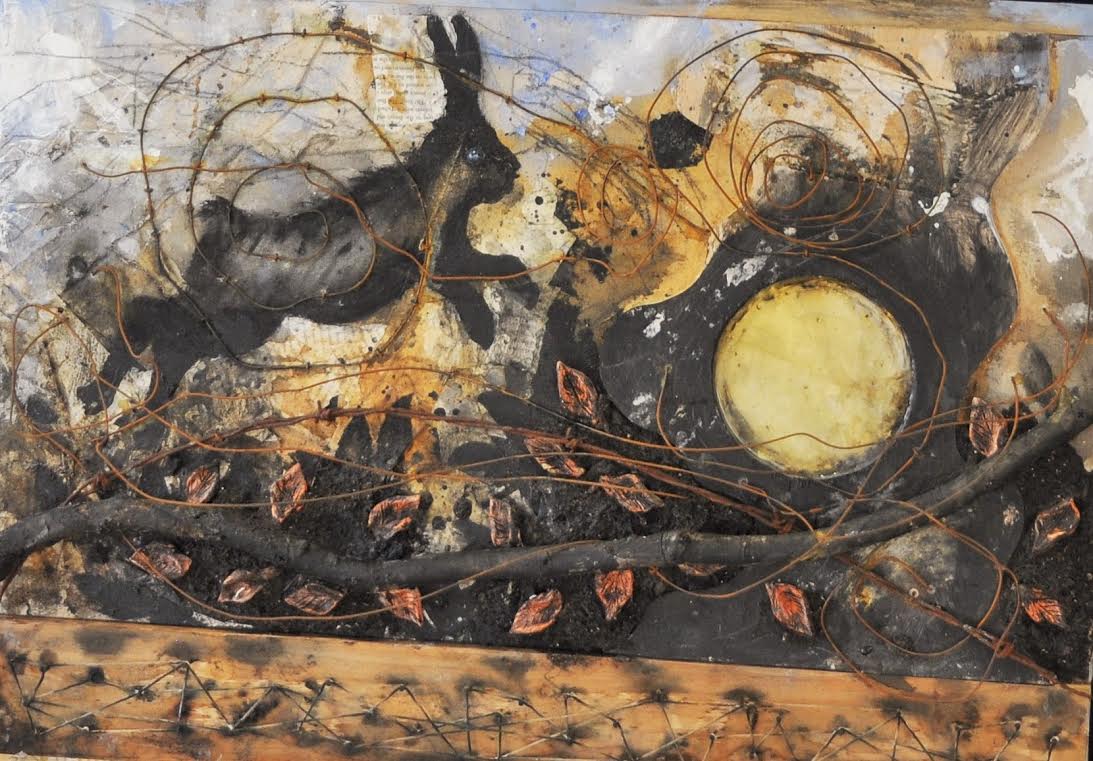
Superchunk Headlines Columbia’s Jam Room Music Festival

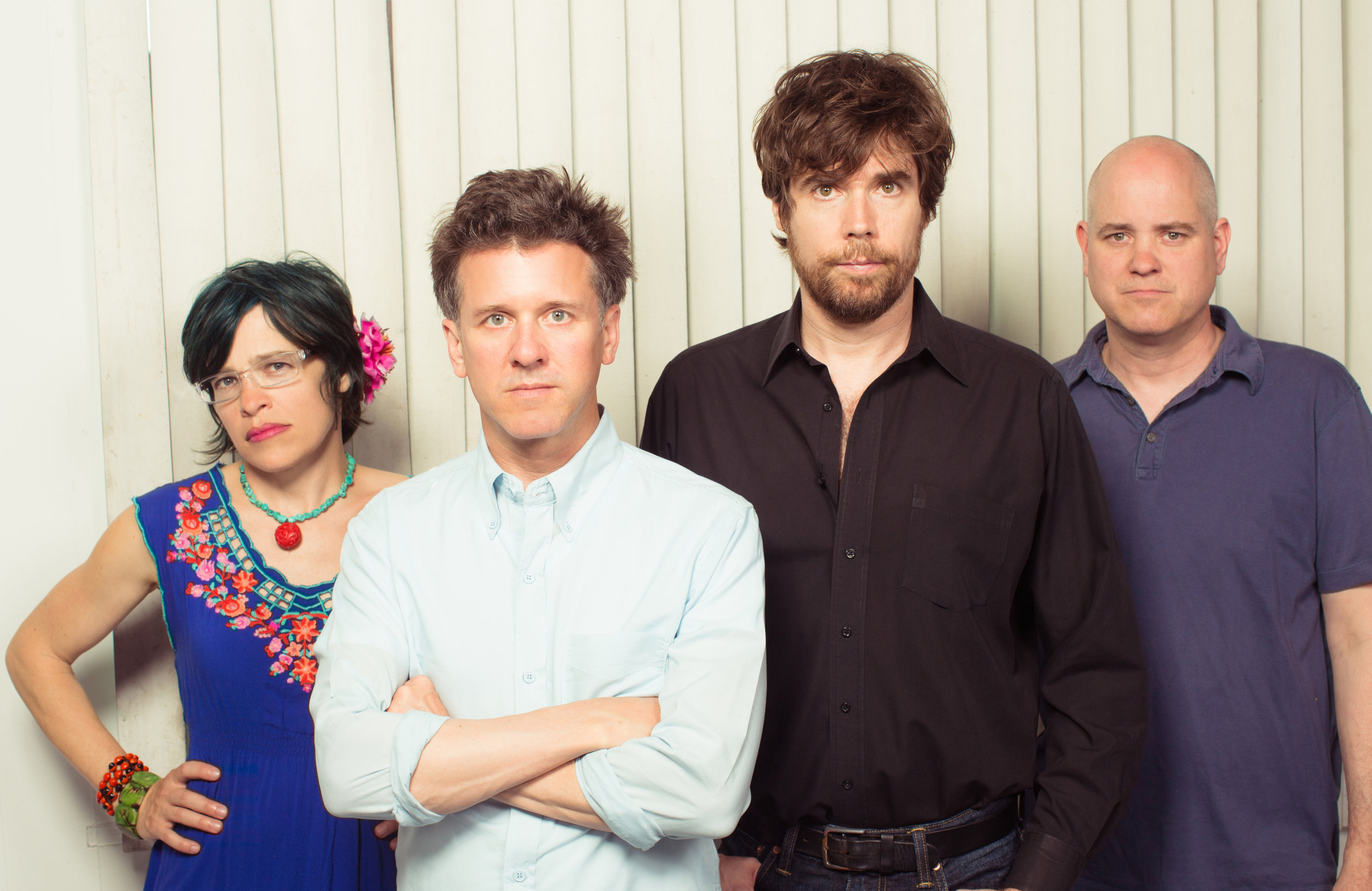
Superchunk

October 11 festival brings 12 bands to Main and Hampton

From amped-up, power pop and gospel to banjo metal and dirty guitar, the third annual Jam Room Music Festival is bringing 12 bands, two stages and an all-around street party to downtown Columbia on October 11.
The festival at Main and Hampton streets in Downtown Columbia, kicks off at noon on October 11. In addition to a diverse musical lineup, the festival features various food vendors, craft beer and a children’s area on Boyd Plaza in front of the Columbia Museum of Art.
The eclectic musical lineup is headlined by Superchunk. Since releasing their first 7-inch in 1989, the  Chapel Hill-based quartet Superchunk has run the gamut of milestone albums: early punk rock stompers, polished mid-career masterpieces, and lush, adventurous curveballs. After 10 albums, Pitchfork says, “Superchunk’s best songs have always been the spastic ones…[frontman Mac] McCaughan’s nasal yowl can’t help being anthemic.”
Other bands joining the lineup include:
•   Southern Culture on the Skids, best described by The Echo: “Long the bards of downward mobility, Southern Culture on the Skids have always embodied a sleazy, raucous, good-natured, good-time take on the culture of the South.” •  The Love Language, a small army of collaborators led by Stuart McLamb making music that is gorgeous and unashamedly fun. •  Rookie says, “Listening to Adia Victoria’s haunting Southern Gothic tales is like being dropped right into a Tennessee Williams play, but one that’s been updated for right now. “ While currently based in Nashville, Victoria is a native of Spartanburg, SC. •  Keath Mead, a local singer-songwriter of “pop slightly off kilter with a side of fuzzy and buzzy.” [Chunky Glasses] •  Shehehe, purveyors of  “new American jet rock” that Flagpole says inhabits “…the camp first established by The Ramones, The Stooges and The Runaways.” •  E.T. Anderson, a local singer-songwriter readying his first release. Other previously announced bands include: •  Nashville-based band, Leagues. Named in the 10 best acts of SXSW in 2013 by Paste Magazine, Leagues displays a penchant for memorable, anthemic lyrics and a mix of dirty guitar tones with catchy, indie-pop harmonies. •  The Defibulators will join the lineup showing off their eclectic mix of musical styles that push the boundaries of country music. •  The Whisky Gentry’s latest album Holly Grove, infuses elements of country, bluegrass, folk, rock, and punk with a mix of poppy and poignant lyrics, fiery vocals, honesty, edginess, and entertainment. •  Megan Jean and the KFB will bring their brand of washboard and banjo metal from 1927. •  The Reverend Matthew Mickens and the New Highway Travelers, a local high energy gospel group, will open the show.

USC Symphony Orchestra opens the season with the music of Russia

Professor of Conducting / Violin / Ira McKissick Koger Professor of Fine Arts School of Music Zuill Bailey, among the most sought after cellists today, has been praised for his "virtuoso technique, strong, richly expressive tone and bold, individual manner of playing" by Gramophone Magazine. Bailey will play Sergei Prokofiev’s Sinfonia Concertante for cello and orchestra on the season opening Russian Extravaganza! concert.


The three movements of the work are expansive and diverse with a wide variety of themes and speeds that demand a cellist of exceptional technique and musicality. Also known as the Symphony Concerto for Cello and Orchestra, it is widely viewed as one of the most challenging works in the entire cello repertoire and is complex in its relationship between orchestra and soloist.


The piece is a departure from the concerto tradition; instead of the typical fast-slow-fast scheme, the central allegro giusto is the dominant movement and one of the longest movements ever written by Prokofiev. The outer movements are slow, and the central movement, in contrast, is quick and scherzo-like, filled with difficult technical gymnastics for the solo cello. The cello is called upon to make use of its entire range, from the deepest bass register to tenuous violin-like sounds, and shows off an entire gamut of techniques such as spiccato (bouncing bow), rapid alternations between arco (bowed) and pizzicato (plucked), and complicated double-stopping (playing two notes simultaneously).


Prokofiev composed the first sketches while in Paris during the summer of 1933. The unsuccessful premiere of the completed cello concerto, in which the soloist had difficulty with the work, took place in November 1938 in Moscow. Prokofiev revised the piece and the revised version was performed in 1940 in the United States. But it was not until seven years later that Prokofiev was to hear a successful performance by one of the greatest cellists of all time, Mstislav Rostropovich. Rostropovich and Prokofiev spent the summers of 1950-1952 recasting the work in its definitive form and it premiered in February 1952 with Rostropovich performing the solo part.


The USC Symphony Orchestra will also play one of Pyotr Tchaikovsky’s most joyous compositions at the September concert, Symphony No. 2 in C minor, in which the composer uses Ukranian folk songs to great effect. The critic Nikolay Kashkin coined the work the  “Little Russian” for the folk tunes from the Ukraine region, then colloquially known as Little Russia.

The orchestration of the Symphony was begun in September 1872 while the composer was in Moscow. In December of that year the composer wrote to his father, "I've been slaving over my new symphony, which is now, thank God, finished....”

In Tchaikovsky's letters to his younger brother Modest he wrote, "…This work of genius (as Nikolay Dmitriyevich calls my symphony) is near to completion, and as soon as the parts are ready it will be performed. It seems to me that this is my best work insofar as perfection of form is concerned—not normally my highest virtue."

The Second Symphony was performed for the first time in Moscow at the seventh Russian Musical Society concert in January 1873. Tchaikovsky shared his impressions of the concert with his father, "My symphony was performed here last week with great success; there were many calls for me and bursts of applause. The success was so great that it will be played again at the tenth symphony concert, for which they are already taking subscriptions to present me with a gift."

Tchaikovsky told his brother in February 1873, "When I was in Petersburg I played the finale one evening at Rimsky-Korsakov's, and the whole company almost tore me to pieces with rapture…."

Despite its success, Tchaikovsky revised the work heavily eight years later. Following its more extensive revisions in December 1879 and January 1880, the reworked Second Symphony was performed in St. Petersburg to great acclaim.


Purchase Tickets

Save with a season subscription (7 concerts) and enjoy the best seats in the house: $150 general public; $110 senior citizens, USC faculty and staff; $45 students. Single concert tickets are $30 general public; $25 senior citizens, USC faculty and staff; $8 students. Capitol Tickets: 803-251-2222 or Koger Box Office, corner of Greene and Park Streets (M-F 9 a.m. to 5 p.m.) or online at capitoltickets.com.


About the USC Symphony Orchestra

The University of South Carolina’s premier orchestra ensemble, led by acclaimed music director Donald Portnoy, receives accolades for its fine performances. World-renowned guest artists join the ensemble throughout the year to bring you a stirring seven-concert season with music by the most dynamic composers.

Sondheim’s “Follies” presented in concert Friday at Town Theatre (Pt. 2) - a guest blog by Charlie Goodrich

  Yvonne DeCarlo in "Follies" on Broadway

(In Part 1, Charlie Goodrich discussed his desire for years to produce Stephen Sondheim's Follies live on stage. Here he continues with the casting process.)

I now had 5 more major roles to cast among the “Present Day” characters: Roscoe, Ben, Phyllis, Vincent, and Vanessa.  Several months back, I had approached Jeremy Buzzard about being my musical director.  Buzzard, a brilliantly talented operatic singer, had appeared with me in Les Mis as the Bishop of Digne.  Jeremy enthusiastically agreed.  When it came time to find an “aging” tenor to portray Roscoe, the singer that opens the show with “Beautiful Girls,” it dawned on me that I had Jeremy already involved, and could make use of his gorgeous vocals, despite the fact that he is 40 years too young to play Roscoe.  With a little aging up though, he would be perfect, and Jeremy gladly agreed.  I was having a hard time figuring out whom to cast as the cool and sophisticated couple, Ben and Phyllis.  In my mind, I had 2 great candidates, but they are in their 30’s, not 50’s.  I finally realized, just as with casting Jeremy, that age is only a number, and looks can be adjusted to suit the part.  For Phyllis, I needed an actress that possessed poise, class, a beautiful singing voice, and strong dancing skills.  Phyllis not only taps in “Who’s That Woman,” but also has a tour de force dance solo in “The Story of Lucy and Jessie.”  I approached my own sister Rebecca Seezen, recently seen as Fantine in Les Mis, to take on the part, and she accepted.  For Ben, I needed an actor that is tall, attractive, and intelligent.  I worked with such an actor in Les Mis, Bryan Meyers, who I found to be all of those things, and to possess a beautiful voice.  Bryan enthusiastically took on the part, his first major lead in a theatrical production.  Awesomely enough, he found out last week that he will be starring as Curly in Town’s season opener, Oklahoma, and he joked that I was his talent scout.

Finally, I needed two ballroom dancers to play Vincent and Vanessa, and dance the beautiful “Bolero D’Amour.”  The number, which originated in the first production, has since been cut from most subsequent productions and deemed unnecessary to the plot.  I disagreed.  I find the beautiful dancing embodied by these characters to be a wonderful addition to a score made up primarily of emotional ballads.  My go-to for Vincent was Tracy Steele, who has choreographed me in several productions, and has the perfect sophistication and grace needed for the role. He also is an instructor at Columbia’s Ballroom Company.  He not only agreed to dance the role of Vincent, but to also choreograph the number. For the role of Vanessa, I thought of my friend and frequent director and costar, Jamie Carr Harrington.  I remembered Jamie stating that she enjoys dancing immensely and unfortunately does not have the chance to do so often.  She told me, “To me, dancing is fun because it is freeing.”  I agree with her 100 % and jumped on the opportunity to get her back on the dance floor.  With both of them cast, I was elated and excited to see this dance come together.   While I will touch on rehearsals and choreography in more detail in upcoming paragraphs, it is more relevant to mention the developmental process of “Bolero,” now rather than later.   I watched over a period of several Saturday mornings this summer as Tracy intricately pieced the Bolero together.  With each rehearsal, my excitement grew because this number is going to be a smash! Seeing Tracy’s choreography come to life reinforces exactly why I put this number in my production, because, as Tracy stated recently, “Dance represents a type of freedom.  It’s another language of expression used to convey emotion.  Dance is a conversation without words.”

Tracy Steele and Jamie Carr Harrington as Vincent and Vanessa

Then it came the time to cast the younger counterparts of the mentioned “Reunion Attendees.”  All of these casting choices became easy, because once again, there is an abundance of twenty-something and teenage talent in Columbia:  Richard Hahn, a local singer, would portray Young Roscoe; familiar faces from dozens of productions, Sophie Castell and William Ellis, would play Young Emily and Theodore; Erika Bryant, most noted for her portrayal of Cosette in Les Mis, agreed to play Young Solange.  Awesomely, Abigail Smith Ludwig (recently seen in Trustus’ Evil Dead: the Musical) agreed to play the younger version of her mother, Young Hattie.  Ashlyn Combs, fresh from playing Ariel in The Little Mermaid at Workshop,  would also play the younger version of her mother as Young Meredith.  She is joined in the tap dance by immensely talented teenage dancers Kimberly Porth, Zanna Mills, and Alli Reilly, who will portray Young Christine, Dee Dee, and Carlotta, respectively.  Allison Allgood (Shrek, Les Mis, and Lenny in Crimes of the Heart) will lead them as Young Stella.  Matt Wright, fresh from his performance as Donkey in Shrek and newly local ballerina Melanie Carrier, will dance the Bolero with their older counterparts as Young Vincent and Young Vanessa.  Karly Minacapelli, praised as Ellen in Miss Saigon, will beautifully accompany Mrs. Carmella Martin as Young Heidi.  Finally, Kristy O’Keefe, fresh from her performance as Tiger Lilly in Peter Pan will humorously bring to life the lyrics of “Foxtrot,” while her older counterpart sings, as Young Sandra.

Erika Bryant and Jami Steele (Young Solange and Solange) rehearse “Ah Paris” with Musical Director Jeremy Buzzard

The largest “youthful” parts however, belong to the younger versions of our four principles. Ben. Phyllis, Buddy, and Sally.  Young Ben needed the same qualities as his older counterpart, and it was easy for me to envision Anthony Chu, memorable as Bahorel and a Sailor in Les Mis, to take on the role.  Young Buddy, too, needed to be like his older counterpart, and I cast Drew Kennedy.  Drew is most noted as a local singer and guitarist, and was last seen on stage at Town in Joseph.

Drew Kennedy as Young Buddy, Andy Nyland as Buddy

For Young Sally, I fortunately got to make use of another mother daughter pair and cast Beth Allawos Olson in the part.  Beth not only resembles her mother, but perfectly brings to life the happiness and gaiety of Young Sally.  Unlike her 3 costars, Young Phyllis is the polar opposite of her older counterpart.  She is full of life, bubbly, pert, and ever hopeful.  Susie Gibbons, with whom I have worked with in Annie Get Your Gun, Les Mis, and Shrek, and who possesses a beautiful voice and amazing dance skills, was a natural choice.

Anthony Chu and Susie Gibbons                                           as  Young Ben and Young Phyllis

The last character I had to cast was neither a former Weismann performer nor a ghostly apparition, but rather a figment of Buddy’s imagination: his young mistress in Texas, Margie.  Usually in most productions of Follies, Margie is played by a member of the ensemble, and is only seen in “Buddy’s Blues.”  However, she is mentioned and addressed by Buddy in “The Right Girl.”  A great idea hit me: why not cast an actress as Margie, and have her appear out of Buddy’s imagination during the aforementioned number.  The very talented Emily Northrop agreed to portray Margie, and is sensational.

Ruth Ann Ingham and Andy Nyland as Sally and Buddy

Now that I had Follies perfectly cast, it was time to organize my plans for the production.  I made a schedule to get Jeremy working with all of the performers on their music.   Knowing how talented they all are, I knew that even Sondheim would not be too much of a challenge to their wonderful musical skills.  Dance wise, I knew that I wanted to recreate original Michael Bennett choreography/blocking for the majority of the numbers, especially in “Who’s That Woman,” and “The Story of Lucy and Jessie.”  But could I do it myself?  My only experience choreographing to date was one number, “No Time at All,” in the Pippin segment of my Damn Sweet Pajama Cabaret.  But I decided to jump in feet first and tackle the intricate Bennett choreography.  This decision would create my biggest challenge as a director/performer to date.  Luckily, the majority of it is available on YouTube.  Watching the original cast perform these dances hundreds of times, I was able to teach myself the choreography, while perfecting it in front of the mirror in the Town Theatre Green Room.

Rebecca Seezen and Susie Gibbons as Phyllis and Young Phyllis

“The Story of Lucy and Jessie,” is a complicated, quick, but exhilarating song and dance that ultimately won Alexis Smith the Tony Award for Best Actress in 1971.  The choreography that Michael Bennett gave her to work with has been unmatched since, and to me, is the only choreography that makes the number as effective as it should be.  However, for my production, instead of having Phyllis backed by a dozen chorus dancers, I am having her backed by only 2 specifically chosen males. One of them is Young Ben, who embodies the youthful personification of her husband, and represents the reason in which Phyllis fell in love.  The other is Kevin, also played by Matt Wright, who, in the libretto, is a young waiter that Phyllis fools around with at the reunion.

Rebecca Seezen and Bryan Meyers

“Who’s That Woman,” the original showstopper in the 1971 production, is perhaps, my favorite number.  Seven former chorus girls began to tap dance, and as the number increases in intensity, the ghosts of these women appear in the background upstage dancing the same dance.  In a burst of brilliance, past meets present as the number reaches a shameless climax.  As the 14 ladies finish the dance, the lights go out, and we see the seven “present day” ladies alone on stage, the ghosts having vanished.

Bryan Meyers and Ruth Ann Ingham

I found this use of past meeting present to be simply amazing, and decided to incorporate in all the numbers that I could.  Therefore, all of the “younger” characters have solos as they perform songs and dances with their older counterparts.  This illusion is seen now not just in “Who’s That Woman?” but also “Beautiful Girls,” “The Rain on the Roof,” “Ah Paris,” “Broadway Baby,” “Bolero D’Amour,” “One More Kiss,” and “Can That Boy Foxtrot.”  While “Bolero,” and “Kiss,” traditionally have always made use of this illusion, the other mentioned numbers have not, and I am excited to bring this innovation to them.  It was important to me that each actor appearing in Follies have his or her time and talent utilized as much as possible.  By doing so, all of my performers can exhibit to the audience why they are 38 of the most talented folks in Columbia.

Ethel Barrymore Colt in the original cast of "Follies"

Now that you know the background on the show, and my reasons in casting, there is nothing else for you to do but see the show! I can assure you that this is going to be a fantastic show.  My actors have worked so hard throughout the summer to present Sondheim’s classic to the Columbia audience for the first time.  Rehearsals have come together brilliantly.

Just to recap, the numbers that you will see performed are: “Beautiful Girls,” (Roscoe and Company) “Waiting for the Girls Upstairs,” (Buddy, Ben, Phyllis, Sally, Young Buddy, Young Ben, Young Phyllis, Young Sally) “The Rain on the Roof,” (Emily and Theodore; Young Emily and Young Theodore) “Ah Paris,” (Solange and Young Solange) “Broadway Baby,” (Hattie and Young Hattie) “The Road You Didn’t Take,” (Ben) “Bolero D’Amour,” (Vincent, Vanessa, Young Vincent, and Young Vanessa) “In Buddy’s Eyes,” (Sally) “Who’s That Woman,” (Stella, Meredith, Christine, Dee Dee, Phyllis, Sally, Carlotta, & Their Youthful Counterparts) “Can That Boy Foxtrot,” (Sandra and Young Sandra) “I’m Still Here,” (Carlotta) “Too Many Mornings,” (Ben and Sally) “The Right Girl,” (Buddy and Margie) “One More Kiss,” (Heidi and Young Heidi) “Could I Leave You,”  (Phyllis) “You’re Gonna Love Tomorrow,” (Young Ben and Young Phyllis) “Love Will See Us Through,” (Young Buddy and Young Sally) “Buddy’s Blues,” (Buddy, Young Sally, and Margie) “Losing My Mind,” (Sally) “The Story of Lucy and Jessie,” (Phyllis, Kevin, and Young Ben) and “Live, Laugh, Love.” (Ben and Company).

The show goes up on Friday, August 15, at 8:00 PM at Town Theatre. Tickets are $10/General Admission, and are available by phone (799-2510) or at the door. Thank you for taking the time to read about a project that is of the utmost importance to me, and I look forward to seeing each and every one of you at Follies!

Selections from Stephen Sondheim’s Follies in Concert

Friday, August 15, 2014 at 8:00 PM

Directed by Charlie Goodrich

Musical Direction by Jeremy Buzzard

All Choreography (After Michael Bennett) by Charlie Goodrich

Except: Bolero D’ Amour Choreography by Tracy Steele

Costumes by Christy Shealy Mills

Scenic/Tech Design by Danny Harrington

Lights by Amanda Hines

Sound Design by Robert Brickner

Stage Manager: Jill Brantley

Assistant Stage Manager: Russell Castell

Dance Captain: Allison Allgood

Pianist: Susie Gibbons

Photography by Rebecca Seezen, Britt Jerome, and Charlie Goodrich
REVIEW: The Velvet Weapon, or The Importance of Being Barney - by Jasper Literary Arts editor Ed Madden

  Cast of The Velvet Weapon with playwright Deborah Brevoort seated in center


History repeats itself, according to Karl Marx, first as tragedy then as farce.  I couldn’t help but think of this observation while watching The Velvet Weapon, a self-proclaimed farce purportedly inspired by the Velvet Revolution in former Czechoslovakia.  I say purportedly because beyond a broadly construed theme of populism versus power, the play is philosophically incoherent, and it seems to trivialize the very historical moment to which it pays homage.  I left the theatre still giggling at the performance (it was, at times, quite funny), but wondering why this play was the winner of the 2013 Trustus Playwrights’ Festival.


Premiering at Trustus last weekend, The Velvet Weapon is a new comedy by Deborah Brevoort.  (For more about the playwright and the play, see the previous Jasper blog..)  In the play, the audience at the National Theatre in an unnamed country protest a play being performed onstage and demand the performance of something different, “The Velvet Weapon,” a play by an unproduced playwright of questionable talent.  According to pre-performance publicity, this play is supposed to be “a metaphorical examination of the Velvet Revolution,” the 1989 non-violent transition of power in Czechoslovakia led by students, political dissidents, and artists, which ended Communist rule.  It is supposed to be about populist democracy.  In the Free Times preview, Brevoort said some audiences had compared her play to the Occupy Movement. That’s a lot of heavy lifting for a really light play.


First, let me say that I love the Trustus commitment to new work.  Let me say, too, that there was much to admire about this performance.  The acting was mostly superb, and the actors did their heroic best to save the script. G. Scott Wild, in particular, was spectacular as Monsieur Le Directeur (aka Charlie), the pompous playwright, director, and dramaturg of the National Theatre.  In one early scene he is backstage, wildly acting out his own play as it’s being performed onstage—histrionic, hilarious, perfect.  Scott Herr as the amateur playwright Winston, Katie Mixon as usher and would-be actress Geraldine, and Libby Campbell-Turner as Winston’s mother also stood out, and Katrina Blanding and Hunter Boyle were hysterical stereotypes of backstage bitchiness.  And John Taylor Kearns, with his series of broadly comic accents and absurd physical humor, was a goofy delight.  Also, in a farce filled with slamming doors and rushed entrances and exits, the comic timing of the ensemble cast was spot on.


Scott Herr, standing, with G. Scott Wild, supine

That said, I was surprised by some of the staging.  The movement from first to second act is smart, the stage transformed over intermission from a backstage set to a stage-upon-the-stage, a set change that transformed us, the Trustus audience, into the dissatisfied audience in the fictional National Theatre.  However, in a play that puts a proscenium stage onstage, that makes the audience part of the cast, and that stages two plays within the play, you really expect more interesting experiment with theatricality and staging.  Only one entrance came through the audience—Kearns as Governor, at the end of the play.  The lost opportunity here may be more a fault of script than direction, but in a play that claims to be about the power of art to blur the boundaries between theatre and life, that final weak attempt to break the fourth wall seemed (yawn) an empty gesture.

Herr, Wild, with Hunter Boyle and Katrina Blanding


Further, when there was supposed to be crowd noise—or keys jingling (more about that in a moment)—I wanted more noise.  Whether we were supposed to be hearing the rebellious audience on the other side of the stage in the first act or the rebellious citizenry outside the theatre, it sounded like maybe five people backstage.  (The downpour Saturday night made more noise than that fictional roaring crowd.)  I wanted the political uproar outside to more obviously impinge on the inside of the theatre.  In a play in which the stage and the street are transforming each other, isn’t that the point?


Mostly, though, I just wanted a better play.


The problem isn’t that the play’s a farce, all mad pacing and hasty exits and someone caught with his (or her) pants down.  There are moments of delightful silliness, and I laughed helplessly when a woman in a horse costume—a gag set up well in advance—galloped across the stage.  With the mishmash of accents, plot non sequiturs, and that kitchen sink thrown onstage (a poke at theatrical realism?), there’s more than a little of the theatre of the absurd in this as well—perhaps Brevoort’s nod to the absurdist playwright Vaclav Havel, one of the leaders of the Velvet Revolution and the first democratically elected president of Czechoslovakia.  Nor is the problem that it tries to do something serious.  A good farce can make us laugh at serious things.  I’m thinking here of Oscar Wilde’s The Importance of Being Earnest, or Brendan Behan’s The Hostage (a mad farce about deadly politics), or Nicky Silver’s wicked dark AIDS farce Pterodactyls (Trustus staged a smart production of this several years ago).


No, the problem isn’t that it makes the serious trivial or makes the trivial serious, but that it trivializes the very things it asks us to take seriously: art and revolution.  Consider, for example, the jingling of keys.  This was the symbol of the November 1989 demonstrations in Prague, crowds of people jingling their keys to ring out the old regime and signify the opening of locked doors.  At the 20th anniversary in 2009, it became the emblem of the Revolution, and the gesture was revived by the crowds of mourners at Havel's funeralin 2011.


In the play, keys jingle weakly soon after Winston announces that he is “taking a stand for a different kind of theatre,” theatre as “an instrument of human liberty.”  When the keys started tinkling beyond the stage doors in the play, I recognized the signature gesture of the revolution, but by the time I thought to pull out my keys and add some noise and solidarity, the moment had passed, the keys were gone, and we were into some incoherent interpretive blather from Winston about truth.  That signature emblem was just a weak and passing gesture, a tossed-off reference—about as meaningful as a later allusion to Oz (“Josef, I don’t think we’re in the theatre any more!”)  With all that heavy lifting in pre-performance publicity (we’re reminded, for example, that Brevoort traveled to Prague in 2005 and interviewed 43 leaders of the revolution), we’re asked to believe that the historical context matters.  Instead we get the unbearable slightness of keys.


For Havel, we get Winston, that “playwright of questionable talent.”  Winston says the national theatre is a “factory” for the production of plays that are filled with incoherence, obscurity, and “intellectual masturbation.”  Pleasure, he says, has been replaced by seriousness—or pseudo-seriousness.  He says the audience needs meaning—though his mother explains that that means his play is very entertaining.  Winston’s play, “The Velvet Weapon,” has a cast of 700, an evil king and evil queen, a dragon—and hey, if someone wants to be a horse, then there’s a horse, too.  After all, auditions are merely “rituals of the old power structure,” and his stand is more about opportunity than art.  “I get to stand upon this stage,” he says to the audience, “and soon you will get to stand upon this stage, too”—both “the talented and the untalented.”


Winston’s nemesis is Monsieur Le Directeur, an elitist and snob who has written a Beckettian play about a hole in the stage.  He thinks art should be protected from the masses.  He complains about the “busload of housewives from the suburbs” that shows up for the matinee.  He wants to win awards from the government (mostly to make his colleagues feel bad).  His plays are filled with metaphors and syllogisms (a very very bad thing, we are led to believe); indeed, he himself spouts bad syllogistic logic.  “The best works of art only appeal to the few,” he claims, so that the fact that the audience doesn’t like his play is proof that it is good.

velvet weapon 6


Skewering pretention is funny.  I love Beckett, but I rarely teach Waiting for Godot without first disarming my students by showing the Monsterpiece Theatre version of Waiting for Elmo.  The central conflict here, however, is all stereotype and cliché—artists versus amateurs, elitism versus opportunity—language that reminds me of the hyperbolic and vitriolic discourse that surrounded the recent controversy over the North Carolina governor’s appointment of a self-published poet as the state’s poet laureate.


So bad art is good for the body politic, and good art is bad.  And that play by Monsieur about the hole in the stage that we never get to see?  Two people on a bare stage sounds like Beckett, but two people with a shovel standing over a hole is surely Shakepeare—Hamlet, to be precise, the gravedigger scene, one of the most important moments of syllogistic logic in English drama.  (All men turn to dust, Hamlet says.  Even Alexander the Great was a man, so he too turns to dust, nothing but a bit of clay to plug a beer barrel.)  It’s surely no accident that Winston says when that play is performed, “the gravedigger wins.”  Ironically, this aborted play is likely more akin to Havel’s absurdist drama than Winston’s heartwarming dragon epic.


To make things more confusing, despite the rhetoric of populism, the play never really knows where its politics lie.  When the audience storms the stage Monsieur shouts, “You have to have talent to be up here.”  The stage manager adds, “ You have to have a union card to come up there.”  So, sure, this is about storming the barricades for access, but the audience that storms the stage really never insists that Winston’s questionable play go on.  No, it’s foisted on us by his haranguing mother and ultimately by the Governor, who wants the play performed, then cancels it, then puts it back on.  At the end, Winston’s play is finally and sketchily acted out as an allegory for the transfer of political power.  The dragon lies down, the princess marries the prince, and everyone pledges to be nice to everyone else.  Convicted by this play, the Governor gives up his crown, and Winston qua Havel is crowned Governor by the Governor (not elected president).  The end.


So there’s bad art and good art, and good art is a tool of the totalitarian state, and bad art is the velvet weapon of the people, but the state demands the production of bad art in order to reinstate a different version of the state.  This is a message play with a very confused message.


The fundamental problem in this fundamentally confused play is the insistent and incoherent transposition of the political and aesthetic, a mash-up of ideas that does a disservice to both.  We are supposed to think that a clichéd and exaggerated battle between low art and high art is, in some important and meaningful way, analogous to the battle between populist democracy and totalitarian government.  Historical emblems like the keys are reduced to empty gestures.  For samizdat, we get a script thrown out the door.  And for the Velvet Revolution, we get “The Velvet Weapon,” a play about a dragon—also a metaphor for revolution, also a metaphor for genitalia (when the embarrassed Winston holds his script in front of his crotch, the scantily clad Geraldine touches it, asking, “Is that the velvet weapon?”), and ultimately “a pledge to be nice to everybody.”  So for a history of massive nonviolent political resistance we get the pledge to be nice, policemen smothered in kisses and a man who gives up his seat on the bus for an old woman.  Honestly, if we’re in a world in which those in power are “struck down by sweetness,” that dragon onstage at the end really should be purple, not green.  He is Barney..


I want to commend Trustus on the commitment to new work.  Arts organizations need to take chances on new work and new artists.  But give us a little credit as an audience.  Just because it’s slapstick doesn’t mean we’ll like it.  We are like that restless audience in the National Theatre: we want to be entertained, but really we’re hungry for meaning too.  Trust us.

- Ed Madden

Photos courtesy of Rob Sprankle

Ed

Ed Madden is the literary arts editor of Jasper Magazine and the author of Nest.

The Art of Bikram Yoga by Jasper intern Annie Brooks

Bikram_yoga It is the same every time. The class is ninety minutes, roughly 105 degrees, 40% humidity. The first half is standing, the second you're on the floor. Your only goal is to stay in the room. This is the spiel that I give to all of my wide eyed, nerve wrecked, first time students.

A Bikram yoga class is a carefully designed series of 26 postures and two breathing exercises. It is a system meant to give you a full body work out "bones to skin, finger tips to the toes". No muscle, tissue, ligament, organ or cell is left untouched. You sweat buckets of impurities, detoxifying the body. For ninety minutes you are asked to keep your eyes on your own two eyes. This in itself can be a challenge for people with low self-esteem. Although each class is the same, the student never returns as the same person. As a teacher I witness the subtle but significant shift in attitude that accompanies the change a student sees in their self. He or she learns to cultivate the powers of their mind through an exploration of the body. He or she becomes the optimal version of themselves. It is so much more than a workout.

Art is defined by a diverse range of human activities and media.  Much like dance, or synchronized swimming, Bikram yogis use their body as a medium. They shape shift, put themselves in postures that seem unnatural, but actually commence a healing process that resets the natural functioning of the body. There is no need for props or straps. Clothes are for courtesy and the mat keeps the floor clean, otherwise it's just you with yourself. Art is expression, and Bikram yoga is the fullest expression of a physical being.

The class allows you to escape the world for an hour and a half, to experience a bit of the sublime, and to land softly on your feet, better prepared to take on the day. At first it can be overwhelmingly intense, and often you feel the urge to give up. Comfort is found in knowing that you are completely safe, and will come out the other side a better person. Although the focus is on the individual, everyone moves together. Students who fall behind can rejoin at any point and plug in to the palpable group energy. It is never easy, but the payoff is monumental. Often I tell my students "mind over the matter", to not let their mind get in the way of their progress. We are furthering the research of the philosophers who toiled over the mind body problem. Humans don't come with a manual, but through this class you come to know every inch of your body and every corner of your mind. In addition to strength, flexibility, and stamina, you gain self-trust, confidence and understanding. Bikram yoga is the art of self-love.

Seasoned practitioners are able to disregard discomfort and through mindfulness convert the agony of stretching into the ecstasy of release. Over time struggle becomes pleasure and the body is able to do things unimaginable. And why would you not want to experience yourself at full range of motion? It's a beautiful thing.

There are two certified Bikram Yoga studios in Columbia. For more information contact (803) 730-8225, or visit www.bikramcolumbia.com.

Part II: Giving Voice to Terrance Henderson – Guest blog by Larry Hembree, Managing Director of Trustus Theatre

black man complex

(For Part I of this series please click here.

As the Managing Director of Trustus Theatre, I am not intricately involved in the artistic decisions that define the theatre.  But as a theatre artist, I am always intrigued by the artistic process.  As I look forward to the opening of Terrance Henderson’s premiere of “The Black Man…Complex” as part of a new initiative called “Premieres” I am on a journey to understand the process, the work and the motivation. This is my second post.

~~~

August 5, 2014: I attend a rehearsal in the Trustus rehearsal space. It’s been about a week since the group of six male performers has been together. Terrance Henderson was teaching master classes in Florida the past week.

I am not ready, at all, for what transpires.

Each week, the rehearsal space, as we call it, goes through many transformations depending on what is taking place in it:  classes, rehearsals and sometimes performances, but as soon as I entered the rehearsal, already in progress,  I was immediately overwhelmed ... this room had quickly transformed in a very sacred place … like church. “Soul food” in progress.

My descriptors may lack authenticity but the space was, to me, filled with a brotherhood of performers who had great respect for each other as artists and humans.

I was there for a couple of hours and couldn’t even speak (very, very rare for me) as I was profoundly moved by the work of Terrance Henderson. I have seen his choreography for years but mainly in the context of collaborating with other theatre directors on their projects, not his own single creation … his solo “voice.”  This experience was uniquely different.  The work was coming from a place of sincere, meaningful and heroic expression so well executed that it both thrilled and intimidated at the same time. It’s hard to explain.  It has to be experienced to understand.

As the rehearsal goes on, vocal coach Walter Graham comes in to assist in the group vocals for a song called “Little Ghetto Boy.”  This piece was first performed by Donny Hathaway and more recently by John Legend.  This song is about growing up in a place where things seem to be stacked up against you but how everything has got to be better as life moves forward. It is hopeful.

As the vocals get deconstructed and then put back together very intimately in layers that eventually make sense, there is a kind of rhythm and syncopation among the collective group that seems instinctual … organic … something that can’t be rehearsed but something that simply is. It’s powerful, intriguing and also confusing to me on some level.

When the exploration is over and the rehearsal is about to turn into a run through of the entire work, Terrance breathes and then addresses the group.  He explains that they have to connect mind and body for the experience to work.  That the piece is about many things, about “gathering our ancestors” and figuring out how we “wear our complexion.”  He reflects in silence for a moment and simply says, “Complicated ... Complexity.”   Nobody speaks, and then the run through begins. Sacred indeed.

Tickets are on sale for this work as well as “Constance” at www.trustus.org and on facebook at TrustusTheatre.

Giving Voice to Terrance Henderson - Guest blog by Larry Hembree, Managing Director of Trustus Theatre

Terrance Henderson

Years ago when I was working for the SC Arts Commission in the performing arts arena, I had a strong understanding of theatre and a basic one of music  but I always struggled with dance, especially my ability to articulate what contemporary dance performances are about, what they mean and how they made me feel.  I came to realize that I simply wanted more context before I saw a contemporary dance performance. 

Over the next three weeks, I am going to tackle the challenge of explaining who Jasper Dance Artist of the Year, Terrance Henderson, is and what you should know about the upcoming premiere of his contemporary performance piece, “The Black Man… Complex” as part of the new Trustus Theatre and Jasper Magazine’s “Premieres” series. His performances are at 8 p.m. August 20 and 22 in the Thigpen Main Stage at Trustus Theatre.  For those who don’t know Terrance, among other things he was the winner of the 2009 Bronze Leo Award for Outstanding Jazz Dance Choreography at the Jazz Dance World Congress in Chicago and the only South Carolinian to ever win the award. 

Early Terrance

Terrance grew up in Newberry SC and took part in an after school theatre program there, eventually spending some time in Minneapolis at age 15 (when he didn’t get into the SC Governor’s School for the Arts) working  in a program produced by the Children’s Theatre Company of Minneapolis.  It was in Minneapolis when he learned about public transit, i.e. how to ride a city bus. He also realized that being Southern was “something different.”  He always thought he would become an actor and eventually enrolled at the University of South Carolina as an undergraduate in the theatre department.  He also decided to take some dance classes there and dance instructors saw that he had potential.  And the ability to do both theatre and dance started somewhat of a struggle.  At USC, the theatre department thought he was more of a dancer and the dance department thought he was more of an actor.  Obvious to Terrance, however, was that he would never make a living in ballet with a body that just didn’t fit in to that world.

I am hoping that people who do know Terrance’s work locally, and who have him pegged as a choreographer of musicals and dance pieces, a dancer and an actor/singer and a uniquely innate dance and movement teacher, see this work and think of him in a new way.   Terrance says he sometimes has a difficult time maintaining his own artistic identity because as a choreographer he often works under a director and is part of that dream, not necessarily being able to affirm his own dream.  But in this dream he is the sole creator.

The Voice and early snippets of this premiere

Ten years ago Terrance was participating in a text to movement class at the Bates Dance Festival in Lewiston, Maine where he had a profound out of body experience brought on by his grief from the death of his grandmother. Through this experience, it became clear to him that as an artist he had permission, the responsibility and the talent to be a catalyst for change. In about 2006, he began to keep a journal where he wrote down his private thoughts about the world around him, specifically tied to who he was and how his role in society was manifested.  Much of the text of the premiere comes from this journal. In 2011 the initial concepts of The Black Man…Complex began sparked by Terrance’s invitation to be a guest artist with a repertory company at the Rogue Festival in Fresno, California. Here, he presented a ten-minute duet called “Two Brothers.”  The following year he applied to be a part of the festival and created another short piece called “A Hole in My Bucket.”  These were the initial works that became part of this larger Columbia premiere.

I am always intrigued by why artists choose to create the work they do and the process of creation, how things begin and when an artist knows when to put the brakes on the initial creation process and just present their work.

The Work

Since this work is his own personal journey capturing his thoughts about his identity and how he participates in the acceptance of that identity, he calls upon all of his skills as a singer, actor, dancer, writer and poet to create “the voice” that drives the piece. The entire work is actually ten separate pieces but he most likely will not present all of them …yet.   As far as the actual production (which is one act without an intermission) Terrance formally describes it as “A tapestry of movement, sound and images incorporating original text and choreography with a wide variety of music.”   The performers are Mario McLean, Jabar Hankins, Kendrick Marion, Jonathan Smith, Sam McWhite and Henderson.  With sections of the piece including titles like “A Farewell to Obligation,” “We Are The Sons of Misunderstanding" and “Naked Soul and My Feet,” it might seem driven by an episodic narrative but Terrance insists that in order to work audiences must be moved by the whole tapestry and that its success will lie in its feeling inherently organic, never like a “show.”

I am somewhat guilty in trying to assign meaning and motivation to everything artistic and creative and I beg Terrance to tell me whether this work is a tension filled angst ridden work informed by his being a black man growing up in the South but he simply won’t go there and says it’s not about black or white or color.  I am curious and excited to see how his voice interprets inequality, racism, homophobia and the struggle of the black man … on some level, things that are part of my own understanding of being a Southerner.

The Experience for Me

The original audiences who saw the first shorter incarnations of the work in California were audiences used to understanding avant garde performances and original works.   Terrance hopes that the content of this first Southern premiere will be even more meaningful to the audience who should identify with that aspect of the work that West Coast audience may not have understood. But I ask him if I going to feel uncomfortable watching the performance.  Without missing a beat, he says that because he embraces and respects the power of art, he takes his responsibility as a human and creator very serious and that “comfortable” or “uncomfortable” are not concepts that enter the creative process.  In this instance, it’s not his job to entertain but to awaken.

Original work is something that I have always been interested in and have participated in as a writer, director and actor.  One of the major reasons for presenting this work is that Trustus wants to become more aggressive in presenting new live work eventually branding it as part of the Trustus identity.  The challenges are many from engaging an audience to participate to figuring out what the next steps are once a piece is performed or executed. 

Where do we go from here?

After each performance there will be a facilitated discussion with the audience about the work so that Terrance can get constructive feedback to help mold the next performance.  He does not see this performance as the end of the work but hopes to get some great footage and submit it to other places to allow him to continue to grow the piece.

terrance dancing 2

There is nothing more fun than to sit in a room of artists and talk about who has influenced their work the most. Terrance remembers seeing Alvin Ailey who he saw on the Phil Donahue show as a kid which was the first time he saw black dancers. He also gives the utmost respect to Cindy Flack of the USC Department of Theatre and Dance;  Marc Joseph Bamuthi of The Living Word Project; choreographer, dancer, theater director and writer Bill T. Jones and Kris Cangelosi, Artistic Director of the Cangelosi Dance Project, who he says made it a possible for him to have a career in dance. But he does admit that his spiritual guru is Nina Simone, the high priestess of soul. My gut feeling is that we will hear her voice in this show alongside his. I hope so.

Part II - coming soon

Larry Hembree - Managing Director, Trustus Theatre


Columbia Dance and Improvisation Festival happening NOW - blog by Jasper Intern Abby Davis

improv The first annual Columbia Dance and Improvisation Festival (CDIF) is taking place in Columbia from Thursday, August 7th through Sunday, August 10th.  The event is being hosted by The Power Company Collaborative at Columbia College.  Dancers will spend the four days participating in a wide array of classes, improvisational jams, informal performances, and discussions. The four-day intensive aims to bring South Carolina dancers together to practice improvisational skills, showcase works in progress, and share feedback.  Associate director and instructor Amanda Ling says she hopes people leave with “more security in dancing and moving through space with other people.”


CDIF is offering six different classes—contemporary dance technique, contemporary dance fusion, yoga and somatic reflection, contact improvisation, improvisational methods, and site-specific dance and composition. Instructors include Martha Brim, Marcy Yonkey-Clayton, Amanda Ling, Ashlee Taylor, Erin Bailey, Angela Gallo, and Terrance Henderson, the 2014 Jasper Artist of the Year in Dance.


In addition to technique classes and morning yoga, there will be three improvisational jams throughout the festival.  Amanda Ling says that she is mostly looking forward to the improvisational jams, “that is the time for people to just be spontaneous, and you never know how it’s going to turn out.  Sometimes they’re really subtle, reflective, and meditative, and other times they get really wild and crazy where everyone is dancing and laughing and the music is loud.  It can really go either way, and I enjoy both directions, so I’m excited to see which way they will go.”


“Dance, dessert, and discussion” will take place on Saturday night, with the dance aspect consisting of an informal performance from any dancers that wish to share.  This gives the dancers an opportunity to showcase some of their works, finished or unfinished, and get constructive feedback from fellow dancers.  The Power Company Collaborative, Columbia College, Coker College, and Winthrop College will all be participating in the showcase.


While this is only the first annual Columbia Dance and Improvisational Festival, The Power Company Collaborative is already looking forward to the future of the event.  They are interested in adding a component that would involve younger dancers, offering housing to people coming from out of town, and expanding to include other states and even other disciplines. Martha Brim, director of The Power Company Collaborative, says “The Power Company has just gone through a transformation of becoming more collaborative, so I think it would be wonderful to open it up to other arts and disciplines beyond dance.”  For this year, however, Brim hopes that when the dancers leave the festival, “everyone feels rejuvenated, artistically and personally, and really connected with a community that’s growing.”


- Abby Davis

TONIGHT! FOM features Alicia Leeke and Darlene Fuhst blog by Jasper Intern Caitlyn McGuire

FOM lost During tonight’s monthly celebration of the arts, First Thursdays, one exhibition is bringing a new meaning to “one man’s trash is another man’s treasure”- metaphorically speaking. Artists Darlene Fuhst and Alicia Leeke have created “Lost and Found,” and exhibition that not only turns junk, random parts, and antiques into interesting works of arts, but also a visual tool for guests to learn a little something about wastefulness.  The duo says they have gathered these parts as a metaphor for just how much consumer goods are cycled through our lives, encouraging viewers to follow the three “R”s-reduce, reuse, recycle.


The artists are hoping that guests stop and take a closer look, not only at the art compiled of figurines, oil paintings of neon signs, and nostalgic antique items, but take a closer look in their everyday lives and use even a pile of trash as a reminder of the impact of a consumer society.


“Lost and Found” will be on display at Frame of Mind, an appropriate place to look at things a little differently. Frame of Mind is the home of Mark Plessinger, one of the kick-starters of First Thursdays. Mark anticipates tonight’s festivities will be a huge success especially since the growth and popularity of the art celebration has increased dramatically over the past few months. He added that more surprises, street vendors, and blocks of artistic expression, will result in a large amount of movement from one end of Main Street to the other.


So as you wander through the blocks of Main Street, through musicians and street vendors, stop into Frame of Mind to take a closer look of the everyday consumer life.


Lost and Found will be open for viewing tonight at Frame of Mind located at 1520 Main Street, from 6 p.m. to 10 p.m., and will be on display until September 29.

-- Caitlyn McGuire

TONIGHT! - Small Art/Big Heart -- blog by Jasper Intern Kirby Knowlton

Rescue by B.A. Hohman  


Like other aspects of our community, the ARC has been hit with huge budget cuts in the past several years. Anastasia Chernoff, owner of Anastasia & Friends, expressed that she could relate to these cuts, saying “Although some of us may not feel these cuts directly, indirectly they have a tremendous effect on all of us in our community, whether it’s the SC Arts Commission or the ARC, they are vital organizations in our state.” Local artists such as John Allen, Bohumila Augustinova, Savannah Bethea, Jarid Lyfe Brown,Toni Marcus Elkins, Nathan Fiveash have all contributed art work for the exhibit, and half of every sale will benefit the ARC. Friends of the ARC was started to help the ARC continue its vital and comprehensive work with our community’s sexually and physically abused children and continues to raise both funds and awareness in the community.

George by John Allen


Small Art/Big Heart will feature paintings, sculpture and mixed media pieces that are 12" x 12" x 12" in dimension or smaller. The opening reception will take place as a part of the First Thursday art crawl on Main Street on August 7th from 6 to 9 p.m. and run through August 31st.

Anastasia & Friends is located at 1534 Main Street, Columbia, SC 29201. Gallery hours are weekdays from 9 a.m. to 5 p.m.


-- Kirby Knowlton

Bringing to life Stephen Sondheim’s "Follies" in concert (pt. 1) - a guest blog by Charlie Goodrich

It all started with Yvonne De Carlo.  Yes the actress, Yvonne De Carlo.  I happened to pick up a book entitled Broadway Musicals: The 101 Greatest Shows of All Time one afternoon in the spring of 2009 during my final semester of grad school in the USC Russell House Bookstore.  I opened it up, looked through a few pages, and knew I had to have this book in my personal library.  That evening, I began to flip through and read about all of the various shows that the authors had designated as “The Greatest.”  When I got to the “F’s,” I noticed a rather long article about a musical simply entitled Follies.  As I read, what caught my eye immediately was that the Stephen Sondheim musical had starred Yvonne De Carlo. De Carlo was an actress that I had been a fan of for as long as I could remember, beginning in elementary school, when I would watch reruns of The Munsters on Nick At Nite. As I went through middle and high school, I became what one might call a “film buff,” and began to watch every classic movie that I could get my hands on.  I began to notice De Carlo in such films as The Ten Commandments and McLintock!  Remembering my fondness for The Munsters, I always watched any and every film I came across with her name in the credits.  Not only was De Carlo beautiful, talented, and a joy to watch perform; she had something so engaging about her, a quality that surely had a lot to do with her stardom.  It always baffled me that such a beautiful and classy lady took on a role as a Bride of Frankenstein-esque horror film housewife, but I was extremely grateful that she did.  Her approach to the role of Lily Munster was by all means brilliant.  I noticed De Carlo’s name and photo in Broadway Musicals, and began to read the article on Follies more in depth.

a page from the original Broadway Playbill

Follies, as I found, was designated by many critics, as perhaps THE greatest Broadway musical ever produced, despite the fact that it was a financial failure when originally staged in 1971.  It had a very loose script, and primarily focused on a group of former chorus girls and boys attending a reunion at the fictional Weismann Theatre, the night before its demolition.  I began to read about all of the classic show-stopping moments in the original production, including De Carlo’s marvelous rendition of the now classic Sondheim tune, “I’m Still Here.”  I had to hear one of my favorite actresses belt this number, which I read was written specially for her about her life.  Within 10 minutes, I had downloaded the Original Cast recording off ITunes and in less than 24 hours was hooked on Follies.  I began to research the show obsessively. My research was aided in part by the definitive tell-all book on the original production entitled Everything Was Possible: The Birth of the Musical Follies, by Ted Chapin, who worked as the Production Assistant.

The first thing about the 1971 production that I noticed had made it so great was the casting. Everyone among the cast of actors had in one way or another lived the life of the characters that he or she portrayed.  De Carlo, for example, was a former chorus girl that transitioned into movie stardom and now appears on a campy television series, just like her alter ego Carlotta Campion.  Alexis Smith had started out as a ballet-dancing chorine, who went onto a successful career in films that showcased her dramatic and sophisticated capabilities.  This career was not a far cry from the cool Phyllis, her stage counterpart, a chorine turned society woman.  Dorothy Collins, also formerly a chorine and now a warm, witty, and talented television personality, singer, and devoted mother, embodied perfectly Sally, the “everywoman housewife,” with an emotionally crippling vulnerability lurking beneath the surface.  Gene Nelson was a former tap dancing acrobatic movie star, best known for his portrayal as Will Parker in the film adaptation of Oklahoma.  Now retired from acting and dancing and primarily a director and family man, he too mirrors his character Buddy all too closely.  I could go on forever about how each original cast member WAS in fact his or her character, but to save time, I will quickly mention a few noteworthy personalities.  Fifi D’Orsay, former French Canadian chanteuse and comedienne, portrayed Solange, also a chanteuse and comedienne.  Ethel Shutta, a huge Broadway musical star from the 1920’s, played Hattie, who had the same history.  Ethel Barrymore Colt, the daughter of Ethel Barrymore, portrayed Christine, a former chorus girl.  While Colt spent the majority of her career appearing in straight plays and singing soprano arias in supper clubs, she started out as a chorine in The George White Scandals.  Finally, Helon Blount, now a seasoned character actress, portrayed Dee Dee, another former chorus girl.  Before drifting into character work, Blount had been a dancer and Off-Broadway musical star for a number of years.

I soon began thinking about the perfect actors in Columbia to portray this plethora of interesting characters.  I wanted to  direct a production of Follies with the same intricate casting as the original production.  A number of names popped into my head, and while I soon had the entire show cast in my mind, I set my plans aside for a few years.  The time didn’t seem right, and I was not sure of an available venue to direct such a show.  And I didn't feel confident in my directorial skills yet.  It was not until I went back to school to study Theatre,  finishing in 2011, that I felt ready.  I directed a production of Tennessee Williams’ Suddenly Last Summer at USC’s Benson Theatre.  I also directed an original Bob Fosse revue that I entitled Damn Sweet Pajama Cabaret, while working professionally at The Lost Colony in the Outer Banks.  Upon returning to Columbia in the fall of 2011, I again became super-involved in local theatre.  While performing in numerous productions, Follies always remained in the back of my mind.  With each show I worked on came one or two more perfect candidates for my dream production.  Finally, in 2013, I spoke with a friend, local actor and director Frank Thompson, about the many fundraisers that he organized to benefit Town Theatre, all of which contained his original ideas.  He then encouraged me to approach Sandra Willis, Executive Director of Town, with my vision of Follies as a fundraiser that could benefit the theatre.  Fortunately, Mrs. Willis loved my idea, and we made plans for the production to occur in the summer of 2014.  Obviously mounting the entire show was too big an undertaking for a fundraiser.  However, a concert version of the major hits from the show would be perfect for August, a month between Town’s summer show and its next season opener.

It was now time to choose what numbers from Sondheim’s score I wanted in my concert, and which actors to  invite.  Being faithful to James Goldman’s original Libretto for the show, I wanted to use all original 38 characters, because I knew that there was enough talent to fill these parts in the Columbia area, and then some.  19 of these characters are the reunion attendees that I spoke of earlier, former chorus girls and boys that sang and danced enthusiastically in their youth, but were now retired for the most part.  The other half are the ghostly “young” counterparts of these characters.  Part of the brilliance of Follies is the fact that while the former Weismann performers are attending this reunion, the ghosts of their youth wander throughout the action, sometimes performing, sometimes not, but always serving as a constant reminder, a memento mori if you will, of the natural human occurrence of aging and decay.  These youths physically embody the major metaphor of the show: “all things beautiful must die,” a line from “One More Kiss.”  The innocent rapture of our youth gradually gives way to the harsh and abrasive reality of adult life. Marriages careers, families, etc are never what we envisioned them to be.  Using this brilliant dichotomy, Goldman and Sondheim fashion a show that reflects upon the decay of our society as a whole, particularly in post-World War America.

Clockwise from top: Bryan Meyers as Ben, Melanie Carrier as the Ghostly Showgirl Young Vanessa, Andy Nyland as Buddy, Kathy Hartzog as Carlotta, Ruth Ann Ingham as Sally, and Rebecca Seezen as Phyllis.

When casting the “reunion attendees,” I needed 19 local actors of a certain age that had been doing theatre for a number of years and seemed to embody their characters as well as the original Broadway cast members did. The first part I cast was easy, Ruth Ann Ingham as Sally Durant Plummer.  Ruth Ann has been my music teacher, vocal coach, and friend for going on twenty years now.  I could not wait to hear her beautiful operatic voice tackle the classic Sondheim ballad, “Losing Mind.”  Then I asked Andy Nyland, an expressive and talented singer and actor with whom I had appeared in 6 productions to play Sally’s husband Buddy.  Andy has the perfect voice for the part and agreed to join the project. Next, it was extremely simple to cast Kathy Hartzog as Carlotta.  Kathy has been entertaining audiences in Columbia theatres for many years with her impeccable comedic timing and warm personality.  “I’m Still Here,” would be a piece of cake for her.  The rest of the soloist casting began to happen even more quickly:  Nancy Ann Smith to sing “Broadway Baby,” as the wry and witty Hattie; Jami Steele to portray the fabulous Solange and sing “Ah Paris;” Frank Thompson and Shannon Willis Scruggs to portray the fun and adorable vaudevillian couple, Emily and Theodore Whitman, and sing “The Rain on the Roof;”  and Will Moreau to play the humorous former director Dmitri Weismann.   All of these actors are staples at Town Theatre, and the audience will recognize each of them from the numerous memorable roles that they have created over the last twenty years.

I then enlisted Christy Shealy Mills to portray Stella Deems, a former tap soloist and ensemble leader in the former Weismann showstopper, “Who’s That Woman,” which Stella and her friends recreate at the reunion.  Stella is backed up by 6 former chorine tappers in the number, including Sally, Carlotta, and the yet to be cast Phyllis.  The other female characters in the number are: Meredith, the youngest former Weismann Girl; Christine, the former leader of the parade of beautiful girls in the follies opening numbers; and Dee Dee, a serious and confidant former chorine.  I easily found 3 women that could tap dance and bring to life these ladies: Becky Lucas Combs, who I had grown up with, to play Meredith; my cousin and frequent costar Agnes Babb as Christine; and my friend and co-performer Robin Blume as Dee Dee.

Agnes Babb and Christy Shealy Mills

I still had a few more roles to cast.  I also decided to expand upon the role of Sandra, who in the original production was a swing understudy, portrayed by the retired Russian ballerina and pin-up girl Sonja Levkova.  I cast a highly talented actress that I had worked with in Elvis Has Left the Building and Les Mis, Resi Talbot, who was relatively new to Columbia theatre, in this role.  I also chose a song that was cut from the original production for Resi to perform: the hilariously smart “Can That Boy Foxtrot.”  “Foxtrot” was intended as Yvonne De Carlo’s big moment, but when the actress couldn’t make the largely euphemistic lyrics work, it was cut and replaced with “I’m Still Here.” The song has become a cult classic over the years, and was included in the Sondheim Revue, Side by Side by Sondheim.  Knowing Resi had the comic timing necessary, I gladly offered her the chance to sing it, and she took me up on my offer.

follies4

I also needed to cast the role of Heidi Schiller; an 80-year-old retired opera singer, and the oldest attendee at the Weismann Reunion.  I approached Mrs. Carmella Tronco Martin, the retired owner of Villa Tronco (also my place of employment.)  Mrs. Martin is the daughter of the late Sadie Tronco, who founded the restaurant in 1940.  In her 80s, Mrs. Martin is just as sharp and witty as ever, and at first nervously dismissed my offer, stating, “I can’t sing.”  What Mrs. Martin didn’t know was that I had heard her sing karaoke at an event I helped the restaurant cater a few years back, and knew that she possesses a lovely voice.  When I informed her that she would share the stage with the “ghost” of her younger self, she seemed more confident, and agreed to make her stage debut at the age of 89 (!!) in Follies.  I was delighted, because it is a rare in a production of the show, including even the 1971 production, to have an actress actually in her 80’s play the part.

Coming up in Part 2:  more casting challenges!

Selections from Stephen Sondheim's "Follies" in Concert  goes up on Friday, August 15, at 8:00 PM at Town Theatre. Tickets are $10/General Admission, and are available by phone (799-2510) or at the door.


Selections from Stephen Sondheim’s Follies in Concert

Friday, August 15, 2014 at 8:00 PM

Directed by Charlie Goodrich

Musical Direction by Jeremy Buzzard

All Choreography (after Michael Bennett) by Charlie Goodrich

Except: Bolero D’ Amour Choreography by Tracy Steele

Costumes by Christy Shealy Mills

Scenic/Tech Design by Danny Harrington

Lights by Amanda Hines

Sound Design by Robert Brickner

Stage Manager: Jill Brantley

Assistant Stage Manager: Russell Castell

Dance Captain: Allison Allgood

Pianist: Susie Gibbons

Photography by Rebecca Seezen, Britt Jerome, and Charlie Goodrich
All Star Exhibition at if ART - "Across the Board: New Works" Opens August 8th

untitled by Tonya Gregg Continuing in its custom of showcasing some of the city's best local artists, if ART has announced a new show of which serious art collectors, aficionados, and even poor broke fans should take notice.

To open the new art season, if ART Gallery presents a large group exhibition with new works by 21 of the gallery’s artists. Across The Board: New Works will take up all the downstairs gallery spaces at if ART Gallery. The show presents art works that are either entirely new or have not been shown before at the gallery. The exhibition opens Friday, August 8, with an artists’ reception from 6:00 – 9:00 p.m., and runs through August 30.

The exhibition includes paintings, limited edition prints, drawings and sculptures by Columbia artists James Busby, Jeff Donovan, Mary Gilkerson, Tonya Gregg, Anna Redwine, Laura Spong and David Yaghjian.

Additional artists represented include Greenville artists Steven Chapp, Diane Kilgore Condon, Phil Garrett and Katie Walker; Dorothy Netherland of Charleston; Edward Rice of North Augusta; Tom Stanley of Rock Hill; H. Brown Thornton of Aiken; Leo Twiggs of Orangeburg; North Carolina artist Ashlynn Browning; Michigan artist Beverly Buchanan; Texas artists Leslie Hinton; Georgia artist Philip Morsberger; and Dutch artist Sjaak Korsten.

“The exhibition amounts to a total overhaul of the gallery,” if ART Gallery owner Wim Roefs said. “It’ll also be a large infusion of new art in the gallery’s inventory. It’ll be exiting to see all brand-new art throughout the gallery.”

The show runs August 8 – 30, 2014 with an Artist’s Reception on Friday, August 8, 2014, 6:00 – 9:00 p.m. Gallery Hours are Weekdays, 11 a.m. – 7 p.m.; Saturdays, 11 a.m. – 5 p.m. and by appointment. if ART Gallery is located at 1223 Lincoln St., Columbia, SC 29201

Trustus Announces Winner of the 2014 Playwrights' Festival

Barbara Blumenthal-Ehrlich Trustus Theatre’s Artistic Director Dewey Scott-Wiley and Literary Manager Sarah Hammond announced on Thursday July 24th that Barbara Blumenthal-Ehrlich’s Big City was named the winner of the 2014 Trustus Playwrights’ Festival. The script will receive a staged reading at Trustus in Fall 2014, and the fully staged world premiere production will run August 21 – 29, 2015.


The Trustus Playwrights’ Festival saw over 500 submissions from all over the nation this year, and Blumenthal-Ehrlich’s Big City was chosen as the festival winner. Barbara Blumenthal-Ehrlich is a Boston-based writer and member of Boston Public Works, a producing collective of playwrights. Her work has been produced/developed in NYC at Playwrights Horizons, Second Stage, Roundabout, Rattlestick, Women’s Project, EST, New Georges, AracaWorks, Urban Stages, the New York International Fringe Festival, Fringe NYC Encore Series, and the Summer Play Festival; Regionally, at Actors Theatre of Louisville, Trinity Rep, Boulder Museum of Contemporary Art, Hangar Theatre, Victory Gardens, Boston Playwrights Theatre, LA’s Elephant Theatre, Long Beach Playhouse, New Mexico’s Fusion Theatre, Colorado Springs Fine Arts Festival, and Chicago’s Collaboraction Theatre. Published by Smith & Kraus and Indie Theatre Now, she won or placed in the Woodward/Newman Drama Award, O’Neill Playwrights Conference, Sundance Playwriting Lab, Princess Grace Award, the Heideman Award, Labyrinth Theatre Summer Intensive, Bay Area Playwrights Festival, and Julie Harris Award, among others. She is an affiliated artist at New Georges in NYC and Boston’s Interim Writers writing group, The Accomplice.


A modern tale about 21st Century relationships and communication, Big City introduces audiences to Jane and Joe. These friends have been living with each other for a while and are “just roommates,” except for Friday nights and the occasional Sunday morning. Now he’s drowning in urban angst and wants a deeper commitment  -- a baby! -- but Jane says no. Deep down, are they really in love? Or is it just the narrowing of options and fear of being alone that comes from being closer to 30 than 20. Anything can happen over a meal of Chinese takeout and muscle relaxants, especially when unexpected guests invade the small apartment they call home.


“I started writing Big City when I was feeling like the world was operating at a faster, scarier, more absurd pace,” said Blumenthal-Ehrlich. “Thanks to wifi, our work follows us everywhere. Twitter and Facebook bring a false sense of friendship and intimacy. Not to mention that the world is scarier since 9/11. The irony is that in a world of heightened fears and isolation, we need each other more than ever. This can make for some oddball and heartrending hookups. That’s the back story of Big City, a quirky high-stakes comedy about Jane and Joe, engaged in an escalating conflict over their life as not-so-platonic urban roommates.”


Trustus Theatre is located at 520 Lady Street, in Columbia, SC.


For more information call Trustus Theatre Tuesdays through Saturdays 1-6 pm at 803-254-9732. Visit www.trustus.org for all show information and season information.

Trustus Playwright's Festival Welcomes Play by Deborah Brevoort of The Women of Lockerbie Fame

Deborah Brevoort

Internationally produced playwright Deborah Brevoort premieres her new farce The Velvet Weapon at Trustus Theatre in The Vista. This script is the winner of the Trustus Playwrights’ Festival, an annual competition that gives a full production to a new original work. This world premiere production of Brevoort’s The Velvet Weapon will run from Friday August 8th at 8:00pm through August 16th, 2014. Tickets may be purchased at www.trustus.org.


Trustus Theatre prides itself on its mission to produce and nurture new American scripts and playwrights with the Trustus Playwrights’ Festival. The festival has produced the work of many playwrights who went on to enjoy further success, including Pulitzer and Tony Award-winning playwright David Lindsay-Abaire. This festival allows Trustus to become a voice in the national theatre scene by fully producing new works by American playwrights, while also bringing provocative and original stories to Columbia audiences.


This year’s winning script The Velvet Weapon is an intelligent, raucous, and political farce by internationally produced playwright Deborah Brevoort. The script takes audiences to the National Theatre of an unnamed country in an unnamed city where a matinee audience rises up in protest over what is being performed on stage and demands something new. They begin a performance of their own of “The Velvet Weapon,” a play by an unproduced playwright of questionable talent. Inspired by the Velvet Revolution in the former Czechoslovakia, The Velvet Weapon is a humorous exploration of populist democracy told through a battle between high-brow and low-brow art.


Deborah Brevoort is a playwright and librettist from Alaska who now lives in the New York City area. She is best known for her play The Women of Lockerbie which won the Kennedy Center’s Fund for New American Plays Award and the silver medal in the Onassis International Playwriting Competition.  It was produced in London at the Orange Tree, off-Broadway at the New Group and Women’s Project, and in Los Angeles at the Actors Gang and Will Geer’s Theatricum Botanicum. It has been produced all over the US and internationally in Scotland, Japan, Greece, Spain, Poland, Belarus, Australia, and has been translated into seven languages.


Brevoort’s The Velvet Weapon is a metaphorical examination of The Velvet Revolution, a non-violent transition of power in what was Czechoslovakia in 1989. The period of upheaval and transition lasted just over ten days.  Students, older dissidents, and artists demonstrated against the one-party government of the Communist Party of Czechoslovakia. The final result was the end of forty one years of Communist rule and the subsequent conversion to a parliamentary republic. Brevoort was inspired by events involving Vaclav Havel, revolutionary leader and artist who had been censored and imprisoned by the regime. “Havel, a playwright, orchestrated the revolution with a group of theatre artists and rock musicians from the green room of the Magic Lantern theatre in Prague,” said Brevoort. “With over a million people shouting ‘Havel to the Castle!’ in Wenceslas Square, Havel donned a suit from the theatre’s costume shop, went to the castle and was sworn in as President by voice vote from the polis. He and his fellow theatre artists took over the government in what was one of the most pure democratic events in human history.”


Brevoort has been working on The Velvet Weapon for years preceding the script winning The Trustus Playwrights’ Festival.  “One of my dear friends Pavel Dobrusky, defected from Czechoslovakia in the early 1980s while the country was still being run by the Soviet regime,” said Brevoort. “Although Pavel remained in the USA after the Velvet Revolution, he was able to go back to Prague every year after the country became democratic. About fifteen years after the Revolution, Pavel and I decided to apply for a grant from CEC ArtsLink to travel to Prague to interview the ringleaders of the revolution, many of whom were his old theatre friends.  Our goal was to make a theatre piece about the revolution that I would write and he would direct.” The show was intended to be produced at a Czech theatre.


What followed was years of grant-funded travel for Brevoort and Dobrusky where they gathered interviews and learned first-hand about the people and ideas that made the Velvet Revolution happen. However, as time passed leadership changed at the Czech theatre that intended to produce the script and the play found itself without a producing agent. Brevoort had seen the Trustus Playwrights’ Festival cited in many trade “opportunities” lists, so she submitted her new farce to the festival and it won. “Pavel passed away last year,” said Brevoort. “I am sad that he will not be able to complete The Velvet Weapon project with me, but I am glad and very grateful that the project will continue and that it will begin its life on the stage at Trustus Theatre.”


(L- R) Scott Herr, G. Scott Wild, Katrina Blanding, Hunter Boyle

Artistic Director Dewey Scott-Wiley directs this world premiere production of The Velvet Weapon, with a talented comedic cast featuring the talents of Trustus Company members G. Scott Wild (Clybourne Park) and Katrina Blanding (Ain’t Misbehavin’, Ragtime). Actors Hunter Boyle (Young Frankenstein, Ragtime), Scott Herr (The House of Blue Leaves, A Christmas Carol), Raia Jane Hirsch (The Motherf**ker With The Hat), John Edward Ford, Libby Campbell (August: Osage County), and broadcast personality Taylor Kearns round out the cast bringing this show to life for the first time.


Trustus Theatre’s The Velvet Weapon opens on the Trustus Main Stage on Friday, August 8th at 8:00pm and runs through August 16th, 2014. Thigpen Main Stage shows start at 8:00pm Thursdays through Saturdays, and Sunday matinees are at 3:00pm. Tickets are $22.00 for adults, $20.00 for military and seniors, and $15.00 for students. Half-price Student Rush-Tickets are available 15 minutes prior to curtain.


Trustus Theatre is located at 520 Lady Street, behind the Gervais St. Publix. Parking is available on Lady St. and on Pulaski St. The Main Stage entrance is located on the Publix side of the building.


For more information or reservations call the box office Tuesdays through Saturdays 1-6 pm at 803-254-9732. Visit www.trustus.org for all show information and season information.


Looking back on six years of reviews and 100+ shows

Six years and six weeks ago - i.e. in May of 2008 - I returned to the world of local theatre reviews.  I had written plenty in the early years of the Free Times (along with interviews, essays, previews of shows, plus reviews of movies, books, even museum exhibitions.)  James Harley was starting a website for independent reviews, OnstageColumbia.com, as The State was scaling back its arts coverage, and he realized quickly that one person can't see everything, and so a number of folks pitched in to help.  (Then Cindi Boiter started Jasper, and asked me to help, which led to even more reviews.)  Since then I have seen a whopping 108 shows(!)  This includes: - 31 of the last 38 shows at Workshop;  27 of the last 47 Main Stage shows at Trustus, 7 shows in the Trustus Side Door (plus a Late Night production, and a staged reading of a new play); 16 of the last 34 shows at Town; 8 of the last 19 shows at Columbia Children's Theatre (plus 2 YouTheatre productions, i.e. performed by children for children); 6 plays at USC, 2 at High Voltage, 2 at SC Shakespeare (including a one-act excerpt done at the Rosewood Arts Festival); one each at Theatre Rowe, On Stage Productions, and Stage 5; a semi-improv dinner theatre performance by the Capital City Killers, and a reading of a new play by the Chapin Theatre Company. That’s a LOT of theatre!

jasper_watches95 of those I reviewed.  The majority of the reviews were written for Onstage Columbia, 68 in fact, and 20 of those were picked up by the Free Times.  Two were online exclusives for the Free Times  - interestingly, both were world premieres of  High Voltage shows - 25 more were for this blog, i.e. What Jasper Said, and one of those was also rerun by the Free Times.  Somehow I managed to see 30 shows last year (including the 2 readings and the one-act) and 17 so far this year.  A conservative estimate is that there were 350 or more shows done locally in that period, i.e. close to 60 done each year, not even counting children's shows, recitals, drama ministries at churches, marionette shows, burlesque, circus and cabaret performances, etc.  So as above, no one can see everything, least of all me.  What follows then is some off-the-top-of-my-head reflections on what I have seen, and what I enjoyed.  (Disclaimer: the following is solely a personal opinion, and not representative of the views of this site, nor this publication, nor anyone involved with it, nor is it meant to represent anything definitive.  And this only refers to shows I did see, not those I didn't.  So if I missed your nephew or niece's appearance as the third daffodil from the left, I'm sure it was dazzling nevertheless. )

Some interesting stats: a dozen plays that I saw were new works, most written by local authors, including Chris Cook’s new adaptations of Dracula and Night of the Living Dead,  Columbia  Children’s Theatre’s original commedia productions of classics like Snow White, Cinderella and Rapunzel, and assorted winners of the Trustus Playwrights’ Festival.  More than half of the shows I saw in this period had roles for actors of color, and many of those shows in fact benefited from color-blind casting. And about time, I might add.


shakespeare11

What did I like?  Well, believe it or not, I've seen very few if any bad shows. Columbia has evolved over the decades to where there are literally several hundred talented performers here in town, although some don't do shows that frequently anymore.  More often than not, I see actors' performances surpass mediocre or at best adequate material.   I think this stems from a combination of odd programming choices, dated shows that don't always stand the test of time, and the relative weakness of much of contemporary Broadway.   There have only been maybe 7 shows that I haven't enjoyed that much, and 3 were really old shows (an average of 50+ years old) that were showing their age, 2 were rarely-produced works that came out of regional theatre (i.e. never made it to Broadway, and in retrospect there may have been a reason) and 2 were original plays that might benefit from some re-writing (to my knowledge neither has ever been done since.)  But even those had their moments, primarily due to some great folks in their casts.  I'm not saying everything was a classic, or great literature - but seeing an age-appropriate cast do an energetic production of, say, Disney’s Camp Rock, or elementary-school age kids do an adorable 25-minute production of the Charlie Brown Easter Beagle show, can still be fun if you accept them for what they are.

Yet there were easily 20-30 more that I would feel no need to see again unless there was some particular performer I really wanted to see.  A lot of those weren't really plays - they were musical revues, even if they had dialogue and an ostensible plot.  These too can be enjoyable to listen to, since there are so many gifted singers around.  Still, often I'd be just as happy if they tossed the framing devices and just let the performers just do a cabaret show.

victoria3But seriously, what did I enjoy most?  Hands down, Victor/Victoria at Workshop in March of 2011.  Perfect casting, and lightning-fast timing and choreography made this a great experience for me.  Close behind that would be The Producers, also at Workshop, and Avenue Q and [title of show], both at Trustus. Interestingly, some combination of Kevin Bush, Laurel Posey, and Matthew DeGuire were in each of those productions.


Giulia Dalbec and Jason Stokes in "The Producers"

Then again, it's hardly surprising to anyone who knows me that my favorites were shows from Blake Edwards, Henry Mancini, and Mel Brooks, a show about muppets, and a show about making a show, since those would have been my favorites at age 10 or 15 too.   It's hard to escape one's own preferences.   Broad comedy, done rapid-fire, with lots of double entendre, has always appealed to me.  Case in point:  I admired the professional quality of shows like Next to Normal at Trustus (I feel sure that I saw a production exactly like I'd have seen in NYC) and Miss Saigon (I suspect Town's elaborate production would rival that of a touring company - maybe not the original one in the 80's, but certainly one that might play the Koger or Township now.)    But I didn't rush out to buy the script or the original cast album.  I appreciated the artistry  and professionalism, even though it may not have been my cup of tea.   And I don’t even consider myself that much of a musical lover – but sometimes the spectacle on stage and memorable songs that set your toes a-tappin’ make for a great experience.


Laurel Posey, Giulia Marie Dalbec, and Matthew DeGuire in "VIctor/Victoria"

Actually, what I normally enjoy most is quirky, character-centric shows with something to say (which would  be an apt description of [title of show] too), and the very best of those that I have seen in years and years was The Shape of Things, directed by Bakari Lebby - at age 22!! - in two separate and equally excellent productions, first at USC and then at Workshop with a different cast.  Close behind would be the NiA Company’s production of Fat Pig, and A Behanding in Spokane, both done in the Trustus Side Door space, and the Trustus Main Stage production of The Little Dog Laughed.  All  were done on a virtually bare stage with a cast of four actors, which is all you need as long as you have good people.  While I'm at it, I do want to mention the very magical and moving production of Caroline, or Change, at Workshop, quite inspirational in its own way. Honorable mention goes to Dracula at High Voltage and Second Samuel at On Stage Productions for doing an incredible job with very limited resources (i.e. sets, space, and budget.)


Robin Gottlieb, Kevin Bush, Matthew DeGuire, and Laurel Posey in [title of show] - photo by Richard Arthur Kiraly PhotographyHere's another interesting stat:  I have seen Vicky Saye Henderson and Frank Thompson more than any other performer locally in that period:  12 times each (although that's just a fraction of the shows each has done - remarkable, since all of Frank's that I saw were in a period of only three and a half years, as were all but two of Vicky’s.) Charlie Goodrich is close behind with 11, Will Moreau with 10, Bobby Bloom and Giulia Marie Dalbec with 9, followed by Kyle Collins, Elisabeth Baker, Chad Forrister, George Dinsmore, Patrick Dodds, Elizabeth Stepp and Hunter Bolton, all tied at 8. But again, I stress that these were just the ones that I saw them in.
 

the cast of "The Producers

USC's Theatre South Carolina  and the SC Shakespeare Company  both have missions to produce the great works of the stage and thank goodness, because apart from shows there, I have seen only a couple of genuine classics, i.e. things that are taught in English classes. More and more local theatres have to be conscious of box office, which isn't always a good thing, especially if a show chosen for its potential to sell tickets doesn't live up to financial expectations.   So the alternative is to do name-brand shows, straight from NYC, and while I've enjoyed the chance to see these, I just wonder how many will hold up over the next few decades? Romeo and Juliet, for example, is going strong after 400 years, and recent productions of works by Tennessee Williams and Edward Albee still worked just fine. But to me something like Miss Saigon now seems less ground-breaking and more of a traditional doomed love story.    We've unquestionably seen top-notch local productions of some of the biggest-name and biggest-reputation shows from the last few decades,  including lots of big award-winners.  But I keep finding myself writing variations on "well that was fun, but how on earth did it win so many awards?"  And I think back to Pulitzer winners of yore, like Of Thee I Sing, Men in White, Beyond the Horizon, Fiorello, and Seascape.  Wait, what are those shows?  Exactly.

As above, a lot of productions contended with their age, with varying levels of success.  If you've never seen it, it's new to you, as NBC used to remind us during rerun season, and if a theatre knows their audience will support a show that some might think has been done to death, there's no shame in bringing it back, as long as it's done well.   But I have to stress - there were a LOT of fairly recent and disposable pop hits like High School Musical, Drowsy Chaperone, and Shrek which were nevertheless quite entertaining, and which gave plenty of good people good roles in which to shine.

Most promising trend I've seen over the last six years:  talented child and teen performers maturing into adult leading roles.  Also performers migrating from theatre to theatre; everyone benefits when the best actors land the roles they are best suited for.  It's very gratifying to see people from one cast attending a performance of a show at a nearby theatre on their only night off in order to support their friends.  Another terrific trend:  actors normally seen in lead roles being willing to  appear in ensembles; again, everyone benefits, and as anyone who's done live theatre knows, it's not the size of the role... it's how fun your castmates are over 6-8-10 weeks of rehearsals, performances and cast parties.

Most disturbing trend I've seen:  audiences over-inflating their experience.  I've occasionally been accused of "liking everything," but read what I write more closely - I usually say that something is good if that's what you're looking for.    And explain who might enjoy a particular show - fans of country music, fans of slapstick, senior citizens, families with children under age 7, drunk people.   What I see far too often, however, is audience members saying that every show they see is ground-breaking, trend-setting, transcendent, transformative or life-changing.  More likely, the best show you've ever seen in Columbia is about as good as a hundred other good shows that have been done here over the years.  You may just need to get out more, see more live theatre, and read more plays.  I think we also may tend to confuse hitting a high note in a solo with something unique, when hundreds and hundreds of singers in church choirs do it every Sunday morning.

So there are some thoughts after the most recent six years of reviews.  Have I learned anything?  Yes.  A) there are a ton of talented people in the Midlands, and B)  there are thousands of potential audience members who will come see the right show if they are in the mood for it, and will come back for more if it lives up to their expectations.    Yet how much influence does a critic's review have on box office?  Or is the critic's role to interpret and help find meaning in a particular work?  Does one even need a critic's review, and does some random writer's opinion even matter?    All valid questions.... all of which will have to be addressed in some future blog post.  In the meantime, those were some of the shows I enjoyed - what about you?  What did you like?  The comments section below awaits your input!

~ August Krickel


"Body of Work: Faces and Figures" opens at Gallery West Tuesday, July 8

Just as any vibrant summer gathering should be, Gallery West’s fast-forthcoming show is destined to take on qualities of a reunion and a first meeting of new friends – referring to both art and patrons. For a reunion with the past, work - created over three centuries - grace the walls at 118 State Street in West Columbia. New friends will show up as new work in all media; featured will be new work by outstanding Columbia artist Pat Callahan. Patrons will converge for the show opening Tuesday, July 8 with a wine and hors d’oeuvres reception hosted from 4 to 8 p.m. Pat Callahan, "Side Light", pencil and conte

Many Columbians are already familiar with the sensitive and beautifully-crafted figure drawings by Pat Callahan. On view for this summer exhibition will be a selection of Pat's work that showcases her refined viewpoint and poetic drafting skills. Callahan comes to art and to craft through graphic design. Perhaps to balance her computer-based career, Callahan draws a classical subject - the body - in traditional drawing media. She works from life, capturing beauty and strength embodied in her subjects. With descriptive line and gesture she captures exquisitely bodies of weight, ruled by gravity and time.

Among the many other highlights in Body of Work is a small, elegant photograph by internationally acclaimed photographer Edward Weston. This intimate, wistful portrait of Weston's friend, Mary Buff, is contrasted by a large, flashy oil on canvas by New York society portrait painter, Mabel Hatt. Hatt's painting of Evelyn Siegel looks like a direct descendent of John Singer Sargent, and for good reason - Hatt's father was a student of Sargent's. More contemporary is a brightly-colored painting by well-known South Carolina artist Jonathan Green of a family enjoying the beach.

In addition to paintings and photographs, there are numerous works on paper in Body of Work. Of note is a haunting etching by nationally-acclaimed printmaker and former head of the Yale University Art Department, William Bailey. A forceful graphic note is struck in Sigmund Abeles and his print of a mother and child. Among the most geometric works in the show is a large original print entitled, Builders, by renowned American artist Jacob Lawrence.

Jacob Lawrence, "The Builders (Family)", 1974, silkscreen

Side-by-side with these well-known artists will be paintings, photographs, prints, drawings and sculpture by artists of great talent. Gallery visitors will note a 1930s portrait of a young girl by Elsie Budd, an astonishing wood engraving by Alfred Tinayre, or the whimsical sculpture of Tom Soumalainen.

Gallery West has quickly become characterized by its director’s innate talent for unearthing affordable treasures and spotlighting them evocatively in the gallery. Several area artists are also featured in the exhibition, including Russell Jeffcoat, Philip Hultgren, and Bonnie Goldberg.

The exhibition remains on view through August.  Gallery West is located at 118 State Street in West Columbia.  For more information, call (803) 207-9265,  e-mail gallerywest.sara@aol.com , or visit their Facebook page.


~ Rachel Haynie

Horror, Camp, Comedy, and Splatter Come Together in Trustus Theatre’s Gloriously Gory "Evil Dead: The Musical" - a review by Jillian Owens

ed7

What could possibly go wrong? Ash (played by Michael Hazin) is just an average S-Mart employee who wants to spend a relaxing spring break at a creepy abandoned cabin in the woods. Joining him on this vacation are his sweetheart, Linda (played by Elisabeth Baker), his jerk of a friend, Scotty (played by Patrick Dodds), his jerk of a friend’s recent hookup, Shelly (played by Abigail Ludwig), and his socially-awkward buzzkill of a little sister, Cheryl (played by Jodie Cain Smith.) When a mysterious trap door in the floor flies open, the fellas decide to investigate.

(L-R) Jodie Cain Smith, Elisabeth Baker, Michael Hazin, Patrick Dodds, Abigail Ludwig - rehearsal by  Richard Arthur Király - Photography

Michael Hazin and Patrick Dodds - - rehearsal by  Richard Arthur Király - Photography

Unless you’re -- as Scotty would say (and says repeatedly) -- “a stupid bitch,” you’ve probably figured out that this is the standard set-up for countless horror movies, and that there is no possible way for this to end well for our young friends. The group discovers a tape recorder and a very strange book, written in Latin. The bizarrely helpful voice on the tape (contributed by Scott Blanks) reveals that they hold the Necronomicon, a book of the dead bound in human flesh and written in human blood that has the power to unleash an army of some pretty catty Candarian demons upon the world. They, of course, play the transcription of the cursed words and release these aforementioned demons. And what do you do when being attacked by demons? You sing a song (“You stupid bitch!”)

Michael Hazin and Elisabeth Baker - rehearsal by Richard Arthur Király - Photography

Even the most pedestrian lovers of campy horror films can guess that this musical is based on the three films of the Evil Dead franchise: Evil Dead (1981), Evil Dead 2 (1987), and Army of Darkness (1992.) The musical version, (created by George Reinblatt, Christopher Bond, Frank Cipolla, and Melissa Morris) was originally produced in 2003 in Toronto, Ontario where its success lead it to Off Broadway in 2006. The musical version combines the plots of the first two films, and contains several Army of Darkness references as well.

Jodie Cain Smith

The songs in the show are silly and fun, and reminiscent of The Rocky Horror Picture Show. Song titles include, "All the Men in My Life Keep Getting Killed by Candarian Demons," “Bit-Part Demon","Do the Necronomicon", and –my personal favorite- “"What the F*ck Was That?" The music isn’t particularly challenging, and it certainly isn’t brilliant, but it’s also not trying to be. The simple score allowed director Chad Henderson to assemble a cast of very funny actors, some of whom are also very strong singers.

(L-R) Amy Brower and Michael Hazin -

Michael Hazin pulls off the role of Ash with a terrific Bruce Campbell (star of the film series) swagger and a commanding voice, and Elisabeth Baker was an obvious choice for the role of Linda, his sweet love interest. She’s also no stranger to musical theatre, and it shows. Matthew DeGuire seems an unlikely Jake (a rugged and sort of sketchy Mountain Man) which makes his role all the funnier and he nails every note. The rest of the cast’s strength lies primarily in their comedic abilities...and that’s okay. Jodie Cain Smith’s Cheryl is hilarious, both pre- and post- Deadite (the term for bodies possessed by Candarian demons), even if some of her numbers pushed her out of her comfortable vocal range. Amy Brower is the most melodramatic archaeologist you’ll ever meet, with some serious wardrobe malfunctions that lead to much laughter, and Patrick Dodds is a complete and utter jerkoff as Scotty, which in this case is a compliment.

Ash vs. the Deadites - "Come and get some!"- rehearsal photo  by Richard Arthur Király - Photography

Evil Dead: the Musical is the definitely the first musical I’ve ever been to that featured a “Splatter Zone.” That’s right - this stage adaptation maintains the high levels of campy gore established in the films, and if you’re feeling particularly fearless, you can choose to be covered in fake blood as the body count rises. You’ll also get to see a beheaded corpse with a grudge, a feisty dismembered hand, and a really unpleasant evil moose. Scenic Designers Brandon McIver and Baxter Engle and Prop Designer Jillian Peltzman have made this production a 4-D experience.

Evil Dead: The Musical is a must-see for horror fans, fans of all things funny, and fans of really strange musical adaptations. Go ahead...heed the calling of the Deadites...Join Us...at Trustus Theatre.

~ Jillian Owens

Evil Dead: The Musical runs through Saturday, July 26; call 803- 254-9732 or visit www.trustus.org for ticket information.  Also, be sure to check out the artwork of Sean McGuinness, aka That Godzilla Guy, the featured artist in the Gallery at Trustus for the run of the production.


Trenholm Artists Guild at Still Hopes by Rachel Haynie

Art by Richard Lund Sunflowers II by Erica Hoyt


Betsey by Nancy Washington


The curvaceous corridor winding around the Marshall A. Shearouse Center for Wellness at Still Hopes Episcopal Retirement Community became an art gallery Thursday evening as Trenholm Artists Guild continued its summer tradition of exhibiting there. More than 80 pieces, including two-dimensional (2-D), mixed media and photography filled the walls. In the corridor several makers of pottery and jewelry were set up showcasing their works.

Juror Maura Kenny of the Coastal Carolina University faculty said the choices she made “got my immediate attention. They had contrast, asymmetrical shapes, unexpected views, emotion and attitude.”

Best of Show went to Richard Lund for his mixed media, “Moon Rising.” First Place in the 2-D category was won by Erica Hoyt for her watercolor “Sunflower III.” Second Place in this category was awarded to Denise L. Greer for her mixed media piece entitled “Fast Waters.” Dale Bishop took third place for “Charleston on My Mind.”

Honorable mentions were given to Mark Conrardy for his oil – “John Deer – Bert’s Pumpin Patch,” and Barbara Yongue for her oil, “Floral Contata.”

Patty Gamburg received a Merit Award for her mixed media piece entitled “YaYa42,” and George Stone for his oil “Morning on the Farm.”

Top photography honors were given to Nancy Washington for “Betsy,” and second place to Brenda Konitzer for “Verdant.” Harold Blackwood took third place for his “Sunset at Jekyll Island.”

Trenholm Artist Guild has been encouraging and stimulating the practice and appreciation of the creative arts since 1971.


Art from the Ashes: Columbia Artists Respond to the 150th Aniversary of the Burning of Their City - Roster Announced

burning Jasper and Muddy Ford Press are pleased to announce the artist roster for a new project being conducted in conjunction with One Columbia and Historic Columbia's commemoration of the sesquicentennial of the burning of the city.

Art from the Ashes will bring together more than two dozen literary and visual artists with local historians for a series of informal, yet in-depth discussions exploring the days leading up to and following the burning of Columbia in 1865. While military history will necessarily form the structure for the discourse, the emphasis will focus on how the attack effected civilians as well as individuals already marginalized during the time period.

The first of the artist-historian sessions, which will include historians John Sherrer and Alexia Helsley, will take place starting mid-July. After meeting with their history guides both visual and literary artists will be asked to respond in their respective arts disciplines. The collected literary pieces will be gathered into a monograph to be published by Muddy Ford Press and released on February 1, 2015. The visual arts will be exhibited at the Tapps Arts Center with a gallery opening scheduled for the same day.

Visual artists include Christian Thee, Kara Gunter, Susan Lenz, Jarid Lyfe Brown, Kirkland Smith, Whitney Lejeune, Cedric Umoja, Michaela Pilar Brown, Michael Krajewski, and Mary Bentz Gilkerson.

Literary artists include Ed Madden, Betsy Breen, Susan Levi Wallach, Al Black, Debbie Daniel, Ron Aiken, Tom Poland, Don McCallister, Jonathan Butler, Rachel Haynie, Ray McManus, Tara Powell, Shani Gilchrist, Darien Cavanaugh, Will Garland and Cindi Boiter.

Filmmaker Wade Sellers will also be creating an original short film to complement the project.