Road Blog: About Touring by Ony Ratsimbaharison

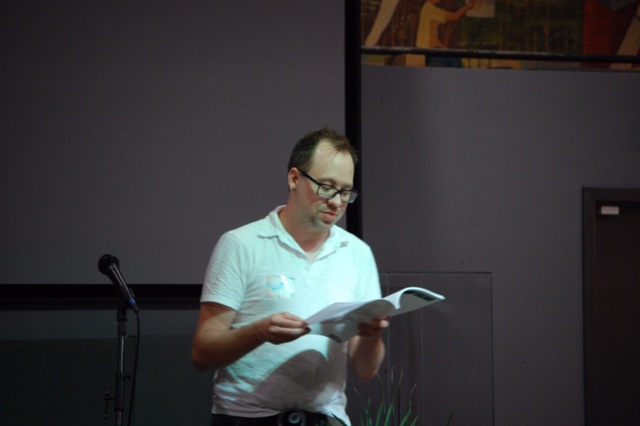
  Jenni Scott, Dylan Kittrell, Cody Roberts, Josh Latham, Ryan Morris, and author Ony Ratsimbaharison


Touring is an interesting experience because it feels so unlike real life, and it’s pretty surreal. I don’t always have the opportunity to play music for people in a new place every night, and moving from place to place each day becomes surprisingly comfortable. I feel like there is progress in motion, and a tour is a good representation of how movement can help us progress—playing each night is great practice, for one. But you also have the opportunity to meet new people and hopefully take back something positive from your interactions.

I recently got back from a quick 10-day tour with my band, fk mt., and another local band called Mybrother Mysister. Despite our van needing some work, and an altercation with some bigoted “cowboys” along the way (we’ll get back to that), it was an overall fun tour.

So to list just a few things going through my mind, I was reading Dune by Frank Herbert, had just watched Jeremy Saulnier’s Green Room, and had just learned about, not one, but two recent shootings of black men by police. And with all this, I also saw numerous updates regarding this year’s upcoming election. All of these things made me think heavily about resources, like the very limited water on the planet Arrakis, and government control, and how tenuous my existence is on our own planet and within our governmental systems.

What a time to be alive, indeed.

Josh Latham, Ryan Morris, and Ony

For anyone unfamiliar with touring, we packed everything needed for playing, sleeping, and staying alive on the road. This included all of our gear, sleeping bags, pillows, vitamins (those help a lot!), clothes, books, a computer, and even some roller blades, since we had some extra room. We didn’t necessarily have a place to stay for each night, but asked around at each show and hoped someone had some room for six people to crash on their floor (which worked out very well). For food, we would usually find some sort of diner or coffee shop in the morning or early afternoon, and anything else on the road that was fairly cheap and convenient. There were also a few incredibly gracious hosts who cooked us a meal, which we very much appreciated.

Each band drove a separate van, and we started to have some trouble with ours on the second day. We broke down on the way to Tallahassee, and stopped to get it looked at somewhere in Georgia. Luckily, all our drives were fairly short (around 4 hours max), so we had enough time to take it to a shop. They gave us some leftover food that they had in their break room, and said we had to replace the radiator, which they couldn’t replace but they sealed a leek which helped us get to Tallahassee. We bought another radiator on the way and got it changed the next day in Gainesville. Gainesville is also where the cowboys were.

To make a long story short, we played a show in Gainesville right next to a bar called Cowboys. The show went well and we didn’t really interact with anyone at Cowboys until we had to load our vans back up, right in front of the place, after the show. They didn’t like that we were unloading from the sidewalk and threatened to call the cops and yelled distasteful comments at us. Even after we had finished loading out, their bouncers and several patrons were verbally harassing us, yelling out racist and homophobic slurs. With everything I was reading being so politically driven, this whole dispute really disturbed me.

These words were acts of violence, the kind of violence that exists on a larger scale around the country. This event was just a microcosm of the terrifying and very real discriminatory views that reveal themselves through other acts of violence every day. These views seem to be held by many, which is not difficult to see given the amount of support a certain presidential candidate has from racists all over the country who see no problem with white supremacy, and are in fact fighting to maintain it. After watching Green Room (and having lived my life as a person of color in the south), this was not a situation I wanted to be in.

Luckily, we got out of the situation unharmed, and this was the only deliberately awful encounter we were faced with. After that, it was all beach hangs and roller blades with tacos and pizza and, oh yeah, some music sprinkled in between. One night in Sarasota, we all took different sets of wheels (blades, skateboards, longboards, and bikes) almost a mile out to a “fake beach,” which was just a shore by a body of water. It was around two in the morning, and we only stayed for a few minutes, but it was all worth it for the ride in and out. I honestly haven’t even roller-bladed that much at home.

Ony, Josh Latham, and Ryan Morris - photo by Gwen Kittrell

This tour seemed to go by really quickly, but I’m still sort of amazed that I’m able to tour at all, thanks to my love for music and the DIY scene. What I love about it is seeing and meeting people who are creating spaces for people in their community and on the road to create and perform art. There is a transient nature to the DIY scene, people are always moving in and out, which keeps it more alive, in my opinion. For example, two of our shows happened at houses that were no longer going to continue being venues. This has happened in Columbia’s scene as well, but there are always more people coming through as well as new venues being created.

As far as playing for people, it’s hard not to get into playing after sitting around all day. It’s also interesting to see how different crowds can be. I’ve noticed that people tend to have more fun when it’s a house show, probably because it feels more like a party than a “concert.” Our best shows were probably at houses when people moved around and had fun with us. We even saw a few people crowd surf during our set at a house in Charleston. Those are the moments when I feel the least tense. There were, however, a few shows where people didn’t feel as comfortable moving around and just sort of stared at us. I never really quite know what to think at that point, but just keep playing. The cool thing about tour, though, is that no matter how the show goes, there is always another one the next day to hopefully make up for it.

So overall, tour was a great experience, and I would recommend touring to any band that’s trying to reach more people with their music, or if you’re just trying to get out of town for a bit and see what else is out there. There is always something one could bring back and try and incorporate into their own scene. It’s also a great way to make a band play better, just from playing each night. Even though we had some van trouble and came across some unpleasant people, we didn’t let that ruin our experience.

Ony - photo by Shane Sanders


Reminder:

Nominations for Jasper Artists of the Year are due August 26th! More info here.

Film Review: Captain Fantastic By Mary Catherine Ballou

captain fantastic Starring Viggo Mortensen, well known for his role as Aragorn in the Lord of the Rings trilogy, and a talented group of emerging young actors and actresses, Captain Fantastic presents viewers with the story of an eccentric father named Ben (Mortensen) who raises his six children in a remote forest of the Pacific Northwest. Ben assumes the role of stay-at-home-dad as a result of his wife’s hospitalization due to a debilitating mental illness. Captain Fantastic divulges the tale of this irreverent outdoorsman and his strong-willed children, who undertake the noble quest to honor their mother and fight for their freedom to live as they choose.


Written and directed by Matt Ross, Captain Fantastic takes viewers on a visual and emotional journey, from the magical dew-drenched greenery of the Pacific Northwest, through the highways and byways of strip-mall America, to mansion-filled suburbs of New Mexico. Interspersed throughout are scenes of sparsely populated RV parks and the family’s insider-versus-outsider struggle against mainstream society. The chosen mode of transportation for their “mission,” as the children call it, is a renovated school bus retrofitted to accommodate Ben and his six children.


In the opening scene, the camera zooms over panoramic mountainside views, immediately enveloping viewers with the raw, natural beauty of the land that Ben and his children call home.  As the film portrays their household routines, bringing to mind memories of playing outside as a kid, and intense training sessions, designed to maintain peak physical and mental conditions, viewers become accustomed to the core facets of this family – an idealized, yet isolated, existence governed by the attainment of mental and physical prowess. Ben and his wife, Leslie, decided early on to raise their children in this natural environment infused with Buddhist traditions, sheltered from capitalistic culture.


Throughout Captain Fantastic, three aspects emerge as dominating themes in this film – the aesthetics of the environment, the importance of family and camaraderie, and the transformation of characters as a result of their struggles. Ben and his children have nearly become one with nature, growing vegetables, raising chickens, hunting animals for food, hiking and climbing rigorous terrains, and sleeping under the stars. They have no need for electronic distractions – books, musical instruments, and intellectual dialogue comprise their evening routines. Mimicking their strong physical conditions, the children’s book smarts and eloquence surpass their young ages, as they undergo exacting tests under the watchful eyes of their father.


The family nucleus plays a dominant role in this film, as Ben’s family embraces the notion of strength in numbers. Ben and Leslie taught their children to appreciate nature and the importance of physical and mental strength, embodied in their capacity to survive in the wild. However, within this family, challenges abound.


In addition to the strenuous training sessions that Ben’s children endure, they must also deal with the encroaching challenges of the outside world. Ben attempts to remain immune to mainstream society, strengthened by his mental and physical acuity he submits his children to rigorous, at times shocking, physical challenges. Yet, the greatest challenge he and his children ultimately face is the one posed by his wife’s health issues. Consequently, his family must leave their paradise in the woods and confront society in ways they never imagined. By fighting to preserve his beliefs, Ben’s family structure nearly collapses and he risks losing his children in the process. Still, a transformation occurs in each of the characters. In no way are they static; rather, the family undergoes dynamic changes, but their love and respect for each other is a mainstay of the film.


Captain Fantastic reveals the paradox between the life of Ben’s family and that of mainstream American culture, one that is dominated by modern technological amenities. By demonstrating these two disparate ways of living, the film reminds viewers that one does not have to accept societal norms. Even so, Ben faces no shortage of backlash and difficulty as a result of the stark difference between his beliefs and those of his wife’s family in New Mexico. At certain points, Ben does some things that may cause viewers to question his sanity, and everyone from his father-in-law to his own sons challenge his beliefs and lifestyle choices.


A beautiful and highly recommended film that sends a profound message about what type of path one chooses to tread in life, Captain Fantastic rattles established frames of mind and challenges viewers to contemplate the world in a new light, provoking and inspiring an appreciation for nature and the simple things in life.


Backstage: A New Musical Revue at Town Theatre, August 19

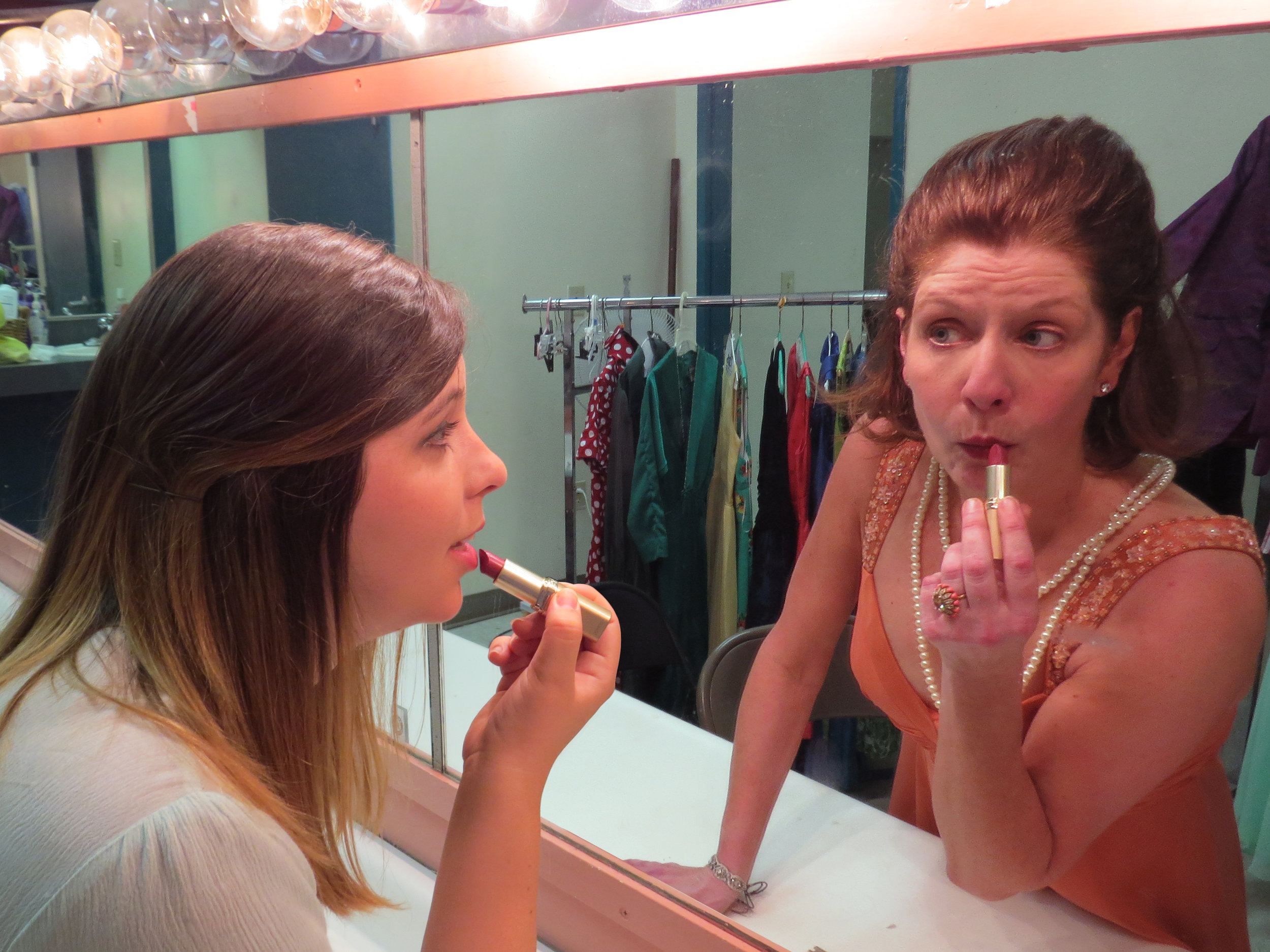
The Ensemble (Jennifer Davis, John Dixon, Jalil Bonds, Emily Clelland, Lisa Akly, Rachel Rizzutti, Nate Stern, and Samantha Livoti) eagerly read a review of their new show. Photo credit: Rebecca Seezen and Jimmy Wall  

The theme is familiar — an aging actress threatened by youth — but we’re giving it a fresh, new spin! BACKSTAGE will bring it all together through shared stories of a group of performers who frequent a bar constructed on the stage of a closed theater. Don’t miss an all star line up of Town veterans, including Dell Goodrich (Stand By Your Man), Mary Joy Williams (Nice Work If You Can Get It), Megan Douthitt (Mary Poppins), Corey Langley (The Addams Family), Bill LaLima (Les Mis), Bob Blencowe (Stand By Your Man), Allison Allgood (Sugar), Samantha Livoti (Singin’ in the Rain), Kathy Hartzog (The Honky Tonk Angels), Nate Stern (The Addams Family), Rebecca Seezen (Spamalot),  as well as a number of talented newcomers including Robin Saviola and Rachel Rizzutti (both seen in Village Square's 9 to 5)! Enjoy a “behind the scenes” look at show business through the songs of Applause (All About Eve), Curtains, Grey Gardens, The Act, The Magic Show, Seesaw, A Class Act, Me and Juliet, Barnum, Little Me and Mack & Mabel.

Production Assistant Eve (Mary Joy Williams) sees the Broadway Star (Dell Goodrich) that she can be someday in the mirror. Photo credit: Rebecca Seezen and Jimmy Wall

BACKSTAGE is written, directed, and choreographed by Charlie Goodrich with musical direction by Kathy Seppamaki (both recently seen in Nice Work If You Can Get It). BACKSTAGE is being presented as a part of Town Theatre’s commitment to emerging artists.

Come early for a complementary wine reception starting at 7:15 PM. Tickets are $10 general admission and may be purchased online at towntheatre.com or by calling the box office at (803) 799-2510.

Reminder: Nominations for Jasper Artists of the Year are due August 26th! More info here,


A Night of Music & Poetry from Infinite Room

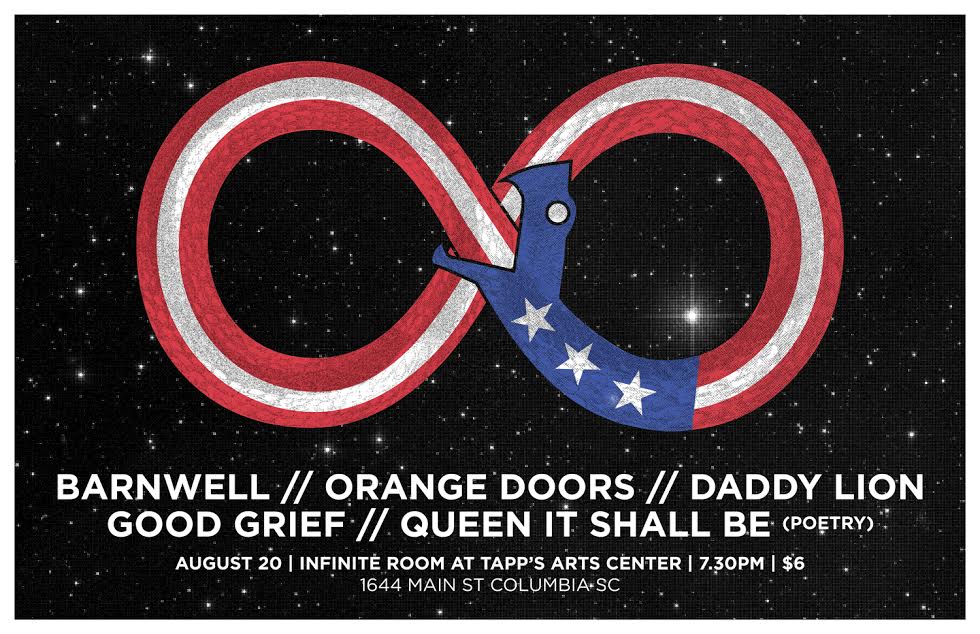
infinite room august Infinite Room will host a night of music and poetry on Saturday August 20, 2016, taking place at TAPP's Arts Center located at 1644 Main Street. Doors open for the event at 7:30pm and the concert starts at 8:00pm. The cost for admission is $6 at the door. Here is the night’s lineup:

Barnwell: "Part alt-country and part pop confessional, Barnwell’s music defies easy categorization." -Michael Spawn, Free Times

Orange Doors: Orange Doors of Charleston, SC, along with their instruments, pack in a psychedelic flannel-rock atmosphere that you may not want to leave.

Daddy Lion: "Columbia’s Daddy Lion is quickly rising to the occasion, with ragged riffs, crashing choruses and moments of ominous ambience." - Jordan Lawrence, Free Times

Good Grief: A new two guitar two drum band featuring members from Scenario Collective.

Queen It Shall Be: Poetry reading from the founder and host of Columbia's The Writer's Block Poetry Show, co-founder of OneWord Columbia, and member of the Usual Suspects poetry slam team.

Infinite Room is a cooperatively run venture providing an intimate listening space dedicated to eclecticism and community building. We are committed to expressing and celebrating diversity by creating a safe space where all are welcomed, protected, and included. Currently Infinite Room is seeking to obtain status as a non-profit organization to progress towards our vision of serving as an incubator for musicians and artists.

COMMON LANGUAGE, UNIQUE VOICES at Vista Studios/Gallery 80808

common1

COMMON LANGUAGE, UNIQUE VOICES is a group exhibition of paintings, prints, ceramics and mixed media works by five South Carolina artists. The artists are Patti Brady, Michael Brodeur, Diana Farfan, and Kevin Isgett from Greenville and Jeff Donovan from Columbia. The exhibition title reflects the individual and personal artistic expression of each artist while making connections within their diversity of style and media.

All artists in the exhibition have received regional and national recognition for their work by way of juried shows, grants, residencies, awards and publications. The public is invited to a closing reception on Thursday, August 11 from 5 – 9 pm.

commone2

(Jeff Donovan, artist)

~~~

Vista Studios / Gallery 80808

80808 Lady Street Columbia, SC 29201

July 18 – August 15, 2016

open Sunday through Saturday

11 a.m. to 4 p.m.

Jeff Donovan will be attending the gallery on Fridays, Saturdays, and Sundays

August 5, 6, 7, and 12, 13, 14

common3

(Diana Farfan, artist)

Closing Reception - August 11, 2016, 5 – 9 pm

The public is invited!

Contact: Jeff Donovan at 803-760-4371 or jadedoven@gmail.com

Husband & ModalCoda Play Summer in the City: Arts Showcase

We're super excited and (grateful) to have two Columbia bands, the electro-pop duo Husband and the jazzy post-punk group ModalCoda, play the arts showcase tonight (8/4/2016) on Boyd Plaza tonight as part of First Thursday on Main. All proceeds go to benefit The Jasper Project, the new non-profit entity that will be taking over the magazine. Here's the full schedule of performances, and be sure to check out both of these band's excellent records before you head out to the show. Performances: 6:00 The Palmetto Opera 6:30 Fringe Dancers 6:45 Yemassee Journal 7:00 Wet Ink Spoken Word 7:15 Fringe Dancers 7:30 Husband 8:30 Modalcoda

New Reaches for Yemassee Journal, a Poetry Contest, & a Performance Thursday Night at Boyd Plaza by Maya Marshall

Yemassee Logo
Yemassee Journal founded in 1993, is the graduate student-run literary journal of the University of South Carolina’s MFA creative writing program. We're seeking exceptional and surprising writing from a range of national and international voices.
We publish fiction, poetry and nonfiction, and we're open for submissions year round. Check out our submittable page. We run an annual contest in poetry and fiction, which opens November 1st. This year we'll be holding our inaugural chapbook contest.
The editors, Maya Marshall, Tracie Dawson, and Emylisa Warrick, are dedicated to growing the in-person presence of the journal. We want to grow the literary conversation around what's relevant in this city, region, and country. So we publish reviews, interviews, and artwork that speak to the world we live in now. We provide a platform for emerging and established writers. To level the playing field we run contests in which we offer $750 for an exceptional poem, $750 for an exceptional piece of fiction and $1000 for an outstanding chapbook.
The 2017 Yemassee Poetry Contest will be judged by Jericho Brown (The New Testament). The final fiction and chapbook judges are TBD. Look to our website for details in October.
As we move toward developing a deep relationship with the community arts scene in Columbia, we would very much like to share space in the growing Columbia art scene. To that end we will be hosting a few events throughout the year.
You can catch us at the Jasper Project's Summer in the City Arts Showcase on August 4th. Also, we'll be hosting, a joint reading the RHINO journal at Drip in Five Points at 729 Saluda on August 20th.
-- Maya Marshall

Summer 6s - with Franklin Jones and Post-Echo

Summer 6

It’s summer in the city and sometimes during this time of year we find ourselves with the weird sensation of (gasp!) free time on our hands.  Rather than letting this phenomenon catch you unawares on some stray Saturday afternoon, Jasper has you covered with our summertime series alliteratively called the Summer Sixes in which we ask members of the Columbia arts community to share their favorite top 6 films, reads, albums, or TV series binges.  We’ll be bringing you this throughout the summer so pay attention to What Jasper Said to learn more about what your friends and neighbors like to do with their spare time, and maybe get some ideas of what to do with yours.

If you know the folks over at Post-Echo at all, it won't surprise you that they took a strange and unexpected tact when we requested a Summer 7 list from them. Franklin Jones compiled his six favorite abandoned places in the Midlands, many of which are featured in the collective's films Passage and their latest, Tyler Digital visual album Exit 8.

---

‘Tis the season for exploration. So resolve your deepest abandonment issues and hit the road this summer in search of these six nearby abandoned places. In the spirit of proximity, I have not included any sites further than sixty miles away; the endless array of ruinous coastal eye candy will have to wait for a separate list. Also, please remember to be careful. Just because somewhere is abandoned, does not mean you are alone.

  1. Lone Star, SC

LoneStar1

Once a bustling community during the heyday of the now-defunct Atlantic Coast Line Railroad, the ghost town of Lone Star has been dormant for quite awhile. The remnants of its downtown area, however, feature four gorgeously dilapidated buildings: a general store, a post office, a freight depot, and what appears to have been an old hotel. Coincidentally, the railroad line (owned by CSX Transporation since 1986) still passes through Lone Star on occasion. Side note: be careful trying to access any of the structures as the wasp nests are plentiful.

  1. Olar, SC

Olar2

While not quite a ghost town, Olar’s population is 212 and plummeting at the rate of 10% per decade- so, just be patient. A haven of forgotten banks, service stations, and general stores, Olar was once a popular whistle-stop on the Seaboard Air Line Railway (aka Route of Courteous Service, also the rival to Lone Star’s Atlantic Coast Line Railroad, got all that?). Unlike Lone Star, an uneasy sense of failure and despair hangs over the dregs of Olar. This hasn’t been a quick death.

  1. Chem Trails - Columbia, SC

ChemTrails1

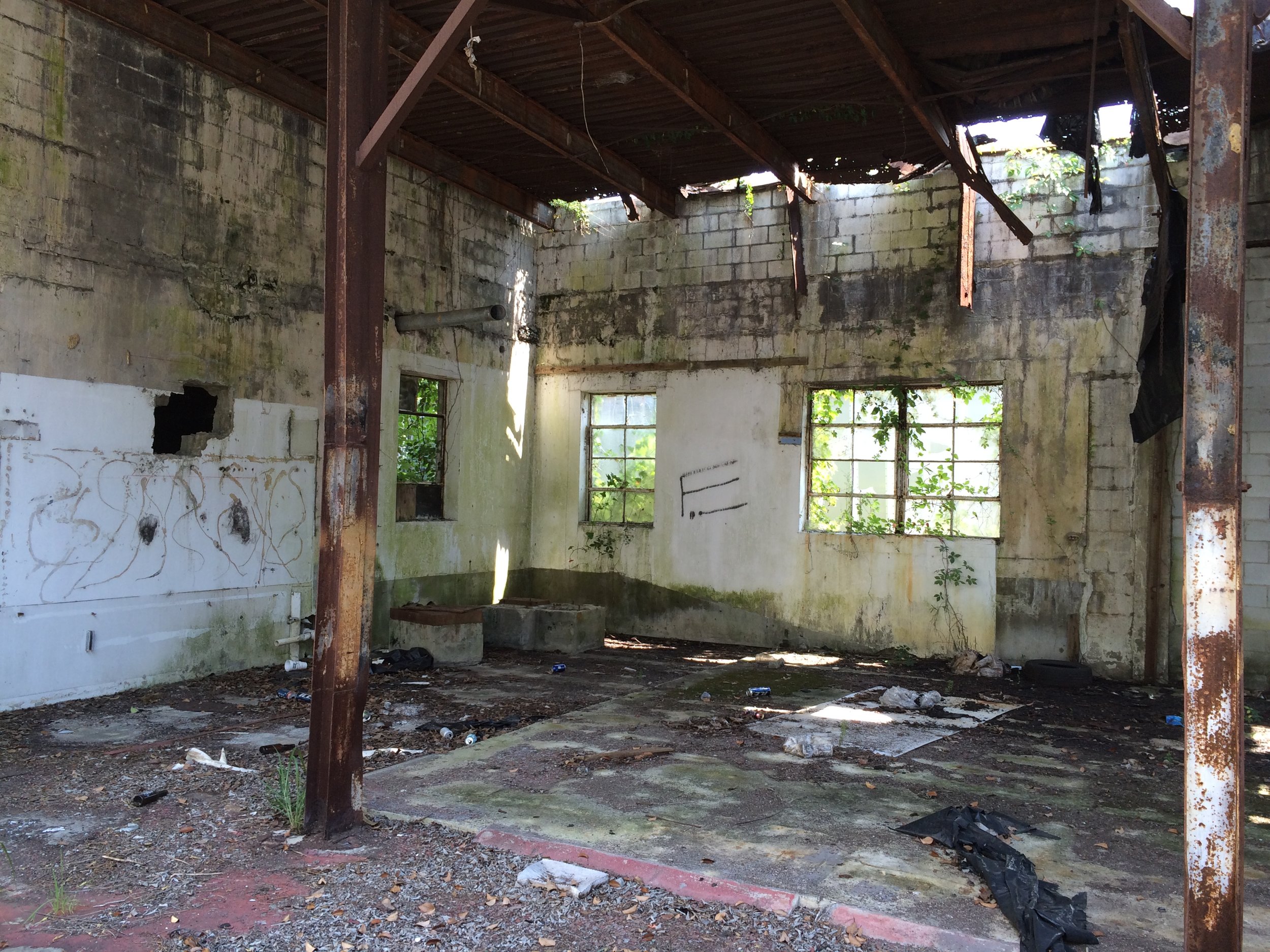
The Intertape Polymer Group officially pulled up stakes several years ago, moving their packaging plant from the South Beltline location (where it had resided for over 50 years) to a state-of-the-art facility in Blythewood. What was left in the wake of this mass exodus amounts to nothing short of an apocalyptic nightmare. A decrepit maze of soul-sucking office corridors, hastily evacuated laboratories and cavernous testing facilities, all somewhere in the process of being reclaimed by outside vegetation. Even after years of corrosive decay, most of the workstations and cubicles are still intact - in addition to post-it reminders and lab notes, you can also find styrofoam to-go food boxes inside the break room fridge. There’s a little something for everyone here.

  1. The Wreck Center - Kershaw, SC

WreckCenter1

Formerly Flat Creek Park, you can find this sprawling behemoth just off Kershaw Highway en route to Forty Acre Rock. Details are scarce (or at least hard for me to find) on what exactly happened to this former parks & rec facility, but the sheer scope of abandonment on display is staggering. Comprised of a gymnasium, an arts/crafts building, two baseball fields, and what appears to be a dungeon of some kind, all scattered across a quarter mile of high grass and cacti (yes, cacti), there’s a lot to experience here so be sure to pack a lunch.

  1. The Locker Room - Hopkins (maybe?), SC

LockerRoom3

Also affectionately known as the Circuit Cell in tribute to its rusty exposed wiring, The Locker Room lurks just off Highway 378 next to a formerly abandoned gas station and a now-abandoned Hot Sub Shop (which itself was formerly a Subway). A short-lived bar and grill that met a fiery end, nearby locals have provided me with conflicting information over the years on just what happened to the Locker Room. With stories ranging from arson to the aforementioned faulty wiring, the origins of the inferno remain a mystery. As it stands now, the Locker Room is an immense husk of grimey, moss-laden concrete, its interior scattered with remnants that survived the blaze. You can actually still access this structure through the front door - but, to fully experience the Locker Room in all its opulent decay, I recommend entering via the gaping cinder block hole located at the back of the building.

  1. The Ruins - Columbia, SC

TheRuins3

The full breadth of The Ruins is difficult to quantify. Tucked away deep off Bluff Road and surrounded by swamps and farmland, this monolithic structure operated as an Eisenhower-era seed repository before heightened industrialization rendered it obsolete. In the years since, the roofless concrete framework has developed a dense canopy of foliage, currently teeming with wildlife. Additionally, the architectural design of the structure has allowed each of its five compartments to accommodate individualized ecosystems, each different than the last. This is a very special place.

Honorable Mention: The Dead Pool - Columbia, SC

DeadPool1

This one really flies under the radar. Located behind Columbia’s historic 701 Whaley building are the crumbling remnants of an indoor pool and gymnasium, approximately sixty years old. The gym was briefly re-purposed as a machine shop before being abandoned several years ago when renovations were announced. However, the real gem to discover is the adjacent pool structure. Truly something to behold, the Dead Pool is anything but lifeless- as a collapsed roof has yielded the necessary conditions for an assortment of plant life to thrive unabated, slowly consuming the interior of the tile structure.

New Sculpture in the Vista by Lander University Artist Doug McAbee

Curtis & Bob

 ""Curtis & Bob represent the people and the state I know and love.” -- Doug McAbee, artist


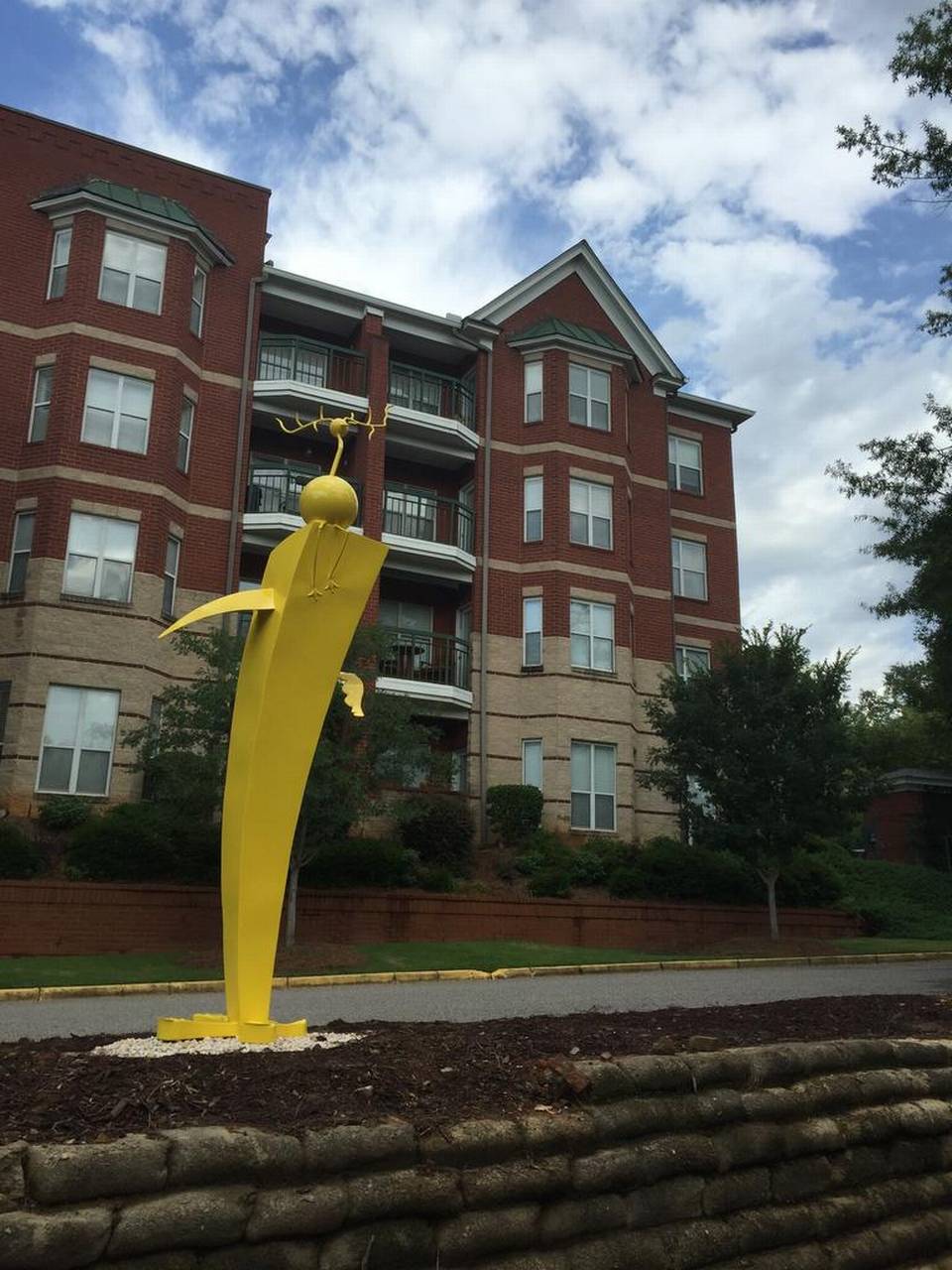
The Vista Guild is proud to announce its most recent public art sculpture installation, a 12-foot-tall, powder-coated steel sculpture by artist Doug McAbee titled, “Curtis & Bob.”


The sculpture is at the Taylor Street entrance to the tunnel adjacent to Finlay Park, which opened July 13 after completion of Phase II of construction. The eye-catching yellow sculpture adds to the list of Vista Guild-commissioned public art pieces and is whimsical and approachable, according to the artist. The sculpture also follows McAbee’s current body of work, which utilizes humor with formal and conceptual qualities to create a visual conversation with the viewer.


“Curtis, the taller figure, may signify the Columbia or the state of South Carolina historically as we have risen with strength and technology again and again throughout our past,” said McAbee, a graduate of Winthrop University who is also an assistant professor of art at Lander University. “Bob sits high up on Curtis’ shoulders proudly looking toward the future. These two pals, though very different in appearance, work together in partnership to accomplish their goals.  Curtis & Bob represent the people and the state I know and love.”


The Vista Guild has worked diligently to fund, support, commission and install public art sculpture in recent years. With “Curtis & Bob,” the Vista now has five sculptures throughout the neighborhood. This commitment is part of the reason the South Carolina Arts Commission recently named the Vista an official South Carolina Cultural District.


“The Vista as we know it today is rooted in galleries and artists and we’re pleased to be able to add even more character to the neighborhood with the addition of Curtis & Bob. The sculpture is cheerful and adds to the fabric of its urban surroundings,” said Meredith Atkinson, executive director of the Vista Guild. “Our board is dedicated to keeping the history of the neighborhood and the arts front and center with every decision we make, and we look forward to adding even more public art to the Vista.”


One Columbia for Arts and History aided the Vista Guild with logistics and communications in the installation process. "It has been a privilege to work with the Vista Guild, Doug McAbee and the City of Columbia to install another piece of public art. Sculptures like ‘Curtis & Bob’ continue to enhance the uniqueness and artistic talent of the Vista, Columbia's first recognized cultural district, but also physically represent how Columbia is a hub of creativity," said Lee Snelgrove, executive director of One Columbia.


Deadline is August 26th! CALL for Nominations - JASPER ARTISTS OF THE YEAR 2016


THE

JasperProjectLogo

&

Jasper Magazine 

Announce the CALL for Nominations for the Title

“Jasper Artist of the Year”

in each of the following categories:

Dance

Theatre

Music

Visual Arts

Literary Arts

Individual Artists, 18 and older, working in the greater Columbia arts community are eligible for the title 

based ONLY upon their artistic accomplishments during the period from

August 26, 2015  until August 26, 2016.

~~~

IMPORTANT STUFF:

Nominations should be sent to JasperProjectColumbia@gmail.com 

with the subject heading “JAY”

and MUST be accompanied by:

  1. The category in which the nominee should be considered.
  2. list of work produced or performed during the designated time period. (No paragraphs. No forthcoming work. No stories of awesomeness.)  
  3. The nominee’s complete contact info and a statement confirming that the individual has consented to be nominated.

Nominations must be received online by midnight August 26th, 2016. *

Finalists will be announced in the September issue of Jasper Magazine and winners will be announced at the JAY Gala in November – details to come.

Upon closing of the nomination call, a panel of judges will select the top three candidates in each field, and the public will be invited to vote online for their top choices.

Jasper leaf logo

Fine Print:

The category Dance includes:  performance, choreography, or direction of any form of dance including, but not limited to ballet, contemporary, jazz, tap, ballroom, folk, or dance-based performance art.

The category Theatre includes: directing or acting in one or more local performances.

The category Music includes: conducting, directing, writing, or performing any style of music in one or more local concerts or recordings; both individuals and groups are eligible.

The category Visual Arts includes: the completion and presentation of any form of non-performing or non-literary arts, such as painting, sculpture, ceramics, photography, print-making, mixed-media, etc.

The category Literary Arts includes: the completion, publication, and/or presentation of any form of prose, poetry, or non-fiction writing, as well as playwriting and the writing of executed screenplays.

Only individual artists may be considered for nomination. While arts groups, such as musical groups or arts troupes, are no longer eligible for consideration, individuals within those groups may be nominated.

Jasper 2016 Artist of the Year Awards will not be awarded based on achievements accomplished prior to August 26, 2015. The purpose of the awards is to recognize artistic achievements accomplished within a calendar year

There is no fee to enter.

Artists may nominate themselves.

Artists must be made aware of their nomination and agree to participate in the competition.

* Failure to comply with these rules will result in disqualification of the potential nominee. 

THE DAUFUSKIE ISLAND EXHIBIT at CMA -- BY OLIVIA MORRIS  

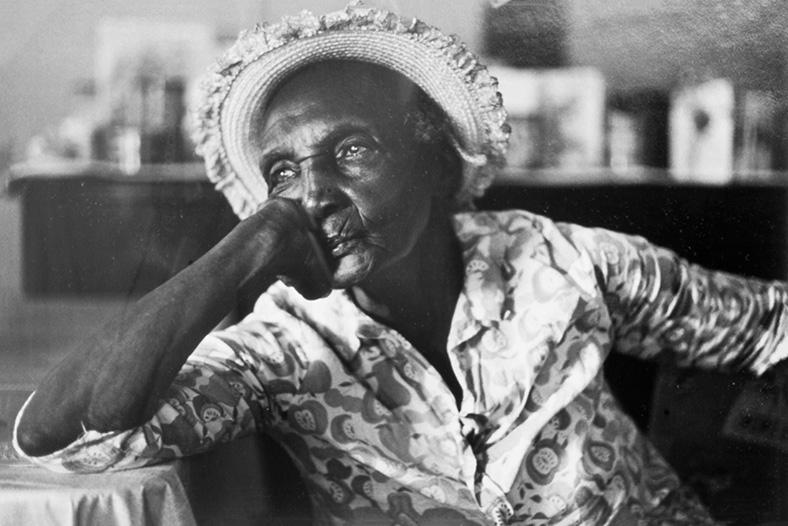
25 The Columbia Museum of Art is currently displaying "Daufuskie Memories", an exhibition of photographs by Jeanne Moutoussamy-Ashe, being shown until August 7.  Through the late 70s and early 80s, Moutoussamy-Ashe explored the people, customs, and buildings of Daufuskie Island, a sea island off the coast of South Carolina.  The series is comprised entirely of black-and-white gelatin silver prints.


The island is famous for its rich preservation of Gullah as result of its tight-knit community and isolation from the mainland.  Gullah is a culture and language developing from the descendants of enslaved Africans in the Lowcountry region, a fusion of Africa and the English South.  In "Emily's Son at Nursery School During Naptime", a young boy is sprawled out on a mat beneath a stove. Hung up behind the stove is a sheet that reads, "moja — 1 // mbili — 2 // tatu — 3," and continues to ten.  The words are numbers in Swahili.  The stove is also labeled "stove", this time in English.  On the other side of the room, propped against the wall, is a Dr. Seuss-themed corn-hole board.  The Daufuskie islanders are suspended between two worlds, yet still largely separate, wedged between the stove and the wall.

38


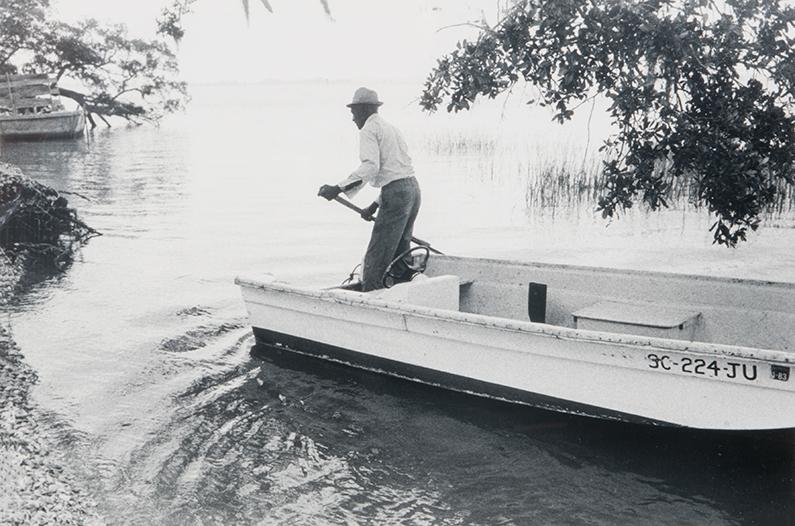
The photos display a wide range of activities, each with its own motion, emotion, and composition of light.  "Shrimper Pulling in his Line" shows a young man at work, dressed in a striped shirt and a bucket hat, pulling a net onboard a ship.  Fishing was the nucleus of the island, a staple at the dinner table and the main sector of the economy.  The island was also deeply religious, and home to the First Union African Baptist Church.  Several photos — of weddings, young piano players, a woman fixing her daughter's shoes — feature the starkly white, thin-pillared church.  The western influence on faith becomes undeniable in "Susie Standing Next to a Holy Picture", where a woman tightly smiles next to a picture of an unrealistically Caucasian Jesus.


There are pictures of people at funerals, on oxcarts, and drawing water from cast iron hand pumps.  There are scenes of boats in winter, of children buried in each other's arms.  However, the vast number of photographs are of just of people — mid-sentence, smoking cigarettes, gazing deeply back at the viewer.  Moutoussamy-Ashe emphasizes the roles of both human interaction and solitude throughout her collection, reminding the viewer that everyone is so much more than a single action the camera catches them in.


65

Moutoussamy-Ashe captures these lives in an incredible transition and tragic disintegration.  In the early 60s, Daufuskie islanders started to sell their land to private corporations and disperse throughout the mainland.  Moutoussamy-Ashe caught the last historical glimpses of the island before it became known for its 20-hole golf course and its members-only residential club.  The photographs hold a spirit and landscape that has been widely gentrified in the 21st century.  The photographer herself spoke on the subject, "because the Daufuskie I photographed no longer exist, I know now that these photos are an invaluable archive for the islanders and greater American society."

Call to Photographers

Arnika_Dawkins-LOGO (1)

Atlanta Photography Group is now taking submissions for one of APG’s premiere exhibitions, "Arnika Dawkins Selects"

Juror Arnika Dawkins will pick her selects from a national call for submissions. This exhibition will be part of Atlanta Celebrates Photography, the month-long, citywide photography festival and featured in the Festival Guide.

TWO AWARDS: APG PRINT PURCHASE PROGRAM

In conjunction with SELECTS, two artists may be selected for the permanent collection of the Museum Of Contemporary Art of Georgia as well as an award $500 each.

JUROR: ARNIKA DAWKINS

Juror Anika Dawkins is the owner of her eponymous fine art photography gallery established in Atlanta in 2011. The gallerist shows work by talented emerging and mid-career artists with a specialization in showing fine art photography by African Americans and images of African Americans. Active as a leader in the Atlanta arts community and avid collector, she is fine art photographer as well.

Deadline for entries is August 21. Show runs Oct 7 – Nov 12

 For more information or to enter:

http://www.atlantaphotographygroup.org/events/2016/5/31/call-for-entry-arnika-dawkins-selects


Call to Authors - Deadline 8/11/16

JasperProjectLogo

Call to Midlands Writers and Poets

Jasper is looking for poetry and/or short fiction (no longer than 2000 words) from SC Midlands area writers for possible inclusion in an upcoming issue of Jasper Magazine.

Submissions must be previously unpublished and submitted as a word doc to editor@jaspercolumbia.com with the word "submission" in the subject heading.

Deadline is midnight Thursday, August 11th, 2016.

A REVIEW: PETRA COLLINS' NEW SHORT FILM, Georgia O'Keeffe - BY OLIVIA MORRIS

[embed]https://www.youtube.com/watch?v=LDT_RaEq0dI[/embed]


"They could tell you how they painted their landscapes, but they couldn't tell me how to paint mine." -- Georgia O'Keeffe

On July 19th, the Tate (a network of four contemporary art museums in London) released a two-minute short film directed by Canadian photographer Petra Collins on their official Youtube channel.  It opens with a girl crawling through a misty, purple desert in thigh-high leather boots.  The scene is soft, and dim, and flat.  Girls dressed in white stare off blankly, let ladybugs crawl across their skin, and lean on cacti.  There is something comical and disturbing in the set.  The desert looks like it's made of papier-mâché — intentionally simple and toylike, as if a Beetlejuice-esque sandworm might appear at any moment.  The scenery is dreamlike and the girls, glossy faced and glitter dusted, hold pensive expressions throughout.  This is Collins' re-imagining of the the work of Georgia O'Keeffe, the famed "Mother of American modernism."


Petra Collins, though only 23, photographed for Vogue, published a book, created a line of clothing for American Apparel, and has written for the Huffington Post.  Recently, Collins stepped into the world of film, with the production of her first short, "Drive Time", in January of 2015.  In this newest short film, she captures the southwestern iconography and textured style that defined O'Keeffe's work.  Collins explores the desert's tactile dichotomy by contrasting the softness of hills, skin, and silk to the hard lines of lizards, branches, and glass.  The short is not a strict retelling of O'Keeffe's work, but rather a fusion of the late artist's trademark subjects and Collins' own muted, hyper-feminine visuals.


The short also incorporates aspects of O'Keeffe's life.  The most provocative shot in the film is of a rose stitched onto underwear, an allusion to the widespread belief that O'Keeffe intentionally painted flowers to look like labia.  However, O'Keeffe repeatedly fought against these Freudian interpretations of her work.  In an interview with Vogue, Collins examined this phenomenon by stating, "people always wanted to sexualize her, to make her work about sex, to make it about the female body.  It could be, but I found it really interesting that she couldn’t paint her own landscape without people putting these connotations on it."  Through her lingering shots on shiny lips and mini skirts, Collins emphasizes the role of femininity in O'Keeffe's work, but it is displayed as separate from (if not devoid of) eroticism.  She beautifully captures the struggle of O'Keeffe, and many female artists, to be open about womanhood, while also trying to avoid sexualization.


A voiceover plays throughout the film, helping develop its complex thematic elements.  First, O'Keeffe's voice discusses the unteachability of  art.  A girl's voice then filters in, over the sounds of breaking glass and running water, musing about the connection between bodies and landscapes.  Different voices thread throughout, often repeating one of O'Keeffe's most famous quotes, "they could tell you how they painted their landscapes, but they couldn't tell me to paint mine."  With the girls echoing this sentiment, it seems to serve as a mantra, a monument to individualism.  The piece is hopeful, a pastel-clad encouragement, pleading the audience to explore their own intrinsic artistry.

Profile on Andy White - Anthropologist, Archaeologist, and Artist by Mary Catherine Ballou  

"The world already has enough straight lines.  And too few dinosaurs." - Andy White Andy White 1

 ~

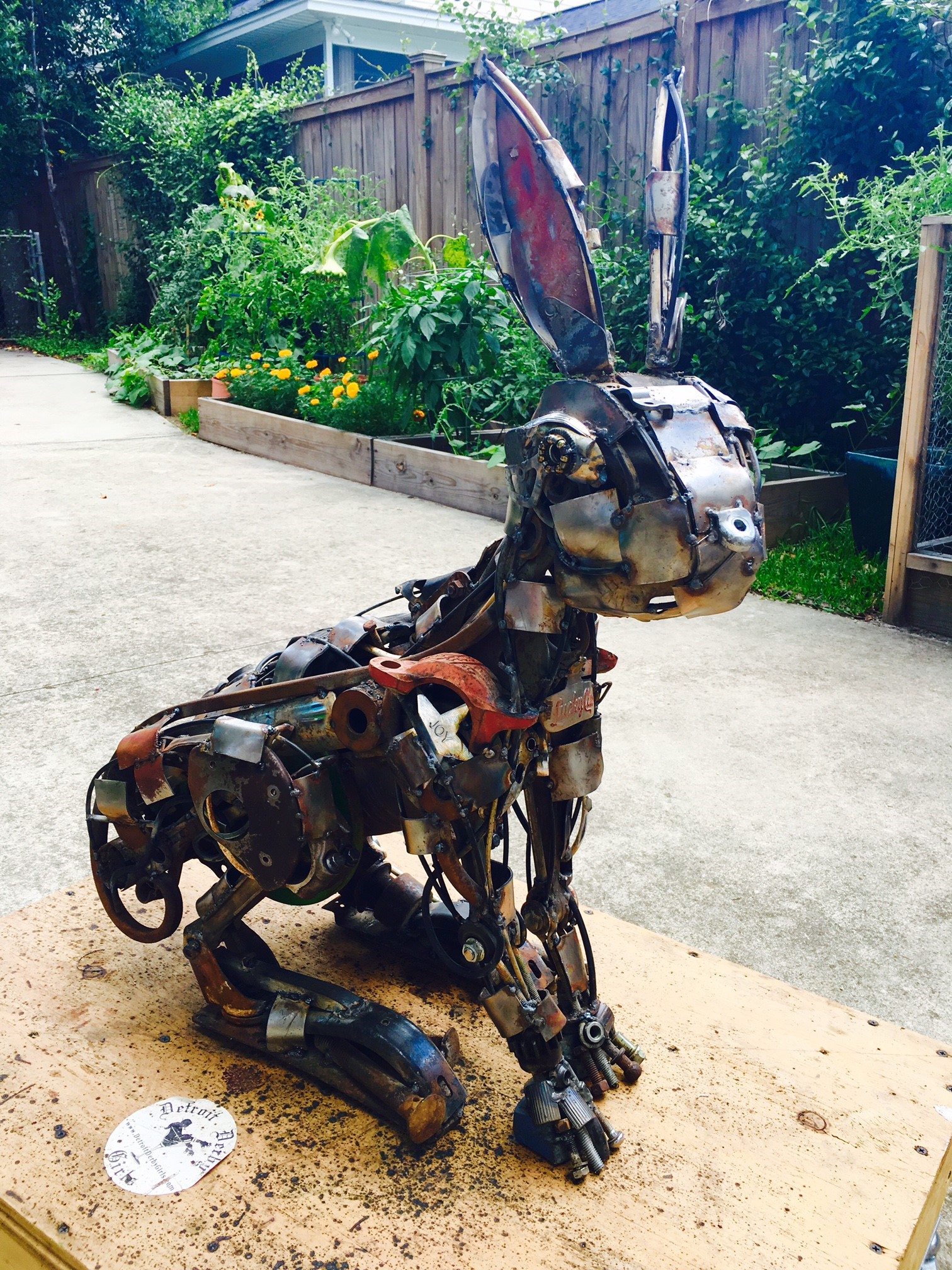
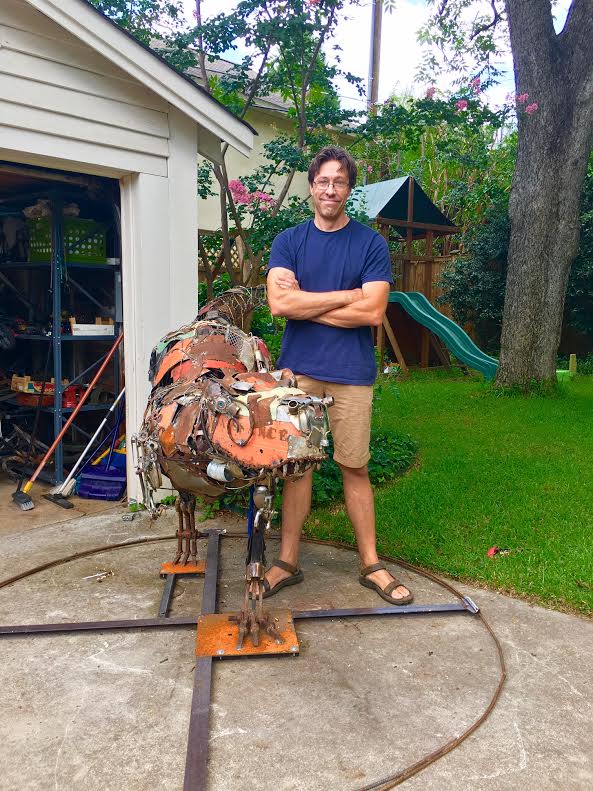
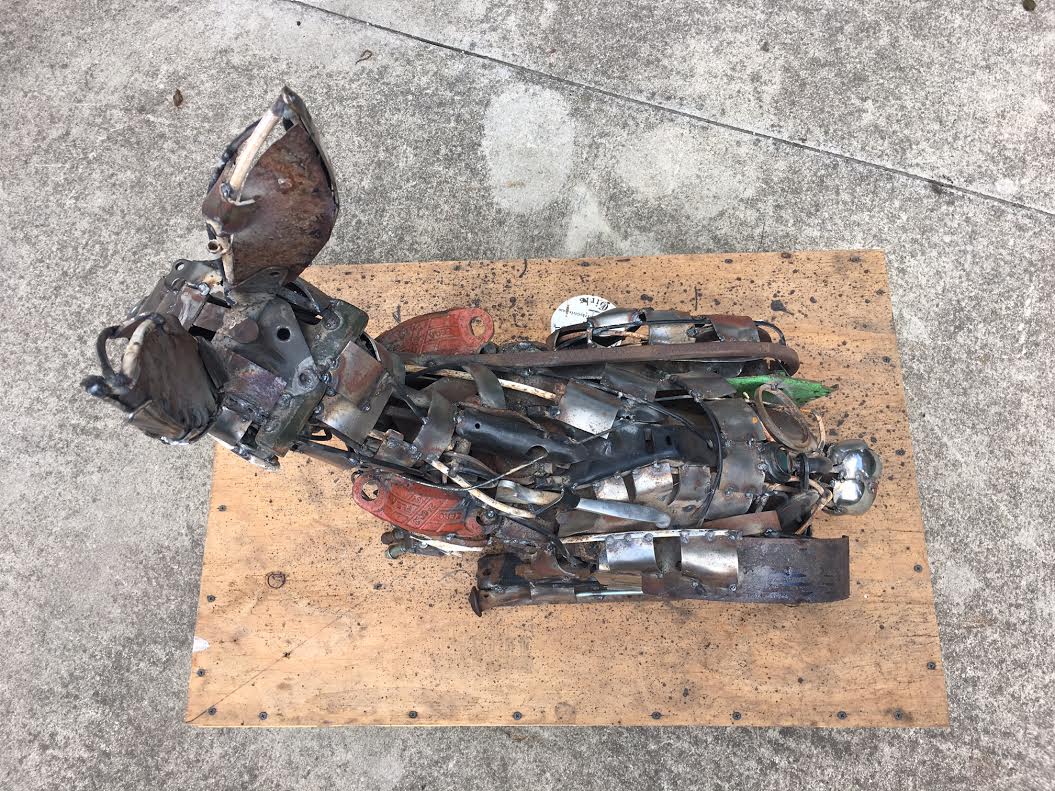
DINOSAURS, RABBITS, DRAGONFLYS – oh my!  Hailing from Michigan, anthropologist and archaeologist Andrew A. White, Ph.D., moved with his family to Columbia last July, in the middle of a sweltering Southern summer.  White holds the position of Research Assistant Professor with the South Carolina Institute of Archaeology and Anthropology at the University of South Carolina.  However, in his spare time, he creates animal sculptures out of scrap metal and found objects.  With a background in welding, White uses his metalworking skills to construct artistic renditions of various species in the animal kingdom.


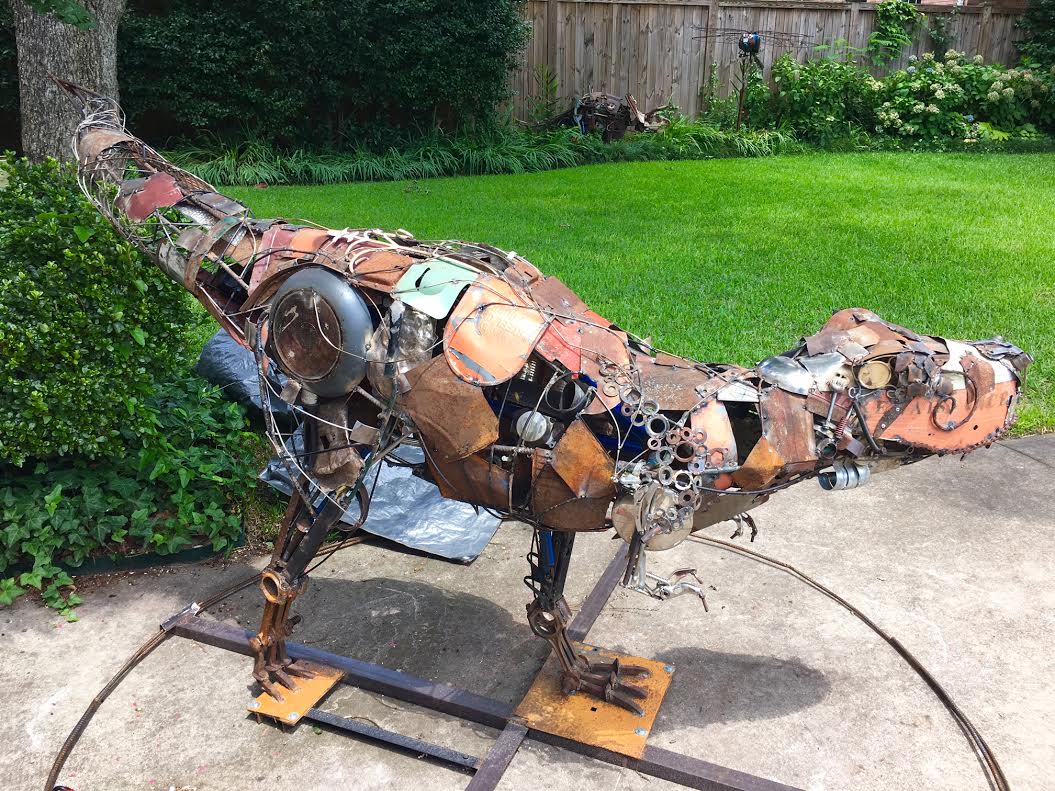
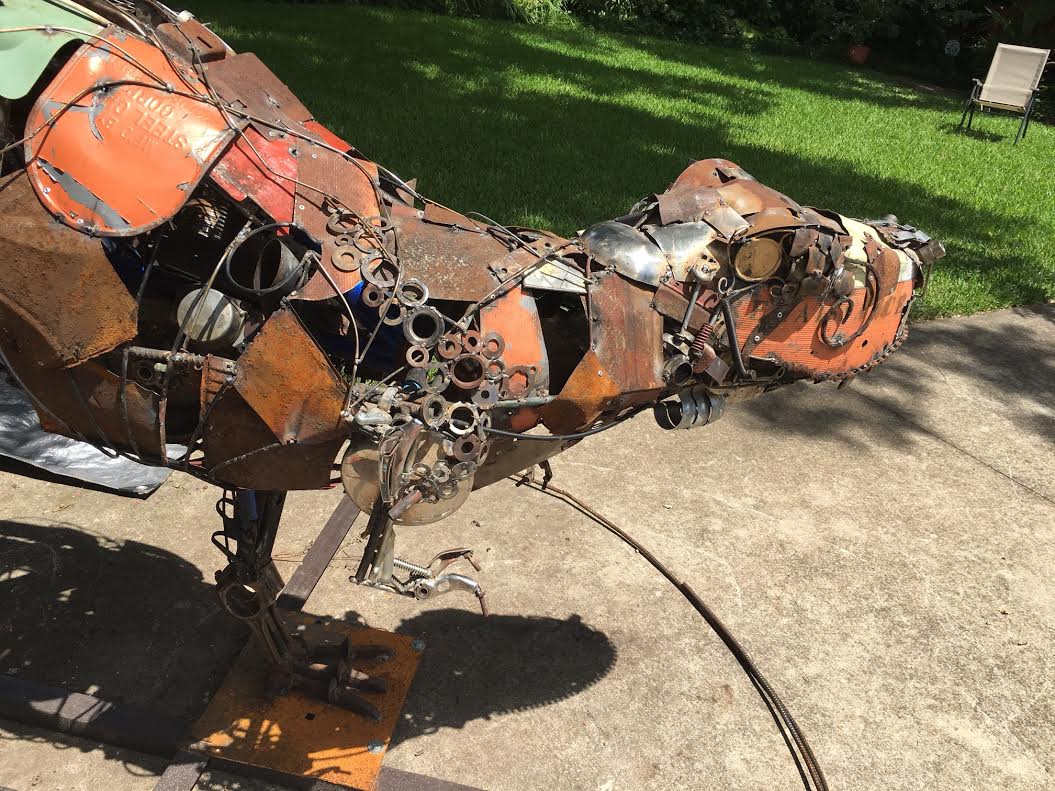
Working out of his garage, Andy White has built a sundry of creatures, including a Tyrannosaurus rex, triceratops, rabbit, snail, dragonfly, and crow.  While each sculpture currently remains in his yard, the broad-based appeal of these whimsical yet sturdy designs cannot be ignored.  The detail and craftsmanship in his work is readily apparent.

From afar, the pieces sit like industrialized replicas of magnificent creatures, some with outsized proportions that make them all the more striking.  Upon closer inspection, the time and consideration taken by White in piecing together the anatomies and choosing relevant parts quickly emerges – household objects ranging from silver spoons to frying pans decorate the sides of various animals.

It seems natural for White’s artwork to occupy public or private spaces of various sorts. Displaying his sculptures would serve as a welcome addition to the art scene in Columbia, livening up our city with a recycled art form that is both refreshing and memorable.

Andy White kindly agreed to answer the following interview questions.  His responses will hopefully spark the Columbia community to learn more about this scientist and artist. Thanks Andy!

~~~~~

When did you first start making sculptures?                                                                            

White: I’ve been trying to make things for as long as I can remember, so it’s not really a question of “when” but a question of changes in “how” and “what.”  I started welding in 2010.  Learning how to weld steel made it possible for me to assemble larger and heavier things than I ever could before, allowing me [to] make bigger sculptures that could survive outside.  Before I began to weld I worked with sheet metal on and off for years as best I could, using bolts and screws to build three-dimensional pieces and using tacks to make two-dimensional designs attached to wood.  The ability to weld removes a lot of constraints on what you can and can’t physically make with metal.  Aspects of my personal and professional life kept me from welding during most of the last few years, but I’m happy that I’ve got the space and the time to do it again now.

What inspires the subject matter for your sculptures? 

I like making animals because of their curves.  Not only do I think that curvy things are more interesting to look at (I like Art Nouveau much more than Art Deco), but building something curvy makes it much less problematic that I’m a sloppy artist and a terrible welder.  While I admire people who are very good technical welders, I don’t want to have to sweat the details of straight lines.  The world already has enough straight lines.  And too few dinosaurs.

A lot of the pieces of metal that I use have personal associations with certain times or places.  I like putting those things into a sculpture because it creates a kind of scrapbook – those bits and pieces hold memories, and creating something new with them gives those memories a physical place in the present.  I’ve found that blending memories together makes some of them blurry, but I think that’s okay too.  Ferrous metal will rust away into nothing eventually, just like memories do.  You have to make conscious decisions sometimes how much effort you’re going to put into preserving relics of your own past.  What do you hold on to and what do you let degrade into nothing?  My sculptures provide a way for me to work through that.


Andy White 2

Can you please describe your artistic process, if any, for creating your pieces?                     

It usually starts in my head with an idea for something I want to build rather than holding a piece of scrap in my hand and saying “this could be an eyeball” or something like that.  I will generally browse pictures of living animals online or in books and see if I can find a posture that I like for whatever creature I’m thinking about.  Sometimes I’ll print out an image and take a few measurements to guide scaling the anatomical proportions somewhat accurately.  But often I’ll just keep eyeballing the piece as I go, adding things for strength, volume, shape, etc., and trying to get the key attributes I’m looking for to “click.”  Sometimes I’ll have a piece of metal that I really want to use because I like the way it looks or because it has a strong memory attached to it, but I won’t be able to find a place for it.  Sometimes I get “stuck” because I don’t have things around that will make what I’m building look like what’s in my head.  Sometimes I find something new on the street and it takes the piece in a different direction.  Sometimes a change of direction is probably for the better, and sometimes it’s probably not, and usually there’s no way to know because you have to choose a path and go with it.  Sometimes I’m in love with what I’m doing, and sometimes I hate the damn thing.  Sometimes I burn myself or cut myself, or something falls off the sculpture or the crane falls over on me.  Eventually I become more interested in working on something else, and whatever is inside the garage gets put outside.  That’s how I know it’s done.

Why did you choose to pursue Anthropology and Archeology as your profession?       

Humans and human societies are the most difficult things in the world to study and understand.  We are part nature, part culture, partly the products of our environments, and partly bound to history.  And while studying human societies in the present is difficult, studying them in the past is even harder.  Archaeologists have to find ways to make credible statements about the past based on a pretty sparse jumble of material evidence that is intentionally or unintentionally left behind.  We can’t directly observe the societies we want to study, but have to look for patterns in those few material traces that remain. We have to not only compel those things to tell stories, but we have to find ways to test those stories and see if they make sense.  The science of the human past may be the most challenging kind of science one can choose to do.  But that also makes it the most fun.

How does your background in Anthropology/Archeology influence your metalworking?

Indirectly, I think, in a couple of ways.

First, the material evidence that archaeologists work with is largely the debris of everyday life– stuff that’s been discarded, lost, left behind.  Sometimes the things that end up in the archaeological record have symbolic meanings attached to them, but often they don’t.  Sometimes things that are thrown away lose their original meanings but are later used by someone else who may attach new meanings.  That’s sort of what I do as well, creating objects with new meanings from collections of cast-offs.

Second, three-dimensional things require a structure that provides both strength and form.  There are different strategies for doing that in the natural world (you can have your skeleton on the inside, like mammals, for example, or on the outside, like insects and crustaceans).  Each has its advantages and disadvantages.  There are different strategies for organizing human societies, also, that are associated with different strengths and vulnerabilities.  When you build something artificial, you have to think about the sources of strength and form.  Does the strength come from some kind of robust central frame, or from the interconnectedness of numerous smaller parts?  Do the same structures provide both strength and form?  Building three-dimensional objects out of scrap metal presents logistical and artistic challenges, the “solutions” to which can have parallels in both natural and cultural phenomena.


Andy White 3

Do you have any future projects in store? Would you ever be interested in making public art?                                                                                                                                                                                 

I always have something in the works . . . sometimes I sweep the garage floor between projects, and sometimes not.

Everything I’ve done so far has been (mostly, anyway) for me.  I make what I want when I have time to do it.  I enjoy the process and the results, and those things together make it rewarding.  Purposefully making something to be displayed in public would change that equation somewhat, but it would be fun to give it a shot if it was an interesting idea that I thought I could pull off and the product would be somewhere I could take my kids to see it. I would have to make some adjustments to produce a piece suitable for a public, outdoor space: it would have to be less ornate and I’d have to pay closer attention to leaving sharp edges.

What's one of the most bizarre items you have found on the streets? Have you ever encountered any problems picking up debris from the curb?                                         

I’ve found much stranger things doing archaeological fieldwork than I have cruising the curbs.  I cannot mention those things.

Did you ever expect to garner publicity surrounding your at-home art projects?  

No!  They’re in the back yard for a reason!  It’s flattering when people have nice things to say, but I’d do it regardless.  As long as my family likes them well enough that I can keep some in the yard, I’m good.

Just for fun: If you could time travel, what time period would you go to? 

I think I’d probably go back to the Middle Paleolithic, around 200,000 years ago.  Despite all the human fossils and archaeological sites that we know of from this time period, there remain intense debates about what humans and human culture were like then.  Although it’s a poorly understood time period that I would like to visit, however, I think I know enough about it to know I wouldn’t want to stay for long.


 GALLERY

andy white 4

Andy white 5

Andy White 6

Andy White 7

Andy White 8

Hoechella: Rock against the patriarchy by Ony Ratsimbaharison

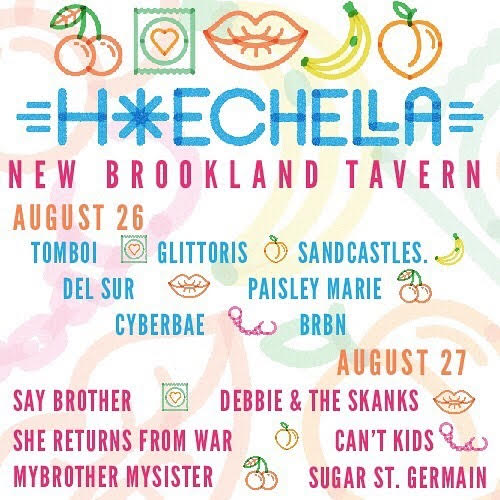
hoechella Next month a festival to raise awareness on body-positivity, called Hoechella, will run August 26-27 at New Brookland Tavern. The festival, organized by local musician and stage actor/director, Kari Lebby, was created to combat “slut shaming, rape culture, and unjust legislation that affects people's bodily autonomy.” This event will be completely free, thanks to Girls Rock Columbia and Girls Rock Charleston, who procured funding for the event, Lebby says.

The decision to throw this event came from a desire to subvert the idea that expressing ones sexuality should be shamed and made to be a bad thing. “It isn’t a bad thing,” Lebby says. “What is a bad thing, however, is the marginalization of women, people of color, and queer people.” By holding this event, they wish to bring artists and leaders from these communities together for visibility and to encourage everyone to be comfortable with who they are, and to be informed about issues that affect us all.

The festival will feature local and regional acts, almost all of them including at least one member who is queer, a woman, or a person of color, according to Lebby. Debbie and the Skanks, Cyberbae, MyBrother MySister, Glittoris, and Can’t Kids will be performing, just to name a few. They cover a wide range of genres, which was another important factor in booking. This is to showcase diverse acts and to hopefully bridge some of the gaps in our ranging music scene.

Hoechella became a fully-realized festival in what seemed like no time at all, but that was not without the help from people and organizations in our community. “I just have crazy ideas, but it takes a ton of people to make it happen!” Lebby says about seeing Hoechella come to fruition. People from the organizations Girls Rock Columbia and Girls Rock Charleston, along with the staff at New Brookland Tavern helped to solidify their plan, while others helped with things like the organizing and designing of the logo.

Lebby hopes this event will encourage people to start speaking out against rape culture, body shaming, slut shaming, and unjust legislation. It will hopefully add a new spin on the typical shows we see here in Columbia, with added awareness and encouragement to be comfortable with one’s self and their personal choices.

For more information, check out Hoechella.org.

Full list of performers

Can't Kids, Say Brother, Debbie & the Skanks, MyBrother MySister, She Returns from War, Glittoris, Sandcastles, Paisley Marie, Del Sur, Cyberbae, BRBN, and Sugar St. Germain.

6 SONGS FOR SUMMER, 2016 by Alex Smith


"It is happening...again..."

-The Giant in "Lonely Souls", episode 14 of TWIN PEAKS

Eight months is a blink of an eye these days. I used to call songs like these "prescient". Now I just think of them as reminders I can shake my ass or slow dance to, but reminders, nonetheless, that we're not learning anything from history. And these days, history keeps getting closer and closer...

Listen to these songs. Shake your ass. Slow dance. But LISTEN. If they don't seem topical right now, just wait until it is happening again. Because it will.
One

David Bowie - "It's No Game (Part 2)" from the 1980 album SCARY MONSTERS (AND SUPERCREEPS)

"I am barred/from the event/I really don't understand this situation/so where's the moral?/People get their fingers broken/to be insulted by these fascists is so degrading...."

Alex David


Two

The Clash - "English Civil War (live)" outtake from the film RUDE BOY

"It's still at the stage of clubs and fists/hurrah....hurrah/a well known face got beat to bits/hurrah...."


Alex Clash

Three

Rolling Stones - "Street Fighting Man" from the 1968 album BEGGARS BANQUET

"Everywhere I hear the sound of marching charging feet, boy/'cause summer's here and the time is right for fighting in the street, boy...."


Alex Stones


Four

Stevie Wonder - "Big Brother" from the 1972 album TALKING BOOK

"My name is secluded/we live in a house the size of a matchbox/roaches live with us wall to wall/you've killed all our leaders/I don't even have to do nothing to you/you'll cause your own country to fall...."


Alex stevie


Five

John Lennon/Plastic Ono Band - "Woman Is The Nigger Of The World" from the 1975 album SHAVED FISH

"If you don't believe me take a look at the one you're with...."


Alex john


Six

Nina Simone - "Ne Me Quitte Pas" written by Jacques Brel, from the 1965 album DON'T LET ME BE MISUNDERSTOOD

This song was my sole response on social media after the terrorist attack in France. Eight months ago.
alex nina
 Eight months is a blink of an eye these days. But these days, eight months ago is so easily forgotten that it's history, too. Listen to these songs. I'll see you in the street.

-Alex Smith

July 15, 2016

~~~

Alex Smith is a multi-talented visual and performing artist , based in Columbia, SC, who also writes.


Girls Rock Columbia Rock Concert Announced - 20 Bands!

GIRLS

Girls Rock Columbia Campers Conclude Fourth Year of Camp with Rock Concert 20 bands comprised of 77 8-17 year olds take the stage Columbia, S.C.

Girls Rock Columbia campers from two sessions will let their confidence shine at a showcase this Saturday at Columbia Museum of Art. The showcase will last from 3pm until 5pm and the doors open at 2pm.

The camp, which concludes its fourth year of camp on Friday, extended its programming to two weeks this year. The first week of programming catered exclusively to teenagers and those teenagers applied what they learned as junior counsellors during the second camp session, for campers 8-12. In addition to learning a traditional rock instrument and writing a song, campers also participate in band coaching, and workshops; Audio Console Mixing, Stage Presence, Herstory of Women in Rock, Body Positivity, Building a Pedalboard, Rock Photography and Zine Making.

“Too often people look at youth as having the potential to be something powerful someday,” said Mollie Williamson, executive director, “but at Girls Rock Columbia we think it’s important to recognize that these kids are change makers today. They are brave, powerful and changing the word right now. It’s really incredible to see them recognize that in themselves over the span of five days. Kids who are too shy to speak into a mic the first day are playing drum solos and screaming out lyrics by the end of camp. Being a part of helping these youth recognize their potential for making positive long lasting changes in the community is something that I feel so proud to be involved with. These are a generation of kids who are going to change the world.”

In its fourth year of operation, Girls Rock Columbia has more than quadrupled in size. Girls Rock Columbia is a non-profit organization dedicated to fostering a community of girls, trans* and non-binary youth in Columbia and empowering them through music education. The program encourages an environment that cultivates self-confidence, challenges gender stereotypes, promotes positive relationships, creativity, and leadership. The ultimate goal of Girls Rock Columbia is to empower everyone involved; both campers and volunteers, to take the sense of community learned from within the organization and carry that throughout the city they call home.

Admission to the showcase is $10 for adults and $5 for kids under 12. Children 3 and under are free. Doors open at 2pm. For more information about Girls Rock Columbia, please visit www.girlsrockcolumbia.org or follow on Twitter and Facebook.