Announcing a new Jasper Project Endeavor -- the Lizelia August Jenkins Moorer Poetry Chapbook Prize for SC BIPOC Poets

In honor of the 20th century poet, Lizelia Augusta Jenkins Moorer, the Jasper Project is delighted to announce a new project, the Lizelia Augusta Jenkins Moorer Poetry Chapbook Prize for SC BIPOC poets.

Lizelia Augusta Jenkins Moorer (1868-1936) was a teacher and social activist in Orangeburg, SC. Born in Pickens, SC, she taught at the Normal and Grammar Schools at Claflin College for 40 years. Her published anthology of poems Prejudice Unveiled and Other Poems (1907) examined the Jim Crow South’s propensity for lynching, racism, and social injustice. Moorer was also an advocate for women’s suffrage in South Carolina, especially in the Methodist Church. 

The purpose of the Lizelia August Jenkins Moorer Prize, affectionately called the Lizelia Prize, is to offer a first-time BIPOC poet from SC a publishing contract with Muddy Ford Press to publish their debut chapbook under the guidance of an established poet. The vision of Dr. Len Lawson, who is a member of the Jasper Project board of directors and the author, editor, or co-editor of four books of poetry, Lawson will also serve as project manager as well as editor of the winner’s chapbook and will collaborate with the winner on the construction of the book.

SC BIPOC poets who have yet to publish a book of poetry are invited to submit 30-40 single spaced numbered pages in Times New Roman 12pt and include a cover sheet with your name and manuscript title. Your name should not appear on the manuscript. The winning submission will receive publication via Muddy Ford Press, a cash prize of $250, and ten author copies of the book. Submissions should be in the form of a Word doc and should be sent to lizeliapoetry@gmail.com no later than February 28th, 2022.

JIM CROW CARS.

by Lizelia Augusta Jenkins Moorer

If within the cruel Southland you have chanced to take a ride,

You the Jim Crow cars have noticed, how they crush a Negro's pride,

How he pays a first class passage and a second class receives,

Gets the worst accommodations ev'ry friend of truth believes.

'Tis the rule that all conductors, in the service of the train,

Practice gross discriminations on the Negro—such is plain—

If a drunkard is a white man, at his mercy Negroes are,

Legalized humiliation is the Negro Jim Crow car.

'Tis a license given white men, they may go just where they please,

In the white man's car or Negro's will they move with perfect ease,

If complaint is made by Negroes the conductor will go out

Till the whites are through carousing, then he shows himself about.


They will often raise a riot, butcher up the Negroes there,

Unmolested will they quarrel, use their pistols,rant and swear,

They will smoke among the ladies though offensive the cigar;

'Tis the place to drink their whiskey, in the Negro Jim Crow car.

If a Negro shows resistance to his treatment by a tough,

At some station he's arrested for the same, though not enough,

He is thrashed or lynched or tortured as will please the demon's rage,

Mobbed, of course, by "unknown parties," thus is closed the darkened page.

If a lunatic is carried, white or black, it is the same,

Or a criminal is taken to the prison-house in shame,

In the Negro car he's ushered with the sheriff at his side,

Out of deference for white men in their car he scorns to ride.


We despise a Negro's manhood, says the Southland, and expect,

All supremacy for white men—black men's rights we'll not protect,

This the Negro bears with patience for the nation bows to might,

Wrong has borne aloft its colors disregarding what is right.

This is called a Christian nation, but we fail to understand,

How the teachings of the Bible can with such a system band;

Purest love that knows no evil can alone the story tell,

How to banish such abuses, how to treat a neighbor well.

Raena Shirali will be serving as the adjudicator for the Lizelia Prize.

Raena Shirali is a poet, editor, and educator from Charleston, South Carolina. Her first book, GILT (YesYes Books, 2017), won the 2018 Milt Kessler Poetry Book Award, and her forthcoming collection, summonings, won the 2021 Black Lawrence Press Hudson Prize. Winner of a Pushcart Prize & a former Philip Roth Resident at Bucknell University, Shirali is also the recipient of prizes and honors from VIDA, Gulf Coast, Boston Review, & Cosmonauts Avenue. She holds an MFA in Poetry from The Ohio State University Shirali and is an Assistant Professor of English at Holy Family University, where she serves as Faculty Advisor for Folio—a literary magazine dedicated to publishing works by undergraduate students at the national level. Her work has appeared in American Poetry Review, Academy of American Poets’ Poem-A Day, The Nation, The Rumpus, & elsewhere.

PRINTWORTHY! Michaela Pilar Brown is in the Right Place at the Right Time

Reprinted from Jasper Magazine Fall 2021

by Cindi Boiter

Over the past decade, Jasper Magazine has written about Columbia-based multi-media artist Michaela Pilar Brown many times. This passage of time has witnessed Brown become a leader in our community, not only as a result of her myriad accomplishments but also by the now-international stature she commands across the most-sophisticated fine arts circles.

Brown’s career has been punctuated by a steady continuum of shows, awards, residencies, and related experiences that have helped shape the 50-something artist into the fierce icon she is becoming. Taking home the 2018 Artfields Grand Prize for her mixed-media installation She’s Almost Ready is upmost among her accolades, as is being awarded the inaugural Volcanic Residency at the Whakatano Museum in New Zealand that same year.

Born in Bangor, Maine, and raised in Denver, Brown became an influential member of the Columbia arts scene soon after she moved here in 2013. Having spent many a childhood summer visiting the Fairfield County farm where her father lived, Brown had returned to SC a dozen or so years earlier to help care for her aging family patriarch. His land and its legacies were a part of who Brown was even when the she first left home to study at Howard University in the ‘80s and ‘90s.

“Howard felt like family. My professors let me continue my work even when I couldn’t afford tuition,” Brown says. “I spent a lot of time learning outside of academia.”

Critically influenced by such trailblazing American artists as Frank Smith and Jeff Donaldson, Brown identifies world-renowned sculptor Richard Hunt as impacting her work ethic the most.

Hunt, who may be the most highly accomplished contemporary Black American sculptor and creator of public art in the country, visited Howard to install a piece of his work during Brown’s time as a student. When a piece of his art was damaged, Brown was recruited to help with the repair. A burgeoning artist-protégé relationship led to an invitation to study with Hunt for a summer in Chicago.

“I was green and just so honored,” Brown says. “He worked fervently all the time and I worked all the time,” noting that she initially wanted to make public art herself. In fact, the young artist had interned at the International Sculpture Center, part of the Washington Project for the Arts, as well as the Smithsonian Institution.

The emphasis on family and the support systems it can naturally provide had followed Brown to Howard, where the faculty became supportive elders for the young artist. The intimacy and sacredness of her ancestral home not only informed Brown as an artist but also provided her with a profound understanding of the strengths and challenges of southern Black art writ large, as well as with the workings of the local arts community specifically.

After her father died in 2007, Brown’s mother soon also came to depend on her and her brothers for what ultimately would be end-of-life care. It was a crushing loss that further strengthened Brown’s resolve to take command of her platform like never before. The artist continued to bring the roots and wings she had embraced — on her home turf, in DC, and in Chicago — into an enduring relationship with Columbia-based theatre artist Darion McCloud and his daughter more than ten years ago.

“All these experiences changed the shape of the work I was doing and what I wanted to do,” Brown says. “My work became much more personal and honest. My focus came to include what it means to me to be Black in SC, but it also focuses a great deal on love and how we grieve.”

Among her major accomplishments over the last decade has been taking on the position of executive director of 701 CCA – Columbia’s Center for Contemporary Art. 701 CCA is located on the second floor of the historic 701 Whaley Street complex and featured on page XX of this magazine.

Arguably the perfect person for this position due to her local and international profile, Brown is the first Black woman to have this role, and she handles the responsibility with a resolute intensity. “701 [CCA] has historically been a place of inclusion,” Brown says. “I am engaged in protecting that and expanding it through exhibitions, programming, community dialogue, and programs outside our walls that engage the community directly in neighborhoods and through community partnerships. … We had a challenging moment recently, and I'm proud of who we are on the other side of it. I'm proud of the public statement we made and the manner in which we supported our artist.”


Brown is referencing the night of May 17, 2021. John Sims, an artist-in-residence at the gallery was living in an apartment assigned to him in the building at 701 Whaley Street when he was accosted, handcuffed, and held at gunpoint as a “suspicious person” by the Columbia Police Department. Brown released a statement in response to the attack, saying the incident was not the first time a resident at 701 had encountered the police. “It was the first time, however, such an encounter led to hostile confrontation, detention, cuffing, and a records check. On the contrary, such previous encounters have resulted in courteous apologies from officers. The difference? Race. Mr. Sims is a Black man; the other incidents involved a white man.”

“Like other community-based, nonprofit institutions,” Brown continues in her statement, “CCA has the responsibility to shine light on injustice it encounters and to be part of an active dialogue to make real and discernible change. We cannot ignore the relationship between white supremacy that permeates our culture and the racial profiling we believe infected John Sims’ treatment by CPD officers. … What we can and will do is support the efforts of John Sims as the CCA artist in residence to tell his story, to provide context for that story through his artistic expression, and to seize the opportunity to join with him and the greater Columbia community as we continue the struggle for racial justice.”

It is Brown’s intimate knowledge of the patrons of 701 CCA and the community it supports that informs this position so well. “I am optimistic about the Columbia art scene,” she says. “This is a community that wants change, that's ready to face the challenges of the moment with art leading the discussions. I am hopeful that our politicians recognize the value of art for the betterment of this community, for the comfort it brings, for the space it makes for challenging conversations, and for the expansive learning opportunities it offers young people. I also hope they support it with dollars, and not just the legacy institutions, but in an expansive, inclusive way.”


Lori Starnes Isom Explores Emotion Through Faces and Figures in New Tiny Gallery Show Sentimental Mood

Jazz Stylist

As we bundle up and get prepared to gather around tables and share thanks with ourselves and the ones we care for, consider expressing that love with an irreplaceable drawing or painting from Lori Starnes Isom, Jasper’s featured November Tiny Gallery artist, whose show Sentimental Mood is up now. 

Lori Starnes Isom is a New Yorker at her origins, born in Brooklyn and growing up in Queens, where she went to an arts high school and college. Her first interest in art came far before school, however, around age six.

 “I remember drawing lots of go-go dancers wearing white boots - probably inspired by the show ‘Laugh-In,’ which most likely inspired my desire to be a dancer as well!” Isom recalls. 

Though her schooling in art absolutely aided in Isom’s understanding of the genre, she roots most of her ability to “voraciously” consuming and studying other artists’ work as well as art content in print. This seed continued to grow not just as a student but a teacher, with Isom having taught children's art classes at the private level.

 As an artist, Isom is proficient in a plethora of mediums, though her favorite is charcoal due to her longstanding history with it and its “depth and richness.” When it comes to painting, specifically, she prefers watercolor due to its translucent texture and visuality. 

Visionary

“At first my work looked really stiff because I was trying to control the paint. But after a while, I learned that watercolor works best if you let it do its thing,” Isom explains, “I eventually switched over to acrylics because framing charcoals and watercolors got way too expensive!”  

Acrylic also provides a “versatility and ease of use” that allows Isom to repaint and alter art while already in-progress, which works in tandem with her personal style that she refers to as “loose [and] painterly.” In contrast to this is the detail she puts into faces, with figures and portraits often being the subject of her work. 

Isom credits artists such as Mary Cassatt, Johannes Vermeer, and John Singer Sargent as being inspiring forces for her. This compounds with her personal motivations in storytelling.  

“My driving force is always to tell a story or pursue an idea. I work from old photos a lot because I'm familiar with the people in them, and I deeply enjoy the challenge of bringing life to them,” Isom intimates, “I also really enjoy working in monotone and large, solid swathes of color because it causes the viewer to focus more on the story.”   

Isom’s process is one of balancing the freedom of ideas and maintaining simplicity, which allows for a striking expression of emotion and affect, finishing a piece when there is “nothing more that needs to be said.” 

For this Tiny Gallery show, Isom offers an intimate exploration of humanity, focusing on what she loves most: people. Sentimental Mood is a collection of 8 new and old pieces in multiple mediums.  

In one, a watercolored woman stands tall, gazing above her at something just off canvas. In another, a couple with soft, blurred faces yet stark emotion stand pressed against another, with an emerald green dress its center. Another zooms in close to a singing woman, mouth open in the ecstasy of song, fingers softly tendrilled around her microphone. 

“As far as a favorite,” Isom shares, “I think that would be "Close to My Heart", because it's a simple pencil drawing of my mom and her mother, Daisy, whom I never got to meet.”  

Close to my Heart

Within or outside the show, Isom has and continues to make a mark on our community with her expressive, pointed, and unique work. “I am acutely aware that it's a gift to be able to express myself in a creative way and know that I am in full control of how far I allow that creativity to grow,” she effuses. 

Isom’s show will be up until November 30th at Jasper’s online gallery, which is accessible 24/7: https://the-jasper-project.square.site/tiny-gallery.    

Concurrent to and after the show, Isom’s work can be viewed at the new Gallery 537 in Camden, South Carolina. You can also follow along her journey on Instagram and Facebook @loristarnesisom. 


—    Christina Xan

Future Fortune Artist Talk: Dogon Krigga interviewed by Michael Murray at Tapp's Outpost October 3rd, 2021

Tapp's Outpost is excited to host an intimate discussion between Artist Dogon Krigga and Co-host of the Podcast Cultivated Ignorance, Michael Murray, on October 3rd at 4pm. Unpacking the vision and inspiration of the exhibition Future Fortune: A visual treatise on perspective, Dogon and Michael will hone in on the experiences, characters, and world views that shaped the artists visual story line. The talk will also be streamed on Facebook live for those community members who can't participate in person. The show is currently on view at Tapp's Outpost, 715 Saluda Avenue, Columbia, SC 29205, and is free and open to the public Tuesday through Saturday 10am to 6pm

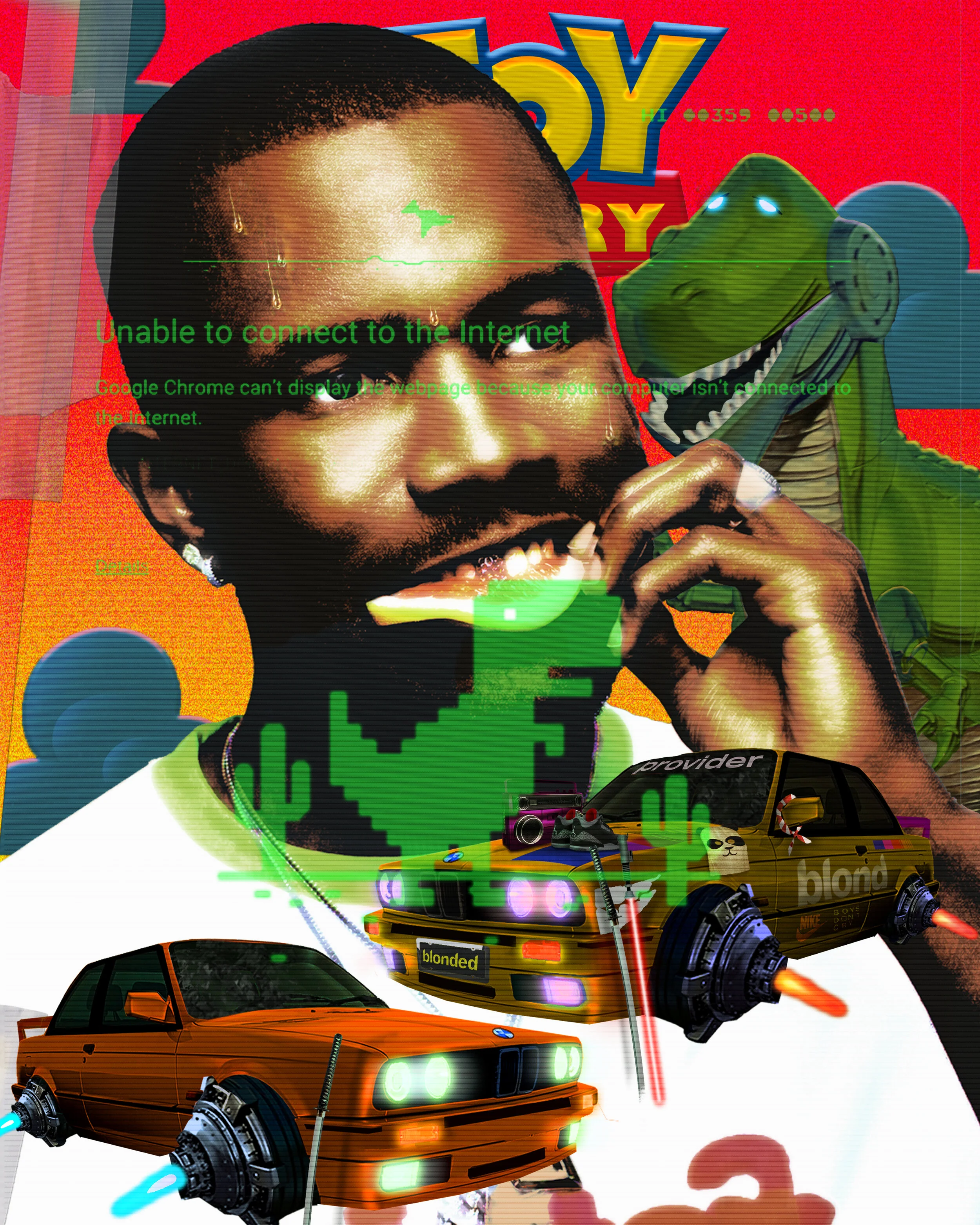
Dogon Krigga expresses magick with the use of pixel and paper. Known as “the keeper of the crossroads between magick and mixed media”, Dogon incorporates divine mysteries, transcribed over time throughout their ancestors’ experiences to connect Black people to the future and the past.

Dogon immortalizes modern and ancient traditions, wisdom, and theory into majestic and whimsical digital and mixed media collages that venerate those that came before, those that will come, and those that exist outside of time. 

Dogon Krigga utilized over a decade of experiences, techniques, knowledge and training as a graphic designer and practitioner of Afrofuturism and other African diasporic traditional religions to illuminate the spiritual paths and possibilities for all whom receive their creations.

Dogon Krigga currently resides where they grew up, in Columbia, SC. Krigga is primarily a self-taught artist, with a creative lineage connected to legends like Romare Bearden and Tom feelings. Their background in creative writing, journalism, and music production also lends to their creative perspective.

Michael A. Murray is a local poet/author who has been writing stories and stanzas ever since his hand could hold a pen. He is also a photographer, filmmaker, podcast host, public speaker, mentor, and founder of the NU GRWTH Artist Collective: a premier conduit that gives black and brown artists of the south the resources, visibility, and appreciation needed to be as influential as their dreams aspire to be.

Since 2016 Michael has joined various creative circles and founded various artistic outlets with one objective constantly in mind: Do whatever it takes to help see both the world and all those who inhabit it reach their highest, truest potential. With this goal at the forefront, Michael founded Playlixt LLC, an event and multi-media based platform built to promote and celebrate artists of various backgrounds and disciplines looking for opportunities to showcase their talents to the masses.
 

The exhibition will be on view September 9th through October 30, 2021. The exhibition is free and open to the public Tuesday through Saturday 12pm to 6pm. Masks and social distancing will be required. For questions about the works on view or Tapp's Outpost, please email caitlin@outpostartspace.org

CORONA TIMES - Jasper Talks with Robb Kershaw #BLACK ARTISTS MATTER

robb shaw 2.jpeg

JASPER: Let’s start with getting some demographics out of the way. How old are you, where did you grow up and, if you’re not from Columbia, what brought you here?                                                                                     

KERSHAW:  I’m 29 years old, born and raised in Columbia to be more specific Hopkins, SC.

JASPER: Describe, please, yourself as an artist. What medium(s) do you use? Are you self-taught or formally trained? If the latter, where did you get your training? If the former, how did you get into this line of art?

KERSHAW: This question always stumps me because at most I don’t see myself as an artist. Yes I create things but I think everyone in some medium creates things. I just tend to conceptually piece things together in an abstract nature that is easy for mass consumption. I view myself as the creator, I have an eye so I deem it worthy in my universe and I welcome those who would like free space to enter my realm. I’m a musician at times, then I write, I may sketch some stuff, but none of that accurately details an answer. I’m self taught I learn from my interaction from others, I tend to latch on and study. I view the studying of others peaceful and I learn a lot from it.

JASPER: Are you a full-time artist or do you have a day job?

KERSHAW: As much as I would love to commit to my art in the fullness I do have a day job. I never let anything art wise fall short I tend to keep a level balance on both to help me stay afloat and not sink any ship I have docked. 

JASPER: Who have been your greatest inspirations as an artist?

KERSHAW: For me I love Prince, I have the nickname Baby Prince because I truly idolize everything that energy was. It’s one of the reasons I took on a one name moniker as ROBBIEBADBOI. Though I should say this as well I don’t like tossing names out as inspiration. I do rather toss certain works that inspired me by said artist rather than glorifying the artist themselves. It takes a very special energy for me to just stop the press and praise namesakes.


JASPER: You answered that you see yourself as a creator more than an artist. Can you tell us about 2 or 3 of your most recent art projects?

KERSHAW:  I feel as if the word artist limits us as creators into a hub that labels us within only a certain spectrum. I feel The world creator is infinite and can’t really be defined as just one set thing. I want to be able to do it all if not try.

So far I was able to release two projects this year I was able to drop a short web comic that is now being reimagined in a serious manga drop. The project is called Binkie Babes which centers around 3 magical girls and their fight to stop the dark universe. Fun fact I started this series back in middle school with a similar concept in mind ha.

And I can’t forget the music, I currently released my first project as a solo artist “MISSING: HAVE YOU SEEN BADBOI, THE LOST TAPE VOL1” which was crazy scary especially after being within a group dynamic for so long you kinda lose a sense of self so I’m regaining a lot of that back with the BADBOI project. 

Robb shaw.png

JASPER: How has the pandemic impacted your ability to create?

KERSHAW: This pandemic has presented a lot of negatives but I have to examine the positives from it and I must say that it has given me the time to hone in. I don’t believe I would be as focused as I am to write the projects I’m currently in the middle of without this happening. I was so busy traveling and running around that I never got the true time to sit and just create. So I’m truly proud of the things that are coming.

Coming from an alternative rock project (NEPOTISM) I thrived from live interactions but since our indefinite hiatus I locked myself away from most public interactions only popping out so often because I wanted to find myself. So yeah I’m grateful for the calm (though it’s anything but)

JASPER: What's next up for you creatively? Where and when can we experience your upcoming work?

KERSHAW: So currently I’m working on a few animation projects. Animation has my entire heart ha. I have a manga (comic) project coming later this year called Binkie Babes and will be releasing another project next year called KOLUH (COLA) it’s a series pretty much about a Supernatural Columbia but I want to explore and reimagine the history of South Carolina as a whole.

Jasper Talks with Benjamin Moore, aka Farticus, about the "Plandemic," Egon Schiele, Basquiat, BLM, His Parents, and the Way Forward for the Columbia Arts Community

“Brown artists in alignment with the BLM movement aren't asking to be placed on a pedestal until things somehow "blow over", we aren't asking anything at all. We're demanding that in exchange for our support (the black dollar) that we share the spaces where decisions formulated.”

- Benjamin Moore, aka Farticus

benjamin moore 3.jpeg

I first met Farticus a few years back when he was in the middle of installing a group show at the old Tapp’s Art Center on Main. Caitlin Bright, director of the center, introduced us and it was in those last few chaotic hours before First Thursday when the old building would absolutely pulse with the music and the energy of our favorite night of the month.

I’m not sure how or why I missed the opportunity to better get to know Farticus back then, but that is what it was - a missed opportunity.

The young artist and Columbia, SC native was kind enough to participate in a virtual interview with Jasper last week and we’re honored now to share his honest and evocative perspectives with our readers.

-Cindi Boiter

JASPER: First, tell us about the work you do -- what is your discipline/medium, how long have you been at it, are you formally trained (if so, where and when) or are you self-taught? 

MOORE: I am a self-taught, multi-disciplinary visual designer and creative director best known for my experimentation with texture, typography, semiotics, color theory and reinvention of pop culture references. I use nostalgic and sci-fi elements to translate an abstract perspective of daily life in an aesthetically consistent, distinct, and relatable format. I’m experienced in textile mediums (collaging, watercolor and acrylic painting, crayon, colored pencil, marker, and more). The spectrum of my pieces varies from detailed, layered and seemingly chaotic mixed media to clean and simplistic layouts emphasizing composition, juxtaposition, and effective advertisement. I’ve been experimenting with mediums of expression for nearly a decade. 


JASPER: How old are you and how would you describe yourself philosophically?  

MOORE: I’m not one to give age too much power. I feel it can misrepresent maturity in a lot of ways, so I tend to think of it purely as an indicator of inherited wisdom. Experience is just as good a term. Not to say that inherited wisdom and experience is always applied. I’m 29 but when most people ask, I just tell em I’m 8… turned to the side. Philosophically speaking, I’m a black man with heightened intuition. 

Benjamin moore 1.JPG

JASPER: Who have been your major influences as an artist?

MOORE: Artists that have had a major influence on me are: Jean Michel Basquiat, Romare Bearden, Frank Stella, Egon Schiele, Mark Rothko, Ellis Wilson, Vincent Van Gogh, Pablo Picasso, Hajime Sorayama, Tekashi Murakami, Kanye West, and of course my parents. 

JASPER: Can you talk about how your parents have influenced you as an artist?

MOORE: Well, outside of showering me with support and encouragement, they're two of the most resourceful, self-motivated, and inspiring people in my life. My father is an entrepreneur. That's a different level of creativity. And my mother is an interior designer. They're both sticklers about quality, thoroughness, and professionalism but they don't take shit from anybody. Their taste and attitude are most definitely hereditary.  

“I truly believe we navigate on a timeline of tasks. Some are born undoubtedly aware of their purpose and contributions to the human experience. Others like myself spend a lifetime figuring it out. As artists, we help those that are less expressive understand, appreciate, and better document their individual timelines.”

JASPER: It's super interesting that both sci-fi and nostalgia find voice in your art. Care to speculate on why that may be?

MOORE: Nostalgia is a lot like DNA. It's a shared consciousness to those that experienced whatever visual, sound, or event. I feel it's unavoidable being that history repeats itself. As for sci-fi, it's an alternate reality, oftentimes future tense. You mix memory with prophecy or premonition and you've got artwork that's timeless. When I incorporate these elements, I'm inserting my personal preferences into an agreed upon "reality" to create my own. 

benjamin moore 4.jpg

JASPER: I was glad to hear you mention Egon Schiele as one of your influences. You probably know that Schiele died at the young age of 28 during the Spanish flu pandemic. It's heartbreaking to think of the loss of such a powerful artist at such a young age -- and especially when we're experiencing a similar pandemic in 2020. Can you reflect on this as a young artist and share your thoughts with us?

MOORE: I hadn't realized the Spanish flu was his cause of death, but I too found his early demise interesting and unfortunate. It helped me appreciate self-portraits that much more. Inspired me to make as many of myself as I could. If you've ever heard of The 27 Club, Jean Michel Basquiat too had an untimely transition. I truly believe we navigate on a timeline of tasks. Some are born undoubtedly aware of their purpose and contributions to the human experience. Others like myself spend a lifetime figuring it out. As artists, we help those that are less expressive understand, appreciate, and better document their individual timelines. The way art appreciates once an artist transitions may have everything to do with the messages and documentation in which they dedicated themselves to, finally being exalted. It's all in divine and supreme timing.  

JASPER: Can you tell us about your pseudonym please? What is its origin and do you/will you continue to use it as an artist?

MOORE: The pseudonym is an icebreaker and an easy way for me to gauge personality types. Some refuse to call me it, some are apprehensive but accepting of it, others can't stop themselves from saying it. I have friends that abbreviate my name to PDF, honestly, both Fart and Farticus were given to me as nicknames. Of course, Fart came first. An ex-girlfriend began calling me Fart once we had gotten comfortable enough to fart around one another. It helped me realize we only fart around people we love. I've since referred to the moniker as me humbly saying I feel as though I'm the shit and that anything we feel deep in our gut is worthy of being expressed. As for the .PDF portion, I enjoy comparing humans to large computer files. All these aspirations, insecurities, abilities, secrets, and desires compressed into this single mind and body, we're more computer like than we'd like to admit.  Above all else, the name is unforgettable, and I have a theory that 3-5-character words have the highest success rate of being both popular and iconic.

benjamin moore 2.jpg

JASPER: How has the pandemic impacted you and your ability to work and share your work as an artist?

MOORE: This plandemic (not a typo) has been fruitful to those closest to me. As artists, rebirth and abrupt adaptation is nothing we're unfamiliar with. What this moment is allowing is a more purposeful and accurate perspective of life. Once again, my ideas of past and future welding into one are being presented all around me. I've always imagined at what point will the future have progressed so much so that it would become the past. I see people getting to the core of who and what matters most, individually, and collectively. We're divvying our days more wisely, giving attention to our diet, curating our abodes, enjoying our environments in a more mindful way, and promoting personal space. 2020 has pushed us into our own realities and broken us into tribes that build trust through health and wellness. My artworks are no more difficult or easy to share than before, but the connection with my audience is greater. My audience actually grew by several hundred. I used these moments of stillness to get more familiar with commerce and production, I discovered I have a passion for cooking and preparing brightly colored dishes, my determination to make my home double as a creative space even encouraged me to transform my front room into a functioning gallery. I can't describe how motivated that keeps me to produce full show concepts with ready to hang artwork, something I would never expect to be thinking about given the current predicament and recent events.

benjamin moore 5.jpg

JASPER: How can we, as a community of artists and arts lovers, support and promote the BLM movement in a way that you and your cohort of young artists of color would realize?

MOORE: The BLM movement (not the organization because we truly have no idea how that crowdfunded money is being used) is one of Utopian coexistence via equality and updated legislation. The thing is, abolishing privilege in a system and society founded on what can be viewed as injustices, would require a new system and society in its entirety. I don't like using words like oppressed to describe people that look like me, but that's the reality of it, and pacifying any specific group with minimal revisions to a system that rewards acts of oppression will never yield long term results. It's the equivalent of taping a dam with more leaks than logical for it to work efficiently but choosing to continue doing so rather than completely destroying and rebuilding the dam. Performative acts are counteractive. Brown artists in alignment with the BLM movement aren't asking to be placed on a pedestal until things somehow "blow over", we aren't asking anything at all. We're demanding that in exchange for our support (the black dollar) that we share the spaces where decisions formulated. We either need more companies and brands built on the premise of equal representation or more that represent only us. Enterprises founded before equality was worth mentioning, ones that failed to even the playing field and instead capitalized on our disadvantages are simply outdated. The standard of white supremacy be it beauty, success, whatever, is outdated. I guess what I'm saying is, including us (as much as I hate that word and sentiment) in the genesis of an idea rather than as an afterthought is the best way to support and promote our voices to those willing to listen.