Supper Table Spotlight: Tonya Gregg and Bonita Peeples by Christina Xan

We’re featuring the artists from the Supper Table project throughout the summer. This is the 18th in our series on Supper Table Artists

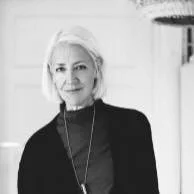
Visual Artist Tonya Gregg

Visual Artist Tonya Gregg

Alice Childress – playwright, novelist, actress. Born in Charleston, Childress dedicated her life to telling the stories of black Americans, specifically portraying the have-nots of society. Her reach was so vast, author Mary Helen Washington refers to her as “the only African-American woman to have written, produced, and published plays for four decades.”

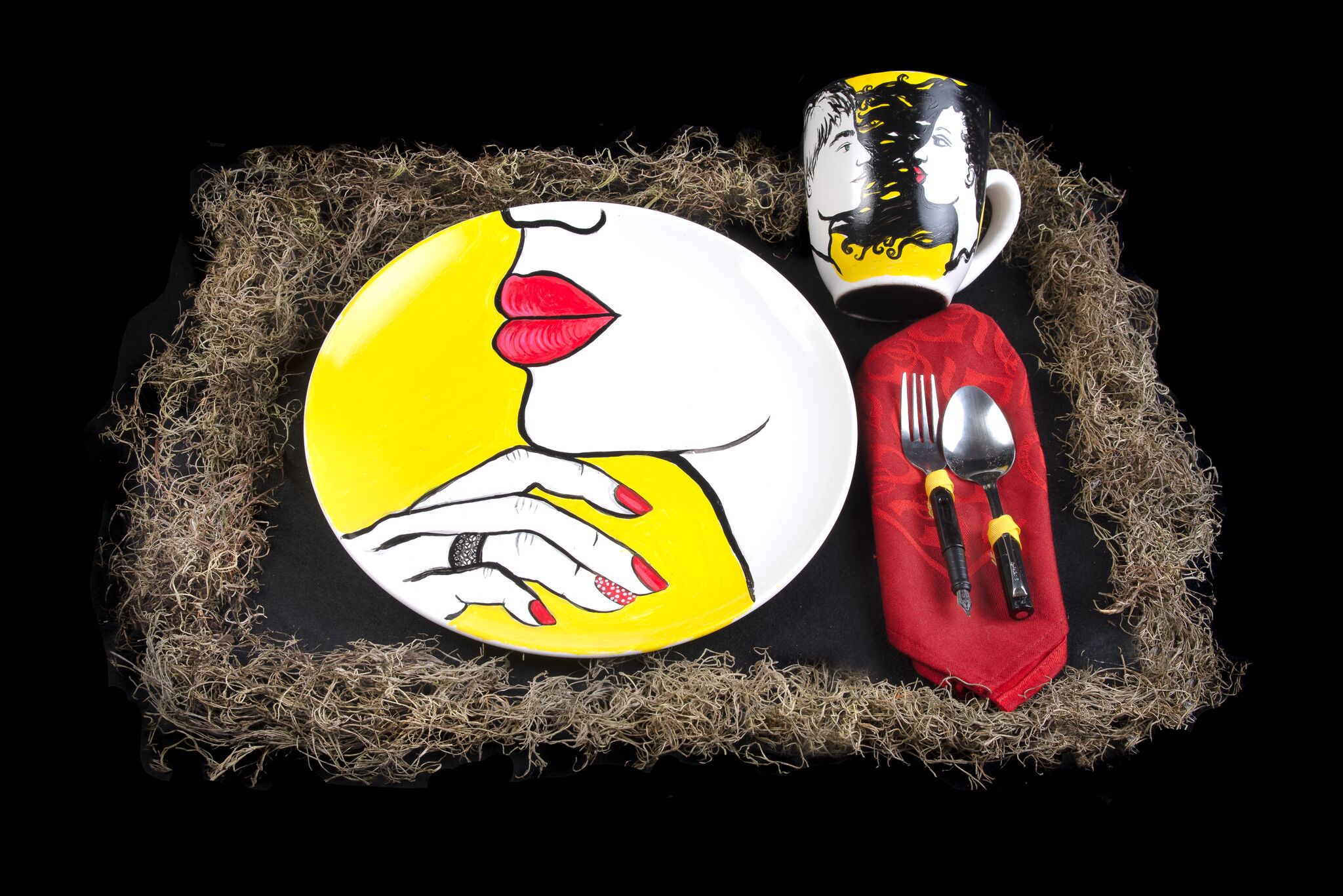
Tasked with creating the place-setting for Childress is Tonya Gregg. Gregg is a painter who studied at the Maryland Institute College of Art where she became the first full-time art student to be featured in New American Paintings. Her paintings navigate different narratives relating to popular culture, class, consumption, colorism, ancient mythology, and interwoven topics related to black girls and women. She has had solo exhibitions in multiple places locally and has exhibited in several different countries throughout the world.

Gregg explored Childress’ work and specifically found inspiration from her play The Wedding Band, a story of an interracial relationship. This is exactly what Gregg wanted to contemporize in her place setting. She used acrylic paint to create a pop-art effect on both a ceramic plate and mug. Specifically, the artist says her place-setting “is intended to invite people to the Supper Table and provide conversation, comfort or healing within this theme.”

Supper Table Alice Childress by Tonya Gregg.jpeg

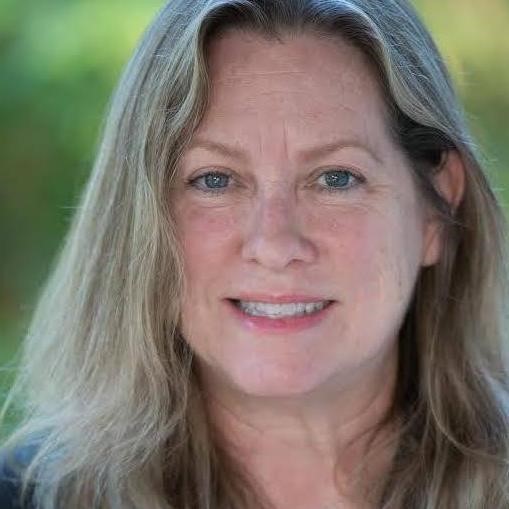
An artist putting Childress into conversation with her own body is Bonita Peeples, a theatre artist who is portraying Childress in the Supper Table theatrical performance. Peeples’ acting debut was performing a monologue of one of the greatest women in history, Madame C.J. Walker. She is a wife, a mother, and a working actor. She is a member of Kaufmann Forensic Actors, the NiA Theatre Company, and serves on the board of the Columbia Children’s Theatre.

Bonita Peeples

Bonita Peeples

Peeples recently reflected on how wonderfully human Childress was. When she would cast her plays, for example, if she had to choose between two friends auditioning for a role, she would be so fearful of hurting a relationship, she would scrap the entire project. While this could be seen as a weakness, Peeples believes it is actually a strength – proof that Childress’ love for others trumped all, a lesson that still can be learned today.

Gregg’s completed place-setting and Peeples’ performance will be available for viewing at both opening events for the Supper Table. Our opening night event is Friday, September 6th, at Trustus Theatre (going fast!), and tickets start at $50. Our second opening event is Sunday, September 8th, at Harbison Theatre, and tickets start at $15.


 -Christina Xan

Supper Table Spotlight: Bohumila Augustinova and Jocelyn Walters-Brannon

We’re featuring the artists from the Supper Table project throughout the summer. This is the 17th in our series on Supper Table Artists

Bohumila Augustinova - visual artist

Bohumila Augustinova - visual artist

Elizabeth Evelyn Wright lived less than 40 years but accomplished more in that time than most will do in 80. Wright was constantly motivated by the lack of education for her fellow black Americans, and instead of waiting around for a solution, she created one. She opened school after school, and even after those who wanted her to fail burned eight separate schools, she successfully founded what we know today as Voorhees College.


Honoring Wright’s journey with her copper-wire place-setting for the Jasper Project’s the Supper Table is visual artist Bohumila Augustinová. Augustinová was born and raised in Czechoslovakia, now the Czech Republic, but she came to the United States in 1998. She has a degree in fashion design, and after winning Runaway Runway, she quickly became part of the Columbia art scene. In 2015, she took over curating responsibilities at Anastasia and Friends Gallery. Augustinová is the leader of Yarnbombers of Columbia and is the art curator for Motor Supply Company Bistro. She works at the Columbia Art Center where she both makes art and teaches art to others.


Augustinová’s place-setting represents several elements of Wright’s life. For example, Elizabeth Evelyn Wright was biracial; she had a black father and a Cherokee mother, so the artist chose two different colors of wire that she wove together. This wire is woven into a flower, the edges of which are shaped like the flames of the arson fires that destroyed many of Wright’s schools, and the center of which represents her final success – Voorhees.


Supper Table Bohumila.jpg


Portraying Elizabeth Evelyn Wright for the theatrical component of the premiere is Jocelyn Walters-Brannon. Walters-Brannon is a South Carolina native and believer in the power of creative individuals to manifest joy and understanding into the world. She serves as Director of The Palmetto School of Protocol and earned a BA in Journalism and MA in Public Administration from the University of Georgia. Walters-Brannon has served on numerous artistic boards and committees, including Trustus Theatre, Columbia Children’s Theatre, Vibrations Dance Company, and the East African based In Movement. Her favorite stage credits include roles in Rent, Ain’t Misbehavin’, and Caroline, or Change.


Jocelyn Walters-Brannon

Jocelyn Walters-Brannon

Walters-Brannon finds Wright’s untimely demise particularly interesting. Wright was sick for numerous years before dying at the young age of 34. What she did in that time is testament to what people can do when they put actions to thoughts and words, but it also sparks the question, “What would she have done if she only had time?” This question is driving Walters-Brannon as she finalizes her performance of Wright.


To see Augustinová’s place-setting on Wright, Walters-Brannon’s interpretation of her life, and the chance to get a copy of a book or t-shirt, come to one of our opening events on either September 6th at Trustus (going fast!) or September 8th at Harbison.

-By Christina Xan

Supper Table Spotlight: Writer Kristine Hartvigsen and Actor LaTrell Brennan


We’re featuring the artists from the Supper Table project throughout the summer. This is the 16th in our series on Supper Table Artists

Literary Artist Kristine Hartvigsen

Literary Artist Kristine Hartvigsen

Althea Gibson is mostly remembered as a tennis player, and for good reason. She was the first black athlete to break racial barriers of international tennis, specifically when she became the first black American to win a Grand Slam title. Beyond this, though, Gibson was a golfer, a singer, and a woman, a human. She was a black woman trying to be a human being that had access to the same rights and activities as everyone around her, not through activism but through existing and doing her work.


The literary artist who captured Gibson’s life for the Supper Table is Kristine Hartvigsen. Former assistant editor of Jasper Magazine as well as a number of publications in the SC Midlands, Hartvigsen is an author who finds beauty in the human condition, using words to express raw stories of love, loss, hurt, anger, lust, envy and more. She currently holds a position at Piedmont Technical College as a public information specialist, but she has done much journalistic work throughout her years. Hartvigsen has had her literary work published in multiple outlets, including State of the Heart, Fall Lines, and more. She authored To the Wren Nesting, a poetry chapbook published by Muddy Ford Press, and she was twice a finalist at the SC Poetry Initiative. She is currently working on her next book, The Soul Mate Poem.


The following is an excerpt of Hartvigsen’s essay on Gibson written for the upcoming book, Setting the Supper Table, which will be launched on Friday night, September 6th at the Supper Table premiere event at Trustus Theatre:


Singles success at Wimbledon in 1956, however, was not meant to be for Althea. She had unwittingly exhausted herself in the tournaments played on the way to the All England Club. U.S. government officials were pleased overall with Althea’s world tour. She had conducted herself according to traditional conventions and represented her country well. She was more consistent and less nervous. Most importantly, she had done nothing to harm America’s equal rights image around the world. The U.S. Supreme Court had just declared bus segregation unconstitutional, so the country was on a race-relations roll.


Fast forward to 1957, arguably the pinnacle year in Althea’s tennis career. She was absolutely focused on Wimbledon above all other tournaments. She wouldn’t make the same mistake twice and made sure to be well trained and well rested before crossing the pond. Before it was all over, Althea was poised in Centre Court facing Darlene Hard in the final. This was the moment. In near triple-digit heat, it took Althea only 50 minutes to overwhelm Hard in two sets and win the singles crown. It seemed almost surreal as officials from the All England Club unfurled the red carpet at courtside, and Queen Elizabeth, who had witnessed it all, approached.


As cameras clicked rapid-fire, Althea executed her perfectly practiced curtsey, and Queen Elizabeth shook her hand before presenting the iconic Venus Rosewater platter. She was the first black Wimbledon champion in the tournament’s history. That evening at the time-honored Wimbledon ball, Althea delivered her acceptance speech, saying: “In the words of your own distinguished Mr. Churchill, this is my finest hour. This is the hour I will remember always as the crowning conclusion to a long a wonderful journey.” At the insistence of guests at the ball, Althea sang “If I Loved You” and “Around the World.” It was like a true-life fairy tale.


Taking this power and putting into a physical performance is LaTrell Brennan. Brennan is a professional stage, film, and voice over actor with over ten years of experience. She is a Trustus Theatre company member and has been seen in productions such as Silence! The Musical (Ardelia), Fun Home (Joan), Barbecue (Marie), and In the Red and Brown Water (Shun). Some of her film credits include Crosswalk, which won the 2013 Second Act Film Festival Audience Award, and Foundation, which won the 2012 University of South Carolina Campus MovieFest Best Drama Silver Tripod Award. For the latter film, she also won the Best Actress Silver Tripod Award and was a Best Actress Golden Tripod finalist at the 2012 Hollywood Campus MovieFest.


LaTrell Brennan

LaTrell Brennan

Theatre artist LaTrell Brennan has been looking back on the life of Althea Gibson and at the nature of her existence to prepare for her role as Gibson in the upcoming performance of Gathering at the Table, the performative aspect of the Supper Table premiere to be held first at Trustus and then at Harbison Theatre on September 6th and 8th respectively. Gibson never wanted to be an activist; she just wanted to play tennis. She wanted to work at what she loved, wanted to be good at it, for what she could do, not for the color of her skin. Yet, everyone expected Althea to be an activist, to use her experiences of racial discrimination to fight back against a country that only wanted her when she was their winner. However, Althea Gibson chose to use her body to fight her own battles instead of her voice to fight others. Whether this is a weakness or a strength or a culmination of both, this is what Brennan hopes to highlight in her performance.


To read the rest of Hartvigsen’s essay, located in our book Setting the Supper Table, and to see Brennan’s performance of Althea Gibson, come to one of our opening events on either September 6th at Trustus (going fast!) or September 8th at Harbison.

Supper Table Spotlight: Lori Isom and Faye Riley

We’re featuring the artists from the Supper Table project throughout the summer. This is the 15th in our series on Supper Table Artists

Septima Clark. A name that should not only be known but revered in the minds of all those living in our country, especially in South Carolina. However, not nearly enough know her name. A 20th century educator and civil rights activist, Clark spent her near 90 years fighting for literacy and equality for black Americans. She developed literacy and citizenship workshops, which she called “Citizenship Schools” in order to educate black individuals on how to not just vote but to fight for their right to vote, to fight for their voice. Her relentless and passionate activism during the height of the Civil Rights Movement led her to be known by Martin Luther King, Jr. as "The Mother of the Movement".


Fortunately, two of our artists have dedicated and are dedicating their visual arts to ensure the name of Septima Clark is quick to all our tongues. Our place-setting artist for this task is Lori Isom. Isom has experienced a varied career as an artist, dedicating years to professional dancing, singing and acting. A figurative and portrait artist for over 20 years, she has been commissioned to do hundreds of individual & family portraits. Her work has been featured in a plethora of places including American Art Collector. She recently completed a one-year artist residency for the City of North Charleston, during which she had the privilege to work on several community-focused projects.

Lori Isom

Lori Isom

For her place-setting, Isom used a round baking sheet that she discovered at a local thrift store to represent her own love of baking in the project. Isom recalls that, in creating the piece, she “felt that although [Clark] was certainly a brave, dynamic trailblazer with incredible fortitude, she also seemed to be simple and understated.” Therefore, the artist chose a style for her plate that represented this simplicity. The plate features a portrait of Clark against a red, white, and blue background to represent her fight for voting rights. Colors of red, black, and green are also present to pay homage to her African roots. Quotes from Clark decorate the border of the plate.


supper table isom.png

Complementing the style of this place-setting, is a film by artist Faye Riley. Riley has a PhD in Theatre and Film from the University of Kansas and is a teacher, writer, and filmmaker based in Columbia. She has created ten short films and has taught scriptwriting for ten years. Her influences include Agnes Varda, Georgia O’Keefe, Ed Small, and her parents. She is consistently creating and working on new projects and has a feature film in New York in addition to this project.

Faye Riley

Faye Riley

For her film, Riley has selected a handful of archival materials on Clark. She has combined footage, photographs, and quotes masterfully with different soundscapes to represent, in 90 seconds or less, 90 years of passion and love. The aesthetic simplicity of utilizing these found images and recordings of Clark is able to do exactly what needs to be done – tell us who Clark is while proving she was, and still is in spirit, a force to be reckoned with.


Isom’s place-setting and Riley’s film will be on view at both opening events for the Supper Table. Our opening night event is Friday, September 6th, at Trustus Theatre, and tickets start at $50. Our second opening event is Sunday, September 8th, at Harbison Theatre, and tickets start at $15.

- Christina Xan

Supper Table Spotlight: Steffi Brink and Erica Tobolski

We’re featuring the artists from the Supper Table project throughout the summer. This is the 14th in our series on Supper Table Artists.

It takes a special kind of artist to portray a figure like Eliza Lucas Pinckney with the finesse and beauty Steffi Brink and Erica Tobolski are. Pinckney was a remarkable young woman, both far ahead of, and stuck in the center of, her time. At only 16 years old, a young Eliza Lucas was sent to the South to run her own plantation. Instead of fading away or losing her grip like many in her position might have, she not only succeeded, but became one of the most successful individuals of her time.

Pinckney.jpg

Pinckney was one of the first to discover the importance of the indigo plant and to make it the cash crop in the colonies that it became. While we are forever indebted to her and in awe of her power as a young woman in a male oriented world, we cannot disregard that Pinckney was a slave holder and that it was the forced labor of the enslaved individuals on her plantation that made her success so tangible. In honoring her, we must honor them, the unnamed who made indigo possible, whilst not failing to recognize what an empowering figure and role model Eliza is for young girls.


The women creating the film honoring Pinckney and embodying Pinckney herself have been cognizant of this challenge and have worked to reconcile these two parts of Eliza’s life in their own art.


Steffi Brink is a visual artist, curator, and film programmer at Indie Grits Labs. She was a photo instructor and organizer for the PhotoVoice project “Seen and Heard: Women and Girls in the Midlands.” Her work has been exhibited at the Columbia Museum of Art and received the People’s Choice Award from the Darkroom Gallery in Vermont. She has a BA in Media Arts from the University of South Carolina and is the recipient of the 2016 USC Photo Review Prize.

Steffi Brink

Steffi Brink


Brink’s film on Pinckney features cyanotype, a type of printmaking that makes the final images a stunning blue in color, which echoes, of course, the indigo crop that Pinckney is known for. The images etched into the prints reflect different images and aesthetics of the life of Pinckney, set with words from her own journals and letters.


Erica Tobolski is an actor, voice-over artist, and vocal coach. At the Aspen Fringe Festival, she played Nora in Doll’s House Part 2 and Juliana in The Other Place. She has played major roles in productions at Trustus Theatre, Theatre South Carolina and the South Carolina Shakespeare Company. In Chicago, she appeared at Bailiwick Theatre, Strawdog Theatre, and Open City Theatre. Erica has vocal coached at Great River Shakespeare, Utah Shakespeare Festival, and the National Theatre in Malaysia. She is an Associate Professor at USC and a consultant in voice and presence for business professionals.

Erica Tobolski

Erica Tobolski

Together with theatre artists managers, Vicky Saye Henderson and Colleen Kelly, Tobolski is crafting an embodiment of Eliza that reflects both her power and her struggles.


Brink’s film and Tobolski’s performance will premiere at our two opening events. Our first event is at Trustus Theatre on the evening of September 6th, and tickets can be purchased here. Our second event is that Sunday afternoon, the 8th, at Harbison Theatre, and tickets are also available for that performance online.


-Christina Xan

Supper Table Spotlight: Jennifer Bartell Writes about Elizabeth Evelyn Wright

We’re featuring the artists from the Supper Table project throughout the summer. This is the 13th in our series on Supper Table Artists

Jennifer Bartell again.jpg

Jennifer Sharain Bartell is a poet and educator, currently teaching at Spring Valley High School in Columbia. She has a BA in English Literature Creative Writing from Agnes Scott College and an MFA in Poetry from the University of South Carolina. Though she loves all forms of creative writing, poetry is her home. She has had literary work published in Jasper Magazine, The Texas Review, and Pluck!: The Affrilachian Journal of Arts and Culture, among others. Bartell is passionate about quality education and equality for all students in South Carolina. You can view her work at www.jenniferbartellpoet.com


Bartell was tasked with writing a creative non-fiction essay on Elizabeth Evelyn Wright, a remarkable late 19th century Black woman and educator whose desire to share her passion of knowledge with others never faltered. Bartell writes with painfully true poeticism on how Wright walked from church to church to receive funding for her schools, about how unnamed and un-prosecuted individuals set fire to nearly all of Wright’s schools, and how she still rose above these flames and founded the school we know now as Voorhees College. Bartell writes:

The school was burned. The fire sheriff did not investigate and said the fire was due to a faulty chimney. She went back to Tuskegee to complete her studies, graduated, and returned to Hampton County to establish a school. That school was burned. Next, lumber she intended to use to build a new school building was burned. Her intentions were to build a school for Black people, run by Black people, and supported by Black people.

Her plan was for young men who worked in the fields by day to learn in the school at night. Those young men whose hands picked cotton and cropped tobacco for a few cents a day came at night to pick up a book to gain knowledge.

Her faith commanded her to walk on and so she had her eyes set on an old mill between Cummings and Early Branch. She was going to transform it into a school. Before she could even have her first class in the mill, it was reduced to ashes.

The school was burned. The passive voice lies so well. The school was burned. As if it had lit the match and tossed it on itself. White racist arsonists burned those schools. Ignorance and hate burned those schools. It was prejudice in the hands of white men who burned the schools. It was an unabashed effort to uphold the laws of their ancestors: Keep Blacks illiterate and without knowledge.

She did not fear the fire and did not sit in the ashes of these moments. Instead she used them as motivation. Educating Black children in South Carolina was and still is revolution. Especially since poor white children weren’t getting an education at this time either.

To read Bartell’s full essay on Wright, as well as our other 11 essays, purchase a copy of our book Setting the Supper Table, which launches on Friday, September 6th at Trustus Theatre as part of the premiere of the Supper Table installation, performance, and film premieres. The book will be available via a limited-edition printing for $25 at this event, and tickets are available online now and selling fast: https://suppertable.bpt.me/?fbclid=IwAR1M-iyMQVSXkx3rKiWpwRV3PabqcXmsODCWoaLBQxPm3BLHt7ncQIJxEV8   

Supper Table Spotlight: Sebastian Sowell and Mana Hewitt

We’re featuring the artists from the Supper Table project throughout the summer. This is the 12th in our series on Supper Table Artists

Mana Debalae Cochran Hewitt is a visual artist with experience in many fields, including that of display artist, illustrator and graphic designer for the military, and senior instructor and director of Undergraduate Studies for the School of Visual Art and Design at the University of South Carolina. Hewitt holds numerous awards for her work, including the South Carolina Arts Commission Artist Fellowship in Crafts. Her work is driven from her passion for process and history, and she is influenced by all the artwork she has had the opportunity to witness and the power of imagination. Her show, Persistence, is currently showing at 701 Whaley.


For the Supper Table, Hewitt was tasked with creating a place-setting for the larger than life, Earth Kitt.

Mana Hewitt

Mana Hewitt

Eartha Kitt is a name most people know, whether as the sultry singer of “Santa Baby” or the striking Catwoman in Adam West’s Batman. What some people might not know is that Kitt spent her life being rejected and demonized by those closest to her, from her own mother to the country she lived in. Despite this, Kitt was never afraid to speak her mind and to be authentically herself. She saw herself as a voice for all those ostracized – the reasons for their rejection did not matter; she only sought to stand for others.

Kitt’s varied career and her passion for arts and human beings alike are pervasive in Hewitt’s place-setting. Hewitt as always been interested in metal working as someone who works and thinks with her hands. She has always been “intrigued by metal’s transformation from rigidity to vibrant and fluid designs,” which wonderfully parallels Kitt’s own personal transformations.


Supper table Eartha.jpg

Hewitt’s “conception in designing the Eartha Kitt place-setting was to provide as much biographical material as possible.” She made the main brass platter like a clock, onto which she etched twelve circles that each feature momentous occasions in Kitt’s life. The center holds an etched portrait of Kitt herself, and a copper band bearing one of her quotes surrounds her. As the final elements, Hewitt included a chalice and brass flatware with etched copper text; they read: “actress, singer, activist.”  

Hewitt’s place-setting of Kitt is so stunning, and the face of Eartha Kitt so powerful, that we chose it to be the cover of our book, Setting the Supper Table, as well as the art for our t-shirts and tote bags that were once a Kickstarter premium and now will be available at the opening events.  

This place-setting is not the only portrayal of Eartha Kitt’s empowering figure that people will be able to see at our Supper Table event. Sebastian Sowell, local theatre artist, will be portraying Kitt in the theatrical element of the performance on September 6th at Trustus Theatre and September 8th at Harbison Theatre at MTC.


Sebastian Sowell

Sebastian Sowell

Sowell is a rising junior musical theatre major and arts administration minor at Winthrop University. Originally from Columbia, South Carolina, she was mainly an orchestral musician before she developed a passion for musical theatre. Her most recent stage productions are Annie Get Your Gun (Annie Oakley), Memphis the Musical (Felicia Farrell), and Fun Home (Joan).


To see Hewitt’s place-setting of Kitt, Sowell’s interpretation of her, and the chance to get a copy of a book or t-shirt, come to one of our opening events on either September 6th at Trustus or September 8th at Harbison. Tickets for Trustus are limited and going fast, and are available at the following link: https://suppertable.bpt.me/?fbclid=IwAR1M-iyMQVSXkx3rKiWpwRV3PabqcXmsODCWoaLBQxPm3BLHt7ncQIJxEV8


The Jasper Project Announces our 2019-2020 Tiny Gallery Season Line-Up by Christina Xan

Chris Lane Sabrina White Michael Krajewski

Mary Ann Haven Eileen Blyth

Bohumila Augustinova Vanessa Hewitt Devore

Mary Mac Cuellar Justice Littlejohn

Last year, Jasper launched its Tiny Gallery series. At the time, we didn’t know where this series would go, but it started with a hope that it would at least promote the art appreciation and accessibility and put some funds in the pockets of some of our beloved local visual artists.

The goal of Tiny Gallery is to provide accessible art from phenomenal local artists at a price most point folks can afford. We want people to see fine art and be able to take it home without breaking the bank. The art world in Columbia is vast and colorful, full of artists of different mediums and talents. Unfortunately, for many working people in our community, many of whom are students, artists themselves, or young adults just starting out, when they come across large, expensive pieces, they may fall in love with them, but they can’t bring them home.


At Tiny Gallery, we find a balance between ensuring artists are selling works worth their time, effort, and artistry with prices feasible to the average consumer. We also provide this in an intimate setting, where patrons can see the art and comfortably mingle with others including the artists themselves.


Our first year was a wonderful success, featuring artists such as Thomas Washington, Olga Yukhno, Kathryn Van Aernum, Will South, and Sara Cogswell. Now, we’re back for our new season. Our Tiny Gallery seasons run from August to June with breaks in January and July. We feature new artists every month, with shows on First Thursdays in our studio #7 at Tapp’s Art Center. The pieces the artists show cannot be larger than 15x15” or more expensive than $250, and they are encouraged to be smaller and less expensive.


Now, I’m so excited to share with you all our 2019-2020 season and the phenomenal 9 artists showing in the coming months, the first of which is this very evening.


Chris Lane

Chris Lane

This month, for August, we’re kicking off the season with local painter Christopher Lane. Born in Minnesota in 1968, Lane spent his formative years inspired by regional artists Thomas Hart Benton, Andy Warhol, Georgia O’Keeffe, and Roy Lichtenstein. He has traveled all over the globe and he eventually settled down in South Carolina. Here, he continues to use fantastic imagery to turn his life experiences into visual stories that primarily focus on people and their relationships with one another. They often offer historical, political, or spiritual narratives — subjects Lane is passionate about.


Lane is also our only extended artist of the season—in September, we’re offering you Christopher Lane Extended. Here you will have a second chance to see work you may have missed out on the first time around and even see new pieces. Lane is also doing additional gallery events throughout the months of August and September that we will be announcing on social media soon.

Michael Krajewski

Michael Krajewski

In October we have a special creepy show planned with artist Michael Krajewski, who is doing a Halloween themed show titled “Michael’s Monsters & Maniacs”. Krajewski is a self-taught artist who has shown in numerous galleries, collaborated on large commissioned pieces for museums, painted live at art events and been the subject of magazine and newspaper profiles. (Krajewski was Jasper Magazine’s first ever centerfold artist in 2011!) His style has been called neo-expressionist and compared to Jean-Michel Basquiat's, though Krajewski says he is less interested in defining, more interested in producing. He’s had solo shows at the HoFP Gallery, Frame of Mind and Anastasia & Friends in Columbia, SC, and participated in a two-person show at the Waterfront Gallery in Charleston and in a group show at 701 Whaley

Mary Ann Haven

Mary Ann Haven

In November we have Mary Ann Haven’s paintings. Haven works in acrylic paint, mixed media, collage, and photography. She has been an Open Studios artist with the 701 Center for Contemporary Art's annual studio crawl since 2011. In today’s hectic world, Haven says, the ability to find quiet can be a challenge. As an artist moving color across a canvas, she must be fully present listening to where her intuition guides her. She finds this is grounding, exhilarating, and peaceful at the same time. This art practice keeps her ever the explorer of the unknown and grateful for the opportunity.

Eileen Blyth

Eileen Blyth

In December, we have a show just in time for the holiday season with artist Eileen Blyth, who will be offering art pieces perfect to give as gifts. Blyth is a Columbia artist known for her paintings and sculpture. Originally from Charleston, Eileen has always thought of herself as a painter. She earned her Bachelor of Arts from the College of Charleston and studied graphic design at UofSC. She is inspired by the moment of creation when there is a sudden shift into a space of knowing and composition falls into place. Eileen’s studio is located at Stormwater Studios, and her work is represented by Carol Saunders Gallery in Columbia, Camilla Art Gallery in Hilton Head, and Art & Light Gallery in Greenville

Bohumila Augustinova

Bohumila Augustinova

We will take a break in January to celebrate the JAYS, but our February show will feature wire artist and ceramicist, Bohumila Augustinová. Augustinová was born and raised in communist Czechoslovakia, now Czech Republic. She has a degree in fashion design. She was always an artist. Bohumila came to the United States in 1998. After winning Runaway Runway, she quickly became part of the Columbia Art scene. In 2015, she took over Anastasia & Friends Gallery. Bohumila is a leader of Yarnbombers of Columbia and is the Curator of Art for Motor Supply Company. She works at the Columbia Art Center where she not only makes art, but also teaches art to others.

Vanessa Hewitt Devore

Vanessa Hewitt Devore

In March we are hosting potter Vanessa Hewitt Devore. All of Devore’s life she has enjoyed nature; in fact, some of her earliest memories are of her grandmother’s backyard.  Every day, she would help her plant and tend her flowers and she would point out to Devore all the different birds and animals that would visit her garden.  The memory of those times fills her with a sense of joy that she tries to convey in her artwork. Devore is not the only artist in her family; in fact, she is a fourth-generation artist.  Her great grandmother painted, her grandmother both made pottery and painted, her father is glass artist, Steve Hewitt and her my mother is the renowned artist and educator Mana Hewitt.. The wheel Devore uses every day belonged to her grandmother.

Sabrina White

Sabrina White

In April we are featuring fine artist Sabrina White. White incorporates a wide variety of mediums into her mixed media work and creates everything from drawings to paintings to sculptures to fiber art and textiles. Born in Charleston, SC, White holds a BA in Studio Art and a M.Ed. from Columbia College. She is an instructor who teaches classes and workshops throughout North and South Carolina. Most of her small format work focuses on one of the following three subjects: eyes, portraits, and animals.

Justice Littlejohn

Justice Littlejohn

In May we have painter Justice Littlejohn. Littlejohn is an abstract painter and educator. He was born and raised in Columbia and received his BA in Art History from Wofford and his MA in Art Education from UofSC. He has previously taught at the SC Governor’s School of the Arts and Glenforest School in Columbia. He is a father and professional exhibiting artist who has shown works in the city before at galleries such as Anastasia & Friends

Mary Mac Cuellar

Mary Mac Cuellar


Finally, in June, 2020, we close out our 2nd Tiny Gallery season with painter Mary Mac Cuellar. Cuellar is a mixed media artist who resides in Columbia, SC. She recently showed her work at Kinetic Derby Day.


More about these artists, their work, and their shows will be posted on our social media as their events draw closer, but be sure to go ahead and mark your calendars for First Thursdays at Tapp’s now.


When Tiny Gallery started, I was just an intern, in my first month of working with Jasper. Our first show was Keith Tolen, who I interviewed about the show, and then I helped run the event. From the moment I met Keith to witnessing the interactions between artists, patrons, and Jasper members, I knew Tiny Gallery was special. I’ve grown closer and closer to it over the months, and now, I’m the Host of the series. 


For me, as both a graduate student and an artist, I’ve always wanted to bring the art I saw in galleries home, but often, I couldn’t. Now, I never leave a Tiny Gallery empty handed. It fills me with happiness and pride to not only bring home the work of artists so dear to me but to know I am part of creating that opportunity for others as well.


I am absolutely floored by the round up of artists we’ve been able to put together for you all this season. Each of them is bringing their completely unique perspectives to the table, and my heart swells knowing you will be able to witness their magnificence. There isn’t one of these you’ll want to miss.


Be sure to follow The Jasper Project on Facebook and Instagram for more updates on our Tiny Gallery series and more details about our upcoming show, and stop by Tapp’s Art Center tonight between 6 and 9 pm to see Christopher Lane’s fabulous work.


 — Christina Xan

Supper Table Spotlight: Lee Ann Kornegay and Jordan Mullen Honor Eartha Kitt and Mary McLeod Bethune

We’re featuring the artists from the Supper Table project throughout the summer. This is the 11th in our series on Supper Table Artists

Filmmaker Lee Ann Kornegay

Filmmaker Lee Ann Kornegay

Both Lee Ann Kornegay and Jordan Mullen have special roles in the Supper Table as they are 2 of 12 filmmakers who are making 60-90 second short films on one of the 12 honored women at the table. Both artists have and continue to offer their skills to the project in additional ways.

Kornegay is our official project filmmaker and, as such, she has attended almost every project meeting and event to record the activity associated with the creation of the Supper Table. Kornegay has gone to the artists’ homes to record them while they created their place-settings, and will create a feature length film on the Supper Table demonstrating the process behind the project from inception to realization.

Mullen is our Kickstarter filmmaker. The main video on our Kickstarter was designed, filmed, and edited by Mullen, who continues to help us film and photograph additional Supper Table events.

Filmmaker Jorden Mullen

Filmmaker Jorden Mullen

Jordan Mullen is a recent Media Arts graduate from the University of South Carolina and has an Art Degree from White Knoll High School. She is known around the city for her remarkable work with animation having won Best in Show for her experimental film, “There’s A Monster In My House”.  

Mullen is using her unique animation style to create a film honoring Mary McLeod Bethune. Bethune was an American educator and civil rights activist best known for developing Bethune-Cookman University and co-founding UNCF. She was a national adviser to president Franklin D. Roosevelt who referred to her as "The First Lady of The Struggle" because of her fight for the African American community.


Lee Ann Kornegay also graduated from the University of South Carolina with a media arts degree and started working immediately as Broadcast Production Manager for Chernoff/Silver and Associates. In 2000, she took a chance and left this successful career to create L.A. Kornegay, Media Productions, pursuing a life-long goal to direct, shoot, and edit documentaries. Kornegay has won numerous national and local awards including Best Documentary at the Colossal Film Crawl for her film Boloba. This film, as well as many of Kornegay’s other documentaries, have aired on SCETV. Since 2008, she has served as Marketing/Public Relations Director for 701 Whaley.

Kornegay is creating a film on the powerhouse South Carolinian Eartha Kitt. She has recently been conducting research by traveling to Kitt’s hometown (near North, SC) and exploring it for herself. Kitt was a singer, actress, and dancer known for her still loved Christmas song "Santa Baby" and her role as Catwoman in Adam West’s Batman. Kitt was also a social activist who was never afraid to speak her mind and stand up for anyone who she felt was discriminated against, even if it meant taking putting herself in harm’s way.

Kornegay and Mullen’s films will premiere in September, but right now our Kickstarter has a limited opportunity to become a Film Sponsor. As Film Sponsor, you will be listed as the exclusive producer for the film of your choice. For only $300, you get this plus two tickets to our Harbison installation & show as well as a dedication to the SC woman of your choice to be included in the book, Setting the Supper Table..


These premiums are not only going fast – Kitt’s film has been sponsored while Bethune’s film is available – but the Kickstarter has less than 24 hours before it closes out.


To sponsor Mullen’s film on Bethune or one of the other 8 available films, click on the following link no later than noon tomorros (Wednesday, July 31st) Jasperproject/the-supper-table?ref=user_menu

 https://www.kickstarter.com/projects/thejasperproject/the-supper-table

Supper Table 1x.png

Supper table Spotlight: SC Poet Laureate Marjory Wentworth Honors Alice Childress

We’re featuring the artists from the Supper Table project throughout the summer. This is the 10th in our series on Supper Table Artists

marjory wentworth.jpg

I consider myself quite fortunate to have seen Judy Chicago’s Dinner Party installation when my husband and I were living in Scotland, where it was featured in the Edinburgh Festival Fringe during the summer of 1984.  The sheer magnitude of the work was overwhelming, and the enormous dining table which anchored the exhibit served as a powerful visual metaphor.  Many of the women honored there were unfamiliar to me, but they certainly deserved a place at the glorious table!       

So, I was particularly thrilled to participate in the Jasper Project’s The Supper Table Project. Cindi Boiter’s concept of focusing on 12 South Carolina women who devoted their lives to positive change is a brilliant way to pay tribute to the 40th anniversary of Judy Chicago’s Dinner Party. I was even more thrilled to have the opportunity to research and write about Alice Childress – a writer I had always wanted to know more about.  This award-winning writer deserves to be better known and read by a larger audience, and her plays should be seen around the world.  Many of Alice Childress’ plays are rooted in the South Carolina low country, and her characters are working-class African Americans struggling against systemic racism.  These are voices that can teach us so much about the present day. Childress was a ground breaking African American artist, and she should be celebrated and honored for her multitude of achievements. She paved the way for so many others, particularly African American women playwrights and actresses.  I am grateful for the opportunity to shine a spotlight on this extraordinary American icon.             

I love the way The Supper Table Project brings together so many of South Carolina’s working visual artists, writers, filmmakers, and performers.  This community of amazing women deserves the support of everyone in the Palmetto State who supports the arts and the rich culture of our home place. 

—Marjory Wentworth  

~~~

MARJORY WENTWORTH is the New York Times bestselling author of Out of Wonder, Poems Celebrating Poets (with Kwame Alexander and Chris Colderley). She is the co-writer of We Are Charleston, Tragedy and Triumph at Mother Emanuel, with Herb Frazier and Dr. Bernard Powers and Taking a Stand, The Evolution of Human Rights, with Juan E. Mendez.  She is co-editor with Kwame Dawes of Seeking, Poetry and Prose inspired by the Art of Jonathan Green, and the author of the prizewinning children’s story Shackles.  Her books of poetry include Noticing Eden, Despite Gravity, The Endless Repetition of an Ordinary Miracle and New and Selected Poems. Her poems have been nominated for The Pushcart Prize six times. She is the current poet laureate of South Carolina. Wentworth is a Senior Fellow at the Global Social Justice Practice Academy.  She teaches courses in writing, social justice and banned books at The College of Charleston.

 Please support the Supper Table in the last few hours of our Kickstarter campaign by visiting https://www.kickstarter.com/projects/thejasperproject/the-supper-table

Supper Table 1x.png
JasperProject72forWEB.jpg

Supper Table Spotlight: Claudia Smith Brinson Honors Charleston's Grimke Sisters - Sarah and Angelina

We’re featuring the artists from the Supper Table project throughout the summer. This is the 9th in our series on Supper Table Artists

claudia smith brinson.jpg

The word “honor” comes up so often for me these days as the Supper Table enters its last month of preparation and, in light of the political climate we are living in, it is such a wave of relief, such a respite for the soul, to find myself surrounded by so many honorable women who want to honor others.

Claudia Smith Brinson is a perfect example of the breath-of-fresh-air kind of person I’m talking about. Claudia Smith Brinson was a senior lecturer and program coordinator of the Writing for Print and Digital Media major at Columbia College in Columbia, S.C. She worked as a journalist for 30 years, mostly for Knight Ridder, and was honored with more than three dozen state and regional awards. She was a Pulitzer Prize finalist as a member of the team covering Hurricane Hugo. She also writes short stories and has won an O.Henry. Claudia is at work on a book on the untold stories of civil rights activists in South Carolina.

Claudia was charged with writing a third-person, creative non-fiction essay about the Grimke Sisters—Sarah and Angelina—from Charleston who became abolitionists and human rights activists for most of the 19th century. Claudia writes with painful candor about the world of slavery the sisters bore witness to and their early decision to leave their churches, join with the Quakers in Philadelphia, and eventually, be disappointed with Quakers and organized religion in general.

What must arise in the heart and head that allows you to see all about you are morally and ethically wrong? What does it take to act? And to continue despite condemnation and abuse? What is in you that allows you to think and act hundreds of years ahead of your time? The brilliance of sisters Sarah Moore Grimke and Angelina Emily Grimke force these questions on us, as well as the frustrating realization that we have yet to meet their standards of equality and goodness.

Brinson continues:

The prisons of gender and color were asphyxiating: Only white men could vote. The enslaved were owned but owned nothing, including their own bodies. Enslaved women were vulnerable to rape; any children born to them, no matter whom the father, were born enslaved and could be sold. Free white women lived under the control of their fathers, and, once married, had no legal identity. Free married women were considered one with the husband; any property, inheritance, income, or ensuing children fell the man under the law of coverture. Poor free women might work as cooks, domestics, seamstresses, and assistants to tradesmen and shopkeepers, but income they made belonged to their husbands. During the sisters’ adulthood, fewer than fifteen percent of women worked outside a household. Not only the law but Christianity confined them: Slaveholders used the Bible to justify white male control of sisters, daughters, wives, and the enslaved.

How does a person, then, gain a sense of her own humanity and her right to have rights? How does a woman find her own self and her life’s meaning when selfhood is denied? And how does she then apply that not only to herself but to others in extremis? The Grimke sisters developed young a repugnance and resistance to cruelty and abuse, to repression and denial while all around them people of their race acclimated. The sisters seem, perhaps through their quests for education and a nondiscriminatory religious community, to have fostered their awareness against odds and opposition into an individuality that knew right from wrong – despite the rules of their times, religion, and country – and also into an individuality that fought for what was right – despite the countering messages of gender, society, and law. To say they were geniuses is exclusionary; they eventually found a like-minded community in women such as Lucretia Mott, Lucy Stone, and Elizabeth Cady Stanton. To call them prophets is depressing; much of what they called for has yet to come to pass.

Claudia Smith Brinson’s full essay on the Grimke Sisters will appear in our book, Setting the Supper Table, which launches on Friday, September 6th at Trustus Theatre as part of the premiere of the Supper Table installation, performance, and film premieres, then moves to Harbison theatre at MTC for on Sunday September 8th for a performance and installation. Setting the Supper Table will be available via a limited edition printing for $25, but you can secure your copy now by contributing to the Supper Table Kickstarter campaign — which closes in less than two days—at the $50 and above levels.

https://www.kickstarter.com/projects/thejasperproject/the-supper-table?ref=user_menu

Supper Table 1x.png

Supper Table Spotlight: Candace Wiley Honors Modjeska Simkins and Matilda Evans

We’re featuring the artists from the Supper Table project throughout the summer. This is the 8th in our series on Supper Table Artists

Candace Wiley.png

Candace G. Wiley is the co-founding director of The Watering Hole, a non-profit organization that brings a hint of Harlem-Renaissance to the modern South. She is a South Carolina native who graduated with her B.A from Bowie State University, her MA from Clemson University, and her MFA from the University of South Carolina where she graduated as a Dickey Fellow.


Wiley’s writings create striking imagery and invoke imagination, and she frequently writes in the style of Afrofuturism, introducing themes from mutants to mermaids. Whether fiction or non-fiction, she always brings her raw imagining of individuals’ lives to the table. She is a Vermont Studio Center Fellow, Lighthouse Works Center Fellow, Fine Arts Work Center Fellow and Callaloo Fellow.


Wiley joins our Supper Table team as one of our literary artists, where she has done incredible work honoring not just one, but two different women, each with their own essay: Modjeska Monteith Simkins and Matilda Evans.


Modjeska Simkins was a matriarch of civil rights in South Carolina and a leader in African-American public health and social reform, specifically in Columbia. Simkins referred to herself as a human rights activist, and that she was.


The following is an excerpt from Wiley’s essay on Simkins:

Throughout her career, Modjeska helped launch the multi-racial Southern Negro Youth Congress (SYNC). The organization’s pact starts, “We, Negro and White young people, one thousand strong, do hereby declare our common purpose, to build a new and democratic South.” Modjeska ran for office; raised funding for renovations to the Good Samaritan-Waverly Hospital, Columbia’s Black hospital; hosted a weekly Civil Rights radio show called, “I woke up this morning with my mind set on freedom,” which she paid for out of pocket; equalized white collar jobs for Black WPA workers; and rectified the gross mistreatment of Black mental health patients. In Columbia’s segregated Black mental institution, female patients weren’t provided shoes, underwear, or gowns; were housed in leaky, dirty, unscreened buildings; had no psychiatrists; and Black female patients were forced to bathe and help dress the White patients at the White mental institution, while Black male patients worked the yard.


After Judge Waring was forced to retire and leave the state, he invited Modjeska to his New York home. Public sentiment had turned on him when he left his first wife of thirty years, who was Charleston aristocracy, and married his second wife, a Yankee matron who turned him against all forms of discrimination. 


“So you’re still in Carolina? You haven’t had any trouble?” He asked Modjeska.


“Well they shot up my hotel a few times, bombed my brother’s yard, called the house with threats. I belonged to all kind of organizations that were labeled communist fronts, so I've been Red-Smeared up and down South Carolina.” Modjeska tossed her hands.


“Not bad, huh?”


“Not bad.”


Like Simkins, Matilda Evans was a prominent human rights activist. The state’s second licensed black female doctor, she took care of not only black patients who could not receive care from white doctors, but also of white patients who came to her because of caring, open-minded spirit.


The following is Wiley’s imagining of Evans in her own essay:


Imagine Matilda reaching out to her powerful contacts. Taking tea in some fancy living room, the ice tinkles the glass when she tilts it forward for a kiss. Affable as always, she’d assert, "You, sir, have truly been an honest blessing from the Lord. It’s people like you who could even make heaven a better place." Just a little butter over bread. "Even the way you threw your resources into furnishing St. Luke’s, you are a man of action."

"What really concerns me is your beautiful family." His face would have frozen. His eyebrow perched. Was it a warning? A threat? "Jenny, Katie, and Davey, they are so happy and innocent, but I’ve seen illness firsthand." He would have tilted his head to the side, hesitant to ask for more information.

"I don’t know how the health of Negro children isn’t a concern to all of us. What infects the child infects the mother. Then the mother, in her infinite sense of responsibility, returns to her domestic employ, cooking for a wonderful White family like yours, dressing the children, grooming the mistress of the house, and the epidemic spreads through sheer love. Isn’t it awful?" It wasn’t a threat. There was kindness in her eyes. Her manners were impeccable. The way she might’ve tinked the spoon around her glass, in sweet tea that didn’t need stirring. There was no hint of anger or frustration.

"It’s a conundrum really. Germs know no color line." Matilda would’ve sat comfortably, occasionally lifting her eyes from her glass. She wouldn’t mention the specific cases of ringworm or scabies she’d seen. He would be well aware that Tuberculosis was ravaging Black Columbians.

He would’ve leaned back in his chair and smirked, amused at how she’d so easily played his emotions, yet interested in her solution.

You can find the completed versions of these essays, as well as the other 10 essays by our wonderful literary artists, in our upcoming book Setting the Supper Table. Early access to copies of this book are included in several of our premiums on our Kickstarter, along with other opportunities such as being listed as the executive producer on one of our films or sponsoring a place-setting honoring one of our 12 women at the table.

If you’re interested in one of our premiums, act fast. Half of the place-settings have already been sponsored, and the campaign only has four days left. You can secure your seat at the table here: https://www.kickstarter.com/projects/thejasperproject/the-supper-table?ref=user_menu


Supper Table Spotlight: Heidi Darr-Hope

We’re featuring the artists from the Supper Table project throughout the summer. This is the 7th in our series on Supper Table Artists

Heidi Darr-Hope (photo: Alexis Schwallier for Jasper)

Heidi Darr-Hope (photo: Alexis Schwallier for Jasper)

We were so delighted when Heidi Darr-Hope agreed to join the Supper Table Arts Team. Heidi brings such a sense of intention to everything she does that we knew her participation would result in not just a beautiful place-setting, but a grounding presence among all the artists.

Having worked as a professional artist for over 40 years, Darr-Hope has accumulated many accolades.  She’s proudest of the Elizabeth O'Neil Verner Award – South Carolina’s highest awards in the arts. Her work’s been exhibited and collected around the globe and are influenced by her enthusiastic passion for travel, her quest to understand her nighttime dreams, and her longing to find the quiet in the roar.  Her artworks are expressions of the universal search for meaning.  

Heidi was charged with creating a Supper Table place-setting to honor Sarah and Angelina Grimke, two antebellum sisters from Charleston who went on to become ardent abolitionists and human rights activists.

We knew Heidi would enjoy the process of gathering and assembling the items with which she would create her place-setting, but we were not prepared for the detail the artist put into her project.

In her own words, we’d like to share Heidi’s take on using her art to honor these important SC sisters.

Everyday Family “Heirlooms”

I come from a strong matriarchal lineage – determined, outspoken, liberal independent thinkers.  To represent the Grimke Sisters, I used heirlooms from that lineage - things passed down to me – the china, crystal and silver, the hand embroidered linens and lacework and even the wooden bowl which, growing up, my mother dished up our Saturday night spaghetti dinners in.

The Placemat

Collaged newspaper clippings featuring The Sisters bold abolitionist and equal rights protests comprise the "placemat.”   Their powerful words cradle the visual content of this piece.  “The ground upon which you stand is holy ground; never, never surrender it.  These are causes worth dying for.”

Women Unite, the Writing Quill, Nest and Eggs

Around the inside rim of the wooden bowl are the women who rallied behind The Sisters. Their weapons in this fight were their intellect and wordsmanship.   The writing quill is constructed from a dove feather I found walking in my neighborhood and the nib was given to me by my friend Eileen Blyth.  Her father collected them.  I wanted to give a nod to the men who support these causes as Angelina’s husband, Theodore Weld, did.  Books and knowledge are what fed Sarah and Angelina’s spirits.  They passionately shared these ideas for the advancement of social change, committed to ushering in a new life for the disenfranchised.  The Sisters worked tirelessly to build a secure nest to hold these ideals.

Book of Dreams and Binding Chains

Tucked underneath the bowl is a small book entitled Dreams.  The sisters dreamed of a new societal order, despite the monumental obstacles that stood in their way.  They were determined to break the chains binding the freedom to follow one's individual dreams.

Golden Hearts Within Us All and the Love Purse

Through their faithfulness in the Quaker principals, the Grimke Sisters believed God is found in the hearts of every single human.   In the center of the bowl, the image of The Sisters, clothed in simple evergreen smocks, depicts their hearts radiating a warm, golden, spiritual glow.  They deeply believed that as disciples of God it was their duty to respect and care for all.  To this end, Sarah kept a “love purse” with her at all times.  It contained the savings she made when she always opted for the less expensive purchase.  The difference between what she could afford and what she bought, went into her love purse. There was always someone who needed something, and she gladly made sure they got it.  The love purse can be found tucked just behind the book of dreams.  The coins inside the love purse are duplications of the coins Sarah devotedly saved in her efforts to make the world a better place.

supper table Heidi cup better.jpeg

Napkins, Fork, Spoon, Knife, Shattered China and a Wooden Bowl

Sarah and Angelina were not nourished and fed by the culture they were raised in.  The napkins are blood stained and silverware is bound, rendering them unusable.  The formal china is shattered symbolizing the conventions the sisters rebelled against.  They longed and fought for a culture that honored an equality where all genders and races could be fed respectfully.  The upside-down teacup symbolizes how they gave up the traditions they were born into, in favor of building a new life.  Balanced on top of this, is a crystal goblet nesting this potential life.  The simple wooden bowl holds all these hopes and dreams.

Supper Table Heidi.jpg

Please mark your calendars for the weekend of September 6th when we will celebrate Heidi and all the other talented women in the Supper Table Arts Team.

And please consider supporting us as we enter our last few days of fundraising via our Kickstarter campaign. You’re invited to be a part of something truly extraordinary. We have a place for you at the table.

https://www.kickstarter.com/projects/thejasperproject/the-supper-table

Supper Table Spotlight: Emmy-Nominated Filmmaker Laura Kissel Honors Modjeska Monteith Simkins

We’re featuring the artists from the Supper Table project throughout the summer. This is the 6th in our series on Supper Table Artists.

Filmmaker Laura Kissel

Filmmaker Laura Kissel

Columbia native Laura Kissel is an Emmy nominated documentary filmmaker. Kissel’s work explores contemporary social, cultural and political landscapes through multiple film genres, specifically the use of orphan films.


Kissel has nearly 20 films to her name including short documentaries Tan Mian Hua and Window Cleaning in Shanghai which both premiered at the Robert Flaherty Film Seminar in 2011 and were included in The Flaherty’s touring festival City Symphonies in 2011-2012. Her most recent feature length documentary, Cotton Road, is about the global supply chain of cotton; the film follows cotton’s life cycle, alongside human labor, as it travels from farms to consumers. The film has won eight festival awards and been translated into four languages.


Named the South Carolina Arts Commission’s Media Arts Fellow for 2007-2008 Kissel has received numerous fellowships and grants for her work, including a Fulbright Award, a MacDowell Fellowship, funding from the South Carolina Humanities Council and the Fledgling Fund. Currently, she is a professor of Media Arts and Film at the University of South Carolina where she also serves as the Director of the School of Visual Art and Design.


We’re honored that Kissel has joined us in our project. For the Supper Table, she is creating a film to honor the pervasively influential Modjeska Monteith Simkins.


Modjeska Simkins was, as the National Park Service refers to her, “the matriarch of the Civil Rights Movement in South Carolina.” She was a leader in African-American public health and social reform across the state, specifically in Columbia. Simkins referred to herself as a human rights activist, and that she was.


Simkins lived a life of power and turmoil. She was the Director of Negro Work for the South Carolina Tuberculosis Association before she was fired for her increased involvement in the NAACP. For this same involvement, unnamed individuals shot at her house in the mid 1900s, despite which Simkins remained unwavering. Any fear she may have had, she did not show, instead allowing it to propel her forward into defending the rights of those who did not have the opportunity to use their voices in the way she used hers. 


Kissel’s film will be unveiled, with 11 others, at the Supper Table’s premiere events at Trustus Theatre this September 6th and Harbison Theatre on the 8th.


On our Kickstarter campaign, at the $300 level, Laura Kissel’s film on Modjeska Simkins is available to sponsor. In sponsoring this, you will become the film’s exclusive producer, plus you will receive tickets to see the films at the Harbison event. 3 of the 12 films are already sponsored, and our Kickstarter only has a week left, so if you want this opportunity, click on the following link to claim it: https://www.kickstarter.com/projects/thejasperproject/the-supper-table?ref=user_menu
 - Christina Xan


Supper Table 1x.png

Supper Table spotlight: Olga Yukhno and Carla Damron Honor Sarah Leverette

We’re featuring the artists from the Supper Table project throughout the summer. This is the 5th in our series on Supper Table Artists.

An overhead view of Olga Yukhno’s place-setting honoring Sarah Leverette

An overhead view of Olga Yukhno’s place-setting honoring Sarah Leverette

Originally from Russia, visual artist Olga Yukhno lives in Columbia, South Carolina, where she is the Gallery Director for the School of Visual Art and Design at the UofSC. After learning and creating in multiple art forms, Yukhno found a home in ceramic sculpting, where she feels that she has no limits.

With ceramics, Yukhno can create anything that she can imagine and even those which she can’t. No two of her completely handmade pieces are identical. Yukhno has used the limitless possibilities of her craft to create a place setting in honor of Sarah Leverette for the Supper Table.

Sarah Leverette was, and is, a powerful inspiration to women in and outside of South Carolina, having spent her life breaking glass ceilings wherever she went, from the Civil Air Patrol to the School of Law at USC.

Yukhno’s place-setting honors all the different aspects of Leverette’s remarkable life. The artist says she wanted to use her piece to “show the parts of her life that were the most significant and impressed her the most personally.” Having been impressed by Leverette’s quotations, she incorporated them all around the border of her place-setting, using small wing symbols with the logo of the Civil Air Patrol.  From there, each layer from bottom to top represents a different period of the subject’s life.

As Yukhno says, the book represents her contribution to the library system of South Carolina, to which she dedicated 15 years of her life. Despite her contributions, school officials at USC would not make her faculty because she was a woman. The next tier of Yukhno’s place setting contains multiple nails, which represent the obstacles Leverette faced to become a full professor.

The very top culminates in a bowl showing a fist having just broken through a glass ceiling. As Yukhno says, “Leverette’s whole life was dedicated to fighting for women’s and civil rights, and the element of this broken glass is repeated throughout the piece to show the relevance of this pursuit throughout her lifetime.”

Finally, the goblet was created with multiple hands supporting it, to “show that in everything she did, she always built other people up.” Leverette was a mentor to many well-known lawyers who themselves brought about significant changes and continued the fight for people’s rights.


Supper Table detail olga - leverette.jpg

Carla Damron is a professional writer (The Stone Necklace, USC Press, 2016) who uses her experience as a social worker throughout her work, as witnessed in her novels Keeping Silent and Spider Blue. Damron has spent over 20 years focusing on her work in mental health, where she connects this to her novels in hopes to fight stigmas surrounding the topic of mental illness. Her very own clients have been her best teachers.

Damron used her background to tackle the task of writing a creative non-fiction essay about the life of Sarah Leverette, a task she was more than ready to tackle and conquer. As Damron says, “[Leverette’s] words, and her spirit, live and breathe in our state’s constitution, its code of laws, and in all the people she touched.”

The following is an excerpt from Damron’s essay on Leverette:

Sarah always wanted to emulate her heroes Lindbergh and Earhart. And now, as a member of the Civil Air Patrol, she was about to take her first flight.

She climbed a ladder to the biplane wing, grabbed hold of the edge of the cockpit, and hauled herself into the copilot’s seat. She grasped the seatbelt and clicked it into place. Snug goggles covered her eyes. Behind her, the pilot started the plane, which gave a little shimmy as it roared to life. Breath entered her lungs in short gasps. She was nervous. Excited. Ready. 

They moved. The plane bumped and rattled up the runway, getting louder and louder as the pilot lifted the throttle. Sarah held to her seat and swayed with the movement. 

Faster. She couldn’t see the speedometer but knew they were approaching eighty-five, full throttle, as the nose of the plane tilted up. As they lifted off, all smoothed.  

She looked above, the sky a vast blue bowl with a few feathers of white. She looked down: Trees became green pencil pricks. A wide, turbulent river was just one of many of Earth’s many arteries. Everything was different here. How wide the world is, she realized, when you are away from the clutter of land.

To read more of Damron’s essay and to see more of Yukhno’s place setting, be sure to reserve your copy of Setting the Supper Table at the $50 sponsorship level or above on the Supper Table’s Kickstarter campaign page at the link below, and join us this September as we unveil the Supper Table for the first time.

Kickstarter: https://www.kickstarter.com/projects/thejasperproject/the-supper-table.


Supper Table Spotlight: Eva Moore and Laurie Brownell McIntosh Honor Eliza Lucas Pinckney

We’re featuring the artists from the Supper Table project throughout the summer. This is the 4th in our series on Supper Table Artists.

Paper Mache Bowl with Indigo Ink, hand-dyed indigo napkin, and indigo branch flatware by Laurie Brownell McIntosh

Paper Mache Bowl with Indigo Ink, hand-dyed indigo napkin, and indigo branch flatware by Laurie Brownell McIntosh

Each of the 12 (actually 13 with the Grimke sisters) honored & historical women seated at the Supper Table is being celebrated by four different artists including a visual artist, a literary artist who writes an essay about the subject for the book Setting the Supper Table, a filmmaker who creates a 90 second film, and a theatrical artist who will perform a staged oration during our premiere in September.

Laurie Brownell McIntosh and Eva Moore are, respectively the visual and literary artists honoring Eliza Lucas Pinckney, the colonial entrepreneur who, with the vital assistance of the enslaved individuals who were attached to the Pinckney plantations, cultivated and developed indigo as a cash crop accounting for 1/3 of the total exports from the colony.

About her place-setting McIntosh writes, “I sought guidance on all things indigo from South Carolina, indigo dye artist, Caroline Harper. I attended two workshops with her to learn the growing and dying process used in dying fabrics with traditional indigo. She supplied me with some of her precious South Carolina grown indigo pigment that she and her husband harvest and produce yearly... as well as the seed and roots from the plant.”

McIntosh continues, “All of the blue you see in my piece is made from this dye mixed with different paint mediums. (the exception being the writing on the bowl... that is just dark blue ink... after many tries I realized I could not get the consistency to flow freely enough for handwriting). The yellows in my piece represent the middle phase of the dying process. Once the fabric is submerged into the dye vat of the indigo mixture the fabric surprisingly turns yellow and stays this way until it is pulled from the vat and the oxygen turns it the rich dark blue associated with indigo. The three apothecary bottles in the setting represent this graduated process.”

Supper Table Laurie indigo vials.jpeg

Eva Moore is a Columbia-based writer who cares about food, local government, and outdoor places. The former editor of Columbia’s Free Times newspaper, she now works in state government. In her eloquent look at the controversial Eliza Lucas Pinckney’s contributions, Moore writes, “At Wappoo plantation, where Eliza lived when she first came to South Carolina, her family enslaved 20 people. In later years there would be more. … Eliza Lucas Pinckney lived a remarkable and fortunate life, but did so at the expense of other lives.”

Moore continues, “Indigo is not like other natural dyes. It doesn’t come out of the indigo plant easily; in fact it doesn’t come directly out of the plant at all. After harvesting, the leaves must be pounded and fermented over hours or days to create a chemical reaction. Depending on who you ask, fermenting indigo smells like ammonia, urine, cow poop or wet dog, and the odor is so intense that the fermentation must be done well away from places where people live and eat. Done at a large scale, it can attract flies and other insects.”

“In colonial South Carolina, in the mid-1700s, indigo processing took place during the hot summer and fall,” she writes.

“It’s hard to comprehend the horrors of the process, because lately, indigo dyeing has made its way into the boutique textile category in South Carolina. … Eliza Pinckney almost certainly didn’t pound the indigo leaves or stir the stinking vats. She didn’t till the ground, or weed the fields, or harvest the leaves. That work was done by people enslaved by her family.“

To read more of this fascinating essay and 11 others, be sure to reserve your copy of Setting the Supper Table at the $50 sponsorship level or above on the Supper Table’s Kickstarter campaign page at https://www.kickstarter.com/projects/thejasperproject/the-supper-table.

Supper Table Spotlight: Filmmaker Betsy Newman honors Elizabeth Evelyn Wright

We’re kicking off our series of spotlights on our Supper Table artists by looking at one of our film artists: Emmy Award-winning Betsy Newman

Betsy Newman.jpg

There’s so much to celebrate about filmmaker and producer Betsy Newman and what she has brought and continues to bring to South Carolina’s cultural landscape. So much so that we’re doing a profile of Betsy in the fall issue of Jasper magazine, coming out later in August.

Here, Betsy talks about her work honoring Elizabeth Evelyn Wright, founder of Vorhees College in Denmark, SC.

My Supper Table subject is Elizabeth Evelyn Wright, the woman who founded Voorhees College. I’m thrilled to have learned about her – she was one of those people who blaze brightly for a short time and contribute an enormous amount. From the time she boarded a train by herself at the age of 16 to go to the Tuskegee Institute, to her death at the age of 34, she had built and rebuilt several schools for black students. Though two of her schools were destroyed by arsonists, she was undeterred by the racist violence of the Jim Crow era. She raised funds from wealthy white philanthropists and named her successful school for her most generous supporter, Ralph Voorhees. It’s fun to work on a short video about Wright, and inspiring to be part of the Supper Table cohort. I love hearing about the approaches that the other women are taking to their films, and the ways in which the visual and literary artists are treating the same subject matter.

To learn more about Jasper’s Supper Table project please visit our Kickstarter at https://www.kickstarter.com/projects/thejasperproject/the-supper-table and for a comprehensive look at what the SC Arts Commission calls a “Who’s Who of SC Female Artists” please visit http://www.scartshub.com/whos-who-of-female-scartists-headline-new-project/.

To be a part of this project and have your contribution celebrated in the accompanying book, Setting the Supper Table, please consider making a minimum $50 donation and dedication to the SC Women who rock your world at https://www.kickstarter.com/projects/thejasperproject/the-supper-table

Supper Table 1x (3).png

Supper Table Spotlight: B. A. Hohman Honors Julia Peterkin

We’re kicking off our series of spotlights on our Supper Table artists by looking at one of our visual artists: local painter and muralist B.A. Hohman.

B.A. Hohman

B.A. Hohman

A visual artist who views art as her grounding force, B.A. Hohman promotes the creativity found in each of us through her work. Hohman graduated cum laude from Ohio University with a Studio Art degree, focusing on painting, and she has received an Art Education certification from Roberts Wesleyan in Churchville, NY.

Though Hohman has worked in many fields, from retail to being a public art teacher, she has always been a working artist often focusing on murals and trompe l’oiel paintings.

For the Supper Table, Hohman was tasked with creating an art piece representative of prolific author, Julia Peterkin, who wrote about life in the Jim Crow South and worked to preserve the Gullah language. Peterkin, a white woman, lived from 1880-1961, and in that time, she wrote a plethora of novels, one of which would go on to win a Pulitzer Prize. As Hohman recalls The Paris Exposition that helped launch the Art Deco style had taken place just four years prior to Peterkin’s first dive into writing. This inspired Hohman as she created her place setting.    

Supper Table BA finished.jpg

Hohman’s place setting starts with a place-mat made of vintage black velvet bordered by hand tatted lace, which was handed down to her from her great aunts. She chose to add this lace trim completely by hand, which she feels reflects Peterkin’s social status. She made the copper flatware from pieces she’d saved and repurposed, and she then added the mug and copper colored charger. For Hohman, these pieces represent Julia’s flaming red hair and indefatigable spirit.

Since the focus and center of Peterkin’s writing and goals was her own depiction of the Gullah customs, language and beliefs, Hohman embellished the center of the plate with woodcut styled representations of images both from Peterkin’s books and from the artist’s own imagination. The plate is bordered with an aforementioned Art Deco design. Hohman states that her overall attempt was to “convey the conundrum that was Julia Peterkin.”

On what makes Peterkin so inspiring, Hohman says, “the title of one of Julia’s biographies is, A Devil and a Good Woman. I found this fitting. She was a force to be reckoned with, yet she managed to expand the consciousness of her audience by humanizing and preserving for posterity, the Gullah way of life.”

All in all, Hohman views art as a necessity of life. In her work both on the Supper Table and in general, she asks the question: what would we know of our world were it not for the depictions, be they visual, spoken, written or musical?

Hohman contributes to gallery showings, restaurant displays and the occasional public mural, but you can currently view her work at her Facebook page: Art & Murals by B.A.

To see Hohman’s work on Julia Peterkin, join us at one of our Supper Table events this September. Information on tickets and other premiums is available on our Kickstarter page. Donating not only grants you access to early showings and sponsorship opportunities, but it also goes straight to supporting our artists, like B.A.

Check it out at the following link: https://www.kickstarter.com/projects/thejasperproject/the-supper-table?ref=user_menu

Christina Xan

SUPPER TABLE.png

We're Setting the Supper Table & You'll Be Able to Feed Your Soul There Soon - A Message from Cindi


The Supper Table – Honored Subjects

Mary McLeod Bethune Alice Childress

Septima Clark Matilda Evans

Althea Gibson Angelina and Sarah Grimke

Eartha Kitt Sarah Leverette

Julia Peterkin Eliza Pinckney

Modjeska Monteith Simkins Elizabeth Evelyn Wright

Laurie Brownell McIntosh’s place-setting inspired by Eliza Lucas Pinckney whose development and cultivation of indigo accounted for 1/3 of colonial SC’s economy prior to the Revolutionary War.

Laurie Brownell McIntosh’s place-setting inspired by Eliza Lucas Pinckney whose development and cultivation of indigo accounted for 1/3 of colonial SC’s economy prior to the Revolutionary War.

It’s all coming together.

More than 10 year ago I started having this dream of using Judy Chicago’s iconic feminist arts installation, The Dinner Party, as a model for an arts project that would honor some of the amazing women from South Carolina history whose work in the arts, sciences, education, business, athletics, and human rights literally — and usually without a lot of fanfare — changed the course of human history. I realized that 2019 would be the 40th anniversary of Chicago’s project and, about 4 years ago, decided to try to make this fantasy a reality using the structure of the Jasper Project to do so. It was terrifying. I appreciate so dearly all the people I spoke to who, when I told them how terrified I was said, “yes, you’re supposed to be” because there are any number of times I might have chickened out had they not.

But with the support and advice of people who are smarter and more experienced than I am, especially my board of directors at the Jasper Project, I jumped in. Central Carolina Community Foundation was kind enough to invest in us with a Connected Communities Grant funding almost two thirds of the project. Friend and arts patron Bill Schmidt stepped up as soon as I told him about the plans and committed to sponsoring not just a place-setting (he chose the Grimke Sisters) but also a third of the table itself. But more importantly, he gave me his faith and he shared the project with others.

THANKS, BILL SCHMIDT!

THANKS, BILL SCHMIDT!

So, I was off!

The first thing I needed to do was to gather together the first two groups of artists — the visual and literary artists — as well as to find a woman to build the actual table for the Supper Table. I can’t remember who recommended the amazing Jordan Morris to me but, whoever it was, thank you.

Jordan is the Maker Coordinator at Richland Library and has been a maker most of her life. Grade school consisted of macaroni ornaments and sugar cube igloos, but it wasn’t until she met an inspiring high school teacher that her creative mind was ignited and took flight. That journey continued on through college at the University of South Carolina where she earned a BFA in sculpture. She continued with ceramic work and expanded into woodworking and computer numerical control production. Jordan’s professional journey led her to an art museum, tech startup, and teaching, but nothing felt quite like home until landing at Richland Library as the Maker Coordinator in February 2016.

Jordan rose to the challenge of creating the table for the Supper Table magnificently, integrating a Southern aesthetic into her design all the way down to the wood she chose. I couldn’t be happier with her finished product.

Supper Table Jordan Morris.jpg

On January 20th of this year we brought together the 25 literary and visual artists who would inaugurate the Supper Table project with their work on place-settings and essays honoring the 12 women at the Supper Table. Over the next few weeks we will be posting daily blogs featuring these artists and the gifts they have brought and are bringing to the project.

While the essays and place-settings are complete there is still much work to be done before we premiere the project on September 6th at Trustus Theatre and move the next day to Harbison Theatre at MTC for our first installation.

The film artists are all at work now under the direction of Mahkia Greene, and Vicky Saye Henderson is casting the actors who will portray out 12 honored women in the theatrical productions.

Kathryn Van Aernum has taken all the photos for the book and the poster and is working on those now.

We still need to frame the 12 portraits Kirkland Smith created which will accompany the installation and we are working on our walls to display the 120 tiles created for our Array of Remarkable SC Women by Brenda Oliver, Bohumila Augustinova, and Diane Hare and embellished by local women and girls.

Lee Ann Kornegay is working on a long-form film that won’t even be ready to view until spring 2020.

I’m editing constantly with the help of assistant project director Christina Xan, who will also be sharing some blogs with you.

So, please stay tuned as we roll out as much information and celebration as we can through summer’s end and into the fall.

The Supper Table will be touring in 2020 and we’d love to talk to you about bringing the installation, along with the book, films, portraits, and tiles your way.

But most importantly, we really need your help raising funds to put some change in the pockets of these artists who are honoring these amazing 12 women from SC. You can sponsor a place-setting, a tile, a film, or the portrait collection or you can share this info and link with someone with the resources to do so.

Here’s the link: https://www.kickstarter.com/projects/thejasperproject/the-supper-table

Thanks for helping us along.

The plate from Mana Hewitt’s place-setting honoring the legendary Eartha Kitt.

The plate from Mana Hewitt’s place-setting honoring the legendary Eartha Kitt.