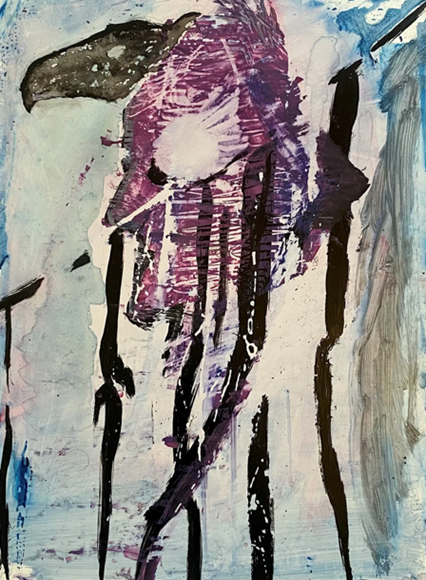
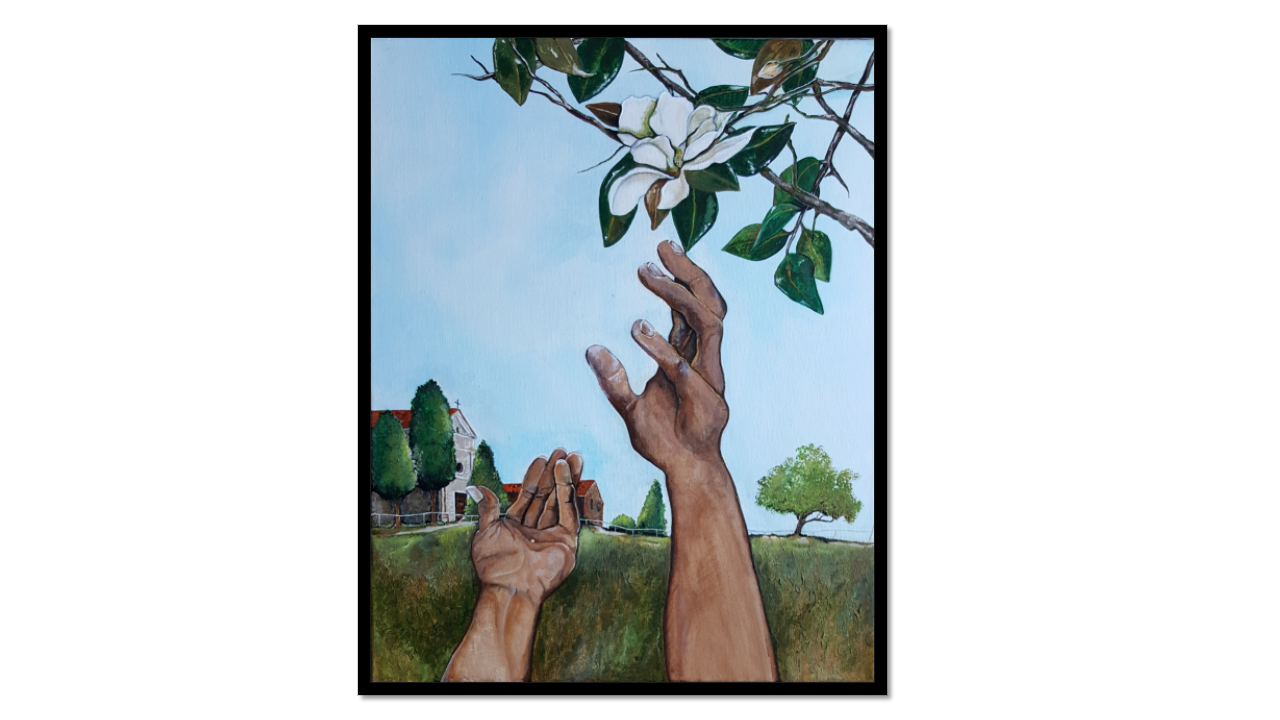
ARTIST PROFILE: Paul Moore and Congaree Pottery

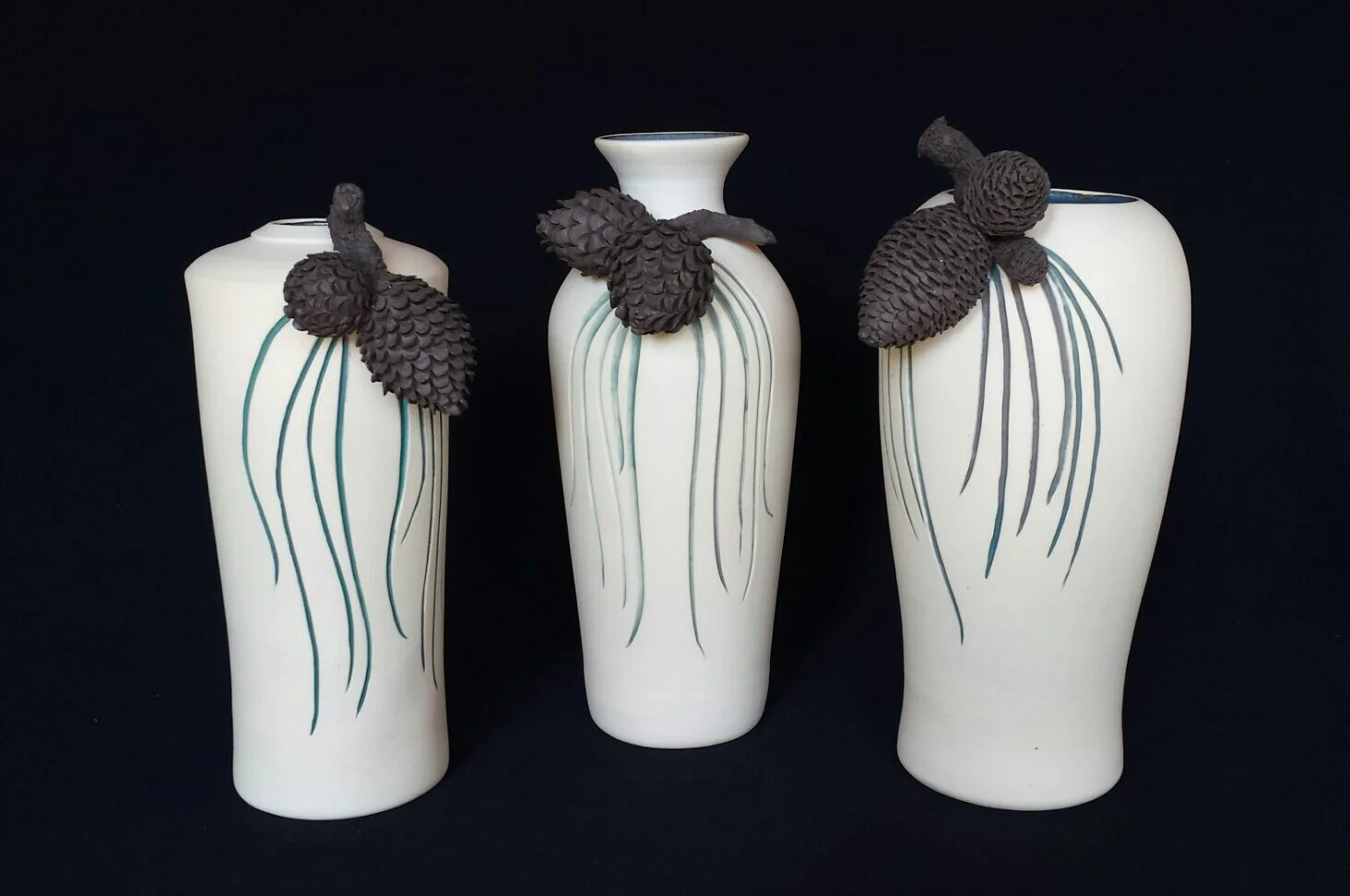
An artist of few words, Paul Moore’s medium of choice is earth.

“It’s old, but it’s versatile,” he says.

JASPER: When did you first begin to pursue visual art? Where and when did you train, or are you self-taught?

 MOORE: I was lucky to have opportunities as a child to create at home, even before elementary school. A beginning pottery class at the City of Columbia Art Center in 2003 was my introduction to ceramics.


JASPER: What mediums in visual arts do you typically use and why?

 MOORE: Earth. It’s old but versatile.


JASPER: Where do you work now and where do you show your work?

 MOORE: Mostly at Southern Pottery Studio.


JASPER: Who have been your greatest influences as an artist?

 MOORE: My parents and my 5th Grade art teacher, Mrs. Norris.


JASPER: What do you feel makes your art unique?

 MOORE: My eyes. My hands.


JASPER: Who is your favorite SC-based visual artist and why?

 MOORE: Dianne Gilbert. She creates with joy.


JASPER:  What are you working on now, will w get to see it, and if so, where, and when?

MOORE: Ending the “Congaree Swamp” carved series. At the Cottontown Art Crawl of course!

8 Fascinating Things About Metalsmith Artist Valerie Lamott

“Mother Earth is my greatest influence as an artist.”

  • I started metalsmithing as a hobby after work maybe 12 years ago. I took classes at the local art center in basic fabrication, enameling, and chain making. My job was essentially to break things all day (I was a Senior Corporate Quality Engineer at an audio electronics company) and the metalsmithing let me create things in the evenings. Gave me some balance.

  • I grew up in Northwest Indiana. After college I moved to Tokyo, then Seoul, then I was kind of a hippie living out of a backpack for a while bouncing around Asia and Europe, and settled in Chicago once I made it back to America. Then around 9 years ago I moved to Columbia.

  • I work in sterling silver, bronze, and semi-precious gemstones for my jewelry. The whole process, from metals to cutting rocks is messy and gross and the end product turns out so beautiful. I love it.

  • I never really grew out of that traveler phase. I work anywhere. I've made a lot of my studio mobile and you can often find me designing or sawing out pieces at a state park picnic table. I sell my work primarily at art shows, from Petoskey, Michigan to Miami, Florida and everywhere in between.

  • Mother Earth is my greatest influence as an artist. I hike, I camp, I kayak, and I take these places and moments and immortalize them in metal and rocks.

  • I think my work is unique because it's my life. I create miniature landscapes that many people identify with, but they're all from my eyes.

  • My favorite SC based artist is TomMac Garrett. Besides being a fantastic potter, he's a good friend and I love that his work incorporates images from his farm. He's an innovative artist sharing his unique voice.

  • I am currently working on a series based on a couple Midlands state parks and you will absolutely see it soon, as it's for the Jasper Project’s April Tiny Gallery Series! I also have shows coming up at the Swamp Rabbit Cafe in Greenville, the Cottontown Art Crawl here in Columbia, and the Fairhope Arts Festival in Alabama.

ARTIST PROFILE - Susan Lenz & Found Objects

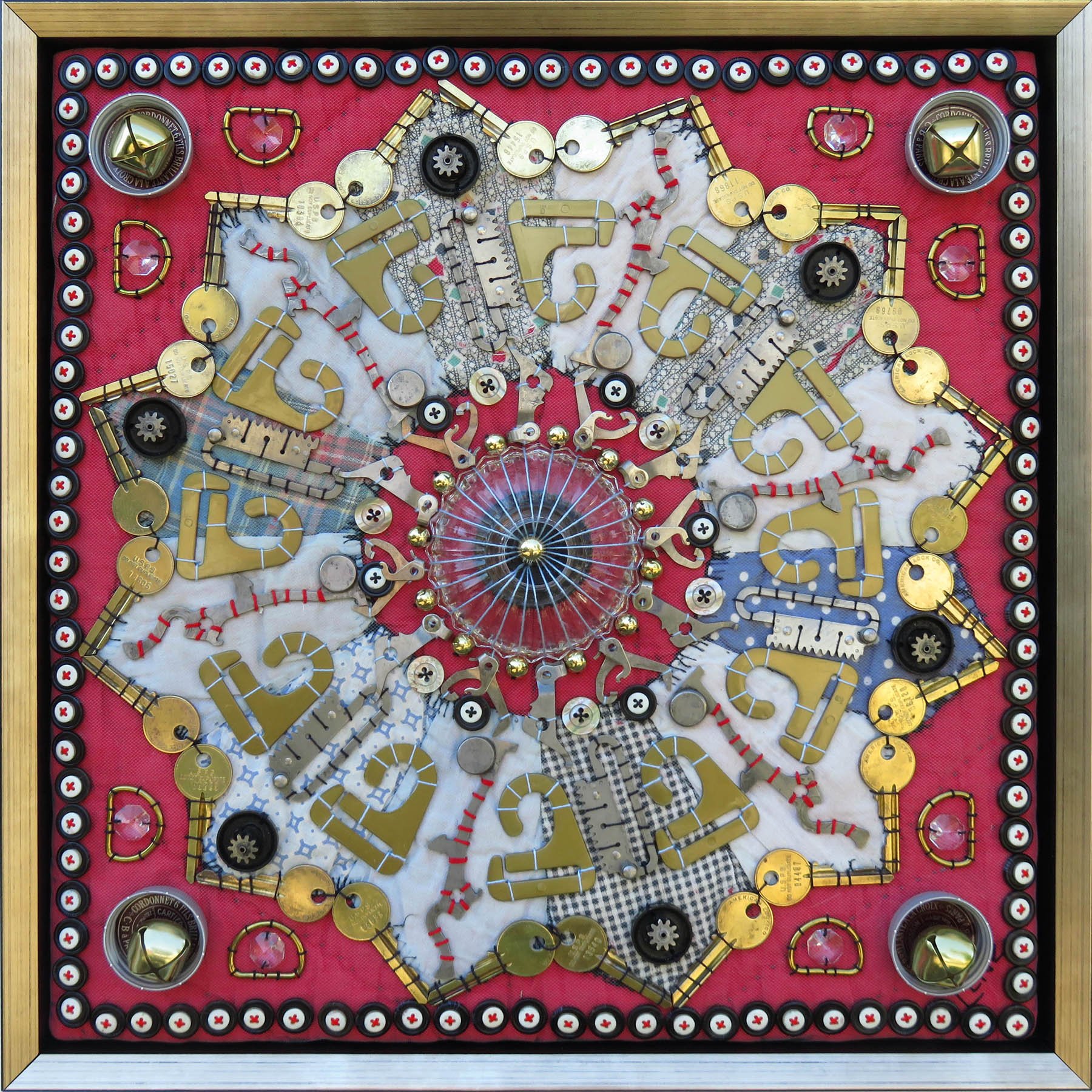
Mandala CXI Steinway piano keys

JASPER: When did you first begin to pursue visual art? Where and when did you train,
or are you self-taught?

LENZ: I started in 2001 at the age of forty-two. I am self taught.


JASPER: Where did you grow up? If you are not from SC, what brought you here?

LENZ:I am from Columbus, Ohio and came to Columbia in 1987 in order for my husband, Steve Dingman, to work as at a coastal engineering company.  He hated it and quit after three years, but we stayed.


JASPER: What mediums in visual arts do you typically use and why? 

LENZ: I am primarily a fiber and installation artist but will dabble in most visual artists media.


JASPER: Where do you work now and where do you show your work? 

LENZ: My studio is in my legally zoned live/work location, Mouse House.  I am represented by the Grovewood Gallery on the grounds of the historic Grove Park Inn in Asheville.  I show my work in both solo and nationally juried exhibitions and high end fine craft shows including the Philadelphia Museum of Art and Smithsonian Craft Shows.


JASPER: Who has been your greatest influence as an artist? 

LENZ: Stephen Chesley


JASPER: What do you feel makes your art unique? 

LENZ: Using a threaded needle, I work in partnership with my materials and use found objects to express my thoughts on remembrance and mortality. My work is unique in the many ways it pays homage to anonymous ancestors and to those whose voices might otherwise be stilled.


JASPER: Who is your favorite SC-based visual artist and why?

LENZ: Stephen Chesley lives a true “artist life” without compromise and through his example, I have learned and will continue to learn how better to be more myself than I initially knew was possible.


JASPER: What are you working on now, will we get to see it, and if so, where, and when?

LENZ; I am currently working on a pandemic-inspired series influenced by the traditions of Buddhist mandala making.  Repetitive circles of found objects are stitched onto sections of neglected, old quilts.  The series is as much about the hunt for unique, found objects as the actual creation of the artwork. Adventures include dismantling an old, broken Steinway piano for three, commissioned pieces for Carolina Steinway in Charlotte and sourcing Hawai’i stamped golf tees from a cyber friend in Texas. The series now numbers over one-hundred and will be on view at the upcoming Smithsonian Craft Show, April 20 – 24, 2022 but some will be available at the Cottontown Art Crawl

The series can be found on-line at: https://foundobjectmandalasbysusanlenz.blogspot.com/

Mandal CXII Susan Lenz

Mandala XCVI - Susan Lenz

Mandala CX - Susan Lenz

Eight Things about Visual Artist Rebecca Lynne Horne

  • Growing up with a father who was an artist, I’ve painted off and on my entire life. In 2018 I began to pursue it. In 2021 my art really began to take off. I consider myself a self-taught artist but have taken several courses over the past few years.

  •  I grew up on Lake Wateree, S.C. I’ve bounced back and forth from Columbia and Camden and currently live in West Columbia 

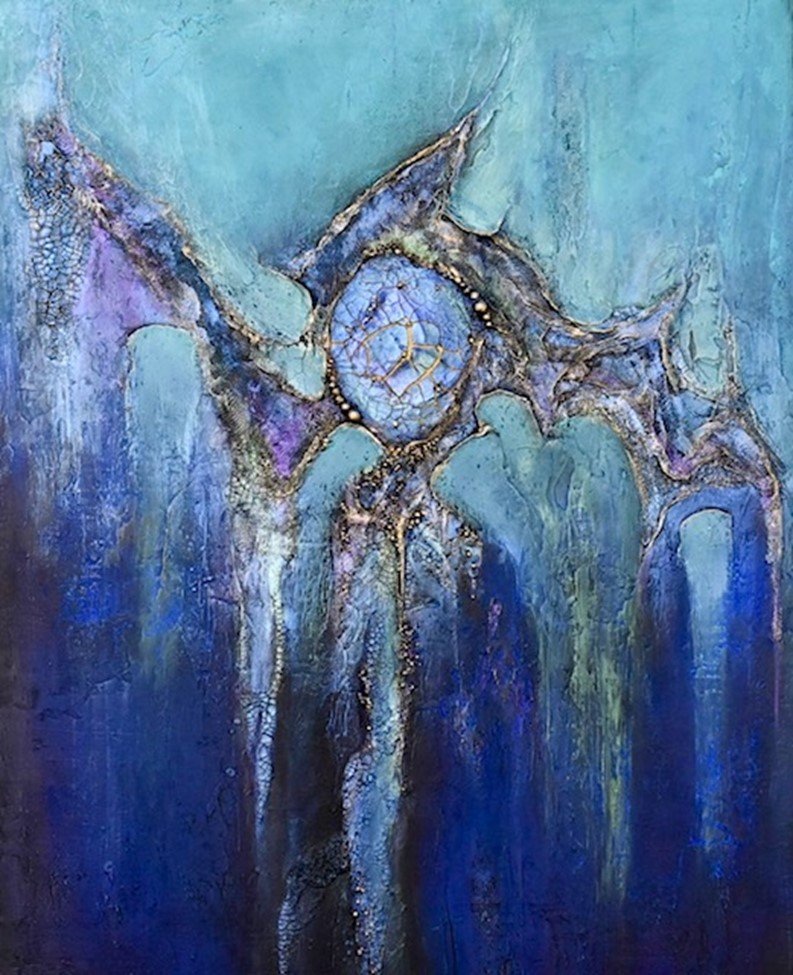
  • I’m an abstract artist so I love the creativity that Mixed Media allows me to have. With Fluid Acrylics, I love the way the paint moves and creates beautiful shapes and colors.

  • My studio space is at my home. It’s small and packed full of art supplies! I’ve shown my work at various locations in the Midlands. Currently, I have several pieces at Aloft Downtown and several international online exhibits. Beginning in May, I’ll have several pieces on exhibit at the Koger Center. There are shows planned for later this year.

  • My greatest influence so far is Ginger Thomas. I’ve taken every course she has offered, and I’ve learned so much from her about Mixed Media art. Then, of course, my father who was a fantastic artist. I don’t make art like he did, but he was the inspiration that sparked my interest in the beginning.

  • Unique art is what I’m all about. It’s my personal mission to make art that is different. Like nothing anyone has seen before. It has to be pretty; it has to push the boundaries and it has to be intriguing. In my Mixed Media art, I love to find things to use in the structure that no one that I know of has ever considered. I also enjoy the challenge of applying many different types of texture into one piece. There are so many interesting layers and tiny surprises that someone has to look for to see. 

  • Pascale Sexton Bilgis is my favorite SC-based visual artist. Not only is she my friend but she’s an incredibly gifted artist. She has a special way with colors, structure, and composition. Her art is always vibrant, unique, and interesting. You can see her personality come through in her work.

  • Currently I’m working on getting art ready for the Cottontown Art Crawl. Also, finishing up several pieces for the Koger Center in May. I’ll have three pieces at the Crooked Creek Art League Spring Show in Chapin. That will take place starting Feb. 28 and run through March 26  After the Cottontown Art Crawl I’ll begin to work on ten to twelve pieces for a solo show this fall!

To see more of Rebecca Horne’s work visit her website.

Eight Things About Artist Ishayda Smith-Hughes

  • I started painting at age three years old. I officially legitimized my art business at age 25-years old. Both of my parents were artists when they were younger as well. I naturally got my artistic talents from both of my parents.

  • I grew up in Spartanburg, SC

  • I typically use acrylic paints and other material in my paintings.

  • I currently work as an educator and a mental health professional. I display my work at art shows and other contest in the surrounding areas.

  • My greatest influencers in art have been Romero Britto, Andy Warhol, Wak, and Bisa Butler.

  • I feel that my use of vibrant colors and subject matters make my artwork unique. I have my own type of style and I do not try to mimic any other artist.

  • My favorite SC-based artist is Teil Duncan. I love her use of bright color combinations, brush strokes and abstract imagery.

  • I am currently working on a painting of a peacock. I will have it for sale at the Cottontown Art Crawl, March 12,2022 in Columbia, SC.

ARTIST PROFILE: PASCALE BILGIS Brings Turkey and France to her Art

Pascale Bilgis grew up in a small village in Burgundy, France, and later in Dijon for her studies. At the age of 18, she left her homeland to continue her studies at the University of South Carolina where she received her BA in photography. After graduating, she worked as an archaeological photographer in southern Turkey and as an art assistant at the Pierre LOTI French School of Istanbul. While in Turkey she began to pursue a new passion for painting and ceramics. She moved back to the States in 2016 and became very active in the artist community in South Carolina. Her work has been shown in solo and group exhibitions throughout the state and has won numerous awards. She is a member of South Carolina Artists and currently lives in Lexington, SC. Learn more about the artist at her website.

HOME – New work
A multimedia artist focusing on landscapes, in her series Home, Bilgis recalls significant landscapes from her own life: the small French village of her childhood; Turkey, where she worked as an archeological photographer; and her current home, South Carolina. Working in acrylic, Bilgis splits her compositions into geometric sections using different color palettes to show the landscapes in different times of day or different seasons. She adds buildings in ceramic or wood relief. The architecture of the buildings helps identify her landscapes as belonging to specific regions: she creates the simple cottages of rural France, the bustling cityscape of Istanbul, and the nostalgic country houses of South Carolina. She chooses to show the buildings in ceramic relief to emphasize the durability of human habitations in contrast to the natural world, which reflects the changing seasons. “As the landscape is ever changing, homes remain in their original state,” Bilgis says.

Little Flat People – Mixed media
In her exhibition, Little Flat People, Bilgis seamlessly blends two-dimensional and three-dimensional elements to demonstrate the fundamental similarities between people. The artist presents little figures set among pebbles, wood frames, and panels with vibrant abstract expressionist landscapes as backgrounds. “After 2 years creating vivid abstract landscapes with ceramic architectural relief, I wanted to keep working with clay and acrylic colors but in a more meaningful way. One day while collecting pebbles on a beach in southern Turkey, I came up with the “Flat Little People” series,“ Bilgis explains. Made of clay and fired at 2000 degrees, the figures all look alike in that they are flat and uniform, but in truth they are not “flat” at all, they seem to be very lively and interesting. It is up to the viewer to imagine their emotions through their postures and implied actions.

Bilgis is one of the more than 100 artists whose work will be shown at the Cottontown Art Crawl on March 12th in Columbia, SC.

WILL SOUTH - Sig Abeles Writes a Memoir

Sigmund Abeles (b. 1934), Self-Portrait in a Hat/Drawing, pastel on paper, collection of Nora Lavori.

            Sig Abeles was born in New York but raised in South Carolina’s Myrtle Beach. His mother had a bad, well, a horrible marriage, so she packed up little Siggy and headed for Dixie where relatives lived nearby. It was Mrs. Abeles’ (pronounced “a” as in hay and “beles” as in Belize) idea to start a seaside hotel (only it was cheaper to be off Highway 17, not quite on the water) and it would be there that her son grew up to love the sea, riding horses, and Brookgreen Gardens. From there, he would eventually make his way back to New York with dreams of becoming a great artist. After all, his pal, Jasper Johns, had not done so bad.

            And, in his own way, he did become that great artist and one of the more recognizable printmakers of the late 20th century. Which means he needs a book of some kind to declare that this is the case.

            “Sig, what about that memoir you’ve been threatening to write for the last twenty years?”

            “Oh, I got busy,” he drawls, with a manner of speaking that betrays echoes of a drawl mixed in with vintage New York aggro and a healthy dose of Yiddish inflection.

            “Busy with what?” I bug him. Most artists need to be pushed until they get to the edge of the cliff, then they’ll happily jump by themselves.

            “Well, there’s my lady, and I’m her man. We need time together.”

            After having been divorced three times, Sig got a girlfriend at the age of sixty-seven, and they are still together after twenty years. Their first date was a walk in the park, literally Central Park. For Sig, ever the romantic, it had been love at first sight.

            “I hope you found a nice Jewish girl, as your mom wished for you to do.”

            “"No, oddly, I didn't. Not even back when I lived with mom.” And he chuckles, ever the gleam in his sharp, highly trained eyes. “Not that I didn’t spend a lot of time looking.”

           “I’m happy for you, Sig. Really. That said, happiness schmappiness. You need to get your life story down in print. You are a first-class bullshitter, and your story would be a good read—the boy from down yonder who made good in the big city. It’s the great American story, isn’t it? Fate would have had you working in your uncle’s grocery story over in Florence, but you defied fate, or something like it, and followed your heart.”

            “Ah, yes. That I did. It really all started in Brookgreen Gardens.”

            “Tell me about that. Maybe later you can write it down and get this show on the road.”

            “Sure. I’ll tell you about it. That spot was where my living education took place at a time when the rural deep South lacked museums of history, nature, and art. I was given either a box of Ritz crackers or a box of Del-Monte raisins as a standard snack and would go sit on my perch and learn with my eyes. On any short list of why I became so damned lucky as a dreamer, human being, and artist, Brookgreen Gardens, a mere seventeen miles south of my Myrtle Beach home, comes in as a close contender for the top. It was where I cut my “art-teeth,” and I would doubtfully have become a professional artist without that magical collection of American figurative sculptures set in formal gardens. Throw in the zoo of local animals, which I also soaked in repeatedly until I was full, and I was able to learn what no one school or teachers could have possibly provided me.

            My lady friend, Nora, likes to tell folks about my “eagle-eye.” In a museum or at an antique show my eye leads me to the absolute best thing there almost instantly. That visual acuteness was developed at Brookgreen. The mystery of how in the world a sculptor could observe a model and somehow translate and transform clay into a convincing, living form for eternity still bowls me over, even though I now understand and practice those processes. The two huge subjects of my personal passion, the human, especially female, body and the grace and power of the horse remains fulfilling, thanks to that rich and exciting collection. From my vantage point on our rooming house’s steps overlooking US 17, I sometimes would spot a huge flatbed truck with a sculpture, sometimes wrapped in tarps with just a huge thigh or shoulder exposed on the way to that ever-evolving Brookgreen. I would run into the kitchen shouting, “Ma, a new sculpture is going to Brookgreen, please, when can we go down to see it, say really soon! OK? Please?”

            Because of Brookgreen Gardens, I knew the name and the sculpture of Anna Hyatt Huntington long before I had heard of Auguste Rodin. The same is true for the names of Gertrude Whitney and Malvina Hoffman before even knowing about Michelangelo, or the way-out, biting wit and satire of Henry Clews before Francisco Goya became a greater favorite and influence. It still seems like an odd happenstance of counter-intuition that it was the lady modelers who were the early heroes for me, not the men. In fact, the first time I “touched” art (and maybe it touched me) is evidenced in a snapshot of me as maybe a four-year-old on a family picnic where I was pulling the tail of a bronze lion by Ms. Huntington.”

            “And, from there to where, my friend? Tell me a little about your time at USC.”

            “My time at USC would prove to be a mixed bag, maybe even a mixed-up bag. In the 1950s, one could argue, correctly, that Columbia was at the epicenter of conservative American mores focused on truth and righteousness and was a national leader in the suppression of civil rights. No irony there, right? It was thus an unlikely place to be if one’s goal were to learn about mysterious creative strategies that might unlock the door to an artistic life. On the other hand, it might be a good place to learn business strategies involving tobacco and the manufacture of cigarettes and how to deny their danger to the health of the world. I knew instinctively things were going to be bumpy when I discovered the art department offered not one course in sculpture. Not. One. A place like Brookgreen Gardens never came up in conversation, however much I loved that place so dearly. It was my launching pad.

            The greatest professor there for me was Bob Ochs who taught American history and was a Lincoln scholar. God, how I loved hearing him dress down those students falsely proud of the Old South. He would happily tell them that their family were not plantation or slave owners, but rather were white trash who desperately needed to distinguish themselves one bare notch above Black Americans. Bob later became a friend, bought some work, had a house in Majorca, was awfully close to Jasper Johns, and was uniquely special—it was a privilege to have known him.

            I was supposed to be a pre-med student. Mom wanted me to be Chief Surgeon to the Free World. But I struggled with math, chemistry, and biology classes. I wanted art like no other desire; it was obsessional. USC's art faculty was comprised of interesting individuals. My favorite art professor was Augusta "Bucky" Wikowski, the adorable, eccentric art historian. She was widowed by the time I met her. Bucky was a great traveler and storyteller. She truly brought slides alive with her insights. Her pronunciation of profile as "pro-feel" delighted me as did her recounting to me over drinks on her Devine Street hillside home of the personae she assumed during her full summer travels to Europe and Mexico. Once she passed herself off as white Russian aristocracy, another time as a famous madam. Long after I left Columbia, the Columbia Museum of Art had arranged a show of her paintings, which were done either while traveling or from sketches made during those trips.

            However, Bucky was extremely modest about her canvases, very self-effacing. When it was time to deliver her exhibition, she stacked all her framed works against the back bumper of her station wagon and then proceeded to back over them all, busting frames and stretchers, doing grave damage to the best of her years of labors of love and remembrance.

            Often, I ranked myself in USC's art department as the fair-haired freshman (or fair-haired sophomore by the time I noticed my post pre-med mistake) while Jasper Johns was the fair-haired senior. The Jasper Johns event of memory was the farewell Mr. Graduate party for Jap after which he roared off in his snappy red sports car to fulfill his dream of going to New York to study at the Art Students League of New York with Yasuo Kuniyoshi. At the time, Jap's works were small watercolors leaning toward Paul Klee and rose period Picasso, sensitive and poetic. Jap's parting words to me were that when I made my way back to New York to look him up and he would help me find a place to live and work, which I did but neither a studio and apartment nor the job worked out for me. I do remember one day when Jap and I were at MOMA and he just said, “the New York Art World is run by four hundred male homosexuals.”

            In 1955, soon after the Supreme Court decision in favor of desegregation, I was called into the president of the University of South Carolina’s office. I had passed out leaflets around campus in support of civil rights, and taped fliers to walls. This work was modest in relation to what was to come in the 1960s, but it was enough to get you into plenty of trouble in South Carolina in the ‘50s. Certain of my views seem to have been influenced by northern proponents of freedom for all (radicals, that is), and the president, had this to say to me: "If you owe them so much (these radicals), why don't you move north to live with them?"

            I responded that I was at USC to get a degree and it was my intention to finish it. My records were on his desk, and he looked them over and proceeded to tell me that with the summer schools I had attended, I had enough credits to graduate. (I had put in five semesters of undergraduate work.) "If you agree to leave USC after this semester, we will send you a bachelor’s degree in June." In essence, he gave me a bachelor’s degree as a way to kick me out of school, similar in spirit to how Southerners will say, “Well, bless your heart!” when they mean “Screw you!” So, I finished that semester and moved to New York, took a small apartment in Greenwich Village on Charles Street and started making art.”

            You must have hundreds of stories.”

            “I do. But I wouldn’t know how to end it.”

            “That, Sig, is a good thing. Now, write the rest of it.”


Note: Sigmund Abeles has completed a first draft of his memoir, and, with a good deal of luck, should be out and readable in a year or two.
Will South is an independent artist, curator and writer based in Columbia.


NEW WORK in the Windows at the Meridian Building's Jasper Galleries

Another of our Jasper Galleries that Never Sleep

the Sidewalk Jasper Gallery at the Meridian Building

Virginia Scotchie

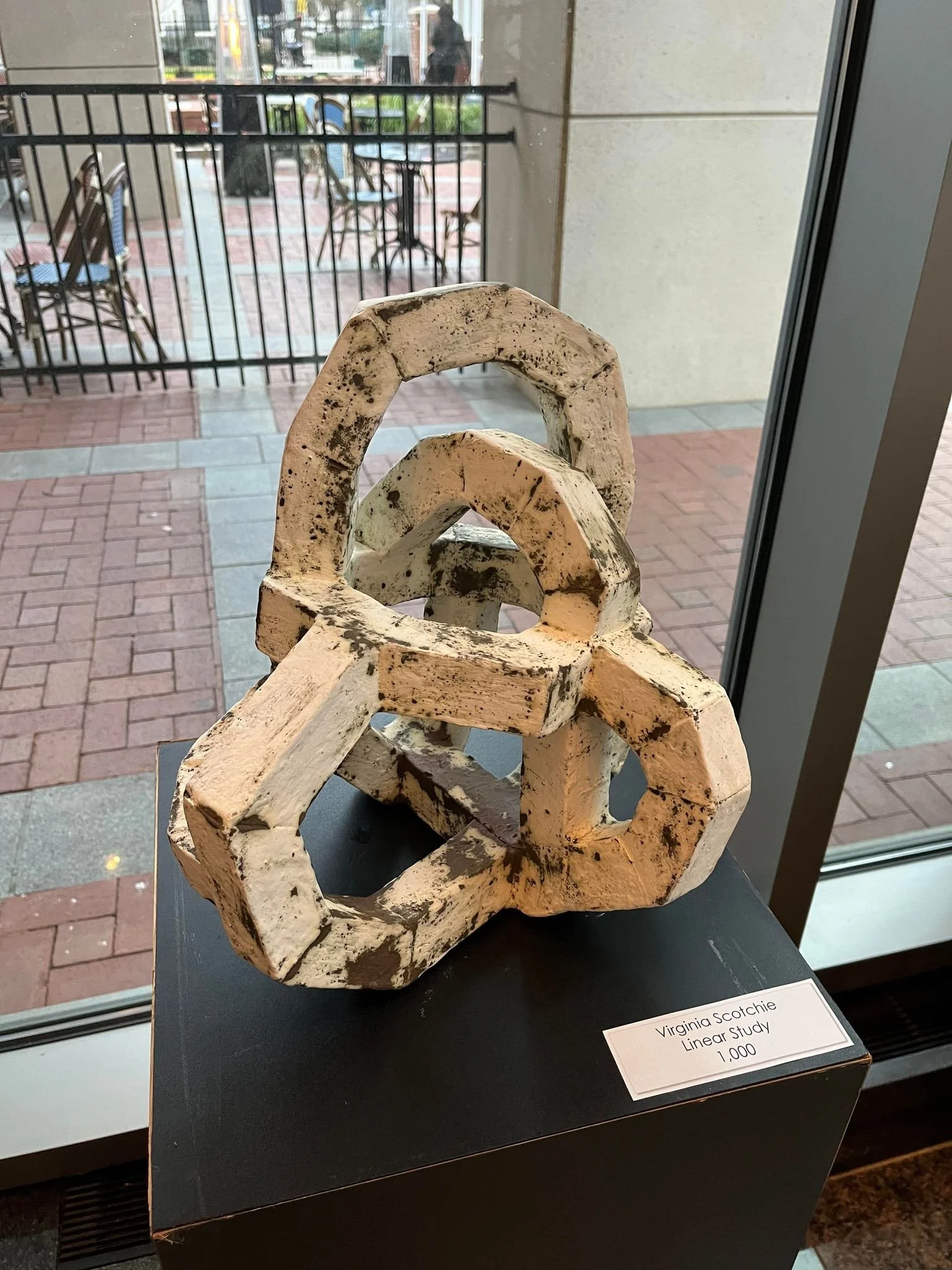
Under the direction of Jasper Project board member Bert Easter, the Jasper Project is showing more art than ever before in the windows of our Jasper Gallery at the Meridian Building in downtown Columbia. Located a half block off Main Street on the corners of Washington and Sumter, our gallery that never sleeps is packed with art from Virginia Scotchie, a number of artists from the Scotchie Studio, including Robert DeLyon, Patrick Burke, and more.

Kat West

Virginia Scotchie

Virginia Scotchie

Landscape artist Emily Ward has also brought us seven new paintings.

Emily Ward

For more information on purchasing work from the Jasper Gallery at the Meridian or showing your own work, please contact us at info@jasperproject.org.

Psssst …! Are you interested in getting involved in the work of the Jasper Project? We’re looking for new friends, guild members, and board members and we’re betting you have something we’re looking for!

We’d love to welcome you to the Jasper family.

Learn about all the possibilities here!

PRINT WORTHY: MALIK Green from the Pages of Jasper Magazine Fall 2021 + NEW WORK

Keep your eye on this outstanding young artist!

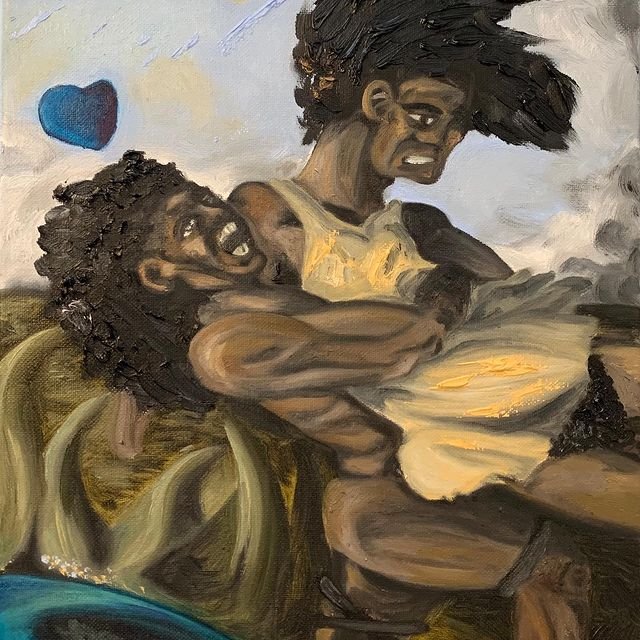
In fall 2021, the Jasper Project ran a brief article on emerging artist Malik Greene. Since then, we’ve been keeping an eye on Malik and his work and, as we suspected it would, the quality has continued to improve and the content has continued to venture into braver, more dynamic, and more unsettling territory.

Below, please find our original interview with the artist and, following that, a sampling of some of Greene’s powerful new art.

JASPER: First, tell us about yourself, please. The normal stuff -- how old are you, where are you from, where did you go to school? 

GREENE: Hey, what’s up, my name is Malik Greene, I was born on July 8th, 1997. I was born and raised in Columbia, South Carolina, but in 2019 I received my bachelor's degree in psychology with a late minor in studio art from Coastal Carolina University. 


JASPER: How did you get started painting? 

GREENE: I've always had a curious mind and just wanted to find my own way to be different turned me to an exploration of self; figuring out where I stand in this world and what it is I want to accomplish in my time here honestly led me to dabble my hand in anything that conveyed self-expression. As a kid, I gravitated towards art forms such as illustration and clothing design through learned experiences with family and friends, but I developed a strong passion for painting my second semester of college. I actually made my first painting on the floor of my best friend’s dorm freshman year, so I have a pretty vivid memory of my origin as an artist. I remember ripping up an old trash bag and splattering paint as my heart desired. After I made this first painting, I unintentionally started a fire that still burns today and one painting turned into two and two into four now my entire life is covered in paint… I love it! 


JASPER: What’s your favorite medium? 

GREENE: I think for me I love how tangible paint is, so I'm constantly amused by how it moves, dries, is applied -- it's almost like a science for me mixing the paints. specifically, I am intrigued by the naturalness of oil paint, and I love that from its origin until its completion finishing a painting is almost like solving a puzzle.


JASPER: What visual artists have influenced you and your work most and why? 

GREENE: I think for me I like to be my own biggest influence. I kind of love that I do not know of any artists who create work that looks like mine, especially in my geographic location! My work is uniquely mine and I love how it is strengthened based on the fact that it comes from my own conception. Of course, I have been inspired and have artists that I do admire. George Condo was the first artist whose work I researched greatly and early into my creation of art he was definitely my biggest influence.

Art goes deeper than just something that is pretty I think art can make one uncomfortable and curious respectively, so I seek artists who entertain my psychology and the unconscious pleasures. From older, more venerated artists like Kerry James Marshall (who has become my favorite artist) and Lucian Freud who plays around with texture to younger artists like Gerald Lovell and Reginald Sylvester II, I am truly inspired by artists who do things their own way, aren’t afraid to break the rules and are still extremely aware of these same rules they break.


JASPER: Tell us about why you paint – what’s your mission and what are you trying to communicate to your viewer? 

GREENE: For me, my mission is to be able to live a life not controlled by the stigmas that are placed on everyone in this human experience. I think a lot of the things that we as people have been taught are tailoring us to live a carbon copy cookie-cutter "American Dream" -- but who even created that standard? No one asked to be on this earth so it bugs me even further that those expectations are placed on people, why can't we just live life? Do the things that make us happy and inspire others to do the same with what little time we have.

I do believe the role of an artist is to speak on the world that is around them. So, if the world of politics is full of issues, and this is what I see in my world, I think it does become my job to relay my message. I think oftentimes people and artists get pigeonholed into what they should be expected to be, but the only expectation I place on myself is to make the best art I can make while staying authentic to my own story.


JASPER: Can you talk more about your Baby Boy exhibition recently held at Stormwater Studios in Columbia?

GREENE: My debut solo exhibition titled ‘Baby Boy’ is literally like my baby, it opened up July 9th, 2021, and closed July 18th, 2021. The title came from just the feeling and sentiment of me always being “Baby Boy” to those closest to me. I’m the youngest of six siblings so to them, to my mother, to those who know me the best I am always a baby boy no matter how old I am. This exhibition was to convey the many sides of me more as a man. Like a coming home for me celebrating the many sides of me the world may never see.

I felt as if the exhibition went extremely well and brought a lot of attention to me and the works that I have put so much time, effort, and love into. It was such a relief to see my work on the walls and to have the feeling of completion. To know an idea of mine was nurtured, developed, and made into a reality empowers me and that alone makes me certain my exhibition was successful.


JASPER: As a young Black artist, what are your specific challenges? 

GREENE: I think the biggest challenge for me as an artist is just being labelled solely a “black artist.” I think I am an amazing artist in general! I want to break the barriers and walls that black artists face where they are seen as only “good for a black artist” or the feeling of making art based on the plight of my ancestors. I choose to make art that brings me progression and strength. I think for me and a lot of other artists who are black we get placed in a box of making contrived art as opposed to art that genuinely speaks and has a message.

I love making art that speaks for those who look like me, who feel like me and those who have felt as I have felt before. Within that umbrella those who identify with me may not be black, but within my art I represent what is tangible to me. I find strength in my identify, but the sentiments of my identity span deeper than me just being black. I think that what I create, and the content of my work is what makes me great, I just so happen to be black.

I think another challenge for me is just having a point of reference that looks like me. I’ve been lucky enough to come across some amazing individuals who have motivated me to continue pushing further but when I see my 8-year-old self I wish I had someone pushing me to be better.

As someone who is self-trained, I don’t have a million references or resources, but for me instead of seeing this as a challenge I see it as an opportunity to be what I didn’t have.


JASPER: What’s next for you? 

GREENE: I honestly see myself just diving deeper into my process and the narrative of Malik the artist. My work is directly related to where I am in life so to be inspired to work, I have to experience life. For the better or worse, see some things, do some things better, and feel some things. It’s exciting to know as long as I have my hands, I have a gift no one can take from me. . 

Jasper Talks with February Tiny Gallery Artist, Musician and Painter Adam Corbett

“There are several heroes, a ghost or two, a couple of villains, some victims, and comic relief characters in this show…in your version you might pick a different hero and shift all the roles, and I think that would be fantastic” — Adam Corbett


RED by Adam Corbett

Adam Corbett is no stranger to the Columbia art scene, having played concerts for years and now beginning to show his art at markets. For his first gallery show, he has curated ten pieces, ten characters, with unique stories to tell. 

Learn more about Corbett, his background, and his current show in our recent interview.


JASPER: Did you grow up around art, or is it something you came to as an adult? 

CORBETT: I grew up in Lexington. My mother is an artist, and my grandfather was as well. Mostly they would paint things for their own homes or gifts for someone, but it was for sure a part of my childhood. My family also ran an after-school art/activity program for most of my childhood.


JASPER: So, when did you begin to get into art, and where did you start? 

CORBETT: Middle school band was my way into music, honestly. I had tried some things before that—mom and dad both play piano—but something about fifth grade band (with Mr. Rhodes) and that saxophone section really got my brain at the right time. I think I took up guitar that summer, and the cool factor was enough of an incentive there; I was hooked. I started performing and teaching lessons for pocket money around fifteen.


JASPER: You’ve worked as a musician for some time since then—what drew you to visual art from there?  

CORBETT: Outside of greeting cards for my mom (family tradition), visual art was something I really just did for myself, to decompress or just pass time. That was until the pandemic happened. I absolutely escaped into carving, painting, cartoons, and little doodles during the most troubling times of 2020. Watercolor painting became a daily mental health thing very quickly. I’m always playing with different materials and art forms, but I don’t see myself giving up my watercolor practice anytime soon. 

Vultura - Adam Corbett

JASPER: If you were to reflect on your visual and aural work, what would you say about their relationship to one another or what is unique about each method of creating? 

CORBETT: To write and perform music is an exercise in vulnerability for me, even if the song is about something silly. I’ve been blessed to sing my songs to rooms full of people who knew the words and joined in. I’ve even had a couple of those moments at shows where I got to point the mic at a mass of people, and they took a chorus. With my paintings the rewarding part is different. With visual art, to me, a success happens when the creation is completed, and then there is a whole other accomplishment in the work being chosen, even if it’s just a “like” by someone. Then there is the big win of someone purchasing and displaying it in their space, wherever that is. The specific feeling of knowing a sad bat-clown man I painted is on display in a stranger’s home somewhere in Columbia is as strong a feeling as those singalong moments; it’s very different but just as strong.


JASPER: Do you find you pursue similar themes in your music and paintings, or does each hold an expression of different themes? 

CORBETT: I feel about my themes like a deer feels about headlights. Humor, fantasy, sci-fi, whimsy—all with a heavy helping of grossness, I guess—are some of general themes I’m working with right now. With songs and lyrics, I feel like I’m telling you how I feel, and we feel something together about it. Music taught me that the audience decides what you meant, whether you meant it or not.


JASPER: When you sit down to create, regardless of medium, do you go through a specific mental process? Do you have any creation rituals, so to speak? 

CORBETT: I have the most inconsistent creative process—calling it a process at all might be too much. I draw and paint in my kitchen at the counter. I write lyrics in my car a lot. There is something to those places typically being the messiest places in my day to day. Sometimes I'll make an awesome doodle at a social gathering or pull full verses and choruses out of the air. Sometimes a really great piece can go from nothing to done in 20 minutes (but we all know there was time invested prior to that). Other times, I work on a song or painting for months, and it might never see the light of day. The quality of the work doesn’t always go with how much time goes into it.


JASPER: How do you know when to walk away from a piece? When is it “done”? 

CORBETT: Emotionally, song lyrics are like mantras; if you write a song to sing over and over you will hear those words more often than anyone. With painting there is this moment when a painting is done. The idea of adding more paint to it is out of the question. Lyrics never feel that way to me.


JASPER: When piecing together this show, how did you go about selecting works? Are there any larger ideas or concepts tying it together? 

CORBETT: I painted “Red” to round out my show to ten pictures, and I selected the other nine from what work I had done over the last year. I picked out what images I thought told the most story individually while also telling a larger story as a group. There is a bit of a fantasy theme throughout. There are several heroes, a ghost or two, a couple of villains, some victims, and comic relief characters in this show. I think the story will be best if I let you (the audience) decide who is who. In your version you might pick a different hero and shift all the roles, and I think that would be fantastic. 

Horns - Adam Corbett

JASPER: Looking back at showings you’ve had of your art; do you have a favorite memory? 

CORBETT: At one of the first markets I did, there was this young kid, maybe like 11 years old. They thought all my art was cool and told me so. I haven’t received a better accolade yet.


Corbett’s show will be up until February 28th, and his work is available to peruse and purchase 24/7 via Jasper’s virtual gallery:

 If you want to follow Corbett, check out his music here: https://adamcorbett.bandcamp.com/ and his art on Instagram @s4d4mz

Artists for Africa Hosts 9th Annual PostCard Event in Support of Original Art and Kenyan Youth

When Cooper Rust traveled to Nairobi, Kenya, in 2012 as a volunteer dance instructor, she didn’t expect the experience to stick so strongly to her skin. It did, however, and soon after her return to the states, she founded Artists for Africa, a non-profit organization that supports and provides dance, new experiences, education, and shelter to Kenyan youth.

 In the past decade, the organization has grown, led by C. Rust (Executive Director) and her sister Brie Rust (President), and now hosts a plethora of events in both Kenya and South Carolina, such as bringing dancers from Nairobi to study and perform at the University of South Carolina. 

One of these events, almost as old as the organization itself, is the PostCard Art Event, an evening that pairs small, postcard sized art with drinks and finger foods for a collaborative, community-oriented experience. Next week, the 9th annual PostCard will be held at the Hilton Garden Inn. 

The evening begins with a cocktail hour and appetizers in the spacious lobby, and at 7:00pm, the ballroom will open to reveal the art donated from various established and emerging artists across the United States. Patrons can peruse the art for around an hour as they continue to enjoy drinks and snacks. 

Over 50 artists are included in this show, including some familiar Columbia names like Bonnie Goldberg, Bill Davis, Rob Shaw, Rebecca Lynn Horne, and the Honors Art Students at Dreher High School

The art is available first come, first serve, for $65 per 4” x 6” piece. While the artists sign each piece, these signatures are on the back. Thus, before purchasing, the artist remains anonymous, and patrons are able to select art based on individual desire and attraction. Beyond the small art, larger pieces will also be available, including jewelry and ceramics, each appropriately priced. 

PostCard Art is one of two major annual fundraisers for Artists for Africa, making it one of the organization’s vital events. “100% of the profit goes to support our mission of providing arts and educational opportunities to vulnerable children in some of the world’s poorest slums in Kenya,” B. Rust shares. 

The organization is particularly looking forward to this year’s event after having to move online during the pandemic. “We are very excited to see everyone and share the evening,” B. Rust says. “We have moved our event to the Hilton Garden Inn downtown and are really excited to share this newly renovated space with everyone.” 

B. Rust credits and thanks the group’s Board of Directors, plus their friends and family, for the time they have and will donate to “organize each detail, set everything up, and get it all wrapped up at the end of the evening.” Further, the expenses of the event are generously covered by sponsors, so all money from ticket sales will go directly to Kenya and C. Rust’s efforts in Nairobi. 

If you want to see unique art and support education and opportunity for African youth, be sure to attend this year’s PostCard Art. The event will be Wednesday, February 16th at 6:00pm at the Hilton Garden Inn in Columbia. Tickets are $30 in advance and $35 at the door and can be purchased here: https://www.brownpapertickets.com/event/5344995  

CALL for Site Specific Visual Art via Our Friends at CCA

701 CENTER FOR CONTEMPORARY ART 

MILL DISTRICT PUBLIC ART TRAIL OPPORTUNITIES 

We were excited to hear about this unique opportunity for visual artists to break into site specific/public art offered by the good folks at 701 CCA that we wanted to help them spread the word.

Here’s what we know —

701 Center for Contemporary Art (CCA) is seeking artists to develop and execute site-specific works for five gate houses located on the grounds of the historic Granby and Olympia Mills as part of CCA’s Mill District Public Art Trail. The mills are twin Romanesque Revival style, four-story structures designed by W.B. Smith Whaley & Company - the leading mill architects of their time. Once considered two of the most architecturally significant textile mills in South Carolina, today the two massive buildings have been repurposed for residential mill living.  

The application deadline is Wednesday, March 9, 2022.

Budget 

The budget for each gate house is $3,000

Public Art Opportunities

Five gate houses located in front of the two mill buildings offer unique opportunities for site-specific works. The structures were built during WWII.  Designed to compliment the architectural elements of the mill buildings, the Olympia Mill gate houses feature arch-shaped windows and a frieze consisting of terracotta arches. The less decorated Granby Mill gate houses feature dentil brick molding and sash windows.  

The gate houses will function as changing exhibition spaces for temporary public art projects. The projects will be installed for a minimum of one year.  Each gate house is 10’x10’ with a modest interior and lighting. Access to the interior is through doors on the rear or side of each structure. The gate houses are not air-conditioned or heated. Artwork must be able to withstand extreme weather conditions. 

The exteriors of the gate houses are protected under the City of Columbia historic preservation ordinance. Attachments to the exterior are not allowed. 

Eligibility 

Artists working in media appropriate for non-conditioned environments and styles are eligible for consideration. Artists may submit individually or as a team. Artist teams must designate one artist as the lead contact. This opportunity is open to professional artists 18 and over. 

Selection Process

A panel of arts professionals will review artists qualifications and make a selection of artists who will be invited to submit a full proposal. Selections will be based on artistic merit, experience with public art commissions and/or installation art and the ability to complete and install the project by June 20, 2022.

RFQ Requirements

  1. Images of up to five completed commissions/installations that demonstrate your qualifications for the project. Please include the title, medium, dimensions, year completed, location, and a short description. 

  2. Artist resume demonstrating a minimum of five years of professional visual art experience. If submitting as a team, a current resume should be submitted for each team member.  Please compile resumes into one document.

  3. Statement of interest in this particular Mill District opportunity

  4. References that include the names and current contact information for three individuals with whom you have worked, collaborated, or who have commissioned your work in the past. References may be contacted for artists invited to develop a proposal for the commissions

    Timeline

Call for RFQ - February 9, 2022

Zoom Q&A - February 14

Zoom Q&A - February 28

Deadline for RFQ - March 12 

Panel Review & Selection - March 13

Notification to Artists - March 15

Deadline for Proposals - April 4

Finalist(s) Notification - April 8 

Finalist(s)  Interviews/Presentation of Proposals on Zoom - April 11

Notification to Finalists - April 13

Site Availability - April 14

Deadline for Installed Works - June 20

Please submit questions to Michaela Pilar Brown at director@701cca.org. Questions and answers will be posted on our website at www.701cca.org


February's Tiny Gallery Features Adam Corbett

It’s always exciting to us at Jasper when we get to witness artists cross genre lines to dip their toes in disciplines other than what they are known for. This month, musician and music educator Adam Corbett is doing just that by participating in the Jasper Project’s Tiny Gallery Series. But this isn’t the first time Corbett has wandered from music to visual arts waters. Corbett has been participating in several of the pop up community arts festivals that have become so popular since Covid grounded most of our gallery showings. In fact, Corbett’s little Christmas gnomes, offered as part of Jasper’s Tiny Gallery Ornament Show were so popular that we sold out of his creations.

Corbett is back in the Tiny Gallery this month with a collection of watercolors and mixed media portraits with sizes ranging from 8 x 10 to 12 x 14 and price points from $30 to $125.

Visit Corbett in the Tiny Gallery and snap up one of his original pieces while they’re both accessible and affordable.

Red by Adam Corbett

ABOUT THE ARTIST: Adam Corbett is a multi-instrumentalist, singer-songwriter and visual artist from Lexington, South Carolina. After releasing numerous records, helping to produce a musical, and taking a break from his career as a music teacher, Adam branched out into visual art as a way to cope with the COVID-19 lockdown. Throughout this period, he has experimented with various mediums in a variety of formats focusing always on exploration, play, and following his muse.

The Other One by Adam Corbett

Check out the rest of Adam Corbett’s Show at

Jasper’s Tiny Gallery

Mark Your Calendars! Jasper Announces 2022 Tiny Gallery Lineup

In 2021, Tiny Gallery hosted 15 artists in a vast variety of styles and mediums. In 2022, we’re featuring an even greater array of mediums with a collection of wonderful local talent. Learn more about each artist below and be sure to mark your calendars for your favorite shows. All shows begin the first of the month and end on the final day of the month, accessible 24/7 to peruse and purchase via Jasper’s virtual gallery.

January: Gina Langston Brewer

Though unconventional in guise and approach, Brewer is a teacher first, having been formally educated at Winthrop University in Rock Hill and later securing a master’s in divergent learning from Columbia College. She has the requisite ‘book-learning’” but is much more interested in life-learning and sharing with others the lush explorations that beckon each and every day in libraries, forests, farmer’s markets, junk yards, and roadside poppy fields. All are creative spaces in her eyes.

After marrying her best friend, Kevin Brewer, in 2008, she assumed the nomadic life of a military wife, moving from post to post and home-schooling their son, George. During that time, she operated two art studios, one in Columbus and the other in Augusta. Brewer also has two grown sons by previous relationships, Nathan and Dylan. The Brewer family moved back to Columbia in 2018, and Gina recently opened a studio in downtown Columbia, away from the interruptions, distractions, and demands of family and household.

Though she works in many mediums, Brewer is best known locally for her lushly colored, abstract paintings that, to many people, are reminiscent of (to select well-known artists for reference) Picasso or Klimt. The subjects she paints are alternately curvy and geometric, simple and lavish. She has had solo exhibitions at multiple venues, including Tapp’s Art Center in Columbia and the University of South Carolina-Beaufort art space.

Headshot of Gina
One of Gina's paintings

February: Adam Corbett

Adam is a multi-instrumentalist, singer-songwriter and visual artist from Lexington, South Carolina. After releasing numerous records, helping to produce a musical, and taking a break from his career as a music teacher, Adam branched out into visual art as a way to cope with the COVID-19 lockdown. Throughout this period, he has experimented with various mediums in a variety of formats focusing always on exploration, play, and following his muse.

March: Fairoozan Art

Ms. Fairoozan is a paper artist and illustrator. She has been interested in various forms of papercraft since her school years, it took her quite a while to find her own way of bringing together her love of paper with her experience in painting.

She has actually discovered a new way of using the basic paper technique as she is drawing with paper instead of on it, at that time point she has no idea it was called (Paper Quilling) and she made the quilling process interesting and modern.

These paper artworks can take from a few days to a few weeks or even longer – it all depends on the level of details, size and design, the largest paper artwork she ever made took her around 6 weeks.

A former art teacher with more than 15 years of experience, she finished a bachelor's degree from the College of Fine Arts at the University of Baghdad, in Bagdad, Iraq.

Her artworks have been shown in many exhibitions in various countries around the world and in different states all over the USA.

April: Valerie Lamott

Valerie Lamott is a Columbia, SC, based jewelry artisan, but can rarely be found there. She's more likely to be hiking or camping or kayaking in any one of America's state parks. She uses these places as inspiration for her artwork and hopes it inspires others to play outside too.

May: Lucy Bailey

Lucy Bailey’s ceramic sculpture centers around the figure, with liberal use of layered textures and mixed media elements. Additional work explores combinations of ceramics and wood or wire, and earthenware altar boxes that create narratives through assemblages of found objects.

In 2021 one of her sculptures was exhibited at ArtFields in Lake City, SC. Her work was awarded the Best in Show distinction in exhibitions by the Annual Artist’s Guild of Spartanburg (SC) Juried Show and the Arts Council of York County (SC) Annual Juried Competition. Bailey’s work has twice been selected for the 701 Center for Contemporary Art’s South Carolina Biennial show. Her work was published in Lark Books’ 500 Figures in Clay-2.

Follow Lucy Bailey’s work on Instagram @lucybaileyclay   

June: Cindy Saad

Cindy Saad considers herself to be a multimedia artist creating art in various mediums that include painting, photography and jewelry making with jewelry being her main form of artistic expression. Whether sculpting a necklace or painting on canvas, she likes to work spontaneously, creating pieces that evoke the senses.

A native of Sumter, SC, Saad has a Bachelor of Arts degree in Sociology from the University of South Carolina and is mainly a self-taught artist. She has exhibited throughout the Carolinas in numerous juried art shows and exhibitions and is currently represented by the City Art Gallery in Columbia and the SC Visitor’s Center in Walterboro.

www.cindysaad.com  
Instagram @cindysaadart

July: Thomas Washington

Perhaps the most important pursuit of an artist is the facilitation of Escapism. Perhaps each project is the equivalent of a Narnian door…or that lamppost beyond, coaxing a wanderer into another realm.

Thomas Washington Jr. (thomas the younger) functions on that premise. Since his childhood, he has produced multitudinous works in this vein—from being hired (out of high school) to illustrate in a local graphic anthology, he has subsequently striven to bring stories in every medium; to breathe life into the fantastical by imbuing it with the familiar…and, of course, to find fun and fulfillment along the way.

As a result, it required the birth of his children to make him care about money. (He still struggles with this.) –For years, he was perfectly fine living as a Bohemian: he laid his head in strange places among strangers, eventually becoming a pleasant strain of strange in the process. He thus entertains all sorts of bizarre notions—the importance of world peace, an unshakeable belief in fundamental similarities that make Humanity one big family, intense opinions on interstellar travel, and so-forth.

Recently, he took the leap of emerging in his local scene. He has sat on panels, joined the instructor roster for community arts centers, partaken in various shows, (finally!) founded a website, and essentially joined the dialogue of Art’s Place in Society.

August: Chilly Waters

Chilly Waters has a high level of creativity and a passion for art. He channels his creativity into creating one of kind clay sculptures that often include reclaimed mixed media materials. These sculptures are 3D representations of his imagination in action and allow him to empty his mind of all the additives that collect in there. They are his imagination coming to life.

His goal is to make things that invoke feelings of joy or curiosity. Well, that and to become a space cowboy or a Marvel superhero - whichever comes first.  He sees “junk” or discarded items as components of art that have yet to reach their full potential.  

Chilly has been working as a clay artist for 5 years (after retiring from a long-term career) and is predominately self-taught, having molded his skills and style through various workshops and networking with other artists. He is a member of the Midlands Clay Art Society, and his work has been shown in galleries in Aiken and Columbia, SC as well as various arts festivals in South Carolina and Delaware.

He finds inspiration in listening to people, observing what they say or do. Often times when he hears a work or a phrase, he visualizes it in his mind and has to create a 3D image of it. He also sees discarded “junk" and wonders what it could be if it had a second chance. Once an idea is realized, he grabs a chunk of clay and starts to create.

September: Amber Machado

Amber Machado is a painter from Columbia, SC. She began painting as a teenager, hoping to emulate her sister and father who have always been her biggest artistic role models. It took nearly a decade of painting sporadically before her personal relationship with art began. At the onset of being diagnosed with Lupus, she began to paint more frequently, and what began as a welcome distraction, has now become her full-time job. More importantly though, she credits painting to being her primary means of coping with a chronic illness. 

Over the last three years her aim has been to develop new skills and grow as an artist. Her main area of focus is landscapes, primarily watercolor. She is greatly inspired by nature, natural light, and color. When she’s not painting, she is usually dancing with her cats or pestering her spouse.

**materials from https://www.ambermachado.com

October: Maya Smith

South Carolina based artist, Maya Smith, has been honing her skills as a freelance artist for the past fourteen years. She graduated from the Savannah College of Art and Design in 2006 with a BFA in Illustration. 

Her work celebrates people of color and women with shape. Using pencils and paint to create imagery that counters negative stereotypes and provokes conversation. 

Maya’s work has been commissioned by Oscar Award winning director, Steve McQueen for the film, Widows. Her work is part of the New York Public Library archives through the Schomburg Center for Research in Black Culture in Harlem, NY. 

November: Sean Rayford

Sean Rayford is a freelance photojournalist and documentary photographer in Columbia, SC, where he works with Getty Images, The New York Times, The Associated Press and many others. He is a 2001 graduate of the University of South Carolina. His work was recently featured in the Hindsight 20/20 exhibition at the Columbia Museum of Art and as part of Time Magazine's Best Photos of 2021.

December: Ornament Show

Last year, we did our first ever Tiny Gallery Ornament show, which was a great success thanks to our ever-wonderful patrons. In 2022, we’ll be showcasing new artists for another ornament show. These artists have yet to be selected, so stay tuned for another announcement later on!

We are grateful to the artists and patrons who come together to make Tiny Gallery possible, and we look forward to our 2022 journey together. To ensure you don’t miss out on further gallery announcements, sign up for Sundays with Jasper!


Mark Your Calendars for Another Melrose Heights Art in the Yard coming up in April

From our friends in the Historic Melrose Community …

The Historic Melrose Art in the Yard will welcome nearly one hundred artists and artisans to show and sell their original work in the historic, downtown Columbia neighborhood. The event will be held on Sunday, April 10, 2022, from noon to 5 pm with art, food and entertainment for visitors.

Historic Melrose Art in the Yard (AITY) held the first art event in 2020 at the beginning of the pandemic. The idea was to provide local artists and artisans with a safe place to show and sell their wares while also showcasing the historic neighborhood. The event drew hundreds of people to explore the neighborhood. Based on this success and the demand for local art, AITY has become a regular event. The April 10th AITY will be the seventh time the event has been held.

“The Historic Melrose neighborhood is looking forward to welcoming visitors and supporting the local arts scene on April 10th,” said organizer Lila McCullough.  “We will showcase a wide variety of artists and artisans in yards throughout the neighborhood and we will have something for everyone,” said McCullough. 

This event is entirely outdoors and spread over several city blocks, but social distancing and masks are encouraged.

Due to the success of the past events, this one will feature more artists and more food vendors than previous events. The event will also be followed by live music starting at 5 pm. The event is FREE and open to the public. Information and maps will be available on Facebook and Instagram. 

The Snow Came Down and Our Hearts Burst with Joy

Snow comes to Columbia and, at Jasper, we honor the fresh new prism it lends us for the needed respite of seeing the world in the light that was intended - cleanly and with introspection and joy.

A blue sky and a white day.

This is all we need for a moment.

Wilma King

"Snow was falling,
so much like stars
filling the dark trees
that one could easily imagine
its reason for being was nothing more
than prettiness.”
Mary Oliver

Green Eyes - Clark Ellefson

“I love you because no two snowflakes are alike, and it is possible, if you stand tippy-toe, to walk between the raindrops.”
Nikki Giovanni

Laura Garner Hine

“I wonder if the snow loves the trees and fields, that it kisses them so gently? And then it covers them up snug, you know, with a white quilt; and perhaps it says, "Go to sleep, darlings, till the summer comes again.”
Lewis Carroll, Alice's Adventures in Wonderland / Through the Looking-Glass

courtesy of Ed Madden & Bert Easter

“The snow doesn't give a soft white damn whom it touches.”
E.E. Cummings

Paul R. Moore & Rusty Sox

“A lot of people like snow. I find it to be an unnecessary freezing of water.”
Carl Reiner

Snow Bunny - Tim McLendon

“The more I see, the less I know, the more I'd like to let it go.”
Red Hot Chili Peppers

Jay Hubbell - Change for Change - Muddy Ford

“It is growing cold. Winter is putting footsteps in the meadow. What whiteness boasts that sun that comes into this wood! One would say milk-colored maidens are dancing on the petals of orchids. How coldly burns our sun! One would say its rays of light are shards of snow, one imagines the sun lives upon a snow crested peak on this day. One would say she is a woman who wears a gown of winter frost that blinds the eyes. Helplessness has weakened me. Wandering has wearied my legs.”
Roman Payne

courtesy of Dick Moons

“I think a lot of snowflakes are alike...and I think a lot of people are alike too.”
Bret Easton Ellis

Dick Moons

“It snowed last year too: I made a snowman and my brother knocked it down and I knocked my brother down and then we had tea.”
Dylan Thomas, A Child's Christmas in Wales

Julie Seel

“This is my first snow at Smith. It is like any other snow, but from a different window, and there lies the singular charm of it.”
Sylvia Plath, The Unabridged Journals of Sylvia Plath

Artist unknown - Muddy Ford

“As he looked out and saw the grey landscape through the gently falling snow, he could not help thinking how much better it would be if people could go to sleep like the fields; could be blanketed down under the snow, to wake with their hurts healed and their defeats forgotten.”
Willa Cather, One of Ours

With thanks to Clark, Bert and Ed, Julie, Dick, Paul and Rusty, Tim, Laura, and Wilma.

Artist Profile: Noelle Brault Makes A Statement with Light

JASPER: When did you first begin to pursue visual art? Where and when did you train, or are you self-taught?

BRAULT: I first began to pursue visual art in 2008 when I started taking lessons from Michel McNinch. I was always interested in art but never did anything about it until then. I took 5 years from Michel and then took several workshops from other artists.


JASPER: What mediums in visual arts do you typically use and why?

BRAULT: I paint in oil. I like the rich colors and how you can mix them. They feel natural to me.


JASPER: Where do you work now and where do you show your work?

BRAULT: I work as a Manager of Software Development at Southeastern Freight Lines. I show my work currently at Over The Mantel gallery. 


JASPER: Who have been your greatest influences as an artist?

BRAULT: Other contemporary artists have influenced my greatly including my teacher, Michel. Also, Shannon Smith Hughes of Charleston, Jason Sacran and Randall Sexton influence me just to name a few.


JASPER: What do you feel makes your art unique?

BRAULT: What makes my art unique is the way I manage light.


JASPER:  Who is your favorite SC-based visual artist and why?

BRAULT: I suppose my favorite SC based artist is Shannon Smith Hughes of Charleston. I love the energy and excitement in her pairings and also the way her paintings glow.


JASPER:  What are you working on now, will we get to see it, and if so, where, and when?

BRAULT: I am always working on a new painting. Right now, I'm working on a nocturne of the Jekyll Island Hotel and also an old truck at Price's tree farm. They will be available at the Cottontown Art Crawl on March 13th.

PROFILE: Visual Artist Wilma King Uses Rich Colors & Clever Object Juxtapositions to Create Warm & Inviting Images

If you haven’t seen the work of Cottontown visual artist Wilma King now is your chance.

Check out this virtual exhibition of King’s art and read about her background and inspirations below.

Jasper had the great pleasure of touching base with visual artist Wilma King this week and we asked her a few questions about her work. We’re delighted to share details of our exchange with you.

~~~~

Jasper:  When did you first begin to pursue visual art? Where and when did you train, or are you self-taught? 

Wilma King: I  remember an incident in fourth grade that helped me focus in on my love of art and design. My teacher, Ms. Hendrix, knew how to inspire and cultivate creativity and internationalism. She read books to us, held in-class competitions, and infused applied learning into our coursework way back then. Our school was on a military base in Fort Greely, Alaska which helped in the spirit of all of these concepts. My mind was full of dreams of being a nurse like Clara Barton, until she announced a fashion design competition for us girls. My classmates who saw my design convinced me that I would surely win – but I didn't. So, I launched this compulsion and intrigue to design paper dolls for my sisters, friends, and anyone who would allow me to do so. It was an experience that allowed me to delve deeply into individual, and cultural preferences for design, color, shape, size, and form. 

But it was in junior high school that my art teacher helped and encouraged me to see a broad range of ideas and topics from which to draw and paint. In eighth grade, I won a scholarship to what was then the Columbia Art School (a part of the museum), and sold my first painting that year, as well.

My first job, literally two weeks after graduating from the University of South Carolina, was with an international trade magazine, while still learning about cultural preferences and communication design. 

I have a BA degree in art studio (advertising design) from the U of SC and went on to earn a MA in Journalism (PR and Advertising) from Texas Southern University (Houston, Texas), because I always felt that there should be a collaboration between words and images. I taught graphic design, computerized design, or some form of public relations design most of my career, beginning with launching, teaching, and designing the first courses and curriculum in commercial art here in Columbia at Benedict College. From that point, I taught at the Art Institute (Houston, TX), O'More College (Franklin, TN), and was an Associate Professor in PR at both Western Kentucky University (Bowling Green, KY), and Rochester Institute of Technology (Rochester, NY).


Jasper: Where did you grow up?  

King: I was born in Lexington, SC, and continued to “grow up” in Alaska, and Columbia (Lower Richland area near Hopkins). My father was born and raised in Louisiana, ten miles outside New Orleans (St. John Parrish), so that's also part of the “growing up” experience. I have lived in eleven different states and did domestic and international sabbaticals that took me to a cumulative  nine months of slow travels and teaching abroad in Italy. 

After more than 30 years of doing some of the things that I found interesting and exciting, and to become my mother's primary caregiver, I moved back home to SC.


Jasper: What mediums in visual arts do you typically use and why? 

King: My very wonderful art professors at USC, particularly Jim Edwards, taught me that acrylics are extremely adaptable and can convincingly disguise as other paint mediums, so as a painter, which is my medium of choice. 

At the beginning of the COVID pandemic, I sought ways to bring people together over a meal, coffee, or drinks. Nursing homes and hospitals were closed to visitors making it impossible to share meals with elderly, ill, or hospitalized family and friends -- so I began painting on glassware -- wine glasses, wine bottles, mugs, vases, etc. (using oils): Table Companions was born! A "table companion" is someone that you enjoy sharing a meal or drink with. 

Jasper: Who have been your greatest influences as an artist? 

King: Dony Mac Manus, sculptor/founder of the School for Sacred Art in Florence,  Italy, and Giancarlo Polenghi,  the school's director of the master’s program who is an Italian art historian and who also teaches theology of the body. They both helped me to understand that the purpose and power of art is to elevate the status of individuals in communities and in society!

Jonathan Green has given me some very good advice and critique on my work, as well.

Now, each day, before I begin to paint, I study some of the great Christian art. I enjoy Biblical stories through the eyes of Michelangelo di Lodovico Buonarroti Simoni, Michelangelo Merisi da Caravaggio, Peter Paul Rubens, Cristofo de Predis, Rogier van der Weyden, Rembrandt, Vincent Van Gogh, and even Salvador Dali. 

I have had the great privilege and opportunity to visit many churches and museums across the US and Italy, particularly the Uffizi, The Vatican Museum and St. Peters Cathedral several times, on numerous occasions, as well as the Prado in Madrid. I also love two fashion museums focused on telling the stories of the family: Ferragamo and Gucci. A yet-to-realize goal is to see Rembrandt’s The Return of the Prodigal Son in the Louvre.

Jasper: What do you feel makes your art unique?

King: I enjoy telling my stories as well as those of people I have met along the way. An avid nonfiction reader, I try to incorporate a level of authenticity, through descriptive and narrative detail in my paintings. I focus on the story to give it broader meaning – that is, the painting’s relationship-building potential. People often comment on my style. I paint from memory, not photos (unless commissioned to do so), and I rarely use references. Various elements in each painting are carefully outlined to show that the story is a composite of different places and spans of time.

Of course, I believe Table Companions fills a different type of need and experience than merely doing handprinted glassware because I am finding a unique way for people to share being together and building memories over meals. I am still telling their stories through perhaps flowers, colors, etc.

Jasper: Who is your favorite SC-based visual artist and why? 

King: There are three. I am watching and loving Gerald Erley's paintings! His technique and artistic ability are unapologetically akin to that of the "great masters,” not only in his artistic ability, but also in the way he commands his storytelling.

Jonathan Greene has been a favorite for a very long time. I love his use of color and form, and the stories of the African American experiences in the south. He depicts an enjoyment, pride, and  love for life that is seldom seen these days. His viewpoint and perspective are necessary against a backdrop of sadness, anger, and bitterness in the world.

Finally, I have always loved the works of my former drawing professor, Phillip Mullen. I learned to be meticulous in the details and still develop a style distinguishable from everyone else.

Jasper: What are you working on now, will we get to see it, and if so, where, and when?

King: I try to produce at least one painting a week. I sometimes take time out to tell my own family's stories. To that end, I ended 2021 with an addition to my private collection titled: “Grandparents” 12/30. 

I began 2022 with a painting titled: “Wings to fly,” to be included in an upcoming exhibit along with six other paintings at the Richland Library’s “The art of being: Woman” exhibit  – February. 

4th Annual Cottontown Art Crawl is Coming Up - Saturday, March 12, 2022, from 10 am to 3 pm

The fourth annual Cottontown Art Crawl will welcome 115 artists to show and sell their original work in the downtown Columbia neighborhood. The event will be held on Saturday, March 12, 2022, from 10 am to 3 pm with more art, more artists, more food and more fun for visitors.

In 2019, the historic neighborhood in downtown Columbia, S.C. held the first Cottontown Art Crawl. The event drew hundreds of people to explore the neighborhood and its businesses and garnered the 2019 Neighborhood Program of the Year from the Columbia Council of Neighborhoods. The event has seen significant growth since. The 2022 event will be the largest yet sponsored by the neighborhood.

“The Cottontown neighborhood is looking forward to supporting the Columbia arts scene on March 12th,” said organizer Julie Seel. “Artists will be selling their work throughout the entire neighborhood. Some of the artists are emerging, some are quite accomplished, and some are award winning, juried artists. So, we truly have something for every level of art enthusiast,” said Seel.

This event is entirely outdoors and spread over several city blocks, but social distancing and masks are encouraged. The organizers of the event are committed to creating a safe and welcoming environment for all and providing an opportunity for artists to showcase and sell their work safely.

Due to the success of the last three Art Crawls, this year boasts many more artists than previous years, as well as an accessibility and entertainment corridor on the 2200 block of Sumter Street with artists, food vendors and entertainment. While artists are located throughout the neighborhood, the corridor is intended to be more accessible to individuals with mobility issues. 

The event is FREE and open to the public and will also feature live music featuring local bands and performers at Indah Coffee’s outdoor stage. The main host station will be located at 2200 Sumter Street, where information and maps will be available. Maps will also be available at specially marked post boxes throughout the neighborhood.

For more information about CAC and to see work by artists, please visit the Facebook and Instagram pages, or email jseel1@sc.rr.com.


May Peace Prevail on Earth -- The Vista Peace Pole by Eileen Blyth

“I was really pleased at how the work was accepted by the committee and the public. Everyone was very excited about the design and for such a large committee, they were delightful to work with. I think if anyone could do it, those people could make and sustain peace.” – Eileen Blyth

On Tuesday of this week, Columbia unveiled a new contribution to the Peace Pole project, an endeavor started in 1955 by Masahisa Goi in Japan after the bombing of Hiroshima. The Vista Peace Pole was funded by the Quaker community of the Columbia Friends, a committee of about thirty people who did all of the fundraising for the project and tapped visual artist Eileen Blyth to design and construct her unique version of an interactive Peace Pole.

The world-wide peace pole movement encourages the planting of poles on which the message “May peace prevail on Earth” is written in many languages. The Vista Peace Pole is located on the nine hundred block of Senate Street between Lincoln and Assembly Streets.

Blyth’s equally interactive drum-like sculpture, “Hanging” on Main Street adjacent to Drip coffee, sponsor of the installation, is already a local favorite among both children and adults.

Jasper spoke with Blyth about the opportunity to create this permanent addition to Columbia’s cityscape.


Jasper: How long did you work on this project?

Blyth: Probably one year start to finish with several bumps in the middle. Meeting with language experts, technical drawings. fabrication. Supply chain issues, and all the fun stuff that happens when doing a piece of public art.

Jasper: Can you tell us about the construction? 

Blyth: The body is Cor-ten steel and the letters are stainless steel. The body is formed around a rebar structure. It is 8”x8” at the base, 8”x22” at the top and 8’ tall. The bell is the cut off top of a gas C02 tank.


Jasper:  How deep is the pole in the ground? 

Blyth: About three feet below the surface and 8ft tall


Jasper: Did you have much freedom in your design?  

Blyth: The sculpture looks 100% like the original drawing. I had total freedom to come up with my own design within the parameters of what a peace pole is. 


Jasper: How did you make your Peace Pole unique to you as an artist? 

Blyth: I added the bell and the curve at the top. I wanted it’s to represent peace as a noun and a verb. The committee chose the languages. I met with each language expert several times to be sure I got every detail correct. The letters were cut out with a water jet and each piece was attached to the surface individually.