
REVIEW: A Heartfelt and Hilarious Start: Second Samuel Kicks Off Columbia Soda City Theatre’s First Season by Jane Turner Peterson

Second Samuel is the kind of show that reminds you why community theatre matters. It makes you laugh, makes you think, and makes you feel connected — to the characters, to the town, and to each other. -JTP

Columbia’s newest theatre company has officially arrived — and what a debut! Located inside Brookland United Methodist Church in West Columbia, Soda City Theatre launches its very first season on a high note with Second Samuel, delivering a show that’s both laugh-out-loud funny and surprisingly moving.

Directed by Jeff Sigley, Pamela Parker’s Second Samuel takes us to a small Georgia town in the 1940s, where life seems simple… until it isn’t. When a beloved resident, Miss Gertrude, passes away, her friends and neighbors discover a secret that rocks their little community to its core.

This play may be set in another time, but its themes are as relevant as ever. One of the cast members, Ripley Thames, summed it up perfectly — Second Samuel touches on “the trifecta” of issues that still challenge us today: homophobia, racism, and prejudice toward people with disabilities. And somehow, the show manages to explore all of that with humor, warmth, and a whole lot of heart.

Sigley’s direction really shines here. He uses the stage cleverly to create three locations — the Bait and Brew, the beauty salon, and Miss Gertrude’s front porch — and the smooth scene transitions, supported by smart lighting, keep things flowing beautifully. The set design makes great use of the space, and the period-appropriate costumes and props (kudos to Joanne Shaw and team!) really help transport the audience to the 1940s.

Now, let’s talk about this cast — because hats off here.

First, keep an eye on Cash Conroy. His performance as B Flat, the young autistic man who narrates the story, is simply stunning. He brings so much heart and honesty to the role, guiding the audience through the story with charm and depth. It’s no surprise he’s already been in several local youth productions — this young actor is definitely going places.

The rest of the cast is just as strong. Debra Leopard is a joy as Omaha Nebraska — her timing is impeccable, and it’s wonderful to see her back on stage. Nathan Wright had the audience in stitches as June Cline, the town caretaker, with his expressive reactions and storytelling flair. Ripley Thames made Mr. Mozel perfectly intolerable (in the best way), and Bill Arvay brought a grounded, easy energy as Doc.

In the beauty shop scenes, Gayle Stewart (Marcella) and Ginny Walker (Ruby) were a hoot, trading zingers, and sass with Tammy Smith as the bigoted Jimmie Dean. And rounding out the Bait and Brew gang — Roderick Haynes (U.S.), Mark DiNovo (Frisky), and Barry Smith (Mansel) — each added their own spark to the mix.

All in all, Second Samuel is the kind of show that reminds you why community theatre matters. It makes you laugh, makes you think, and makes you feel connected — to the characters, to the town, and to each other.

If this production is any indication, Soda City Theatre has an exciting road ahead. Here’s to a fantastic start and many more stories to come!

Catch Second Samuel at Columbia Soda City Theatre before it’s gone. Performances run November 8, 13-15 at 7:30 pm and on Sunday, Nov. 9 at 3:00 pm. For tickets and more information, please visit their website at sodacitytheatre.com.

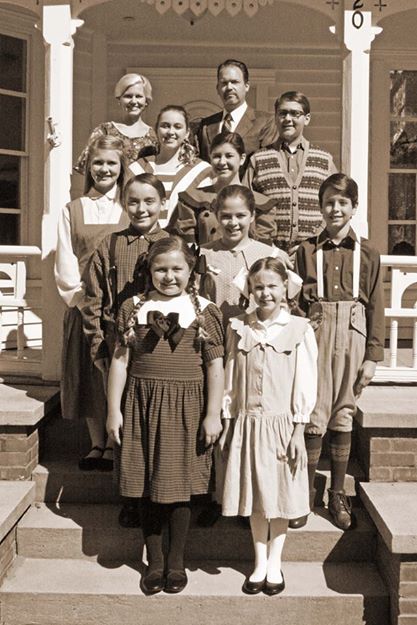
 

"Cheaper by the Dozen" - Melissa Swick Ellington reviews the new show at Lexington's Village Square Theatre

cheaper2 The Lexington County Arts Association presents Cheaper by the Dozen, dramatized by Christopher Sergel from the book by Frank B. Gilbreth, Jr., and Ernestine Gilbreth Carey, at the Village Square Theatre through November 16.   Based on the book authored by two of the Gilbreth children, Cheaper by the Dozen explores family life in the early twentieth century as the older girls begin grappling with the social and fashion issues of high school.  While the song titles and style choices are of a different era, the teenagers’ feelings are timeless. The real life inspiration for the father character, Frank Bunker Gilbreth, was an accomplished efficiency expert. His work in the field of time and motion study extended from factories to his own home, where Gilbreth and his wife Lillian Moller Gilbreth implemented procedures inspired by efficiency with their children. Several of these attempts are dramatized in the play, such as the use of Victrolas in the bathrooms for the purpose of learning foreign languages. Although the scene of Gilbreth modeling the most efficient way to bathe while fully clothed on the living room rug is undeniably humorous, he made serious contributions to his profession. (The book by Gilbreth and Carey was made into a film in 1950. Potential audience members may want to know that the more recent movie starring Steve Martin does not reflect the book’s characters or plot.  South Carolina connection: Gilbreth later wrote a popular column for the Charleston News and Courier for many years under the pseudonym of "Ashley Cooper.")

As the authors of the book that inspired the play’s creation, Frank and Ernestine provide a handy narrative framework, sharing glimpses of character and exposition as they remember their energetic and loving father’s impact on family life. The story focuses on Mr. Gilbreth’s goal of prioritizing efficiency as well as instilling strong character and values in his large brood. While the oldest child Anne rebels with silk stockings and a flashy cheerleader suitor, her younger sisters encourage her daring ways as ardently as her father tries to put on the brakes through insisting younger brothers accompany older sisters on dates. Although light-hearted matters of high school popularity and the family dog’s misbehavior suggest an insouciant romp, there is a dark cloud of illness that runs through much of the drama. The parents’ awareness of Mr. Gilbreth’s heart trouble contrasted with the children’s ignorance of the situation allows for moving exchanges such as one daughter’s careless declaration (“I wish I were dead”) met by her father’s troubled reply, “What a thing to wish.” As the audience comes to understand the motivation behind Mr. Gilbreth’s urgent need to organize his family and push the children through their education, the play moves beyond a simple comedy to a more complex depiction of the harsh struggle that mortality poses for any family.

This Village Square production boasts effective direction and an excellent cast. In the central role of the patriarch known for his “By jingo!” exclamations, Brian Andrews delivers a moving performance as Mr. Gilbreth. With the charming Lisa Pappas playing his gracious and clever wife, Andrews creates a highly convincing family dynamic. (Gariane Gunter plays the role of Mrs. Gilbreth for the November 14 – 16 performances.)  The idea that “what works in the factory” can improve the home helps to drive an entertaining script.  Andrews’ strong stage presence reveals a father who loves, gives firm direction, and teaches his children.

Although we don’t see all twelve children referenced in the title as the babies are being cared for “upstairs” throughout the play, the nine youngsters who appear on stage are vibrant enough for a full dozen and then some. The children craft a very believable sense of sibling camaraderie, transforming the living room set into a real home full of lively young people. As eldest daughter Anne, Maggie Hornacek achieves a skillful portrayal of the adolescent girl trying to date boys and become popular, while also learning adult truths about life.    Riley Goldstein and Cameron Eubanks share enthusiasm as Ernestine and Frank, making fluid transitions between reminiscences and scenes of the past. Kori Hays plays Martha with verve, and Paul Woodard becomes a genuine and funny younger brother in the role of Bill.   Isabella Gunter (Jackie), Kristen Hallman (Danielle), Cade Culler (Fred), and Annsyn Feinberg (Lillian) demonstrate spirit and charisma. It is rare to see a cast this young deliver such consistently strong performances, and the Cheaper by the Dozen kids succeed admirably.

cheaper3

Supporting characters are also well represented in this production. Graycen Szalwinski is appropriately flashy as the cheerleader Joe Scales, while Nick Holland makes a sympathetic impression as the beleaguered boyfriend Larry. Ben Sellers shares a memorable performance as the disapproving teacher Mr. Brill, and Rae Fuller’s effective appearances as Mrs. Fitzgerald remind us of the tremendous work required to keep the home running. Alternating in the brief yet significant role of Dr. Burton are Jeff Sigley, Steve MacDougall, and Troy Fite.

Mr. Gilbreth keeps an eye on his daughter and her suitor.

Village Square Theatre has once again assembled a talented production team, with producers Jill Larkin and Jeff Sigley at the helm. Debi Young provides insightful direction, and Daniel Woodard (Technical Director/Master Carpenter) has created a very attractive and functional set. Additional technical support includes experienced theatre artists such as Debra Leopard (Lighting Design), Nancy Huffines (Costumes), and Becky Croft (Sound Design and Control).

This lovely production gently affirms the idea of saving time for where one’s heart lies. Hard work, education, and family bonds: the Gilbreth clan’s experiences do not sugarcoat life’s challenges. My first grader shared that she enjoyed this play “about a family who learned about love.” I believe that audiences will leave the theatre feeling that they have learned something about love, and family, too.

~ Melissa Swick Ellington

Cheaper by the Dozen runs through Sunday, November 16; visit www.villagesquaretheatre.com/ for more information.