Jasper Talks with femme x About Story Slam -- in the Flesh -- September 14th

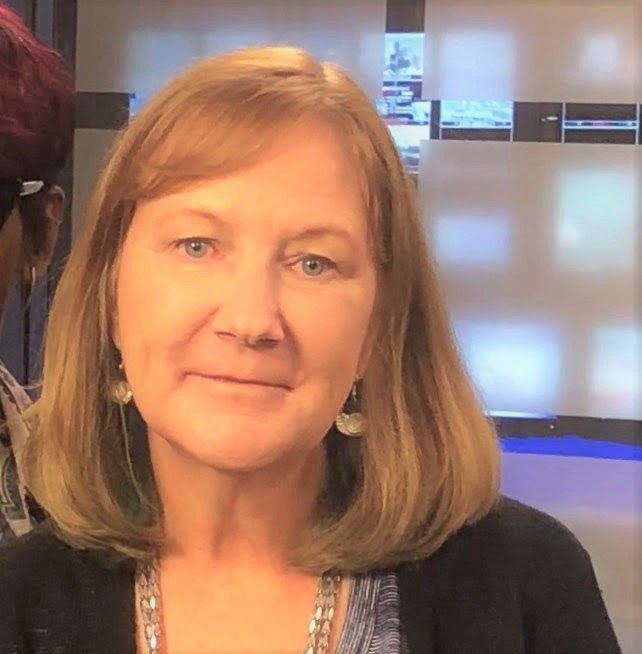
Looking for something in Columbia to itch that performing arts scratch, but with more of an edge and authenticity to it? femme x, a notable social gathering and coworking space in Columbia will be bringing back in person Story Slams, with the support and collaboration of the #whatshesaidproject. We talked to Nell Fuller, co-founder and managing partner of femme x, about the story slam and what audiences can expect from attending one of these recurring nights. 


Jasper: Have you partnered with the #whatshesaidproject before?

Fuller: Although we hadn’t partnered before, I have long admired the #whatshesaidproject and remember Shannon Ivey (founder of the #whatshesaidproject) winning a giveaway when we first opened. When Shannon and her business partner, Katie Zenger, pitched their Inspired Speaking Curriculum, it was a natural fit for our growing community of women, many growing their own companies and refining their storytelling skill sets. We saw an exciting need for a storytelling platform, particularly in a space that centers women. This story slam is a mix of seasoned and new storytellers, some of whom are in our Fall Inspired Speaking cohort. I am over the moon to collaborate with Ivey!


Jasper: What should audience members expect from the Story Slam? Does everyone in the audience have to participate, or can you attend to listen and offer love/support?

Fuller: Audience members can expect around 10 local storytellers to tell a 5–8-minute personal story connecting to the theme “In the Flesh.” Unless there’s rain, we will have it outside in the courtyard and all are welcome to attend and enjoy the community. The bar at femme will be open for drinks and snacks. 


Jasper: How does the Story Slam align with the aims and goals of femme x?

Fuller: Story Slams (and Shannon Ivey’s work in personal storytelling) aim to give women the opportunity and experience of crafting a personal story and then sharing it with a warm audience. These opportunities are rare, and femme x is a community that is aware of this and how it negatively impacts women and their quality of life. 


Jasper: Do you plan to have reoccurring Story Slams, or other live events with #whatshesaidproject?

Fuller: Yes! We will continue Story Slams on the second Wednesday of each month. The bar will open at 6 PM and the stories will start at 7 PM.


Jasper: Are there any other collectives like femme x in Columbia?

Fuller: Columbia has so much to offer, including a growing network of cowork spaces for entrepreneurs and creatives! NoMa Warehouse and SOCO both offer incredibly innovative, community-centered spaces. It’s been so energizing to come out of COVID and see the entrepreneurial community growing and thriving as we make space for one another to contribute to the larger ecosystem.


Fuller described femme x as a “social club and cowork space dedicated to changing the traditional systems of capital distribution.” The collective aims to nurture and create a safe, accessible, and empowering space for entrepreneurial women through “social events, peer engagement and programming tailored to their unique needs.” If you are interested in checking out their membership options, visit their website

The Story Slam is $5 for femme members and $15 for non members. You can register for the event online.


Columbia Author Carla Damron's New Fiction Deals with the Fight Against Human Trafficking

Advocate for human trafficking survivors pens thriller with a message of awareness and vigilance

Award-winning author and social worker Carla Damron, once named by NAMI as an Outstanding Mental Health Professional of the Year, uses fiction to address social justice issues, and her latest release is no exception. Emotion-driven, The Orchid Tattoo (Koehler Books, Sept. 30, 2022) is one part of Damron’s work as an advocate for human trafficking survivors and people with mental illnesses. Her previous work includes The Stone Necklace, winner of the 2017 Women’s Fiction Writers Association Star Award for Best Novel, which led award-winning author Pat Conroy to say “this is a novelist to be read again and again.”

In The Orchid Tattoo, social worker Georgia Thayer can balance her own mental illness with the demands of an impossible job. Mostly. But when her sister vanishes in the dead of night, her desperate quest to find Peyton leads to a multi-tentacled human trafficking network. When Georgia learns that her sister was brutally murdered trying to help a young victim called “Kitten,” she picks up where Peyton left off, and travels a treacherous path to expose the kingpin of the Estate, a luxurious brothel servicing rich and powerful men, and rescue his victims. Kitten is determined to escape. She won’t be trapped like the others. She won’t sell her soul like Lillian, victim-turned-madam, feeding the dark appetites of international business moguls and government leaders. Aided by Kitten, Georgia maneuvers to bring down the Estate and expose its dark secrets, but her efforts place her--and the very few people she allows to get close--in grave danger.

Continuing her advocacy work, Damron is partnering with Doors To Freedom, a non-profit that provides safe places for survivors of trafficking. They offer housing, education, treatment, and even vocational opportunities for teens and young adults who have been impacted by this issue. Their vocational program includes a cottage industry that makes cuff bracelets which you can purchase on their website. Damron hopes to promote the organization by selling bracelets at her signings, handing out information at her events, raising money, and donating a portion of her royalties. You can find out more at their website: 


“The Orchid Tattoo”

Carla Damron | September 6, 2022 | Koehler Books | Crime Fiction

Hardcover | $32.95 |978-1-64663-765-2

Paperback | $21.95 |978-1-64663-763-8


Carla Damron is a social worker, advocate and author whose last novel, The Stone Necklace (about grief and addiction) won the 2017 Women’s Fiction Writers Association Star Award for Best Novel and was selected as the One Community Read for Columbia SC.  Damron is also the author of the Caleb Knowles mystery novels and has published numerous short stories, essays, and op-eds. Damron holds an MSW and an MFA. Her careers of social worker and writer are intricately intertwined; all of her novels explore social issues like addiction, homelessness, mental illness, and human trafficking. In her spare time, Damron volunteers with the League of Women Voters, Sisters in Crime, Palmetto Chapter (President), her church, and Mutual Aid Midlands.


Columbia Theatre Stars Come Together for Jasper Project Staged Reading of MOON SWALLOWER

SUNDAY AUGUST 28TH

DOORS AT 3:30 - SHOW AT 4 PM

CMFA - 914 PULASKI STREET

$10 W/ RECEPTION

MOON SWALLOWER BY COLBY QUICK

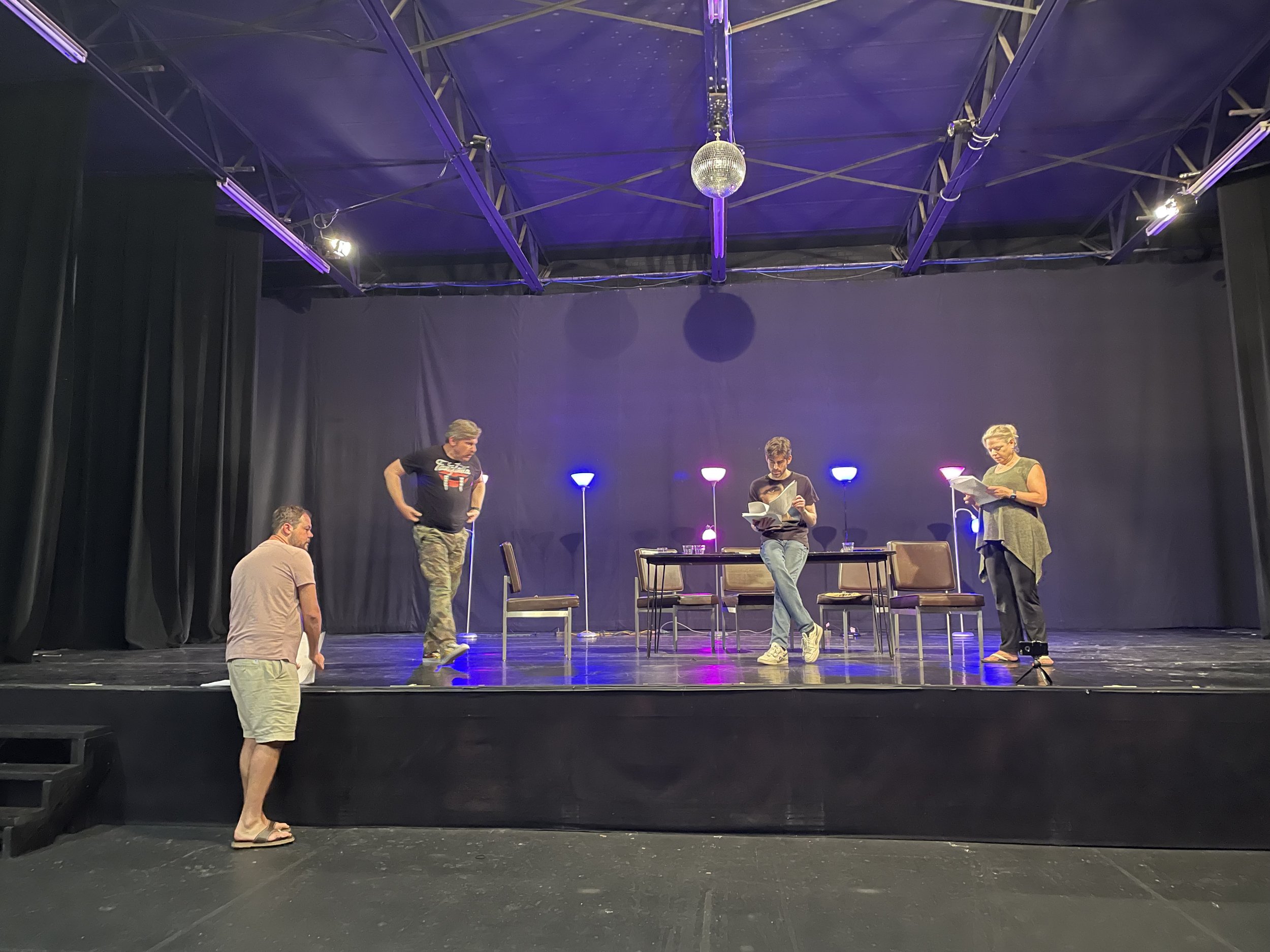
left to right - Chad Henderson, Chris Cockrell, Michael Hazin, and Becky Hunter


Join some of the city’s most exciting theatre artists this Sunday as they bring a brand-new play to the stage of CMFA. Directed by Chad Henderson, MOON SWALLOWER by Sumter playwright, Colby Quick, is the winner of the 2022 Jasper Project Play Right Series.

A one-act coming-of-age exploration that embraces the world of Youtube, gentle drug use, family dynamics, performative Christianity, and yes, the possibility of werewolves, this is not your typical staged reading.

Check all your expectations of straight back chairs and music stands at the door. Henderson has included lights, music, sound effects and more in this tease of what a full-blown production would look like. And the actors are anything but sedentary. From fight scenes to actors climbing on tables and hissing like creatures of the night, this is an exciting look at an exciting new project coming out of Columbia, SC.

Tickets are only $10.

Join this accomplished cast and crew for a fun Sunday reading complete with wine, snacks, and an opportunity for you to learn more about the page to stage process courtesy of the Jasper Project!

BECKY HUNTER

CHRIS COCKRELL

MICHAEL HAZIN

LONETTA THOMPSON

RICHARD EDWARD

CHAD HENDERSON

Mark Your Calendars - Future Poetry Events with The Jasper Project and Al Black

For the poetry lovers and art appreciators in the Columbia area, Jasper’s own Al Black will host a plethora of live events for poets and readers to be a part of. Each of the events have their own schedules, allowing for plenty of opportunities to fit everyone’s schedules. 

Mind Gravy Poetry is a weekly event that meets on Wednesdays from 7-9 PM at Cool Beans Coffee Company. The event includes music and poetry features, followed by open mic time, allowing for new voices to let their creativity and written word be heard.

For monthly meetups and activities, the first Tuesday of every month holds Simple Gifts, from 7-9 PM at the Friends Meeting House. The meetup includes music and poetry features and concludes with an open mic session. On the last Tuesdays of every month is the Jasper Poetry Salon, from 7-9 PM. It occurs at 1013 Duke Avenue and encourages poets of all experience levels to come and share their writings and appreciation for the art form. On the last Sunday of each month is Front Porch Swing, an outdoor event with live music; don’t forget your lawn chairs and coolers! Front Porch Swing also takes place at 1013 Duke Avenue, from 2-4 PM.  These monthly events are sure to provide anything you’re looking for in the realm of Columbia’s poetry scene.

Words, Words, Words is a quarterly event hosted on a random Saturday in January, April, July and October from 2-4 PM at the Richland Library Southeast Branch on Garners Ferry Road. This event features a published poet with an original music introduction; the featured poet is often from out of town, providing a great surprise factor for those interested in attending each of the meetings for Words, Words, Words. The next event will be in October, and we’ll update when we know more.

Black often organizes and hosts ekphrastic poetry events that feature galleries and artists from the Southeast—showcasing the appreciation of the combination of the written word and visual accompaniment. 

What? Was that June 30th that just FLEW RIGHT BY? Lucky for us, FALL LINES is FLEXIBLE!

FALL LINES DEADLINE EXTENDED TO JULY 5TH!

At Jasper, we know how hard it is to keep deadlines in our headlights and out of our rearview mirrors!

And while we are thrilled with both the quantity and quality of the submissions we’ve received this summer, we have no reason not to take a deep breath and invite our beloved SC wordsmiths to do the same, take pen in hand once again, and send us even more poetry and prose for Fall Lines volume IX.

That’s right, you have until July 5th midnight to send us your first batch of work if the deadline passed you by.

OR, if you scrambled to get your submissions in on time, we invite you to send us another batch to double your chances of being published this year.

Same rules as the first time around - just an extended deadline.

How’s that for independence?

We Got Your Fall Lines Submission Guidelines Right Here.

The Supper Table Goes to Jasper County!

THE MORRIS CENTER FOR LOWCOUNTRY HERITAGE

We’re delighted to announce that the Supper Table, the Jasper Project’s most ambitious project to date, is traveling to the South Carolina Lowcountry this summer for a 6-month-long residency at the Morris Center for Low Country Heritage in Ridgeland, Jasper County, South Carolina.

The Supper Table, an homage to the 40th anniversary of Judy Chicago’s 1979 epic feminist art exhibition, is a multidisciplinary arts project celebrating the history and contributions of 12 extraordinary South Carolina women and featuring the work of almost 60 of South Carolina’s most outstanding women artists in the visual, literary, theatrical, and film arts.

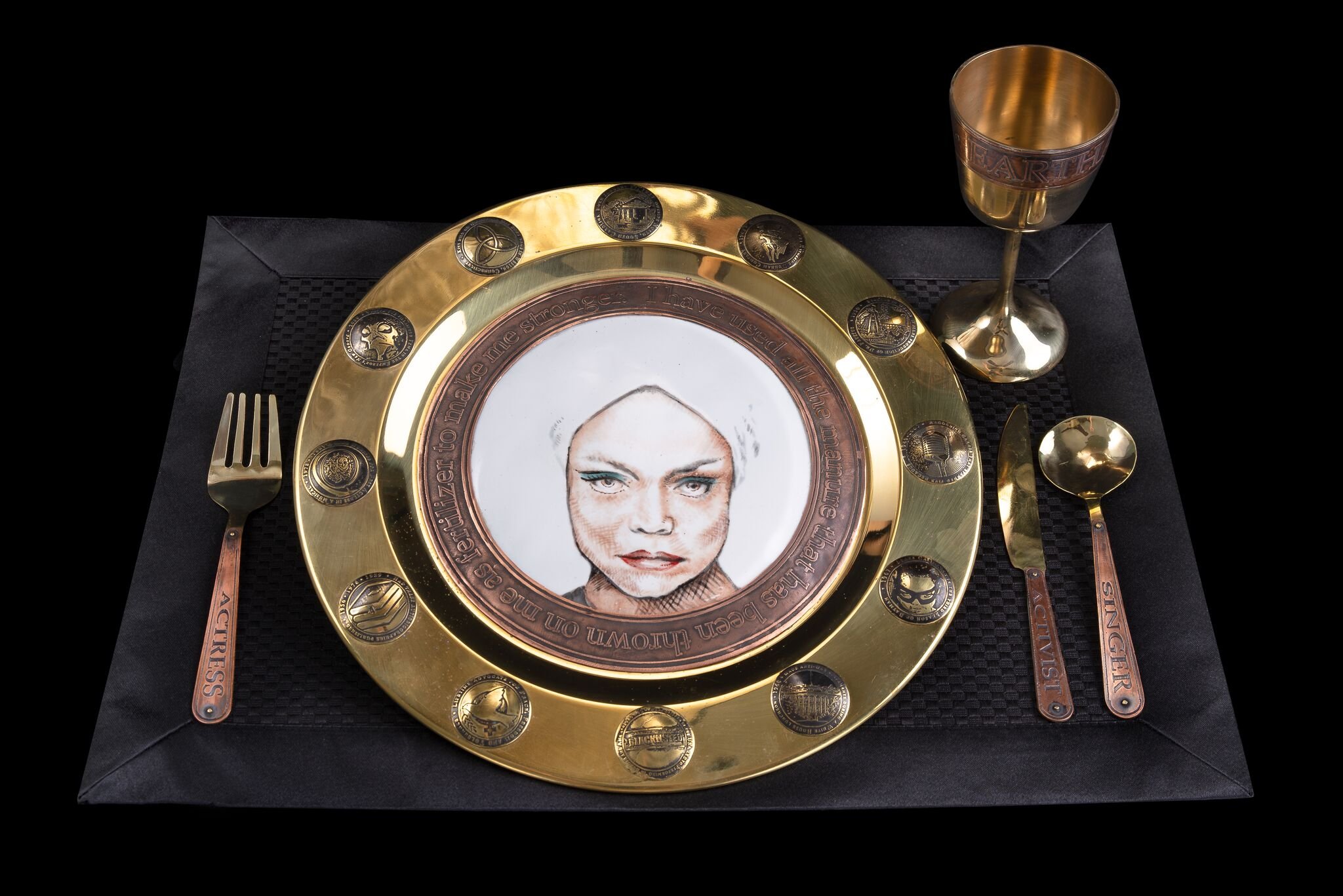
Place setting honoring SC artist Eartha Kitt by Mana Hewitt

The Supper Table was created between 2018 and 2019 and began touring the state in November 2019, traveling from Columbia to Irmo, Camden, Florence, Lake City, and more, but its itinerary was interrupted by the Covid-19 pandemic. For more information on the women honored with seats at the table created by outstanding SC women artists, as well as the writers, filmmakers, theatre artists, visual artists, and portrait artist Kirkland Smith, please visit the Supper Table page on the Jasper Project website.

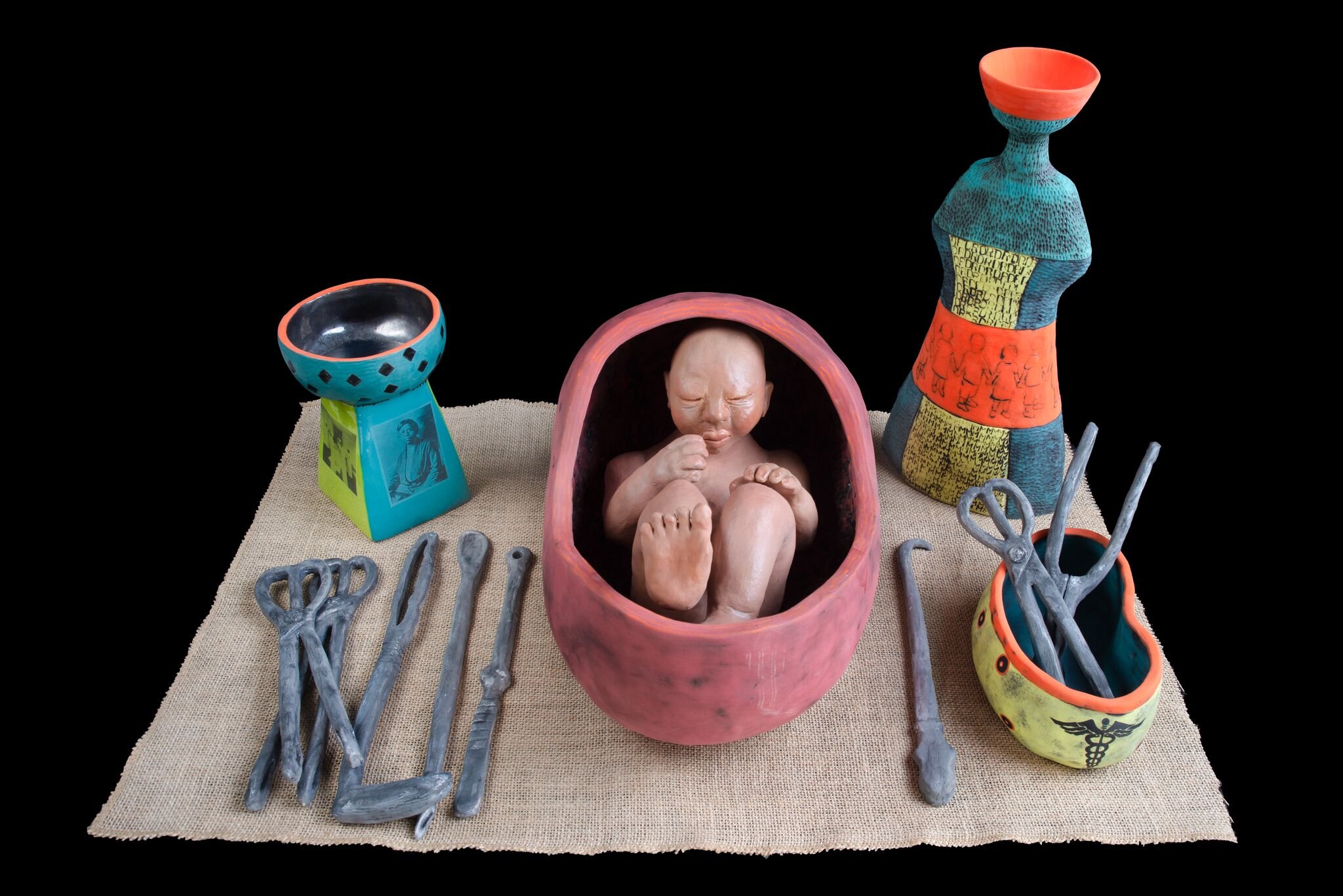
Place setting honoring SC’s Dr. Matilda Evans by SC artist Rene Rouillier

The Morris Center for Low Country Heritage has a number of educational and interpretive events planned to further explore and celebrate the Supper Table including the following.


7/16/2022

11:00 AM - 12:00 PM

Table Talk: The Supper Table Opening

Kayleigh Vaughn/Cindi Boiter

Part history lesson, part art installation, all homage. The Supper Table, its origins and impact on South Carolina Women’s History is the topic of conversation with Morris Center Curator Kayleigh Vaughn and Jasper Project Director Cindi Boiter.

https://www.morrisheritagecenter.org/events/table-talk/


8/12/2022

6:00 PM - 7:00 PM

Take a Seat: Visual Artists' Panel

Tonya Gregg, BA Hohman, Flavia Lovatelli

Enjoy some lively table talk as several of the visual artists from The Supper Table discuss their role and process in contributing to the art installation.

https://www.morrisheritagecenter.org/events/take-a-seat-visual-artists-panel/


Many of the SC artists involved in the Supper Table project

9/20/2022

5:00 PM - 6:00 PM

South Carolina "Herstory"

Dr. Valinda Littlefield

Scores of women have left an indelible mark on “herstory” in the Palmetto State. This inspiring talk connects to The Supper Table.

https://www.morrisheritagecenter.org/events/south-carolina-herstory/


10/21/2022

6:00 PM - 7:00 PM

Take a Seat: Writers' Panel

Christina Xan, Claudia Smith Brinson, Kristine Hartvigsen

Food for thought? In conjunction with The Supper Table, several writers share about their role and process contributing to the exhibition.


11/18/2022

6:00 PM - 7:00 PM

Take a Seat: Filmmakers' Panel

Ebony Wilson, Carleen Maur, LeeAnn Kornegay

Food for thought? In conjunction with The Supper Table, several filmmakers share about their role and process contributing to the exhibition.


Chapin Theatre Company Announces CALL for 10 Minute Play Scripts

CALL FOR SCRIPTS!

Exciting News from our Friends at Chapin Theatre Company!

Submissions will be open from June 15 through August 26.  We will accept only one play per playwright this year, so submit your best piece!

Other rules:

  • Playwright must live in South Carolina

  • Play must be no longer than 12 minutes in length

  • Maximum of 5 characters

  • Simple production with limited set pieces

  • Keep it PG 13 or less

  • Play should be in a "play format" and saved as a pdf. Play title and page number must be written on each page

  • This is a blind submission, so your name must NOT be written on the script

Plays will be selected in early September.  The eight winning plays will be part of the 2nd Annual 10-Minute-Ish Play Festival on November 4-5 at the Firehouse Theatre in Chapin.

Good Writing and Good Luck!

Submit

here!

Launch Announced for Jane Zenger's New Book of Poetry - Night Bloomer from Muddy Ford Press

Saturday, May 21st

5:30 - 8 pm

Stormwater Studios

Muddy Ford Press is pleased to announce the publication of the latest book in the Laureate Series, Night Bloomer by Jane Zenger.

Zinger will welcome guests to Stormwater Studios on Saturday May 21st from 5:30 - 8 pm for readings from her debut poetry collection. Included among the guests will be city of Columbia poet laureate (and Jasper Poetry Editor) Ed Madden, who edited Night Bloomer, working closely with Zenger on the composition and structure of the book. Night Bloomer is the third book in the Laureate Series following works by Tim Conroy and Ann-Chadwell Humphries. Angelo Geter’s More God Than Dead, the fourth in the series, will be published in June.

“It is a delight to see Jane's work coming into print,” Madden says. “I love the way that her voice ranges through memory, from tragic loss to humor and anger (sometimes both at once). The loss of her husband grounds this book, the poems range widely through a lifetime of experience.”

Of Night Bloomer Zenger says, “This book is a compilation of poems written during several distinct periods in my life. Several poems chronicle my early days as a rambunctious student and traveler, others are based on people or events that influenced or upended my life. The book celebrates and reflects both my real life and my imagination. Having a book published is a dream come true for me.”

Night Bloomer is available at Amazon, WOB, Walmart. Books-a-million, and a number of additional outlets. Zenger will be offering the book for sale and signing at the event on Saturday afternoon.

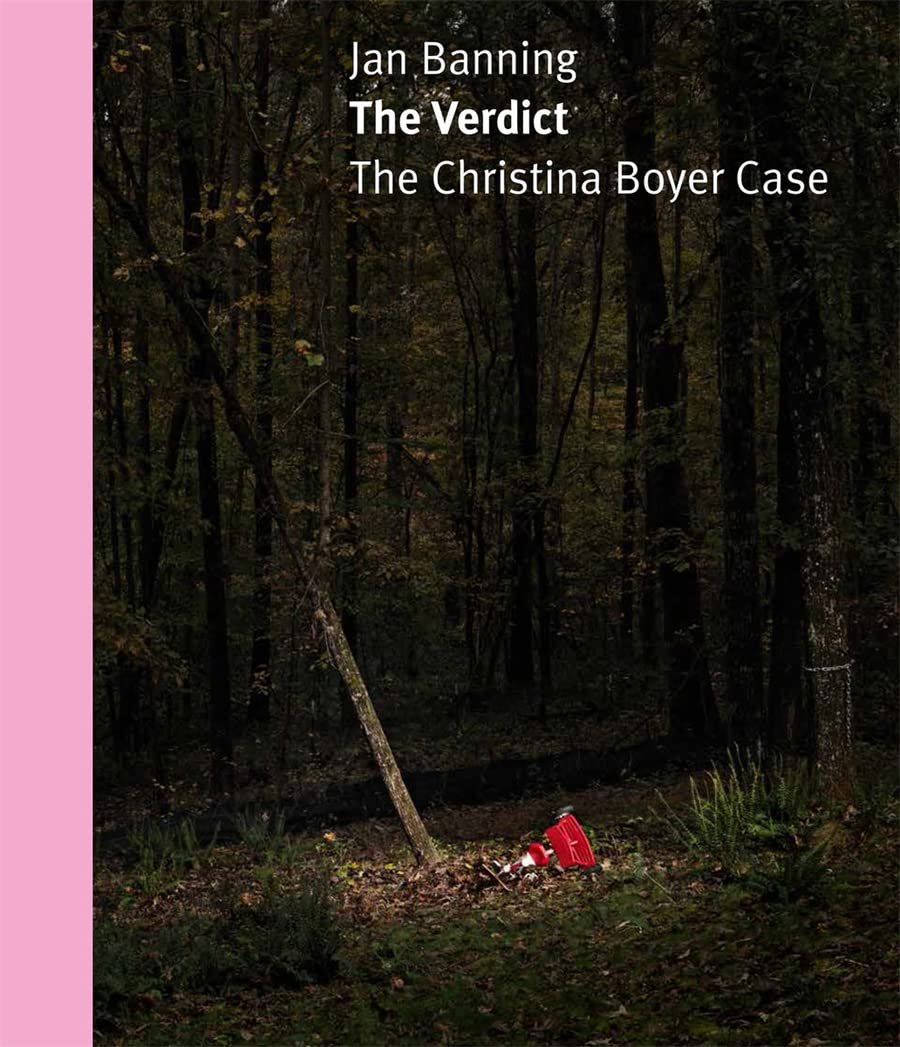
Book Presentation/Discussion--The Verdict: The Christina Boyer Case by Jan Banning @ 701 CCA

Book Presentation & Discussion:

JAN BANNING:

The Verdict: The Christina Boyer Case

Featuring Richland County Chief Public Defender Fielding Pringle

701 Center for Contemporary Art director Michaela Pilar Brown and

world-famous Dutch photographer Jan Banning

Monday, May 16, 2022

7:30 pm

Admission Free

Richland County Chief Public Defender Fielding Pringle and 701 Center for Contemporary Art director Michaela Pilar Brown will lead a conversation at 701 CCA with world-famous Dutch photographer Jan Banning during the first American presentation of his new book, The Verdict: The Christina Boyer Case. The conversation and book presentation will take place Monday, May 16, at 701 CCA.

Banning, a former 701 CCA artist in residence who has had two solo exhibitions at the center, makes the case for Boyer’s innocence in the death of her three-year-old daughter Amber in Carrollton, GA, in 1992. Boyer has been incarcerated for three decades after she accepted – under duress and after receiving poor legal representation – a prison sentence without pleading guilty to avoid a death penalty trial.

“For decades I have admired Jan Banning’s socially focused and engaging portrait projects on menial professions and human conditions otherwise ignored,” said Anne Wilkes Tucker, curator emerita of photography at the Museum of Fine Arts in Houston, one of many museums that has Banning’s work in its collection. “This moving book calls for what should be and could be done for Christina.”

Boyer’s “heartbreaking case infuriates me,” Tucker wrote, “but came as no surprise. Bullied and abused as a child, she is one of thousands of women without resources who weren’t believed, and had inadequate defense.”

The plight of especially poor defendants in the United States’ judicial system, in which 95 percent of cases never go to trial, will be part of the conversation with Banning. Public attorney Pringle has decades of experience representing indigent defendants.

Banning’s book presents a complex and multi-layered approach to the Boyer case. Two chapters, by Banning and Georgetown University law professor Marc M. Howard, discuss the case and the American judicial system. Photographed pages from the local newspaper provide media context and show the papers’ biased reporting on the case. “The Family Album” shows family photos of Boyer and her daughter, while another section shows hand-written pages from Boyer’s prison diaries. In “Imaginations,” Banning presents interpretive and conceptual photographs, mixing photojournalism and staged art photography, to illustrate aspects of the case, though not literally. “Christina’s Associations” presents Boyer’s written responses to Banning’s photos of the Southern environment, an environment that Boyer has not seen in person in decades.

Banning came across Boyer’s case when he was making portraits of inmates at Georgia’s Pulaski Women’s Prison for his 2016 book Law & Order: The World of Criminal Justice, which examines crime and punishment in five different countries through photos and text. Since then, Banning – by training a historian, with decades of experience as a photojournalist – has spent years researching the Boyer case, spending more than six months in the small town of Carrollton, Carroll County, and elsewhere in Georgia.

New York Emmy-winning production company Latchkey Films, contributors to the Netflix series The Innocence Files, is making a documentary about the Boyer case and Banning. Banning’s and Boyer’s exhibition about the case, The Verdict: Beyond A Reasonable Doubt?, opened in February at the Nederlands Fotomuseum, the national Dutch Photo Museum, in Rotterdam.

Banning was born in 1953, in Almelo, The Netherlands. His work has been exhibited in some 30 countries and is in the collections of many museum, including the Rijksmuseum in Amsterdam, Atlanta’s High Museum and the Philadelphia Museum of Art. Banning has published more than a dozen books of photography. Among his books and exhibitions are Bureaucratics, about government officials in several countries, including the United States; Comfort Women, about Indonesian women forced into sexual slavery by Japan during World War II; Traces of War, about forced laborers who survived the Japanese Burma and Sumatra Railways building project during the same war; and Down and Out in the South, about homeless people in Columbia, SC, Atlanta and the Mississippi Delta. Both Bureaucratics and Down and Out were exhibited at 701 CCA, where a residency for Banning provided the impetus for and beginning of the Southern homeless project.

701 CCA is a non-profit visual arts center that promotes understanding, appreciation and enjoyment of contemporary art, the creative process and the role of art and artists in the community. The center also encourages interaction between visual and other art forms. 701 CCA is located at 701 Whaley Street, 2nd Floor, Columbia, SC 29201.

Announcing the Winner of the Inaugural Lizelia Augusta Jenkins Moorer BIPOC Chapbook Prize - Maria S. Picone

Maria S. Picone (photo courtesy of the artist)

It is with great joy that the Jasper Project announces that the winner of the inaugural Lizelia Augusta Jenkins Moorer Poetry Chapbook Prize is Maria S. Picone of Myrtle Beach, SC for her chapbook entitled, Sky Sea Edict.

Maria S. Picone/수영 is a Korean American adoptee who won Cream City Review’s 2020 Summer Poetry Prize. She has been published in Tahoma Literary Review, The Seventh Wave, Fractured Lit and Best Small Fictions 2021. Her work has been supported by Lighthouse Writers, GrubStreet, Kenyon Review, and Tin House. She is a 2022 Palm Beach Poetry Festival Kundiman Fellow and Chestnut Review and The Petigru Review's managing editor. 

Lizelia Augusta Jenkins Moorer (1868-1936) was a teacher and social activist in Orangeburg, SC. Born in Pickens, SC, she taught at the Normal and Grammar Schools at Claflin College for 40 years. Her published anthology of poems Prejudice Unveiled, and Other Poems (1907) examined the Jim Crow South’s propensity for lynching, racism, and social injustice. Moorer was also an advocate for women’s suffrage in South Carolina, especially in the Methodist Church. 

The purpose of the Lizelia August Jenkins Moorer Prize, affectionately called the Lizelia Prize, is to offer a BIPOC poet from SC a publishing contract with Muddy Ford Press to publish their debut chapbook under the guidance of an established poet. The inspiration of Dr. Len Lawson, who is a member of the Jasper Project board of directors and the author, editor, or co-editor of four books of poetry, Lawson will also serve as editor of Picone’s chapbook and will collaborate with them on the construction of the book. Picone will receive publication via Muddy Ford Press, a cash prize, and ten author copies of the book.

This year’s judge of the more than 10 submissions was Raena Shirali. Shirali is a poet, editor, and educator from Charleston, SC. Her first book, GILT (YesYes Books, 2017), won the 2018 Milt Kessler Poetry Book Award, and her forthcoming collection, summonings, won the 2021 Black Lawrence Press Hudson Prize. Winner of a Pushcart Prize & a former Philip Roth Resident at Bucknell University, Shirali is also the recipient of prizes and honors from VIDA, Gulf Coast, Boston Review, & Cosmonauts Avenue. She holds an MFA in Poetry from The Ohio State University and is an Assistant Professor of English at Holy Family University, where she serves as Faculty Advisor for Folio—a literary magazine dedicated to publishing works by undergraduate students at the national level. Her work has appeared in American Poetry Review, Academy of American Poets’ Poem-A Day, The Nation, The Rumpus, & elsewhere.

About Picone’s work, Shirai writes, “What does it mean to belong—to a country, to a culture, to oneself? Maria S. Picone’s work is defined by these questions, and her work joins a storied lineage of Asian American authors who have wondered the same. Dense, insistent, and endlessly rewarding, Sky Sea Edict studies loss through identity and identity through loss in poems overflowing with language and yet marked by their empty spaces. These poems defiantly experiment, crossing text out, attempting language by repeating, iterating, attempting, scrapping it all and trying, again, to learn a mother tongue. Sky Sea Edict is a glorious declaration of oppositional existence, a vibrantly musical exploration that—as Picone herself writes—“weigh[s] these lucks against the lacks.”

Lawson is also delighted with the outcome of the inaugural poetry competition, saying, “Maria S. Picone translates her experience as a Korean adoptee in the South into the language of poetry, filling in any gaps with compelling verse, connecting her timeline with her original and adopted tongues. She braves the unknown in her life with these courageous words, offering a free-spirited narrative we must observe from all angles of both sky and sea. Picone has a voice to remember going forward.”

Lawsone continues, “The legacy of South Carolina poets of color became the impetus of this project with the example of Lizelia Augusta Jenkins Moorer at the forefront. Her poetry and service to South Carolina presents a beacon for any artists of color seeking to make a permanent mark in their communities. My hope is for this project to endure as more gifted voices emerge from our state.”

For more information about Maria S. Picone please visit her website.

Fall Lines Call for Poetry and Prose is Open

Fall Lines – a literary convergence is a literary journal presented by The Jasper Project in partnership with Richland Library and One Columbia for Arts and History.

Fall Lines will accept submissions of previously unpublished poetry, essays, short fiction, and flash fiction from April 1, 2022 through June 30, 2022. While the editors of Fall Lines hope to attract the work of writers and poets from the Carolinas and the Southeastern US, acceptance of work is not dependent upon residence. 

Publication in Fall Lines will be determined by a panel of judges and accepted authors (ONLY) will be notified by October 1, 2022, with a publication date in January 2023. Two $250 cash prizes, sponsored by the Richland Library Friends and Foundation, will be awarded: The Saluda River Prize for Poetry and the Broad River Prize for Prose.

Ø  POETRY: Up to five poems may be submitted with each submitted as an individual WORD FILE.
Include one cover sheet for up to five poems. Submit poetry submissions and cover sheet to FallLines@JasperProject.org with the word POETRY in the subject line.

Ø  PROSE: Up to five prose entries may be submitted with each submitted as an individual WORD FILE.
Include one cover sheet for up to five prose submissions. Submit prose submissions and cover sheet to FallLines@JasperProject.org with the word PROSE in the subject line.

COVER SHEET should include your name, the titles of your submissions, your email address, and mailing address. Authors’ names should not appear on the submission. Do NOT send bios.

ALL ENTRIES SHOULD BE TITLED.

There is no fee to enter, but submissions that fail to follow the above instructions will be disqualified without review.

Simultaneous submissions will not be considered. Failure to disclose simultaneous submissions will result in a lack of eligibility in any future Jasper Project publications.

 __

 The Columbia Fall Line is a natural junction, along which the Congaree River falls and rapids form, running parallel to the east coast of the country between the resilient rocks of the Appalachians and the softer, more gentle coastal plain.

New Poetry and Songwriter Events from Jasper and Al Black

Jasper Project board member and local poetry event guru, Al Black, is bringing two brand-new, unique events to the Midlands: a poetry salon and an outdoor music concert. Both events are starting this month: poetry month.


Jasper’s Poetry Salon


The mission of Jasper’s Poetry Salon is to give both new and established poets a safe, communal space in which to share their work and connect with other poets.


This is not a workshop, nor is it a simple reading. Everyone at the Salon will be able to share at least one poem, and conversation about the poems read will occur organically. Participants will be able to step into a relaxed environment with like-minded individuals—a space with no judgment where the goal is to hear, share, and appreciate language and story. This event allows any and all poets to enter a singular dwelling space and establish a sense of community with other Columbia-based poets who they may not meet otherwise. This is a wonderful opportunity for poets who feel isolated or who want casual feedback on their work. Whether one has been writing and publishing poetry for decades or has only just written their first poem, they will be welcomed with open arms and warm conversation.  

Occurring on the last Tuesday of every month, the event will hold its first gathering on April 26th at 7:00pm at 1013 Duke Avenue.


Front Porch Swing


The mission of Front Porch Swing is to provide a space for local musicians to showcase their work and for people to share in said work without distraction from what is important: the music.


On the last Sunday of each month, a singular music act will set up on the porch of the co-op on Duke Avenue and play for two hours. Anyone interested can come at their leisure, completely for free, and enjoy the performance. This come-one, come-all experience asks patrons to bring their own chairs, blankets, food, and drink—or whatever they might want to enjoy as they settle under the South Carolina sun with friends, new and old, to hear local music, new and old. Unlike some music-related events, here there is no dance floor, no bar, and no simultaneous events; for the duration of the performance, the focus is on the music itself. Whether a long-term Cola-music lover or brand new to the scene, this relaxed environment is the perfect space for anyone wanting to view local talent. 

The first Front Porch Swing will take place on April 24th at 2:00pm, featuring the band Jazz Dog, also at 1013 Duke Avenue.

 In the coming week, we will feature deep dives with Al Black on each event, so if you aren’t following Jasper’s online magazine, scroll down and enter your email to be updated when the articles come out!


Al Black has Two April Poetry Events Planned featuring Lawrence Rhu, Miho Kinnas, and Lang Owen

Pre-pandemic, it was hard to find Jasper Project Board of Directors Member and Local Open Mic Organizer, Al Black, when he wasn’t sitting in a coffee shop or a church basement with poets and songwriters gathered around him, waiting for their turn at the microphone. But lock-downs and social distancing brought all of Black’s endeavors to a screeching halt once Covid worked its way into the city.

Thankfully (and fingers crossed) those days are over and we can start gathering into our little (and large) tribal enclaves once again to cheer each other on as we explore the assorted paths of the written word.

And Al Black is back at his post, hosting and encouraging Midlands area literary artists as they grow and learn more about themselves and each other by sharing their work.

Two events coming up in Columbia during April’s Poetry Month include:

Words, Words, Words

Saturday, 04/02 at 2 pm

Southeast Branch Richland Library

7421 Garners Ferry Road

Columbia, SC 29209

Singer/songwriter, Lang Owen opens

for Poet, Miho Kinnas

Organized and hosted by Al Black

https://www.richlandlibrary.com/event/2022-04-02/words-words-words-poet-miho-kinnas


SIMPLE GIFTS - poetry & original lyric songs

7-9 pm, Tuesday, 04/05 (Monthly)

Columbia Friends Meeting House

120 Old Pisgah Road

Columbia, SC, 290203

Featuring: Poet, Lawrence Rhu & Singer/songwriter, Lang Owen

Followed by open mic (original poetry and music only)

hosted by Poet, Al Black

POETRY FOR THE PEOPLE OF UKRAINE - Premonition by Ellen Malphrus

This poem originally appeared in Fall Lines - a literary convergence volume VII-VIII

Premonition: January 2, 2020

by Ellen Malphrus


A castover hush of a day.


White tulips bend

to where there is no sun

as the dog naps

and the cat naps harder.

Little winter birds flit and flash,

awakened now from their own

long morning quiet

as a flicker drills at an oak.

The low growl of a Sunday plane

drifts back into silence and

the miles-away road buzz

goes entirely un-hummed.


I have lit a candle against the bleakness  

but why it seems like gloom

I cannot say.


Here on the cusp of the oncoming

year of perfect vision

maybe I’m afraid of

what I might see,

what I might not see.


Today I’d rather lie here in the porch swing

with my eyes closed

and listen to the dog snore,

the heedless woodpecker laughing.

You’re invited to share your poems and prose, dedicated to peace in Ukraine, with the Jasper Project.

Send to editor@JasperProject.com

WILL SOUTH - Sig Abeles Writes a Memoir

Sigmund Abeles (b. 1934), Self-Portrait in a Hat/Drawing, pastel on paper, collection of Nora Lavori.

            Sig Abeles was born in New York but raised in South Carolina’s Myrtle Beach. His mother had a bad, well, a horrible marriage, so she packed up little Siggy and headed for Dixie where relatives lived nearby. It was Mrs. Abeles’ (pronounced “a” as in hay and “beles” as in Belize) idea to start a seaside hotel (only it was cheaper to be off Highway 17, not quite on the water) and it would be there that her son grew up to love the sea, riding horses, and Brookgreen Gardens. From there, he would eventually make his way back to New York with dreams of becoming a great artist. After all, his pal, Jasper Johns, had not done so bad.

            And, in his own way, he did become that great artist and one of the more recognizable printmakers of the late 20th century. Which means he needs a book of some kind to declare that this is the case.

            “Sig, what about that memoir you’ve been threatening to write for the last twenty years?”

            “Oh, I got busy,” he drawls, with a manner of speaking that betrays echoes of a drawl mixed in with vintage New York aggro and a healthy dose of Yiddish inflection.

            “Busy with what?” I bug him. Most artists need to be pushed until they get to the edge of the cliff, then they’ll happily jump by themselves.

            “Well, there’s my lady, and I’m her man. We need time together.”

            After having been divorced three times, Sig got a girlfriend at the age of sixty-seven, and they are still together after twenty years. Their first date was a walk in the park, literally Central Park. For Sig, ever the romantic, it had been love at first sight.

            “I hope you found a nice Jewish girl, as your mom wished for you to do.”

            “"No, oddly, I didn't. Not even back when I lived with mom.” And he chuckles, ever the gleam in his sharp, highly trained eyes. “Not that I didn’t spend a lot of time looking.”

           “I’m happy for you, Sig. Really. That said, happiness schmappiness. You need to get your life story down in print. You are a first-class bullshitter, and your story would be a good read—the boy from down yonder who made good in the big city. It’s the great American story, isn’t it? Fate would have had you working in your uncle’s grocery story over in Florence, but you defied fate, or something like it, and followed your heart.”

            “Ah, yes. That I did. It really all started in Brookgreen Gardens.”

            “Tell me about that. Maybe later you can write it down and get this show on the road.”

            “Sure. I’ll tell you about it. That spot was where my living education took place at a time when the rural deep South lacked museums of history, nature, and art. I was given either a box of Ritz crackers or a box of Del-Monte raisins as a standard snack and would go sit on my perch and learn with my eyes. On any short list of why I became so damned lucky as a dreamer, human being, and artist, Brookgreen Gardens, a mere seventeen miles south of my Myrtle Beach home, comes in as a close contender for the top. It was where I cut my “art-teeth,” and I would doubtfully have become a professional artist without that magical collection of American figurative sculptures set in formal gardens. Throw in the zoo of local animals, which I also soaked in repeatedly until I was full, and I was able to learn what no one school or teachers could have possibly provided me.

            My lady friend, Nora, likes to tell folks about my “eagle-eye.” In a museum or at an antique show my eye leads me to the absolute best thing there almost instantly. That visual acuteness was developed at Brookgreen. The mystery of how in the world a sculptor could observe a model and somehow translate and transform clay into a convincing, living form for eternity still bowls me over, even though I now understand and practice those processes. The two huge subjects of my personal passion, the human, especially female, body and the grace and power of the horse remains fulfilling, thanks to that rich and exciting collection. From my vantage point on our rooming house’s steps overlooking US 17, I sometimes would spot a huge flatbed truck with a sculpture, sometimes wrapped in tarps with just a huge thigh or shoulder exposed on the way to that ever-evolving Brookgreen. I would run into the kitchen shouting, “Ma, a new sculpture is going to Brookgreen, please, when can we go down to see it, say really soon! OK? Please?”

            Because of Brookgreen Gardens, I knew the name and the sculpture of Anna Hyatt Huntington long before I had heard of Auguste Rodin. The same is true for the names of Gertrude Whitney and Malvina Hoffman before even knowing about Michelangelo, or the way-out, biting wit and satire of Henry Clews before Francisco Goya became a greater favorite and influence. It still seems like an odd happenstance of counter-intuition that it was the lady modelers who were the early heroes for me, not the men. In fact, the first time I “touched” art (and maybe it touched me) is evidenced in a snapshot of me as maybe a four-year-old on a family picnic where I was pulling the tail of a bronze lion by Ms. Huntington.”

            “And, from there to where, my friend? Tell me a little about your time at USC.”

            “My time at USC would prove to be a mixed bag, maybe even a mixed-up bag. In the 1950s, one could argue, correctly, that Columbia was at the epicenter of conservative American mores focused on truth and righteousness and was a national leader in the suppression of civil rights. No irony there, right? It was thus an unlikely place to be if one’s goal were to learn about mysterious creative strategies that might unlock the door to an artistic life. On the other hand, it might be a good place to learn business strategies involving tobacco and the manufacture of cigarettes and how to deny their danger to the health of the world. I knew instinctively things were going to be bumpy when I discovered the art department offered not one course in sculpture. Not. One. A place like Brookgreen Gardens never came up in conversation, however much I loved that place so dearly. It was my launching pad.

            The greatest professor there for me was Bob Ochs who taught American history and was a Lincoln scholar. God, how I loved hearing him dress down those students falsely proud of the Old South. He would happily tell them that their family were not plantation or slave owners, but rather were white trash who desperately needed to distinguish themselves one bare notch above Black Americans. Bob later became a friend, bought some work, had a house in Majorca, was awfully close to Jasper Johns, and was uniquely special—it was a privilege to have known him.

            I was supposed to be a pre-med student. Mom wanted me to be Chief Surgeon to the Free World. But I struggled with math, chemistry, and biology classes. I wanted art like no other desire; it was obsessional. USC's art faculty was comprised of interesting individuals. My favorite art professor was Augusta "Bucky" Wikowski, the adorable, eccentric art historian. She was widowed by the time I met her. Bucky was a great traveler and storyteller. She truly brought slides alive with her insights. Her pronunciation of profile as "pro-feel" delighted me as did her recounting to me over drinks on her Devine Street hillside home of the personae she assumed during her full summer travels to Europe and Mexico. Once she passed herself off as white Russian aristocracy, another time as a famous madam. Long after I left Columbia, the Columbia Museum of Art had arranged a show of her paintings, which were done either while traveling or from sketches made during those trips.

            However, Bucky was extremely modest about her canvases, very self-effacing. When it was time to deliver her exhibition, she stacked all her framed works against the back bumper of her station wagon and then proceeded to back over them all, busting frames and stretchers, doing grave damage to the best of her years of labors of love and remembrance.

            Often, I ranked myself in USC's art department as the fair-haired freshman (or fair-haired sophomore by the time I noticed my post pre-med mistake) while Jasper Johns was the fair-haired senior. The Jasper Johns event of memory was the farewell Mr. Graduate party for Jap after which he roared off in his snappy red sports car to fulfill his dream of going to New York to study at the Art Students League of New York with Yasuo Kuniyoshi. At the time, Jap's works were small watercolors leaning toward Paul Klee and rose period Picasso, sensitive and poetic. Jap's parting words to me were that when I made my way back to New York to look him up and he would help me find a place to live and work, which I did but neither a studio and apartment nor the job worked out for me. I do remember one day when Jap and I were at MOMA and he just said, “the New York Art World is run by four hundred male homosexuals.”

            In 1955, soon after the Supreme Court decision in favor of desegregation, I was called into the president of the University of South Carolina’s office. I had passed out leaflets around campus in support of civil rights, and taped fliers to walls. This work was modest in relation to what was to come in the 1960s, but it was enough to get you into plenty of trouble in South Carolina in the ‘50s. Certain of my views seem to have been influenced by northern proponents of freedom for all (radicals, that is), and the president, had this to say to me: "If you owe them so much (these radicals), why don't you move north to live with them?"

            I responded that I was at USC to get a degree and it was my intention to finish it. My records were on his desk, and he looked them over and proceeded to tell me that with the summer schools I had attended, I had enough credits to graduate. (I had put in five semesters of undergraduate work.) "If you agree to leave USC after this semester, we will send you a bachelor’s degree in June." In essence, he gave me a bachelor’s degree as a way to kick me out of school, similar in spirit to how Southerners will say, “Well, bless your heart!” when they mean “Screw you!” So, I finished that semester and moved to New York, took a small apartment in Greenwich Village on Charles Street and started making art.”

            You must have hundreds of stories.”

            “I do. But I wouldn’t know how to end it.”

            “That, Sig, is a good thing. Now, write the rest of it.”


Note: Sigmund Abeles has completed a first draft of his memoir, and, with a good deal of luck, should be out and readable in a year or two.

Will South is an independent artist, curator and writer based in Columbia.


Writer Carla Damron is More Than a Writer and a Social Worker - She Uses Her Art to Shine a Light on Some of Our Greatest Social Woes Including Homelessness and Human Trafficking

“I didn’t realize” were words I often heard in my work. They applied to me, too, back when everything I knew about human trafficking came from episodes of Law and Order. My first awakening occurred when asked to be a guest lecturer at a local college. I mentioned the beginnings of our anti-human trafficking advocacy when a student raised her hand and said, “You mean, like that girl they found in the trailer a few miles from here?”

Carla Damron, author of The Stone Necklace and the upcoming The Orchid Tattoo

I first met Carla Damron when I was working with the Richland Library and One Columbia to grow the One Book/One Community program in Columbia, SC. My personal goal for that project was to always choose a South Carolina writer for our community to read and I had lots of reasons why.

First, I believe it’s important for communities to recognize and support the truly talented among us in any way we can. But second, it’s incredibly important for us to see our friends and neighbors who accomplish major goals and be encouraged by them. Ride their mojo and use it to your own advantage!

The book we chose for our community to read, in conjunction with The State news which published the manuscript in part, was Carla’s 2016 novel, The Stone Necklace, set in Columbia, SC and published by the University of South Carolina Press’s Story River series, curated by the late Pat Conroy.

(I’m not sure what happened to the One Book/One community project since I’m not involved anymore, and neither is the Jasper Project. But, as an aside, I’d love to see it come back to Columbia and I’d love to see it adhere to the loose protocol developed by the Washington Center for the Book at the Seattle Public Library when the project was initiated in 1998. Hit me up if you’d like to work on getting this beautiful community project back up and running and are willing to work on it yourself. It’s a relatively easy project if you have a few volunteer hours in your pocket that you are willing to share.)

I’ve written about Carla Damron a number of times since we first met, and we’ve worked on projects together. She is quite a specimen of humanity in her goals and priorities, and I’m fortunate to call her my friend, writing sister, and fellow Columbian.

Today I want to direct you to two (more) outstanding contributions to our culture that Carla has so generously shared with us.

The first example is a recent essay Carla wrote on the issue of human trafficking and posted on her website. The title is “I Didn’t Realize — The Story Behind the Orchid Tattoo.” You should know that the Orchid Tattoo is the title of Carla’s upcoming novel, releasing on September 6th, 2022 from Koehler Books. This essay is linked above.

But secondly, Carla shared a piece of prose writing that I was delighted to share in the most recent issue of Fall Lines - a literary convergence. For your reading pleasure we present, “Breaking the Surface.”

Breaking the Surface

by Carla Damron

The olive green 1967 Mercury Marquis station wagon bulged with suitcases, bedding, groceries, floats, and our family. My father drove, my mother beside him, a Virginia Slim squeezed between two pink-nailed fingers. Crammed in the back seat: my teenage sister Susan, engrossed in a Nancy Drew novel, me, age nine, in the middle, and my eight-year-old satanic younger brother Freddy to my right. It felt like the drive to Surfside Beach took centuries, though really it took less than three hours. I smiled as we passed the bright blue billboard with the cartoon dolphins leaping into the air. It advertised the best store on earth, known for its pet fiddler crabs and mammoth shark’s teeth that could be purchased for less than my allowance. Every vacation to Surfside included a day at the Myrtle Beach pavilion and a visit to the beloved “Gay Dolphin.”  

            Freddy squirmed like the worm that he was, a bony elbow catching me in the ribs. “Quit elbowing me. Mom, Freddy’s elbowing me again,” I complained, for all the good it did me. I had a permanent concave space under the right side of my ribs.

            “She’s hogging up too much space with her fat butt,” Satan said.

            “Y’all behave. We’re almost there.” Mom let out a loud sigh as she flicked on the radio.

            “You said that a half hour ago.” Susan peeked up from her book, eyebrows arched in criticism.

            Mom tipped the ashes of her cigarette out the partly opened window. Smoke circled the inside of the car and found its way into my nose. I coughed.  

            “Here comes a VW,” Dad said.

I struck first, a quick-knuckled punch on my brother’s arm. “Punch buggy! No take-backs!”

“MOM!” he bellowed, as if I’d hacked him with a machete.  

“Arnold, seriously?” Mom tsked Dad. “Why do you encourage them?”

I spotted Dad’s sly smile in the rearview mirror.

“I’m going swimming as soon as we get there,” I said.

“Not until we get everything unloaded. And that means all of you helping.” Mom flicked the cigarette out the car, a pale torpedo barely missing the back window.

            I settled back in my seat, gaze fixed out the window, and counted speed limit signs. How many until Surfside? Twenty? A hundred?  I had reached number seventeen when another smell filtered through the windows: the unmistakable odor that meant Georgetown.  

            “I smell an egg fart! It’s probably her!” Freddy elbowed me again.

            “I wish they’d do something about the paper mills,” Mom said, like she did every time we came.  I didn’t care about the stink. Because if I closed my eyes, the Sulphur odor faded, and the distinct fragrance of salt, tanning lotion, and sea air filled my mind. I almost tasted my ocean.

***

            Finally, blessedly, we pulled up to the yellow wooden beach house perched on stilts. The checkerboard linoleum-floored kitchen had the basics: single sink, stove, refrigerator, and oven. Susan helped Mom unload the groceries, while Dad did the heavy lifting and Freddy and I fought over bedrooms—simple rooms, with no air conditioning, and generic paintings of seashells over white-washed dressers. 

            Mom tasked me with putting linens on the beds while my brother stocked the bathroom with soap, toilet paper, and towels. We both moved with lightning speed so we could scurry into our swimsuits and flip-flops and head down to the beach. Dad halted us at the screened porch.

            “Nobody swims until your mom or I are ready. So plant your fannies in those chairs and wait.”

            Wait. The hardest word for a kid, and one we heard many times a day. I pushed back and forth in the squeaky rocker as I stared out at sea-oats rippling above sand dunes. The quiet pounding of waves and squawk of seagulls called to me, but I had to WAIT.

            Inside, voices swelled in an argument about missing extra towels. “Really, Arnold. I ask you do to ONE thing,” Mom said.

            “One thing? Who loaded the wagon? Who gassed it up? Who DROVE us here?” Dad didn’t yell, but sort of laughed it out, like Mom was being ridiculous, a tone that might infuriate her and further delay hitting the beach.

            Freddy and I both stopped rocking. No response from her. Good.

Finally, the rest of my family emerged, Susan in her new bikini, Mom in a black one-piece and floppy hat, and Dad in trunks and an unbuttoned shirt, with an embarrassing stripe of white stuff over his nose which was prone to sunburn.  We jumped from our chairs and banged through the screen door, all a-bundle with towels, chairs, rafts, suntan lotion, playing cards, plastic buckets, and a thermos of Kool-Aid. Another container peeked out of Dad’s pocket: silver, small, and shiny, something he rarely went without.

The narrow board walk carried us over the last sand dune and I saw it: a blue-green expanse, white froth in stuttered lines across it. The sky a bold blue that stretched forever. Freddy and I dumped our belongings, kicked off our flip-flops, and dashed to the water. Susan remained with our parents, stretching herself on the blanket and slicking on suntan oil.

Waves crashed over me, surprisingly cold. At our salty feet, the undertow signaled a waning tide. It didn’t matter. Satan splashed me, and I splashed back, and we laughed and dove into a cresting wave. 

When we emerged, sputtering, soaked, and sandy, Dad met us ankle-deep in water. He handed us an inflated raft. “Take turns with this one until the other one’s ready,” he said.

Take turns, he said, like sharing was remotely possible. Freddy grabbed the raft, held it over his head, and trudged out to where the waves were breaking. When a big one surged, he hurled himself on top of the canvas float and rode it to shore like a cowboy on a bucking stallion. “YEEESSSS!” he yelled, as he climbed off.

“My turn,” I said.

“In a minute!” He sneered at me and hurried back to where the waves were cresting, no easy feat with the smaller waves slapping against him.

Another spectacular ride, and my jealousy erupted. When would I get a turn? When Dad finished blowing up the other raft? I glanced at the beach to find him engrossed in a card game with Susan, as though my uninflated float had no importance AT ALL.

“MY TURN!” I bellowed.

Freddy wagged the float at me, and I would have jumped on his head and dunked him if he’d been close enough.

            His third ride was a letdown, a smallish wave that fizzled a few feet from where he started. He stood up and shook sand from his swim trunks.
            “Ha!” I laughed at him.

He tossed the raft at me. “See if you can do better.”

I would do better. I tugged the raft out beyond the foamy sea caps, determined to find the biggest, most powerful wave which I’d ride like a rodeo champion. As the first few rolled under me, I looked further out, and saw it. A giant, magnificent wave rolling in.

I hopped aboard the raft and paddled as hard as I could, hoping to be just ahead of where it broke.  I timed it perfectly. It peaked, white froth exploding against the backs of my legs.

The raft took off like a Thoroughbred. I held on with all my might, holding my breath against the salty water splashing my face. Maybe my family watched this courageous ride, but I all I saw was the roiling foam.

My mount betrayed me. The raft swiveled, the back end pushing forward so that I was lying parallel to the wave. I stroked against the current, desperate to straighten, but it flipped over.

The force of the water pulled me under. I had no air in my lungs. My feet felt for the bottom, but instead felt the unmistakable tug of undertow pulling me out to sea.

I sank as low as I could, touched sand, and pushed, my hands pointed above me. For just a second, my face felt air and I sucked in a deep, frantic breath before another wave pounded me down.

Underwater again, I did my best to swim in what I hoped was the direction of shore. The undertow was a hungry force. My arms and legs ached against its power, but I kept on. When I bobbed up for another gulp of air, another wave knocked me under. And once again, I swam.

When I surfaced again, I saw the shore. Almost there, but not quite, and I felt so tired. A hand gripped my arm. I almost fought it, but I had no fight left in me, and the hand pulled and guided me until I stood on sand, safe, chest-deep in water.

“The float came in without you,” Freddy said, releasing my arm.

I nodded, unable to speak, as my air-deprived lungs sucked in breath.  

On the blanket on the beach, my mom thumbed through a magazine. My sister dealt cards to Dad, who sipped from his little container. 

“Maybe we should go up?” Freddy asked.

I shook my head. I trudged through the water to the shallowest part and dropped, my heels sinking into the wet sand. My brother sat beside me. The abandoned raft rested on the beach behind us. Three pelicans flew by, skimming the surface of the water.

“Hey, look!” Freddy said.

I tried to see what he was pointing to in the endless green water. It was less friendly than before. “What?”
            “Wait just a second. There!” He grabbed my hand and aimed it towards the descending sun. 

            Two gray lumps emerged, breaching the surface and arcing high above the water before submerging again. Two dolphin.

            “Whoa,” I whispered, not wanting to my voice to scare them away.  They erupted twice more, magic silver beings in a synchronized water ballet, before vanishing into the horizon.

            “Have you ever seen anything more beautiful?” I asked.

            Freddy didn’t answer.

Voices cut through the sea air from behind us: an argument between Mom and Dad about dinner arrangements. I let the pounding of the waves drown them out. For the next six days, I had the sand, my ocean, and one of two inflated rafts.

I would keep steady vigil, in case the dolphins came back.   

~~~~~

 Carla Damron is a social worker, advocate, and author of the novel The Stone Necklace, the recipient of the 2017 WFWA Star Award for Best Novel. Damron also authored the Caleb Knowles mysteries as well as numerous essays, and short stories. Damron’s careers of social worker and writer are hopelessly intertwined; all of her novels explore social justice. Currently Damron volunteers with Mutual Aid Midlands, League of Women Voters, and is the president of a local Sisters-in-Crime chapter. She works for Communities in Schools and Rutgers University. 
http://carladamron.com/

Featured Fall Lines Contributor: ERIC MORRIS and his Short Fiction, THE GIFT BEFORE

Eric Morris - photo credit Susan DeLoach

Throughout the year we like to feature some of our literary artists whose work appears in the Jasper Project literary journal, Fall Lines - a literary convergence.. Today, we’re featuring a piece of short fiction from Eric Morris, author of Jacob Jump, USC Press, 2015.

A native of Augusta, Georgia, Eric Morris is a production designer for the stage and teaches at the University of South Carolina. He is the author of Jacob Jump, a Story River Book selected for publication by USC Press editor-at-large, the late Pat Conroy. Morris holds an M.F.A. from Western Illinois University and a B.A from Augusta College. His professional work includes productions for dance, theatre, opera, live music stages, and trade shows. Morris writes and records as one half of the musical duo Classes of Dynamo. He lives with his wife and son in Columbia, South Carolina.

The Gift Before

By Eric Morris


            This child dances as she learns to walk, because dancing is the first thing. It is the first thing and it will be the last. This child taught no light of fire is needed to dance and neither speech.

            Her grandmother lay in bed silent and not opening her eyes. Her hair now loosed from her bun in tributary about her head as white as the heart of fire. She did not open her eyes or speak for two days, as if to tell, I am tired and it is time to rest now, and all of you can do this without me. The child stood alone in the room at her grandmother’s bedside, almost a teenager, becoming stronger every hour, tall and learning by legacy, fast within her growing body the unspeakable language of art. The third day when her grandmother wakened they looked upon each other viewing in brimming pools the same clear gray eyes they had been born into.

            “Take my hand, baby.”

            Their hands thin and elegant and of the same nature and intelligence, though two generations apart. Hands of a selfsame history and destiny, reaching one for the other, layered in embrace a last time.

            “Yes, Gran.”

            “You know y’all are going on without me.”

            “Yes, Gran.”

            “Baby, you know what to do, now. You know the gift, don’t you?”

            “Yes, Gran.”

            “I know you do. And you will always respect it, won’t you.”

            “Yes, Ma’am.”

            “I know you will. Because you know why.”

            “Cause--”

            “Ah.”

            “Because. You said it is what I have, and I will always give it, and it is my way of helping.”

            “That’s right baby. When they see the truth of it in you, they see something about themselves. And that is how we help one another along. I have seen you and I have watched you, and you are the one. It was taught to me and I taught it to your mother, and when she teaches it to you I can see you are the one. And that is a precious thing. And why.”

            “For within our gift resides all there ever was or will be.”

            “That’s right, baby. That’s right. Now, you can remember this, yes?”

            “Yes. I will remember this.”

            “I know you will. Alright, baby, you go get them now.

            “Ok, Gran.”

            This blooming child goes to her Grandmother’s walnut chest and kneels to open the third drawer. She knows these shoes and has held them many times. The rosin taken from a lightning struck yellow pine still staining the platforms, pleats and soles, the ribbons yet stitched to the bindings, sewn the morning of Mary’s final performance.

            “These are yours now. To keep right along.”

            “I love them.”

            “Yes, baby.”

            “Thank you, Gran.”

            “You knew they were already.”

            “I know.”

            “Alright, baby. Now I want you to go and get your mother and your father and any who want to come. This will be the end of it.”

            “Oh, Gran.”

            “Now, no. Don’t, baby. You know better than this, we talked about this.”

            “But can’t I cry.”

            “Yes, you can. But after, then you can cry, after. Like we said. Like we agreed. You cry then you stop crying. I don’t want to see that pretty face sad. I want to see your light. You do that for me. Now call them in.”

            When they returned to her grandmother’s room, the body of her family stopped and attended. Mary had risen from the bed and she was away from it in the center at the footboard. She stood without aid from human or device and she made a slow dance at the cheval mirror in her bedclothes and bare long feet with her hair spilling loose, white as the heart of tumbling fire. This elegant woman speaking a last time the unutterable language of truest art in the moment of its creation. She danced slowly turning with her arms aloft, and her aged body making a final figure, the same posture as statues and paintings from the ancient world cast in unknowable times, the form that is telling of things to come because a woman’s arc is the most beautiful thing made, then and now, and too is the most enduring, the truest, the most heartbreaking. The most unreachable.

            Her grandmother danced slowing, a final turn with her twin mirrored, her arms assuming en bas down by her side, the line of her core easing, giving to the end of her days.

            Alright,” she said softly. “You all can help me now.”

            And they took her and returned her to bed.

            “I’m closing my eyes now,” she said to all of them, taking each of them in, and finishing at her granddaughter. “I’m closing my eyes now, Maryanne baby, but I will see you. I will see you.”

Jasper Poetry Editor ED MADDEN Wins SC GOVERNORS AWARD FOR THE ARTS!

Congratulations Ed!

We’re delighted to report that Jasper Magazine’s own ED MADDEN is one of the recipients of the 2022 SC Governor’s Award for the Arts!

Ed has been Jasper Magazine’s POETRY EDITOR since the founding of the magazine in 2011. He has served as a major advisor to the Jasper Project as well as co-editor of Fall Lines - a literary convergence since its inception. Ed also serves as the poetry editor for our JASPER WRITES column in ONLINE JASPER.

Ed, who won in the Individual category, shares the spotlight with Darion McCloud, winner of the 2019 Jasper Project Theatre Artist of the Year, who won in the Artist category, and Carrie Ann Power who won in the Arts in Education category. One Columbia for Arts and Culture, the organization that grabbed and ran with the proposal that a City Poet Laureate position be created and that Ed Madden be seriously considered for the post, also won in the organization category.

Ed’s bio reads, “ED MADDEN (Individual Category) is a poet, activist, and a professor of English, with a focus on Irish literature, at the University of South Carolina. There, he is also director of the women’s and gender studies program. His academic areas of specialization include Irish culture; British and Irish poetry; LGBTQ literature, sexuality studies, and history of sexuality; and creative writing and poetry. In 2015, Madden was named Columbia’s first poet laureate, a post he maintains today. Madden has been a South Carolina Academy of Authors Fellow in poetry twice and was South Carolina Arts Commission Prose Fellow in 2011. He has been writer-in-residence at the Riverbanks Botanical Garden and at Fort Moultrie in Charleston as part of the state’s African American Heritage Corridor project. He also works with the South Carolina Poetry Initiative and was 2006 artist-in-residence for South Carolina State Parks. His numerous publishing and editing credits include four of his own: NestArk, and Signals and the chapbook My Father’s House, runner-up for the 2011 Robin Becker Chapbook Prize.”

While we are super proud of the accomplishments listed above we’re most proud of the talents and energy that Ed shares with the community on a voluntary basis, such as the work he contributes to the Jasper Project and as the Poet Laureate of of Columbia. It’s a lovely thing to honor a person or organization for doing well the work they are commissioned to do, and it is encouraging to those individuals and organizations to continue to do well the job they are paid to do. But when someone like Ed, who is already inordinately busy directing a university academic program, maintaining and growing his art, maintaining and growing his homelife, and more, chooses to take on more responsibilities because he believes his gifts should be shared FREELY with his community — then THAT is something to celebrate.

Cheers to our friend and colleague Ed Madden, as well as to the other honorees of this year’s SC Governor’s Awards for the Arts. And thank you for making our home a better place!

SC Philharmonic Celebrates American Composers and SC Poet Dr. Frank Clark in “American Memories”

South Carolina native, accomplished psychiatrist, and poet Dr. Frank Clark has the prestigious honor of having his poetry featured alongside the SC Philharmonic’s upcoming performance “American Memories.” While featuring familiar works by composers like Gershwin and Still, the ensemble will be performing the world premiere of pieces by Dick Goodwin, inspired by Clark’s poems “Partial Absence-Full Forgiveness” and “Foggy Brown Sugar.” We interviewed Dr. Clark in order to gain some insight on the creative processes behind his poetry, what inspires him, and the existing relationship he has with music.

JASPER: Have you always held a fondness for music? When did your interest first start?

CLARK: My relationship with music stems back to my childhood. My mother, a retired Chicago public school teacher and advocate for the arts provided an early exposure to music. I grew playing several instruments including the piano and flute. I have fond memories of attending various symphonies and performing in recital as child. These experiences allowed me to develop an appreciation for music.

JASPER: Did your love of music create an interest in poetry, or did that come up on its own?

CLARK: My love of poetry came later during a pivotal point in my life. I was diagnosed with clinical depression in medical school and experienced seasons of unrelenting despair.  One day I decided to start exploring more of me while sitting at my favorite tea shop. I needed to find another way of coping with the array of thoughts that had percolated through my mind. These were thoughts of feeling like a failure and questioning if I would ever succeed in medical school after experiencing multiple academic hurdles. In retrospect my academic struggles in medical school were a blessing in disguise. I don’t know if I would have taken the step of putting the pen to paper to explore humanity in all its glory and imperfections. Writing poetry along with Lexapro at that time were my antidepressant that had synergist effects for my mind, body, and soul. 

JASPER: With your poems being a key component in the upcoming SC Philharmonic performance, we were wondering if this is the first time your poetry has been featured in direct conversation with music, or do you consider this type of conversation whenever you write new poetry?

CLARK: I had never considered having my poems set to music until last year when I was blessed to meet University of South Carolina School of Music Distinguished Professor Emeritus, Dr. Gordon (Dick) Goodwin and his wife Winifred Goodwin. Dr. Goodwin and Winifred performed a virtual concert as part of the South Carolina Philharmonic Healing Harmonies program for the patients at Marshall Pickens Hospital and for our faculty in the Department of Psychiatry at Prisma Health Upstate. I became aware of Dr. Goodwin’s composition skills and decided to take a leap of faith by asking him to consider setting several of my poems to music. He graciously accepted this offer. My providential encounter with Dr. Goodwin and Winifred Goodwin has created a snowball effect. Currently, I am working on several collaborations with composers nationally and internationally. These collaborations remind me of one of my favorite scriptures: Commit to the Lord whatever you do and your plans will succeed (Proverbs 16:3).

JASPER: The subject matter of the featured poems “Partial Absence” and “Foggy Brown Sugar” are quite personal; do you find that writing about your family comes the easiest to you?

CLARK: Poems such as “Foggy Brown Sugar” and “Partial Absence-Full Forgiveness” were not easy but necessary for me to write in order heal during the grieving process. The former is about my mother who was diagnosed with a neurocognitive disorder (dementia) several years ago. I wanted to find a way to capture the emotions that were evoked for me. As I psychiatrist I have provided care for individuals with neurocognitive disorders. The impact is different when it hits close to home. I still have days where I vacillate between acceptance, anger, bargaining. I am mindful of these feelings and am comforted by the fact that she is an environment where she is well cared for. I’m thankful that she is still able to recognize me, her daughter-in-law, and her granddaughter. We share the joy and love of music. These are all silver linings for me.

“Partial Absence-Full Forgiveness” is about my father, who was partially absent throughout my life. He passed away when I was in my early 20s. I wanted to find a way to express forgiveness given that for many years my heart was full of anger due to some of his decisions that impacted our family unit. I was able to process my feelings in therapy, which led to a sense of relief and peace. Writing this poem was difficult as it conveys my raw feelings, but it also allowed me to remember the important of grace, love, and mercy. 

JASPER: Are there any other major ideas or concepts you tend to explore through your poems?

CLARK: Other concepts and ideas I have explored through my poems revolve around diversity, equity, and inclusion; the importance of exploring humanity; world events; and my Christian faith.

The SC Philharmonic’s performance of “American Memories,” which additionally features guest tenor Johnnie Felder, is on February 5 at 7:30 PM. Tickets are available to purchase on their website.  

Read the poems that inspired the performance:

“Foggy Brown Sugar”

Foggy brown sugar reclines in her regal chair.
I wonder if she remembers the days we viewed movies starring Ginger Rogers and Fred Astaire.

Foggy brown sugar mourns the loss of her previous independent dwelling.
Confabulation is her new peer that welcomes whimsical story telling.

Foggy brown sugar crumbles at the site of multiple short acting injections.
The mirror reveals a storage shelf filled with a variety of sweet reflections.

Foggy brown sugar searches for the proverbial spice of life.
Heavenly angels recite familiar psalms to provide protection from any strife.

Foggy brown sugar gazes at the spirited hawk.
She relishes the sight of princess feet frolicking on the sidewalk.

Foggy brown sugar ingest acetylcholine to sweeten a cognitive taste bud. 
Her puzzled progeny still grieving the colorful substance that was once clear as mud.

“Partial Absence-Full Forgiveness”

I remember a childhood that left me partially love parched.
His routine became predictable and at times left my heart charred.
His mouth spewed messages that were entangled in my disorganized web, filled with mixed emotions.
His act sustained itself during the formative years of my life and left me in a state of delirium.

I remember a childhood that left me partially puzzled.
His adoration for Our Father was transparent like a glass ceiling.
His love for my faithful fan left my airway obstructed with questions that went unanswered.
His deceitful nature left my receptors feeling that his presence was indeed a placebo.

I remember a young adulthood that left me wandering into a bewildered wilderness.
Hatred, ambivalence, and regret disturbed my digestive system.
Love and father did not coexist in my world for many years.
Sanctuary became polluted with earthly pleasures.

I remember the moment in my life that left me fully transformed.
Molecules of love, peace, and forgiveness easily penetrated my once stubborn blood brain barrier.
My countenance lifted, thermostat reset, arms outstretched.
He offered prayers from heaven and his presence is more palpable than ever before.

Until we meet again.

Fall Lines - a literary convergence vols. VII & VIII Releases Sunday Jan. 23 with a 2 pm Reading at Drayton Hall

Attention Fall Lines Contributors and Readers: If you are unable to attend the reading and release of Fall Lines on Sunday, please visit the Jasper Project Facebook Page where the event will be live streamed.

After too many Covid-related postponements, the Jasper Project is delighted to release the combined Volume VII and VIII issues of Fall Lines- a literary convergence on Sunday, January 23rd at Drayton Hall on the campus of the University of South Carolina. The event will begin at 2 pm.

Strict Covid protocols will be in place. Masks are mandatory except when reading. Only vaccinated contributors and guests are invited to attend.

Contributors to the 2020 and 2021 issues of Fall Lines are invited to choose one piece of their own poetry or prose from the dual-volume journal to read to the public.

Drayton Hall is located at 1214 College Street. Street parking is available. The public is invited to attend.

~~~

The Jasper Project shines a light of appreciation Columbia-based photographer Crush Rush, whose powerful portrait of a Black Lives Matter demonstration graces our cover.

from the One Columbia site above …

Crush Rush is a photographer/photojournalist living and working in Columbia, South Carolina. His photographic eye is keen on identifying and capturing the critical finite moments of ever moving human emotion and the natural world. Rush is self taught but was extremely lucky in his opportunity to work and play along with some of Columbia’s greatest photo makers which helped him hone his skills and gain a deeper appreciation for the craft.

 Known as a social chameleon, Rush constantly engages different types of people from different walks of life to find a common denominator in the grand scheme of things, which he feels allows for him to draw inspiration from very non traditional sources.

Artist Statement:

I feel like the best display of emotion is one that can be felt or portrayed with no words involved. My camera grants me the ability to take a person back to a moment in time by simply showing them a picture. I almost feel as if I have the power to steal grains from the sands of time. For me the love of editing is just as exciting as making the photo and I strive everyday to be a better storyteller.

Crush Rush - artist Easel Cathedral