Saul Seibert on Jealousy

As Kyle Petersen described him in a 2018 profile he wrote on Saul Seibert and his older brother Zach Seibert for Jasper Magazine, “… Saul is a consummate frontman, with a steady intensity that crackles with a voodoo-like mysticism punctuated by unfettered, anxious hollers that bring to mind the most wiry aspects of early post-punk.”

greeneyedjealousy.jpg

It’s hard enough being an artist and dealing with the difficulties the outside world sends your way — money problems, relationship challenges, and the general drama of daily life as a human — but when you add in all the internal battles specific to being an artist, a person whose job is basically interpreting life, processing feelings, and sharing it with the world, it can get seriously rough.

Saul Seibert has been at this battle for a while now. The 44-year-old musician and, let’s-face-it, philosopher, has become one of the Columbia music scene’s leaders, of late, cranking out stellar albums and hard-hitting performances alongside Scott Tempo in the band, Boo Hag.

This morning on social media, Seibert shared his take on dealing with one of the demons most of us don’t even want to admit we have caged up in the back room of our minds — Jealousy. Jasper was moved and asked Seibert if we could wrap his words of wisdom up in a tidy little package and share them with our readers.

He graciously agreed, and here you have it.

Competition motivated by jealousy can often be the Achilles heel of any artist or progressive movement and it's ugly. Guard your heart from such an insidious seduction. Here are a few things you can do to avoid such a pitfall.

1. Posture yourself in such a way so as to learn from those who have gone before you and ask questions.

2. Don't trust all your judgments and seek out council from your peers and other proven people in the art community.

3. Don't pretend. People are smart and can spot a poser.

4. It's ok to be an asshole, (the industry will make you one and that's ok) … just don't be a dick. There's no excuse for that.

5. Apologize and ask for forgiveness.

6. Fail. It's good to fail.

7. Sometimes the critics are right and sometimes they are wrong … either way they are in general paid to write about what you do. Take it on the chin and put it in box under the bed. Remember they can't do what you do.

8. Build relationships with younger players and performers and model the movement you want.

9. Look up the definition of "Service".

10. You are dying. Remember that. In general, that can kill a jealous mood.

Saul Seibert and his beautiful mom, Brenda Seibert. “She taught this outlaw kindness.” — Saul Seibert

Saul Seibert and his beautiful mom, Brenda Seibert.

“She taught this outlaw kindness.” — Saul Seibert

Jasper Talks with Cellist Idris Chandler about Covid, Challenges for Classical Musicians of Color, How South Carolina Treats Black Artists, and Mr. Rogers Neighborhood

“South Carolina has a special responsibility due to its past, to check racism, biases, and judgement in the continued effort to support black communities. In my opinion we should be given, yes given, more education, guidance, grace, and support because of the history of white supremacy in South Carolina.”

Idris chandler 2.jpg

JASPER: Thanks for agreeing to chat with us about your life as an artist, Idris.

Can we start with learning a little about your background like where you’re from, where you went to school, and how you got to Columbia, SC?

CHANDLER: Thanks for asking me to participate. I’m a native of Columbia, born at Richland Memorial. I went to Brennan and Lyon Street Elementary, Crayton and Gibbs Middle and Eau Claire High Schools.

“I love wooden instruments. The resonance and beauty of the material is fascinating. Something that people build out of trees makes such special sounds.”


JASPER: Who have been your biggest influences as a musician?

CHANDLER: I am a fan of so much music. I fell in love with classical music in middle school, but grew up singing everything on the radio, especially R&B, and listening to reggae which my father played constantly though I didn’t understand why he loved it so much.  

A pivotal moment was seeing Yo-Yo Ma on Mr. Rogers Neighborhood. I listened to him speak so calmly about music and the cello and watched an intimate performance with him and Mr. Rogers who seemed so appreciative and fascinated. I think my parents got me a cassette tape of his Cello Suites and I was hooked. I pretty much taught myself how to play the first few weeks.


JASPER: In addition to playing cello, I know you play a number of additional string instruments, as well. Can you talk a little about that, please?

CHANDLER: Starting on the violin in 5th grade I switched to cello at Crayton and was amazed at the sound of this huge instrument. In 9th grade I picked the violin back up and even played it in the District Orchestra for a time. Having gone to USC to pursue an education degree and a performance certificate, I had to play the other string instruments (viola and bass) which I also have grown to admire, but I don’t play them as often or as well as the cello. I love wooden instruments. The resonance and beauty of the material is fascinating. Something that people build out of trees makes such special sounds. I generally play cello professionally and explore the others in my private studio. 

I’m teaching myself guitar and tenor guitar, though I’m not very good. One day I’d like to own all the guitars related to bowed strings like the mandolin and madola.


JASPER: I first learned about your work when I heard Day Clean several years ago and was blown away by your technique and musicality. That was a duo with you and Marcus Thomas, right? Is Day Clean still a thing?

CHANDLER: DayClean!!!! Sorry for yelling. The duo was me and Marcus who plays guitar. He’s an amazing soul, hip-hop, lyricist and songwriter. He currently leads worship and teen ministry in Virginia. I wrote string arrangements for the album and sang backup. It was and still is my favorite thing and I’m proud because it’s good music that speaks to people. I always wanted to do more than classical music and the time with Marcus was my education. He moved a couple times, and I blame him for being allergic to creating long distance! We still play occasionally.


JASPER: Where else do you perform?

CHANDLER: COVID has made things difficult obviously, but I usually play with the Resonance String Quartet, EdgeWire Music, and several regional orchestras which this year includes the North Charleston Pops. Like many musicians, in normal times, I’m also contracted for engagements including, studio recording, and other live concerts and shows.

“Navigating the emotions of this time has been difficult. Being unable to perform with my colleagues and friends, keeping track of my family, staying healthy, then watching hundreds of thousands of people die in the richest nation in the world, questioning how a musician and teacher can be of service during this time.”


JASPER: Can you tell us a bit about your personal practice and rehearsal schedule? (I think non-artists are always surprised by how many hours/week a performing artist logs in.)

CHANDLER: These days I’m averaging about an hour and ½ a day. I’d love to play for myself more! As I’m also an educator, most of my time is spent devising curriculum strategies. The pandemic has changed the way we teach, so a lot of my work has been revising the curriculum to teach online. The entire job has changed. Sometimes when people ask what I do it seems insignificant to say I practice, research, study, write and create. But that’s the life.


JASPER: What has been one of your greatest challenges as a classical musician and how have you overcome it?

CHANDLER: The biggest challenge is making a living. I’m learning as a musician to be flexible and versatile. It’s helpful to be open to new opportunities, while being discerning about the ones you except. Being a classical musician is about being business minded, a skill that doesn’t come easy to me, but I’m learning.

JASPER: And you’re a teacher, as well, is that right? Can you talk a bit about what and who you teach, and where?

CHANDLER: Yes, I was counseled that if I wanted a career I needed to teach. Low and behold, teachers don’t get paid much. And while teaching in the public school I realized that I couldn’t perform as much. Playing the instrument that I love became the sticking point. I decided if I couldn’t perform then I didn’t want to teach. I found that teaching privately and performing is a workable balance for me. I teach violin, viola, cello & bass to students from typically 7 to 70 years old. Though recently I started a really focused 4-year-old violinist and it has been a pleasure and an education. It’s reminded me how interested I used to be in early childhood music ed. at USC but didn’t have space for it. I’ve maintained a private studio at Freeway Music studios for over 10 years. Generally, beginner to advanced students, though my most advanced students are on cello.

JASPER: I also understand that you’ve had the privilege of performing with some pretty big superstars. I’d love to hear more about your brushes with greatness – what can you tell us?

CHANDLER: Ha! Not too many brushes, but as a bowed strings musician I’ve gotten to meet a variety of artists from Ray Charles and Valerie June to Pablo Casals and Edgar Myer. I’ve also performed with Edwin McCain, Lou Rawls, Tasha Cobbs Leonard, Mannheim Steamroller, Trans Siberian Orchestra, and many more but I need to do better at keeping track. I’m not the most star struck guy. I’m pretty quiet when it comes to meeting people and doing my job, but it’s cool the stages you get to share with great artists especially when you play in the orchestra. When I was a kid, one of my few dreams was to perform on tour with Janet Jackson. Fingers crossed…


JASPER: How has the COVID-19 pandemic impacted you as an artist?

CHANDLER: I wish I could say I’ve had time to catch up on unfinished projects and self care but its not the case. As with most people I lost income as 99% of performing was cancelled and several students had to quit. Juggling which bills to pay and calling companies for assistance became imperative. I’m thankful to have an education background so teaching has kept my head above water. Many of the students were able to transition to virtual lessons, but it’s not lost on me that technology is difficult if not nonexistent for many.

I volunteer as the worship leader at church as well. Moving our worship services online has been a very difficult endeavor, with a weekly deadline. The learning curve has been steep with countless hours of trial and error. As an artist, feeling inadequate to encourage the congregation has also been a struggle.

Navigating the emotions of this time has been difficult. Being unable to perform with my colleagues and friends, keeping track of my family, staying healthy, then watching hundreds of thousands of people die in the richest nation in the world, questioning how a musician and teacher can be of service during this time. It’s been a huge weight. I’ve had to trust that God will work for good even in these difficult times.

“I have however, experienced racism in spaces where I am known as well, but it’s South Carolina so you get used to it.”

~~~

“As I’ve gotten older, I’ve realized that not seeing yourself in the world has been a hindrance.”

JASPER: Have you found ways to problem solve some of the constraints COVID has presented?

CHANDLER: I’ve pivoted to different aspects of the profession including arranging and composing and keeping my chops up so that when restrictions are lightened, I’ll be ready to play. Also outlining ideas and creating pages for a string method book, creating videos to use my YouTube page better and overall trying to figure out how to make more income with the skills I have. It’s so tempting to want to pivot to a different field or add another hustle, and maybe there’s a time for that; but one of the pitfalls of being an artist is doing too many different things, and I definitely succumb to that. Being a classical musician requires more creativity due to its place in our culture. I’m trying to stay open to the possibilities.

“It’s difficult to be a classical musician unless you have means. So, wealth inequality keeps black musicians from the profession.” 

JASPER: What are your thoughts about being a working artist of color in the SC Midlands? Does the community of artists in general give you the support you need? If not, where do you get your support? Your sense of community? 

CHANDLER: This is a difficult question. The classical community has been as “supportive” as it can be; they know me because I grew up here. I have however, experienced racism in spaces where I am known as well, but it’s South Carolina so you get used to it. In college I had teachers who were outwardly racist toward me for which I had to receive counseling. It was where I “learned” that those that have control over you can determine the outcome of your circumstances. I also had very generous professors for whom I’m very grateful.

It’s been a solitary existence. I’ve struggled with being one of the only black male string players working in Columbia. I can count on one hand how many there are. As I’ve gotten older, I’ve realized that not seeing yourself in the world has been a hindrance. Without “stars” to reach, some personalities can languish in mediocrity, in the median, waiting for someone to tell them they can do “it” or recreating the wheel because there are few mentors. I wish it wasn’t like this, but it’s human. I want to grow to be an artist that sees what hasn’t been and isn’t afraid to try. I need to work smarter, not harder.

I believe that if SC and more locally Columbia wants to be a thriving city, that locals and tourists enjoy it will need to support the arts and entertainment in a more substantive way, by supporting artists. A specific issue that I experienced was not being able to find affordable housing. It took me a year to find an agency that would rent me the cheapest apartment I could find in a pleasant area. There is a lack of concern for artists in this regard. If artists can’t find affordable housing it must follow that they won’t be able to live here and add to the culture of our city. I’d rather not argue about the profession that I chose and my work ethic as I’m sure many readers will immediately question. Being an artist is a profession that has always required a bit of subsidy and/or help from patrons. I just hope that Columbia isn’t a place where only those that can afford to be artists; that come to the table with a level of wealth can make it work.


JASPER: How prevalent are classical musicians of color? How do the challenges of being a classical musician differ for artists of color – or do they? And if they do, what are your recommendations for meeting these challenges? 

CHANDLER: There are more and more of us. In my opinion being in the classical music industry is difficult for everyone involved. It is a niche that is only now beginning to appeal to a wider audience mostly due to those entertainers who are trying to expose the art, with more contemporary styles and genres. However strictly “classical” music is still an artform that needs to be considered an investment not for its revenue stream but for its cultural and spiritual significance to our society.

It’s difficult to be a classical musician unless you have means. So, wealth inequality keeps black musicians from the profession. In fact, I’ve counseled students to be discerning when considering music as their only career option, for fear that they’ll have some of the same struggles that I’ve faced.

More positively I’ve participated in a few Black Classical Conferences like the Sphinx and Colour of Music organizations and its really nice to see you’re not alone; so nice to sit next to someone that has had similar experiences, someone you can look up to, or help inspire.

“I think it’s interesting that we pay so little for art, but the tools of the trade are so expensive.” 

JASPER: As a culture, what needs to happen for us to see more young men and women of color pursuing careers in classical music?

CHANDLER: Columbia has a history of providing string education, particularly in the public schools. We should have more black musicians performing after high school. Many of things I’ve mentioned are barriers to this. Access to quality instruments is important. I got into a disagreement some time ago with a lawyer who claimed that anybody can succeed in this field if they work at it. I proposed that without means its difficult to pursue this career. The students that cultivate the best sound usually have a good instrument, whether they purchase or borrow it. Most black students borrow their instrument if the school provides it, or they don’t play. In most cases it will be the cheapest instrument the district deems it should spend, which won’t sound good and will not encourage the best from a student. When the year is over, they return it. The end. Communities that value this art form invest in it.

I think it’s interesting that we pay so little for art, but the tools of the trade are so expensive. Owning a good, bowed instrument is like owning a car. I was trying to explain how expensive quality instruments are, including all the accessories and maintenance. I’m grateful for being given the opportunity to acquire an instrument through many donors when I was in college. It’s an intermediate cello that I play professionally, a $4000 instrument and bow that I still play to this day. Where would I be without the generosity of thoughtful patrons?

We also need to be able to make and see more opportunities for success. I pray that the biases of the business community don’t make it hard for black artists to present their work and make a decent living doing so. Classical music is a small niche. It’s not beloved and sought after in the popular sphere. There are unique challenges for an art form that is in the minority culturally. Let’s take this a step further. Are rap artists, whose art informs popular culture, being given a chance to showcase their art in Columbia? When they are, are they treated equitably? More widely are black businesses being prejudged for the clients they might attract? Is it assumed that a black artist will not provide a quality experience? Are black artists being admonished to succeed without avenues to hone their skills? We know that white entrepreneurs are allowed to fail, but if they are black the judgement is disproportionate, and second chances are less likely. I wonder sometimes if I play less than perfect if I will be called again. There’s a level of doubt and anxiety that is perpetuated by all the things we encounter as black artists. It takes a lot to be confident under the pressures of this culture. I don’t have all the answers, but we can at least consider these types of issues when we are planning events and making spaces for artists.

When people move here, the complaint I here is that there is a lack of diversity and variety in the arts and entertainment. Could we be missing out as a city? I can’t speak for other groups, but I believe and will espouse that South Carolina has a special responsibility due to its past, to check racism, biases, and judgement in the continued effort to support black communities. In my opinion we should be given, yes given, more education, guidance, grace, and support because of the history of white supremacy in South Carolina.
JASPER: So, what’s next on the horizon for you, Idris?

CHANDLER: I’ll continue to push forward in business and my art. I find myself doing lots of things for other people, which is fun and informative, but I’d like to publish work and create art of my own. I have lots of interests and projects to finish. I’m passionate about making things whether it be art, music or students that thrive in their endeavors. I’d love to study abroad.

I’m very grateful that we are at a place where we feel it important to talk about race. In South Carolina, this willingness is long overdue and must be continued in the face of objections. Thanks for this platform. Thanks for highlighting the arts in Columbia, and thanks again for having me.


JASPER: Thank you so much for agreeing to take part in this unique interview form.


THANKS TO THE 2021 MEMBERS OF THE JASPER GUILD

Please support stories like this by JOINING the JASPER GUILD today!

CORONA TIMES: Local Musician Ahomari Talks New Music and the Importance of Expression as a Black, Queer Artist and Human Being

“The environment in 2020 is not new to me except for the pandemic…I’ve always been Black and Queer and have been able to create regardless.”

ahomari 1.jpg

Throughout the COVID-19 pandemic, Jasper has been checking in on local artists, seeing what they’ve been creating, and ensuring their voices get heard. I was able to have a virtual interview with local musician, Ahomari, about their new EP, Girl Kiss II (September 2020), and their creative process this year. The 29-year-old artist shared their raw experiences with music making, the importance of saying what needs to be said, and some advice for fellow Black creators.


Jasper: Ahomari, I don’t believe we’ve met, but I’ve enjoyed discovering your work through this writing process! Can you tell me what first led you to music as a form of expression?

Ahomari: Music has been my everything since I was a little kid. When albums would come through the house, I’d read all the liner notes. Would make little lists of my favorite producers and songwriters. I would make loops of my favorite parts from the instrumental breaks in songs from CD to cassette tape. I guess you could say I was sampling, but I honestly didn’t know what I was doing. Think I was like 9. Songwriting started at 8, but it was very simple and mostly nonsense.


Jasper: So, music was your first form of creation then? 

Ahomari: My first mode of creation was visual. My mom taught how to draw, and I was always either drawing horses or fashion designs. My mom can do fashion design, and I think I inherited some of that from her though I have no fashion sense. I used to also write little books. Like full on stories with chapters and shit. My brain these days is kind of fried but that’s not of my own doing. The human body is weird. 


Jasper: That it is. Did you, or do you, have any major artistic influences that inspire your music making? Or perhaps experiences that continually show up in your work?  

Ahomari: Most of my inspiration is taken from all the music I grew up with but these days it’s mostly Missy Elliott, Janet Jackson and Arthur Russell. A lot of my music is about my experiences as a queer and how it’s like to navigate with everything going on in my head. 


Jasper: When you take what’s in your head and transform it into music, do you typically produce in a specific genre, or do you like to play around?  

Ahomari: I don’t really know what genre is for me personally. It’s all electronic, I guess. I don’t take mainly from one genre. I’ve always wanted to be a pop star, but nothing I make comes out grand like an NSYNC or a Samantha Mumba. It comes its own way. I do want to make a full-on punk Stooges type album, a Post Punk album, a R&B album, a Country album, a like 00s Boyband Pop album.


Jasper: How would someone know when they put on a record that that’s Ahomari? 

Ahomari: People have tried to compare me to other artists, and I’ll never understand why. I don’t think I sound like anyone but me. When you hear me, you know it’s me because I’m never current. I’m never in line. Nor am I conventional in any aspect of my being and creatively though I try and fail. 


Jasper: Would you say your discography so far is unconventional too?  

Ahomari: Everything so far is just an experiment until I get there. I don’t like most of my discography. I love the stuff I did in Blue, Girl, but I end up hating most of my music after releasing it because it never sounds the way I want it to. My discography is disjointed like my music. It exists and it doesn’t at the same time. 


Jasper: Well, I know you just released a new EP – Girl Kiss II, right? What all went into making this?  

Ahomari: Girl Kiss II started the same time I made the first Girl Kiss project. I don’t have a process. I create when I feel like it. I didn’t know I was gonna release anything. I was done with music to be honest. This also brought my first collabs. I’m mostly 100 percent involved with everything, but this project has a song produced by someone else and I also share writing credits, which is not something I usually do. Thankful to Quiet Year—without them I’d probably be caught in a loop.  


Jasper: Having good collaborators is great! How do you go about finding people to work with?  

Ahomari: I just be knowing people to be honest. All my friends are talented.


Jasper: You said you were done with music. What stories said, “we need to come out” that resulted in Girl Kiss II?

Ahomari: A lot of the music on Girl Kiss II is old and reworked. One story that needed to come out into this album was that I’m scared of most things human. For a long time, my music has been me being a robot. I deliver my songs like a robot. No emotion as a solo artist. With the music I’m working on currently, I’m allowing myself to express emotion and be fun. 


Jasper: That’s awesome! How did you choose what would be the most expressive and fun in this album? Why these songs?  

Ahomari: Why not these songs? They’re good songs. Selecting these songs was so easy, though it did go through multiple changes, and I almost didn’t release it, but this album is the most me. This and Blue, Girl are the projects I’m most proud to be a part of. What I made with Sean, Marcy and Kiwyon was so special. It’s the most free I had ever been vocally and lyrically. I really miss it. I miss being in a band. Anyone need a vocalist and writer? Hit me up! 


Jasper: On that note, tell me a bit about your process as a vocalist and writer.  

Ahomari: I write almost every day in my notes app. I used to keep notebooks on top of notebooks since I was like 11, but I threw them all away. Still remember some of the songs. They were cute. These days I’m working with Eric Fury, so when he sends me a song, I go through my notes to see what could work mostly. Nothing complicated. Writing comes pretty easy to me. My brain won’t shut up. 


Jasper: How do you navigate through your brain? How do you know when you’ve picked the right words?  

Ahomari: I know I’ve picked the right words when I know it’ll upset someone or myself. I have a song called “Dressed in White” that may be my next single, and the lyrics go, “I’ll hate your white girlfriend instead because it’s better than what I’m feeling.” It’s about queer people of color who exclusively date White people. That’s a complicated conversation. It’s rooted in so many things including self-hate. 


Jasper: You did something a lot of people haven’t been able to do lately – you made something. How do you feel the environment of 2020—rife with BLM, a global pandemic, and a divisive election—affected your creative process?  

Ahomari: The environment in 2020 is not new to me except for the pandemic being a thing. I’ve always been Black and Queer and have been able to create regardless. It’s just new to people who “care.” When I started talking about this stuff years ago, Columbia wanted me to shut up. I don’t know why they care now. Should of cared far before Donald Trump was in office.


Jasper: No, you’re absolutely right. If there are any creators in a similar place, what would you tell them? 

Ahomari: Advice to other Black creatives would be to take care of yourselves first. It’s not easy, but it’s essential to remaining. 


Jasper: Lastly, how are you? As a human, as a creator—how is your soul? 

Ahomari: My soul is still here despite what it looks like. 


If you’d like to support Ahomari’s work, you can peruse their music and purchase Girl Kiss II from their Bandcamp at ahomari.bandcamp.com. You can also support them through contributions at PayPal.Me/Ahomari. 


—Christina Xan


REVIEW: Fierce & Fabulous Cabaret - an Entertaining Concert with Potential for Growth

by Frank Thompson

workshop fierce.jpg

   (As always, I open with the disclaimer that I am a frequent director and a member of the Board of Trustees for Workshop Theatre.)

   The Fierce & Fabulous Cabaret, running through Sunday at Workshop’s new home at Cottingham Theatre on the Columbia College campus, bills itself as “celebrating the women of Broadway,” and there’s certainly no shortage of celebrated talent onstage. Featuring several well-established Midlands-area chanteuses alongside a few new faces/voices, last Saturday evening’s performance brought the audience to its feet more than once with multiple show-stopping bravura turns by some of the best female vocalists in town.  The acoustics at Cottingham are nice and hot, and while live mics are utilized, I doubt if even half the cast needs any amplification. These ladies know how to project and sell a song, and if you’re looking for a showcase of outstanding music plucked from Broadway hits from the 1950s to today, you’ll find it at The Fierce & Fabulous Cabaret.

   Following a full-cast rendition of  “I’m A Woman” from Smokey Joe’s CaféRegina Skeeter sets the bar high with “Home,” one of the lesser-known but most vocally powerful ballads in The Wiz. (This was my first time seeing Skeeter perform, and she delivers strength as well as a sense of dreamy wonderment to her turn in the spotlight.)  Columbia legend Valdina Hall absolutely soars with Sondheim’s  “Send In The Clowns,” and Robin Gottlieb’s signature number, Cabaret, quite literally had the crowd shouting for an encore. The second act rocks open with Katrina Blanding  delivering  Dreamgirls  “And I’m Telling You I’m Not Going” with her usual powerhouse voice and innate storyteller’s gift for conveying a song’s emotional foundation. On Jason Robert Brown’s  “I Can Do Better Than That,”  Emily Northrop engages the audience from intro to post-applause, demonstrating  not only impressive vocals but also an understanding of  true cabaret technique, and Mandy Applegate Bloom’s  “She Used To Be Mine” from Waitress brings down the house in classic eleven-o’clock-number style.

   The rest of the cast offers solid work across the board, and there truly isn’t a weak link, though those mentioned above are particular standouts. While watching the performance, I began to realize that I was missing the sense of an overall emotional arc, framing piece, or central theme to segue the audience from each number to the next. Some of the performers simply took the mic and started singing, others utilized a few lines of dialogue, and a few (see above) took a moment to connect with the audience. If this sounds nit-picky, it’s because The Fierce And Fabulous Cabaret is of such high quality, I truly hope it comes together as a more thematically cohesive piece. Who are these women? Are they the actual people we see onstage? If so, great! I would suggest having each song tied to the singer's life experience, allowing a glimpse of the real-life woman known to many only as her onstage personae.  (Gottlieb and Northrop are particularly skilled at bonding with the audience, as is Emily Clelland, who relates a personal experience that motivated her as a performer, followed by an enthusiastic song-and-dance rendition of  “If They Could See Me Now” from Sweet Charity.)  A few of the pieces, while quite splendidly performed, seemed randomly inserted. Kathy Seppamaki’s  “Christmas Lullaby” (Songs For A New World) is one of the best-sung ballads in a show full of A-list talent, but feels somewhat out of place between two comedic bits, and without context . Lou Boeschen’s  “On The Steps Of The Palace” (Into The Woods) is lovely, and dovetails nicely into Rodgers and Hammerstein’s  “Stepsisters Lament,” yet nothing is said about the Cinderella myth. This would have been a perfect opportunity to comment on any number of themes relevant to modern womanhood. Once I realized that I was seeing a sort of hybrid concert/cabaret, I just sat back and enjoyed the music, all the while thinking how interesting it is to watch the artistic process unfold. With a stronger sense of identity and a commitment to one specific reality/style, The Fierce And Fabulous Cabaret could easily tour as a professional show. The talent is there, the music is solid and representative of classic and contemporary Broadway, and the basic structure is in place. All it needs is a more defined sense of identity and an answer for “why is each song in its particular spot?”

   The set is simple and sleek, designed by Patrick Faulds to provide tiered seating for the cast, who stay onstage the entire show. As usual, Dean McCaughan’s steady hand keeps sound well-balanced and smooth, though I was disappointed to see that the production utilizes pre-recorded music tracks instead of live accompaniment. For future gigs, I would suggest a single pianist who could also serve as a narrative voice, presenter, and general point of connection between the singers and their audience.

   The Fierce And Fabulous Cabaret is well worth your time and money exactly “as is,” and I strongly recommend you see it now. With a little scripting revision and specific motivation behind each number, it could have a significant future, and you’ll want to catch this act from the very start of its evolution.

   There are only three performances left, Friday and Saturday at 8pm, and Sunday at 3pm. Tickets can be purchased by calling (803) 799.6551 or visiting Workshoptheatre.com

-FLT3

JAY Music Finalist Marina Alexandra hosts Southern Guitar Festival Competition

southern guitar .png

Guitar Gala is an elegant evening that will feature wine tasting, delicious dining from Dupre Catering, comedy and superb performances by such popular musicians as  Ukrainian-born guitarist,  Marina Alexandra, Charleston based guitarist, Chris Teves, Tony Lee (drums),  nationally recognized soprano, Janet Hopkins, and award winning actress Martha Hearn Kelly from Trustus theater.

Janet Hopkins

Janet Hopkins

Renowned dramatic mezzo-soprano Janet Hopkins, a 16 year veteran of the New York Metropolitan Opera, continues to thrill audiences on her concert tour of symphonic stages across America. Recent performances include The Defiant Requiem (Verdi Requiem) at the Kennedy Center in Washington DC,  El Amor Brujo (South Carolina Philharmonic), Beethoven’s Ninth Symphony (Bowling Green Symphony Orchestra, Kentucky) and Alexander Nevsky (West Shore Symphony Orchestra, MI).

Known for her innovative style and approach to bringing classical music to broader audiences, Miss Hopkins won critical acclaim from the New York Times and USA Today for the limited edition ARIA. A first-of-its-kind music and fine wine project, ARIA is the marriage of a world class wine personally blended by Miss Hopkins with Tulip Hill Winery and her recording of well known classical Italian love songs at historic Capitol Records in Hollywood. The boxed set was an immediate mainstream hit.

Miss Hopkins made her debut at the Metropolitan Opera during the 1991 – 1992 seasons. Since then, opera lovers have appreciated her diverse repertoire on the world’s greatest stage.

She debuted at The Met in The Ghost of Versailles, and has since returned many times over the years, pleasing audiences in Die Walküre, Die Frau ohne Schatten, Der Rosenkavalier, Katya Kabanova, Elektra, Jenufa, Il Barbiere di Siviglia, War and Peace, Les Mamelles de Tiresias, L’Enfant et les Sortileges, Khovanschina, Doktor Faustus,The Makropulos Case, Lady Macbeth of Mtsensk, The Bartered Bride, and Parsifal. Miss Hopkins has toured Japan three times with The Met in Der Rosenkavalier, Die Walküre, and Rigoletto. While in Japan the mezzo-soprano sang a series of solo recitals in Tokyo, garnering much critical acclaim.

Away from touring and performing, Miss Hopkins enjoys her position as a member of the voice faculty at the University of South Carolina in Columbia.


Marina Alexandra

Marina Alexandra

Marina Alexandra has established herself as a dynamic performer with a powerful stage presence. Finger Style Guitar Magazine described her as an “amazing player that commands the guitar with world-class technique and musicianship that is uncommon.” Marina Alexandra was listed by the Aaron Shearer Foundation as one of the most influential female classical guitarist in America.

She has received awards in several guitar competitions including the Music Teachers National Association State and Regional Competitions and semifinalist in the 6th annual Edwin H. and Leigh W. Schadt National String Competition for classical guitar. Marina has a concert career spanning the last fifteen years, taking her to Piccolo Spoleto Festival, National Public Radio, Allentown Radio, and hundreds of venues including colleges, guitar festivals and museums throughout USA.  She has released three albums   including; Timeless Enchantment (Baroque, Classical, Modern, and Latin-American music) , A Moment of Magic (modern music by Russian composer, Nikita Koshkin) and Americas from North to South (flute and guitar music). Her albums received high praises from such prestigious music magazines as Soundboard, Classical Guitar (UK) and American Record Guide.

Marina Alexandra was born in the Ukraine, where she began her guitar studies at the age of six. In 1996 she immigrated with her family to the United States, and in 1998 she was awarded an assistantship to earn her Master of Music degree at the University of South Carolina.  She has served on the faculties of Furman University, University of South Carolina- Aiken, SC, Wingate University, and Columbia College.  Her students have been awarded scholarships to attend music schools such as the Eastman School of Music, Peabody Conservatory, and University of Southern California.  Under Marina’s direction, many students have also received top prizes in national guitar competitions.
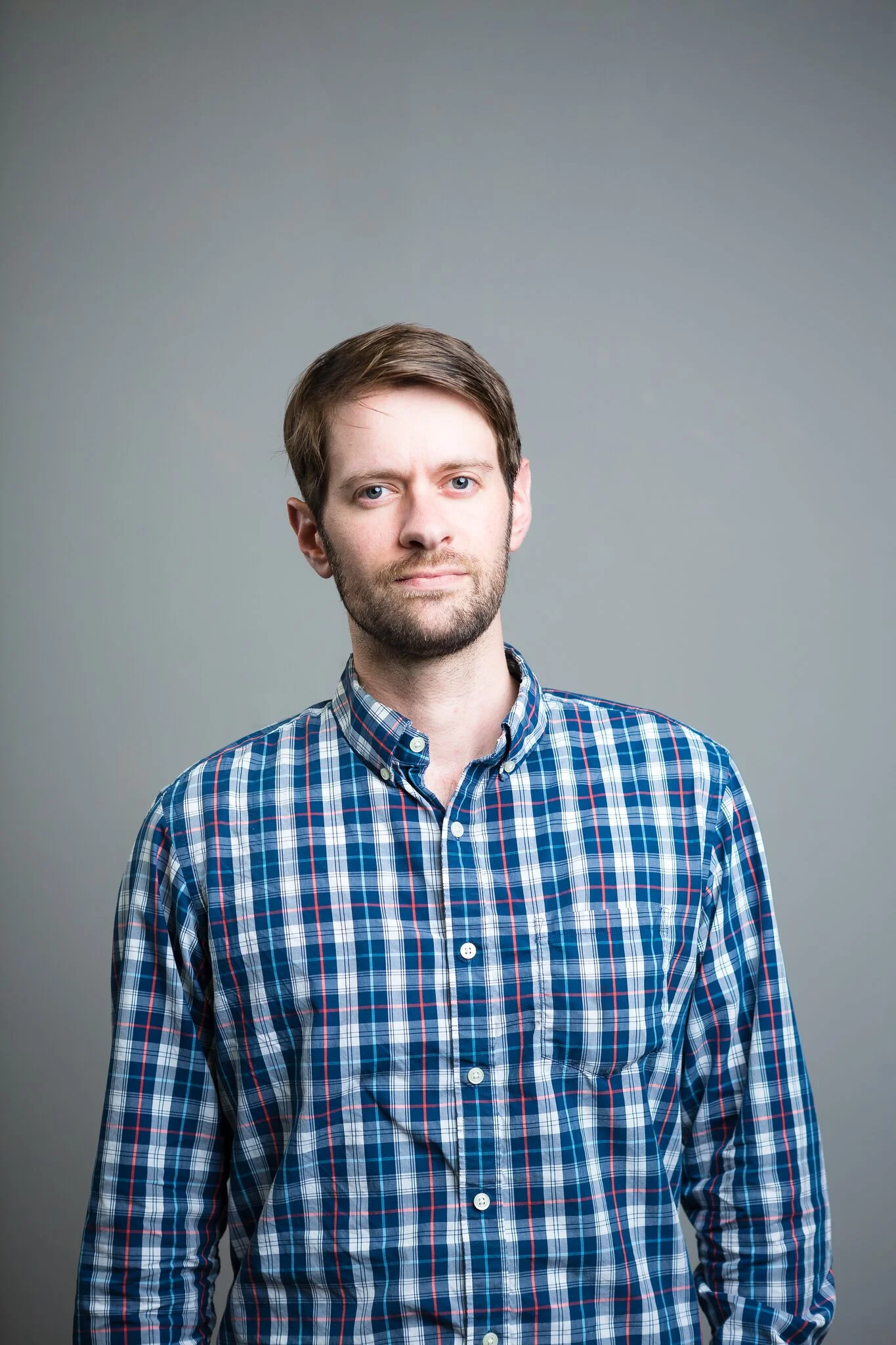
Marina performs regularly on stages throughout the southeast United States. In addition to her concert solo career, Marina Alexandra participates in the group Duo de Vista (with flutist Teri Forscher-Milter).

Marina is a major contributor to the guitar community on both the local and national levels. Mrs. Alexandra is the founding president of the Guitar Muse Society, which  hosts yearly concert and educational events in Columbia, SC.  Mrs. Alexandra is also the artistic and executive director of the Southern Guitar Festival and Competition, which attracts participants from all over the US and abroad. Mrs. Alexandra plays a major role in advocating for the arts, she was invited to be on the planning committee for Midlands Art Conservatory (SC) as well as grant approval  committee for the  South Arts non-profit organization, that represents nine Southeastern states.

REVIEW: Toro y Moi @ The Senate, 11/17/2018

By: Kyle Petersen; Photos by: Bree Burchfield

Toro y Moi performing at The Senate, November 2018. PC: Bree Burchfield

Toro y Moi performing at The Senate, November 2018. PC: Bree Burchfield

More than most, Toro y Moi is a musical act that reinvents itself with every album cycle. Since the pre-Causers of This days when Chaz Bundick (Chaz Bear?) played shows half behind a DIY laptop and keyboard combination as a chillwave progenitor to the almost-jammy guitar pop of 2015’s What For?,  the Toro y Moi project has constantly tested its own boundaries, trying on various permutations of dance-centric indie rock, funk and pop as if flipping through an exceptionally-curated record collection.

Bundick, a Columbia native who led the sharp indie rock quartet The Heist & the Accomplice in his college days at USC, adapted his live band to each of the singular aesthetic visions of his recordings each time he flipped the dial, adding drummer Andy Woodward and bassist Patrick Jeffords and then, later on, guitarist Jordan Blackmon and then keyboardist Anthony Ferraro to the proceedings. That core nucleus carried him far, even through the beats-oriented pop of 2013’s Anything in Return, but at a certain point it felt like the touring version of the band stood resolutely apart from the studio creations, and that Bundick was pretty fine with that.

Then came last year’s Boo Boo, a moody pop affair that showed traces of The Weeknd-style R&B and the grimy grandeur of some of Toro’s hip-hop production on the side. As ambient and inscrutable as that album could get, it was among the most consciously pop the project had yet leaned. Too, it was difficult to imagine the live band translating many of these songs to the stage. That Bundick didn’t tour on the effort seemed right and would ultimately prove prescient.

This Columbia show was the final date on the first string of non-DJ sets Toro y Moi had played since Boo Boo and comes in conjunction with the release of an advance single, “Freelance,” ahead of a full-length in early 2019. And it’s clear we’re getting a very different Toro experience going forward. Now performing without Blackmon and with Jeffords on synths as much as bass, Bundick is stepping fully into the frontman role, often drifting decisively away from the keys to roam the stage and lean into the considerable power of his vocal hooks rather than laying low in the groove. It’s a move he could have made at arguably any point in his career thus far, but it fits the new material particularly well, placing him in the lineage of artists like Frank Ocean and Sampha whose auteur styles and left-field melding of pop and R&B manage to command large audiences.


PC: Bree Burchfield

PC: Bree Burchfield

Venturing through much of Boo Boo and new material from the forthcoming album amid a smattering of older tunes that fit the new direction, Bundick was as confident as a performer as I can ever remember seeing him. Even amid the most sweaty, dancefloor-ready vamps of the past, there’s always been something fundamentally bedroom producer about him, that felt like a masterful musician reimagining the music swimming around in his brain while saddled in front of the computer screen.

And that’s probably still who he is at heart but, for the first time, it’s possible to imagine that quiet, bespectacled oddball from around the way as the most unlikely thing of all—not just a nationally renowned indie artist, but a genuine pop star.

This might be some hell of a new record.


Les Merry Chevaliers & Death Becomes Even the Maiden Kick Off Jasper's Happy Hour Concert Series Wednesday Night atTrustus

The Jasper Project

Happy Hour Series

The Merry Chevaliers

The Merry Chevaliers

The Jasper Project is kicking off a new series of early evening fun on Wednesday with our first ever Happy Hour Concert featuring Les Merry Chevaliers and Death Becomes Even the Maiden.

The purpose of this series is to provide a mid-week time to listen to original local music, have a drink with friends, and still get home in time to put your kids to bed and not wreck your sleep schedule for the rest of the week. This is also an important fundraiser for Jasper Magazine.

We were thrilled when Alex Ruskell of the Merry Chevaliers volunteered their band to play and we are crazy appreciative of their generous contribution of time and time, as well as that of Heyward Sims and Death Becomes Even the Maiden, who will be opening for the Merry Chevaliers. (Blog post on DBETM coming up next.)

Come on out to Trustus on Wednesday night. Doors open at 6 for a cash bar, happy hour snacks, with music starting about 7.

Tickets are $10 at the door – or, join the Jasper Guild at any level and get in for free AND become eligible for the drawing of a pair of tickets to this year’s 2nd Act Film Festival coming up on November 7th.

Now, some words of wisdom from our featured musicians --

Jasper:  First of all, who are the Merry Chevaliers, what instruments do the band members play, and what are the members’ unique missions in the band?


LMC: Les Merry Chevaliers are France’s 14th favorite punk/pop band.  Les members are:

            Pierre Balz – rhythm guitar, glockenspiel, digeridoo – unique mission is to be fifth most handsome band member.

            Guillaume Guillotine – lead guitar -- unique mission is to be fourth most handsome band member.

            Garique Le Freaque – drums -- unique mission is to be third most handsome band member.

            Count De Monet – vocals -- unique mission is to be second most handsome band member.

            Menage O’Shea – Bass -- unique mission is to be most handsome band member.


Jasper:  Where did the concept of the Merry Chevaliers come from and how did you guys go about actualizing the idea into a musical group?

LMC: After a long night of drinking sweet claret and reading Rimbaud, the idea of dressing in French frippery and playing the dulcet tones of punk rock sprang fully formed from Pierre’s head like fair Athena in her gossamer robes.  While it is likely a violation of several sumptuary laws, the powdered wig hides Pierre’s bald spot.  The band formed when Pierre wrote some songs and asked his friends to sing along.  When they wouldn’t, he asked these guys.


Jasper:  How long have you been together?

LMC: We’ve been together for a year and a half, and have played shows in Columbia, Charlotte, Charleston, and Greenville.  We’ve also been featured on WUSC’s Columbia Beet, WXRY’s Unsigned, and Sirius XM’s Goldie’s Underground Garage.


Jasper: What kind of music do you play and why?

LMC: We play power pop punk – because we like it and think it’s fun for audiences to sing along and jump around to.


Jasper: What are your musical backgrounds and what do you guys do for day jobs?

LMC: Mssrs. La Freaque and O’shea have played in many other area bands.  The other three are rank amateurs.  For day jobs, we are all men of leisure.


Jasper: What do you want people to experience from your concerts?

LMC: Life can feel pretty dark sometimes – we’d just like people to have a little break to have some fun, dance, and laugh.


Jasper: What’s next for the Merry Chevaliers after the Jasper Happy Hour concert? 

LMC: We are working on our follow-up to 2017’s Never Mind the Baguettes, Here’s Les Merry Chevaliers! The current working title is Plus Grands Succes Volume Trois, and it will feature the world-wide mega hits “Faster than the Speed of Sexy,” “I Ruined Coitus for You,” “Sex Sommelier,” and “I’d Punch King Kong in the Balls for You.”


Jasper:  What did we not ask that you’d like our readers to know?

LMC: As part of David Hasselhoff’s divorce settlement, he kept possession of the nickname “Hoff” and the catchphrase “Don’t Hassle the Hoff.”


happy hour concert 1b.jpg

If you or your band would like to participate in Jasper’s Happy Hour Concert Series - a fundraiser for Jasper Magazine - hit up Cindi Boiter or Kyle Petersen.

Rosewood Art and Music Festival: The Celebration of SC Art and Artist Through a One-Day Festival


29597417_1982591542001994_392355684103185410_n.png

By: Jasper Intern Hallie Hayes

David Britt, the event director for the Rosewood Art and Music Festival (RAMF), describes this art festival as “a one-day, micro-urban festival that was conceived as a way to showcase South Carolina’s talented emerging artists and to help elevate the cultural scene in Columbia.”  The festival celebrates the arts locally in Columbia, SC, and it is an event that any who take pride in SCs local arts, along with simple fun, must experience.

RAMF is an annual fun-for-all festival that takes place in the Rosewood area of the city. Now in its eighth year, the festival will held this Saturday, September 29 from 11:00 a.m. to 7:00 p.m.  Parking will be available at Rosewood Baptist Church any time after 12:00 p.m. and admission to the festival free.

Not only does this event support SC art, but it supports the artists who create the magic we have the opportunity to experience, as well.

“Every art purchase made will help support a hard-working, independent SC artist,” Britt explains, “and helps them continue to develop their craft.”

The visual artists showing at RAMF are assembled by Alexandra White, also known as “Abstract Alexandra.” White makes the event a pleasant experience for those involved, making sure that they are met with proper expectations.

“She is the one who curates all of the artists and does a ton of work to make our festival a professional experience for all involved,” the event director says on White. “Her vision and eye for talent have been crucial to elevating the festival’s growth and making the event a great venue for our SC artists to get some of the recognition that they are very deserving of.”

The festival has hosted poets at the event in the past, but this year it will be hosting its first poetry competition where cash prizes will be awarded. The poets entered into the competition have been organized by Stephanie Suell. 

“Stephanie Suell has done a great job organizing the poets this year,” Britt states.  Attendees of the festival will have the opportunity to hear this year’s poets read their poetry in between band sets.

As seen in the title of the festival, music is also a large part of the event.  RAMF will showcase different artist and genres throughout Saturday, giving each band their own set time located on one of two stages.

“We have a completely new line up of music artist this year with some of Columbia’s best up and coming bands,” Britt says on this year’s lineup.

 You can find the lineup of musicians and poets for the day below.

The Rosewood Art and Music Festival works hard to make this event a pleasant experience for all attendees, and to simply celebrate the gifted artists that Columbia is lucky to call members of the community, all free of charge.

“I would want people to know that we have been working hard to produce a great event,” Britt explains,” the artists have been working hard to produce great art and I think anyone who attends will be glad they did.”

Find the lineup for this year’s Rosewood Art and Music Festival below:

CALLIOPE STAGE

12:00 - 1:00 pm - Slim Pickens
1:00 pm - Poetry - Marie Grady
1:30 - 2:30 pm - Autocorrect
2:30 pm - Poetry - John Starino
3:00 - 4:00 pm - Daddy Lion
4:00 pm - Poetry - Patrice Pino
4:30 - 5:30 pm - The Dead Swells
5:30 pm - Poetry - Colette Jones
6:00 - 7:00 pm - Ashes of Old Ways

APOLLO STAGE

11:30 - 12:30 pm - Julia Beckham Duo
12:30 pm- Poetry - Alfonso Ross
1:00 - 2:00 pm - McKenzie Butler Band
2:00 pm - Poetry - William Hilliard, Jamez Tisdale
2:30 - 3:30 pm - The Runout
3:30 pm - Poetry - Tribal Raine
4:00 - 5:00 pm - Husband
5:00 pm - Poetry - Patricia Marvin
5:30 - 6:30 pm - Alien Carnival
6:30 pm - Poetry - Constance Johnson

Conundrum and ifArt Host Concert

skot IM.jpg

Id M Theft Able & Reflex Arc @ ifArt on June 25


Conundrum Music Productions is pleased to announce a concert by the Portland Maine noise artist Id M Theft Able, at ifArt Gallery on Monday, June 25.   Sharing the bill will be Reflex Arc and bigSphinx.


Id M Theft Able performs within and without the realms of noise, avant improvisation, sound poetry, and performance using voice, found objects, electronics, and whatever else is available. He has given hundreds of performances across 4 continents in settings ranging from the humblest of squats to the fanciest of festivals.


Reflex Arc is a two-piece experimental & improvisational band from Raleigh, NC. Crowmeat Bob plays a variety of horns & sometimes electric guitar while Ginger Wagg plays a variety of body parts, spaces and emotional states.


bigSphinx is a solo project of local laptop improvisor Tom Law.


The door will open at 8:00pm, and a $7 admission fee will be collected at that door.  The music will commence at 8:30pm.  ifArt Gallery is situated at 1223 Lincoln Street, Columbia, South Carolina 29201.   Further information can be obtained on the World Wide Web at conundrum.us, or by using a telephone to dial (803) 250-1295. 


Id M Theft Able: https://idmtheftable.bandcamp.com/

Reflex Arc: http://www.gingerwagg.com/reflex-arc

bigSphinx: http://bigsphinx.com/tomlaw.html

News from the Rosewood Art & Music Festival -- OPEN CALL to Artists & Poets

rosewood arts and musci festival.jpg

Calling all painters, sculptures, photographers, upcycled artists, potters and more for the 8th annual Rosewood Art and Music Festival

Applications open June 1, 2018.

Professional, amateur & emerging creators may complete the free application online at RosewoodFestival.com June 1st to August 1st.  

Artists may apply to participate in multiple activities; Exhibitor, Pop-up Gallery/Juried Show and/or Poetry contest. Application, Categories and Guidelines are found online at RosewoodFestival.com


On the application Exhibitors will select either individual booth or communal visual arts tent. The communal visual arts tent is a shared space for artists who may be new to the festival scene, have a smaller body of work, or may prefer to live paint.

The Pop-up/Juried Tent is for two-dimensional and three-dimensional visual artists ready to compete for over $2000 in prizes.

The Poetry contest is for writers and poets seeking to be published and more.

On Saturday September 29, 2018, from 11am-7pm, thousands will descend into the Rosewood Neighborhood of Columbia, SC for the 8th Rosewood Art & Music Festival. Multiple stages with live music throughout the day provides a pleasant festival experience. Sit and listen, grab your dance shoes, or simply enjoy the sounds as you take in the visual arts and celebrate Southern arts and culture.

Black AF - And Why Columbia Deserves More New Performance Art And Why That Art Must Come from Everyone

"Nothing is more empowering than being able to speak your truth."

Preach Jacobs - photo by Brodiemedia

Preach Jacobs - photo by Brodiemedia

One of the most telling signs of a healthy arts scene in a city is when performing artists and arts organizations no longer rely solely on art being fed to them from the outside or from a canon of tried and true productions, and instead look within themselves and to their own resources to create new art and make unique contributions to culture. While we rarely see performances of new works from our more heavily funded Columbia arts organizations who seem to be more incentivized to put butts in the seats of the expensive Koger Center than to challenge, stimulate, and yes, grow their audiences, it is the smaller venues and organizations – think Tapp’s Arts Center, Harbison Theatre’s Performance Incubator, and local bars – where we most often find new work being created and performed.

Thankfully, Trustus Theatre has a history of encouraging new performing arts via their Playwright’s Festival and sketch comedy programs and, this season, they brought it all home by presenting Constance, a new musical theatre production composed by Daniel Machado, Adam Corbett, and the Restoration and written by Chad Henderson, all Columbia-based artists. Interestingly enough, Constance sold out and came close to selling out on most nights, challenging the assumption that Columbia audiences are content with the same plays, compositions, and ballets their parents grew tired of decades ago.

Now, just one week later Trustus Theatre offers a brand new one-night-only original production written and performed by Preach Jacobs and directed by Kari LebbyBlack AF.

Black AF originated with Preach Jacobs who, at 34 is a well-known member of Columbia’s local music scene. “My grandmother passed away last year and it took a toll on me,” Jacobs says. “She came from a generation where black folks … didn’t talk about their lives. …But there would be moments where she would begin to talk and those were jewels for me. Her stories were fascinating and she gave me the understanding that everyone deserves to tell their story. Black AF is paying homage to my granny and ancestors because by telling my story I’m telling their story. Unapologetically black. Black as fuck.”

Jacobs enlisted the help of Columbia native actor/director/musician Bakari Lebby, 27, whose previous directing work has included Sunset Baby at Trustus and Some Girls at Workshop, who readily jumped on board. “We had talked about how we wanted to work together on something,” Lebby says, "and Preach said he had this theatre project that he wanted to do that was ‘part TED talk, part stand up, and part hip hop show.’ That sounded dope and innovative to me, and then he told me he wanted to call it Black as Fuck, which also appealed to my interests. Then we started really fleshing out the concept and content together.”

Both artists identify the importance of supporting black art and new art from traditionally marginalized voices as being integral to their decisions to go forward with this project. “Life is scary. Shit is cray. We need art to be able to confront, explore, and express our feelings as well as the feelings of others,” Lebby says. “Any art that is not ‘mainstream’ is critically important right now. Representation. Real representation.”

“It’s important as black people in America to not just have our stories told, but in fact we be in charge of telling our stories,” Jacobs adds. “It may seem like a simple idea but it’s something that we’ve been deprived of. In this current climate it trickles to other groups of people that haven’t had their voices heard. The Me Too movement is proof of generations of women that are finally being heard and able to tell their stories. Nothing is more empowering than being able to speak your truth.”

With any new performance art audiences may be uncertain of what to expect and whether to invest in the not-inexpensive ticket price of $25, but Lebby has faith in the format and the gifts Jacobs brings to the stage. “This show is not the average ‘one-man show.’ Yes, Preach will be occupying the stage the whole time, but there is a DJ. There will be some visual supplements. There will be musical performances and dialogues. The show is funny. The show is darkly funny. It’s also a bummer at times. It is also ceaselessly honest and in Preach Jacobs’s voice. He carries the show confidently.”

Jacobs emphasizes the role of “raw honesty” in the performance, adding that the show is “a love letter to my ancestors.”

With the title of the show being Black AF (Black as Fuck) it’s reasonable to question the audiences to whom the show might most appeal, so we asked both gentlemen why both black people and white people should show up, or even if both black people and white people should show up.

According to Lebby, black people should attend “because supporting black art is lit. It’ll be a good time. The more that we show up, the more opportunities that we can get and give to more artists of color. … These are conversations we need to be having with each other.”

Jacobs says, “Hopefully the black folks that show up can relate to what I’m saying. Having a shared experience is a type of emotional bonding that I look for with my art. Watching Black Panther resonated so much because of that fact. Black folks could relate.”

As for white folks, Jacobs hopes they will “come with an open mind and really hear what I believe are things that could help with dialogue about race relations. There’s not much in the show about black and whites dealing with each other per se, as much as it is embracing and loving myself. To learn that being black isn’t a curse is life changing but also a process. Some of these things might surprise them.”

Lebby adds, “I think checking out perspectives that you haven’t seen on stage before is cool. If you’re a white theatre person, yes, come see this show. It’s important. You don’t get to ‘support black art and then not actually support it.”


Black AF is a one-night-only event coming up Sunday, May 27th at 8 pm at Trustus Theatre and tickets are available at http://trustus.org/event/black-af/.

A free accompanying art show will also be held May 26th at Frame of Mind (142 State St., West Columbia, SC).

***

- Cindi Boiter is the executive director of The Jasper Project and the founder and editor of Jasper Magazine

REVIEW: The Restoration's Constance - An Original Musical

by Jon Tuttle

Constance for Trustus.jpg

Eight years and several iterations after its 2010 debut, the Restoration’s Constance is finally and fully on its feet at Trustus, and it is a monolith.  


A fictional musical saga set in Reconstruction-era Lexington, the play defies summation except to say they’re all there, all those primal southern tropes, like bigotry, miscegenation, old money, zealotry, revenge, hypocrisy, and violence.   It’s unwieldy and exhausting and overwhelming and an excellent example of what theatre is for. 


It’s elemental, is what it is.   It begins with fire—the actual fire set by Sherman’s troops in 1865 at St. Stephen’s Church—and ends in flood, the drowning of an entire town by an embittered native son.   It is earth, in its emphasis on home and land and the genius of place.    And it is air, or rather ayre, an aural palette of (how to describe it?) Americana/heartland/folk balladry. 


That Constance is a protracted labor of love between two old friends--Trustus Artistic Director Chad Henderson and The Restoration founder Daniel Machado--becomes obvious in its attention to detail and commitment of resources.   Henderson wrote the book, quilting together Machado’s songs with dialogue so assured you can’t hear the writing.  In directing it, he deployed many of the theatrical gadgets in his Swiss Army knife.  And he hired Tom Beard, always a pro, as musical director, and Jessica Bornick, whose costumes are terrific.  The result is a multi-media, multi-modal theatrical tsunami, more akin to Bernstein’s Mass than to the last musical you saw.


The flood scene, for instance, is magnificently effectuated by the “floating” of church pews by members of the ensemble.   The fire is a combination of lighting mayhem, percussive stomping, urgent strings and

choreography.   Virtually every scene introduces a fresh visual element--Brechtian projections, newsreel footage, scrim silhouettes, a cascade of flying paper, and (this was brilliant) an unruly mob armed with creepy flashlights marauding the auditorium.  Meanwhile, hanging ominously on the back wall: heavy ropes, impossible to ignore in a play about race.


And there are unmistakable references to Our Town, appropriate in such a panoramic homage to our town, such as the adult Constance’s observation of herself at different ages, or the funeral scene, or in Paul Kaufman’s (riveting) Reverend Harper, at first a unifying and benevolent consciousness presiding over these affairs like Wilder’s Stage Manager,  later reduced by time and tribulation to a ragged, wild-haired, raging alcoholic howling about the “Werewolf of Ballentine” and looking as horrifically grizzled as Steve Bannon on a good day.   


The cast itself is colossal, consisting of twenty-five actors led by Trustus veterans Kaufman and, in the role of the adult Constance Owen, Vicky Saye Henderson, whom I cannot review fairly because her singing beguiles me.   I think, however, she might be magnificent because what I wanted most was more of her.  


And here begin my apprehensions.  


The play is actually two, each its own act.  In the first, we meet teenage Constance (played by Brittany Hammock) and her love interest, the mixed-race Aaron Vale (Mario McClean).  So convincing is their chemistry, so harmonious their voices, so solid their performances, that the play is never better than when they are on stage.  Indeed, their scenes together provide the evening’s best moments and melodies (like “I Can’t Stop Wanting You”).  If such actors are the inheritors of Trustus’ reputation, then the theatre is in excellent hands. 


But the first act is so long as to test the limits of the even the most heroic middle-aged prostate.   This being a work-still-in-progress, further pruning is likely to be done.  A good place to start, so say I, would be the subplot involving a local troupe’s production of Othello, which seems to ape Waiting for Guffman and features the embarrassing caricature of a flaming primo uomo.  Or perhaps the glimpses we are given into the troubled marriage of Col. and Mrs. Palmer, he a pompous developer with an eye for the colored help, she a pious shrew competing for his attention.   To be fair, their story is actually quite compelling, particularly as it is embodied by Stan Gwynn and Len Marini, but it tries to compete with the real story here, that being Constance and Aaron’s, whose secret wedding in a short, lovely benedictory would have made an excellent act-closer.  And should have.  


Better there, so say I, than much later, at Aaron’s death scene, and for two reasons.  One is that it’s odd.  No sooner has he suffered an infarction than he calls for his guitar, sits up, and begs Constance, through song, not to “let my music die with me.  Don’t let it go into the ground with me.  Write it down, write it down, write it down for me.”   It’s a fine piece of music, but it would have made more sense had it been sung a capella, since he’s, you know, dying.  And until that point he hadn’t really identified so strongly with his music.  He took more pride, or so I thought, in his skills as a builder.   


At any rate, I was sorry to see him go, partly because I really liked him, but mostly because I knew the play had just created for itself a considerable structural challenge.  Conventional Dramatic Wisdom dictates that a second act must trump the first; it must quicken the themes and conflicts already established and more deeply develop its characters.   But now a romantic lead was dead, so that story was over.  Where to now? 


Conventional Dramatic Wisdom can be wrong, of course. Witness Robert Schenkkan’s 1992 Pulitzer Prize-winning The Kentucky Cycle, a play very similar in texture and scope.  It’s actually nine different, barely-connected plays spanning two-hundred years and running six hours.  It shouldn’t work, but it does, and Constance shares its DNA.   And it attempts the same sort of narrative teleportation:  in Act II we are introduced to Thomas Vale, Constance and Aaron’s quadroon son, who now becomes our protagonist because Constance is glimpsed only rarely.


In an opening duet, ten-year-old Thomas (Henry Melkomian) and his friend Henry (Christopher Hionis) sing (quite well) that “I don’t understand” why race would separate people, and that refrain interweaves gracefully through the rest of the play, which is essentially a catalogue of young Thomas’ frustrations. These are (a) the death, in war, of Henry; (b) unrequited affection for Willodean, on account of the one-drop rule; (c) the foreclosure on the family home, and (d) there’s this hooker.   And so the stage is set for the violent climax, and when it comes, it’s a cathartic sensory spectacle played out before Constance’s eyes so that the full measure of her loss can be realized.   The whole act has the shape of a perfectly plausible plotline, the closing of a long and vicious circle, really the story of the South itself.


And yet….


Perhaps there are again too many distractions.   At one point, for instance, two of Colonel Parker’s mill hands interrupt a New Year’s Eve party bearing a bag of bloody cotton testifying to the death of Flora, the object of his unreconstructed lust.   But because the contents of the bag better resemble the offal of a difficult liposuction, his grief seems comical.  And then, for instance, there’s a song about Little Round Shoes, which “I don’t understand.”    And the cast turns over almost completely, as generations do, and I get that, but I kept wondering where Constance went.   When in the coda she is discovered, years later, recounting her story to a stranger on a train, she feels like a stranger on a train. 


And yet, and yet.


“Constance” means fidelity, commitment, perseverance, which perhaps explains the sensation of comfort attendant to our last encounter with her.   It is comforting, at play’s end, to look back upon her life and see so many familiar stories there, and so much sorrow, and more than that, so much goodness. 


The theatre’s purpose is tell stories of other people so that we can find designs for living our own real stories—which are unwieldy and exhausting and overwhelming.  They are epic poems, is what they are, and one ought to appreciate a piece of art that sings one.   


Constance may become a permanent part of Trustus’ repertoire, a play it can return to in years to come, and it ought to, because it’s uniquely theirs, and it’s ours, and it’s really quite extraordinary. 


Jon Tuttle is Professor of English and Director of University Honors at Francis Marion University and former Literary Manager at Trustus Theatre, where his play BOY ABOUT TEN will premier in August.


Focus on Jay Finalists - Those Lavender Whales in Music

We're chatting with the 2017 JAY Awards Finalists as we enter the last few days of voting and preparing for the JAY Awards (& Retro Christmas party!) coming up on December 5th

Those Lavender Whales - photo by Forrest Clonts 

Those Lavender Whales - photo by Forrest Clonts


Jasper: What made the past year so great for you as an artist?

TLW: We were really happy to release our album, “My Bones Are Singing” this past spring and get to travel to a lot of new places playing those songs with friends.


Jasper: How have you grown as an artist over the past year and to what do you attribute that growth?

TLW: We’ve felt more focused as a group. That could be just having an album coming out, but it feels like we’ve really made an effort to move closer musically when we perform making things tighter and playing more as a family (less as individuals).


Jasper: How have you seen your arts community grow over the past few years and to what do you attribute that growth?

TLW: My favorite thing is seeing more murals around town. I love seeing murals in other cities. Seeing public art seems to scream to the average passerby that there is a thriving and working arts community.


Jasper: Why is art so important right now?

TLW: With so much negativity and uncertainty floating around, creating is a good response to express and process your views and feelings.


Jasper: What role does art play in your life?

TLW: There’s art on the walls of my house, I make up songs about doing dishes and going to work, my daughter performs dances for my wife and me in our house. I can’t speak for everyone, but art seems to always surround me and be intertwined with every part of my life. I just recognize it more at random times.


Jasper: What role does community play in the execution of your art?

TLW: From our meager beginnings emailing dorm room recordings to friends, to having our wider web of friends and family produce, mix, and master our last album, community has always played a huge role in our music.


Jasper: Who are some of your favorite local artists from an arts discipline other than your own?

TLW: Trahern Cook is a live painter who is always around local events. The way he uses the energy of where he is and allows people passing by to influence his painting is really amazing.


Jasper: Is there anyone you’d like to thank for their support of your arts career?

TLW: We love Columbia, and don’t think we could make the sounds we make in any other city. There’s such a vast array of different sounds and art coming out of this place that it’s great to be a part of it and be supported by it.


Jasper: Why should folks come out to the 2017 JAY Awards and Retro Christmas Party?

TLW: You get to sing along to some fun Christmas songs (if you want), get to dress up in some silly Holiday wear (if you choose), and get silly with a bunch of fun and friendly Columbia folks!


VOTE at http://jasperproject.org/jays

BUY Tickets at https://2017jays.bpt.me/

GIVE as part of #GIVINGTUESDAY at https://www.facebook.com/JasperProjectColumbia/

THANKS!

Focus on JAY Finalists - Tyler Matthews in Music

Tyler Matthews - 2017 JAY Finalist in Music - photo by Forrest Clonts

Tyler Matthews - 2017 JAY Finalist in Music - photo by Forrest Clonts

We're chatting with the 2017 JAY Awards Finalists as we enter the last few days of voting and preparing for the JAY Awards (& Retro Christmas party!) coming up on December 5th.


Jasper: What made the past year so great for you as an artist?


Tyler: Just getting to go full artist mode across several different disciplines, collaborating with talented people and working on awesome projects.


Jasper: How have you grown as an artist over the past year and to what do you attribute that growth?


Tyler: I’ve grown across the board in the area of problem solving, writing, and producing fast. When you start out at anything there’s a large amount of activation energy required to get past being a novice producer. After a certain amount of hours you reach a tipping point where the technical things that used to be difficult to understand are second nature.


Jasper: How have you seen your arts community grow over the past few years and to what do you       attribute that growth?


Tyler: I’ve seen the music scene continue to thrive because the energy from artists in Scenario Collective, Moas Collective, and WUSC has been embraced in Columbia by Arts & Draughts, First Thursday, and various events/venues around town. The film scene is thriving because of the leadership from Wade Sellers. The work he’s done with 2nd Act Film Festival has bridged more connections and brought more people to the scene than anything else I can think of in Columbia. (editor’s note – yes, that’s Jasper Magazine film editor, Wade Sellers – nominated for a boatload of Emmy’s, always eager to help  his brother and sister artists, especially with a hand-up. We love our Wade and are proud to have him on our staff and Jasper Project board of directors. And yes, 2nd Act film Festival is one of the primary endeavors of the Jasper Project, so you know, yays all around!)


Jasper: Why is art so important right now?

Tyler: Art is so crucial right now. At a time when there seems to be so much division and confusion in the world, art enables people to express themselves in a healthy, productive way. For some it provides a much needed escape.


Jasper: Who have been your major influences?

Tyler: Locally: Mason Youngblood, Chaz Bundick, Tucker Prescott, Pedro Ldv, and Wade Sellers. Globally: Hans Zimmer, Led Zeppelin, Deadmau5, Wes Anderson, and Christopher Nolan,


Jasper: Who are some of your favorite local artists from an arts discipline other than your own?

Tyler: Ed Madden and Tucker Prescott (um, hello, it’s us again. We just wanted to point out that Ed Madden is our poetry editor and has been since we started Jasper Magazine – we don’t know what we’d do without our Ed. Oh, and did we mention that he’s the poet laureate for the city of Columbia? So, again, yay!)


Jasper: Is there anyone you’d like to thank for their support of your arts career?

Tyler: Mason Youngblood and Tucker Prescott for inspiring me with their talents and encouragement. Wade Sellers for being a great mentor. My family for putting music in my life at an early age and setting a high bar with their own talents. The Jasper Project for caring enough about the arts community to assemble a great team that takes interest in South Carolina’s creative talent. (Aww, thanks Tyler!)


Jasper: Why should folks come out to the 2017 JAY Awards and Retro Christmas Party?

Tyler: Everybody who’s anybody is going to be there!

~~~~

VOTE at http://jasperproject.org/jays

BUY Tickets at https://2017jays.bpt.me/

GIVE as part of #GIVINGTUESDAY at https://www.facebook.com/JasperProjectColumbia/

THANKS!

Celebrating Jazz on Main Street - by Mike Miller

This First Thursday Jazz is the Main Event

main street jazz fest.jpg

     Thirty years ago, a Columbia restaurant owner named Veron Melonas and his trumpet-playing pal Johnny Helms decided that Columbia needed a cool jazz party right on Main Street. Melonas owned the Elite Epicurean, a top-notch eatery right across the street from City Hall, and he said, “Why don’t we put the stage right outside?” Helms knew a lot of jazz players in New York, so he got on the phone and invited several of them down to the South Carolina capital city. Just like that, a jazz festival was born.

     “Jazz on Main” as it was called was first staged in July of 1987, and it ran for 10 years. One of the festival’s first performers, pianist Marian McPartland, called it “a true happening,” and it was pretty special. Musicians who came to Columbia during those years included trumpeter Clark Terry, saxophonist Jimmy Heath, guitarist Bucky Pizzarelli, and bassist Milt Hinton, just to name a few.

     To celebrate the 30th anniversary of that first “Jazz on Main” show, November’s First Thursday on Main will become a jazz festival of sorts. But this will not be a nostalgic event. It will showcase many of Columbia’s current crop of talented jazz musicians, players such as Mark Rapp, Tony Lee, Amos Hoffman, and Sam Edwards. Columbia jazz veterans such as Dick Goodwin, Danny Boozer, Robert Gardiner, and Jim Mings will also be performing.  

     Festivities begin at 6 p.m., and there will be live music at several locations on Main Street. Trumpeter Mark Rapp is the prime mover on Columbia’s contemporary jazz scene, and his quartet will be performing in the Main Street Public House. The guitar duo of Mings and Monte Craig will be in front of Mast General Store, and a revolving array of local jazz stars, including guitarist Hoffman, bassist Edwards, trombonist Mitch Butler, and drummer Boozer, will play on a stage in Boyd Plaza outside the Columbia Museum of Art. Add trumpeter Goodwin and the Tony Lee Group to the mix on Boyd Plaza, and you’ve got one of the most impressive collection of jazz players to come together in Columbia in quite some time.

     Back in 1987, there was an impressive array of jazz artists playing around town as well. Goodwin’s big band played weekly shows in a club called Greenstreet’s. Guitarist Terry Rosen and bassist Frank Duvall could be heard often at happy hour in the Five Points restaurant Garibaldi’s. But the most adventurous jazz happening took place on Tuesday night in Pug’s, a Five Points bar named after owner Pug Wallace. Weekly jam sessions there featured players such as drummers Reggie Ritter and Ted Linder, guitarists Mings and Rosen, trumpeters Al McClain and Helms, keyboardists John Drake and John Emche, and saxophonists Hans Tueber, Roger Pemberton, and a teenager named Chris Potter. For Columbia jazz fans, those nights in Pug’s were not to be missed.

     Today’s Columbia jazz scene is just as vibrant, and truth be told, it’s more diverse and active than its counterpart from three decades ago. Jazz can still be heard in Five Points at Speakeasy’s on Saluda Street. But the epicenter for jazz has moved uptown to places such as Public House on Main, Gervais and Vine, and Pearlz in the Vista.

     Other Columbia nightspots are featuring jazz nights, and there are many other exceptional musicians playing around town than just the ones mentioned above. It’s a great time for jazz artists and fans in Columbia, and that’s why it seemed like a good idea to revive the spirit of “Jazz on Main” and celebrate this cool, complex, and free-flowing music in the capital city.