A Message from Cindi for Midlands Gives 2023

Jasper is an all-volunteer 501c3 with NO paid employees and NO overhead, so your donations go directly to the Columbia, SC arts community via events and publications.
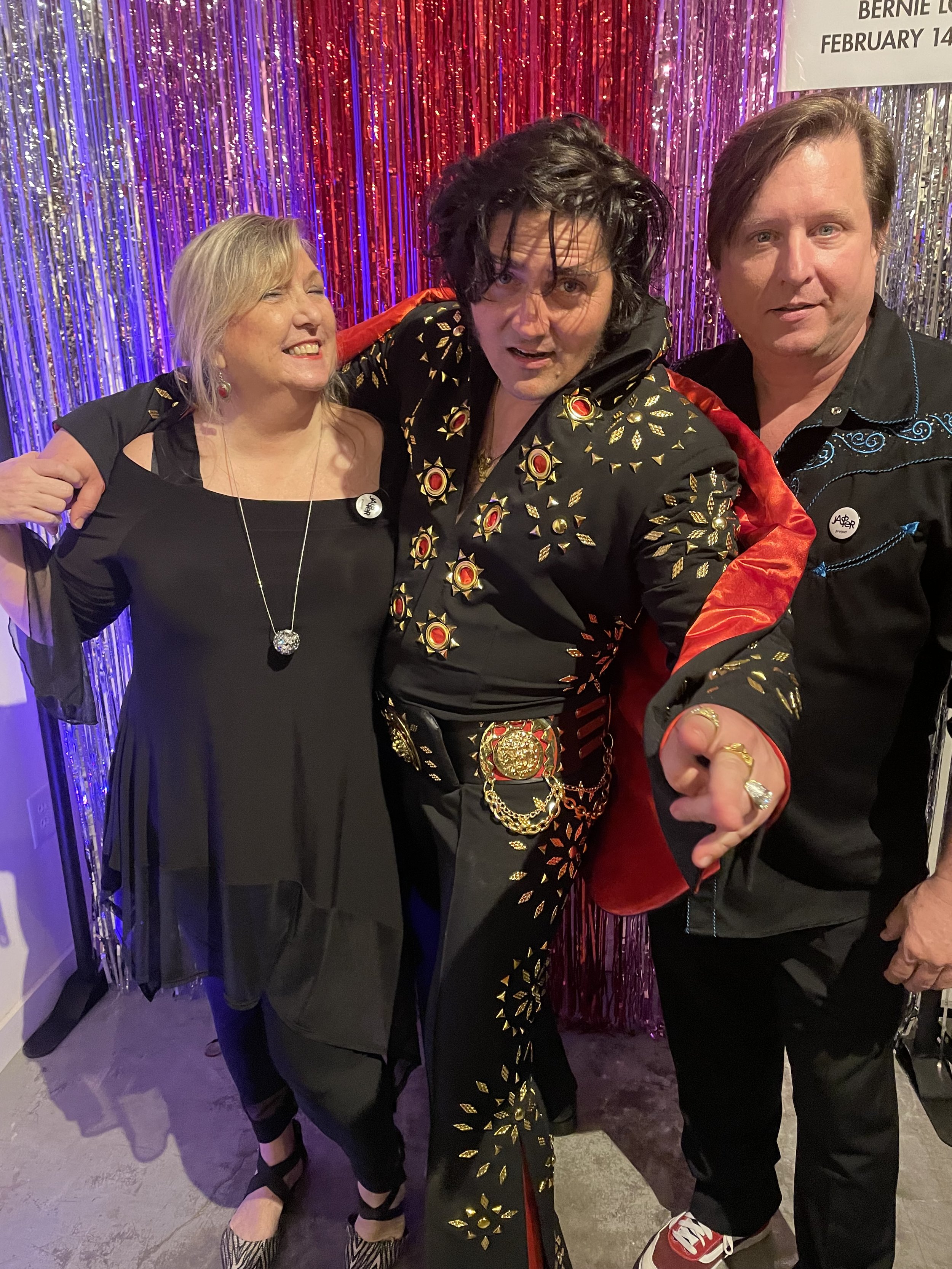
Me with Jasper Project board president Wade Sellers and Elvis (aka Patrick Baxley) at Bernie Love 2023

Welcome to one of my favorite times of the year—the time for me to report back to you, our supporters, on how the Jasper Project has been using the funds you entrusted to us over the past year. It’s a joy to celebrate what we can accomplish together with your funding and the Jasper Project’s labors of love.
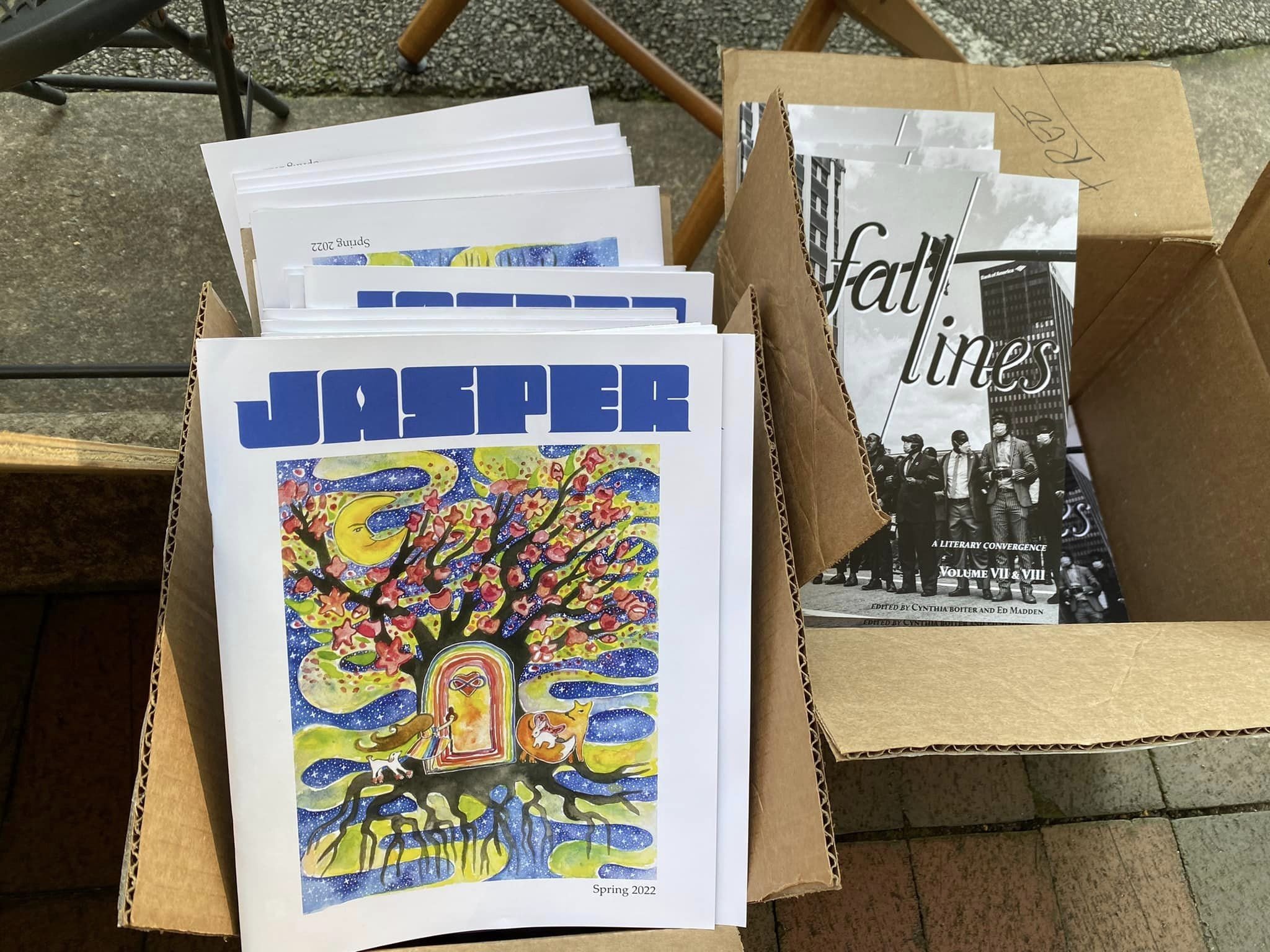
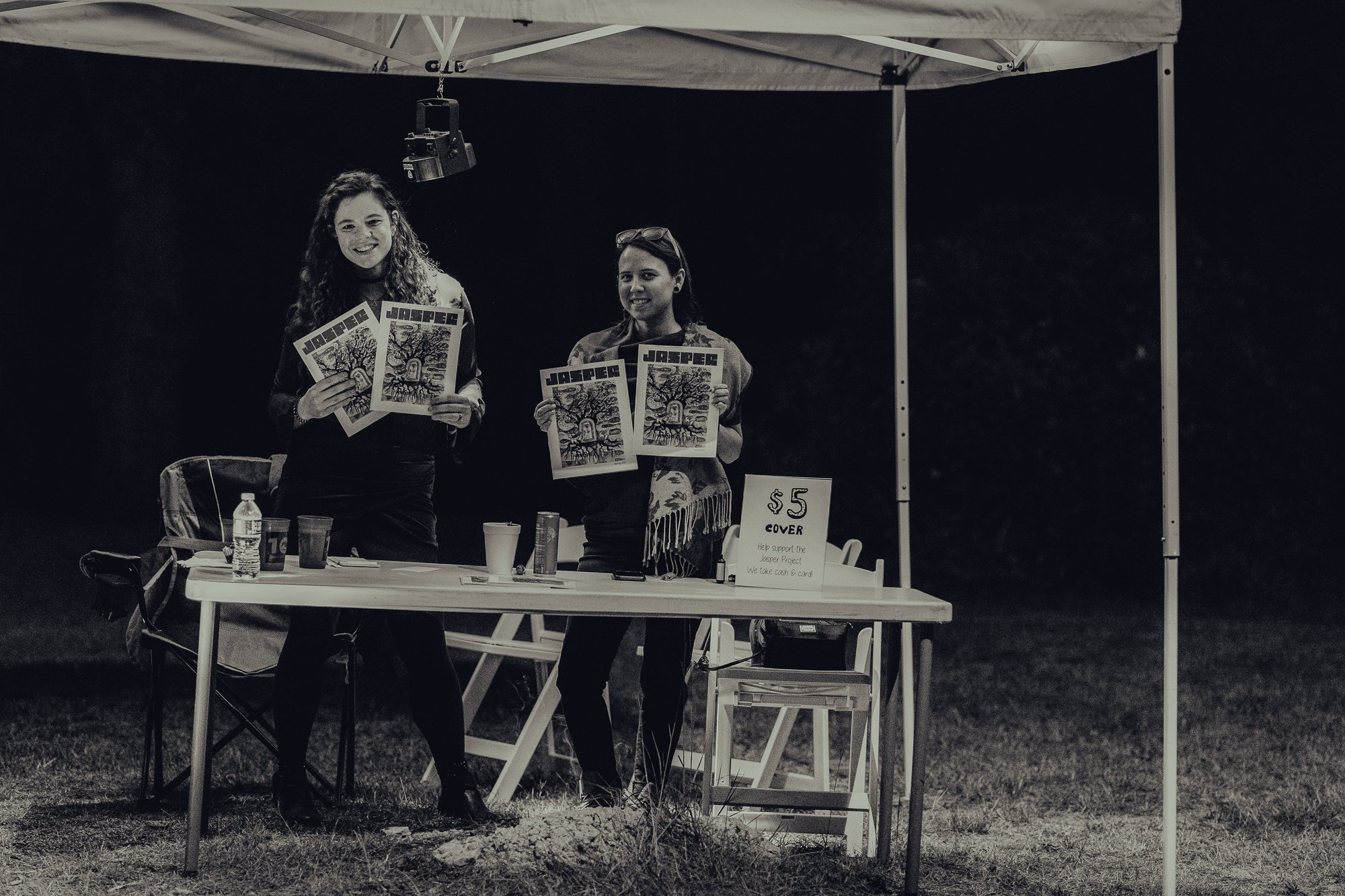
I always have a soft spot in my heart for Jasper Magazine, which was the seed of the Jasper Project and remains my favorite project of all. Last spring, we published a beautiful issue featuring Lindsay Radford Wiggins on the cover and Michael Krajewski as our centerfold artist. Kristine Hartvigsen wrote the piece on Lindsay, and I had the honor of writing about Michael who, actually, was the centerfold in the first ever issue back in fall 2011. This time, however, he is fully clothed!  We also featured a piece on Mike Miller’s new book, The Hip Shot, WOW Production’s first YouTube series,  Quincy Pugh’s Veteran’s Day Parade painting series, Carleen Maur’s experimental filmmaking, Artists for Africa, and two new books from Muddy Ford Press, (Jasper’s original underwriter before we became a non-profit under the leadership of Larry Hembree), including Night Bloomer by Jane Zenger and More God Than Dead by Angelo Geter. We wrote artist profiles on Lucy Bailey, Diko Pekdemir-Lewis, and Rebecca Horne; Music editor Kevin Oliver compiled a jam-packed article on 10 music artists to watch in the coming year; Will South wrote a piece on Tyrone Geter and his work and life in Gambia; and I had the honor of profiling David Platts, the ED of the SC Arts commission. Sadly, we also memorialized Wim Roefs and Mary Bentz Gilkerson.

Our fall 2022 issue of Jasper featured Wilma King on the cover and Jim Arendt in the centerfold. We wrote about Wideman-Davis dance, Baba Seitu Amenwahsa, Steven Chapp and Jerred Metz, Arischa Connor’s television successes, the Soda City jazz scene, Jamie Blackburn, poet Monifa Lemons and her stint as an actor on Lena Waithe’s film, Crooked Trees Gon Give Me Wings, Carla Daron’s new book The Orchid Tattoo, Amy Brower and the life of a casting agent, new theatre editor Libby Campbell, Dustin Whitehead’s new film Hero, Elizabeth Catlett, and included several poems and music reviews.

I don’t want to give too much away about the spring 2023 issue which is releasing on Saturday May 20th at the Artists Showing Artists event, hosted by Desirée Richardson of Death Ray Robin, but if you meet me that evening at the One Columbia Co-Op at 1013 Duke Avenue, you’ll get some fresh print featuring Philip Mullen, Olga Yukhno, Bohumila Augustinova, Katie Leitner, Dick Moons, Ivan Segura, Drink Small, Alyssa Stewart, and lots of surprises

Fall Lines volume IX - Cover art by Sean Rayford — https://www.seanrayford.com/

After the magazine my next favorite project has to be Fall Lines—a literary convergence. We just released our 9th volume and issued the call for our 10th. I’m incredibly excited to announce that, in addition to the Broad River Prize for Prose, which went this year to Tim Conroy, and Saluda River Prize for Poetry, which went this year to Jo Angela Edwins, that next year we will also be offering the Combahee River Prize to a SC BIPOC writer of poetry or prose. We’ve also formed an ad hoc committee, captained by poet Randy Spencer,  to study the best ways to grow Fall Lines as it moves into its 10th year.

Along the same lines we awarded the Lizelia Prize, named in honor of anti-Jim Crow poet-activist Lizelia Augusta Jenkins Moorer, to Myrtle Beach poet Maria Picone. Maria will have her poetry chapbook titled Adoptee Song, published by Muddy Ford Press through a sponsoring relationship with the Jasper Project. Board member Len Lawson managed this project.

We devoted a lot of our time last summer to the Play Right Series, a project managed by board member Jon Tuttle. The winner of last year’s Play Right Series was first-time playwright, Colby Quick. After spending the summer working with Community Producers Ed Madden, Bert Easter, James and Kirkland Smith, Paul Leo and Eric Tucker, Bill Schmidt, Wade Sellers, and myself, as well as the cast of Colby’s winning play, Moon Swallower, we presented a heavily produced staged reading, directed by Chad Henderson, at the Columbia Music Festival Association in August. We were also delighted to invite the public to the reading and, via our relationship with Muddy Ford Press, offer published copies of Moon Swallower for sale.
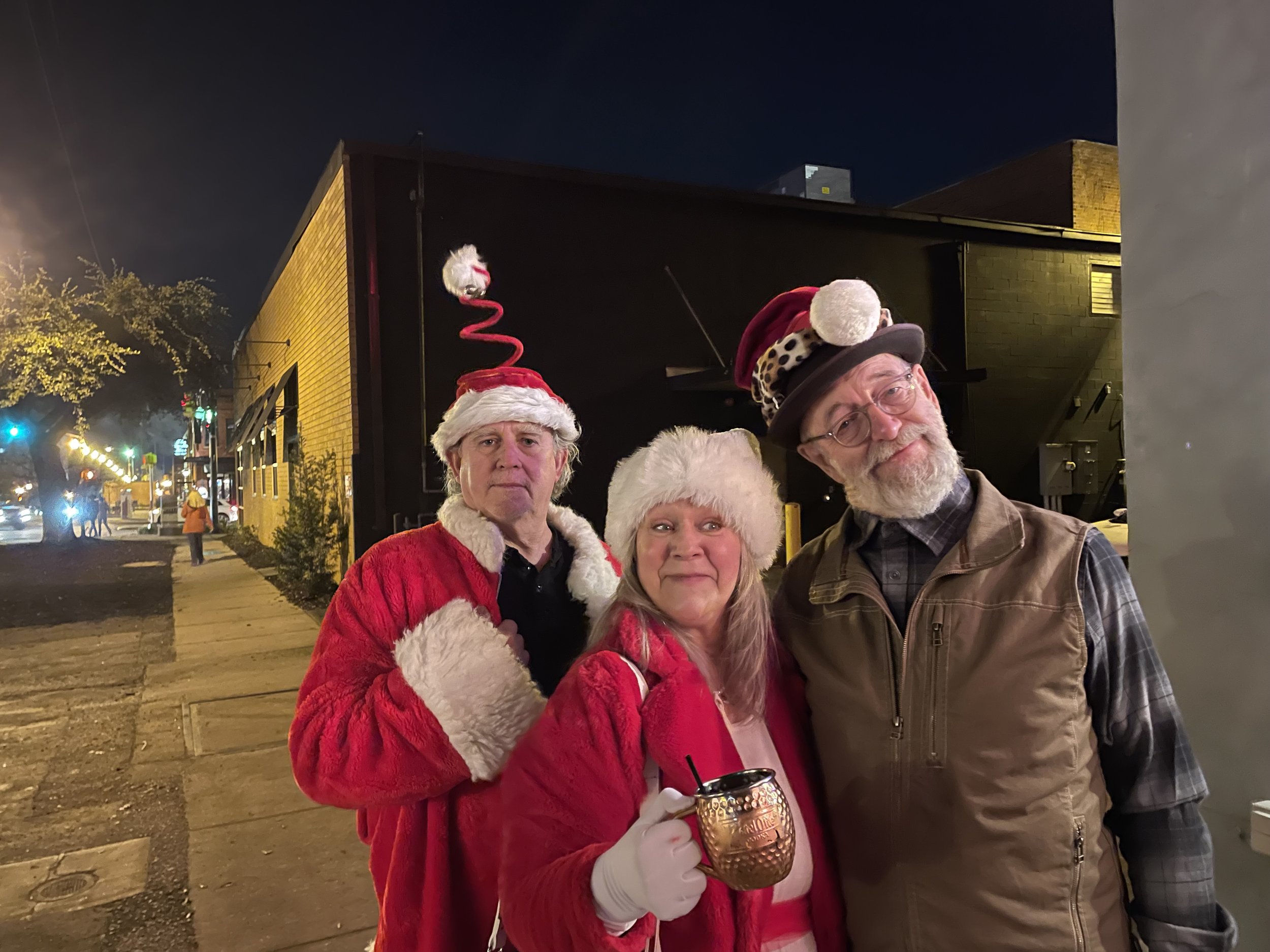
Jasper Friends Dick Moons and BA Hohman pose with our host, Clark Ellefson, outside the Art Bar

In December, Clark Ellefson and Andy Rodgers hosted the Jasper Project at the Art Bar on Park Street where we staged our first official Santa Crawl, inviting all comers to don their Santa suits and drink like it was Christmas. We had a fabulous time and enjoyed a delicious house-created cocktail list with a portion of each sale going to the Jasper Project. Thanks Clark, Andy, and everyone at the Art Bar!

In February, the good folks in the Capital City Playboys invited us to partner with them on the fundraiser concert event, An Evening with Bernie Love—A Tribute to Elvis. We themed the event around Valentine’s Day and welcomed more than 100 folks to the 701 Whaley Market space where Marty Fort, Jay Matheson, Kevin Brewer, and Patrick Baxley as Elvis! We also hosted artists Jamie Peterson, Gina Langston Brewer, Cait Maloney, and Lindsay Radford Wiggins who showed and sold their work. At the same time, and thanks to Lee Ann Kornegay, we had reserved the Community Hallway Gallery at 701 Whaley for the month of February to stage an art exhibit we called Love Hurts/Love Heals featuring K. Wayne Thornley and Wilma King.

In March, created a new event called Artists Showing Artists. Artists Showing Artists is an opportunity for established artists to share the spotlight with other artists who may be emerging, new to the area, or who they want to highlight. The project encourages collaboration within and between disciplines and enlightens the community about both the featured artists and the art curation process. Our first event featured Saul Seibert who invited poet Alyssa Stewart (we’re publishing her first ever published poem in the next issue of Jasper Magazine - thanks Saul!), visual artist Virginia Russo, and rapper Keith Smiley.

Our next Artists Showing Artists event will feature Desirée Richardson of Death Ray Robin as our Artist Host. I hope you can join us on May 20th to pick up a copy of the spring issue of Jasper Magazine and check out all the artists Desirée has invited to join us!

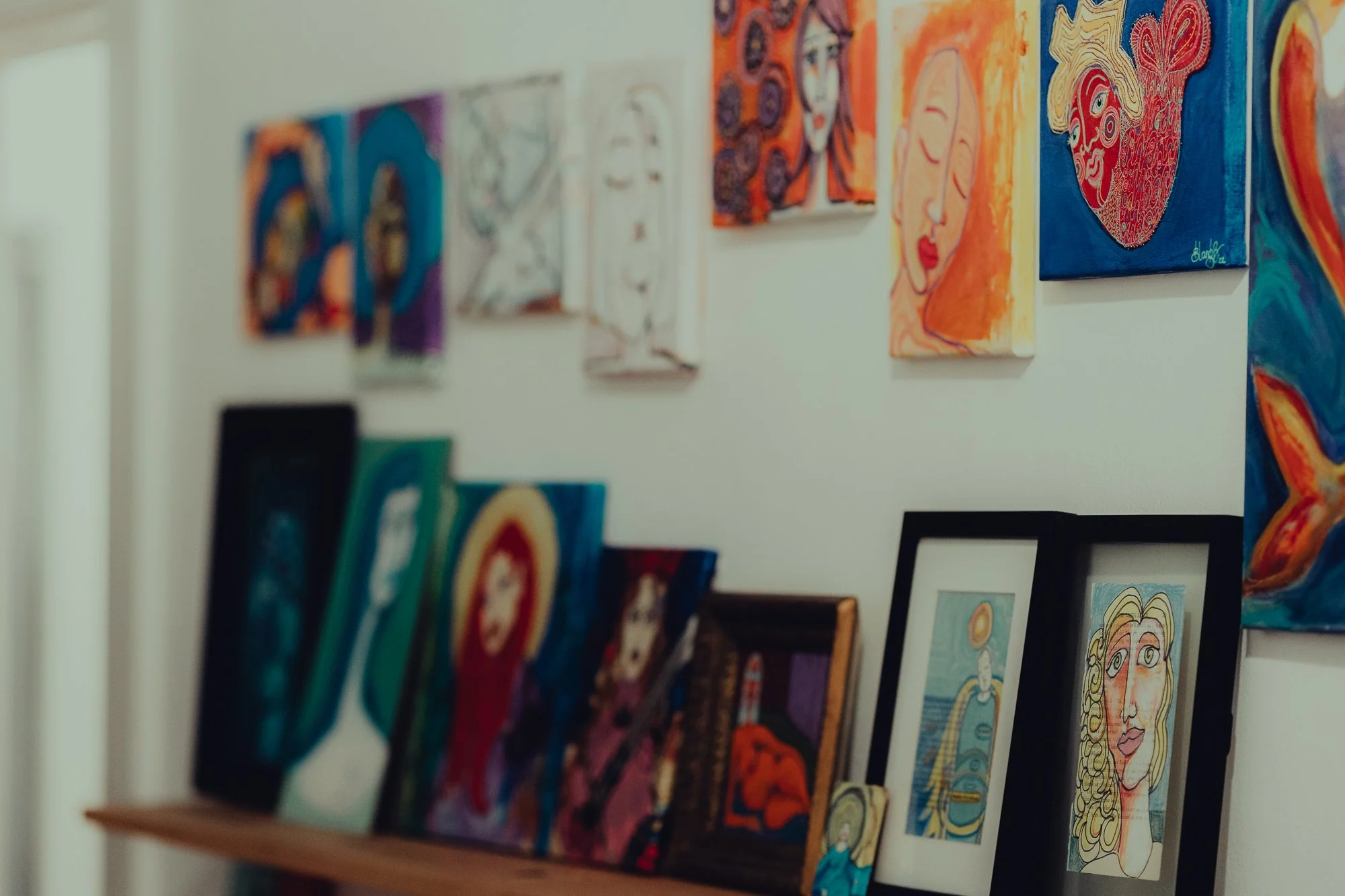
In fact, our various gallery spaces across town have grown considerably, helping Jasper to spotlight the work of artists in small, captured spaces. We do a First Thursday artist-in-residence rotation at Sound Bites Eatery on Sumter Street that has thus far included Michael Shepard, Alex Ruskell, Kimber Carpenter, Ginny Merritt, Adam Corbett, Quincy Pugh. Marius Valdes, Gina Langston Brewer, Lindsay Radford Wiggins, Lucas Sams, Colleen Crichter, and Keith Tolen.

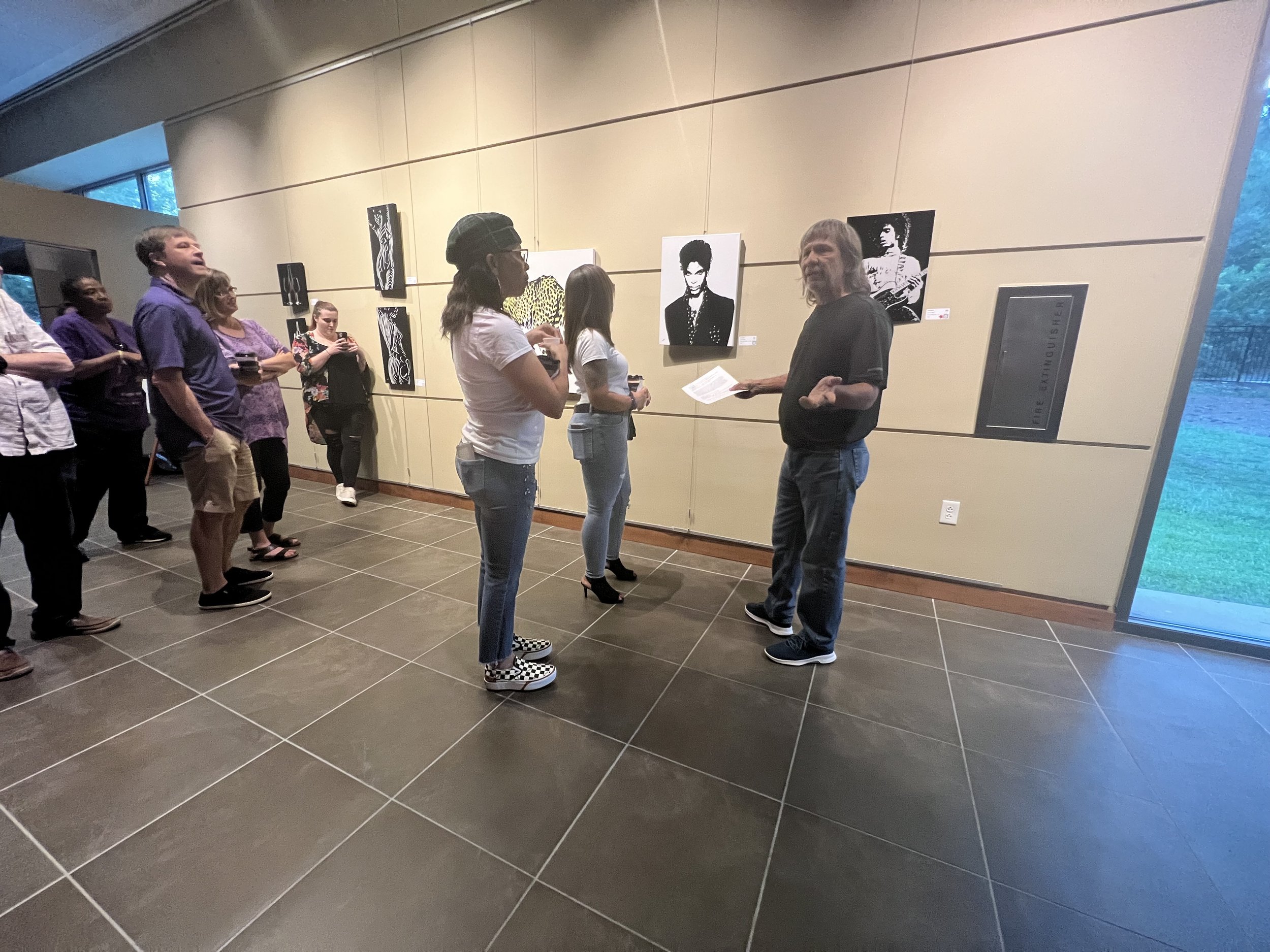
Steven White speaking to theatre goers at Harbison Theatre

In January, the Koger Center opened a space on the second floor of their building just outside of the Donor’s Gallery for the Jasper Project to show the art of Columbia-based artists. We opened with Thomas Crouch, then Lindsay Radford, followed by Quincy Pugh. We’ve scheduled additional visual artists to fill out the remainder of 2023 and are already programming into 2024 at the Koger Center as well as at Harbison Theatre in Irmo, where we’ve shown David Yaghjian, Steven White, Michael Krajewski, Lori Isom Starnes, and are currently showing Olga Yukhno. We also keep a running gallery at Motor Supply Bistro and in the sidewalk gallery at the Meridien Building on Main Street.  

I’m actually thrilled to announce that the Jasper Galleries helped put almost $18,000 into the pockets of working artists in Columbia since last March!

Board Member Bert Easter staffs the kegerator at a Jasper Project House Party

As the Jasper Project board of directors has grown, we’ve done a bit of reorganization. Christina Xan, whose work on the Tiny Gallery continues to be so efficient that we tapped her to manage all our gallery spaces, is now also serving as our treasurer. Emily Moffitt was also elected board secretary in January, just after officially joining the board, and Wade Sellers and Kristin Cobb both continue as board president and vice president respectively. Bekah Rice is officially our digital manager as well as our operations manager and, typically, our events director. We welcomed new members to the board including visual artists Ginny Merett and Kimber Carpenter, and Jasper Magazine theatre editor Libby Campbell

I’m sure I’m forgetting an event, a happening, or a party.

Please remember, it is your support of Jasper’s passion for supporting, promoting, and validating Midlands-area artists that allows us to do what we love. Thank you for your continued support.

Cindi

April 2023


Please enjoy a few more photos from the past year of the Jasper Project below —

Carla Damron at Richland Library leading discussion on her book, The Orchid Tattoo, for Jasper’s Nightstand Book Club

Me judging the Mad Hatter Art Show

Featured Artist Wilma King talks with artist Gerard Erley at the Love Hurts/Love Heals art show that she shared with K. Wayne Thornley— a Jasper Project with 701 Whaley

Lisa Hammond served as the poetry judge for Saluda River Prize for Poetry in 2022’s Fall Lines

Jasper was invited by the good folks at Curiosity Coffee to arrange a pumpkin carving contest among the city’s artists — it was a huge success, a lot of fun, and we had some beautiful (and terrifying) pumpkins result!

Point person = Bekah Rice

We featured the art of the four artists on the board at Artista Vista this spring - Ginny Merett, Kimber Carpenter, Laura Garner Hine and Emily Moffitt

Olga Yukhno speaking to theatre goers at Harbison Theatre for her spring exhibit
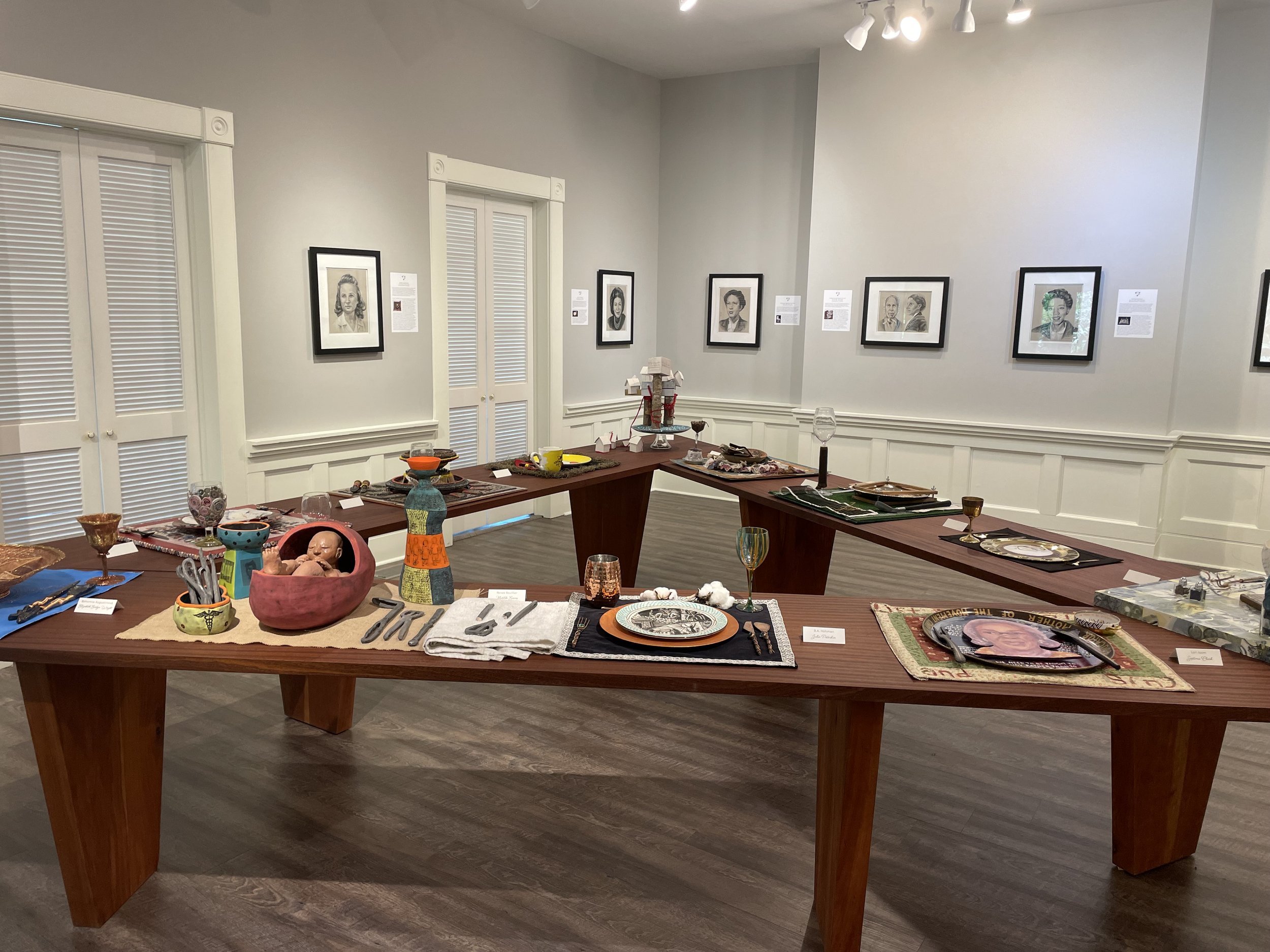
Our 2019 project, The Supper Table, is still touring. Here it is at the Myrtle Beach Gallery of Art just after being on exhibit at the Morris Center for Arts and History
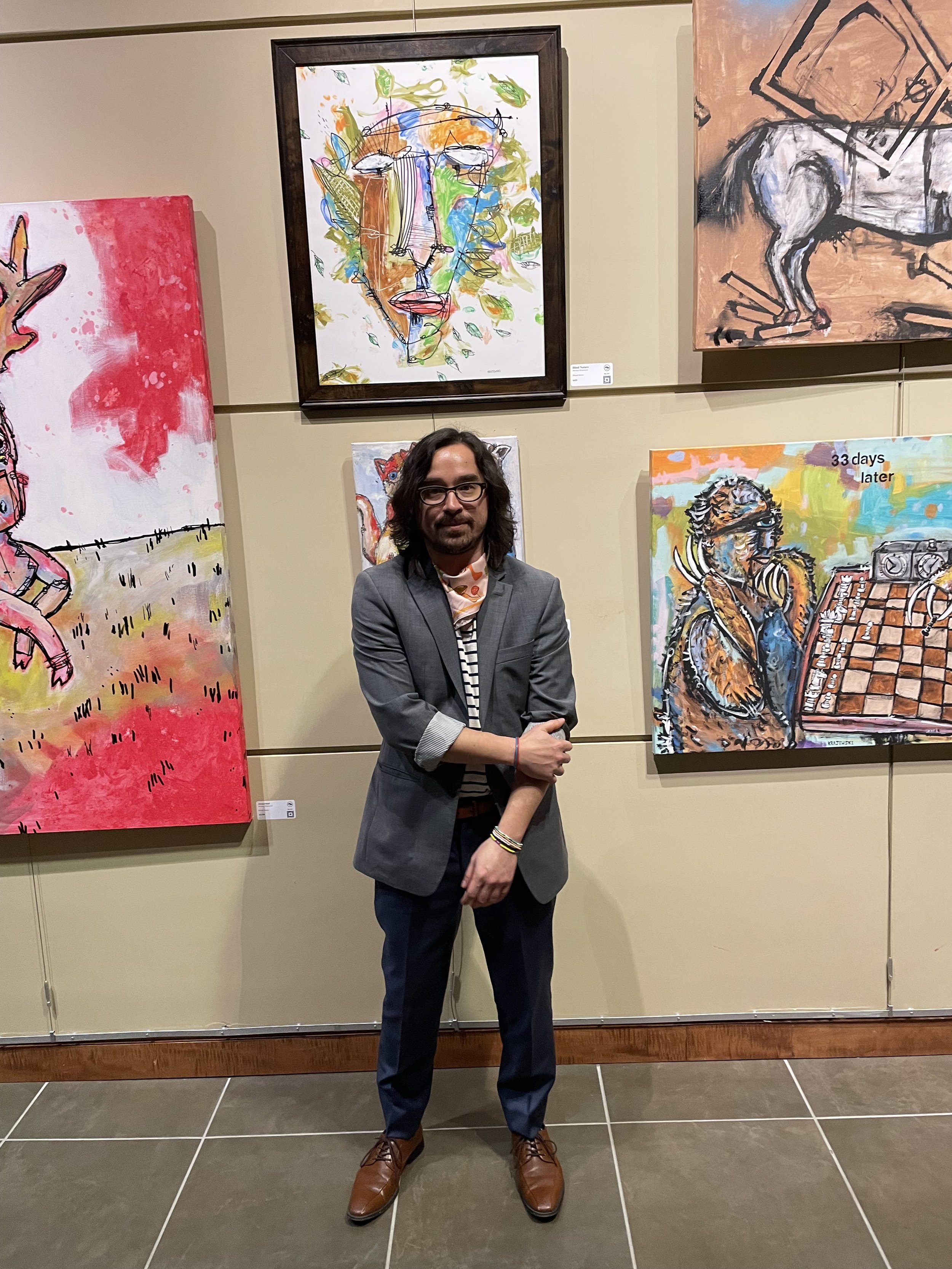
Michael Krajewski with his exhibit at the Jasper Gallery at Harbison Theatre
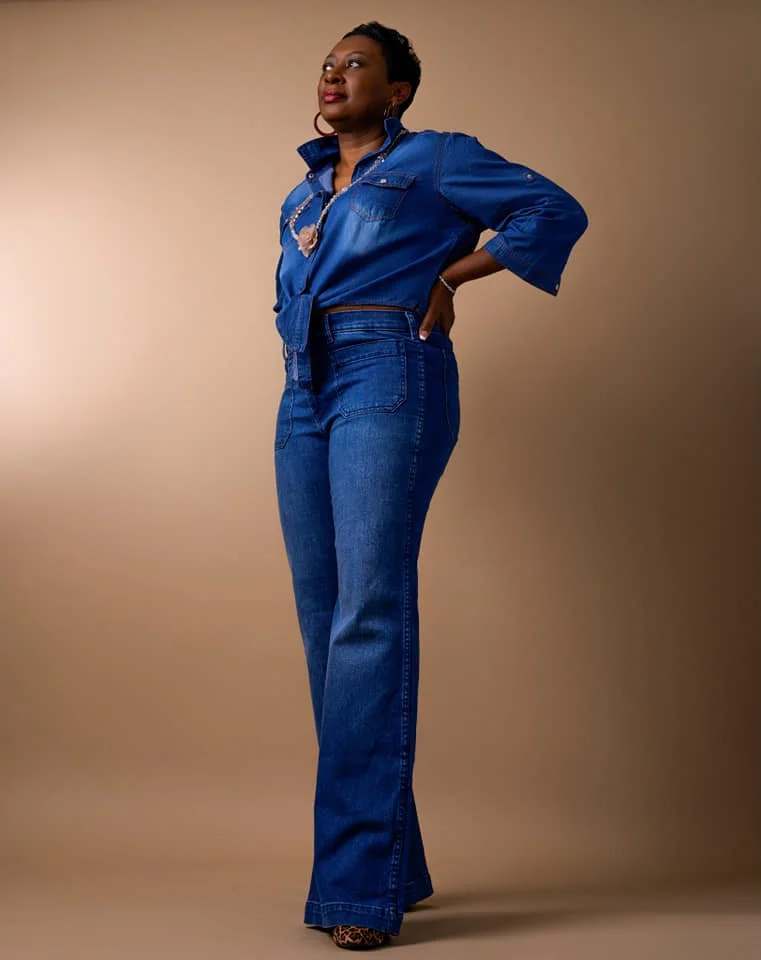
Announcing the Winner of the Jasper Project 2023 Play Right Series - Lonetta Thompson

Congratulations Lonetta Thompson!

The Jasper Project is delighted to formally announce that Lonetta Thompson is the winner of the 2023 Play Right Series competition for her play, Therapy.

Lonetta Thompson is a graduate of the University of South Carolina with a B. A. in English and a Minor in Theatre. As an actor, she has performed for years on stages in Columbia and surrounding cities, most recently touring with Spark, an Outreach initiative of the SC Governor’s School for the Arts and Humanities in partnership with Workshop Theatre of South Carolina. She is a member of the NiA Company and Company Emeritus with Trustus Theatre.  Prior to entering the Play Right Series, she had written a handful of short stories and one other script. By day, Lonetta is an eLearning Developer with a large insurance company. She has one daughter and one grandson. 

Lonetta’s play, Therapy, will be the focus of a staged reading on Sunday, August 6, 2023.

~~~

Now it’s your chance to join the Jasper Project’s Play Right Series as a Community Producer.

Are you the kind of person who always wants to know more about the art you experience?

·         Why did the playwright write their characters the way they did?

·         What was the director trying to accomplish by having an actor move across stage, turn their back to the audience, or break into dance?

·         How did an actor make me feel the way they did simply by turning their head?

If you have a passion for knowing more, understanding process, inspiration, and impetus, and seeing how a virgin play goes from page to stage, you are a good candidate for becoming a Jasper Project Play Right Series Community Producer.

 ~~~

What is a Community Producer?

Community Producers are important members of the Play Right Series Team who, in exchange for their investment of a modest amount of funding, ($250 each or $500 per couple) become engaged in the development of a virgin play from the first time the actors meet until the production of a staged reading of the play in front of an audience.

During July 2023, Community Producers will gather every Sunday to explore the process of a play moving from page to stage with presentations that include

  • Meet the Playwright: Lonetta Thompson

  • Meet the Director: Elena Martinez-Vidal

  • First Table Reading with your host, Jon Tuttle

  • Behind the scenes with the Cast of Therapy

  • Stage managing, props, costumes, lighting, & sound with your host, Jon Tuttle   


And finally, a Staged Reading before a live audience with the Community Producers front and center as our esteemed Guests of Honor*

You’ll enjoy wine, cheese, socializing, and an assortment of other unique snacks at every event, as well as Jasper Project swag bags

* For the Staged Reading, Guests of Honor will be seated in the best seats in the house, acknowledged from the stage and in all programming, promotions, and press releases, as well as on the Jasper Project website and in the Fall 2023 issue of Jasper Magazine.

Ready to sign up as a Community Producer?

Watch this space for more information or drop a note to info@JasperColumbia.com


How does this work?

Every Sunday afternoon in July 2023 you are invited to join with the cast, crew, and fellow Community Producers of Therapy for an enlightening and entertaining session that pulls back the curtains of theatre development and illuminates how a stageplay goes from page to stage. Your first session will offer you a private viewing of the first step in play production, the Table Reading – the first time the cast of Therapy reads their parts together for their director, Elena Martinez-Vidal.

Subsequent sessions will focus on essential ingredients in the production of a successful staged reading, such as the stage manager’s job; props, lighting, blocking, and sound; unique insights from the director; how the actors prepare for their parts; playwright perceptions from this year and past projects; and an invitation to the dress rehearsal. In addition to your invitation to gather with the cast and crew every Sunday in July, each session will also feature exciting snacks and beverages. And many more surprises each week!

Finally, you’ll take your reserved, best-in-the-house seats to a ticketed staged reading of Lonetta Thompson’s Therapy on Sunday, August 6th.

But there’s more.

Your name will be included as a Community Producer on programs, posters, press releases, and other promotional materials as well as in the perfect bound book, Therapy by Lonetta Thompson, published by Muddy Ford Press and registered with the Library of Congress, and you will take home your own copies of Therapy as a souvenir of your experience.


What is expected of Community Producers?

We hope you can make it to every exciting Sunday afternoon meeting, but we understand if you have to miss some. Each session will last from 90 – 120 minutes.

The financial commitment for a Community Producer is a minimum of $250 per person, but institutional sponsorships are also available and appreciated. You can also sponsor a student for $250 if you are unable to participate yourself.

Our hope is that you will be so enlightened and inspired by this experience that you will become a diplomat of live theatre, fresh playwrights, and the Jasper Project and encourage your friends and colleagues to participate in live theatre themselves!


Play Right Series History

The Play Right Series is an endeavor to enlighten and empower audiences with information about the process involved in creating theatrical arts, at the same time that we engineer and increase opportunities for SC theatre artists to create and perform new works for theatre.  

Our first project in the Play Right Series was in 2017 when Larry Hembree led project members to produce a staged reading of Sharks and Other Lovers by SC playwright Randall David Cook. Sharks went on to win a number of awards and has been produced off-Broadway.  

Our second play, community produced in the summer of 2022, Moon Swallower, was written by first time playwright Colby Quick and directed by Chad Henderson. Moon Swallower was performed as a staged reading at the Columbia Music Festival Association in August 2022 and subsequently performed in its entirety by USC Aiken. 2022’s Community Producers included James Smith, Kirkland Smith, Paul Leo, Eric Tucker, Ed Madden, Bert Easter, Bill Schmidt, Wade Sellers, and Cindi Boiter. 

SC Playwright Professor Jon Tuttle of Francis Marion University was the project manager in 2022 and returns as to the position in 2023.

Q&A with Bobby Hatfield: Growing in Hope

Bobby Hatfield is a musical scientist, an explorer of sound, experience, and emotions. Well known in the Columbia scene for his piano chops and unique song writing style, his live performances are something to behold– they never disappoint. Read about his growth as an artist, process, thoughts on Columbia and fellow musicians.

“I find art focused on the wounds maybe sometimes helps the pace of nursing those wounds, because it gives them context during their time rather than random infinite tyranny, and creating can be hard during those times but the unchecked loop can be disastrous. But while I breath I hope.”


Bobby Hatfield — photo— Kati Baldwin


JASPER: Tell us a little about how you got started and the projects you have been a part of over the years. 

HATFIELD: After 5 year run of The Sea Wolf Mutiny, Numbtongue was an idea to develop and experiment with songwriting and songcraft within purposeful constraints. What can I do when it is just me? What can I write around bass guitar as the lead voice? Can you write a Waltz at 4 beats per measure? And furthermore, can I deconstruct both the art that folks have heard already as well as continue to deconstruct myself as “the self” and the contradictory mechanics of faith and doubt, love and hate, heaven and hell, destiny and choice, hope, and hopelessness, and other rather cliche anxieties into an entirely not cliche expression? What could it mean to take away everything I relied on and create from scratch?  

I found myself as the side man on keys for ET Anderson, not out front. This helped me learn a way to exist in the more joyful bombast of TSWM, where I wasn’t the focus but could provoke a response through someone else’s music and be felt rather than heard. Staying busy with that let my musical imagination go a bit wild. My first release, Exhumation, was an attempt to sound as though it was a time capsule discovered in the sands of the internet, as though guitar distortion had never been heard before, to ask the question of nostalgia: “are you worth my time?” 

So, if my first release “exhumation” was about an abstract rebirth of sorts, my sophomore release Phantom Limbs is more about wiping the dust off such a creature as me, seemingly just discovered, and seeing who’s there now. And while it didn’t happen in a linear emotional way, what was looking back at me was a person in lament. A person with anger and trust issues. A person who had felt betrayed and not really dealt with or admitted to what that meant. And what I found in that fundamental sorrow was that, through no plan of my own, I found myself yearning to express these emotions in simple terms, and it bothered me that I needed to make beautiful monuments to what seemed less than beautiful feelings. Things like trying to process the sudden suicide of a friend and somehow search the hope. But I’ve learned since making and releasing it that to exude such thoughts doesn’t have to be a bad thing, and creating these songs as permanent places meant justifying the feelings as valid. Literally doing them Justice. We grow around pain and loss and grief the same way rings on a tree reveal their history on earth. And for me this album was a record of a tree still standing and growing in hope despite the damage, and really naming the feelings gives them a wholeness that you can then grow around. They don’t necessarily “heal” in the sense that you ever feel like you did before you required healing, but maybe just maybe you will feel them as apart of you whole. It was a struggle to get this record off my chest no doubt, but if there’s hope in simply admitting hopelessness, to continue on is to live your life carrying it but maybe not nursing it anymore. I find art focused on the wounds maybe sometimes helps the pace of nursing those wounds, because it gives them context during their time rather than random infinite tyranny, and creating can be hard during those times but the unchecked loop can be disastrous. But while I breath I hope. 

Numbtongue is kind of this idea that “you can’t taste it but you know it’s there” either because you’ve felt it so much or said it so much or because it’s hard to but words on it, and the new record title “Phantom Limbs” is similar as an idea where these specific instances exist longer after your done feeling them, and I know as I get distance from some of these songs creation, there’s an ability to look at them and the feeling inhabiting them more objectively, which makes it far easier to sing. I hope that what I’ve tried to do with this project is hope.

JASPER: What does your writing process look like? How has it changed or evolved over the years?

HATFIELD: Early on it was almost exclusively me writing and singing from the piano & later a guitar, but I wasn’t comfortable with just learning, so most of my early guitar playing [consisted of] alternate tunings that I felt were unique tonally. But I’ve constantly challenged myself into the next phase of something that might not feel natural to me but then I try to inhabit it in “my style.” I remember spending an entire year exclusively forcing myself to write or compose songs on the guitar in the standard tuning. Just to see if I could fit inside the mold. I liked what I learned about myself as an artist, but oddly I haven’t ever released more than one song publicly that was in standard tuning. I tried to stay in that traditional songwriter vein at first because I didn’t play other instruments so piano felt like a home base, and it still does. As I’ve gotten older and wilier about what is “allowed to be a song” and being my own producer on almost everything numbtongue related…. Inspiration can vary widely.

Sometimes it’s a lyric I like that falls out of my mouth acapella and then I try and find chords around it. Sometimes I start with a drumbeat that is lyrical itself already and I try to write against a unique linguistic beat. Sometimes I start with a bass line. What’s interesting is often a song will start on one instrument and end up totally focused on another one by the end. That is the case with my new song “I Will You Will” off my new record, it is very piano heavy live. But it began on acoustic guitar strumming the chord progression in a completely different key, than it is now., and all I had was the words “I never thought I never thought I would give up on you” just strumming 8th notes in standard tuning. That one idea that fell out randomly gestated for about 6 months or so, maybe longer. Now you won’t hear a single acoustic guitar on the song on the record because it was the vehicle that got me there, not necessarily the end product.  

Because I still love the concept record, some songs are born out of a communicative necessity in relation to the rest of a record of songs. Sometimes I realize “wow this song needs better track coming before it” or I hear an entirely new idea that should come after a song that already exists, and I’ve always really tried hard to make sure track 7 is interesting because records are risk of the sagging middle by track 7. I feel like a lot of artists in the past used tracks 7 for a perhaps average or mediocre song at times. I try to avoid mediocre or anything that takes up unnecessary space. I like writing with the sense that everything has  purpose and identity musically, even my singing voice, which I will fundamentally alter to fit the song if I can manage to make it sound convincing.  

JASPER: Do you have any tips or tricks for finding inspiration or getting over writer's block? 

HATFIELD: I find that it helps to chase rabbits even down their holes, and record yourself doing it. It may feel and sound dumb but if you watch and listen later, the replay can be informative even if uncomfortable. But also allowing writer’s block to be the block it is and let it rest, just walk around it, and move on to something different entirely that may feel freer or more fun and distracting. You can always come back to that block later; it is not the end of your world. Sometimes paths are dead ends for you. Walking around the block in the road can also be “maybe this is boring and I should juke styles right here and don something surprising just to hard left it both for myself and the listener so we can walk away from this dead end in real time together” and then you can decide if you want to repeat the phrase that dead ended and it feels like a pattern then that just has a dead end. Music is helpful in that it is a mercifully repetitive and endlessly self-healing of its mistakes in that way at times. It can also be deciding to rest and recharge and come back at it fresh in the morning. I need this advice because I am notorious for working 5+ hours straight in an idea that I hate later, but sometimes you have to see where the rabbit hole goes. I’ve sadly had a lot of success grinding an idea for five hours to a place I think is finished and sincerely liking the result of my efforts so I guess sometimes the advice is take a wrecking ball of ego to the writers block and destroy it by force of will. 

JASPER: How do you know when something is done? 

HATFIELD: The easiest answer is it’s done when it’s done? But the clearer answer is it’s done when you can hear everything you need to hear and feel what you want to feel. I find that it’s always a moment with my songs where I smile and say “oh there you are” as if it was always there until it finally makes sense what I want to hear.

JASPER: What is your favorite or least favorite show you've played in and why? 

HATFIELD: Favorite shows: all house shows. I have never played in a bad house show. The Price Street House Show was probably 2013 or 2014 with my old band The Sea Wolf Mutiny. It was up a flight of stairs on the second floor of this house right off Main Street in downtown Columbia SC. At the time I was playing this 250lb Yamaha cp60 keyboard that required 2-4 people to move so it was a quite a chore to get it up to a second story. We passed out tambourines. It was so hot. There was this guy reading poetry as the opener and he was incredible, absolutely slayed, one of the coolest opening acts ever at a show. I think his name was Connor. The energy of a house show is already something different because it feels personal and special and no one else is here but us and it’s always very “all hands-on deck” we’re in this together audience and band and crew alike … but that normal vibe was on absolute overdrive by the time we played this night.   

We played something called Dead Tree Festival another time that was a house show of equally ineffable and palpable anticipation that you could cut with a knife, but the show was shut down by the police 3 songs in. The floor was also beginning to “smile” under the weight of the humanity standing on it.  

JASPER: Who are some of your favorite local artists and why? 

HATFIELD: Well this is hard to answer because I don’t know if I should answer with latelies or evers. I will go with lately: I fell in love with Gamine like 1 minute and 12 seconds into their inaugural set at GrungeProm we played together last year, just an instant classic Columbia band waiting to happen; it’s like the Cure meets Nirvana and shoegaze; it is not a criticism to say I love that they feel like a work in progress happening before your eyes being born from stone they are personally carving themselves out of, but they could immortalize any moment in the process of that progress and it would be great.  

Rex Darling vocalist Catherine (Hunsinger) is just effortless and has such stellar tone under constant control and sounds like it can go anywhere she wants, beautiful voice.  

Stagbriar are deep long running friends of mine, and their song “Open Floor Plan” is a crown jewel of theirs to me, I love the way it uses this simple rotating bassline polyrhythmically against their duo harmonies. 

Dear Blanca boys will always have a special place in my heart, not the least of which because Dylan Dickerson, their leading man, has been so helpful and encouraging via his role at Comfort Monk promoting my latest release Phantom Limbs.

Death Ray Robin, Desiree Richardson’s solo project is another favorite new person for me. I saw her perform also at GrungeProm last year for the first time and oh wow, is she gifted or what? I knew immediately a fellow meticulous producer who knows exactly what they want from a song they made, and has a tight control of vision and execution to boot, but she not only crafts beats and chord progressions and soundscapes from scratch but there was a moment she abandoned the mic entirely, because she didn’t need it whatsoever and turned her set over to the opera within and it was as mesmerizing to watch her balance it all as it was to hear.  

And last but certainly not least my friend Alyssa Stewart, whose project Local Honey opened my Phantom Limbs Album Release last October. Columbia has rarely seen as erudite a songwriter and poet, who also developed a live set that sounded like a seasoned professional after only a couple of public performances. With many years of stage performance and classical vocal performance training, there’s certainly a foundation to explain such ease but it’s such a different experience becoming vulnerable with your own songwriting in front of perfect strangers. And she met the moment of her first outing at New Brookland Tavern with such aplomb, ease, and whimsy, knowing that nerves could best her at moment was impossible. I couldn’t have been more impressed nor have gushed more to her afterwards. I really hope everyone gets to hear her and see her perform her original music in this region and beyond. If she wants it, she’s got a cool music future. 

Oh and p.s. I’m happy People Person is a thing again in Columbia. 

JASPER: What do you think about Columbia's art/music scene and how has it changed over the years? 

HATFIELD: I think Covid brought a lot of communal art experience to such a halt that it altered the reality of the return to normal. It actually feels like there are 5 or 6 music scenes happening all at once right now. I think some folks are playing catch up, but some folks are trying to start things for the first time that they didn’t have a chance to start for two years. It’s a bit difficult to keep up with the sheer volume of scene activity happening. A lot of my peers from before Covid hit haven’t been as active since, and it’s been tricky getting back at it even for Numbtongue. So I think what I’m seeing is almost too much of a good thing? It’s hard to call it bad but I think Columbia has grown performance opportunities given the types of venues that host music downtown has diversified and you still have the old haunts that host music. Places are selling out for shows and it’s kinda crazy overdrive some weeks. It has actually gotten way harder if not impossible to avoid booking a date that doesn’t conflict with someone else’s show lately. Which I suppose is a good problem to have. I think it just snuck up on me.

So I think there’s a fair amount of activity that is siloed and invisible across a few music scenes right now. I do think there seem to be more opportunities now than ever to seek a performance, but it does create the challenge of being able to do anything unique enough as an independent local to make a statement or draw. But as far as cultural growth, I am completely enamored with Columbia’s local non-chain business developments from Noma bistro, Transmission Arcade, Curiosity Coffee, The Warmouth, All Good Books, etc. That’s just the start of a very long list of new businesses over near where I live in town. Downtown Columbia at least seems more vibrant and diverse than ever. So despite the sense of rarity shows might have held in the past, there’s some rare air were all living in still trying to move past Covid and it feels like everyone is trying to get as much done as possible before the world tried to end again. I don’t know maybe I’m making a mountain out of a mole hill. It seems great?

JASPER: What advice do you have for other artists?

HATFIELD: Never stop. If you’re an artist, keep creating. If you’re an aspiring artist, keep creating. You or the world will only be the better for it. Create, oh creator, and thus be recreated.

JASPER: Any other things you want folks to know 

HATFIELD: Stream my new record Phantom Limbs, it’s available everywhere. 


You can see Numbtoungue this Sunday, April 23rd at New Brookland Tavern with Secret Guest, Summer of Snakes, and Gamine at 6pm. Also make sure to wish Bobby a happy Birthday!

Facebook Event

Business Strategies for the Performing Artist at CMFA -- April 22nd -- Register Now -- KNOW YOUR RIGHTS!

Last Week to Register!

Register HERE!

Check out this FREE and informative interactive workshop coming to you from our friends at Columbia Music Festival. Sure, no one wants to spend their Saturday morning talking dollars and cents, contracts and budgets. BUT it’s important that you, as a performing artist, KNOW YOUR RIGHTS! Particularly when we live in a community in which at least one well-known performing arts executive director pettily compromises the RIGHTS of the artists he works with to work for anyone else. This workshop just might change your life. And it’s FREE.

914 Pulaski Street, Columbia SC

Registerr Here!

The Arts Center of Kershaw County is proud to present Godspell May 5-7 and 12-14 in Wood Auditorium!

From our friends at the Arts Center of Kershaw County:

The Arts Center of Kershaw County is proud to announce Godspell!

Focusing on the timeless power of hope, Godspell is structured as a series of parables based on the biblical gospel of Matthew. Godspell features an eclectic blend of songs, ranging in style from pop to vaudeville, as the story of Jesus’ life dances across the stage. With music composed by Stephen Schwartz (Wicked) with book by John-Michael Tebelak, Godspell was an immediate blockbuster hit upon its release in the 1970’s.

Godspell began as a project by drama students at Carnegie Mellon University and then moved to the off-off-Broadway theater La MaMa Experimental Theatre Club in the East Village of Manhattan. The show was rescored for an off-Broadway production, which opened on May 17, 1971, and became a long-running success. Many productions have followed worldwide, including a 2011 Broadway revival.

Now we are proud to bring Godspell to the Arts Center Main Stage!

Dates: May 5-7 and 12-14
Location: Wood Auditorium
Tickets: $25 (Adults) $10 (Under 18)
Showtimes: Fridays and Saturdays doors open at 6:00 for a 7:00 pm show. Sundays doors open at 2:00 pm for a 3:00 pm show.

Purchase Tickets

For more information, please visit our website or call us at 803-425-7676. Thank you for supporting the Arts Center of Kershaw County! We look forward to seeing you soon! 

Monday Night - ONE NIGHT ONLY - Join 701 CCA for SWIM, a Unique Puppet Pool Experience by Tarish Pipkins

Tarish Pipkins, also known as Jeghetto, presents his newest installation and puppet show SWIM, at the 701 Center for Contemporary Art’s swimming pool. This will be a one night performance with limited capacity on April 10, 2023 from 7 p.m. to 9 p.m.

Pipkins has been using found materials to create puppets since the late 90s in Clairton, Pennsylvania. Currently, he is an Artist in Residence at the 701 Center for Contemporary Art. However, he got his start at the BridgeSpotters Collective, where he staged puppet street performances.

Some of Pipkin’s most major puppet projects include the Amazon Echo commercial featuring puppets of Alec Baldwin and Missy Elliot, as well as a Pharell Williams puppet in Elliot’s music video “WTF (Where They From).”

SWIM will be a performance dedicated to exploring the myth of the Dogon and Mer-People, and how these myths currently relate to our present collective history. As the 701 Center for Contemporary Art says, “This performance is a poem of hope and determination that will undulate through the glass floor under which it is performed and crash into the hearts of the audience.” 

You can find tickets for the one time, special event at by clicking here.

REVIEW: The Light at USC Lab Theatre

Trigger Warning: sexual assault is a primary subject in this piece.

Spoilers ahead

You should see this show.

Loy A. Web’s script is a bit heavy-handed at times but the subject(s) and the conversations they can prompt override that. It’s filled with quick turns and twists and surprises. 

The show opens in an ordinary apartment. Rashad is rehearsing how he will propose to his girlfriend, Genesis. Asaru Buffalo plays the role of Rashad, and he is perfectly charming. This opening scene is lovely and joyful and playful, and I loved it. Genesis, played by Shakori Jennings-Shuler, enters her apartment, and is not in the same good spirits as Rashad. Genesis is a school principal and has discovered that one of her new teachers, someone she admires and respects, feels that Brett Cavanaugh is being judged unfairly. Genesis is disappointed and surprised at her new colleague’s stance and wonders whether how she can reconcile herself to their obvious political differences. (I daresay that at some point in the last 9 years we all have found ourselves in a similar situation.) 

Rashad tried to lift her spirits and his ploy begins to work. Genesis then accuses him of not knowing “today’s” significance. It’s revealed that it’s their anniversary. He has, of course, completely forgotten this. The engagement ring steps in as an anniversary gift. The proposal is gleefully and tearfully accepted. Joy ensues. He has planned to recreate their first date and has obtained at great cost tickets to a concert by her favorite artist. How happy can two people be?

Hold my beer. 

The headliner and producer of this concert is the fictional rapper Kashif. Kashif has been a source of conflict between Rashad & Genesis before. Genesis condemns Kashif for his misogyny. Rashad supports Kashif for the good he does for the community. Genesis initially tells Rashad Kashif raped a friend of hers in college. She admits her friend did not report the rape. Rashad has been falsely accused of domestic assault; he had been a football player with a bright future. These dreams evaporated with the false accusation. He is also the custodial parent of his daughter.  

Rashad implores Genesis to understand his existence as a Black man who is never afforded the benefit of the doubt. Genesis implores Rashad to understand her position as a black woman in an unending struggle to be seen and valued as being black and as a woman.  

Spoiler alert: Genesis reveals it was not a friend who was raped, but herself.  The opening scene set the stakes really high. I won’t tell you how it ends. 

It was nice to see two young actors honing their craft. There were no bios in the program, so I have no idea about the work the actors have done previously. Ms. Jennings-Shuler needs to watch her volume and energy. There were times I lost what she was saying because she spoke so softly. Her final soliloquy was powerful, and she delivered it with anger and frustration. Mr. Buffalo needed to kick up the volume a bit; he may have been suffering from a cold or allergies. His focus on Ms. Jennings-Shuler’s monologue never faltered. He remained focused on her the entire time. 

The set was completely serviceable. It would be nice to have a coat rack or a hook on the back of a door for Rashad to hang his jacket. Otherwise, there was nothing to really detract from the performances. 

I saw the Thursday performance with friends who are also actors. It was a diverse group; one Black man, two Black women, and one white woman. We went out afterwards and talked and argued and discussed the show for over two hours. The disrespect and devaluation of Black men and women, the irreparable damage of false accusations, the very personal perceptions of what constitutes “rape”… it was enlightening on many levels. That’s what good theatre does - it opens the door to conversation and debate, which is how we all move forward. Unfortunately you have only two more chances to see this show. Take one of those opportunities. You won’t be disappointed.                               
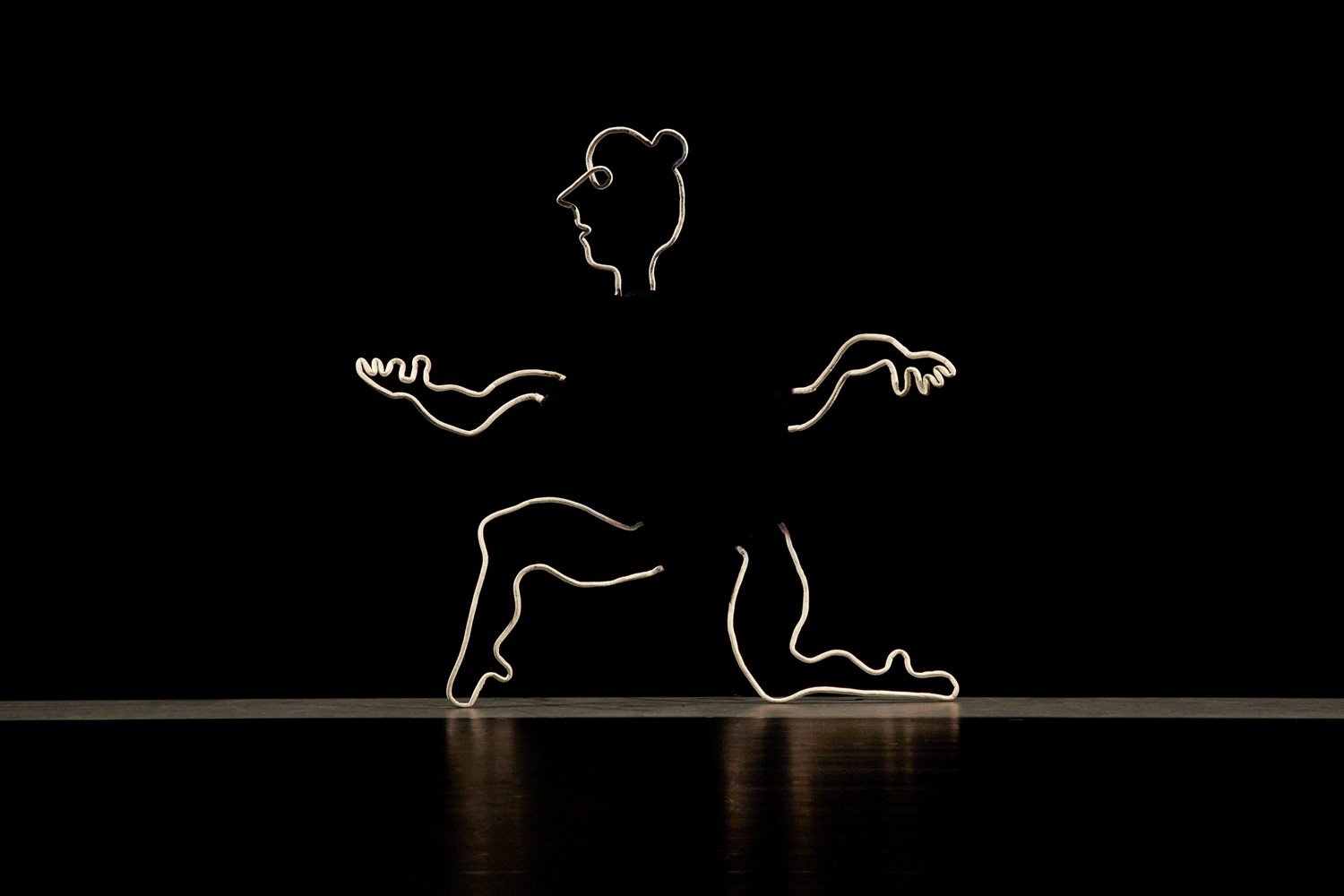
REVIEW: The Mad Ones at Trustus Theatre

“The only people for me are the mad ones, the ones who are mad to live, mad to talk, mad to be saved, desirous of everything at the same time, the ones who never yawn or say a commonplace thing, but burn, burn, burn, like fabulous yellow roman candles exploding like spiders across the stars and in the middle you see the blue centerlight pop and everybody goes 'Awww!'"

Jack Kerouac from his autobiographical novel On The Road

Not enough has been written about platonic girl love, especially for adults. But the reality is that platonic girl love—its power and gravity and the way it can encompass a person like a cocoon—has saved many a young woman’s life, both figuratively and literally. The musical The Mad Ones by Bree Loudermilk and Kait Kerrigan (2017), on the Trustus stage through March 18, gives this beautiful and complicated phenomenon the reverence it is due.

With a tiny cast of four Trustus stage virgins, including two current USC students, Lily Smith and Charlie Grant, The Mad Ones is the story of Samantha and Kelly, played by Smith and Elise Heffner, BFFs who are separated by an accidental death. Samantha must rely on her memories of the all-important platonic girl love relationship she had with Kelly to get her through her grief and on the road to adulthood and making the next life decisions.

The working metaphor throughout the musical is that Samantha is obsessed with Jack Kerouac’s autobiographical novel, On the Road, but despite her intelligence (Sam is valedictorian of their senior class), she repeatedly fails her driving test keeping her, in essence, off the road. The brilliance of this simple metaphor plays out beautifully in the construction of the play.

Lead characters Smith and Heffner are just so much, too.

Adorable, approachable, relatable, insightful, lovable young women, Smith is a cross between Mayim Bialik and Tina Fey and Heffner is that combination of cute and fun that leaves no wonder Smith’s character Samantha adores her so. Smith plays Sam as vulnerable, but capable of getting through this period of grief with the help of the three people who she knows has her back no matter what: her boyfriend Adam, played by Grant, her mom Beverly, played by Jessica Roth, and the memories of her dead friend, Kelly. And in no way is the character of Beverly to be overlooked. Her character is refreshingly written as a bright, caring, and self-fulfilled mother who wants nothing less for her own daughter. While many writers would have fallen into the old tarpit of depicting her as a pushy parent, Loudermilk and Kerrigan seem to recognize what is at stake here and present Beverly as assertive, yes, but justifiably so. Beverly behaves in ways that every mother should aspire to.  

To say the cast has vocal chops is an understatement. From Grant’s smooth dulcet crooning to Roth’s rich and powerful voice, the four vocalists take on the score bravely leaving nothing on the stage. The slight pitchiness and rare missed note were so real and genuinely offered that they almost felt scripted, as in, everyone misses a note now and then so of course these authentically imperfect characters will, as well. These young actors, as well as Roth, DO NOT HOLD BACK.

Clearly this kind of bravery in such young actors had to originate in the experienced pedigrees of their directors, Robin Gottlieb and Katie Leitner. In her playbill note, Heffner gives special thanks to Leitner as “the best teacher she ever had.” No doubt. Leitner is also the powerhouse musician and vocalist in the popular local band, Say Femme and between the two women, they have performed enough lead roles to intimidate these four initiates into paralysis. But it is evident how the directors empowered their cast with courage and the message of the script.

There were no weak links in this production. Kudos to Ginny Ives (stage manager), Ezra Pound (sound), Lorna Young (lighting), Liza Hunter (assistant stage manager), and Jim Hunter (scenic designer) for pulling off all the pieces of the behind-the-scenes puzzle that allow for a successful production. Also outstanding was music director Chris Cockrell and his band, and special thanks to the strings player whose melancholy tones were enough to elicit tears alone.

Yes, expect to respond to The Mad Ones with anything from misty eyes to ugly sobbing. But the tears you’ll shed are of the redeeming variety—the kind that wash away the pain and remind us that we grow from every obstacle we overcome.

Go see this beautiful musical and celebrate the talents of these young actors and the futures they have in store.


Philharmonic Collaborates with Local Nonprofits to Present a Weekend of Music and Sensation

By Liz Stalker

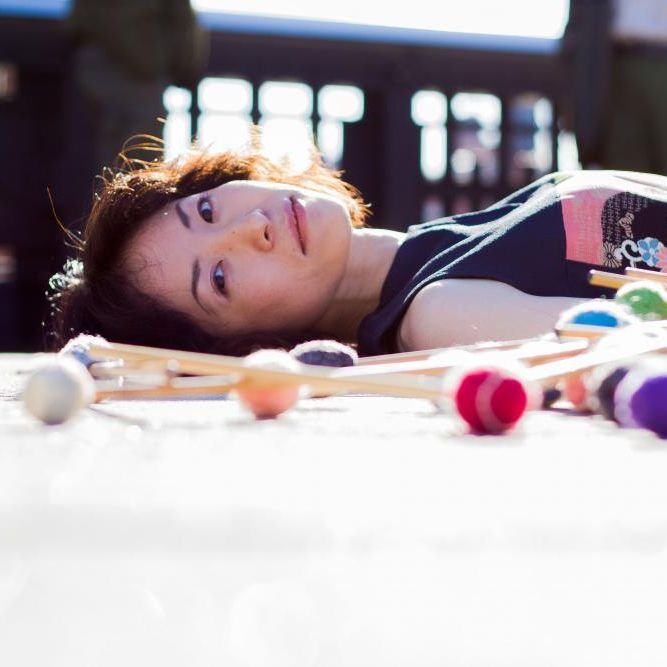
Ayano Kataoka

This coming weekend, the South Carolina Philharmonic will present two noteworthy concerts at the Koger Center: Firebirds of a Feather on Saturday, February 18th at 7:30 p.m., and Sensory Friendly Family Concert on Sunday, February 19th at 3:00 p.m. Both concerts are a part of the Philharmonic’s Music for a Cause program, a program that involves partnering with other non-profit organizations in order to raise awareness and funds for important causes through the Philharmonic’s various Masterworks concerts.


Firebirds of a Feather is a concert centered around the fantastical nature of our aviary friends. The concert is bookended by Igor Stravinsky, starting with Song of the Nightingale, and concluding with The Firebird Suite—one of his most renowned works—with Takashi Yoshimatsu’s composition, Bird Rhythmics, at its center. The SC Philharmonic’s Marketing Director, Chad Henderson, describes the selection of pieces as “a great opportunity for audiences to ignite their creativity and let the story form in their mind based on how they interpret the music.”


The Philharmonic will play alongside featured soloist Ayano Kataoka, a percussionist whose marimba skills will be particularly highlighted through these pieces. Kataoka started performing as a marimbist as early as nine years old, leaving her home in Japan to tour around China. She went on to amass a number of impressive degrees in music and perform all over the world. Kataoka is currently the Professor of Percussion at the University of Massachusetts Amherst and continues to be a season artist of the Chamber Music Society of the Lincoln Center of Performing Arts in Manhattan.


Firebirds of a Feather is being put on in partnership with Feathered Friends Forever, an organization dedicated to the rescue, rehabilitation, and sanctuary of abused and neglected birds as well as adoption services for responsible bird lovers. Patrons who get there early can check out the live birds that will be in the lobby prior to the show, thanks to handlers from the organization. The birds in attendance will be highly social, imbued with some of the playfulness of the music that will follow, and present a unique opportunity for the audience to, as Henderson puts it, “learn more about these fantastic animals and create a personal connection to aviary rescue.”


Sensory Friendly Family Concert is, at its core, a concert designed for all families, inclusive to children of all ages and abilities. This concert, which will be just under an hour in length and feature themes from well-known children’s movies, such as the Harry Potter franchise and Moana, invites audience members to participate in whatever way they feel moved, such as singing, dancing, vocalizing, and moving about. The concert will also prioritize the ability of audience members to exit the theater with ease as needed. In addition to this, there will be a variety of accommodations available to theatergoers, including a quiet room, spinners, and changing stations that accommodate children with disabilities, and the lobby and auditorium will both be open an hour before the concert begins.


The Philharmonic has partnered with a number of organizations for Sensory Friendly Family Concert. Their current partners include The Unumb Center for Neurodevelopment, The SC Commission for the Blind, Family Connections of SC, Key Changes Therapy Services, Carolina Autism and Neurodevelopment Research Center, and Palmetto Animal Assisted Life Services. This concert will be the first of many Philharmonic inclusive family concerts.


“The SC Philharmonic is definitely committed to making these accessible family concerts a more regular occurrence,” Henderson shares on the commitment to inclusion, “It’s important that we make it possible for everyone in our community to experience symphonic music. The Koger Center is dedicated to working with us on diminishing boundaries as we go forward.”


Tickets for both events are available on the Koger Center’s website

The Palmetto Opera Presents Madame Butterfly

by Meg Carroll

One of the most renowned operas of all time is opening Sunday, January 29th at 3:00 p.m. at the Koger Center for a one time matinee—Madame Butterfly. The elaborate, full-scale, vocally rich performance is made possible by Columbia’s very own Palmetto Opera in conjunction with Teatro Lirico D’Europa.

Giacomo Puccini’s Madame Butterfly follows the tale of Cio-Cio-San, a Japanese teenager, who finds herself in the throes of a love affair with an American naval officer, Benjamin Franklin Pinkerton. However, Cio-Cio-San’s love is unrequited, unbeknownst to her, leaving the operatic audience to despair over Cio-Cio-San’s devotion and Pinkerton’s debauchery. The famous aria for which Madame Butterfly is known, “Un bel di, vedremo” or “One fine day, we’ll see,” is sung by Cio-Cio-San in anticipation of the return of her wayward American lover.

For this performance of Madame Butterfly, Palmetto Opera has paired with Teatro Lirico D’Europa, an organization that sources opera singers from all over the world. The part of Cio-Cio-San will be sung by Melliangee Pérez, from Puerto Rico, who boasts many operatic distinctions as well as numerous lead soprano roles. The part of B.F. Pinkerton will be played by Alessio Borraggine, from Italy, who has a habit of receiving rave reviews on his beautiful tenor voice. 

Pairing with an organization like Teatro Lirico D’Europa allows some of the most prestigious voices to come to South Carolina, yes, but Teatro Lirico D’Europa also provides set designs, costumes, and professionally trained instrumental musicians as well. This makes for all the more ornate of an opera performance, which we get to enjoy in our very own home state of South Carolina.

When speaking with the Palmetto Opera Board Chairman (and Jasper Project board member), Paul Leo, about the reasons behind Palmetto Opera’s choosing Madame Butterfly, he cited the opera’s longevity and respectability. This opera has been performed since 1904 and is one of the most famous operas in the world, and it has inspired countless other artistic projects in its wake, including the Broadway musical Miss Saigon.

Paul Leo has been head of the Board of Directors at the Palmetto Opera for about three years now, although Palmetto Opera itself has existed for about twenty. Since its start in 2001, Palmetto Opera and its board of directors has been dedicated to bringing professional opera to the state. Leo notes that the board holds fast to the distinction that Palmetto Opera is the only organization producing “Grand Opera” in South Carolina.

The board of directors operates on a volunteer basis, and Leo stresses that the collaboration of the board is vital to the success of the shows that they put on. Currently, the board consists of the aforementioned Chairman Paul Leo, Program Director Mari Hazel, and Artistic Director Peter Barton, among others.

The Palmetto Opera has performed many of the most popular operas, including the best of Porgy and Bess, Carmen, and La Bohème. This performance of Madame Butterfly will actually be the third that the organization has sponsored, indicating perhaps a fierce loyalty to and admiration of this production.

When asked what Leo loves most about opera in general, he said, “It is built to last!  An art form perfected before the availability of electronic amplification and enhancement, it simply transcends fad and fashion.”  

The only local in the opera will be 5-year-old Asher Cobb, playing the part of Sorrow. When he is not rehearsing for his part in Madame Butterfly, he enjoys trains and jumping in muddy puddles.  

As for what’s to come, Palmetto Opera is going to keep on with its mission to bring professional opera to South Carolina. Their next performance in May will be Great Voices: From Broadway to Opera. But they always need help from local opera lovers. If you would like to make a donation, you can do so here.  

Tickets for this one time matinee of Madame Butterfly can be purchased on the Koger Center’s website here.

REVIEW: CMA's Baker and Baker present Zion. A Composition by Saul Seibert

Zion. A Composition

Live at Columbia Museum of Art

Thursday, Nov 17th, 2022

Baker & Baker Series

by Kevin Oliver

An ambitious instrumental and visual art piece conceptualized by Saul Seibert with help from artist Virginia Russo, multimedia from Ash Lennox, and a cast of fellow musicians, Zion. A Composition came alive in multiple dimensions on Thursday evening at the Columbia Museum of Art, as part of their ongoing Baker & Baker concert series. 

Seibert opened the evening with a short explanation of the story behind the composition, and as he told the family background in front of multiple members of his own family in the audience, the anticipation in the audience built. The delineation of the three acts: The Diaspora, The Sojourn, and The Ascent, was a useful glossary of sorts for the crowd to reference, but as the piece unfolded, there was no visual division on screen or stage to indicate when one movement ended and a new one began. As such, at several lulls in the program audience members interjected applause and exclamations, seemingly unsure if something was ending or maybe just overwhelmed with appreciation of what had just transpired in a concluded segment.  

With two of the three movements already released for a while prior to this live performance, and the third just completed, it was still a much different experience watching the musicians perform the entire piece live. Left to right, they filled the CMA stage: Seibert’s older brother Zach Seibert (E.Z. Shakes) sat quietly cooking up some sinister electric guitar tones, Marshall Brown contributed keyboard swirls of varying tone and intensity, Kevin Brewer held down the beats even as they came and went throughout, Darren Woodlief, also seated, provided a solid bass presence that asserted itself fully in the final movement. Sean Thomson was the musical wizard of the night, starting on spooky, sensual sitar and moving to steel guitar and some wicked electrified mandolin. Seibert himself stood center stage, hollow body guitar in hand throughout, the ringleader of this spiritual, musical circus troupe.  

Every musical composition has an arc, that up-down movement that gives it an interesting story to tell. Zion’s first movement, Diaspora, came through as a slow-building bundle of potentialities, with the audience a bit on edge, unsure of where it might be headed, perhaps. The preshow preface alluded to one beginning to rid themselves of preconceived ideologies, attitudes, and casting those things out, and the music reflected such a sweeping task. Thomson’s sitar was prominent through the early passages, giving this portion a raga-like intonation that allowed listeners to settle into the aural universe of Zion.  

As the middle section opened up, the music soared, searching for those times of sojourn, as the movement’s title suggests–those places of rest, as one searches for home. At times the band resembled arena rockers on an extended jam, bluesy and blustery and supremely confident. In these sections, the drumming and the guitars evoked the percussive jazz plains of Steve Tibbetts’ 1980s work, or a more democratic take on the guitar orchestras of Rhys Chatham. In between those searing, searching sections the dynamic shifted to hushed tones, leaving sometimes a single instrument moaning, or clicking along softly as the band reloaded for the next swell like a surfer coiling his muscles for the next wave. 

It is in its final movement, however, that Zion finds, well, Zion. The Ascent is a lumbering leviathan of a groove, somewhere between Soundgarden-level grunge and the groaning Krautrock grooves of Can or Neu!, just a beast of a display anchored by Woodlief’s mammoth bass riffing. Again, however, there are interludes, lulls in the action. Life isn’t all one trajectory, after all, and neither is the ascent to Zion, musically speaking. The mountain does eventually get conquered, and in conclusion the music doesn’t so much fade away as plant itself on the peak and say “done.”  

Visually, artist Virginia Russo’s live painting/art added a facet to the proceedings that didn’t have to be there, but the performance was richer and fuller for it. As the band’s musical arc proceeded to rise and fall, so did Russo at the front of the stage, clad in black with a rolled out white canvas in front of her. She proceeded to paint over the entire canvas with her hands, no brushes, and then pick up the fully paint-saturated canvas and cut it into long, increasingly narrow strips. Those, she then rolled up before pulling them back apart, one ripped square at a time. The squares were then arranged on a new, clean white canvas to make a totally different piece of art. It was a perfect visual analogy for the thematic elements of the musical composition and served to reinforce those themes as the audience both listened and watched the proceedings.  

Other parts of her artwork for Zion were projected throughout as sometimes moving images on two large screens behind the musicians, lending a psychedelia gauziness to the already evocative visuals. 

Overall, I’d call this a nearly unqualified success, to write and perform such a challenging piece of multimedia art here in Columbia. I’m not sure I’ve seen anything quite like it locally, and Seibert’s prior resume as a garage rock raconteur certainly wouldn’t have hinted at the possibility of something like this coming forth. Going in, Seibert told me himself that there would be very, very limited live performances of this project, and I understand why–the preparation and commitment of all the participants was fully on display for this one.

Photog Caleb Brown of Saucewithspoons Photo-Documents Jasper's 1st House Show - October 2022

Last Saturday, Jasper board member and local arts leader Bekah Rice hosted a house show at the One Columbia co-op as a fundraiser for the upcoming issue of Jasper Magazine. Featured bands included Death Ray Robin, Opus and the Frequencies, and Joseph Hunter Duncan, all of whom blew the crowd away. And by the way, let’s send out one more happy birthday to Joseph Hunter Duncan and thank him for spending his special day on our stage.

Featured artists included Gina Langston Brewer, David Dohan, Adam Corbett, Emily Moffitt, and Olivia Pope, who showed their work pop-up style inside the house at 1013 Duke Avenue, the old Indie Grits homeplace. This is the same place where Al Black hosts his monthly Front Porch Swing Sunday afternoon concert series as well as his once-a-month Jasper’s Tuesday night Poetry Salon.

By the way, Gina Langston Brewer is Jasper’s featured artist-in-residence at the Jasper First Thursday Gallery at Sound Bites in November — and David will be in residence in January 2023.

The bands were sponsored by board members Libby Campbell and Paul Leo with Eric Tucker, the wine and popcorn by Coal Powered Filmworks, and the beer by Muddy Ford Press. We also had a boat load of new helpers, most of whom were friends and family of Bekah. We can’t thank all of these sponsors and volunteers enough. You all rock!

But we were also lucky enough to be visited by local photographer Caleb Brown of Saucewithspoons who grabbed some pretty fabulous shots of the night. Caleb shared some of these shots with us; now we happily share them with you.

The Sound of Silence: Mummenschanz at the Koger Center

Mummenschanz is something you need to see to believe.

 You might not recognize them by name, but if someone mentions to you, “that one skit from Sesame Street with the green clam thing” or “the group that was on the last episode of the first season of the Muppet Show” then you will remember who they are.

A silent theatre and performing arts troupe from Switzerland, Mummenschanz was created in 1972. Now, 50 years after its conception, the troupe is taking a celebration tour across the United States and Europe to perform a brand-new production, aptly titled “50 Years.” The group has been to Columbia before, so the Koger Center is ecstatic to host a homecoming of sorts for such a beloved group. “Mummenschanz came to Columbia in 1991 and 1993, and we’re really excited to bring them back,” Koger Center director Nate Terracio said. “It’s a sort of homecoming for us that we’re looking forward to, and it’s great that they’re coming back for such a landmark achievement.” The company is led by the remaining founder, Floriana Frassetto, amongst other Swiss talents. “50 Years” will start touring in New Jersey during mid-October and will conclude next June abroad in Germany. The New York Times has described the troupe as “witty madness...dazzling and delightful,” and it does not take too long to find out you agree with them.
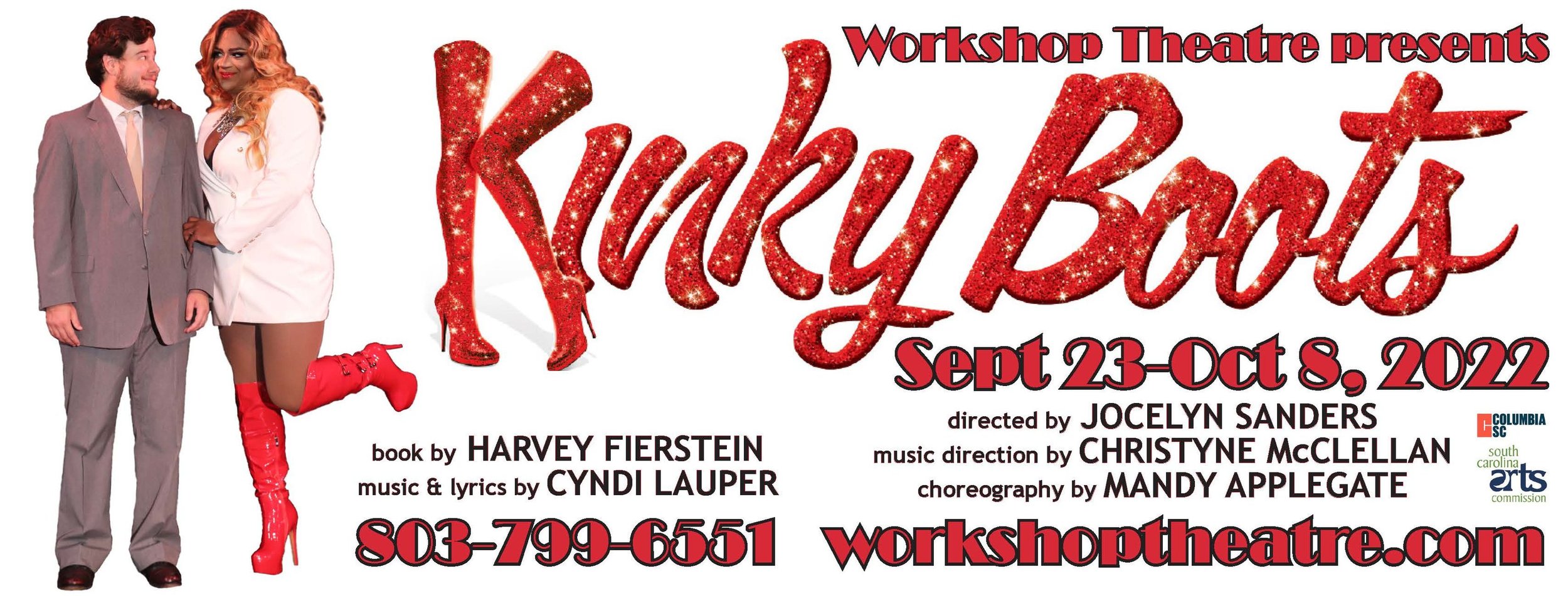
 

Mummenschanz has cemented itself as one of the most avant-garde performing arts groups in history. Their unique stage direction and costumes bewilder audiences of all ages, often prompting the younger members to verbally respond to the performers, indicating all sorts of engagement and excitement. The silence of the performers beckons audience response as well, allowing the audience to fill in the gaps with their own sense of dialogue or story. The lack of dialogue does not mean that the performance lacks heart; it multiplies as the performance continues. The audience grows to feel attached to the Clay Faces, the Green Clam, and everything else in between. Mummenschanz gives a voice to the creative minds that may prefer to speak in silence.

Mummenschanz’s performance at the Koger Center for the Arts is on Friday, November 4, at 7:30 PM. Tickets are available for purchase in person at the Koger Center box office or online

PREVIEW: DEATH OF A SALESMAN AT WORKSHOP THEATRE BY JON TUTTLE

The grinding wheel of American capitalism has become a Catherine Wheel: if you’re not helping to turn it, you’ll get lashed to it. This is what Miller called, in his eponymous essay, the tragedy of the common man: “the disaster inherent in being torn away from our chosen image of what and who we are in this world. Among us today this fear is strong, and perhaps stronger, than it ever was.”

The watershed moment for American drama occurred at about 10:30pm on January 22, 1949, at the Locust Street Theatre in downtown Philadelphia. It consisted of a stunned silence.  

Arthur Miller’s Death of a Salesman had been in rehearsals for several weeks but came to Philadelphia for a tryout before opening at the Morosco on Broadway. It would go on to win the Pulitzer Prize and Tony Award for Best play, as well as a raft of other awards, and would be remounted on Broadway five times—including right now at the Hudson Theatre, with an all- African-American cast. There is no official count of such things, but it is surely one of the most-produced plays in history. At any rate, it ranks at or near the top of lists—such as a recent one by the Denver Post—of the most important American plays.  

But when the when the curtain came down on the first public performance of The Great American Play, there was no applause, no response at all. In his autobiography, Timebends, Miller recalls the strange moment: “Strange things began to go on in the audience. With the curtain down, some people stood to put their coats on and then sat down again; some, especially men, were bent forward, covering their faces, and others were openly weeping. People crossed the theatre to stand quietly, talking with one another. It seemed forever before someone remembered to applaud, and then there was no end to it. I was standing at the back and saw a distinguished-looking elderly man being led up the aisle; he was talking excitedly into the ear of what seemed to be his male secretary or assistant. This, I learned, was Bernard Gimbel, head of the department store chain, who that night gave an order that no one in his stores was to be fired for being overage.”

Salesman tells the story, of course, of Willy Loman, the disposable American Everyman who measures his worth only in dollars, and of his wife, Linda, whose every encouragement hastens his suicide. His sons, Biff and Hap, represent the competing halves of his personality and of the American psyche—one a rugged outdoorsman still invested in pre-Depression ideals of hard work and camaraderie, the other a wannabe cut-throat executive who equates price with value. Reunited for twenty-four hours, the Lomans can no longer live together under the same roof. By the end of the play, the family home—the artifact upon which the American mythos is based--is paid for—but empty.

We are living in the fallout from unchecked capitalism and patriarchy - burnout, classism, exploitation, income and wealth inequality, housing shortages, climate crises. We are poorer now than our parents were at our age, and without significant and sustained changes to our system, the future looks more uncertain than ever. Social media has turned many of us into salespeople, selling the version of our lives that we want others to see, angling for as many likes as we can get to increase our self-worth, believing as Willy does that it's important to be well-liked.” - Patrick Michael Kelly

“Attention, attention must be paid,” says Linda of her hapless husband, and by extension of every well-meaning, faceless citizen failing to fulfill their obligations to the economy, and that’s truer now than it was in 1949. The grinding wheel of American capitalism has become a Catherine Wheel: if you’re not helping to turn it, you’ll get lashed to it. This is what Miller called, in his eponymous essay, the tragedy of the common man: “the disaster inherent in being torn away from our chosen image of what and who we are in this world. Among us today this fear is strong, and perhaps stronger, than it ever was.” 

Patrick Michael Kelly, who is directing the Workshop Theatre production opening November 4, concurs. “Salesman speaks to many of the issues we grapple with today,” he says. “Miller sought to deflate the idea of the American Dream - that anyone could achieve anything with hard work and determination. My generation and younger generations believe less and less in that idea, and this play underscores our disillusionment. We are living in the fallout from unchecked capitalism and patriarchy - burnout, classism, exploitation, income and wealth inequality, housing shortages, climate crises. We are poorer now than our parents were at our age, and without significant and sustained changes to our system, the future looks more uncertain than ever. Social media has turned many of us into salespeople, selling the version of our lives that we want others to see, angling for as many likes as we can get to increase our self-worth, believing as Willy does that it's important to be well-liked.”  

Kelly’s production will emphasize, he says, the concept that originally informed the play—the stream of consciousness running through the mind of its protagonist. Miller composed the first act of the play in a single night in his backyard shed in Connecticut—emerging the next morning, he said, aching and exhausted. His working title was The Inside of His Head, and he imagined the setting of the play as an enormous face which would open, like French doors, to reveal the interior of the Loman household. Designer Jo Mielziner prevailed upon Miller to do away with the cranium, but the operative principle that drives the play—that Willy cannot separate his illusions and memories from his realities—remained part of its DNA. It’s that element that Kelly’s production will emphasize. 

“We are highlighting that much of the play takes place in Willy’s mind,” says Kelly, “in his memories, with moveable settings to illustrate the fleeting nature and impermanence of memory and time. Beyond a few period accents, our set largely eschews reality and instead looks to illustrate Willy’s true passion for building things and his desire to get ahead. A skeletal staircase to nowhere is the only permanent fixture - a visual metaphor for his thwarted dreams, which Biff declares in the requiem as being ‘all, all wrong.’” 

What’s different about this production, however, is that Kelly is seeking to “decolonize and deconstruct” it as much as possible. The cast is racially diverse because “we want audience members of all backgrounds to see themselves in this story,” and his set is “somewhat Brechtian” in its minimalism and desire to keep the audience asking the right questions. “Salesman is almost entirely devoid of references to race,” Kelly says, and is primarily “focused more on classism. Racism was very much alive in the ‘40s however, so it cannot be ignored, and casting this play with a diverse group of people presents new dynamics and problems that were not originally intended. At the end of the day, I wanted to work with the best actors I could find, and I believe I found them. We’ve got a stellar team.” 

Veteran Columbia professionals Paul Kaufmann and Libby Campbell as Willy and Linda head that team. “I always love working with my longtime friend and colleague Paul Kaufmann,” says Kelly. “Paul is a wonderful artist and will bring his expertise in creating a more sensitive version of Willy Loman, balancing the ferocity of his fears with his sweetness and sentimentality. This play is the third time I’ve had the pleasure of directing him. [And] Libby is Columbia theatre royalty. This is my first time working with her.” 

Kelly notes that Deon Turner (Biff) and Jon Whit McClinton (Happy) are fresh from Trustus Theatre’s True Crime Rep--Jason Stokes Composure and Charlie Finesilver’s House Calls, and that “Jonathan Yi (Bernard) was one of my students last year at the University of South Carolina, and actually played Biff in scene study in that class, so it’s a treat to work with him on this play. Ripley Thames (Charley) is an actor I’ve admired for some time, but never gotten to work with. Same goes for Emily Meadows (Woman/Letta). Caroline McGee is a 2022 UofSC theatre graduate, and Roderick Haynes, Jr. stepped in late in the process and has been a joy. Mostly, it’s just an honor to get to tell this story - it’s one of the greatest American plays for a reason, and it’s a privilege to get to work on it intensely. It’s intimidating, but I love a challenge, and I hope audiences love what we’re creating for them.” 

Likewise, he relishes the opportunity to work once again—in a new venue--with Workshop, for whom he’s performed in Some Girl(s) (2017) and The Little Foxes (2002). This production is the culmination of conversations he’d been having with Jeni McCaughan, Workshop’s executive director, about remounting American classics. “I don’t think we go back to the dramatic classics enough,” he says. “I am a champion of new work. I think fostering new voices and nurturing new plays is the most important work a theatre can undertake, but we can still learn a lot from producing the plays of Arthur Miller, Lorraine Hansberry, Tennessee Williams, and many others.”   

And he is “thrilled” about Workshop’s partnership with Columbia College. “I know it’s going to benefit both organizations in a big way - and I’m excited to direct a show in the historic Cottingham Theatre. It’s a beautiful space and an actor’s dream as far as acoustics are concerned. I’ve never directed in a true proscenium theatre that has wings and fly space before either, so it’s a real treat.” 

Workshop Theatre’s production of Death of a Salesman will run November 4 through 13 at Cottingham Theatre on the campus of Columbia College. Tickets are available here.

Drink Small at the Koger Center

Wednesday, October 26th at 7:30 pm

Koger Center for the Arts

Drink Small is famous for many things, not the least of which is his modeling career. Right in the heart of Five Points sits Drink Small in the “V” of the iconic Five Points mural.

A native of Bishopville, SC, Small has been playing the guitar since his childhood. He has made a huge name for himself through his stage presence, his vocal tonality, and the ease with which he masters different musical styles. Now approaching his 90th birthday, even after losing his eyesight, Small continues to perform for audiences with aplomb. Small is known for his signature “Drink-isms,” a mixture of aphorism, stage banter, and charm that you cannot find with anyone else.

On October 26 at 7:30 PM, come to the Koger Center for the first of a brand-new concert series: “Koger Center Presents: Onstage With...” which Drink Small will introduce.

The concert is a result of the continued partnership between the Koger Center and the ColaJazz Foundation. South Carolina ETV and Public Radio are also partnering with these groups to record and videotape the entirety of the performance. The concert will include performances from other blues performers like the Randy Newton Trio and Brittany Turnipseed while also featuring the SC State University Choir. The audience will continue to stay on stage for each of these performances so they get an even more intimate concert experience than they may be used to.

“We’re really excited to bring such a legend to the Koger Center,” says Nate Terracio, Director of the Koger Center. “This new concert series is something we have been looking forward to putting on for a while and starting it off with such a musical powerhouse is really encouraging.”

The Koger Center has been dedicating itself to continuing and improving the diversity of its performance catalog. The directorial staff of Koger knows just how diverse the Midlands are (and the rest of South Carolina altogether) and aims to consistently accommodate the interests of everyone involved with the arts or music. The University of South Carolina has been making headway with their own Diversity, Equity, and Inclusion expectations, and Koger hopes to not only fulfill those expectations but exceed them. Supporting the arts of all audiences is integral for the growth of the art industry, and the Koger Center hopes that the celebration of such an important artist as Drink Small will bring in support for both the Columbia jazz scene and Mr. Small himself.

REVIEW: Kinky Boots at Workshop Theatre

Originally a smash Broadway hit, Kinky Boots is a musical about two people finding common ground in an unusual way: through shoes. With the book by Harvey Fierstein, Kinky Boots is the story of two seemingly different individuals who discover that they have more similarities than differences. Charlie Price (Taylor Diveley) inherits the family’s shoe factory just as he is attempting to start his life elsewhere. Unfortunately, the factory is bankrupt and may close. A chance encounter with Lola (Lamont Gleaton), a drag queen and cabaret performer, leads to an unconventional solution to save the business.

Jocelyn Sanders has done an admirable job of pulling together a talented cast of performers for a fun evening of theatre. As the leads, Diveley and Gleaton balance each other nicely and then shine beautifully during solo numbers. Gleaton dazzles as the outwardly confident Lola, taking the stage by storm with a larger-than-life persona and performance. At other times, Gleaton easily reaches the introspection necessary to convey the depth of Lola’s sometimes painful journey to true self-understanding. Diveley takes some of the same opportunities, as he energetically leads his factory workers to believe in the dream of success and then anguishes over his own shortcomings.

The supporting characters and cast play beautifully in the background of Charlie and Lola’s story without pulling focus away from those characters’ journey. Evident in their body language, the factory workers are initially tired and demoralized, anxious about what is around the corner. After Lola enters the scene, the factory comes alive with energy. Jessica Roth (Lauren) presents a nicely nuanced performance, a tad daffy when required and thoughtful and kind in other important moments.

Lola’s Angels do exactly what they’re supposed to do. They bring fun and energy to the stage through their marvelous dancing and sassy personalities. Mandy Applegate’s overall choreography is fun and sexy and gives all performers a chance to shine.

The live band is terrific, led by Chrystine McClellan, who is also the Music Director. McClellan has taken a group of varied performers and created not only a lovely ensemble performance but also has led individual performers to shine where their talents lie. The only sound drawback is that at times, it is difficult to hear certain dialogue and portions of songs.

When you first arrive, you find yourself looking at the exterior of Price and Son, the factory which Charlie inherits. During the opening number, the building opens to reveal an aging industrial space in which most of the action takes place. Both the set and light design are by Patrick Faulds, and both beautifully deliver an important underlying aspect of the show. The lighting seamlessly moves with the performers, capturing them as they move to different levels and areas of the stage, which is a credit to the design and designer. As the locations change, Faulds has designed clever movable set pieces, practically moved by cast members in character, adding to the overall success of the design.

The costumes, designed by Andie Nicks, also play a nice supporting role, and then step to the front to take a bow when appropriate. Nicks has chosen a basic monochromatic theme for most of the clothing of the factory workers, leaving it to Lola and the Angels to dazzle the eyes. The varied costumes sported by the Angels bring real life to their personalities, and Lola’s outfits . . . . Well, let’s just say “fabulous” is insufficient.

Kinky Boots runs about two and a half hours, with one fifteen-minute intermission. It runs through October 8 at Cottingham Theatre on the campus of Columbia College.

Concert in the Gardens, September 22nd at Seibels House & Garden

One of the few good things to come out of COVID was the collaboration between the South Carolina Philharmonic and the Historic Columbia Foundation. Unable to perform indoors at the Koger Center, the Phil teamed up with Historic Columbia to present concerts outside in such beautiful settings as The Hampton Preston gardens and the Seibels House & Gardens. My friends and I attended the “inaugural” event and haven’t missed a concert since.

Thursday’s program features a string quartet, presenting a concert of light classics.  Columbia Repertory Dance Company will also be performing. 

You can arrive at 1601 Richland St. any time after 6:00 p.m. The concert starts at 7:00.  We always bring folding chairs and/or blankets, a picnic basket chock full of goodies, and bubbles. (What’s a picnic without bubbles?). Wine is available at the event for $5/glass, and you can become a member of the Historic Columbia Foundation at a discounted rate.

Tickets are $20.00 and may be purchased online.

See you there!

- Libby Campbell

The Return of the Jam Room Music Festival - A Q & A with Trey Lofton

The Jasper Project is extremely excited for the return of Columbia’s premier free music festival, Jam Room Music Festival on Saturday, October 1st. The Jam Room Music Festival has been a tremendous hit with the city for almost a decade, and this year’s will be the first festival hosted since the start of the COVID-19 pandemic. We talked to Trey Lofton about the behind-the-scenes action of Jam Room, expectations for the year, and a little bit in between.


Jasper: How did you go about choosing which bands would participate?

Lofton: This is my first year being involved with the Jam Room Music Festival. I thought it was important to have input from the whole board. I reviewed all the previous lineups and generated a list of roughly 75 bands that I thought would fit the template that had been established. I met with several members of the board to go over that list to see if my ideas matched their expectations. They seemed highly enthusiastic about the names I had produced, so I began the process of contacting artists and agents. There is only so much money to go around so you must reach out to bands at different price levels. 

Bailey Road Band

We were fortunate to have several of the first bands we reached out to express interest. Once a few of the pieces were in place the next challenge was to make sure that we were being diverse in our lineup. That narrows down the next wave of inquiries. We also thought in terms of local, regional, and national acts. I think we did particularly well in this regard. We have two acts from here in Columbia (Bailey Road Band, Dear Blanca). We have two local / regional acts in The Explorers Club and The Shaniqua Brown. Both bands originated in Charleston and have played Columbia many times. The Shaniqua Brown is performing after a 10-year hiatus. I saw they were doing a reunion show in Charleston and thought they would be a great addition. The Explorers Club also originated in Charleston but have relocated to Nashville and are primarily a studio project of lead singer Jason Brewer these days.

Titan to Tachyons

Then we have a half dozen national acts. Mourning [A] BLKStar are a collective from Cleveland. I first heard them after their last album was named one of the best of 2020 by The Wire magazine. Shiner is from Kansas City, Missouri. They had some big albums in the college radio world in 90s. They had been on hiatus but put out a new album and planned to tour in 2020. Titan To Tachyons are from NYC. To people familiar with the Avant Garde jazz scene in NYC, the band is something of a super group: most notable is bassist Trevor Dunn who is a member of Mr. Bungle amongst many other groups. But the other members play in dozens of projects that involve luminaries like John Zorn and John Medeski. Clap Your Hands Say Yeah and Titus Andronicus are two big names to emerge from the indie, punk, college radio scenes of the 2000s. The Sun Ra Arkestra are part of a legacy spanning near 70 years. 


Jasper: How did COVID impact the organizational aspects of the festival? Did you decide to do anything differently or did COVID open any unexpected creative avenues for everyone to explore?

Lofton: I’m new to the board so it is hard for me to compare; I know that there are a few new members. Whenever that happens on a small board like our you lose some institutional memory. Covid has certainly had a major effect on the concert industry in general. Supply is high but demand is through the roof. Most bands and venues were shuttered for two years. While there are a lot of bands looking for an opportunity to perform there are way more venues trying to get back to putting on shows. A lot of bands are booking further out than I have previously dealt with, and I think prices are higher than they have been, along with touring costs. But now that we have a lineup in place, I don’t think we have any current COVID related obstacles to overcome.


Jasper: What would you like newcomers to Jam Room to know about the festival? Anything they should know about or do to prepare for the day?

Lofton: We would like people to know that the Jam Room Music Festival is a free community event that is meant for everyone. We are primarily funded by the generous support of the City of Columbia and Richland County through their h-tax programs. A music scene is an essential part of any community. The Jam Room Music Festival is an opportunity to celebrate that scene but also appreciate varied styles and artists from around the country. This year we feature rock, pop, soul, and jazz with variations of each. Wear comfortable shoes, pack sunscreen, and stay hydrated!


Stay tuned for more about Jam Room through Jasper!

Koger Center Brings Squonk to the New Outside Stage

If you’ve never heard of Squonk, then you’re in for an absolute treat! 

On September 25th and 26th , the Koger Center for the Arts will officially open their brand-new outdoor Plaza Stage with three performances of Hand to Hand. The performances are free to the public, with two performances on Sunday at 2:00 PM and 6:00 PM, and one at 6:00 PM on Monday.  

With a booming sound that has traveled across the United States since the ‘90s, Squonk is a performing arts group based out of Pittsburgh and are known for their extravagant stage presence. 

The group has competed on America’s Got Talent, performed on both Broadway and off- Broadway, and has even opened for prestigious performing arts festivals abroad and in South Korea. Their performances have been met only with critical acclaim, and the colossal interactive elements that always appear within their shows ensure that audiences never forget the first time they ever see Squonk perform. 

The iconic giant purple hands that Squonk brings, along with the rest of the performers in the troupe, are what make this show so distinguishable. The hands constantly move with the musicians on stage and can be manipulated by audience members invited up to the stage.  

Squonk’s performances are a part of a new Koger Presents series that focuses on the incorporation of the Plaza Stage into the already numerous performance spaces the organization has to offer. Audience members will be able to enjoy the stage performance while relaxing on the lawn surrounding the stage, located right in front of the lobby doors and near the University of South Carolina’s School of Music building.  

For those who want a more personalized experience with the members of Squonk, the troupe will offer a free hands-on session from 12-2 PM on September 26 near Russell House at the heart of UofSC’s campus. This will allow students and other attendees to interact with the props and performers before their last performance of the weekend. 

More information about the show can be found at KogerCenterForTheArts.com.

Don’t Let the Pigeon Drive the Bus: The Musical from Columbia Children’s Theater Opening this Weekend

by Meg Carroll

Don’t Let the Pigeon Drive the Bus: The Musical — based on the children’s book by Mo Willems, the author of the #1 New York Times bestselling children’s Pigeon picture book series — is a hilarious and inspiring tale about a pigeon finding his purpose in life. The young Pigeon doesn’t get to do ANYTHING! But when an emergency situation threatens to delay the bus, Pigeon is determined to find a way to help. Willems’ penchant for humor coupled with Deborah Wicks La Puma’s catchy song writing means this musical is sure to get everyone’s wings flapping.

Mo Willems is an author, playwright, and artist. He is most known for his children's books, four of which he has since converted into musicals. Some of his most popular book series are the Pigeon series and the Knuffle Bunny series, and there have been musicals produced from both. Currently, he is the most produced playwright for Theater for Young Audiences in America. However, his career really began on PBS’ Sesame Street, where he won six Emmy Awards for his writing.

Don’t Let the Pigeon Drive the Bus: The Musical is performed with a combination of live actors and puppets. Jerry Stevenson, artistic director for Columbia Children’s Theater, said that one of the most important decisions that he had to make for this production was choosing which characters would be live people and which would be puppets. Director Chad Henderson commends actor and puppeteer Paul Lindley, who plays Pigeon, on his ability to transfer tangible energy into that little felt bird.

And that energy is often hilarious! To this, Henderson credits Mo Willems’ natural comedic genius. The play garners giggles from children and adults alike as it is “packed” with humor. When Stevenson approached Henderson about directing Don’t Let the Pigeon Drive the Bus: The Musical, he was happy to come on board because he saw it as “an opportunity to have fun!” Henderson says that his return to CCT as a director of a Mo Willems play felt like “going over to a good friends’ house that you hadn’t visited in a while.”

Similarly, Stevenson found his calling as an artistic director when he realized that he just liked to make children laugh. He performed in many children’s theaters around the country before deciding to run his own, Columbia Children’s Theater. For this musical, Stevenson had the most fun designing puppets with puppet designer Donna Harvey.

Don’t Let the Pigeon Drive the Bus: The Musical is sure to delight audiences young and old. It is a part of CCT’s Mainstage series, where professional actors perform for young audiences. However, there are also a few talented teenage members from CCT’s YouTheater.

Henderson says that it is incredibly valuable for young actors to work alongside professional ones, and he only has glowing remarks about the CCT community: the environment “truly creates a sense of belonging.” This is a non-profit organization openly making a difference in the Midlands.

The musical has offers performances this Saturday, September 17th, and Sunday, September 18th at the Richland Library Auditorium in Sandhills. Tickets can be purchased here, from the Columbia Children’s Theater website, by clicking the “Buy Tickets” button.