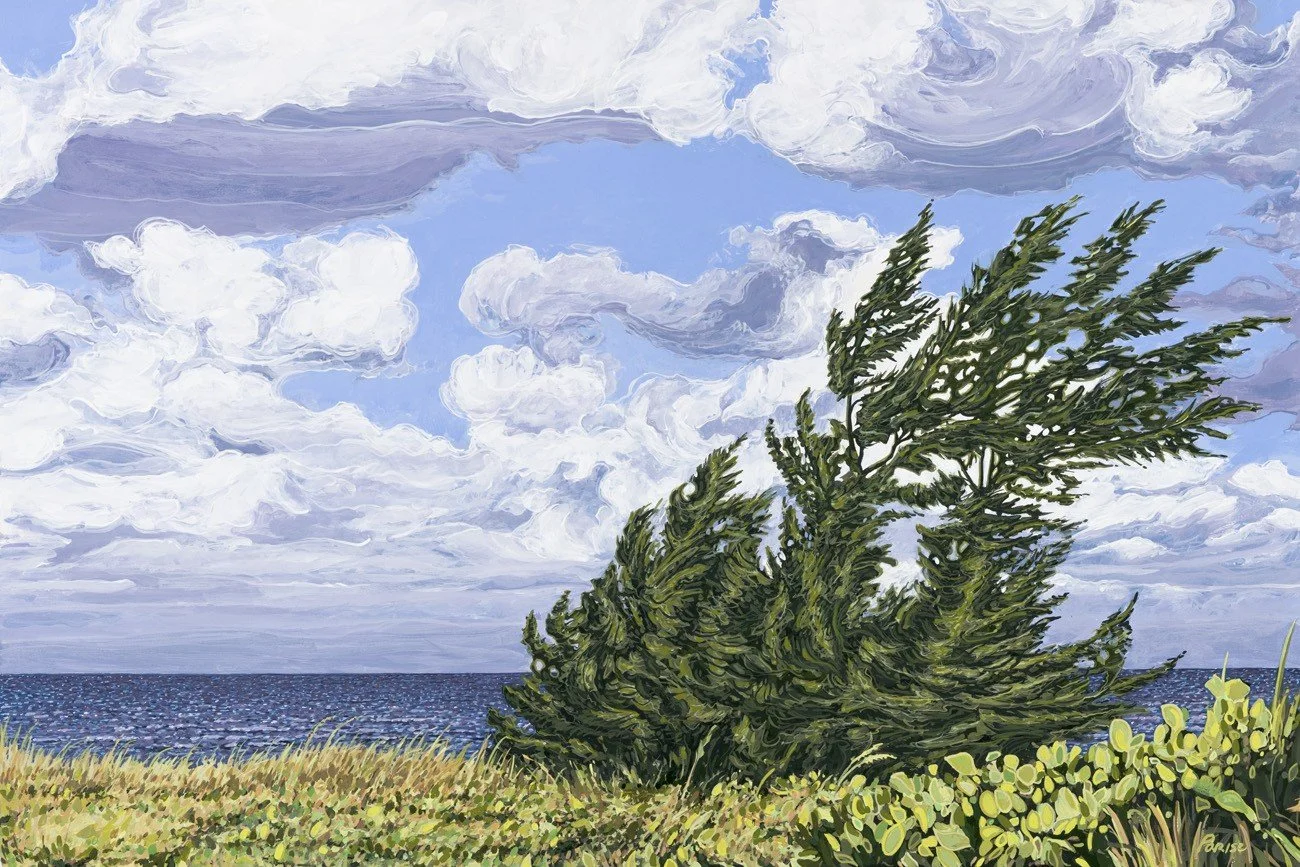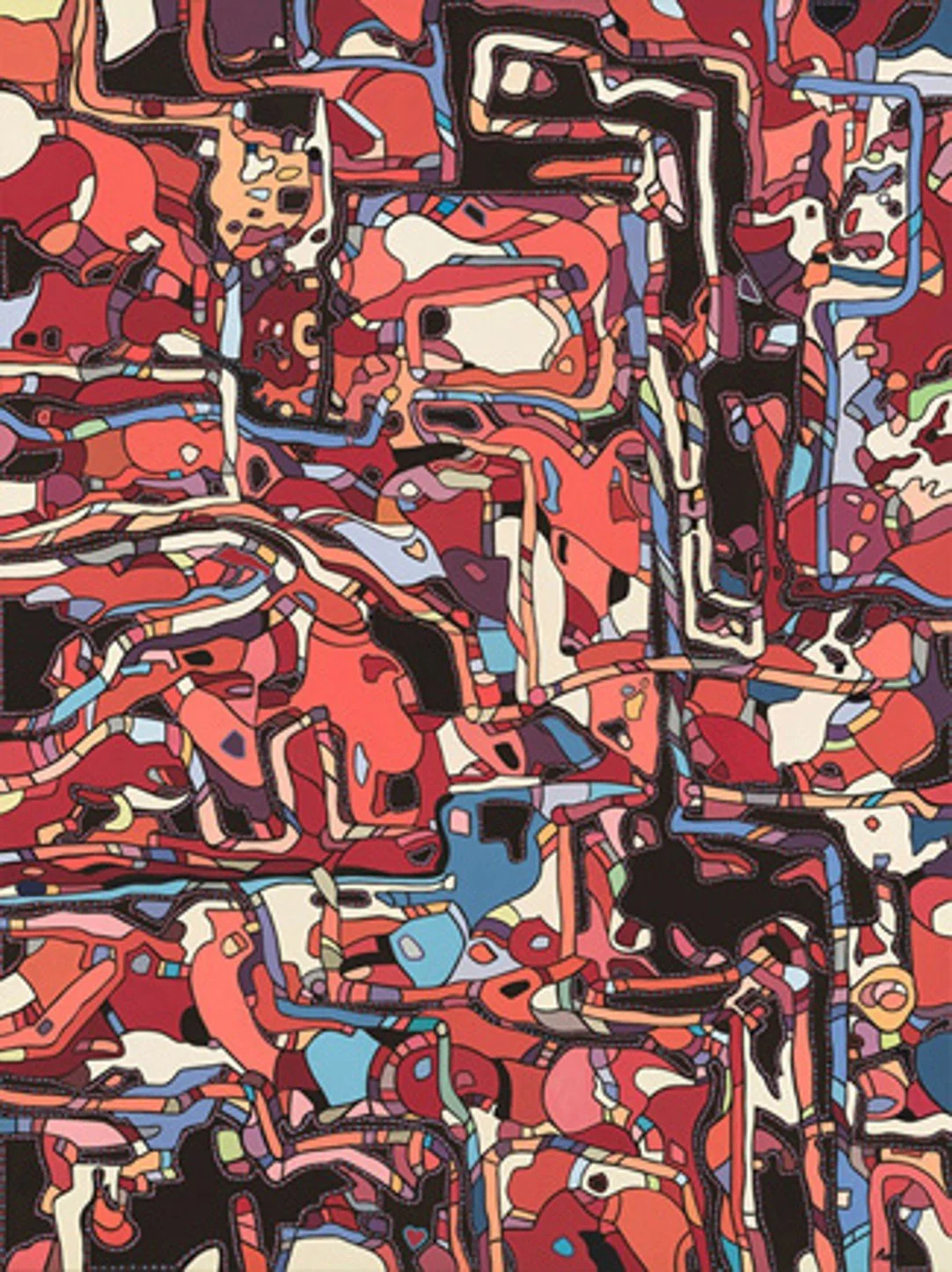
FROM THE PRINT ISSUE - PART TWO IN OUR SERIES ON KOGER CENTER PROJECT WINNING ARTISTS featuring COLLEEN CANNON-CARLOS

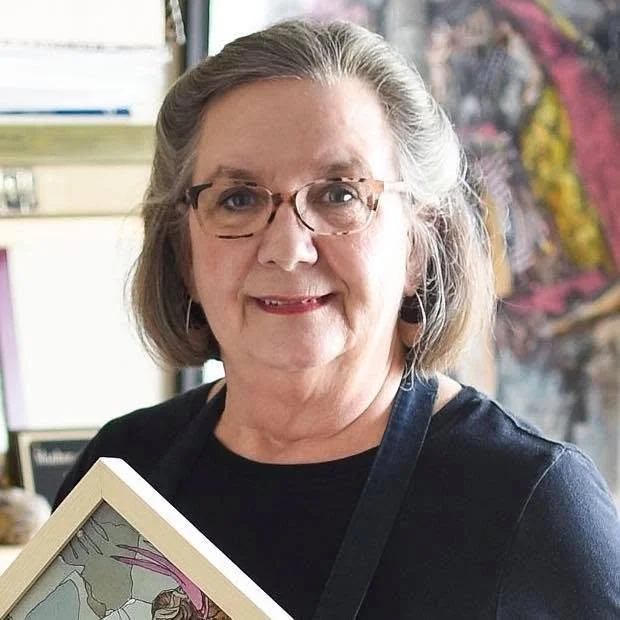
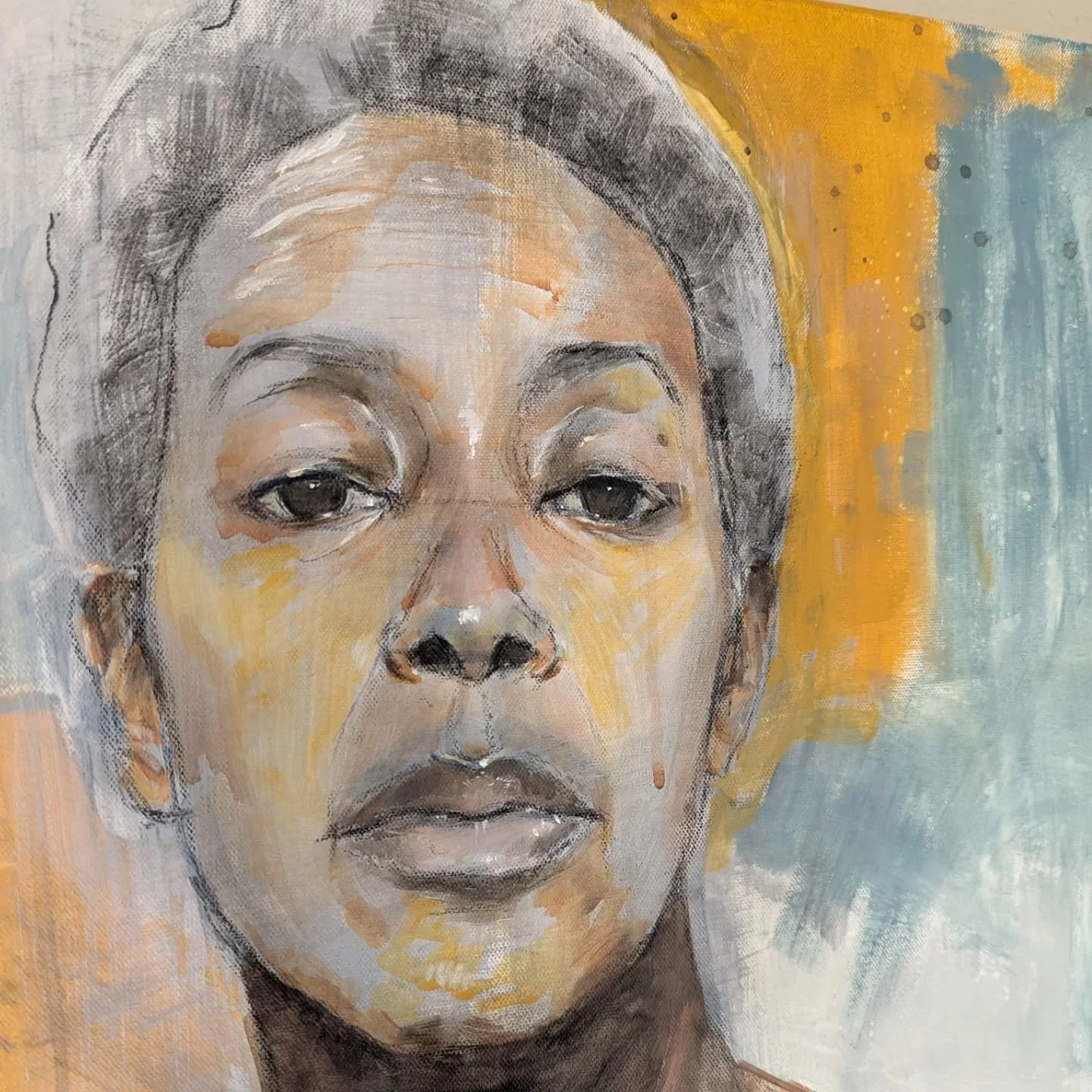
Welcome to the second article in our series on the Koger Center Project’s Winning Artists. You can get the background on this series in yesterday’s article on Kate Timbes, and learn more about the project and the other winners from an earlier Jasper Online post. Today we’re featuring Colleen Cannon-Karlos and sharing the article by Emily Moffitt that appears in the spring issue of Jasper Magazine!

~~~

Colleen Cannon-Karlos:

Left Brain, Right Brain – One Artist 

By Emily Moffitt

Photography by Perry McLeod


The intersection of art and science is sometimes explored only in name, particularly in academic settings. However, for Colleen Cannon-Karlos, the two fields are inextricably intertwined both in her art and her personhood.

Cannon-Karlos' upbringing took her across the country to both coasts—born in Los Angeles to native New Yorker parents, she ended up moving to New York after her parents divorced. During her school years, she excelled in all subjects, participating in gifted student programs and having a strong handle on both sides of her brain. The left brain seemed to dictate her path slightly more as she had not considered being an artist when she was younger. She still enjoyed creative endeavors, however. According to Cannon-Karlos, “I never had a formal art class growing up in school, and the gifted programs in the Bronx that I participated in had music as the cultural enrichment.” This did not stop Cannon-Karlos from pursuing artistic hobbies at home as her mother taught her how to knit, sew, and crochet. At home, she made her own art projects that combined her budding fiber arts skills with recycled materials like popsicle sticks and old fabrics. This resourcefulness has resurfaced years later in the Cannon-Karlos work we see today.

Even as the designated artist of the family, Cannon-Karlos still initially enrolled in schooling oriented toward a career in math or science. “I went to the Bronx High School of Science and had an affinity for math and physics,” says Cannon-Karlos. “There was a drafting class available if anyone wanted to be an architect or engineer, … I absolutely loved taking it. The precision, tools, and learning how to transfer schematic drawings into three-dimensions—I use these skills in my work today all the time.”

Precision is the key to much of Cannon-Karlos' artistic practices today. She developed these tools even further when she studied at Stanford University and worked in the physics lab. Her curriculum was strenuous and extremely scientific, but she always had art in the back of her mind. While in college at Stanford, the artist’s aunt asked her to make some art for her. This became an “a-ha” moment for Cannon-Karlos, whose time spent in the lab, identifying subatomic particles of smashed atoms, did not leave much time for creative hobbies. “I rediscovered my love for making stuff, using materials as simple as magic markers,” she remembers. It was time for her to find her path not only as someone with a knack for science, but also as an artist.

Cannon-Karlos decided to take a gap year from her Stanford studies and moved back to New York City to, hopefully, establish a career as an artist. She spent her days teaching herself how to paint, exploring museums and creative communities, and communing with playwrights, artists, and musicians. “This was during the 70s, so a lot of the community’s creative endeavors coalesced with different sociopolitical movements of the era,” Cannon-Karlos says. “There was this explosion of creative, dynamic energy that was so immersive and different from today.”

Working on her art career paid off early as she had her first gallery representation when she was 19-years-old. She began dabbling in photography and even convinced the staff photographer at the Studio Museum of Harlem to let her work with him in the darkroom. After spending the year building her portfolios in a variety of media, drawing, painting, and photography, she went back to Stanford and switched her major from sociology to art with a concentration in photography.

 She flourished in the field while also continuing to experiment with other media. The inquisitive Cannon-Karlos always had a knack for trying and learning something new and says that “some artists do the same thing for decades, but it is my nature to explore.” In her twenties, she began to bring back her fiber arts skills to simultaneously turn a profit and make some serious work; she was introduced to fabric design by her former husband, a fellow artist. She began to sell her handmade fabrics and clothing in flea markets, then boutiques and stores in New York. Eventually, Cannon-Karlos took the lessons she had learned practicing her art and began to apply them to something new: academia.

Throughout her career, Cannon-Karlos has instructed students of all ages, from elementary school through college. Since her methods of problem-solving combine both artistic and scientific approaches, she uses this thought process to her advantage in the classroom. She teaches her students that they may have analytic tools but they still need to be able to think outside the box.

The artist has also created curricula based around projects in which students can learn scientific concepts by making art. In Durham, NC, for example, she worked with the local art council and taught classes to elementary schoolers in which they studied ocean science through technical concepts but also had opportunities to create sculptures like jellyfish and tube worms with plastic bags, paper tubes, and other recycled materials that can, unfortunately, easily be found in oceans and bodies of water.

While she lived in Hawaii, she created curricula that truly captured the intersection of her interests. “I was finally able to make a proposal for an Art, Science, and Technology Class that collaborated with the marine science department,” says Cannon-Karlos. “We had a mix of art and science majors in the class, and we were allowed to use lab equipment, including their scanning electron microscopes. This allowed us to see the intricacies of the designs of a particular specimen at a microscopic level and beyond.” The designs found on the plates were only black and white, so the students would then learn how to use Photoshop to add color to their discoveries. While this was an art project in essence, Cannon-Karlos made sure that all students flexed both sides of their brains and wrote explanations of each step of their project, including why they dissected the image in a particular way, how they manipulated the image, and what they learned from the experience. The science-minded students loved the opportunity to express their inner creativity, and the arts students jumped at the opportunity to exhibit their talents on an academic level.

Thess lessons were among the many ways that Cannon-Karlos exhibited her proficiency in seeing things beyond the material plane and comprehending, on a deeper level, the use of an object or material for something completely different. Using recycled materials for creating artwork started in her childhood, and it has manifested contemporaneously as her preferred medium.

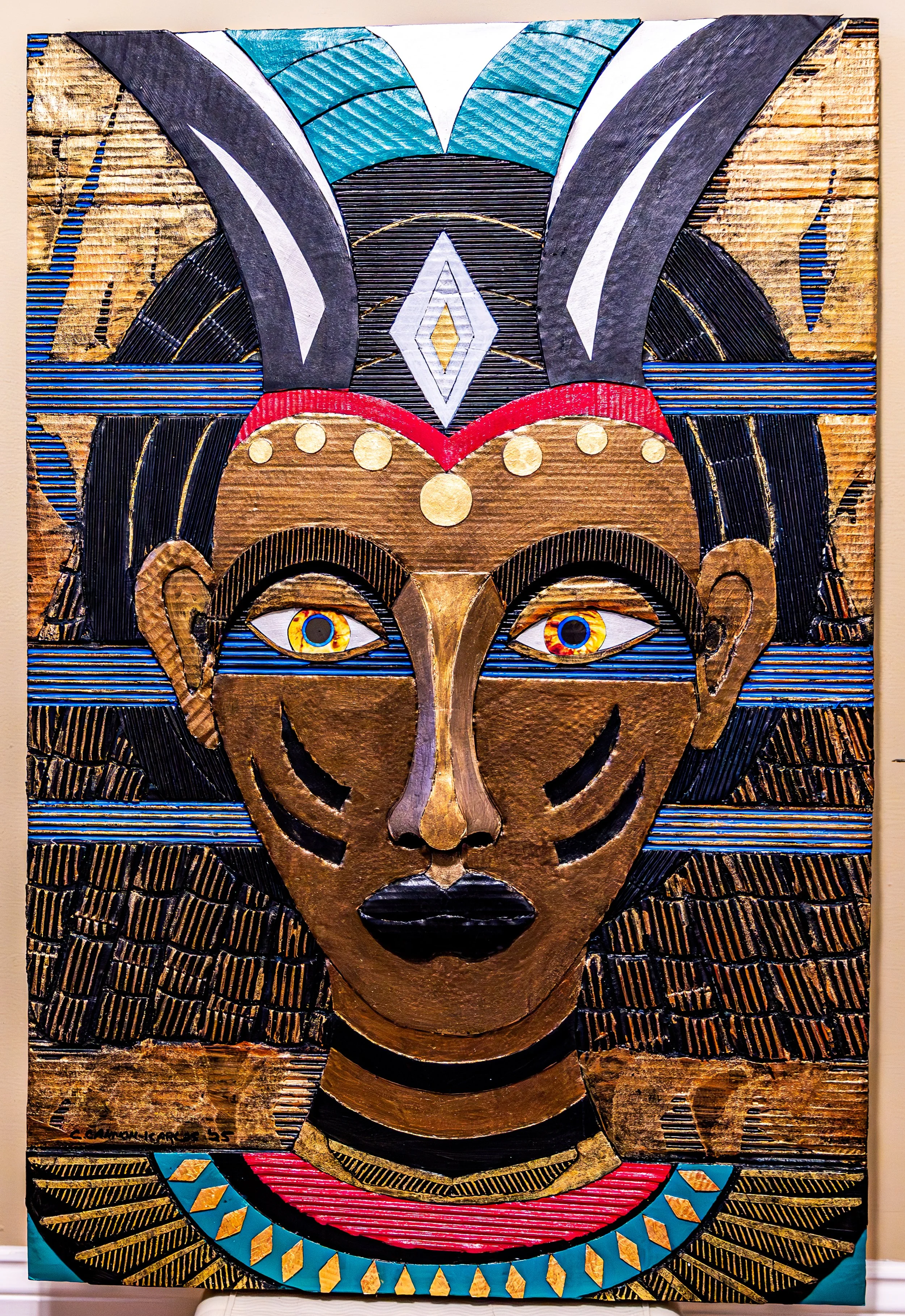
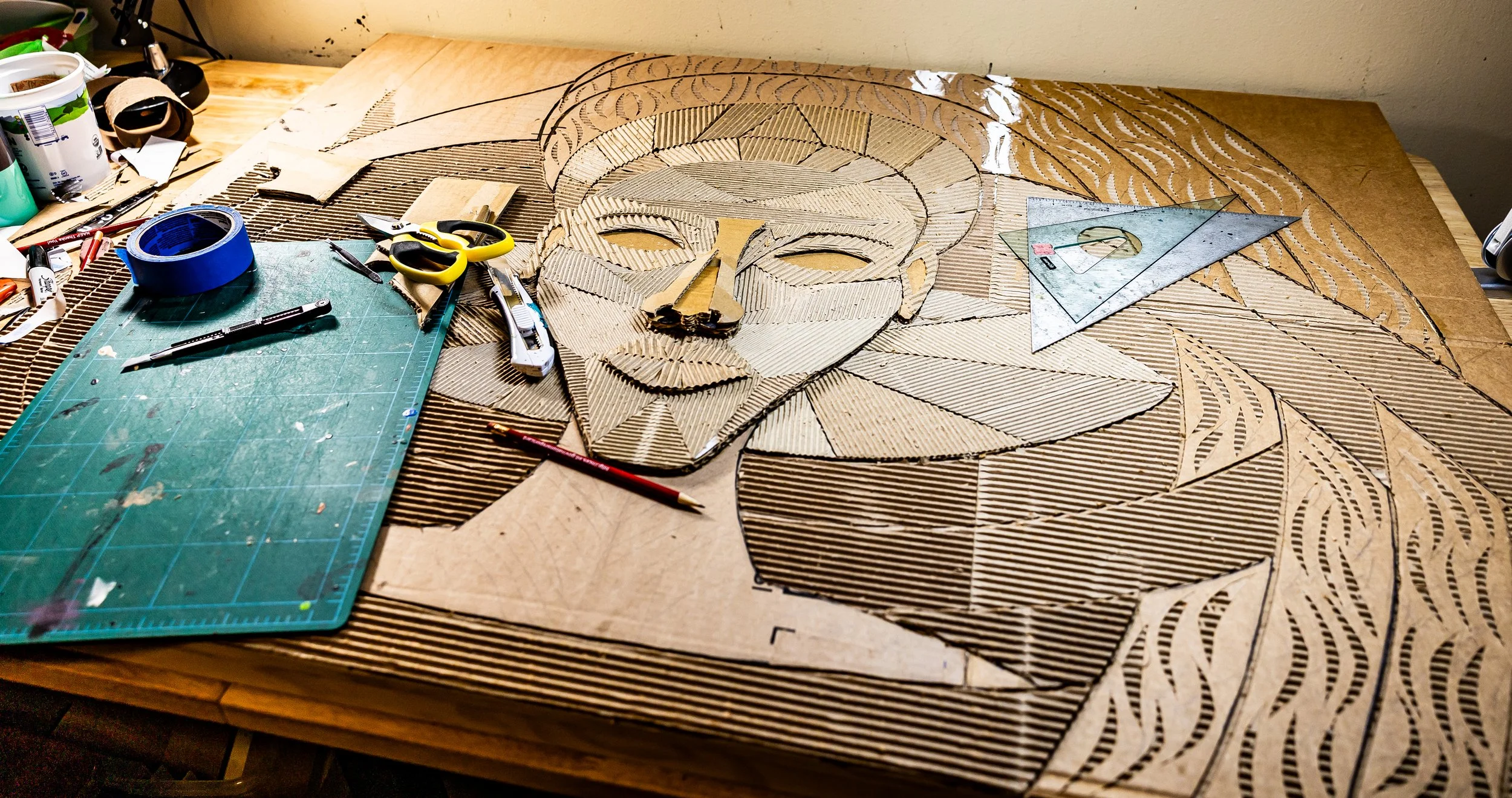
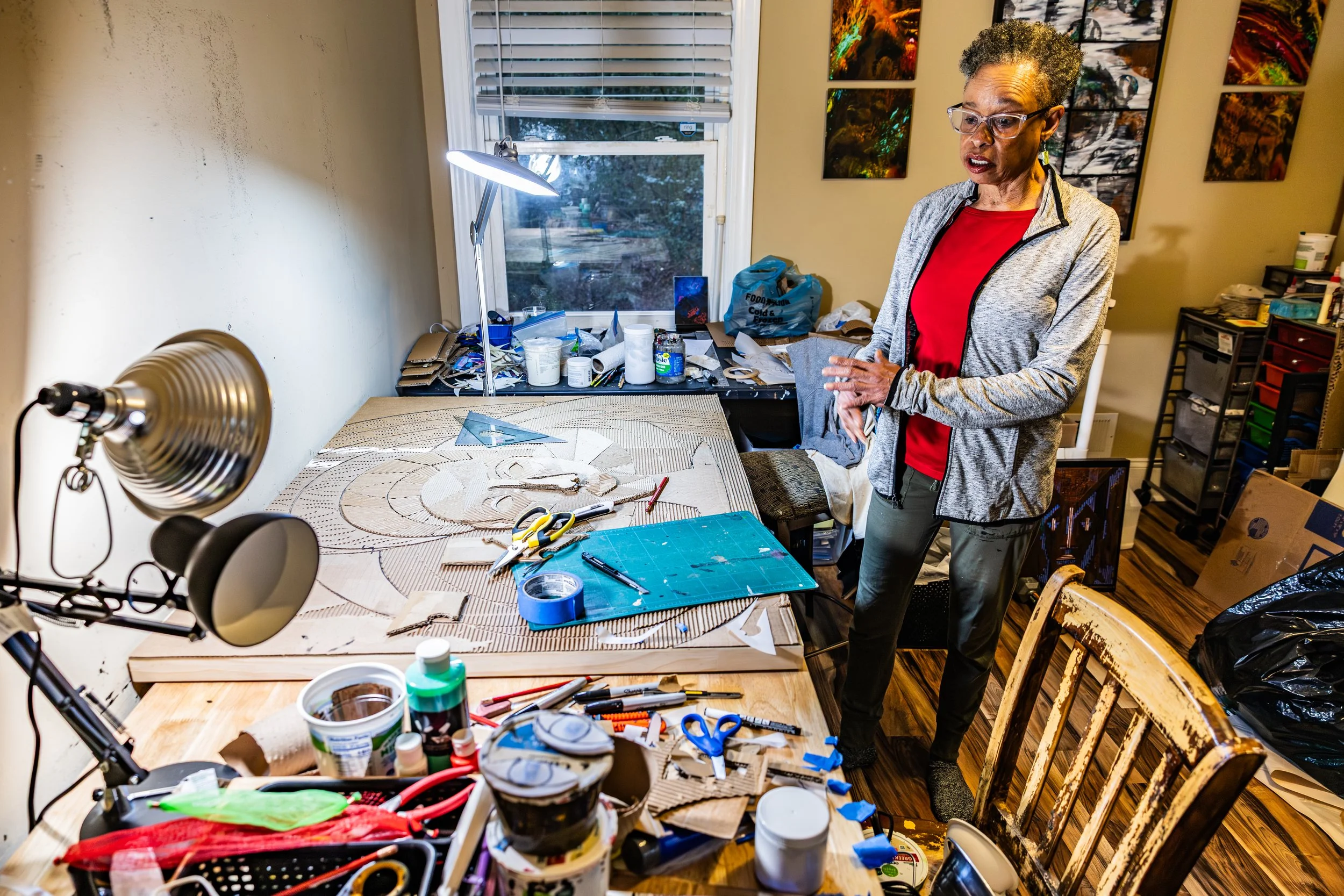
Piles of cardboard boxes inevitably piled up across Cannon-Karlos' cross-country moves. After collecting so many, but not wanting to throw them in the waste, she decided to express her resourcefulness by stripping, cutting, and tearing the boxes apart. “Being a science aficionado, I like to experiment with my materials and am always in that mindset of play,” says Cannon-Karlos. “I realized I could make some imagery with these strips.”

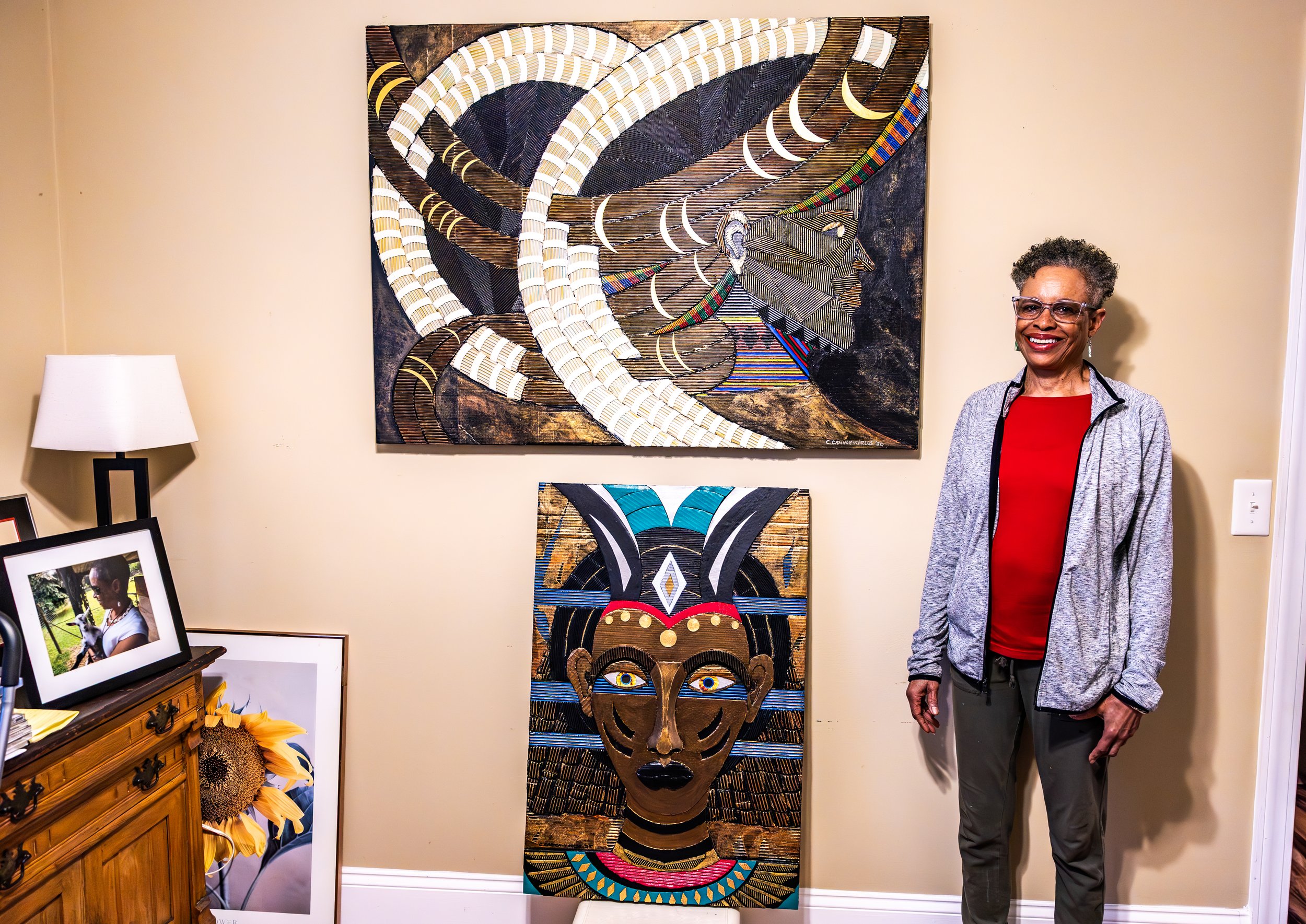
Cannon-Karlos had started to experiment with cardboard in 2019, but it was not until after the pandemic and a final move to Columbia that she seriously started to create with it. The cardboard allows Cannon-Karlos to work as a scientist again, finding ways to challenge herself and test new hypotheses regarding how she can use the cardboard and adapt the surface to do different things. One such test of skill was born out of observing sweetgrass basket weaving. “When I saw the weavers … I asked myself if I could simulate the weaving process with the corrugated cardboard.” This process also made Cannon-Karlos reflect on the resourcefulness of African artists, especially with recycled materials of their own. Her work is a constant conversation between culture and science, always looking to explore what that conversation could look like on a surface with one of the most accessible materials available. “A lot of recycled materials are brought over and dumped into Africa,” notes Cannon-Karlos. “The artists are very resourceful; they can go to the dump and pull fabrics, electronics, and other trash then turn it into the most amazing work. I am very inspired by people who look at things differently and turn them into something new.”

Like many other artists, Cannon-Karlos' career path did not follow a straight trajectory. The moves, twists, and turns provided great opportunities at each bend, but nothing necessarily consistent. “If I followed my trajectory out of grad school in the 90s, I may have become more prominent in the art world,” says Cannon-Karlos. “I have had to put my career aside working as a single parent. It is hard to be an artist when you are taking care of a family.” While working in Hawaii, she had first-hand experience with the exorbitant costs of shipping artwork, and the transience of teaching positions in higher education. Her trips across the country, while pursuing her dreams, created different bumps along the road. But when asked if she had the chance to do everything all over again, Cannon-Karlos admits that she may not change anything at all. Her life experiences and her way of approaching art, as both an academic and a creative, are what make her portfolios so alluring, with viewers waiting with anticipation to see what she’ll create next.

Thursday Night at the Koger Center Brings You the Opening of Ginny Merritt's Exhibition, the Opening of the Koger Center Project Winners' Exhibition & the Closing of the Late Laura Spong's Show

Artist - Ginny Merritt

When we first saw the work of Ginny Merritt years ago at a Contemporaries exhibition at the CMA, we knew she had something special. That’s why Jasper awarded her the Best in Show prize (2018) and wrote a feature on her in the next issue of Jasper Magazine. In the years since, it’s been such a trip to watch this retired art educator pour herself into her own art, after decades of nurturing the art in her students, and grow and grow and grow.

That’s why we’re excited to welcome Merritt back to the Jasper Nook Gallery at the Koger Center this Thursday night from 5:30 - 7pm.

And we’re even more excited to invite you to her opening reception which will coincide with the Closing Reception for the Koger Center’s beautiful exhibition of the late Laura Spong’s work, as well as their Opening Reception for The Koger Center Project Winners’ Exhibitionall three happening at the same time!


About Ginny Merritt

Ginny Merritt was raised in Denver and settled in South Carolina in 1987. She graduated from the University of Georgie and has two master’s degrees from USC. She studied art education and taught art in public schools for 30 years, also teaching as an adjunct instructor at USC.

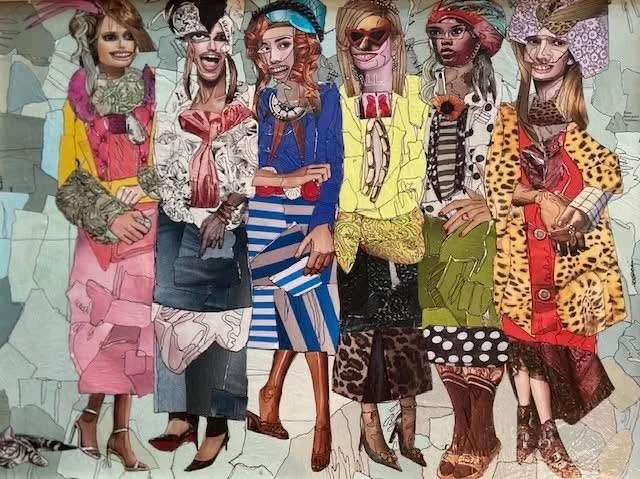
Her work is centered on mixed media collages inspired by the stylish women from her grandmother’s day which she recreates using vintage and contemporary papers. She has mounted exhibitions of her work all over town as well as  in Charleston, Lake City, Augusta, Brooklyn, NY, and a solo show at the Etherredge Center Gallery at USC Aiken, SC. Merrett published her book Tall Women in 2024, which offered a collection of ekphrastic poetry based on her art.

Ginny Merritt


About Laura Spong

Laura Spong (1926-2018) is remembered as one of SC’s leading Abstract Expressionist artists. Originally from Nashville, where she graduated cum laude from Vanderbilt University, Spong took her first drawing classes in 1948 before moving to Columbia, SC and studying under Gil Petroff among others. Spong was a favorite of the late Wim Roefs and Eileen Waddell of the former If Art Gallery, Waddell wrote of the artist, “Laura was a genteel Southern woman with a Tennessee accent whose ‘Coming Out’ party as an artist was on her 80th birthday.” Spong died at the age of 92, painting until the end of her days.


About the Koger Center Project Winners’ Exhibition

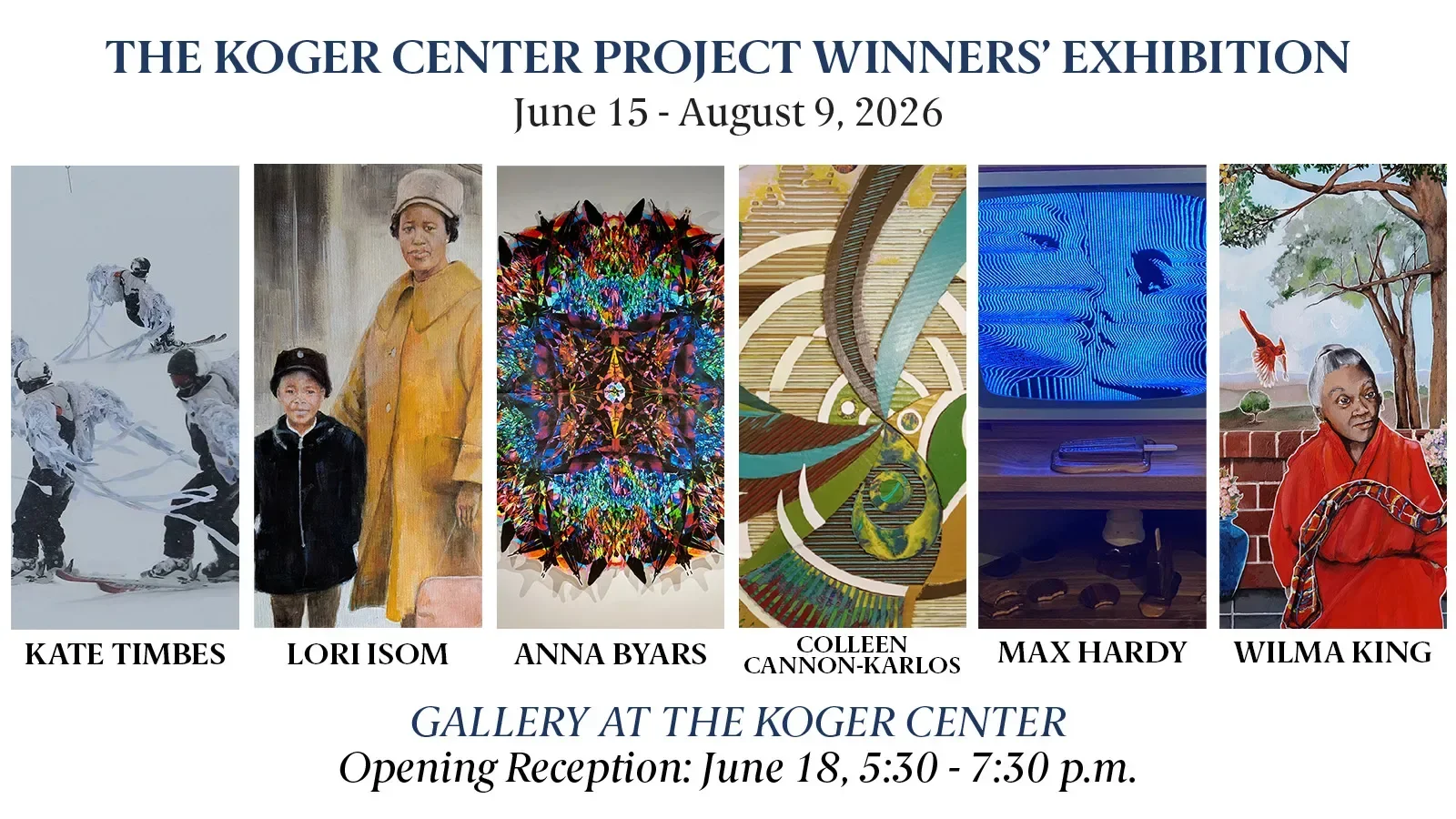
The Koger Center Project Winners’ Exhibition is a group exhibition in the Gallery at the Koger Center. The exhibit features the winning artists from their 2025 call for art sponsored by the Koger Center: Kate Timbes, Lori Isom, Anna Schumann Byars, Colleen Cannon-Karlos, Max Hardy, and Wilma King.

This opening reception coincides with Third Thursday Art Night featuring Ginny Merett.

About the Winners

Kate Timbes (1st Place) is a South Carolina based interdisciplinary artist whose work investigates the narrative and functions of materiality.  Working primarily in painting, video, and sculpture, she weaves mediums together, carrying objects, paintings, seeds, weavings, and sculptural handmade paper through physical, emotional, and digital landscapes. Timbes contemplates sourcing of resources, rethinking use as an individual effort to engage in a curious ecological practice. Timbes has exhibited her work nationally and internationally, with recent exhibitions at the Richardson Family Art Gallery, Greenville-Spartanburg Airport, the Spartanburg Public Library, and the DIS Student Hub in Copenhagen, Denmark. In addition to her studio practice, Timbes teaches papermaking workshops that have been supported by the Tri-State Sculptors Association and Wofford College. Timbes received her BA in Studio Art from Wofford College in 2023. (Read more about Kate Timbes in the current issue of Jasper Magazine, on newsstands now.)

Lori Isom (2nd Place) Artist Statement: It is fair to say that my life has been quite varied as an artist, and all around creative person. Years of my life were dedicated to working as a professional dancer, singer and actress in New York and Los Angeles, and I’ve had several interesting and fun entrepreneurial pursuits along the way, including owning and operating my own baking business! I am predominantly a self-taught artist, however, I studied illustration in high school, and later fine art and fashion design at Parsons School of Design. I would say that I walk the line between illustrator and fine artist. While I work to tell a story with my art, I also produce paintings that primarily express a particular emotion. Artists like Mary Cassatt, Andrew Wyeth, and John Singer Sargent were ones who greatly influenced my work early on. I suppose that’s how I came to love capturing people.

Anna Byars (Honorable Mention) is an artist based in Columbia, South Carolina. Anna grew up in Lexington, South Carolina, and received a BA in Studio Art and Art History at the College of Charleston. Her work has been shown in exhibitions at the Southern Graphics Conference, Sawtooth Visual Arts Gallery, and the Halsey Institute of Contemporary Art. Anna primarily focuses in printmaking and is currently exploring the idea of transcendence within her work.

Colleen Cannon-Karlos (Honorable Mention) was born in Los Angeles, raised in New York City, and currently resides in Columbia, SC after living in Hawaii for 20 years. Over the years she has worked in a variety of mediums including painting, drawing, photography and ceramics. Conceptually her work is based on quantum physics and ancient metaphysics exploring the illusive abstract nature of reality. Inspiration for her work includes indigenous African, Native American, Asian and Polynesian art forms. (Read more about Colleen Cannon-Karlos in the current issue of Jasper Magazine, on newsstands now.)

Max Hardy (Honorable Mention) Artist Statement: I’ve always loved to draw and paint and make things and have done so since I can remember. When I was in high school I took a few art classes but other than that I’m self- taught. Lately my paintings have been sculptural and deal with illusion in some way. My process is quite slow with visual art; I only produce a handful of pieces a year.

Wilma King (Honorable Mention) endeavors to combine her experiences of living in 11 states (including Alaska) with her educational background into a visual storytelling collaboration through her painting. Her pursuit and passion goes beyond a daily practice of technique and development. She believes that universality — seeking common ground — is what makes art purposeful. She taught public relations, communication studies, advertising design, publication design, and photography for more than 30 years in American universities in Kentucky, Tennessee, New York, Virginia, Texas, and South Carolina, and taught Study abroad courses in Italy several years. She was an associate professor of Public Relations at both Western Kentucky University (Bowling Green, KY) and Rochester Institute of Technology (Henrietta, NY), and served on faculty at Benedict College (Columbia,  SC), where she wrote the curriculum for, and taught the first courses in the college’s now defunct commercial art program; O’More College of Design (Franklin, TN); Texas Southern University (Houston, TX); The Art Institute of Houston (Houston, TX). (Read more about Wilma King in the Fall 2022 issue of Jasper Magazine.)

Art Reception Double Feature with the Jasper Project and the Koger Center

By Emily Moffitt, Visual Arts Editor, Jasper Magazine

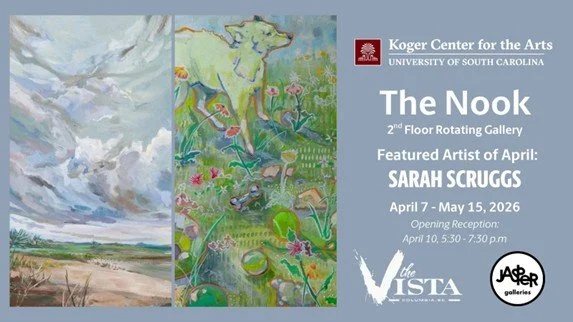
The Koger Center for the Arts is excited to bring its patrons two new art exhibits in its second-floor gallery spaces: the Gallery at the Koger Center and The Nook, the latter of which is presented by the Jasper Project.

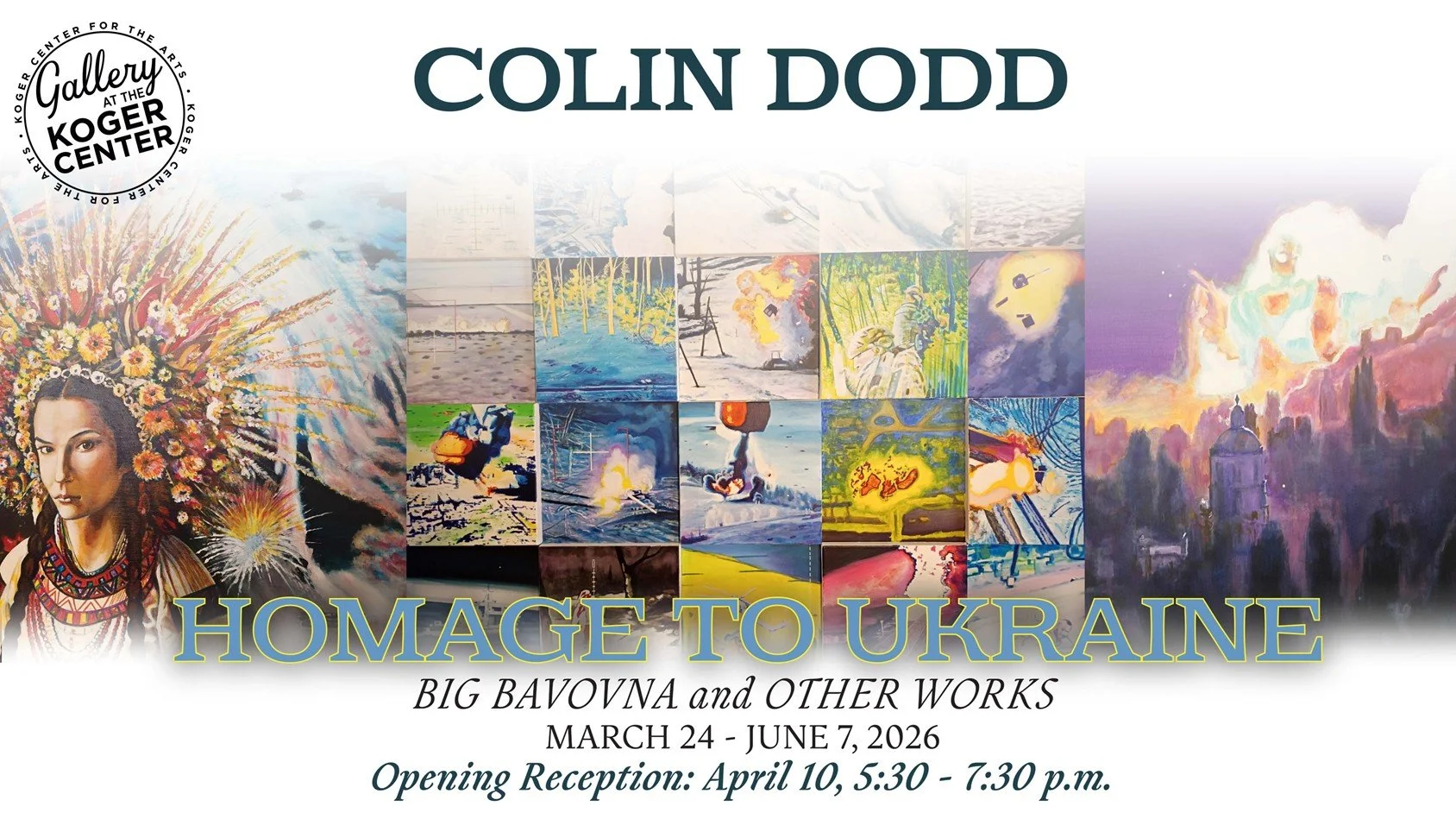
On April 10, join the Koger Center in celebrating Colin Dodd and Sarah Scruggs for their new art exhibits! There will be a joint opening reception for the two shows that evening from 5:30 – 7:30 p.m. The event is free and open to the public, and complimentary wine and light fare will be available.

Sarah Scruggs is the newest artist to take up residence in the Nook at the Koger Center. Sarah is a South Carolinian painter focusing on oil and watercolor. Her alla prima style is relaxed and playful, with attention to color. Most always, her paintings are a celebration of storms, the ever-changing clouds, flora, and fauna. Many of her materials are hand ground pigments collected from local areas in the pursuit of play. She has sold/exhibited her work at multiple art fairs like Cottontown Art Crawl and the Brandywine Festival in Harrodsburg, KY. Her work will be on display through early May.

Colin Dodd is exhibiting a new body of work in the Gallery at the Koger Center, titled Homage to Ukraine: Big Bavovna and Other Works. The exhibit began on March 24 and is on display through June 7, 2026. Colin Dodd was born in Northumberland and grew up in Newcastle upon Tyne. As a young teenager his interest in art began to develop and he decided to go to art college as soon as he finished high school. He first attended Leicester Polytechnic and then Trent Polytechnic in Nottingham, where he completed an undergraduate degree in fine art. After two visits to the U.S. he moved permanently in 1980. He attended the University of South Carolina and completed a graduate degree in 1984. In the same year, he began teaching at Midlands Tech as an adjunct instructor. This position eventually became full time and he taught classes in drawing, painting, art history, and Film as Art until his retirement in 2018.

Homage to Ukraine Artist Statement:

It’s the artist’s duty to reflect the times in which we live.” – Nina Simone.

This quote struck a chord with me, especially due to personal circumstances. Russia invaded Ukraine on February 24th, 2022, and by coincidence that was the day I had open heart surgery, following a heart attack on February 22nd! I watched the footage on CNN of Russian tanks firing on civilian targets from my hospital bed. I have since followed the war on an almost daily basis, strongly identifying with the cause of the Ukrainian people, and seeing in them a nation standing alone against a tyrant just as Britain did against Hitler’s Germany at the outset of World War II.  Ukraine has managed to survive, against all the odds, for four years.

The imagery from FPV drone footage I found strangely alluring and fascinating, even beautiful, although the results and intended consequences were destruction and death. This dichotomy is what led me to start painting images based on often distorted and grainy images, abstracted to a degree, by the process of recording and transmission. This resulted in a twenty-panel work resembling a bank of monitors, titled Homage to Ukraine: Big Bavovna.   In addition, a triptych dedicated to Ukraine consists of a portrait of a young Ukrainian woman wearing a traditional flower crown, titled Flower of Ukraine.  An image of trench warfare reminiscent of images from the First World War and I borrowed the title We Are Making a New World from Paul Nash who was an official war artist in both world wars. Lastly, an image derived from a video taken in 2023 in the Donetsk region, of a Russian ammo dump explosion, which became known as, Ammo Dump Jesus.

As the war has progressed it seems like it has been largely forgotten about by the news cycle which moves on unrelentingly, but the struggle and the suffering continues for the Ukrainian people.

For more information about the visual arts at the Koger Center, inquiries can be directed to kogercenter@sc.edu. The gallery spaces are available for public viewing Monday-Friday, 9 am – 5 pm, and an hour before any performance in the center.