Columbia Classical Ballet Takes the Stage and Tells Us All About the Actual Dancers Who Will Make this Performance Possible!

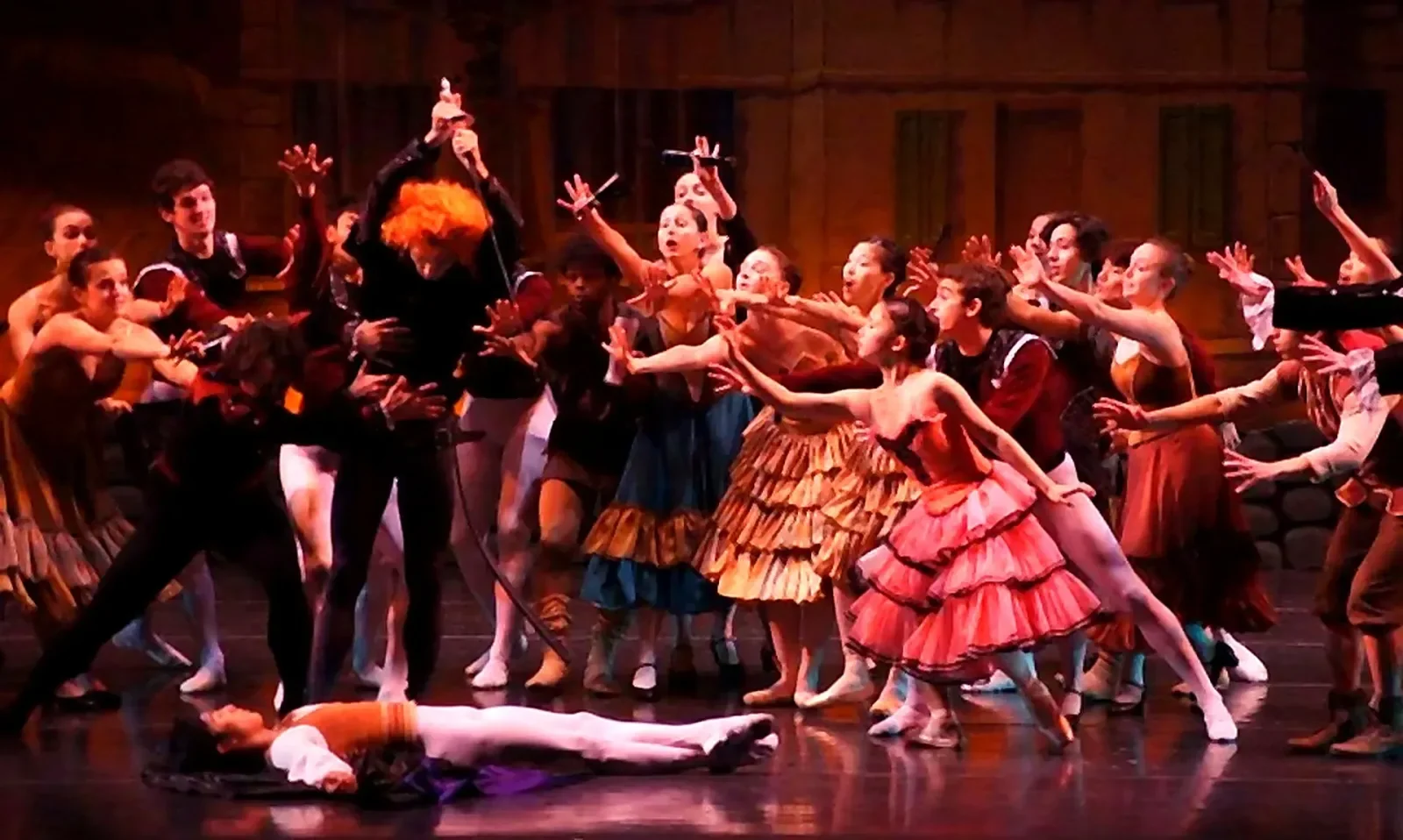
What a delight it was this morning to receive the contents of the newsletter below from Joseph Phillips, artistic director of Columbia Classical Ballet. In it he shares news of the upcoming production of Don Quixote at Koger Center for the Arts, gives us some background to make it more meaningful, and—most surprisingly from a Columbia-based ballet company—he gives credit where credit is due.

He writes about the dancers!

How refreshing to have an arts admin sing the praises of the artists he reles on to bring his production to life.

Kudos to Joseph Phillips and Columbia Classical Ballet for recognizing the ARTISTS performing rather than making the performance all about himself! And look for our article on Columbia Classical Ballet in the Fall 2026 issue of Jasper Magazine, releasing on Sunday November 8th with a 15th Anniversary Party at the Art Bar!

Here’s what Phillips wrote:

Hi everyone,

Columbia Classical Ballet dances Don Quixote three times this week at the Koger Center, October 1 and 2. Thursday and Friday mornings at 10, for schoolchildren from across the Midlands, with Lawrence Ogina and Johanna Yatco as Basilio and Kitri. Friday night at 7:30, with Lisa Kamiya and Luke Slavich as Kitri and Basilio.

Lawrence is in his fourth season with this company and a Principal Artist this year. Johanna joined us this season. I was one of her teachers in the Philippines, years ago, when I was directing there.

Sergei Zolotarev, our rehearsal director, set this ballet on the company in four weeks. He comes from the Mariinsky Theatre, where he rehearsed Don Quixote, and ours comes down from that staging. The company has been in the studio since the first of September, at the barre at 9:30, behind the glass at 610 Harden. Yuleanne Santos, Lawrence Ogina, Johanna Yatco, Zola Weinberg, Jolie Alonso, Dylan Tobias, Lindan Shivar, Amy Brooks, Bonnie Spafford, Catherine Sistrunk, Karina Zolotareva, Mollie Berk, and Eliza Blackwell. They came from Brazil, Kenya, the Philippines, Russia, Ukraine, New York, and South Carolina. Eduardo Ramirez, Kiyomi Mercadante Ramirez, Leonardo Victorino, and Christina Duffy are dancing with us, along with five dancers from the University of South Carolina and students of the School of Columbia Classical Ballet.

For Friday night, I called Edward Ellison in New York and asked for two dancers. He sent Lisa Kamiya and Luke Slavich. They landed in Columbia on September 17 and were in our studio by eleven. They didn't bring their own Don Quixote. They learned ours, in the studio with the company. For these two weeks they're Columbia Classical Ballet.

Valeri Salnikov is dancing the Don. When I was a boy, I took class in his studio, down the same street, here in Five Points, and he coached me in one of the first Don Quixotes I ever danced. The sets are his too. He designed the backdrops and painted them himself. Look closely at the tavern scene. There's a toreador painted up at the top. The face is his.

Pat Moran's story on the company is in Wednesday's Post and Courier. Irene and I were on WIS, and Sergei and Mollie Berk were on ABC Columbia.

October 1 and 2 · Koger Center for the Arts

Thursday, October 110:00 am · school performance

Friday, October 210:00 am · school performance

Friday, October 27:30 pm · public performance

Tickets $10 to $40 for Friday night.

The morning performances are for schoolchildren from across the Midlands.

Buy tickets

TONIGHT at The Jasper Alley at Tapp's

Jasper is Back On Main Street for First Thursday Fun! Join us from 6 - 8:30 pm in our old stomping ground at Tapp's! This month we're full or pride for our LGBTQ+ Artist Spotlight featuringJackie Bobo & Barry J. White, Josef Berliner, Tayler Simon, and Alejandro García-Lemos.

Come shop, have a drink, and hang out with us in the alley! The artists and Jasper Board members will be on site to chat about their work.

Our DJ for the evening is Ubaeby!


Ubaeby is a queer, Columbia based DJ with Filipino and Guatemalan roots. She mixes house, UKG, global club, and familiar songs with playful twists, bringing good energy wherever she plays.

Our Visual Artists

Jackie Bobo

Jackie Bobo

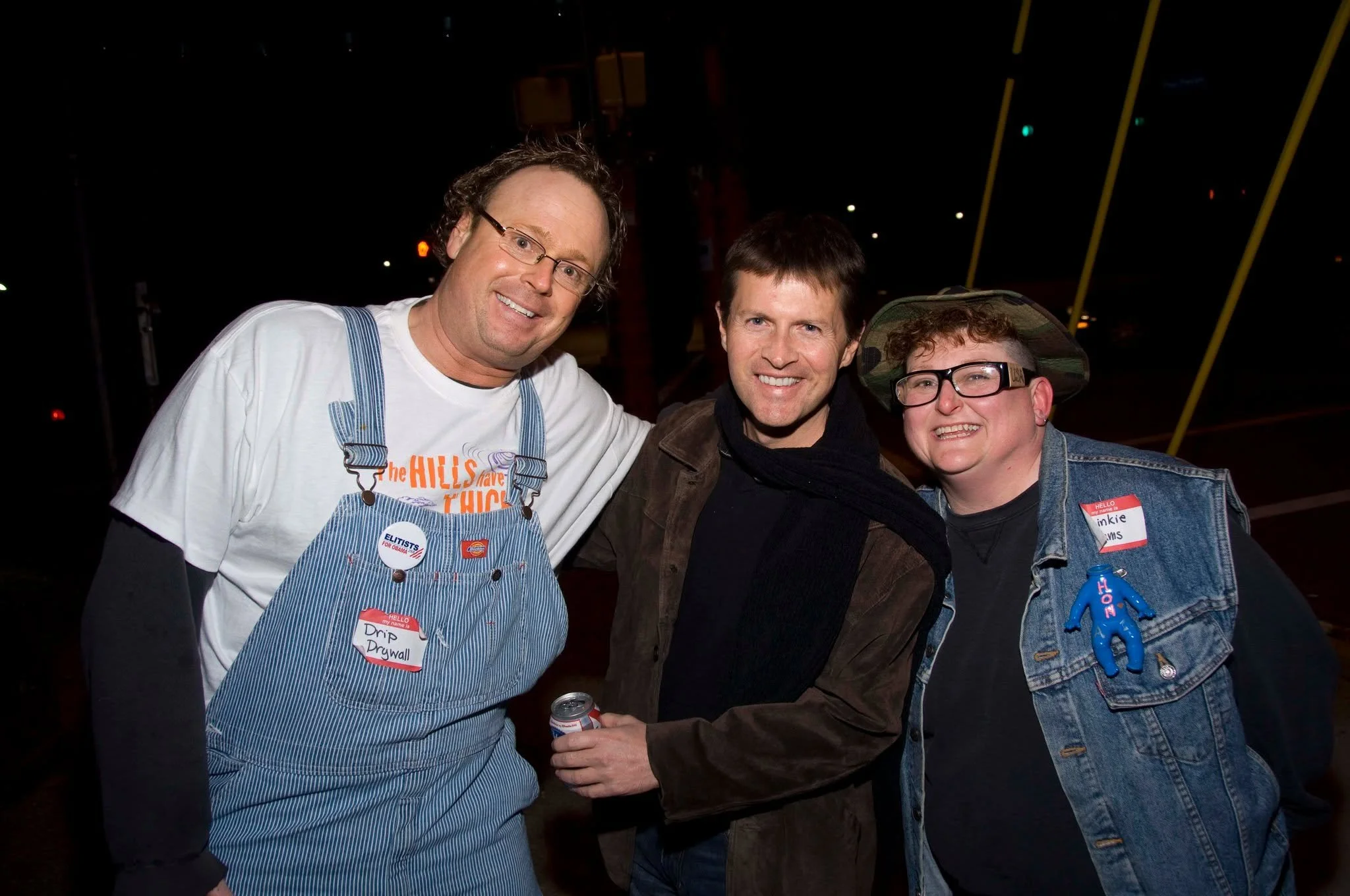
Jackie Bobo is the vibrant force behind Bobo to the Max, an art practice and brand that creates emotionally immersive art and experiences inviting people to feel deeply, express fully, and belong as their most vivid selves.

Informed by nearly a decade as a Speech-Language Pathologist—and more than three decades of living at the intersection of queerness, Blackness, and neurodivergence—Jackie approaches painting as its own language, one capable of holding nuance from the playful to the profound.

Through her signature Happy Spooky aesthetic—bright, bold colors paired with ghosts, spiders, and other whimsically macabre motifs—her work explores what it means to unmask, authentically connect, and belong. Each piece acts as a symbol of self-acceptance, affirming that belonging doesn’t mean blending in—it means revealing who you already are.

Bobo to the Max is built on invitation, not instruction—an open door to feel.

Artist - Josef Berliner

Josef Berliner

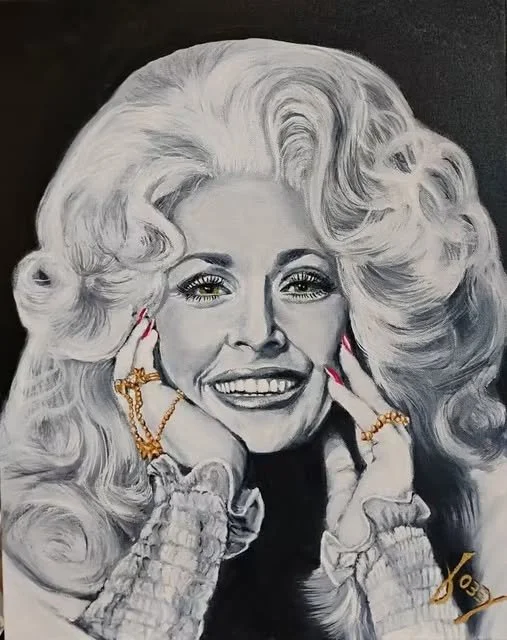
Josef Berliner's artistic identity emerged early. As a child he gravitated toward sketchpads and drawing pencils, and a supportive family nurtured that spark until his work was selected for the Scholastic Art Awards' national touring exhibition at sixteen, earning his first public showing at the Columbia Museum of Art. He studied at the University of South Carolina among instructors and classmates who remain close friends today, but an unexpected detour into DJing took hold, and he spent years as one of the Southeast's premier nightclub DJs, playing top venues and racking up awards. That chapter also brought him his husband Josh, his biggest supporter and most honest critic. As commission work picked up alongside the DJ career, Josh's encouragement helped Josef make the leap into art full time, fulfilling a lifelong dream.

Since then, Josef has exhibited widely in solo and group shows and founded Eye-Conic Art Studio. His work has appeared in community theatre lobbies, touring exhibitions, and private collections across regional, national, and international audiences, and he's contributed to organizations like Bullets and Bandaids, the Betsy Blackmon Dance Company, the Atlantic Institute, the Jasper Project, the Greater Irmo Art Guild, South Carolina Artists, and Artists for Africa, where he was a featured artist at the 2024 and 2026 Postcard Art galas. Working primarily in oil on canvas with portraiture at his core, Josef pairs technical precision with a deeper aim: revealing who his subjects truly are beneath the surface.

Artist - Alejandro Garcia-Lemos

Alejandro García-Lemos

Bio: Alejandro García-Lemos is a visual artist based in New Orleans, Louisiana and Columbia, SC. He holds a MA in Latin American Studies from Florida International University in Miami, and a BA in Graphic Design from the School of Arts at the National University in Bogotá, Colombia. His work focuses on social issues, mostly on aspects of immigration, sexuality, biculturalism, religion and community. His works has been shown mostly in the South East. Alejandro is a member of the National Association of Latino Arts and Culture (NALAC), as well as the founder of Palmetto & LUNA a non-profit organization promoting Latino Arts and Cultures in South Carolina since 2007. From 2022 to 2024 he was part of the artist collective “CAVILANTES” in Colombia, showing in Panama, México and Colombia. In July 2025 Alejandro was selected for a residency of Buihno, ArtLab in Messejana, Alentejo Portugal.

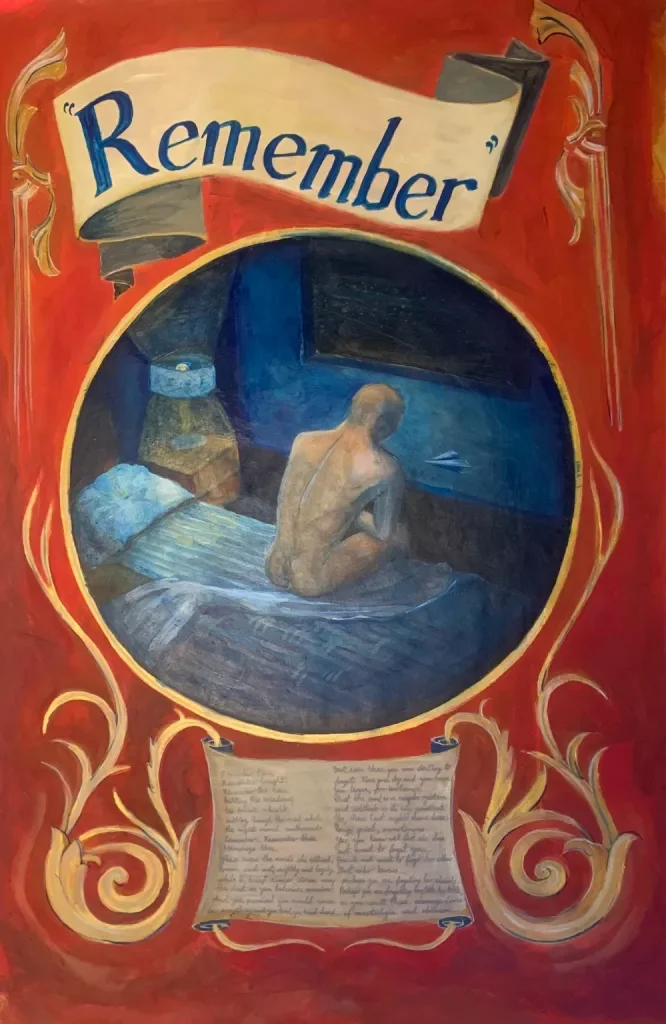
Artist Statement: I create art based on the curatorial statement or the intent of the show, which means that I use different materials and technics to convey the meaning of the exhibition. For the LGBTQ+ Pride Jasper show I decided to use some recent homo-erotic collages that I have been developing which depict images of the male nude body, highlighting the issue that men's bodies have been historically minimized, excluded or avoided in most art forms. It still persist an aspect of censorship if the male body is openly presented.

Tayler Simon

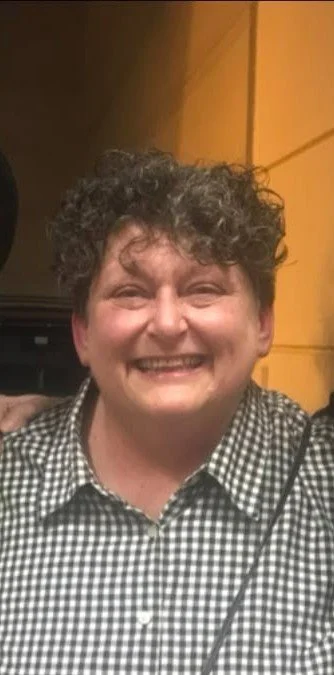
Tayler Simon (she, her) is a writer, artist, social worker, and seeker of collective liberation. She owns Liberation is Lit, a bookstore and press that sparks collective action for liberation among readers by promoting stories from intersectional experiences. Her main artistic mediums are digital collage and poetry. She has self-published four books, including her latest, Black Madonna. Through her art, she has made a commitment to radical vulnerability, curiosity, connection, and liberation.

Barry J. White

Barry J. White is a Blythewood, SC-based self-taught multi-disciplinary artist whose works center the beauty, strength, and vulnerability of Black men. Guided by intuition, personal experience, and emotion, Barry’s paintings explore themes of identity and self-acceptance through expressive realism and atmospheric color.

Barry’s work has been featured in exhibitions For the People, Crowned by the Roots, Degenerate II, and Gemini Arts, Stormwater, Roc Bottom, and Drummond studios, where it’s been recognized for its depth, honesty, and visual storytelling.

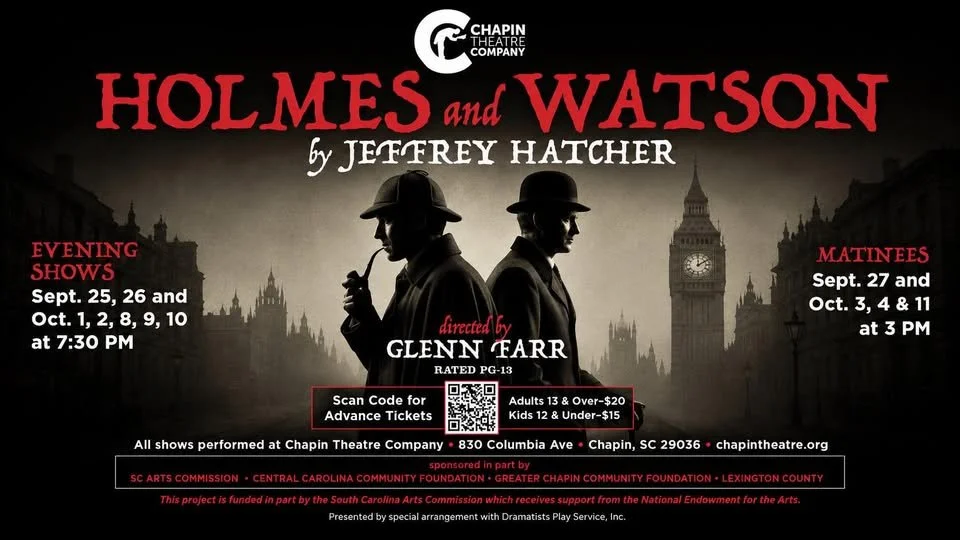
REVIEW: Chapin Theatre Company's Holmes and Watson

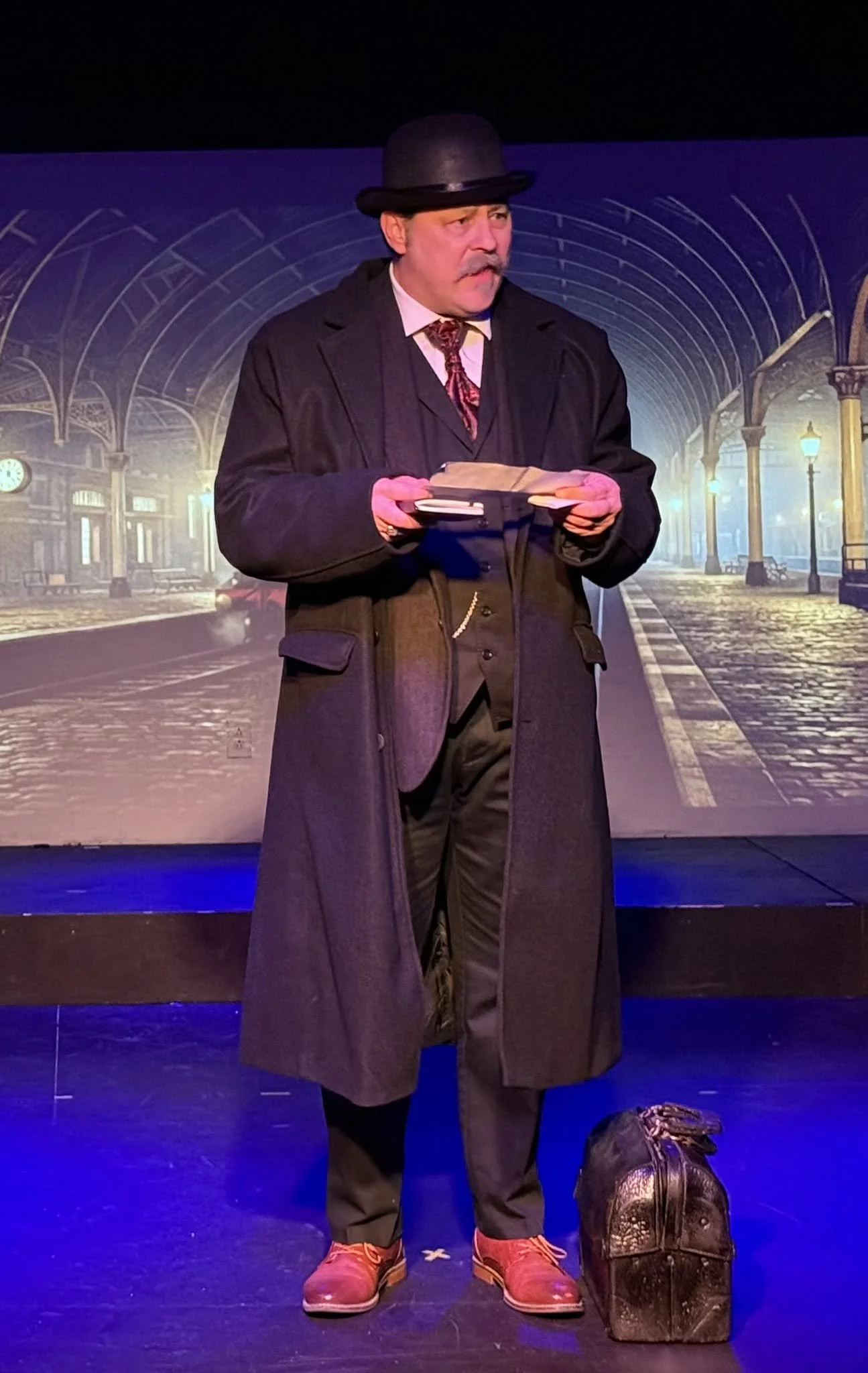
Gerald McWilliams as Dr. John Watson (photo courtesy Glenn Farr)

This reviewer comes from a family of Sherlock-heads. My husband has an internal library of Arthur Conan Doyle-created facts, fictions, and solutions filed away somewhere in his soul and anytime the opportunity presents itself to him to visit that peculiar place, he is there. I knew he’d want to be part of the process of reviewing Chapin Theatre Company’s production of Jeffrey Hatcher’s Holmes and Watson on opening night.

His review? “I liked it!” He went on to say that it was a very nice night of community theatre, and this reviewer agrees.

It was nice to sit in Chapin Theatre Company’s cozy black-box theatre and enjoy the low-key production of a Sherlock Holmes spin-off tale set in 1894, three years after the infamous Reichenbach Falls incident recounted in Doyle’s The Final Solution. It was relaxed and casual and perfectly pleasant.

Directed by Glenn Farr, Holmes and Watson finds us at an asylum on an island off the coast of the UK where Holmes’ one-time consummate companion, Dr. John Watson, played exceptionally well by Gerald McWilliams, has been summoned. Watson is greeted by Dr. Evans, played by David Reed, and the multi-character player (Orderly/Moriarty/Inspector) which was performed last night by Nathan Dawson. Jami Steele Sprankle is there playing dual parts as the matron and the woman (big costume changes here – kudos – also, that was one excellent scream) and there are three potential and decidedly-undead Sherlocks played by Dennis Kacsure, Jeff Sigley, and Charles Zuber. Watson’s assignment is to discern who the real Sherlock is and take the audience along for the ride.

It was a fine ride and most people did not see the end coming!

While McWilliams demonstrates veteran-level chops on the stage, his fellow players are also quite good. As Dr. Evans, David Reed seems to have the lion’s share of lines—a daunting amount of memorization for several near-soliloquies delivered with very little flubs. Kacsur, Sigley, and Zuber, as the potential-Sherlocks, each hold their own well, with Zuber giving some of the best performances of the night without saying a word. There was very little movement on the stage—lots of standing in one place facing forward and saying lines in character. This reviewer would have enjoyed seeing a bit more action and interaction from the players. In such a dialogue-heavy play, interesting and engaging blocking can help draw the audience into the story. In its absence, one’s mind might wonder too much to things like the kind of shoes the characters are wearing. We quite liked those of Dr. Watson.

The set for the show was unusually minimalistic for a Victorian era staging, even for an off-shore asylum. The production relied primarily on back-wall projections of a train station, cell doors, etc. Having seen this type of projection employed at CTC before, they are a good choice for this cozy theatre space. The “live” depiction of Reichenbach Falls was very cool and seemed to please the audience a great deal.

A great mystery for this reviewer and guest was the horizontal black platform at the back of the stage which the actors had to step up to and down from repeatedly throughout the performance. We were not sure of its purpose and found the constant negotiation of the obstacle a bit distracting.

Costuming, by Sandy Steffen, was quite good, though the hair situation—both facial and other—was a little startling, particularly the wild wig worn by Dawson and the various degrees of muttonchops sported by several players. Steffen was not in charge of beard or hair effects.

All-in-all, Chapin Theatre Company’s Holmes and Watson accomplished what it set out to do—entertain and mystify. While not on the same excitement level as a Mary Poppins or a Godspell (and without a similar budget, I feel certain), it delivered a lovely little mystery via highly capable actors who seemed to love what they were doing. The energy from the joy and fun and commitment of these actors was palpable. Go see this show.

Holmes and Watson runs

September 25th through October 11th at

Chapin Theatre Company

830 Columbia Avenue, Chapin, SC

Tickets are available here or at chapintheatreorg

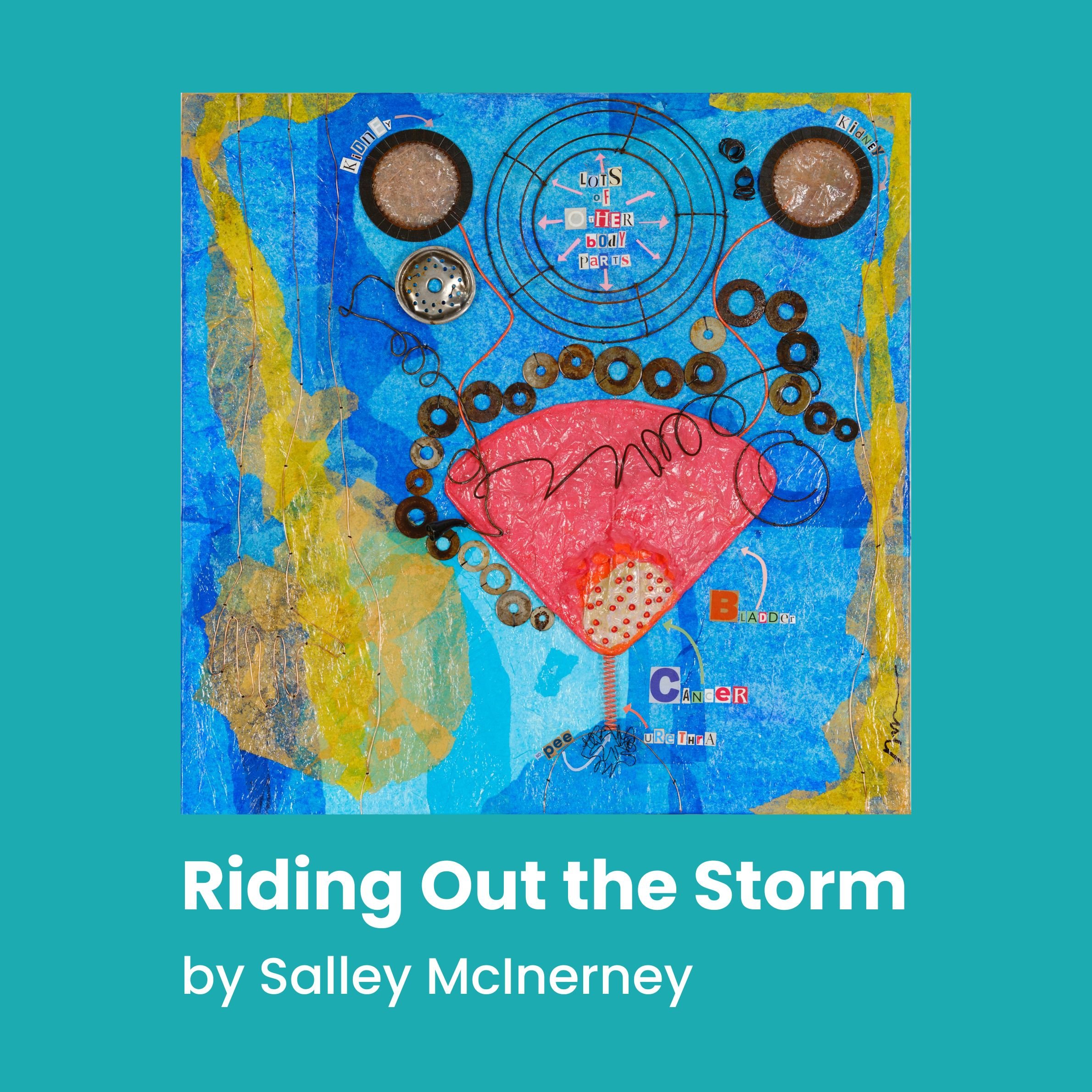
From the Print Issue: Salley McInerney's Riding Out the Storm Opens at Stormwater Studios -- Read the Story Behind it from the Spring 2026 Issue of Jasper Mag

From our friends at Stormwater Studios:

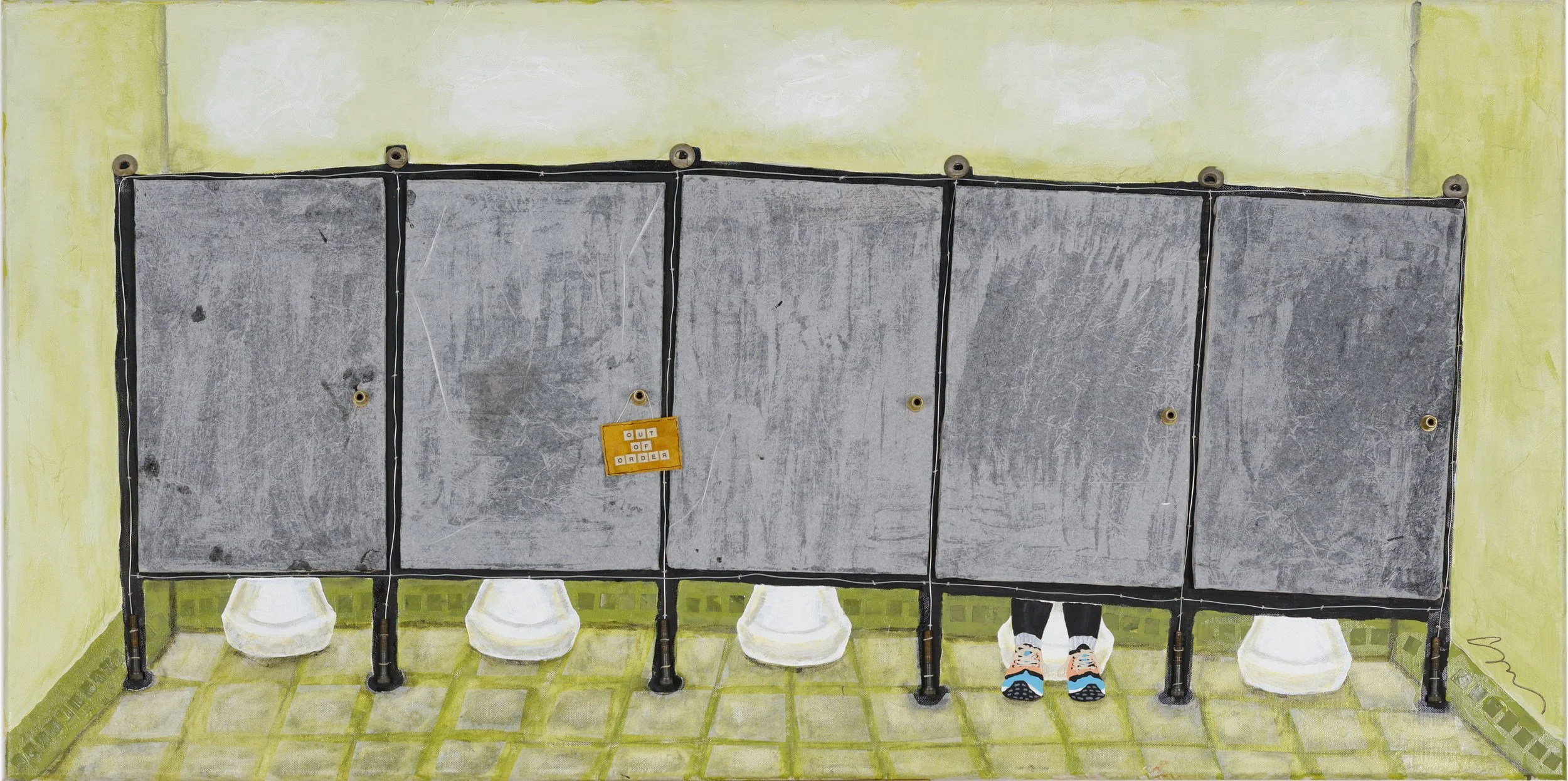
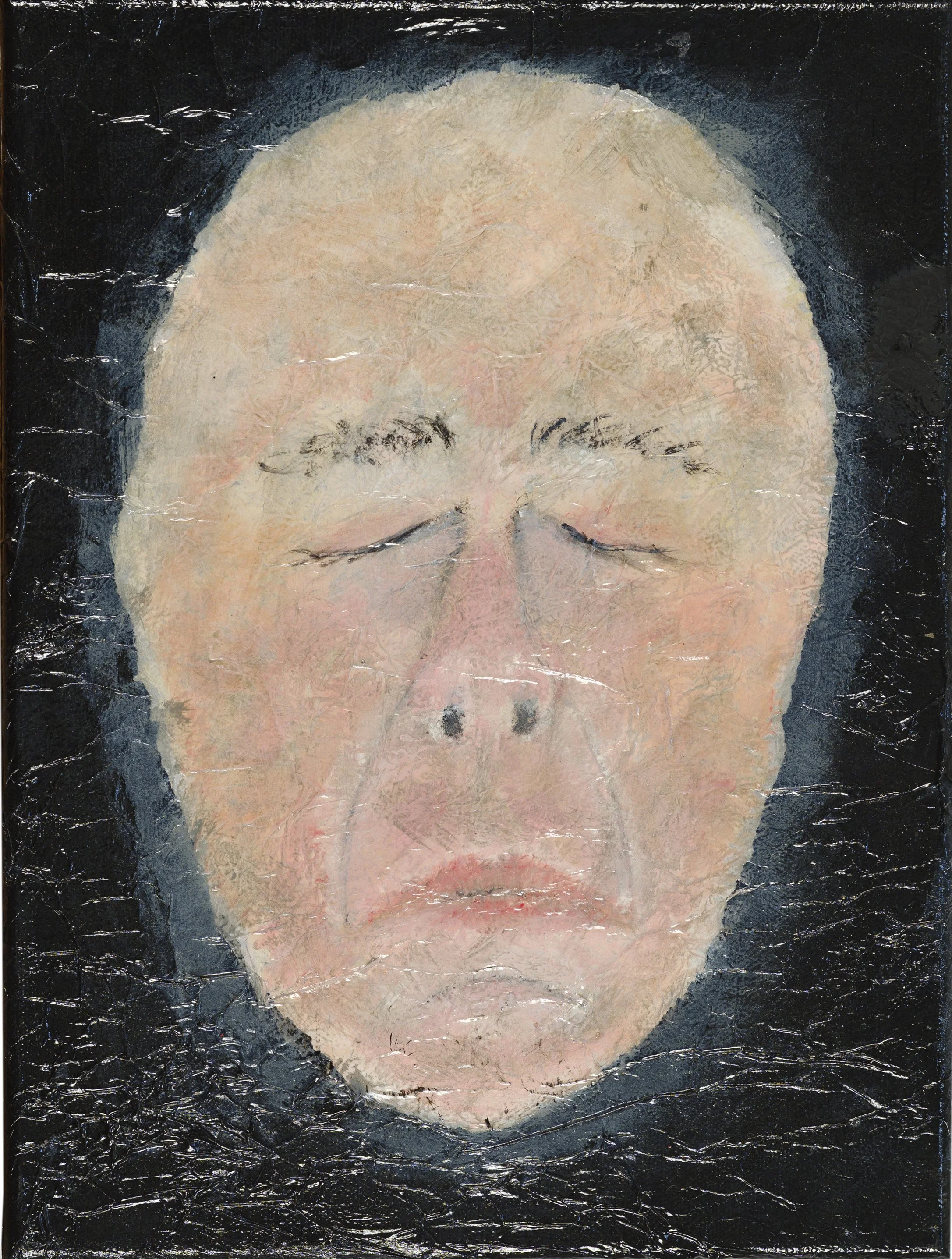
Riding Out the Storm is an unflinching visual and literary exhibition chronicling artist and writer Salley McInerney’s journey through bladder cancer and divorce. With a collection of 30 mixed-media works and corresponding storyboards, Salley explores a sudden diagnosis of bladder cancer, months of chemotherapy, grueling bladder removal surgery, a difficult physical and psychological recovery, and a most unforeseen consequence—the end of a 43-year marriage. Riding Out the Storm also chronicles Salley’s hard-won journey from profound loss to resilience of the human spirit and the reinvention of the individual self.

Opening Reception: Thursday, October 8, from 5:30 p.m. to 7:30 p.m.

Exhibition Dates: Wednesday, October 7, 2026, to Sunday, October 18, 2026

Gallery Hours: Wednesday – Sunday, 11:00 a.m. to 3:00 p.m.

From the Spring 2026 issue of Jasper Magazine …

Riding Out the Storm with Salley McInerney

By Cindi Boiter


Salley McAden McInerney opens, Riding Out the Storm, the book she wrote to accompany her visual art exhibition by the same name, with the words, “I have always taken the ability to pee for granted. I’ve peed everywhere. Toilets, outhouses, behind trees, sheds in the bushes, on mountaintops, in the back of horse trailers, off the back of pontoon boats, in lakes rivers and oceans. I’ve peed in my pants because of urgency or because something was so funny there was no stopping the flow.”

These are words almost any woman, particularly women who live in the South or another rural area of the country, can easily identify with. This writer, for example, even peed behind an ancient standing stone in a field in Scotland.

 But her next words stop her readers, including this writer, in our tracks: “In August 2021,” she writes, “all that changed.”

The remainder of the 34 pages in the book is packed with the author’s annotated art, telling the story of McInerney’s journey, starting in August 2021, through invasive urothelial carcinoma. A journey that started with the author waking in the middle of the night with the unrequited need to urinate, a sensation that increased and became more and more painful throughout the night and into the morning, compelling her to visit the emergency room of the local hospital in McInerney’s small town of Camden, SC.

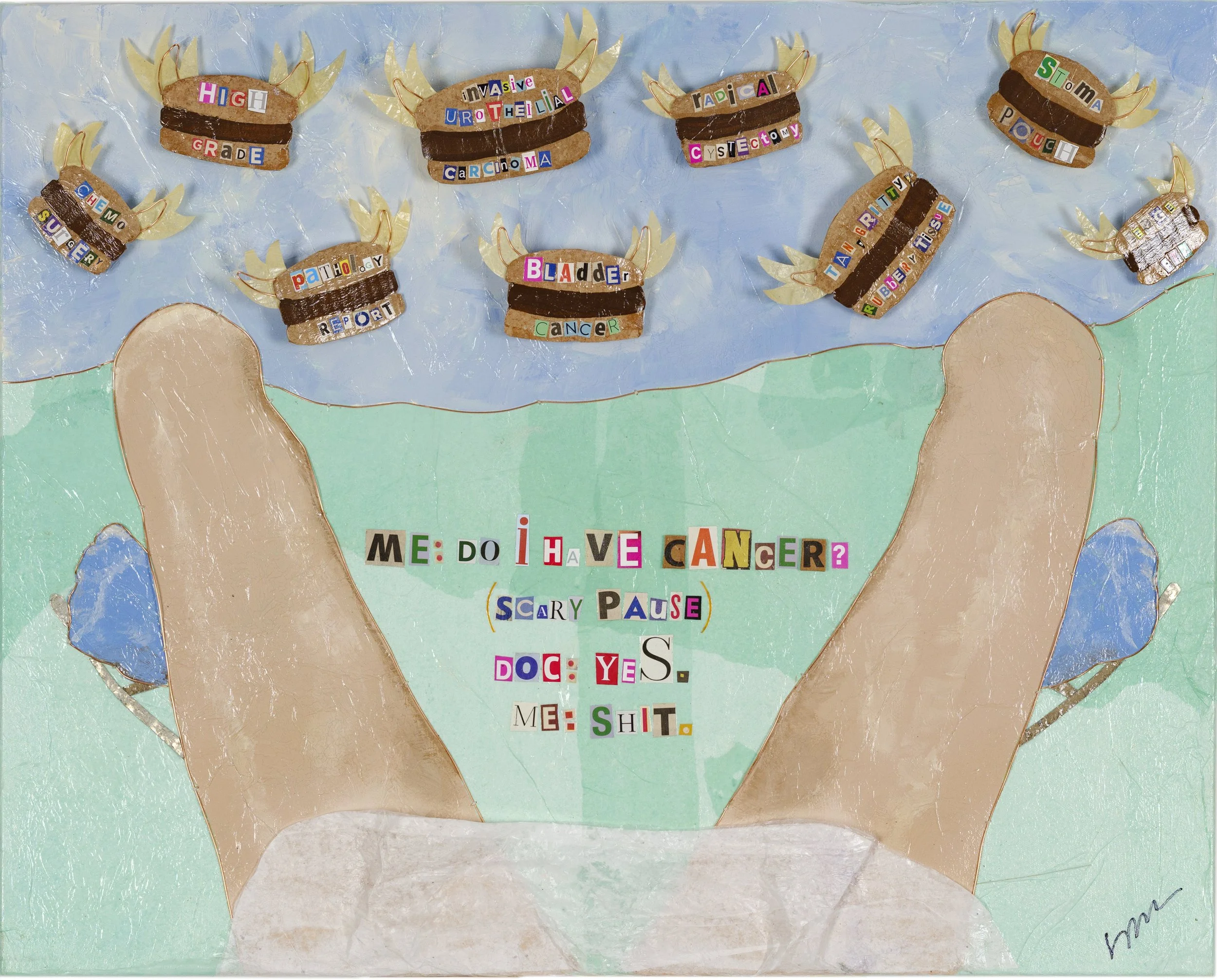
After many tests, McInerney was sent home with a catheter, the diagnosis of a bladder obstruction of, at the time, unknown origin, and an appointment the next week with a urologist. A writer, journalist, and visual artist, McInerney approached her urologist at her first appointment with the characteristic directness that has defined her career. “… I asked him, point blank. ‘Do I have cancer?’ He stopped short, looked at me intently. ‘Yes,’ he said. ‘Shit,’ I replied.”

The doctor explained that she would need 12 weeks of chemotherapy, starting immediately, followed by a radical cystectomy, or removal of the bladder. He went on to clarify that her urinary system would be rerouted from her kidneys, … “so that my pee would come out of a hole in my abdomen which was called a stoma, and which would be made with a part of my small intestine. He said I would wear a pouch over the stoma to catch the pee.”

If McInerney’s words sound blunt or jarring, or if the reader is less-than-comfortable with the directness with which she approaches such intimate topics, it’s no surprise.

As a former writer for The State newspaper as well The Gwinnett Daily News in Atlanta and the Chronicle Independent in Camden, McInerney’s writing style reflects her approach to moving through life. “Yes, my writing is blunt, to the point,” McInerney says. “In the case of Riding Out the Storm, there are two reasons for this. The first - during my 9-to-5 working years, I was a journalist, writing many stories on daily deadlines in big newsrooms. There was no time or space for flowery language. The job at hand was to tell the story as clearly, correctly, and quickly as possible. Concise language. Simple sentences. Get in, get out.”

“The second source for the bluntness,” McInerney continues, “is that bladder cancer seems to be one of those diseases that doesn't get talked about in ‘polite company.’ It's an intimate subject about body waste, and, in my case, forevermore peeing into a bag stuck to my belly. As I delved into the subject on the internet - specifically muscle-invasive cancer and bladder removal - I discovered that the unpleasant specifics of the ordeal tended to be glossed over. As I began work on Riding Out the Storm, I was determined not to do that. I wanted to be brutally honest about every facet of the disease. It's one reason I painted a self-portrait of my naked body with my stoma visible and my pee bag attached to my belly. Here I am, folks, bag and all.”

Hints of McInerney’s to-the-point methodology are found throughout the book via her written words and her visual art as she details the stages of her experience with honest precision. “As chemo drugs dripped into me week after week, I watched fall approach, the leaves on the trees turning yellow, orange, and red. And with every visit , my body grew weaker.”

After she had completed the chemotherapy course in December 2021, her oncologist recommended that she take the nest month, January, to gain weight and grow stronger before the surgery, she says. Her husband wanted her to take the month to relax and recover, saying, “Can’t we just enjoy this month?” But McInerney remembers that “the waiting was horrible.” And she became more and more aware of an “emotional distance spreading even wider” between her and her husband of more than forty years.

“Unlike me,” she writes, “he was able to compartmentalize the mess we were in. January ‘he felt’ should be a pleasant month. I … was only able to do one thing: count down the days left until I could no longer pee like a normal person.”

The Last Pee by Salley McInerney

McInerney recounts the last days before the cystectomy remembering that when she was a child, she always made a point of committing to memory her last swim of the summer from the SC beaches where her family vacationed. Acknowledging that once her surgery was performed, she would never again urinate the way she had all her life, she applied the same practice to going to the bathroom.

“I sat on the toilet seat and let what little fluid was left in me come out. I felt the warmth of it leaving my body. I heard the trickle. I watched as the last drops of pee created concentric circles in the toilet water. … I stood and pulled my pants up, running  my hands across a smooth belly that would soon be opened and excavated by a surgeon’s tools. I flushed the toilet. I gave thanks to a body part I’d hardly ever thought about. And that was that. The last normal pee.”


While her surgery was successful, the artist still had to remain a patient at the Medical University of South Carolina in Charleston for seven days, after which she and family members settled in at a beach house, close to her physicians and treatment facilities, for recuperation. One of the images in the book depicts a pair of feet in cozy socks propped against a railing, legs draped with a warm blanket, and the beach and ocean beautifully rendered behind them.

Throughout this unthinkable chapter in her life, McInerney relied on family and friends to sustain her, “I was not in control,” she writes. “At one point, I curled up in my sister’s lap and wept.”

Ultimately, McInerney returned home to Camden, but she was no longer the woman she once was. “I was sure that life as I knew it was over. I would never be able to ride horses,” she writes. A horsewoman all her life, McInerney rides as a “whipper-in” with the Camden Hunt, a role that includes the vital responsibility in fox hunting of keeping up with the foxhounds during a chase. (“We do not kill game, but we chase it,” she writes in her book.)

“When I announced to a close friend that my husband and I had separated a mere five months after surgery to remove my bladder, she, who had experienced cancer herself, said ‘It’s the cancer,’” the artist writes.

“… My friend was partially right about cancer rocking my marriage. The illness was catastrophic for me. Every coping skill, every reserve of patience and energy had been spent on battling cancer and learning to live without a bladder,” she writes. “Shortly before we divorced a year later, … my husband told our divorce mediator that I had ‘gone to a very dark place.’ He was right. … The place was dark and grasping, and when I returned from its grips, a startling light shed itself over what was left of my life. My future came into sharp focus. I was determined to live that future, if not happily, at least peacefully.”

While in many ways her divorce was liberating, it also came with new burdens and responsibilities for McInerney to carry along with recovery. “I was a naïve woman who was suddenly trying to drink life’s water from a firehose,” she says. “But here’s the thing:  I had survived cancer. I had met that battle head-on. When I felt like I couldn’t manage my own life, I remembered that struggle, and I gathered my strength. … I put one foot in front of the other and kept moving.”

According to the American Cancer Society, bladder cancer accounts for 4% of all U.S. cancers. It is the 10th leading cause of cancer death in the country and the five-year relative survival rate is approximately 79%. As McInerney faces the five-year anniversary of her illness, she says that she is doing well physically and that, emotionally, most days are good. She is back in the saddle at the Camden Hunt with her beloved horse, Lee, “who carries me safely through thick and thin. I swim. I walk my dogs. I do my art, …my volunteering. I write,” she says.

“I have always expressed myself best through my writing and through my art,” McInerney explains. “That said, I also believe that my writing and my artwork act as a way of me ‘talking to myself.’ Both mediums make more clear to me things about myself and my world. It's almost as if I'm in a classroom of one, a classroom of me, where the teacher is the art or the writing or both.”

It is for this reason that she embarked on the multidisciplinary art project, Riding Out the Storm. The exhibition will be presented at Stormwater Studios in Columbia, SC October 7th through the 18th, with an opening reception on Thursday October 8th from 5:30 – 7:30 pm.

She continues, “The best way for me to understand the complexities of what happened in a two-year span - bladder cancer, divorce - was to let my writing and my art do the work, unravel the gravity of it all and tell the story to me and, as it turns out, to others.”

It’s a story worth telling; a story of the importance of support and the role art can play in survival.


Midlands Light Opera Society Presents Hansel and Gretel - October 8 - 11

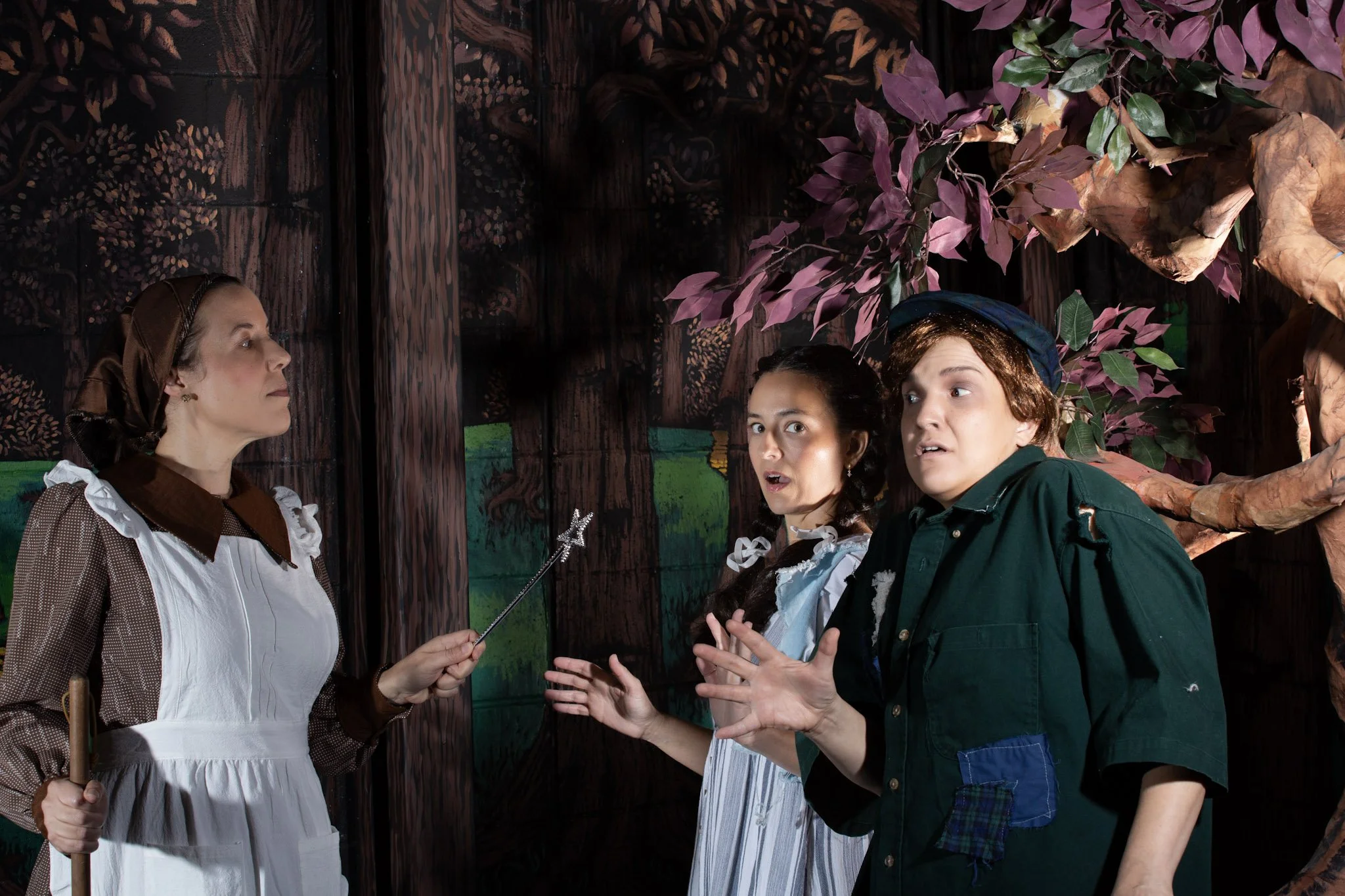
Maria Beery, Casiphia Wohlfeld, Evelyn Clary - photo by James Mabry

Midlands Light Opera Society is excited to present the opera Hansel and Gretel October 8 - 11 at Bethel UMC (4600 Daniel Drive) in Columbia.
This performance is an original English adaptation of the opera using Humperdinck's beautiful music with a fresh new libretto and dialogue by Evelyn Clary. It is suitable for all ages.

Hansel (played as a child by Lina Cordova and as a teen by Evelyn Clary) and his sister Gretel (played as a child by Lilith Clary and a teen by Casiphia Wohlfeld) have lived happily in their village with their Papa (Roddey Smith) and Mutter (Bethany Cely), until an evil witch (Maria Beery) has terrorized the town by kidnapping children. Hansel and Gretel are tired of being safely stuck inside their home, so they decide to venture into the woods to destroy the witch. They are watched over by the Sandman (Patrick Pilat) and Dew Fairy (Laura Hutchins). Can these two kids beat the witch and save their town? You'll have to come see to find out!

Rounding out the cast are townspeople Alexandra Agee, Liz Barrett, Abigail Brandt, Chavous Camp, Helen Camp, Robin Dorfer, Bob Folts, Annya Glass, Tilly Haynes, Alex Mabrey, Janice Mabrey (who is also a flute soloist), Bri Palmer, Daisy Palmer, Ember Rucker, and Amelia Schmidt.

This opera is directed by Hollie Smith, musically directed by Grant Hamby, accompanied by Lucinda Shields, costumed by Rob Richards, choreographed by Maria Beery, and produced by Evelyn Clary.

Performances are Thursday 10/8 and Friday 10/9 at 7:30; and Saturday 10/10 and Sunday 10/11 at 3:00.

Tickets are $20 for adults and $12 for seniors, students and children, and can be purchased online (link will be up in September), or at the door with cash, check or card. Opening night (Thursday 10/8) will be pay-what-you-can. We will be selling concessions as well. Friday through Saturday, we will have concessions by The Baking Wench.

Our venue is handicapped accessible.


REVIEW: Paul Smith Reviews Mean Girls at Workshop Theatre for the Jasper Project

Here come the “Plastics.”

Mean Girls opened at Workshop Theatre this past Friday, transporting audiences back to the early 2000s high school experience when “Fetch” is never going to happen, and on Wednesdays we wear pink!

The original Mean Girls was an iconic 2004 American teen comedy film written by Tina Fey, which has remained a part of the millennial and Gen Z cultural zeitgeist by capturing the essence of what it felt like to be in what some see as one of the most defining periods of a person’s life … high school. The film went on to have several parodies and spinoffs in different forms of media, but none captured the heart and essence of Mean Girls until 2018, when Tina Fey adapted and debuted the musical production of Mean Girls on Broadway. An instant success, this musical doesn’t reinvent the wheel, but it cleverly uses the medium of the stage to dazzle audiences with a variety of music genres and styles from classic golden age numbers to contemporary pop ballads. 

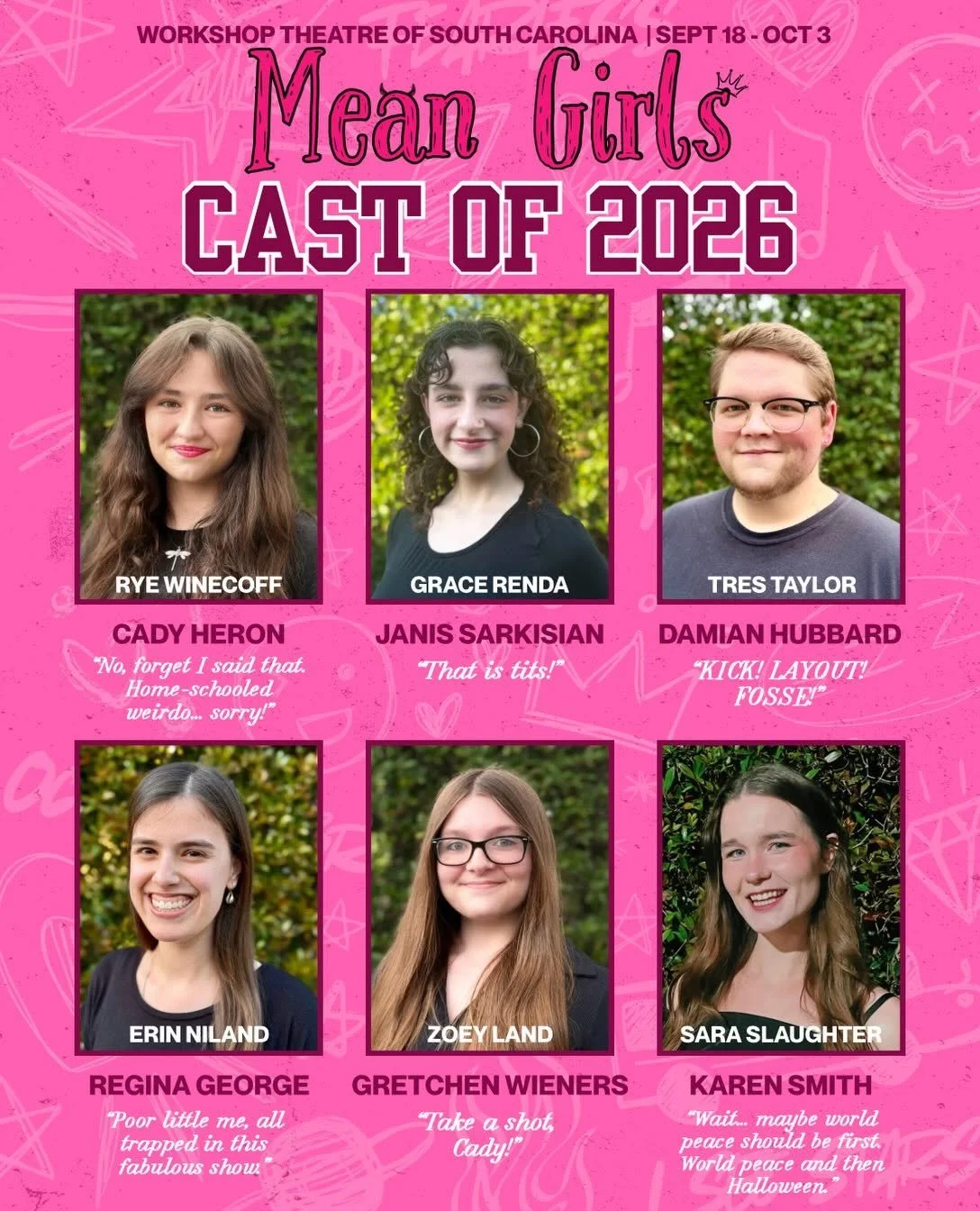
In the Workshop production, we follow Cady Heron (Rye Winecoff), the new girl in school. Cady has been homeschooled and lived in Africa for the majority of her life, so when she enters this new world of Northshore High, she has some social skills to catch up on. Damian Hubbard (Tres Taylor) and Janice Sarkisian (Grace Renda) take Cady under their wing and show her the school’s hierarchy in their natural habitat. You have the jocks, the mathletes, the band geeks, and the plastics—the popular girls. The titular “Mean Girls” are Gretchen Wieners (Zoey Land), whose “hair is so big because it's full of secrets;” Karen Smith (Sara Slaughter), the “dumbest girl you’ll ever meet;” and Regina George (Erin Niland), the recognized queen bee of the school. When Regina takes notice of the new girl, Cady is stuck between the power and social status of the plastics and the authenticity of her first friends at school.

 As a whole, this cast brings life to the world of mean girls through outstanding vocal performances and creative dance numbers. The clever use of everyday school items such as notebooks and lunch trays offers wonderfully choreographed numbers that connect to the world around the characters.

Winecoff brings a wonderful naivety to the role and consistently made the audience laugh with Cady’s homeschooled, uncharacteristically animalistic pickup lines. Renda finds a beautiful arc in her role as Janice, one that is filled with pain and shame, eventually triumphed by the idea that she would “Rather be Me”. Thomas Bozard (Aaron Samuels) plays the love interest and finds poignant moments to deliver powerful messages in a few words. Is more always better? Not if there is “less of you than there was before.” 

Niland demands the audience's attention every time she enters the space, showing the audience how the whole school “humps her leg, like a chihuahua.” Sara Slaughter’s witty timing provides comic relief in tense situations, and Land plays her character with a frantic disposition that perfectly complements the other two plastics. 

Tres Taylor was a standout for this reviewer. Truly a triple threat of a role, Taylor taps, triple pirouettes, belts out big, showy numbers, and still finds time to connect to each person in the audience. Taylor certainly steals the show. 

The adult characters in this production were wonderfully grounded, which contrasted with the all-or-nothing environment that high schoolers seem to think they are in. Evan Cook as Mr. Duvall did everything he could to keep the kids in line at school. Brittnie Cooper (Ms. Norbury) was a kind, caring teacher caught in the crossfire of the nasty cycle of high school drama and it was heartwarming to see her efforts in breaking the cycle, in spite of the very real threat to her livelihood. Perhaps not as grounded as the others, Jessica Roth plays Mrs. George, Regina’s mom. She may not be the best mother, but she’s cool with the kids, and you’ll find her dancing her own tune dressed as “Sexy Corn.”  

The ensemble not only filled in the world but also gave us endearing recurring characters in the story. Shout out to the mathletes headed by Alex Cato as Kevin Gnapoor. They made math cool again with rap verses and slant rhymes. The other teachers offered fine performances from Jack Bingham and Tyler Zangla, with a little healthy stereotype; they brought to life the teachers that we still talk about today from our own high school experiences. Lovely work from all the ensemble: Liam Amil, Aajay Pinder, Abby Gamble, Blythe Long, Carrissa Ferro, Christian Banks, Ethan Wilson, Jack Bingham, James Nolan, Jane Cato, Jordan Robinson, Katie Rooney, Kayla Welch, Kyran Burkett, Lily Stricklin, Meagan Hodges, Paxton Hartenstine, Phoebe Ferro, and Tyler Zangla!

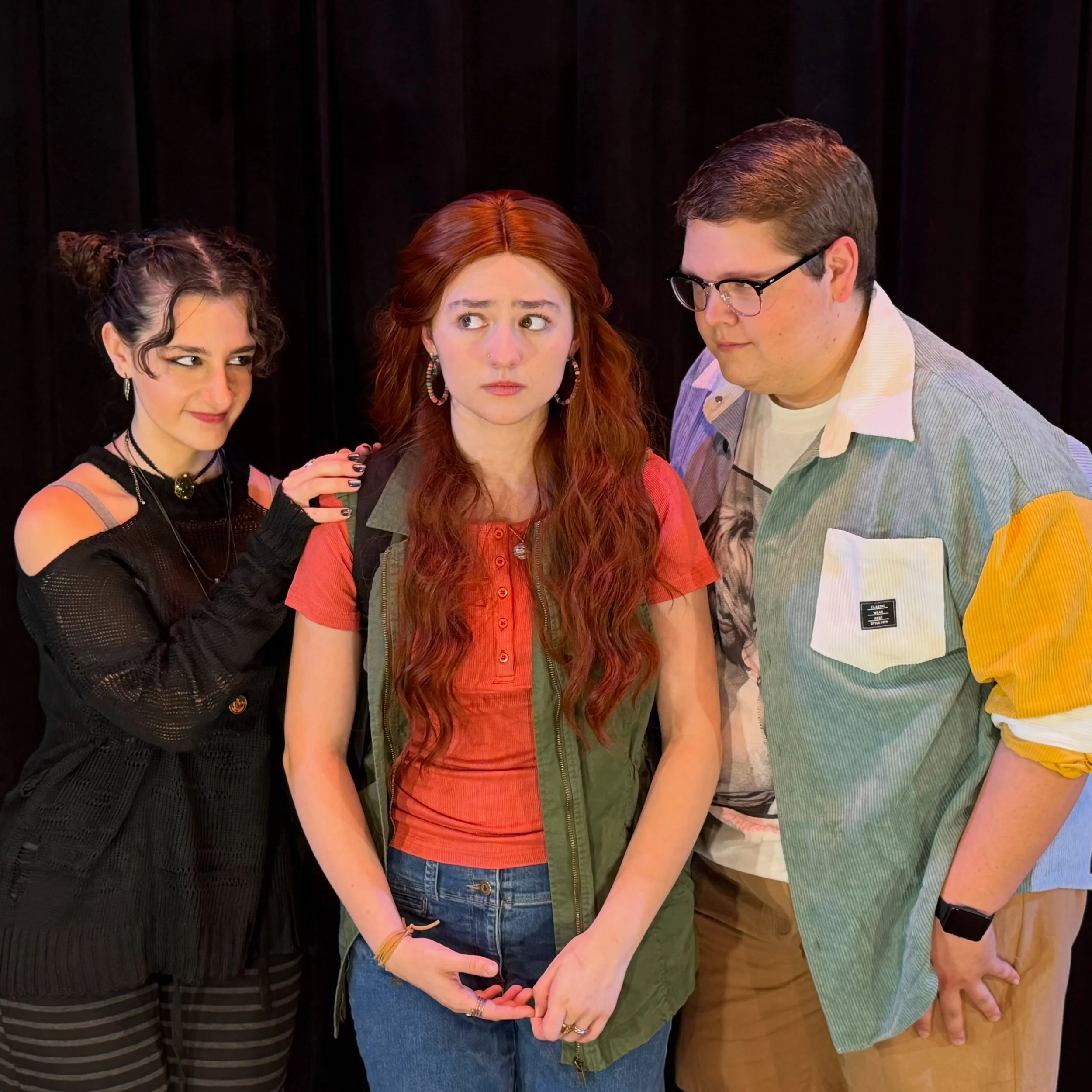
Grace Renda, Rye Winecoff, Trey Taylor

 Congratulations to the creative team on a fine production. Music director Taylor Diveley prepared an ensemble for success, and through their powerful harmonies, it shows. Christy Shealy Mills, as choreographer, had a new trick up her sleeve with every new musical number. Andie Nicks had fun with costuming and brought life to each of the characters with their many costumes. Patrick Faulds, as the set and lighting designer, brought us into Northshore High and captured the feeling of this world very well. And director Marybeth Berry put together an experience that is truly magical. 

Thank you to the stage manager Hannah McCloy, the backstage crew Logan Jones and Karyssa Burkett, and the light and sound board operators Patrick Faulds and Dean McCaughan for being the foundation on which this show stands. 

This reviewer’s only real critique of the show is that I wanted more of it. The sound system that was used in this show did not do justice to the cast that performed it. Sometimes the more boisterous bass beats in dance numbers were not loud enough to fill the space and bring the audience into the moment. This is not a comment on the cast or creative team; however, it is a critiqué of the arts funding in our state. 

Mean Girls is a show worth seeing. Framed as a cautionary tale, this show tells its audience that it is bad to put others down for your own popularity and that other people do not define self-worth, but that each person is worthy of love, respect, and being seen. 

Mean Girls at Workshop Theatre is being shown at Cottingham Theatre on the campus of Columbia College from September 18th until October 3rd. There is the use of the d-slur and frequent provocative dancing and themes, so take that under advisement if you’re planning on going with kids. Ticketing information can be found at Workshop Theatre of South Carolina

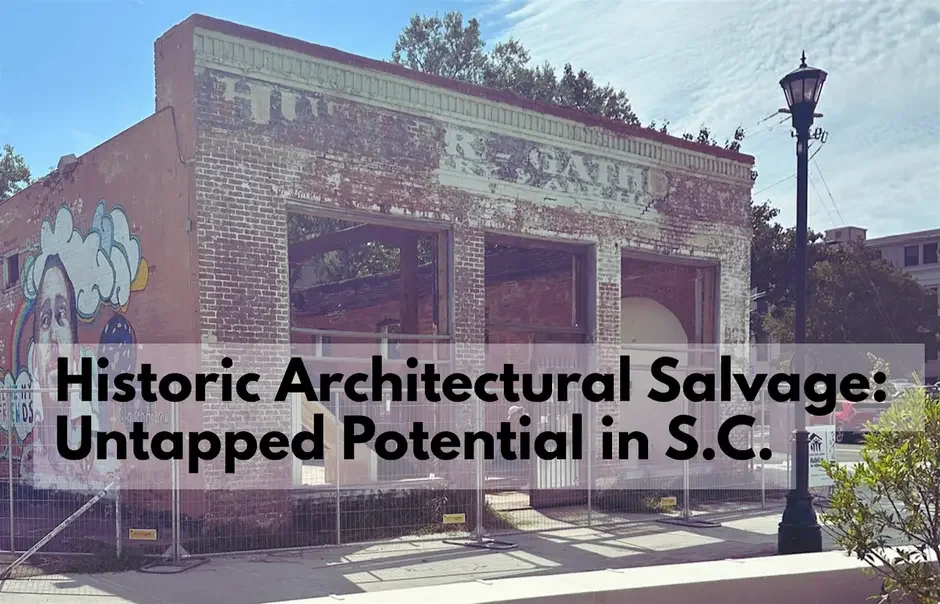
Historic Architectural Salvage: Untapped Potential in South Carolina By Coalition of Columbia's Historic Districts

Seibels House & GardenColumbia, SC

Saturday, September 26  •  1 PM - 2:30 PM

Rampant complaints on social media about how the University seems to be taking over many of the architectural and artistic nuances that add character to the city without so much as a please and thank you, makes Jasper think this might be an event many of us are looking for.

For more information about the Coalition of Columbia Historic Districts check out this page.

Overview

Learn how architectural salvage can conserve historic resources, reduce waste, and create economic value in our region

Historic Architectural Salvage: Untapped Potential in South Carolina

Not every historic building can be saved, but many of the materials and architectural features that tell its story can be preserved and reused. Across the country, architectural salvage has become an effective way to conserve historic resources, reduce waste, and create economic value.

Join us for a discussion of the opportunities and challenges of architectural salvage in our region. Whether you're a homeowner, preservation enthusiast, contractor, entrepreneur, craftsperson, or simply appreciate historic architecture, you'll gain insight into how communities can preserve more of their built heritage. Creating economically viable solutions requires broad community support and a variety of resources.

Featured Speakers:

Dr. Alan Todd of the Conway Architectural Salvage & Heritage Project non-profit will share practical experience from projects across South Carolina, including the deconstruction of Columbia's historic Hunter-Gatherer Brewery & Alehouse building.

Ms. Betsy Kleinfelder, Preservation Planner for The City of Columbia, will discuss recent demolition of historic buildings in Columbia. It will include a look at what policies are in place to prevent demolition and what other municipalities are doing to prevent waste of viable historic materials.

1 hour 30 minutes, all ages, free parking, doors at 12:45 PM

3rd Annual Southern Gothic Festival in Camden Has a Blood-Curdling Lineup! Oct. 9 & 10

The third annual Southern Gothic Festival returns to Camden on Friday, October 9, and Saturday, October 10, bringing together acclaimed authors, historians, storytellers, podcasters, musicians, and investigators for a thoughtful—and suitably spooky—exploration of the South’s darker side.

Set among the historic streets and famously haunted places of South Carolina’s oldest inland city, the festival considers Southern Gothic in both its literary and supernatural forms.

Programs will explore how contemporary writers continue a tradition shaped by eccentricity, moral complexity, inequality, religious fervor, and troubled history, while also celebrating the ghosts, legends, folklore, and uncanny landscapes that remain part of Southern culture.

According to Amy Schofield, Kershaw County Library Director, “The idea started with a suggestion from Robb Hinson, who works the front desk at the Camden Library and is an unapologetic book pusher. Excited about recently attending a Grady Hendrix book reading, Robb suggested the concept. From there, it's been a library effort every year with help from staff and volunteers, and support from our Friends group, the Arts Commission, Historic Camden, and the City of Camden.”

Schofield continues, “Each year of the Southern Gothic Festival has brought a different kind of excitement. The first year, we wondered if anyone would come; the second, we wondered if we could successfully turn it into a larger, two-day festival—and now, in our third year, I’m cautiously confident enough to simply be excited about what we’ve put together. We have an extraordinary range of writers, musicians, storytellers, podcasters, and historians exploring everything from contemporary Southern horror, folklore, and haunted houses to race, masculinity, true crime, and the continuing influence of writers like Edgar Allan Poe.” But, more than anything, she says, “I’m excited that the festival keeps expanding the conversation about what Southern Gothic means today while still being a really fun place to spend a couple of days immersed in the darker, stranger corners of the South.”

The festival begins Friday at 5:30 p.m. at Broad & Vine with “Agnes of Glasgow: The Legend and Lore,” featuring Brandon Schexnayder, creator and host of the acclaimed Southern Gothic podcast. The podcast combines careful historical research with atmospheric storytelling to investigate the history behind the South’s legends and hauntings.

Agnes is said to have traveled from Scotland to Camden during the American Revolution in search of her fiancé, a British soldier, only to die before finding him. Buried in Camden’s Quaker Cemetery, her spirit is still said to wander nearby, continuing her search. Schexnayder will discuss the research behind a new podcast episode devoted to Agnes, examining what can be documented, how the story has changed across generations, and what local ghost stories reveal about the communities that preserve them.

Broad & Vine will be open during the free program, with food and beverages available for purchase. No tickets or reservations are required.

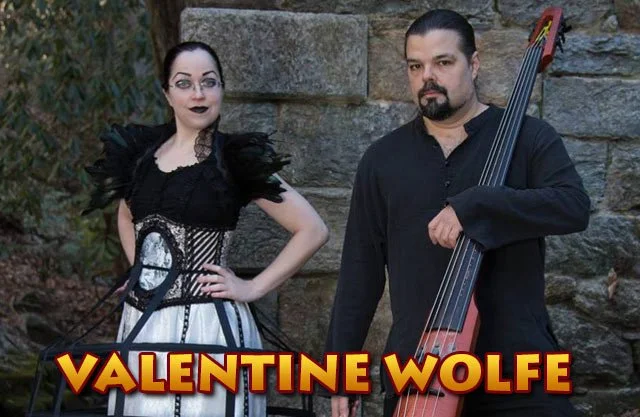
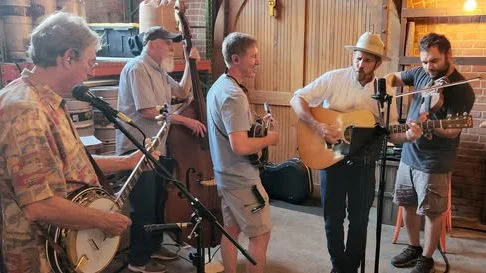
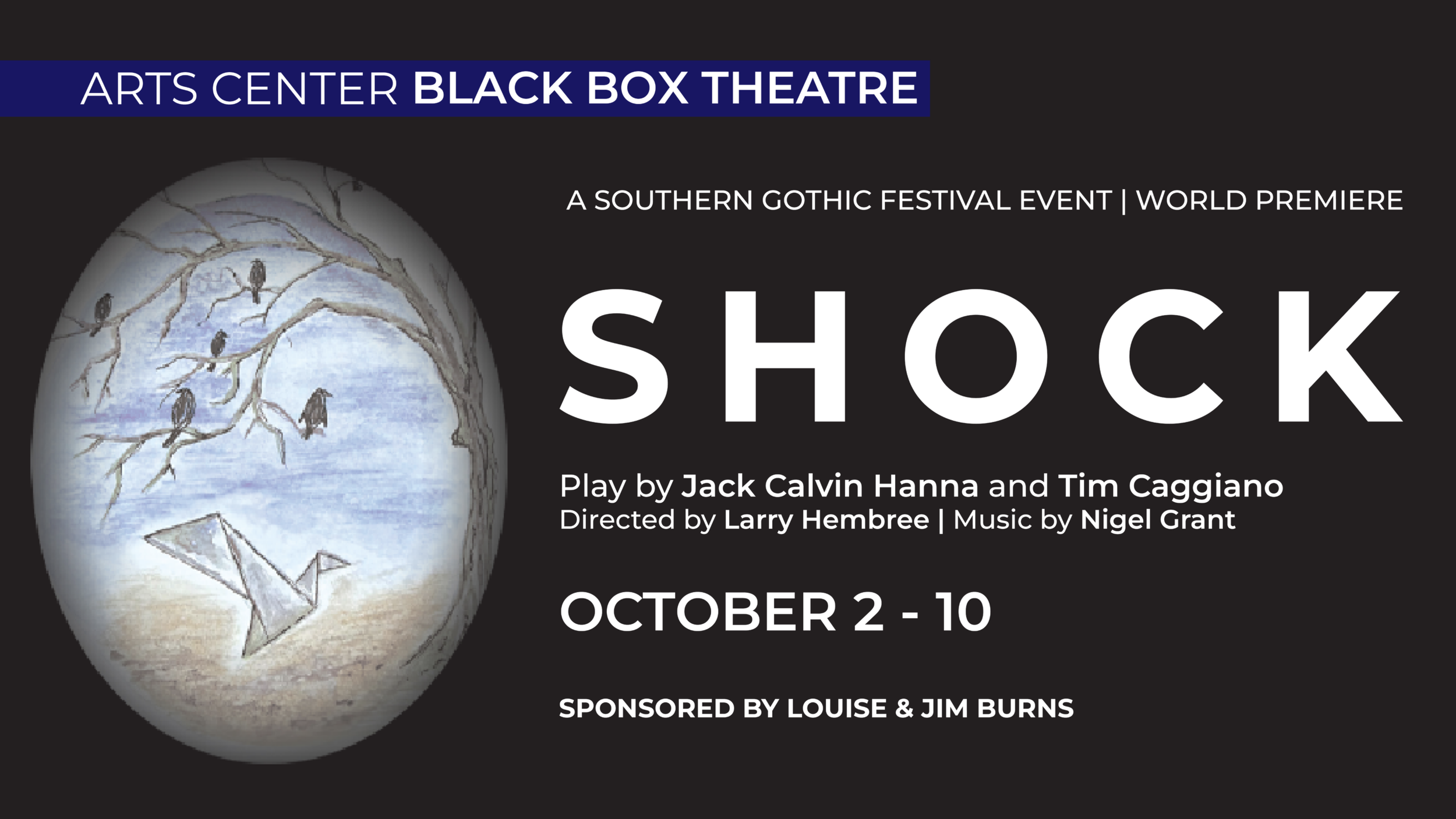
Friday evening continues at 6:45 p.m. with a free outdoor concert by Valentine Wolfe and the Southern Gothic Opera Company at the Rutledge Street Green Space. The Greenville-based ensemble combines haunting soprano vocals, keyboards, electronics and electric upright bass in music inspired by gothic literature, classical traditions and heavy metal. According to Schofield, “Valentine Wolfe brings a genuinely Gothic musical sensibility, including a preview of music they will feature at the Harbison Theater later in October as part of the Southern Gothic Opera Company. I’ve given the bluegrass band The Mill Hands a cheerful assignment of digging through their bluegrass repertoire for murder ballads and the darkest songs they can find. They’ll also help kick off the last show of Shock, an original Southern Gothic play at the Arts Center of Kershaw County, one of several venues this year alongside Historic Camden, the Revolutionary War Visitor Center, and downtown Camden.

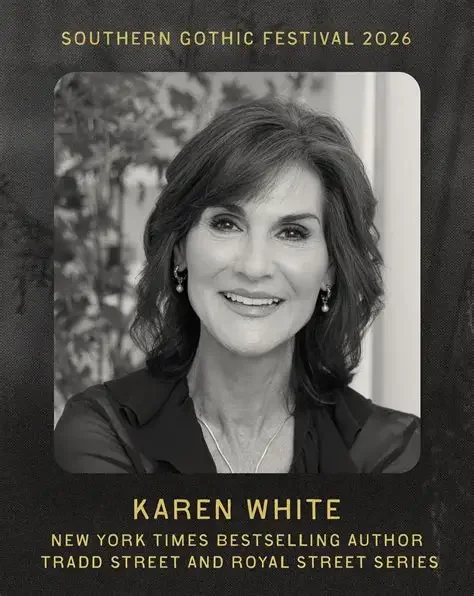
Historic Camden will also offer its ticketed Southern Gothic Lantern Tour beginning at 7 p.m.Saturday features a full day of concurrent programs examining Southern writing, history and storytelling. Bestselling author Karen White will discuss the historic homes, family secrets and ghosts behind her popular Tradd Street and Royal Street novels, set in Charleston and New Orleans.

“We have an extraordinary roster,” Schofield says. “For readers of contemporary horror, we have always had something. We started with one horror writer, had four our second year, and this year we have eight, writing everything from folk and body horror to slashers and more experimental forms. At the same time, writers including David Joy, Jason Mott, Ray McManus, and Scott Gould will explore the larger tradition of Southern writing and the ways it continues to wrestle with race, masculinity, history, and place. We’ll have haunted tours and ghost stories, certainly, but also serious conversations about the things that continue to haunt the South.”

Award-winning authors Jason Mott and David Joy will join South Carolina poet Ray McManus for “Southern Man: Race and Masculinity in Southern Writing,” exploring how race, class, violence, history, and identity shape their work and the lives of men in today’s South.

In “New Monsters: Contemporary Fears in Horror,” Michael Wehunt, Clay McLeod Chapman, Tanya Pell, and Chris Panatier will consider how horror transforms modern anxieties—including misinformation, technology, aging, trauma and mental illness—into new forms of the monstrous.

Other literary programs will examine the continuing evolution of Southern Gothic. “Haunted Landscapes” brings together Yah Yah Scholfield, Julia Elliott, and Robert Gwaltney to discuss magical realism, folklore, and the uncanny places that inhabit contemporary Southern fiction.

In “Beyond the Grotesque: The New Southern Gothic,” Lindy Ryan, Andy Davidson, Nathan Ballingrud, and Scott Gould will explore how the tradition now reaches into horror, humor, historical fiction, literary fiction, and science fiction.

Poe scholar Dr. Scott Peeples and horror author Clay McLeod Chapman will consider Edgar Allan Poe’s Southern roots and continuing influence in “Poe and Place: The Original Southern Gothic.” A related display of Victorian mourning jewelry presented by author and living historian Kim Poovey will be open from 2 to 5 p.m.

The festival will also celebrate the South’s oral traditions. USC professor and storyteller Nancy Tolson and Craig Dominey of The Moonlit Road will discuss folklore and the enduring influence of African American storytelling, concluding with a live story by Tolson.

“Where History Meets the Unexplained” will explore Carolina cryptids, paranormal sightings, and the research, history, and traditions behind regional legends.

One of the day’s most serious programs, “Behind the Headlines: The Susan Smith Case,” will revisit the investigation and trial that captivated the nation in 1994. Camden Mayor Vincent Sheheen will moderate a conversation with prosecutor Tommy Pope, former SLED Chief Robert Stewart, and Mark Brandenburg, who served as clerk to the presiding judge. The panel will reflect on the investigation, media coverage, and the case’s lasting impact on South Carolina.

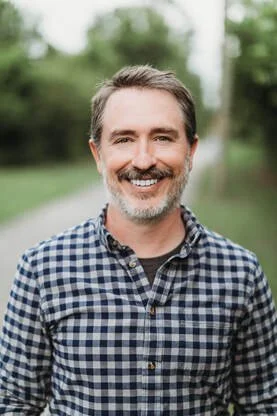
Scott Gould

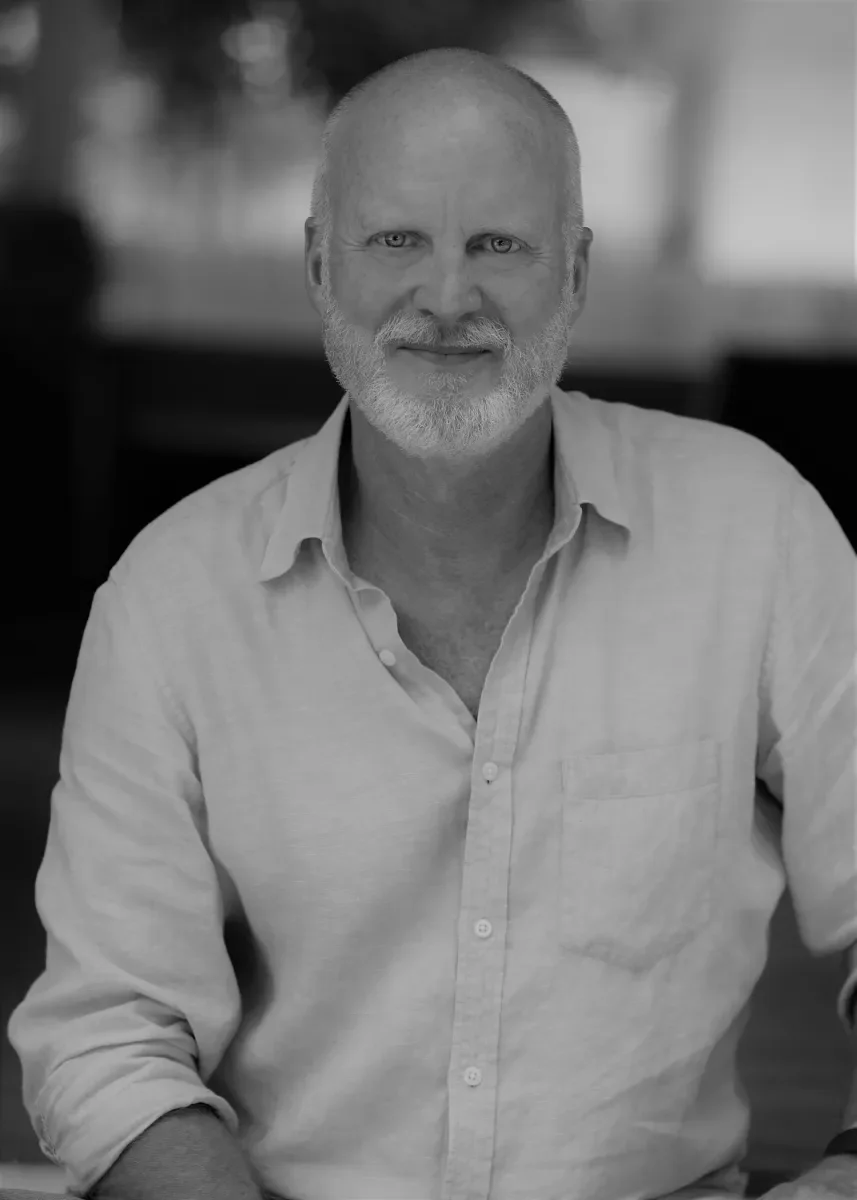
From 11 a.m. to 5 p.m. on Saturday, visitors can also meet independent and regional authors. Local favorite Miles Gardner will offer books, including Murder and Mayhem in Kershaw County. South Carolina writers include Julia Elliott, a recent winner of the Carol Shields Prize for Fiction, whose magical realism transforms familiar Southern landscapes, and Scott Gould, whose work celebrates deep family connections and small-town Southern life. Arcane Carolinas will bring its knowledge of Carolina cryptids and regional lore, while other participating authors will offer ghost stories, horror, history, and fiction grounded in recognizably Southern experiences.

A vendor market will feature gothic ceramics, jewelry, artwork, and unusual merchandise, while Books on Broad will offer books by featured authors. Food trucks will be available, and visitors can also explore downtown Camden’s restaurants, coffee shops, and a variety of retail experiences.

The Millhands

Saturday evening begins at 6 p.m. with “Dark Strings,” a free performance by Columbia bluegrass band The Mill Hands featuring Appalachian murder ballads and mournful mountain songs—the kind of music that might once have been heard in Camden’s nearby mill villages.

The festival concludes with two ticketed partner events: the Fine Arts Center’s original play SHOCK at 7 p.m. and Haunts and Spirits at Historic Camden at 7:30 p.m. According to Chad Henderson, Executive Director of the Fine Arts Center of Kershaw County, “ We are absolutely delighted to partner with the Southern Gothic Festival to bring Shock to the Arts Center’s Black Box. There is something meaningful about collaborating with a festival that celebrates such a distinctive part of our Southern culture and imagination, while also welcoming longtime Camden theatre favorite Larry Hembree back to direct.” He continues, “Larry has been an important and beloved part of this community’s theatrical life, and we’re thrilled to have him leading this production. Partnerships like this are what make the Arts Center so special —bringing together talented artists, community traditions, and new creative experiences for our audiences to enjoy together.”

Most Southern Gothic Festival events are free and require no reservations. Complimentary shuttles will operate from 11 a.m. to 5 p.m. Saturday among Historic Camden, the Revolutionary War Visitor Center, the Arts Center, and downtown Camden.

Together, the festival’s programs celebrate something Southerners have long understood: places hold stories. Some are carefully documented, some are passed from one generation to the next, and some may still be wandering just beyond the edge of the light.

“What I love is that the festival has become big enough to ask a question we’ve been interested in from the beginning: What is Southern Gothic now?” says Schofield. “We want to honor the literary tradition, but we also want to explore how contemporary Southern writers, artists, and storytellers are expanding it—who gets to tell these stories, what histories need to be confronted, what still frightens us, and why the South remains such fertile territory for stories that are dark, strange, funny, and sometimes beautiful. This year feels like our fullest exploration of that question yet.”

For the most up-to-date information visit the Southern Gothic Festival website here.

SC Academy of Authors Announces a CALL for Elizabeth Boatwright Coker Fellowships in Poetry and Fiction

Submission period begins: November 15, 2026
​​Deadline: January 15, 2027

The Jasper Project is excited to help spread the news that the SC Academy of Authors announces the Elizabeth Boatwright Coker CALLS for Fellowships in Poetry and Short Fiction opening on November 15th

Elizabeth Boatwright Coker Fellowship in Poetry

The Elizabeth Boatwright Coker Fellowship in Poetry, supported by the Penelope Coker Hall/Eliza Wilson Ingle Fund of Central Carolina Community Foundation and sponsored by the South Carolina Academy of Authors, recognizes the talent of poets in the state of South Carolina.
 
The award is $1,250 and an invitation to be honored at a future SCAA event.
 
There is no restriction on form or content. Submit up to 5 unpublished poems (totaling no more than 10 pages). You may submit multiple entries, but each entry must be accompanied with entry fee.

The entry fee is $20 per entry. Entry fee will be made to the SCAA PayPal account under the Donate category on this website.

Authors grant the SCAA first publication and electronic reprint rights to prize-winning work. Authors retain all re-publication rights and are free to reprint the work in any publication, subject to acknowledging original publication in South Carolina Academy of Authors annual publication. The author guarantees that the submitted work has not previously been published elsewhere. Entries generated by AI will not be accepted.

We will accept entries in doc, docx, rtf, and pdf file formats. 

Applicants must be full-time residents of South Carolina and must not have won this fellowship (previously known as the Carrie McCray Nickens Fellowship in Poetry) in the previous three years. 
 
Your name should not appear anywhere on the poems submitted. Include contact information with a brief bio in the body of the email. Submissions should be sent to scaacokerfellowship@gmail.com.
 
The 2026 contest will once again be judged by Rachel Hadas.
 
Questions about the Elizabeth Boatwright Coker Fellowship in Poetry should be sent to: scaacokerfellowship@gmail.com.
​

Elizabeth Boatwright Coker Fellowship in Fiction

The Elizabeth Boatwright Coker Fellowship in Fiction, supported by the Penelope Coker Hall/Eliza Wilson Ingle Fund of Central Carolina Community Foundation and sponsored by the South Carolina Academy of Authors, recognizes the talent of fiction writers in the state of South Carolina.
 
The award is $1,250 and an invitation to be honored at a future SCAA event.
 
There is no restriction on content, but submissions may not exceed 15 pages double-spaced and must be either one original, unpublished short story or one excerpt from a longer, unpublished work. You may submit multiple entries, but each entry must be accompanied with an entry fee.

​The entry fee is $20 per entry. Entry fee will be made to the SCAA PayPal account under the Donate category on this website.
 
Authors grant the SCAA first publication and electronic reprint rights to prize-winning work. Authors retain all re-publication rights and are free to reprint the work in any publication, subject to acknowledging original publication in South Carolina Academy of Authors annual publication. The author guarantees that the submitted work has not previously been published elsewhere. Entries generated by AI will not be accepted.

We will accept entries in doc, docx, rtf, and pdf file formats. 

Applicants must be full-time residents of South Carolina and must not have won this Fellowship in the previous three years. 
 
Your name should not appear anywhere on the pages submitted. Include contact information with a brief bio in the body of the email. Submissions should be sent to scaacokerfellowship@gmail.com.
 
Judging the 2026 Coker Fellowship in Fiction will be Wiley Cash.
 
Questions about the Elizabeth Boatwright Coker Fellowship in Fiction should be sent to: scaacokerfellowship@gmail.com.

WILEY CASH

Wiley Cash is an award-winning and New York Times bestselling author of four novels, host of the Our State Book Club Podcast, and co-owner of Floodplain Books in Wilmington, North Carolina. He teaches fiction writing at UNC-Asheville and lives in North Carolina with his wife, photographer Mallory Cash, and their daughters. He is the 2025 recipient of the North Carolina Award for Literature, the state’s highest civilian honor.
https://www.wileycash.com/

RACHEL HADAS

Rachel Hadas is an American poet, teacher, essayist, and translator. Her most recent poetry collection is Pastorals (2025). Her honors include a Guggenheim Fellowship, Ingram Merrill Foundation Grants, the O.B. Hardison Award from the Folger Shakespeare Library, and an Award in Literature from the American Academy and Institute of Arts and Letters. Hadas taught English at Rutgers University-Newark from 1981 to 2023, and was named a Board of Governors Professor in 2001. She has also taught courses in literature and writing at Columbia and Princeton Universities, the Ninety-second Street Y, the Sewanee Writers’ Conference, the West Chester Poetry Conference, and the Hudson Valley Writers’ Center. https://www.rachelhadas.net/

CLICK HERE FOR INFORMATION ABOUT THE ELIZABETH COKER FELLOWSHIP IN STUDENT POETRY AND HERE FOR INFORMATION ABOUT THE ELIZABETH BOATWRIGHT COKER FELLOWSHIP IN STUDENT SHORT FICTION.

Jasper Welcomes Artist Patrick Parise to our Nook Gallery in the Koger Center for the Arts + Black Nerd Mafia

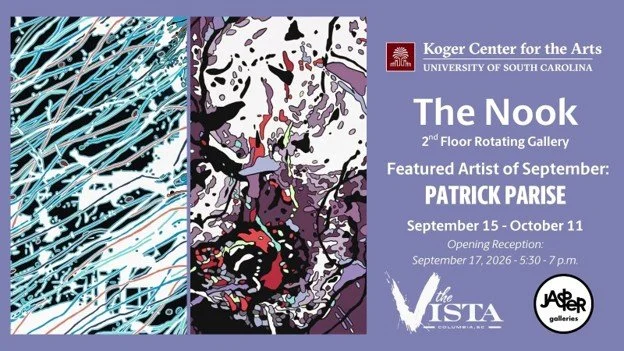
The Jasper Project’s newest resident artist in The Nook Gallery is Patrick Parise! Parise’s work will be on display through October 11 over at the Koger Center, and we cordially invite you to stop by for the opening reception on September 17, from 5:30 – 7 p.m.

Jasper will be on site both inside by the gallery and outside during the Koger Center Presents: Levitt AMP Columbia Music Series concert this Thursday, featuring Black Nerd Mafia. Light snacks will be provided inside, but you can grab a drink from the concert concessions outside and bring it in while you experience Parise’s artwork in person.
All paintings in the exhibit are for sale, and during the reception, Parise will also have some additional etchings available for purchase in Jasper’s Nook Gallery on the Koger Center’s second tier.

About the Artist: “When I was young,watching my mother and others paint, it moved me toward wanting to learn more about painting to pursue an art career,” Parise writes. “As a young student thinking only as a painter and sculptor, I never contemplated other ways to make my art. Over the years, oils, and acrylics have been my main mediums, but some newer works are with enamels. Landscapes will always be my favorite subject matter, but I have never shied away from an abstract thought. In my junior year as an undergraduate I was introduced to printmaking, and my entire world changed about making art. Whether etching plates to make limited editions, mono-prints, mono-types, or working a lithograph, a wood block, or a mixed media piece, I began to see the beautiful and innovative ways I could create work with this new medium. So instead of graduate school, I jumped right in and purchased a Charles Brand Etching press and opened my own studio, Southern Printworks, where I have continued to paint and make original prints for over 30 years. I guess we all have a moment of truth on how to pursue a creative path, and by committing to this large purchase, it was my moment of truth. I understand now it was the only choice because, to this day, I haven’t looked back.”


“Over the years I have realized you can spend your art career focusing on the nuance of one process, which many artists find very rewarding. Or you can use that information and leap into the unknown, in new directions, to learn other mediums and to change things up,” Parise continues. “With my paintings, I use varied surfaces - canvas, paper, panels, and plexiglass – and vary the subject matter among landscapes, florals, and abstracts – keeping things interesting for me and the viewer. With printmaking, I often introduce color into my limited-edition etchings, using acrylic washes to create a stronger original print. I use multiple etched plates to produce dynamic images with unique combinations of color, shapes, and design to create one-of-a-kind monoprints or, painting on metal and plexiglass allowing me to create one-of-a-kind mono-types. Printmaking, painting, and sculpture are the mediums I will continue to focus on and I will see where it leads me. So here I am, years later, still learning and developing innovative ways to make my art and trying to become a better artist along the way. It has been a fun ride, so far. Enjoy!”

From the Print Issue - Sharing the Spotlight: Collaboration vs. Competition in Midlands Theatre By Jane Turner Peterson

Jasper noticed that at least one other theatre writer in the area is engaging in a conversation Jane Turner Peterson started in the spring issue of Jasper Magazine about community and regional theatres and the problems of competition in booking shows. So we thought it might be helpful to reprint Jane’s original article from the magazine.

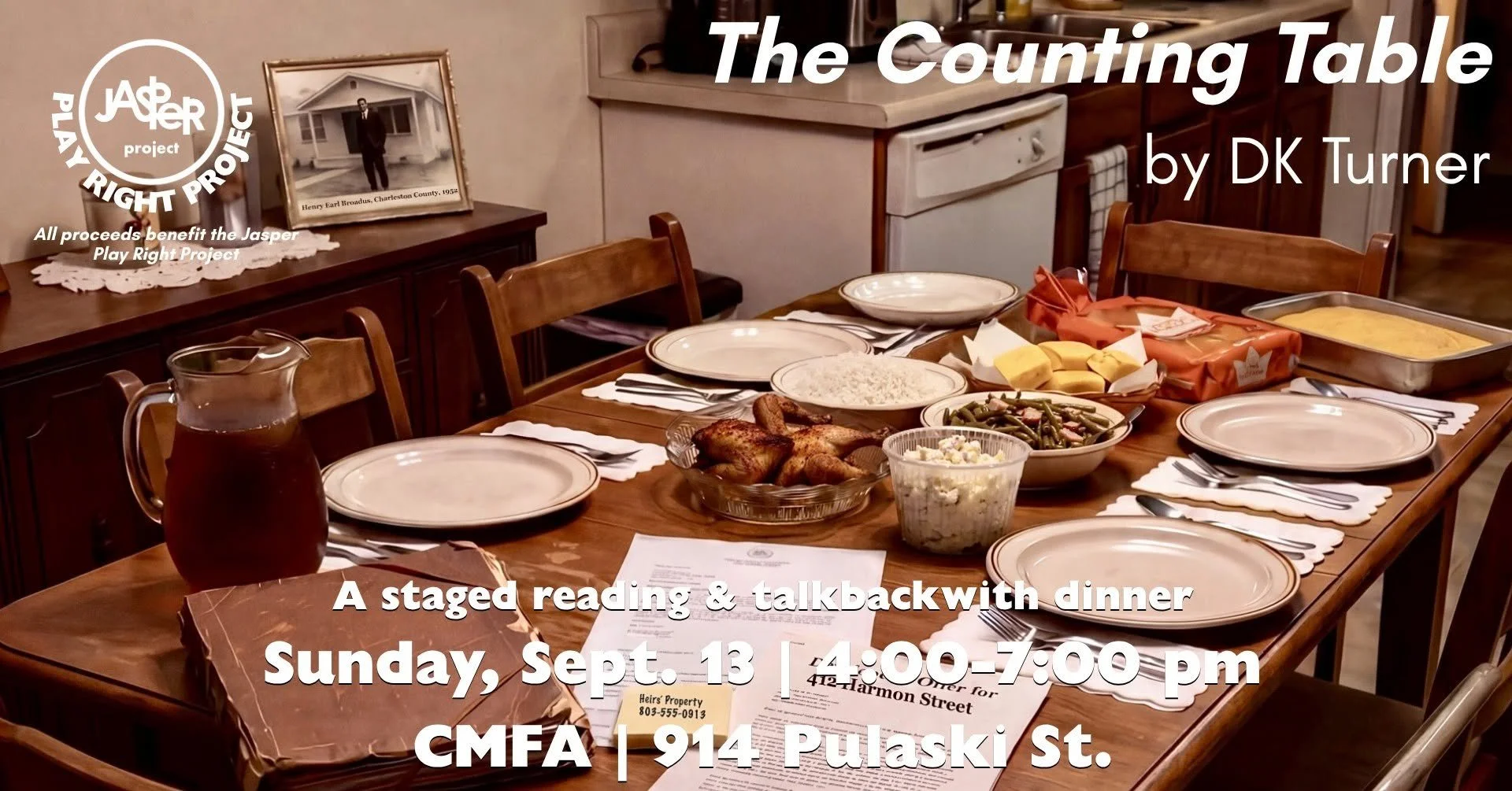
Jane is the theatre editor for Jasper Magazine, a member of the Jasper Project board of directors, and she just finished up serving as leader of the 2026 Play Right Project which midwifed D.K. Turner’s wonderful play, The Counting Table, onto the literary landscape.

How many local theatres can you name here in the Midlands? More importantly—how many have you actually visited or been involved with? Do you find yourself loyal to just one theatre, or do you venture out to Lexington, Chapin, or even Newberry to see or participate in or see work on other stages?

Right here in the Columbia area, we’re home to an impressive lineup: Town Theatre, Workshop Theatre, Trustus Theatre (with both its Mainstage and Side Door spaces), Chapin Theatre, Village Square Theatre, Soda City Theatre, Broad River Arts Center (BRAC), and The South Carolina Shakespeare Theatre, which performs on multiple outdoor stages. Add to that the University of South Carolina’s three venues—Longstreet Theatre, Drayton Hall, and the Benson Theatre black box—and you have a remarkable number of creative spaces for a community our size.

That doesn’t even include the region’s thriving youth programs, such as Columbia Children’s Theatre and Broadway Bound, or the classes and performance opportunities offered by nearly every community theatre. Harbison Theatre at Midlands Technical College also hosts a wide range of professional productions while providing space for local companies with larger-scale needs.

And with these spaces comes something even more valuable: people. The Midlands boasts a deep well of talented actors, directors, musicians, designers, and volunteers who care deeply about the work. It’s a vibrant, passionate theatre community—and we’re lucky to have it.

But that talent pool, as strong as it is, isn’t endless. And lately, there’s been a growing concern that we may be stretching it thin—not because of a lack of passion, but because of how we’re operating within our own ecosystem.

“Because at its core, theatre is about connection.”

In recent seasons, there’s been a noticeable trend: multiple theatres producing the same—or very similar—shows within a short window of time. It’s easy to understand why. Everyone wants to bring in audiences. Everyone wants a successful run. Familiar titles and newer, buzzworthy shows feel like a safer bet when the goal is getting “butts in the seats.”

But it raises an important question: are we truly serving our audiences—and ourselves—when we program this way? Are we building something sustainable, or are we unintentionally competing for the same limited resources?

Curious about whether this was unique to Columbia, I turned to a national Facebook group, Community Theatre Resource Group, and posed the question. The response was immediate and overwhelming. Dozens of theatre-makers from across the country chimed in, and the consensus was clear: this isn’t just a Midlands issue. It’s happening everywhere.

Stories poured in of overlapping productions—sometimes in the same city, sometimes within just a few miles. Popular titles like Kinky Boots, The Play That Goes Wrong, Frozen, and Come From Away appear multiple times in the same season, often drawing from the same pool of actors and audiences.

Many pointed to a shift in how production rights are managed. In years past, licensing companies maintained tighter control, limiting how close in proximity or timing the same show could be produced. Today, with fewer companies controlling more titles, those restrictions have loosened significantly. The result? A kind of theatrical free-for-all.

To be clear, no one is doing anything “wrong.” The desire to produce exciting, recognizable work is natural—and necessary. But without communication, we may be unintentionally undercutting one another.

And yet, within those same national conversations, there were glimpses of a different approach. Some communities have found ways to collaborate rather than compete—sharing calendars, coordinating seasons, even creating joint awards programs that celebrate the entire theatre ecosystem. In those places, success isn’t measured by one theatre’s box office, but by the health of the community as a whole.

That’s the model worth striving for.

Because at its core, theatre is about connection. It turns first-time attendees into lifelong supporters. It builds relationships. It creates community. An audience member today might be a volunteer tomorrow, a donor next season, or even a performer down the line, especially in a community theatre setting. Every production is an opportunity to grow that circle.

“The goal isn’t uniformity—it’s balance.”

When we think of ourselves as competitors, we risk shrinking that opportunity. But when we think of ourselves as collaborators—as part of a shared mission to keep theatre alive and thriving in the Midlands—we expand it.

Actors already understand this. They move fluidly between companies, following roles that excite them and working with artists who inspire them. Loyalty isn’t tied to a single stage—it’s tied to the work itself. And from an audience perspective, there’s something refreshing about seeing new faces in new spaces, discovering different interpretations, and experiencing the breadth of talent our community has to offer.

Still, there are practical realities to consider. Casting is challenging, especially when multiple productions are drawing from the same pool at the same time. Directors know how difficult it can be to find a full cast of “triple threats”—performers who can sing, dance, and act at a high level. When several theatres are producing similar shows simultaneously, that challenge only intensifies.

Audiences, too, are affected. With overlapping productions, they’re forced to choose—sometimes missing out on shows they might otherwise have attended. And as actors move between theatres, their friends and families follow, creating a ripple effect that spreads audiences across venues. While that can introduce people to new theatres, it can also dilute attendance when too many similar offerings compete at once.

“… when one theatre succeeds, it doesn’t take away from the others—it adds to the cultural fabric of the entire region.”

So what’s the solution?

It doesn’t require a major overhaul—just a shift in mindset. Communication is a powerful first step. Imagine if theatre leaders, board members, and directors gathered once a year—virtually or in person, to share season plans, compare calendars, and look for opportunities to complement rather than compete.

From there, collaboration could grow naturally. Costumes, props, and even set pieces could be shared or rented between companies. Knowledge and resources could flow more freely. And programming could become more intentional, offering audiences a wider variety of experiences across the region.

The goal isn’t uniformity—it’s balance.

The Midlands has everything it needs to be an extraordinary theatre community. The talent is here. The passion is here. The audiences are here. What’s left is the willingness to work together in a way that strengthens the whole.

Because when one theatre succeeds, it doesn’t take away from the others—it adds to the cultural fabric of the entire region.

And that’s something worth building, together.


Jasper Galleries Presents the Opening Reception for Wilma Ruth King at Harbison Theatre

Friday September 18th 6:30 pm

Harbison Theatre, 7300 College Street, Irmo, SC

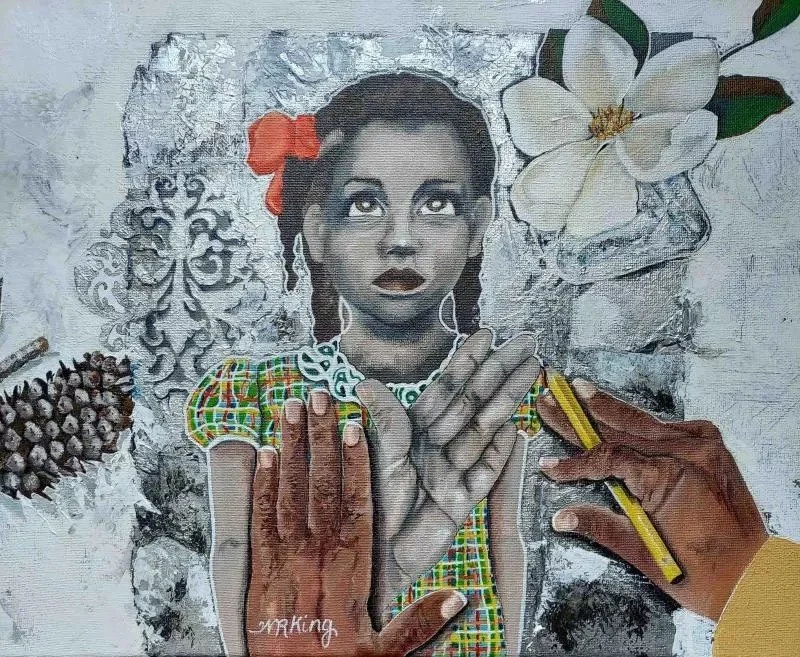
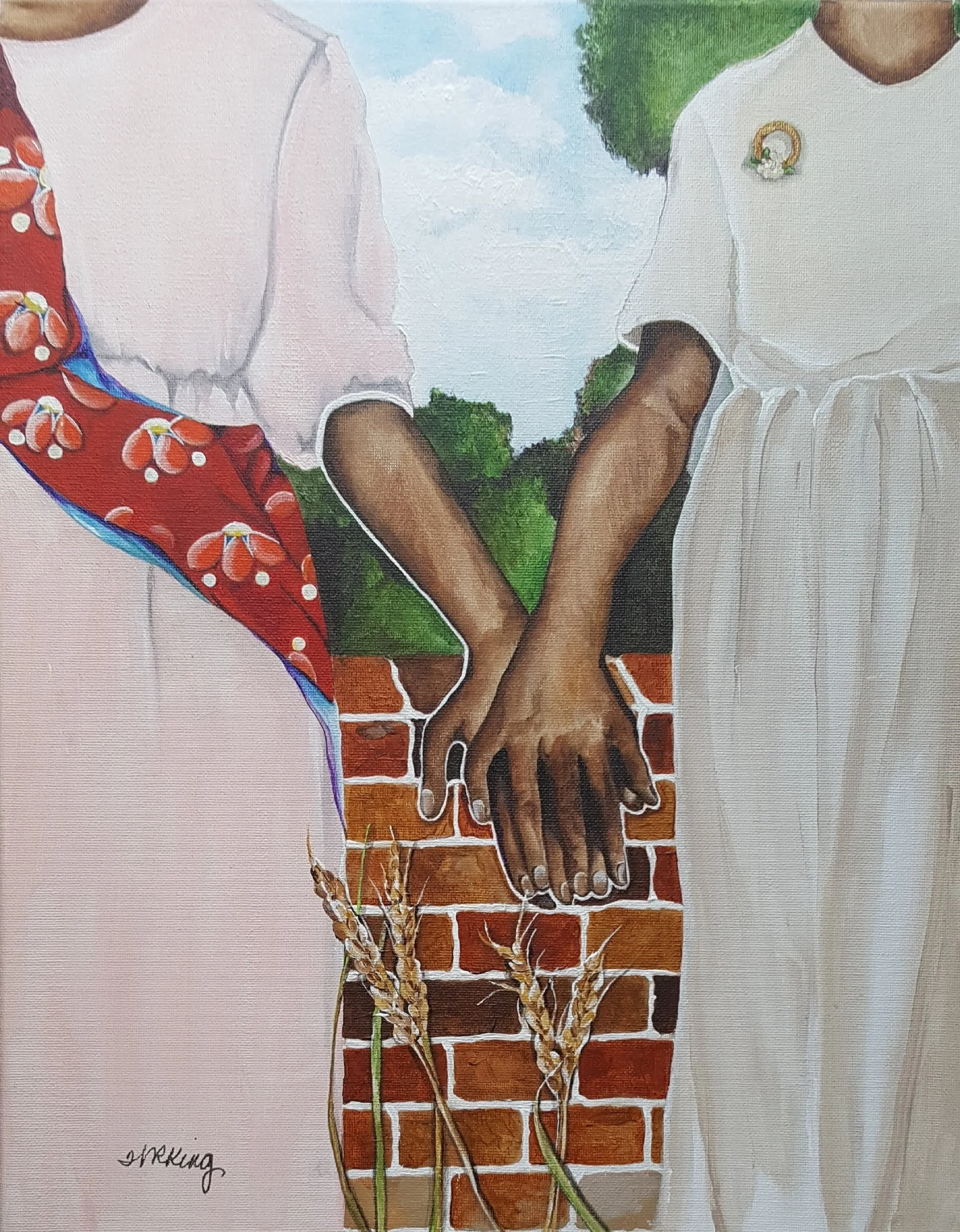
Join The Jasper Project on Friday night, September 18th at Harbison Theatre for a reception honoring our featured artist, Wilma Ruth King.

Beginning at 6:30 PM, guests are invited to explore the exhibition and meet King before the curtain rises for Mike Super's "Three's A Charm." Artwork will be available for purchase.

The exhibition is free and will remain on view through December 2026.

Artist Bio:
South Carolina native, Wilma R. King, endeavors to combine her experiences of living in 11 states (including Alaska) with her educational background into a visual storytelling collaboration through her painting. Her pursuit and passion goes beyond a daily practice of technique and development. She believes that universality — seeking common ground — is what makes art purposeful. She taught public relations, communication studies, advertising design, publication design, and photography for more than 30 years in American universities in Kentucky, Tennessee, New York, Virginia, Texas, and South Carolina, and taught Study abroad courses in Italy several years. She was an associate professor of Public Relations at both Western Kentucky University (Bowling Green, KY) and Rochester Institute of Technology (Henrietta, NY), and served on faculty at Benedict College (Columbia, SC), where she wrote the curriculum for, and taught the first courses in the college’s now defunct commercial art program; O’More College of Design (Franklin, TN); Texas Southern University (Houston, TX); The Art Institute of Houston (Houston, TX).

Artist Statement:
I am a contemplative contemporary painter. The context of my paintings is based on personal memories, and my style is described as a montage of times, places, and spaces. My goal as an artist is to give broader meaning to my personal experiences, build long-term relationships with communities, invite two-way communication, embody, expand, and present art and culture as significant and socially responsible. I seek to tell inspiring stories about the communities and cultures that were significantly changed, destroyed, or devastated, and to preserve the memories through my paintings.

I also share my love of art and my skills as an artist to positively affect others, particularly through portraits of children with special challenges or those in various stages of cancer, living out their dreams. In addition, some of the most important work I’ve done was commissioned to hang in private homes. Such works include a painting for a fellow parishioner who could no longer attend Eucharistic Adoration as she had done so for years, so wanted to create a prayer room in her home; a painting requested by a 9-year-old that represented his longing to hug his grandmother while she suffered with the shingles; and, a painting from my photographs of neighborhoods in Italy for a third generation Italian family who had never been there; a painting for a young woman who was able to purchase a house after living in a motel for two years, Portraits of children with special challenges or those in various stages of cancer living out their dreams. Of equal significance to me -- five of my paintings hung in the office of a mental health counselor, and another one in an office of a Ronald MacDonald’s House.

The exhibition is free and will remain on view through December 2026.

REVIEW: Jon Tuttle Reviews Dear Evan Hansen at Fine Arts Center of Kershaw County

“So Big/So Small”: Evan Hansen Takes Camden

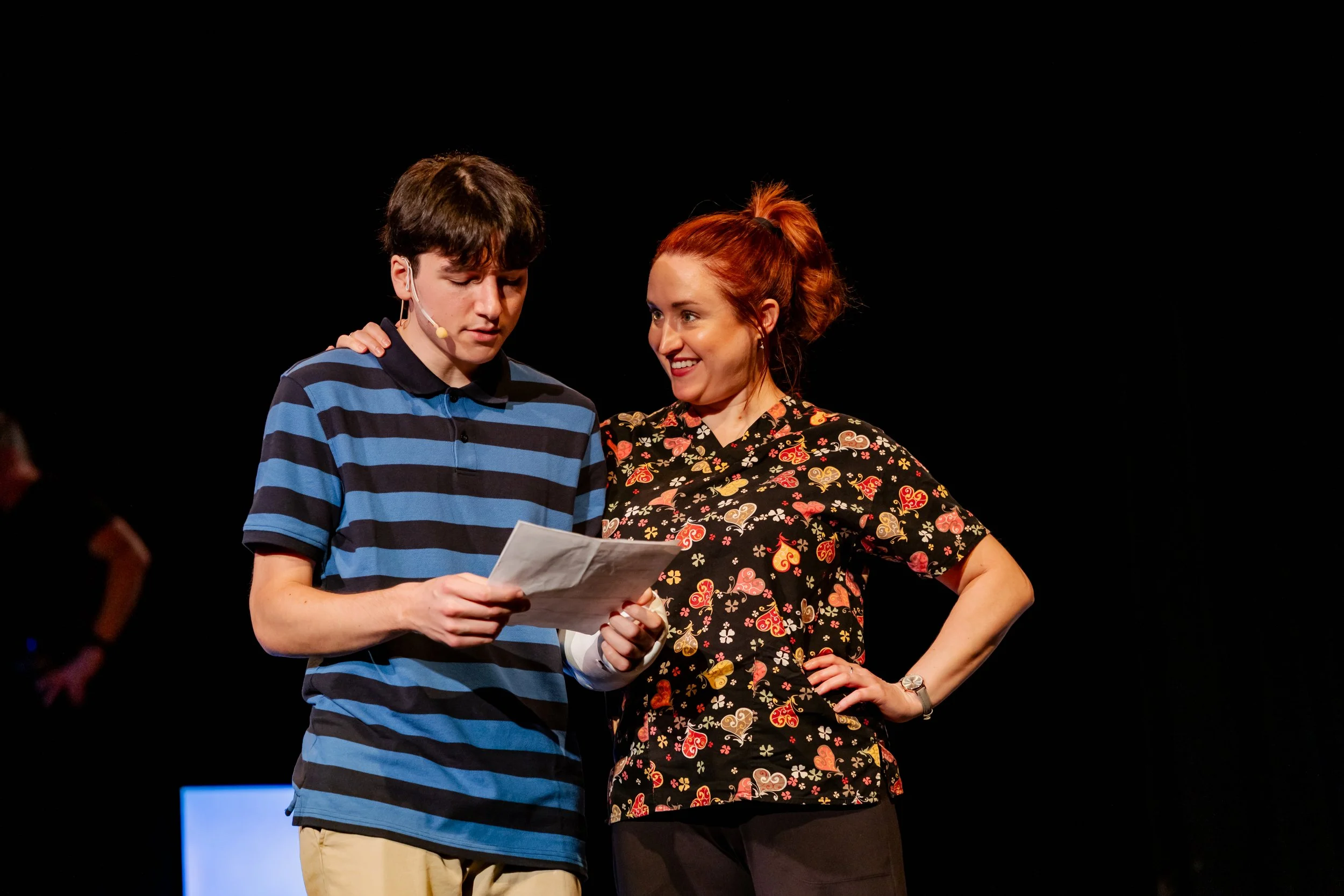
Kyle Mayson with Dominic Coletti

The Arts Center of Kershaw County describes its production of Dear Evan Hansen as “a remarkable musical about loneliness, belonging, and our very human longing to be seen and understood,” and all of that’s true, but let’s say it’s about much less.

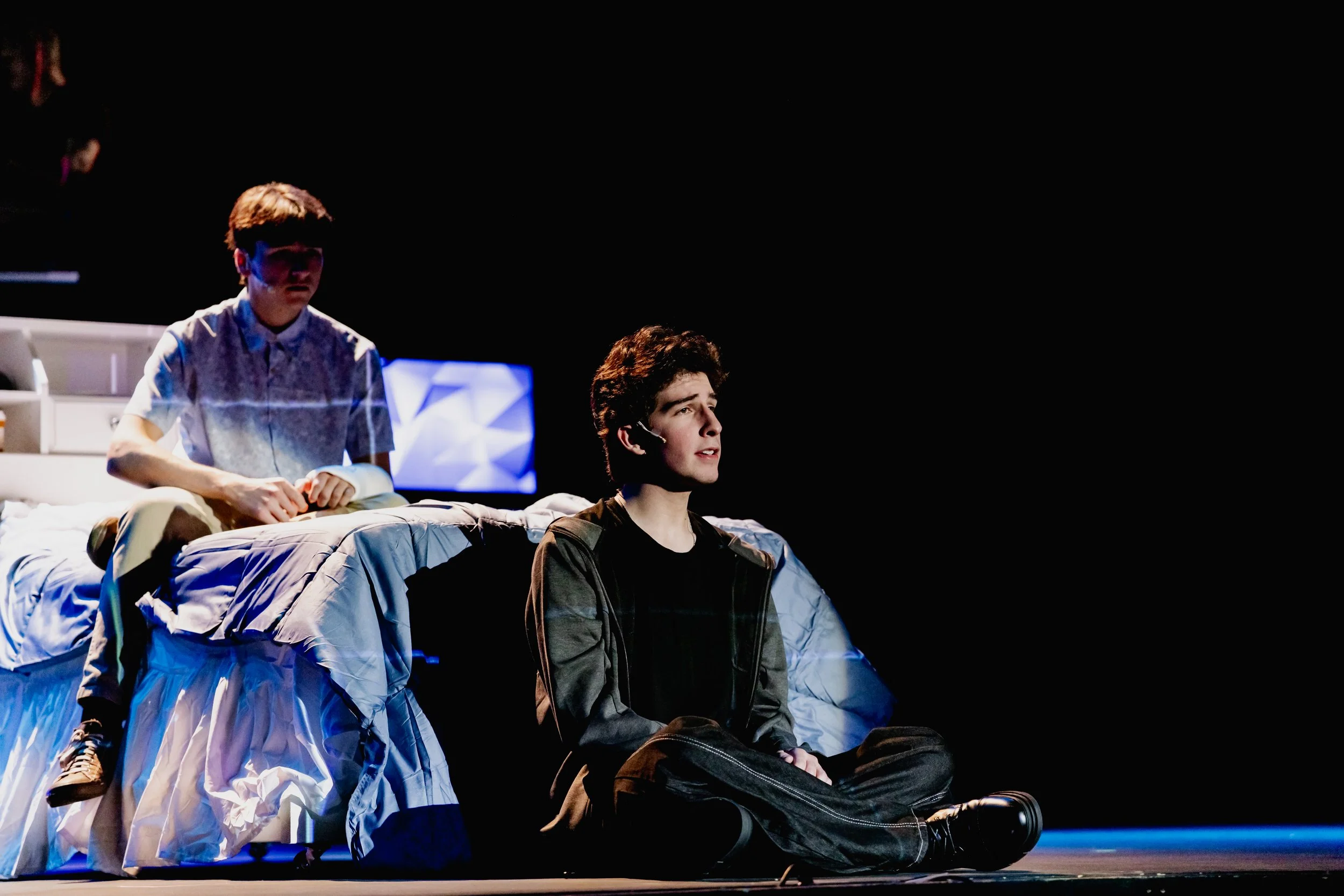
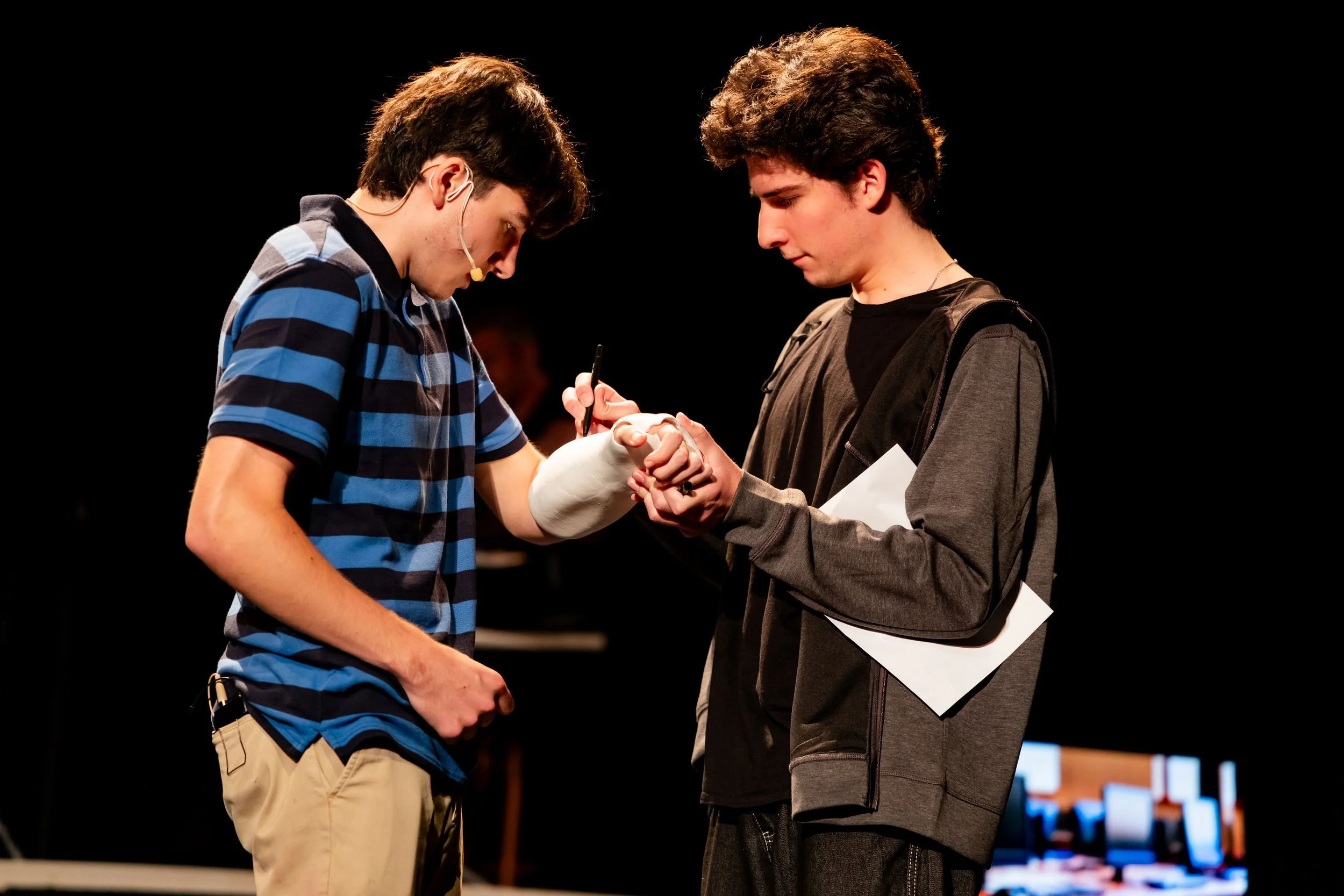
Let us say, oddly, that this is a show about only its production elements—the scene design, the lighting and sound and so on—and presents, therefore, as a hyper-techno-cyberscape in which people exist only as extensions of their gadgetry. The set is spare, cold, consisting primarily of television monitors on which are displayed representations of a remote dimension: a suburb, a lawn, a bedroom, a school, a toaster, a coffee maker. On the proscenium curtains and flat black surfaces appear The Matrix-like, computer-code-looking social media posts while, between beats, electronic beeps and bloops remind us that our lives are now virtual. At times, a laser-like grid appears, graphing the world like a brutalist wall of windows through which we all desperately wave or, on one particularly stirring occasion, fixing a crosshairs on the broken heart of our distraught, eponymous protagonist.

Upstage, on a riser, with no attempt to disguise it, is the band, consisting of eight fine musicians (Katie Miller, Patty Boggs, Cully Salehi, Kathryn O’Shields, Dottie Hanlin, Nigel Grant, Kevin McKinney, and Christopher Cockrell who, pro that he is, conducts from the keyboard.)  No attempt is made to create a mise-en-scène that is what we’d call realistic. Rather, this production channels Brecht in that it constantly shows us that we are always being shown something—that these characters are not people but figments, and that by extension we are all just ghosts in a machine. To sum up: this medium is the message. It’s all stunning and disturbing.

Even before the lights come down, fans of director Chad Henderson (who is also the Arts Center’s Executive Director) will immediately recognize his virtuosity. Since his days helming Columbia’s Trustus Theatre, he has solidified a reputation for pushing the limits of the theatrically possible. Here, he is aided ably by lighting designer Sebastian Liafsha, sound engineer Cam Mullikan, media designer Chris Harre, and other members of his crew. He also masterfully choreographs a cast of veterans and newcomers from around the midlands who provide the play with what it desperately needs: a soul.

On which note, let us now say, incorrectly, that this production of Dear Evan Hansen is only about parenting, particularly the agony endured by Larry and Cynthia Murphy, who have recently lost their teenage son Connor. Dad’s coping mechanism is a refusal to feel anything, while Mom’s consists of the nearest available trends—Pilates, eastern mysticism, farm-to-table organics. As played by Kevin Bush, who commands every stage he sets foot on, and Jennifer Erickson, for whom this role is a debut, Larry and Cynthia break our hearts by trying to steel their own. So poignant as to leave bruises is their attempt to replace their lost son with our distraught, eponymous protagonist.

Meanwhile, our protagonist’s mother Heidi (played here by Brittany Hammock, of whom this reviewer can never speak highly enough) is a study in maternal resilience, having been abandoned by her husband and left to juggle jobs and coursework and housework with the needs of her damaged son. Her song “So Big/So Small,” in which she swears never to abandon him, is just as heart-rending as Larry’s serenade to late son’s baseball glove. To sum up: if this production of Dear Evan Hansen were about nothing else, it would be about the futility of trying to raise healthy children in a world that isolates them in their rooms and reduces them to beeps and bloops and tweets and likes.

Kevin Bush

Kyle Mayson with Brittany Hammock

If that’s all there was—if Dear Evan Hansen were about only its production values and parenting—it would never have moved to Broadway and won six Tony Awards, including best musical, best score and best book for its creators Benj Pasik, Justin Paul, and Steven Levenson. Nor would the Washington Post have called it “One of the most remarkable shows in musical theatre history.”  It would be unspeakably bleak.

It is not. It’s actually quite charming at times even hilarious as it confronts what Henderson calls “our fundamental need for real human connection. It explores that need through the lens of social media and online communication, revealing how these tools can sometimes become an unhealthy substitute for genuine relationships.”  Henderson licensed the play for his September slot to “start the season off with a bang” and to give his audience the opportunity not just to witness good theatre, but to “participate in it. There’s something especially powerful about experiencing this story live: in a play about the challenges of connecting with one another, the audience, the cast, and musicians are all sharing the same human experience together in the same room.”

That room, as the play begins, is the bedroom of its distraught, eponymous protagonist, a high schooler hobbled by awkwardness, hopelessness, and friendlessness. He, Evan, is discovered writing letters to himself—an exercise recommended by this therapist to buoy his drowning spirits. From the very top, then, Dear Evan Hansen announces itself as a play about a boy trying to befriend himself. As it goes, it becomes a valentine for anyone who has ever felt the same, which, judging from the ovation it received on opening night in Wood Auditorium, is everyone.

The inciting incident is, figuratively and perhaps literally, a bang: the death, by his own hand, of the aforementioned Connor, whom we get to know only briefly as a callow jerk. But then, as the play continues, we reinterpret him as an outcast who, in a world full of fashionable influencers, never stood a chance. As played by Dominic Coletti, for whom this is also a debut, and a fine one at that, Connor is not callow but so embittered by isolation that he must mete out his revenge on himself.

The rest of the first act traces the machinery of myth-making—the resurrection of Connor as a saintly but misunderstood martyr. It is Evan who, inadvertently and reluctantly, spearheads this Connor Project, as it is called. Abetted by fellow cultists Jared Klineman (Sam Siceloff) and Alana Beck (Jayda Bracey), Evan spins himself in a web of deceit woven partly from his own good intentions and partly from our culture’s hypocritical insistence on lionizing its casualties. Their collective desire for visibility drives them to such absurd extremes as an online fund-raising scheme to purchase an orchard.

The orchard is crucial but hard to explain. It is, let us say, a real place, but extinct now, defunct. It is therefore the old world, the organic, Edenic world, where grew the very apple of knowledge which destroyed it. The orchard is a brilliant device that reminds us of all we’ve lost, which is our innocence, our minds, and our way.

In the second act, Evan’s rise to social prominence not only necessitates his fall but quite wonderfully complements it. Sure, he manages to score a beautiful girlfriend, but she is Zoe, Connor’s own sister, who would be devastated if his subterfuge were revealed. Tension becomes panic. No wonder, then, that Evan eventually appears in a bland hoodie very much like the one worn by Connor: they are melding. Evan is about to lose his grip—or let go.

One of the most wonderful ironies in the play is that, for a boy trying desperately to like himself, he has an audience full of fans who adore him. This is owing to actor Kyle Mayson, who embodies Evan magnificently. Mayson is, according to his bio, a theatre veteran of eight years. In that time, he has clearly mastered timing, posture, pitch, timbre, gesture—everything necessary to inhabit a goofy, endearing, lost soul without appearing merely to imitate one. To sum up: Mayson is a revelation and well worth the price of admission.

Zoe, his romantic counterpart, is played by Bella Coletti Pender. You’d think that all this young talent might render this production sometimes clunky and amateurish. You would be mistaken. Guided, presumably, by Henderson’s high standards, Pender and the other actors engage us as recognizable, realistic characters trapped in a synthetic world.

Are there problems? Sure. Not all the actors hit all their consonants. Sometimes, volume levels between those playing and those singing are in conflict. And, as for the writing, more jaded viewers might object to the play’s reliance on such platitudes as “everybody matters.” 

What is equally true, however, and what Evan Hansen is really about, is that everybody fabulates. It’s a theme that runs through plays as disparate as The Iceman Cometh, Who’s Afraid of Virginia Woolf, and The Playboy of the Western World: our identities are built on lies. How else could we survive?


Dear Evan Hansen runs at the Arts Center of Kershaw County on Thursdays, Fridays, and Saturdays (and one Sunday) through September 26. Admission is $30 and up.

Tissues are encouraged.

Tickets available here.


Jon Tuttle is author of The Trustus Collection (2019) and editor of South Carolina Onstage (2024).

Photography by Perry McLeod.


REVIEW: Beth DeHart Reviews Come From Away at Village Square Theatre

by Beth DeHart

Our grandparents could tell us where they were when they heard the news that Pearl Harbor had been attacked. Our parents could tell us where they were when they heard that John F. Kennedy had been assassinated. We can tell you where we were on the morning of September 11, 2001.

The attacks on America that day changed our nation forever. Twenty-five years later, it can be hard to believe that so much time has passed. To those of us who lived through it, it certainly doesn’t seem that long ago. Yet much has come from the tragedy of that day, including many beautiful things—art, music, and even theater.

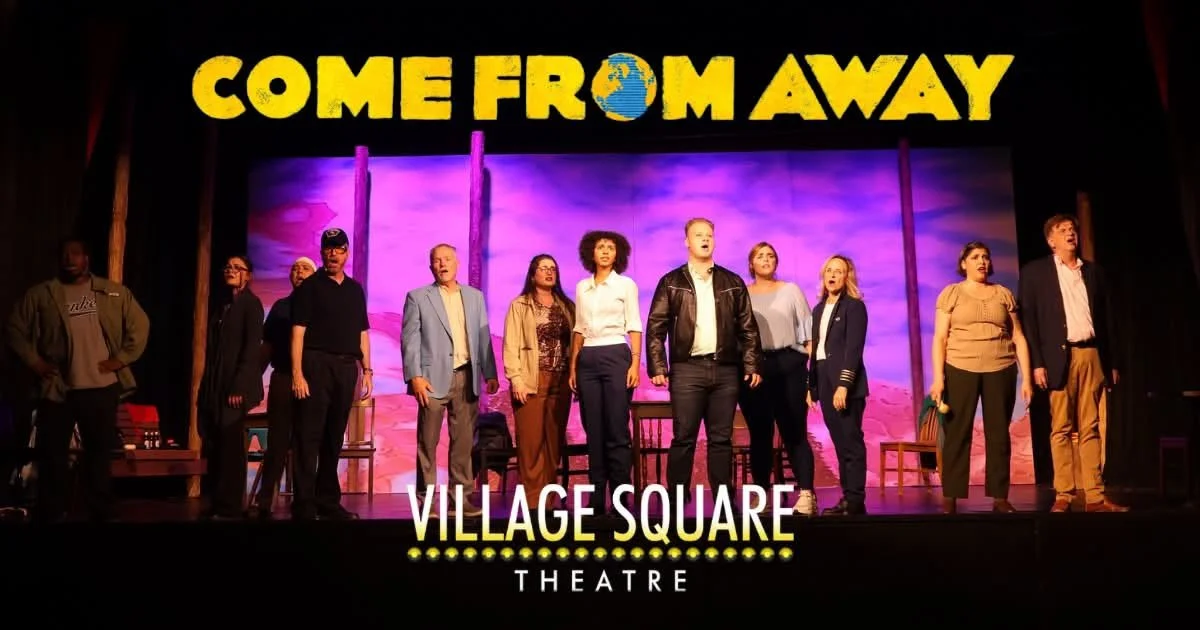
On September 11, 2026—25 years to the day after the horrific events of 9/11—Village Square Theatre opened its production of Come From Away. Director Pat Gagliano mentioned that dozens of theaters across the nation did the same. It seems fitting that, on this anniversary, theaters would offer something beautiful in homage to a day remembered for terror and tragedy.

Come From Away is the celebrated musical by Irene Sankoff and David Hein about the small town of Gander, Newfoundland, which welcomed 7,000 stranded airline passengers in the aftermath of the September 11 attacks. When the United States closed its airspace, planes already in the air were diverted to destinations far from where their passengers expected to land that day.

At its heart, Come From Away is a simple story about human kindness—and one very worth seeing. But it is also a carnival of movement, action, and remarkable music.

Pat Gagliano admits that Come From Away is his favorite musical, which is saying something for someone who has spent more than four decades in theater education. That experience is evident in this production. Gagliano’s direction allows the performers and the people they portray to shine, which is ultimately what this story is about.

The set, effects, lighting, and costumes are intentionally minimal, allowing the story to take center stage. There is nothing grand about these people or their lives. They are ordinary people who harness their ordinary kindness to change the lives of the “plane people” forever.

The show features a true ensemble cast, with every actor playing multiple roles while singing, dancing, carrying chairs, and changing costumes—all seemingly at once. The cast does a beautiful job juggling the many fast-moving parts of the production.

The only permanent piece of scenery is the enormous painted scene at the back of the stage depicting Gander as seen from an airplane window. Everything else is created through chairs, a few tables, and quick costume changes. The cast appears completely at ease with all these moving parts, with nary a hiccup or hang-up. They move effortlessly through shifts in energy, tone, humor, and emotion, keeping the audience fully engaged. This production is unpretentious yet powerful. On opening night, the audience could not get out of their seats fast enough to offer a standing ovation.

Hats off to Amanda Hines Wrona for excellent music direction and to Katie Hilliger Page for impressive dance choreography. The full cast deserves mention by name, as each person played an equally key role in presenting the story: Heather Miller, Kaeleigh Miller, Olivia Wamai, Kristin Ferrante, Caroline Clarke, Kristi Parker Byers, James Galluzzo, Nick Good, Eric Jewell, Jordan Mendenhall, Todd Gustafson, and Frank Thompson.

Kudos also to Matthew Fuller for scene and lighting design, Melissa Sheppard for costume design, Vicky Saye Van Horne as Associate Director, and Paula Riddle for her excellent Ugly Stick artistry!

Columbia continues to produce some incredible vocal talent, and this production is further evidence of that. One of the overarching highlights was the cast’s lovely harmonies and beautiful vocal pairings. Three moments in particular were enthralling: “28 Hours/Wherever We Are,” “Stop the World,” and “Somewhere in the Middle of Nowhere.” The vocals, energy, and storytelling in each were simply delightful.

We’ve all had those evenings that ended with the thought, There went two hours I’ll never get back. But if your evening includes seeing VST’s Come From Away, you won’t feel that way… Instead, you’ll go away singing “I’m an Islander,” and you may find yourself wondering when you can see the show again.


Memory is a Verb: Exploring Time and Transience

Ten Women Artists Examine Memory, Loss, Legacy, and the Meaning We Make of Time

PhotoSC will present Memory is a Verb: Exploring Time and Transience, an exhibition featuring the work of ten women artists from diverse geographies, experiences, and backgrounds. The exhibition opens September 17, 2026, at 918 Lady Street in Columbia, South Carolina, and runs through October 17, 2026.

The project began as a conversation during the COVID-19 pandemic, a time marked by fear, uncertainty, isolation, and loss. As the ten artists longed for a return to normal life, they also found themselves looking back—seeking comfort in their histories and in their connections with one another. The experience of the pandemic gave the group a chance to see the past differently. Rather than simply looking back with nostalgia, the artists in this exhibition ask what our memories mean to us now. What still matters? What has changed? And what is worth carrying forward?

The exhibition Memory is a Verb: Exploring Time and Transience has traveled across the country and has resonated with audiences along the way. PhotoSC is excited to present this important and beautiful work that travels to Columbia, SC from the Vermont Center of Photography in Brattleboro, Vermont. As Building Bridges Art Exchange curator and founder Marisa Caichiolo writes – “the idea that memory exists in the present moment is something that can also be applied to all the artworks presented. As a cohesive collection of works, the exhibition grounds memory as a vital concept in our fast-moving world.”

At its heart, Memory is a Verb is about our desire to connect, to remember, and to be remembered. The work is about honoring the past while deciding what to carry into the future. The exhibition invites us to consider what we hold onto, what we let go of, and what we leave behind. Through ten distinct perspectives, Memory is a Verb: Exploring Time and Transience explores how we make meaning from a changing world and from the lives we have lived.

The exhibition’s participating artists are Aline Smithson, Sarah Hadley, Diane Hemingway, Susan Lapides, Annette LeMay Burke, Rosalie Rosenthal, Lori Ordover, Dena Eber, Jennifer Pritchard and Elizabeth Bailey.

Jasper Announces Filmmaker Roster for our 2026 2nd Act Film Project

THE FILMMAKERS HAVE BEEN SELECTED!

The Jasper Project is pleased to partner with Coal Powered Filmworks to announce the roster of independent South Carolina  filmmakers selected to participate in the 2026 2nd Act Film Project, the 10th in the organizations’ history. More than 30 filmmakers applied to take part in the project with a total of 16 being chosen by a committee of judges to compete for prizes that include cash and artisan-created trophies. All 16 films will be screened at Harbison Theatre (7300 College St., Irmo, SC) on Thursday, October 15th at 7:30 pm.

The 2026 slate of 2nd Act Film Project filmmakers includes: Tom Baire, Jennifer Baxley, Chris Bickel, Jason Berry, William Clay, Ed Connolly, Mathew Cothran, Ethan Lopez, Jessica Lyle, Trevor Mawhinney, Chris Refo, Liz Stalker, Alex Steele, Trey Weaver, USC1080c, and Jonathan Raban and CIU students.

The brainchild of filmmaker Wade Sellers, the 2nd Act Film Project began in 2013 as a way to bring independent SC filmmakers under the umbrella of one project in order to foster collaboration and innovation, as well as to build community among SC filmmakers. The 2nd Act Film Project is unique in its structure: Participating filmmakers receive the 1st and 3rd acts of an unfinished filmscript. Their challenge is to write the 2nd act of the script and produce all three acts as a finished film. There is no fee to enter and selected participants are automatically awarded a $100 stipend to help with the creation of their films. Films must not exceed 6 minutes in length including credits.

Thusfar, Jasper’s 2nd Act Film Project has produced 100 films by independent SC filmmakers.

TOM HALL

At least $2500 will be awarded on the night of the official screening at Harbison Theatre, including the Tom Hall Indie Spirit Award for the best overall film, named for the late Tom Hall, a SC filmmaker and attorney whose independent film, Compromised, is cited as contributing to the removal of the Confederate Flag over the SC Statehouse. The Tom Hall Indie Spirit Award is sponsored by the Krewe de Columbi-Ya-Ya. Other prizes include the Audience Choice Prize as well as awards for Best Actor, Best Script, Best Editing, Best Cinematography, and Best Director.
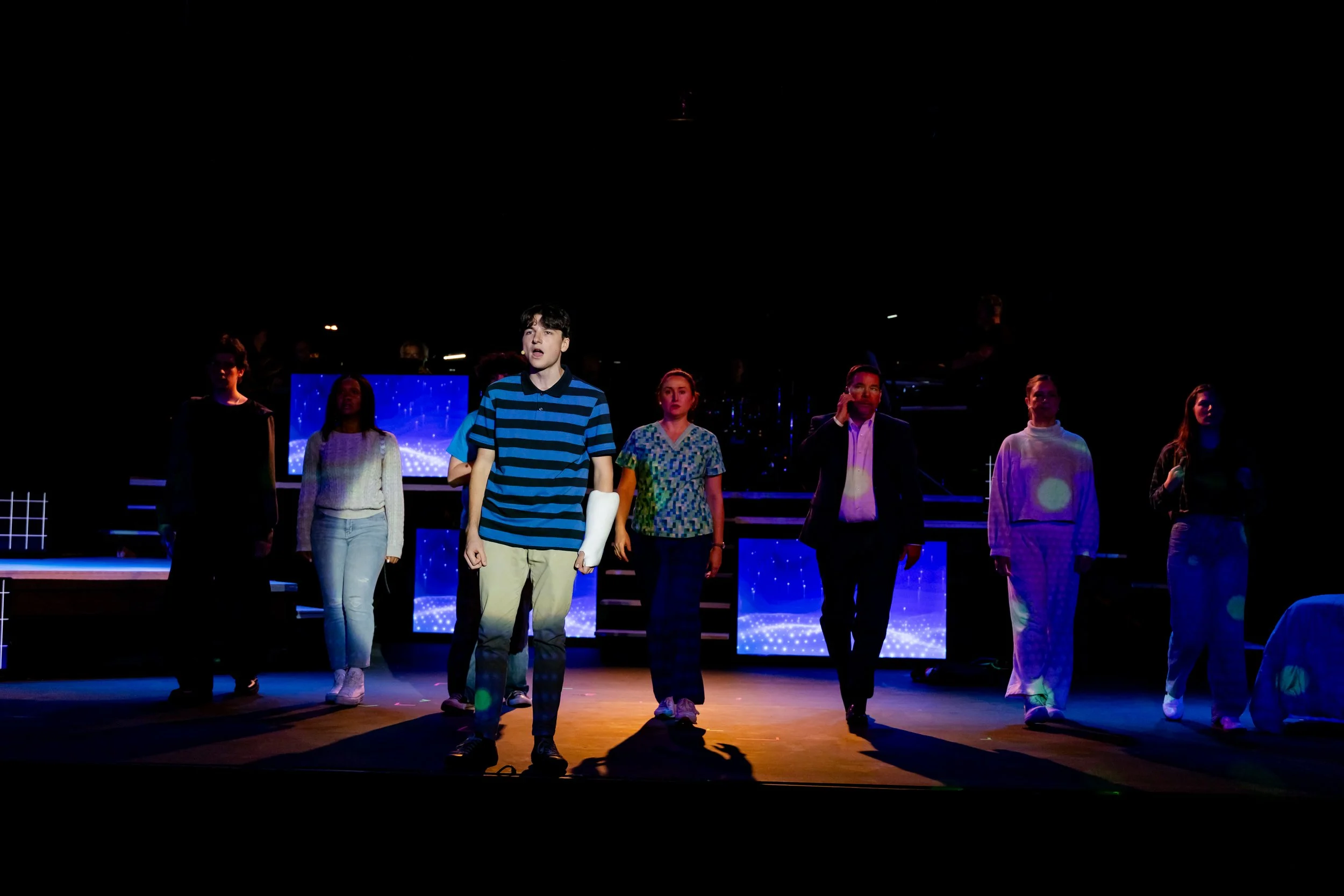
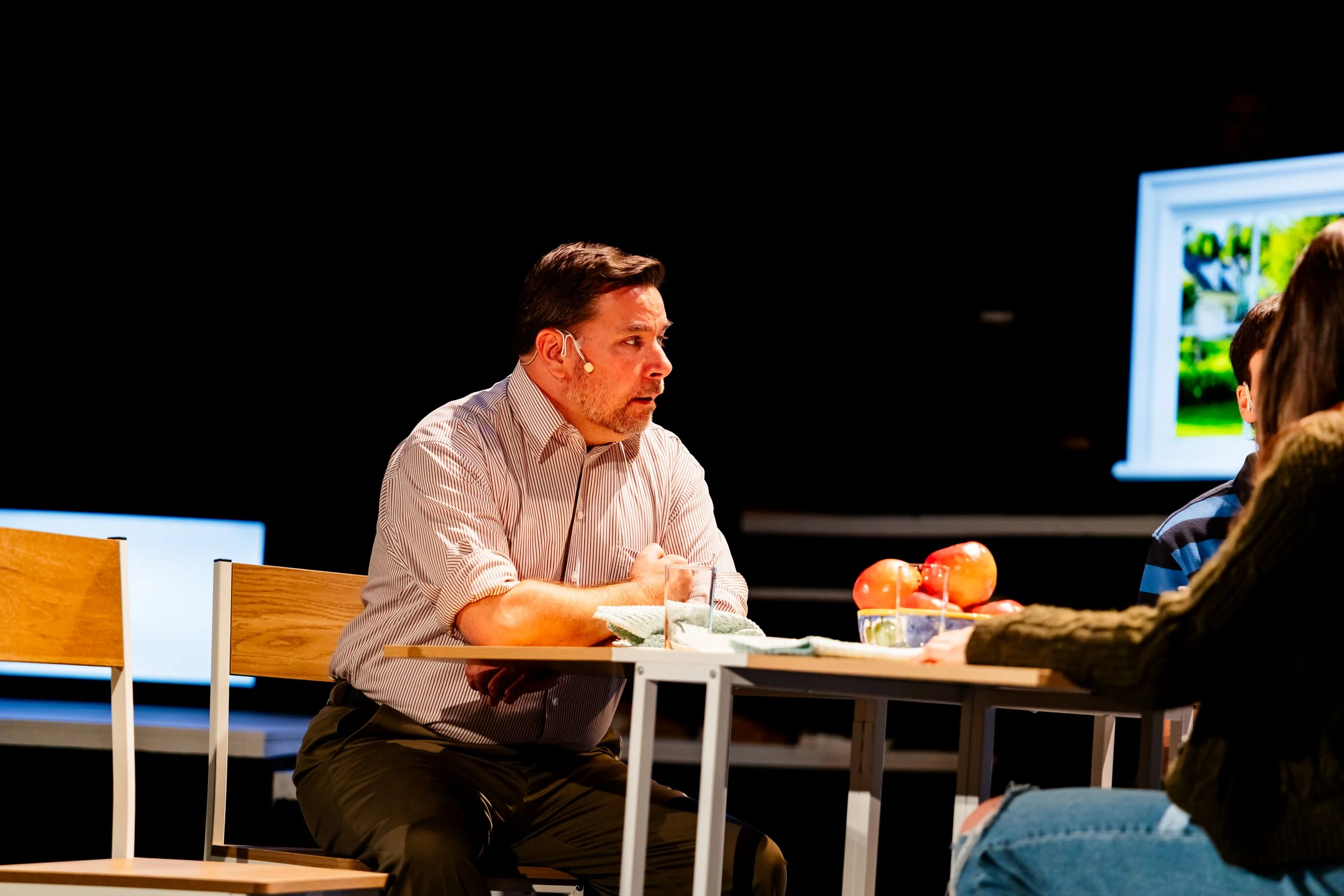
For more information about Jasper’s 2026 2nd Act Film Project contact Wade Sellers (above) or visit the website at secondactfilmproject.com where you can also buy tickets to the event.


Important Reminder: Sunday Sept. 6th is the Last Call for The Counting Table Post-Performance Dinner - DINNER TICKETS WILL NOT BE AVAILABLE AT THE DOOR

The Jasper Project Presents the Premiere Staged Reading of the Winner of the 2026 Jasper Play Right Project, The Counting Table by DK Turner, September 13 at 4 p.m. at the Columbia Music Festival Association.

This year, guests can break bread with the cast and crew following the play with a special meal inspired by The Counting Table ($25 for dinner + a ticket).

A LIMITED NUMBER of dinner tickets are still available but they MUST be purchased by midnight September 6th.

Advance tickets to the performance only ($10) will be available until September 12th.

Tickets to the performance only on the day of the show will be available at the increased price of $15.

Space is limited and this event is expected to sell out soon.

DINNER TICKETS WILL NOT BE SOLD AT THE DOOR. RESERVATIONS MUST BE MADE NO LATER THAN SEPTEMBER 6TH!

Jasper Welcomes Jana Willis as our Tiny Gallery Artist for September

Artist - Jana Willis (photo courtesy of the artist)

The Jasper Project welcomes artist Jana Willis to our 24/7 virtual Tiny Gallery!

Jasper’s Tiny Gallery is a virtual gallery that gives artists an opportunity to show a selection of smaller pieces offered at affordable price points attractive to beginning collectors and patrons with smaller budgets. Pieces can be any medium but must be under 15” x 15” and cost less than $200, with no more than 50% of works being above $100; artists typically show around 15-25 pieces.

Artists are featured monthly with a solo show for all months but December, which is group holiday show. This gallery runs via the Jasper website, so patrons have access to the art 24/7

Lapse in Vision by Jana Willis

About Jana Willis

Jana Willis is a visual artist from Columbia, SC who works primarily in oil, acrylic, colored pencil, and pen. They blend translucence, abstracted figures, and illusion to describe memory, spirituality, and insomnia. While pursuing a BFA in Drawing at the University of South Carolina, Jana exhibited work in the Visual Art and Design Showcase at the President’s House and Flux/Flow at the Southeastern College Art Conference in Cincinnati, OH. Since graduating in 2025, Jana’s creative inquiry has led to an interest in visual processing and phenomena and further experiments in layering, texture, and scale.

See more art by Jana Willis at Jasper’s Tiny Gallery page.

Distant View by Jana Willis

All visual artists in the SC Midlands are encouraged to apply to show their work in Jasper’s Tiny Gallery or one of the many other gallery spaces that we program! Our Galleries Committee selects artists for the coming season in the fall and will contact those who have been accepted at the end of the year.

Learn more about showing your work with jasper.

Apply here to show your work via the Jasper Project.

Calls for Art that You Want to Know About - ArtFields, Kershaw County, Cottontown, & McMaster

Sharing a few calls for visual art. Do you have anything to add?

From our friends at the Arts Center of Kershaw County -

Our Annual Holiday Market is returning to the Arts Center of Kershaw County, and we’re looking for talented local and regional artists to join us! 

From December 4–13, the Bassett Gallery will be transformed into a festive marketplace featuring unique, handmade works perfect for holiday gifting.

The best part? You don’t have to be here the whole time! Our Arts Center staff will handle sales throughout the market. We simply ask participating artists to:
Keep your inventory replenished as items sell
Volunteer for one day during the market
Bring your creativity and help us make this year’s Holiday Market special!

Whether you create paintings, pottery, jewelry, textiles, woodworking, photography, handmade goods, or something entirely your own—we’d love to hear from you.

APPLY HERE

******

From the SC Arts Commission, if you’re straight, I guess.

******

2027 ARTFIELDS SUBMISSIONS ARE NOW OPEN –

DEADLINE - NOVEMBER 1

All submissions must be completed and paid for by 11:59 PM on November 1st, 2026. Use our simple submission tool, ArtBooth, to upload your artwork photo, artist statement, and bio. The submission fee is $25.

Artists must reside in Alabama, Arkansas, Florida, Georgia, Kentucky, Louisiana, Mississippi, North Carolina, South Carolina, Tennessee, Virginia, or West Virginia for at least 6 months and be over 18 years of age.

  • 2. Acceptance

    All submissions will be reviewed by an independent panel of arts professionals and rated on a scale from 1 to 10 (1 = lowest score; 10 = highest score).

    Up to 400 artists receiving the top average ratings will be invited to exhibit and compete during the 2027 ArtFields Festival in Lake City, South Carolina.

    All artists will be contacted about their submission status via e-mail in December 2026.

  • 3. Invitation

    Venues will view accepted artworks through a private gallery and work with the ArtFields team to choose which pieces to display.

    Artists will be invited by the venue via email in February 2027.

    To confirm participation, artists will electronically sign an Artist and Venue Hosting Agreement.

    Then we’ll coordinate shipping/installation, and your artwork will become part of a town-wide celebration of art and compete for prize money!

    ******


Applications to participate in the Cottontown Art Crawl are now open.

All artists who wish to participate (including previous CAC participants and artists who reside in Cottontown) must complete the application (including payment) by Friday, October 16, 2026.

The 9th Annual Cottontown Art Crawl will take place on Saturday, March 6, 2027 from 10am-4pm. The rain date will be Sunday, March 7, from Noon-5pm.*
*Please make sure you are available for both dates.

APPLY HERE!

******

McMaster Gallery at USC