The following story is a preview from the print edition of the fall 2026 issue of Jasper Magazine.
SOUTH CAROLINA ARTS COMMISSION: NO QUEERS NEED APPLY
Commission Revokes Funding for Queer Voices, Migrant Art
By Ed Madden
Although the South Carolina Arts Commission’s (SCAC) official documents state that the agency’s mission “is to expand access to the arts and foster creativity for all South Carolinians,” recent decisions by the commission’s board suggest an agenda to restrict access to the arts only to some South Carolinians.
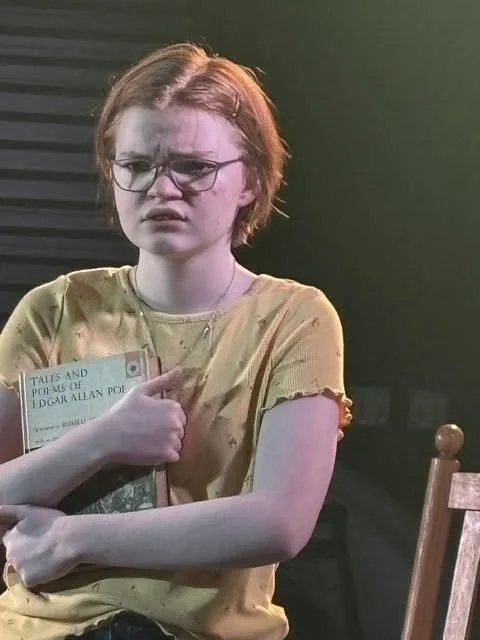
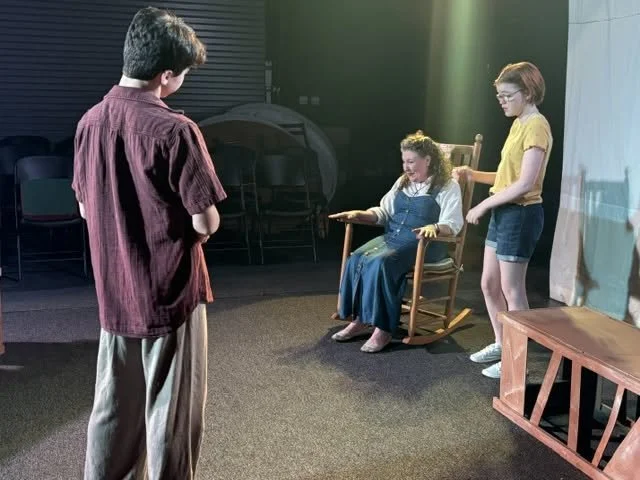
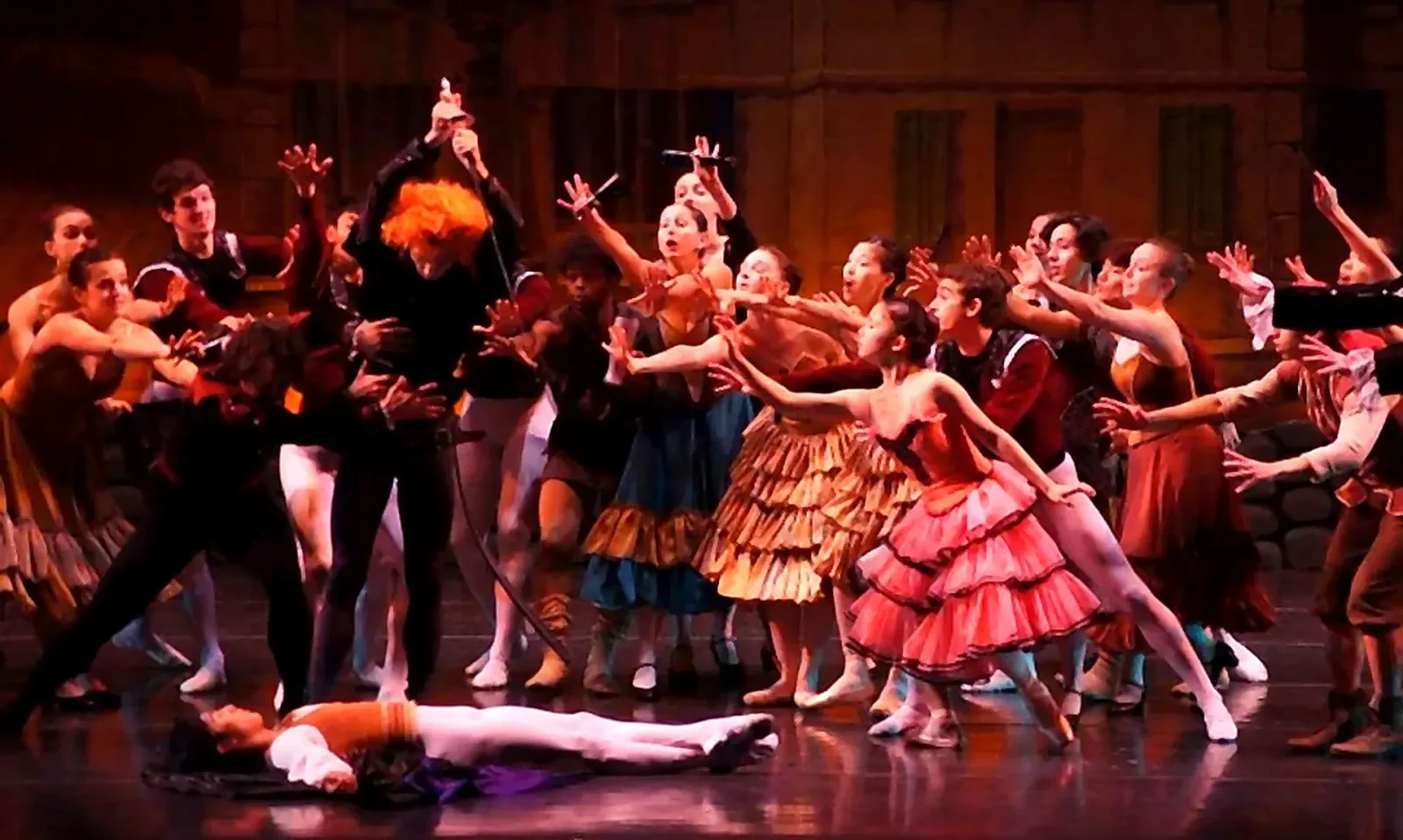
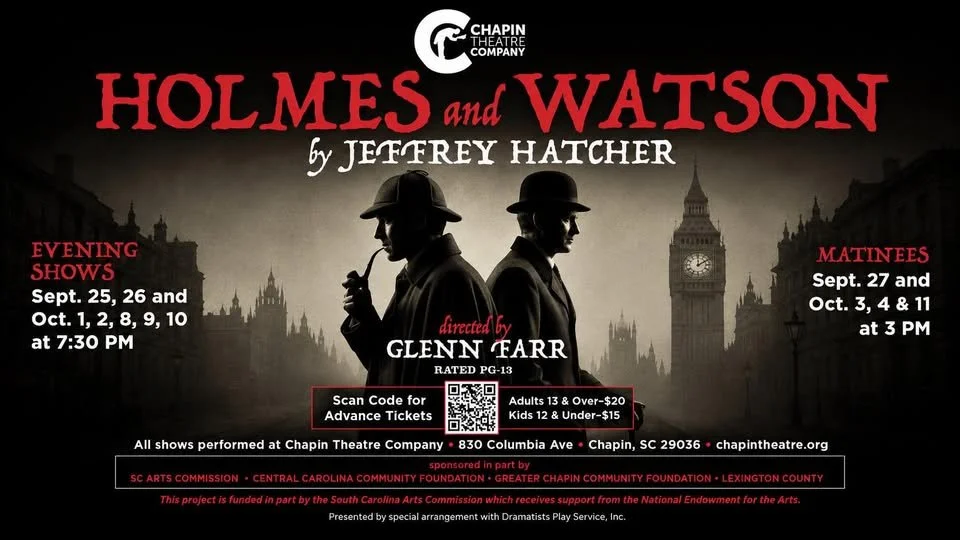
Earlier this year, instigated by objections from commissioners Jessica Rourke of Columbia and Russell “Rip” Parks of Easley, two LGBTQ arts organizations were singled out to defend their artistic merit. Official reviewers had recommended grant funding for both the Greenville Gay Men’s Chorus (GGMC) and Proud Mary Theatre (PMT) of Spartanburg. Though the board members questioned the artistic merit of the organizations, their actions made it clear that “artistic merit” was merely cover for anti-LGBTQ political bias—as they cut the recommended funding without explanation.
The board members also changed the rules at the last minute, passing a disingenuous resolution about “ideology” that they applied retroactively and that they have since used to attack other minority voices. Only two weeks after they killed grants to the chorus and theatre, they singled out a Latina artist whose work focuses on migration, removing her from an approved emerging artist roster, denying her grant, and calling her work too political by citing the resolution. The SCAC has thus established a precedent for discriminatory treatment of LGBTQ artists and organizations, and the subsequent action indicates that in doing so they have found a way to suppress other views they dislike. If “artistic merit” won’t do the work of shushing gays and erasing migrants, then calling minority arts “ideological” will do the job instead.
A Little History
In June 2026, the SCAC paused distribution of about $3.7 million in grant funding for more than 170 arts organizations after Rourke and Parks objected to grants recommended for the GGMC and PMT. Both organizations had received grants in the past and were recommended for funding again by outside review panels that evaluated artistic merit and community impact: $13,000 to the chorus for operating expenses, about $4,000 to the theatre to support the production of two upcoming shows.
In communications obtained by the ACLU of SC, Rourke informed commission staff that she would vote against the funding “based on a personal and governance principle that commission funding should not be directed toward organizations structured around specific sexual orientations, nor should public funds support drag performances.” Lest one focus too carefully on her “personal” objections, Rourke said her decision aligned with federal executive orders about “gender ideology”—orders that have been ruled unconstitutional and are currently in appeal. Reviewing Proud Mary Theatre’s website, Rourke complained that the theatre “seems to also not offer any other educational options just says they showcase the voices of LGBTQ+ community” (as if highlighting marginalized voices isn’t educational). Parks accused both organizations of promoting “their agendas,” and said their art was “totally inconsistent” with what the commission should be promoting.
None of their objections were about artistic merit.
Although interim executive director Ashley Brown reminded the commissioners in a July 6 email that the same standards should apply to everyone—“we must apply the criteria for one applicant to all applicants”—commissioners promptly decided otherwise. At the August 20 board meeting, they singled out the two organizations to defend their “artistic merit” above and beyond what was required of all other organizations. Parks further suggested that in the future “controversial requests” like these be brought to the board in advance for additional adjudication, outside of the official review process.
In a telling slip, Parks said that “maintaining community standards” was the reason for his concern, before clarifying that he meant “artistic merit.” Similarly, when board attorney Ben Ziegler vocalized board concerns, he said they singled out those organizations to examine the “artistic merit of the subject matter.” They question whether art by and about LGBTQ people can have any artistic merit because their real objection is subject matter. “Artistic merit” is the ruse they use to deny funding to any representation of LGBTQ South Carolinians.
Just before they voted to make LGBTQ artists do extra work to prove their worth, the board passed the resolution on ideology, doing so quickly and unanimously, without reading it aloud, with no public discussion—indeed forwarding past it so quickly on the public video feed that it couldn’t be read at all. It was a prophylactic measure, intended to justify and enable the discriminatory moves they were about to take.
Three commissioners met privately, and possibly illegally, with Brown on September 17 to decide what to require of the two organizations. In a series of emails, they asked for line-item breakdowns of the budgets (including the names of employees or vendors). They asked if either organization had programming in K-12 schools. Both said no. Mary Adam, executive director of the chorus, told reporters that when she offered additional documentation of the chorus’s artistry, the board refused those materials.
None of their follow-up questions were about artistic merit.
With little notice, the board also moved up the vote on funding from the planned October 15 meeting to a special meeting on October 1, making the organizations scramble to submit paperwork earlier than previously required and limiting the window for public comment. With no discussion and providing no reason, the board then denied the grants to the two Upstate LGBTQ arts organizations. The vote was 5 to 3. Voting to deny funding were Parks and Rourke, with Linda Stern and Bhavna Vasudeva of Columbia and Danielle Thompson of Sumter. Voting yes were Heidi Carey and David Hodges of Columbia and Barbara Nwokike of Charleston.
The SCAC reminds us (in a note posted beneath the last board meeting YouTube video) that “the authority to award Arts Commission grants ultimately rests with the commissioners. Such decisions are within the commission’s discretion.” Still, transparency about such decisions is important—and the organizations and the arts community deserve to know how and why that decision was made. No explanation has been given beyond the whiff of bigotry that suffused the process. It seems that they knew what they were going to do, but they needed a rationale. The ideology resolution was their answer.
A Little Primer on Ideology
Drafted by Zeigler, the resolution on ideology touts the commission’s charge of “encouraging” rather than “limiting the freedom of artistic expression,” then proceeds to specify how it should be limited, citing “community standards,” as well as obscenity laws and references to K-12 standards on age-appropriate “subject matter,” dog whistles for broader political attacks on any representation of LGBTQ lives—including the ongoing villainization of LGBTQ instructors, the censorship of LGBTQ books, the effective erasure of LGBTQ kids. The resolution stipulates that no public funding go to any artist or organization that would “promote any ideology without regard to what that ideology might be.” It instructs staff to “disfavor any projects that promote any ideology.”
On September 15, all grantees received an email that their grant contracts were being updated with a new requirement that they certify “that no part of the grant funds covered by the contract will be used to ‘promote any ideology.’” Art, the memo absurdly insists, is without ideas: “Any inference of ideas or ideology is not inherent in the art itself, but instead in each individual’s interpretation.” They surely know this is ridiculous: from the “Hallelujah Chorus” to Angels in America, art is driven by ideas.
They offer further guidance with a specious definition that wouldn’t stand up in any art history (or Western civ) class: “Thus, any expression that is subject to more than one interpretation is art and not promotion. Conversely, any expression that can be interpreted as promotion of an ideology is not art.”
An ideology is a set of shared beliefs, values, and ideas that shape how you view the world and guide your political, economic, and social choices. Capitalism, Christianity, and democracy—like communism, Buddhism, and authoritarianism—are ideologies. America 250 projects are ideological. Arguably any representation of minority lives is ideological. The idea that art isn’t political is, itself, an ideological position. But the most powerful forms of ideology are the ones we don’t notice, dominant ideas taken to be normal and natural—what most people believe. It’s why a straight person can refer to “specific sexual orientations” when she just means queer people. It’s why she can say arts funding shouldn’t go to drag but likely not mean Mrs. Doubtfire at the North Charleston Performing Arts Center.
A little clarity and honesty would have been useful. At least President Trump has the wherewithal to divide the world into proper and improper ideologies, as when he accused the Smithsonian Institute of “improper ideology and “race-centered ideology.” Although the resolution says the commission cannot “make distinctions” about “ideologies actual or perceived,” its execution literally depends on what evaluators “perceive” in the art—based, that is, in their own personal ideological positions.
Unsurprisingly the SCAC board skews Republican, wealthy, and white, with major donors to both Governor McMaster and President Donald Trump at the table. Only one commissioner is a practicing artist. There are only two people of color. Two tout their commitment to diversity and inclusion. Vasudeva’s resume highlights her work as the Diversity and Inclusion Chair for the Central South Carolina Chapter of the American Red Cross and her 2018 graduation from the Riley Institute at Furman University as a Diversity Fellowship Graduate, where she says her project focused on “encouraging businesses and non-profit organizations to recruit and hire more diverse people.” Similarly, Thompson, an entrepreneur and restauranteur credited with transforming downtown Sumter with her husband and business partner, Greg Thompson, claims on her website that her women-owned and women-operated hospitality business creates “a diverse and inclusive workplace” where “everyone feels welcome and respected.” Both voted against the LGBTQ organizations and the Latina emerging artist.
A search of the SC Ethics Commission filings confirms over $21,000 in personal donations to McMaster from four commissioners, but an AI-assisted search of the 2021-2026 Federal Election Commission filings confirms over $136,000 in personal donations to GOP candidates from five commissioners—a figure that soars to over $600,000 when only two of their spouses are added. Thompson personally donated $75,000 to the Trump-Graham Majority Fund PAC. Stern, who has served on the boards of the Columbia City Ballet, the SC Arts Foundation, and the Governor’s Mansion Commission under Governors Mark Sanford and Nikki Haley, cochaired McMaster’s 2023 inauguration committee with her husband. Of the over $237,000 in donations attributed to Bill Stern in FEC filings 2022-2026, $100,000 went to Never Back Down, the presidential campaign PAC for Ron DeSantis—the man who gave us the Florida “Don’t Say Gay” law and persistent attacks on studies of race and sexuality in libraries, schools, and college curricula.
Who’s Next?
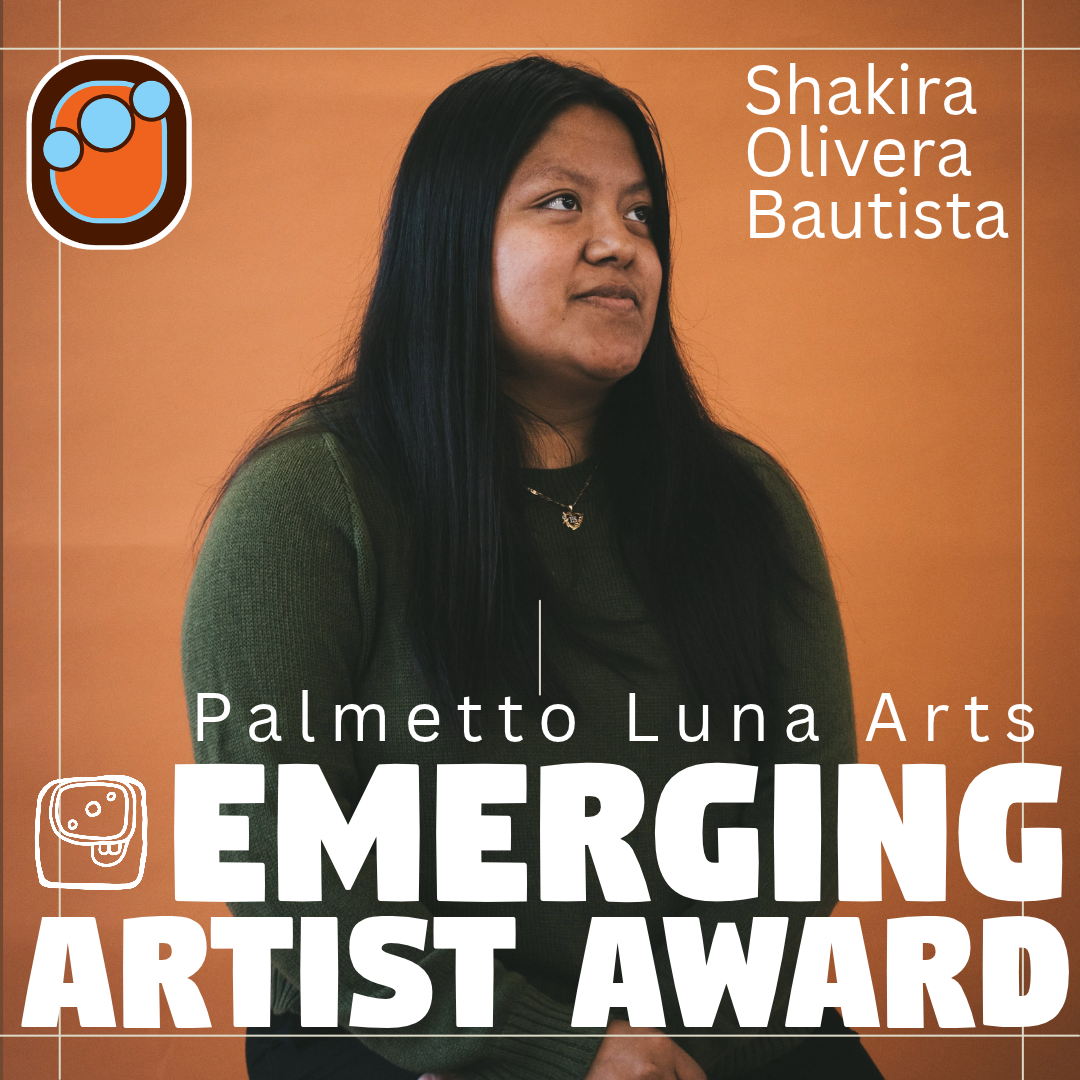
After the decision to deny funding to the queers, commentators on social media asked, “Who’s next?” Not an idle question, it turns out. Only two weeks after killing the grants to the LGBTQ organizations, the board used the resolution to remove Latina artist Shakira Olivera-Bautista from the emerging artist roster, calling her work too political. Rourke (of course) opened the attack: “I feel like some of the pieces [in her portfolio] may be going against some of the rules that have already been laid out,” adding, “we have these policies to try to avoid certain things.” Though other artists prompted comments about obscenity—and a board commitment to draw up obscenity guidelines that will be more stringent and limiting than existing state law or SCAC policy—Olivera-Bautista’s work drew the most opposition from board members, who described her work as “political” and “scary.” We have since learned that her submitted work addressed the actual experiences of the migrant community, given the ongoing sweeps and violence of ICE. Parks (of course) called her work “pure political ideology, and not even good art.” The vote to deny her funding was unanimous. They removed her from the emerging artist roster, denied the $1,800 grant and professional training. While the review panel saw promise in her work, all the commissioners could see was a political point of view they didn’t like.
The resolution will be a policy lever; pulling a policy lever triggers adjustments, makes clear what will be supported and what will be targeted. The resolution does not specifically mandate content, but we see clearly in these early applications of the nebulous guidelines that it will be used as a tool for viewpoint discrimination. And it will chill rather than encourage free expression. With the LGBTQ organizations, the board set a precedent for discriminatory treatment of queer artists. With Olivera-Bautista, they have indicated how the resolution can and will be used to restrict voices they don’t like. While they seem to sidestep accusations of viewpoint discrimination with the resolution’s ostensibly neutral focus on “any ideology,” we now see how it will work in practice.
Media coverage of these actions suggests that what appear to be attacks on artists from within SCAC are, in fact, the agenda of conservative state lawmakers. When the Senate Education Committee considered the reappointment of board chair Flavia Harton in March, Senate Majority Leader Shane Massey (R-Edgefield) expressed his disapproval of the 2024 emerging artist grant recipients, which included a queer portrait artist. According to the Post and Courier, he called the portraits “sexually explicit” (they weren’t) and saw the art as derogatory toward certain ideologies and "biblical accounts of things." He instructed Harton that any art funded needs to be what “most South Carolina taxpayers would approve.” Otherwise, he threatened, “conversations are going to be different.”
What SCAC should be promoting, it seems, is only what most people believe. They should only fund mainstream art that doesn’t challenge dominant culture (white, straight, Christian—and Republican). Because the legislative Freedom Caucus threatens to destroy the SCAC, maybe the commissioners have decided that—whatever their personal opinions—it’s only politically pragmatic to sacrifice queers and migrants if that’s what’s needed to save the agency.
But that leaves us with a state mandate for conformity. Only artists who represent the majority culture will receive state funding. And state-supported art, as in any fascist state, will not represent the fullness and complexity of who we are, only a mainstream fable of what those in power think we should be.
~
A condensed version of this article will appear in the November print issue of Jasper magazine. I am grateful for the reporting by Pat Moran in the Post and Courier, Jessica Holdman in the South Carolina Daily Gazette, and Jeffrey Day’s Substack posts on Carolina Culture. An earlier version of some of this material appeared in a September 20 column in the Free Times, “SC arts board targets LGBTQ art and creates political test for art.”
Ed Madden is the literary arts editor for Jasper. He served as the inaugural poet laureate for the City of Columbia, 2015-2022. A professor of English and Women’s & Gender Studies, Madden is also the recipient of a 2022 Governor’s Award of the Arts and the 2025 Carolina Trustees Professorship in Humanities, Social Sciences, Business and Law. This article does not represent the views of his employer.
Please join The Jasper Project on
Sunday November 8th from 5 - 11 at the Art Bar
as we celebrate the 15th anniversary of Jasper Magazine with the fall 2026 release party.